Showing posts with label ilocos sur. Show all posts

Sunday, May 1, 2011

XXII. Bantayan and Binyagan in the Vigan Suburbs

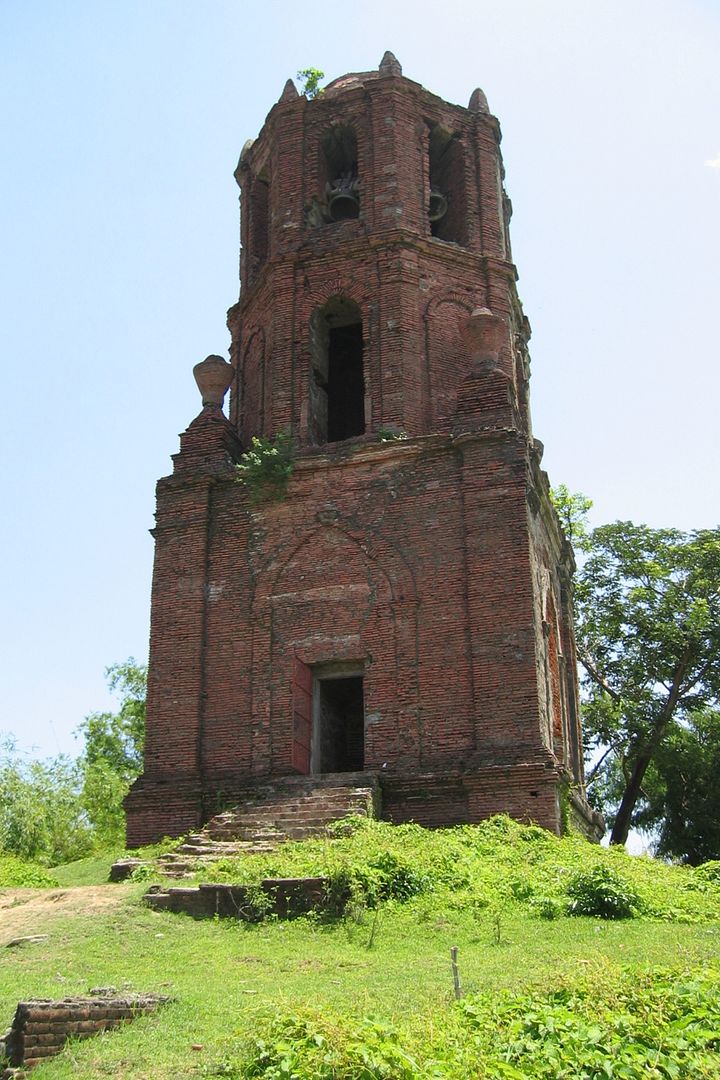
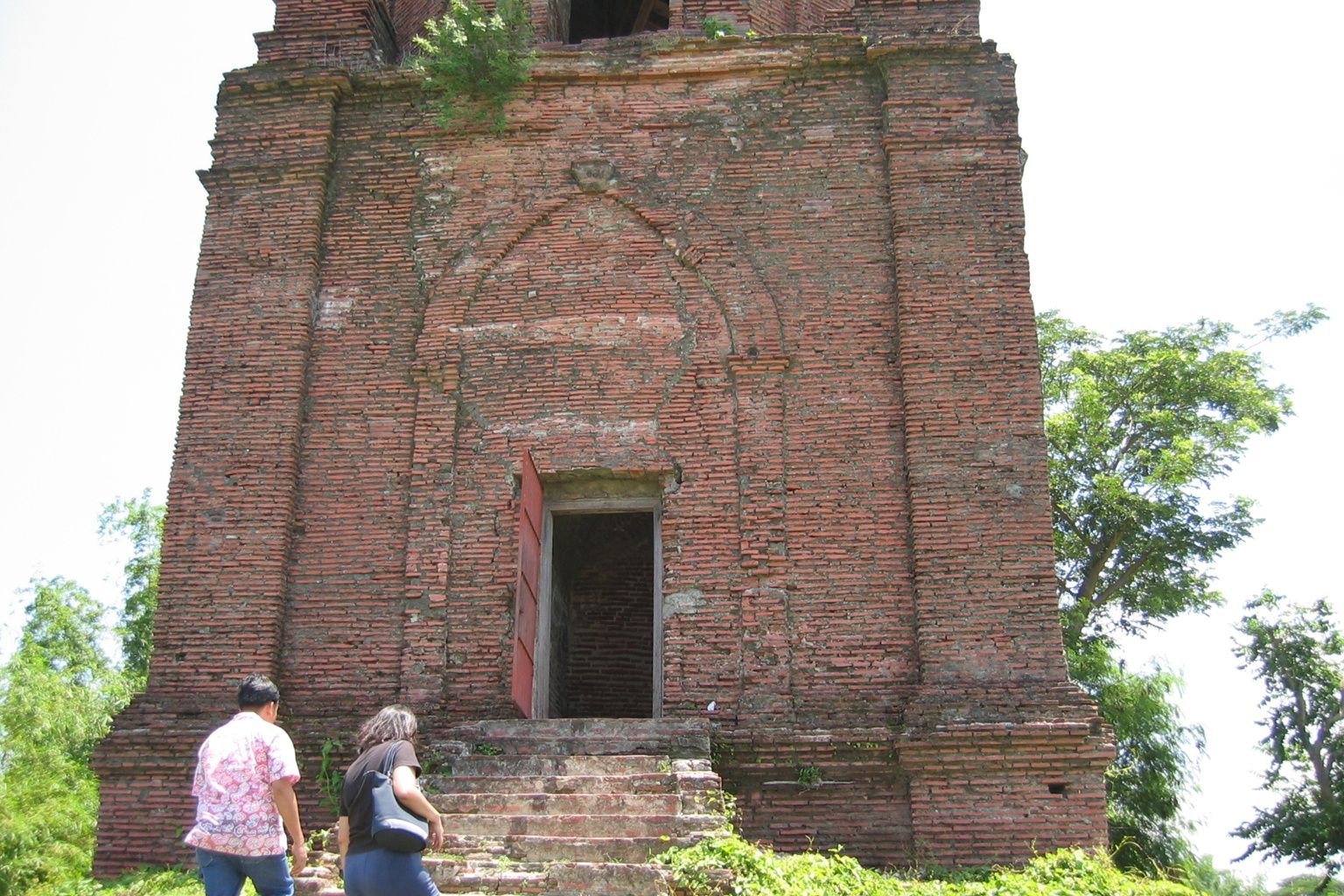
All good things must come to an end (ugh! – where do these clichés come from?), and so must our Vigan visit. (End, that is.) Fortunately, there are still other interesting places that we can go to on our way out of the city. For starters, right beside Vigan, on the other side of the city’s prominent welcome arch, is the town of Bantay, Ilocos Sur. The name appears to allude to its ancient role as a watchout against pirates. According to our guide, the “watchout” was a watchtower (no, no Jehovah’s Witnesses here), and in fact the watchtower was the Bantay Church’s bell tower itself, seen here:


The bell tower is one of the few in the Philippines that are separate from the main church structure; in this case it’s also mounted on a hill overlooking the church, the town, and the sea – no doubt the better to enable it to carry out its watchout role. 

One may ascend the tower via an extremely steep and narrow spiral staircase, something that would probably increase one’s insurance premiums significantly. All that you get for all that risk and effort is a lot of strong wind at the top (not fun unless you enjoy standing inside a wind tunnel), bits of trash left by previous tourists (apparently some people like to picnic up there), and abundant graffiti courtesy of the local teens. Far more interesting is an examination of the tower’s structure – innumerable red bricks, perhaps from a colonial-era kiln in the area that must have also supplied building material for the Vigan ancestral houses.

There are only five places in the Philippines on the UNESCO World Heritage List, and the historic town of Vigan is one of them, inscribed in 1999. One of the other four Philippine entries is in fact four separate locations: the four Baroque Churches of San Agustin in Intramuros, Paoay in Ilocos Norte, Miag-ao in Iloilo, and Santa Maria in Ilocos Sur, all inscribed together in 1993. We’re privileged to have the opportunity to visit the last of these four churches, as it’s not far from Vigan and is on the way back to Manila.

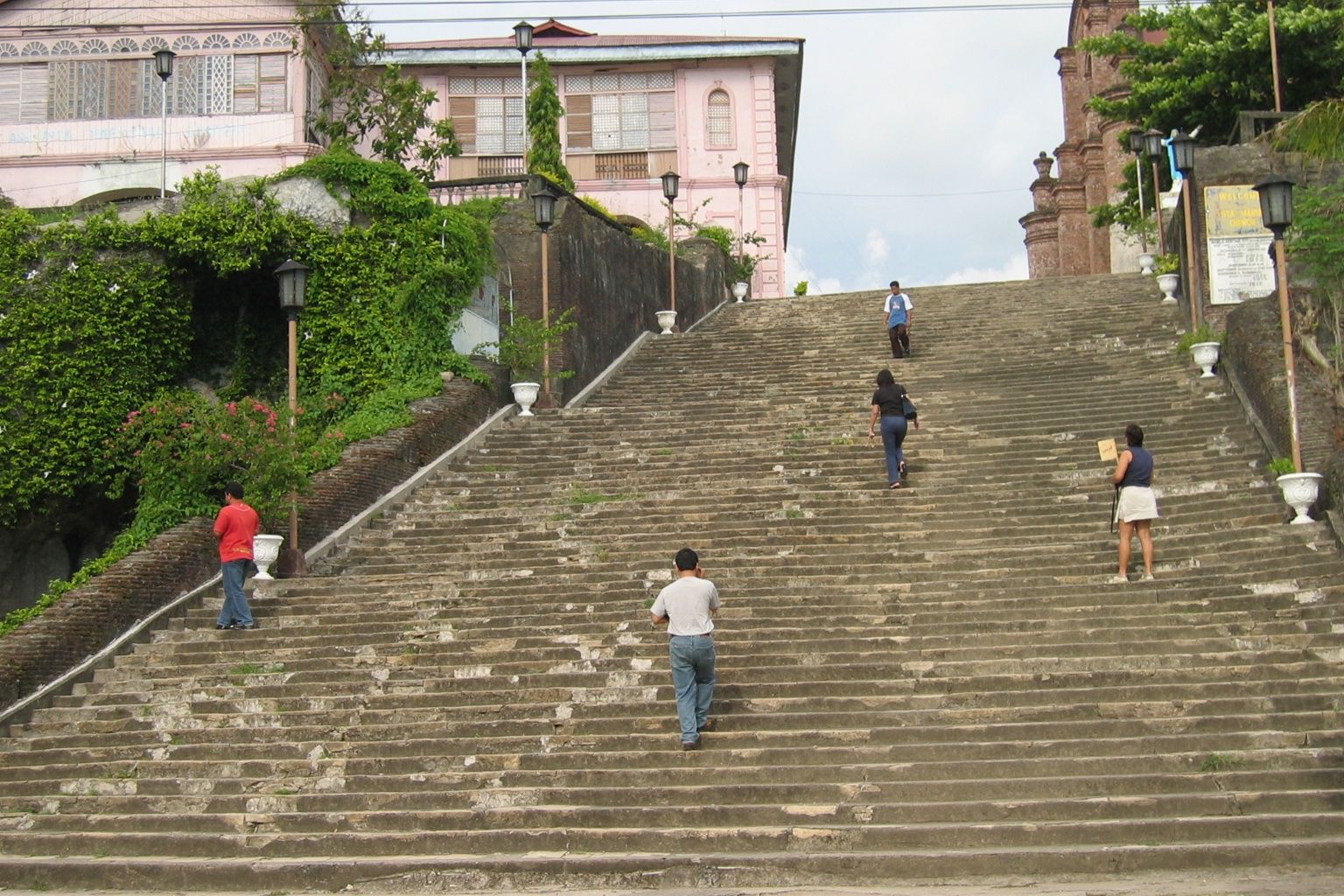
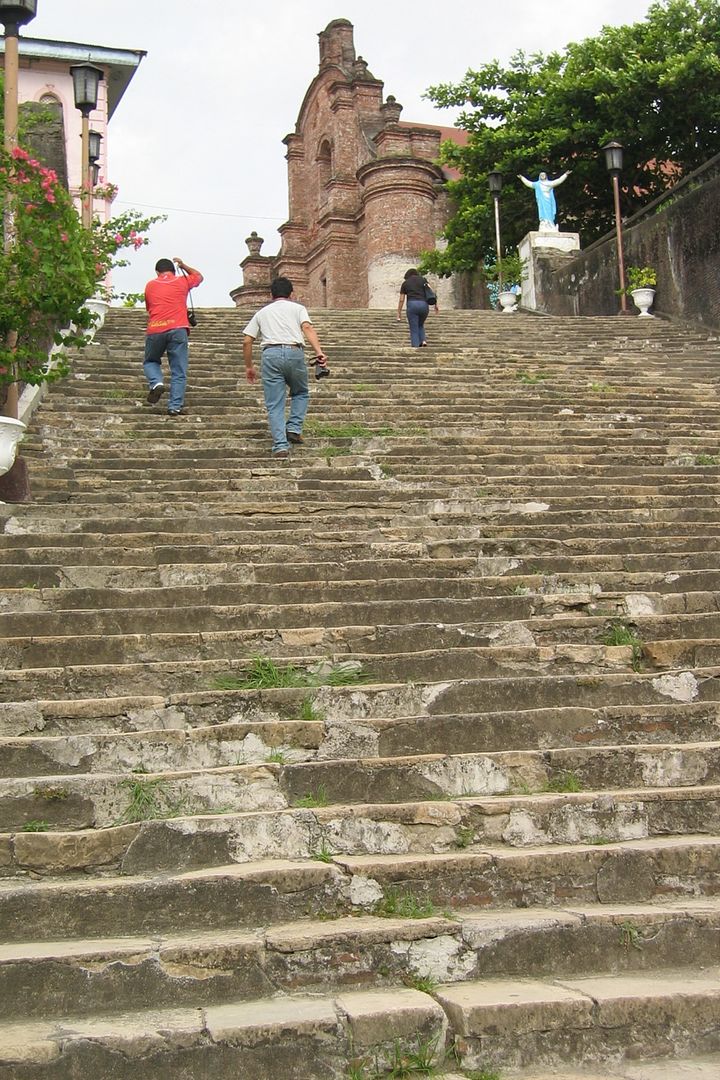
The Santa Maria Church is unusual for being on a relatively steep hill in the middle of town; before these steps were built, parishioners supposedly had to tread uphill through dust or mud to attend Mass. 


\These steps and the church at the top were immortalized in a famous Fernando Amorsolo painting, “Binyag ng Panganay” ("Baptism of the First-Born"). Since I don’t own that painting (or any Amorsolo for that matter), just imagine a young couple with a newly-baptized infant at the foot of the steps in this next shot, more or less:


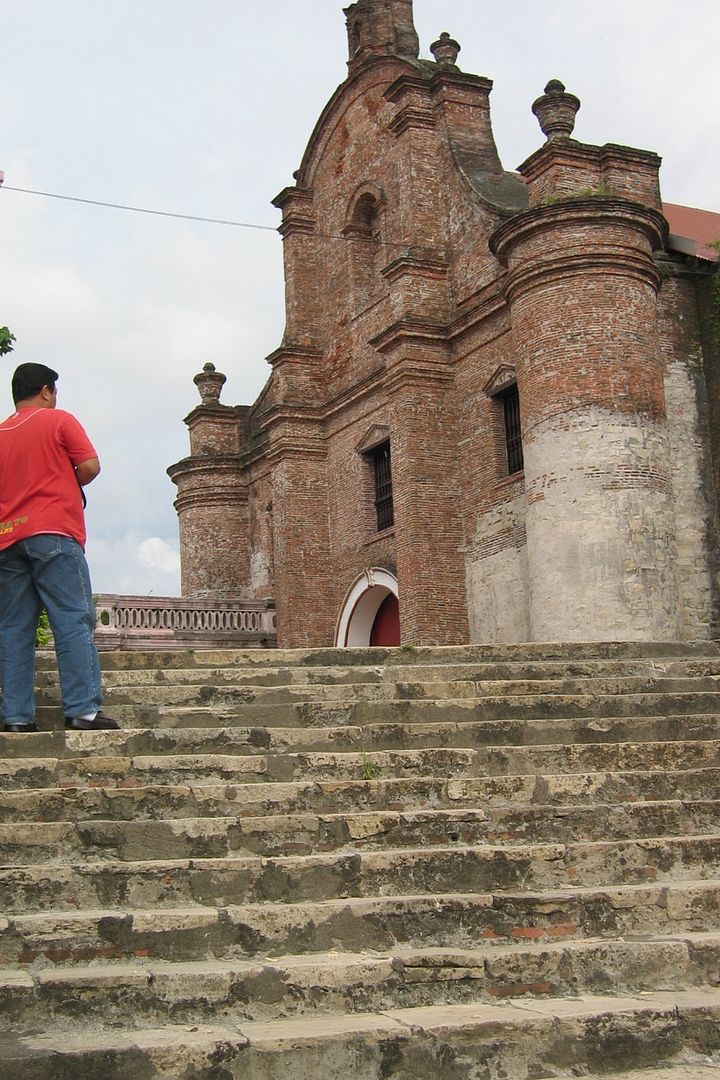
We continue our climb, and the all-brick (from the same Vigan-area kiln perhaps?) church starts to fill up our frame of sight:
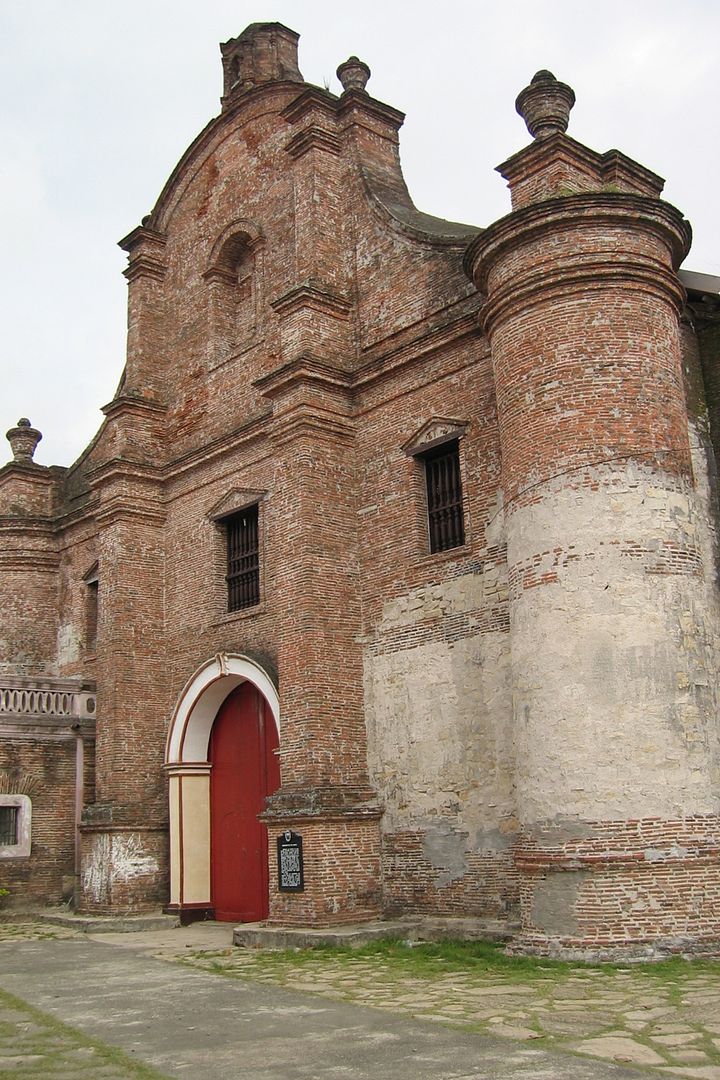


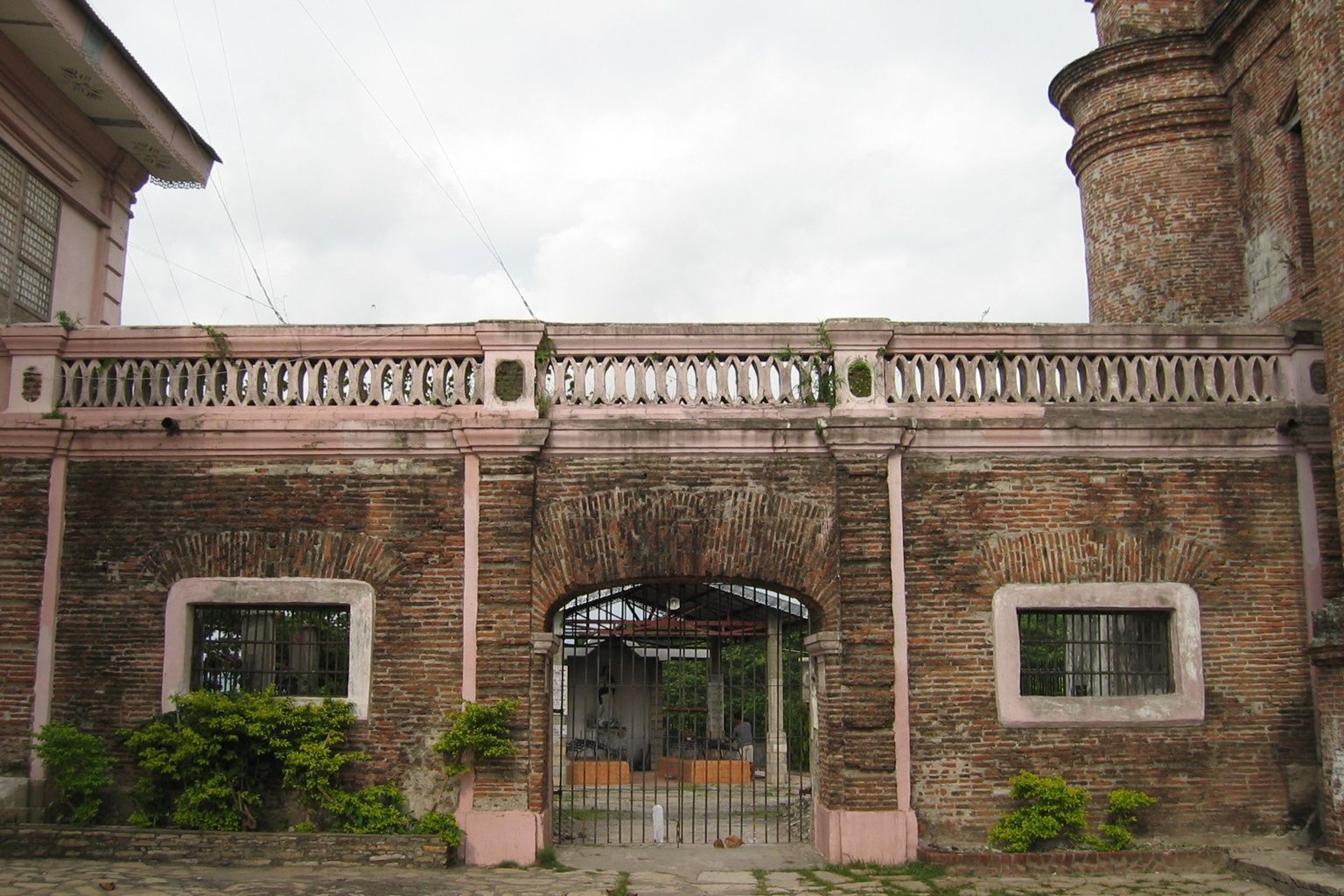
One of the unusual things about the Santa Maria church, which some might have noticed in the first photograph of the staircase above, is that its convento (parish house) is in front of the church, rather than attached to its side. Here’s how it connects to the front of the church, via a catwalk that doubles as a gate and fence:


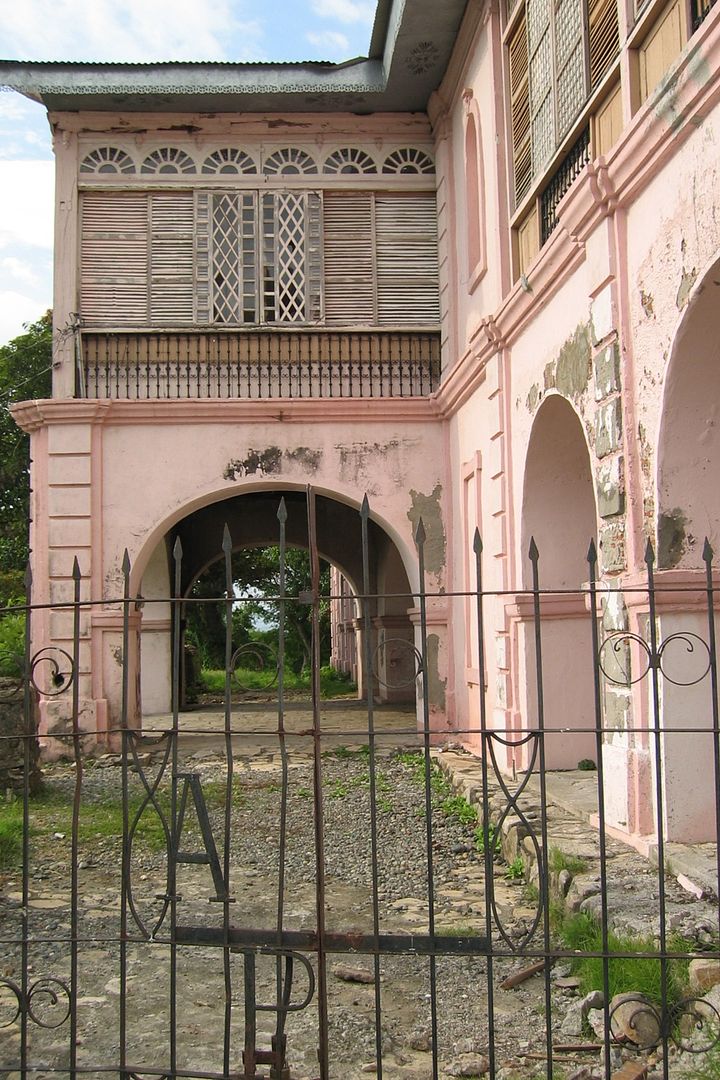
And here’s how the convento itself appears from the outside:
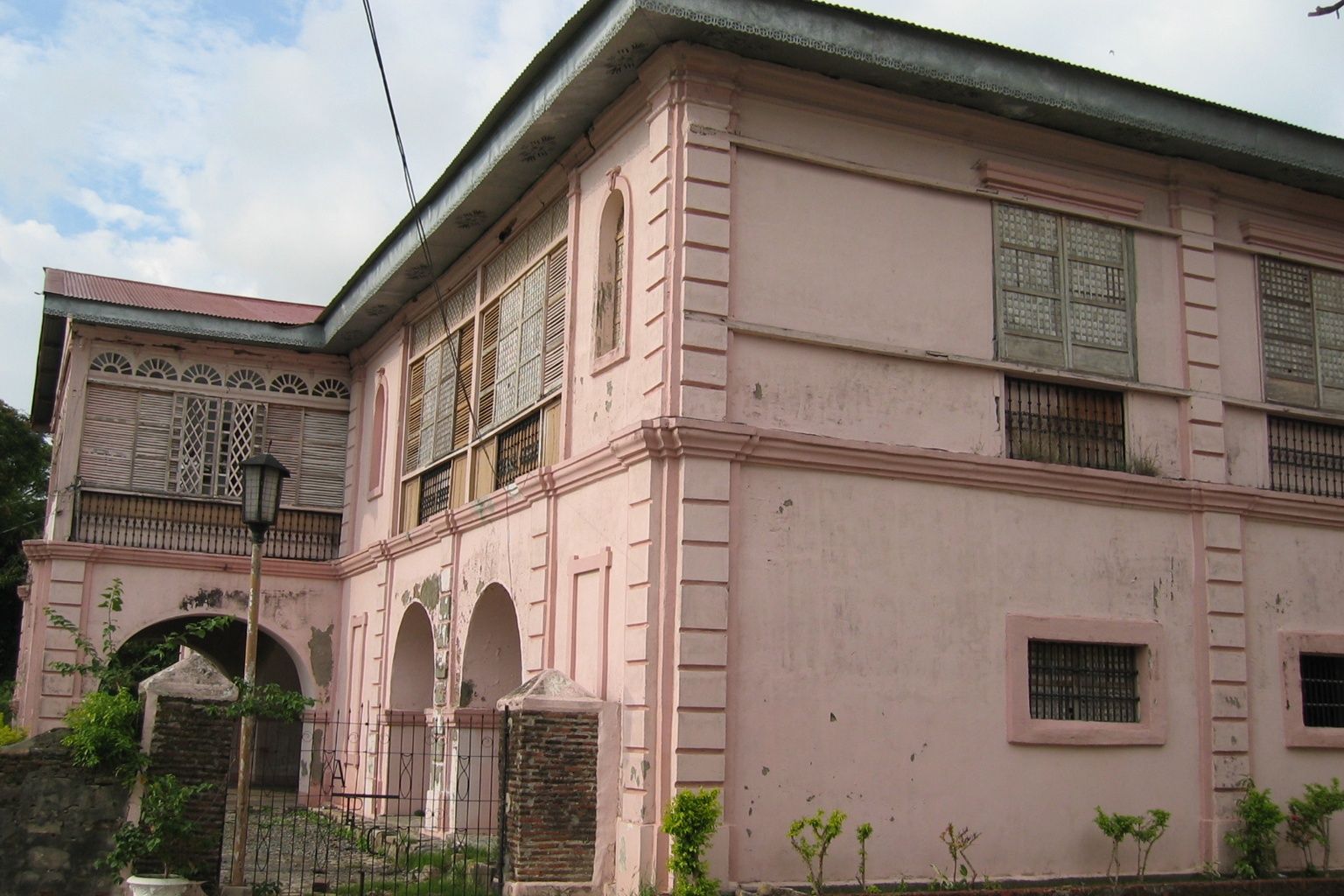


It would have been really good to do an akyat-bahay visit of this apparently early-20th century structure, but as the photos above make evident, it is closed – its gates, doors, and windows were all firmly shut when I was there. It appeared to have been abandoned and in disuse, perhaps for reasons of operating economy.

Instead, we walk back to the church and see a historical marker by the main door, which is helpful:
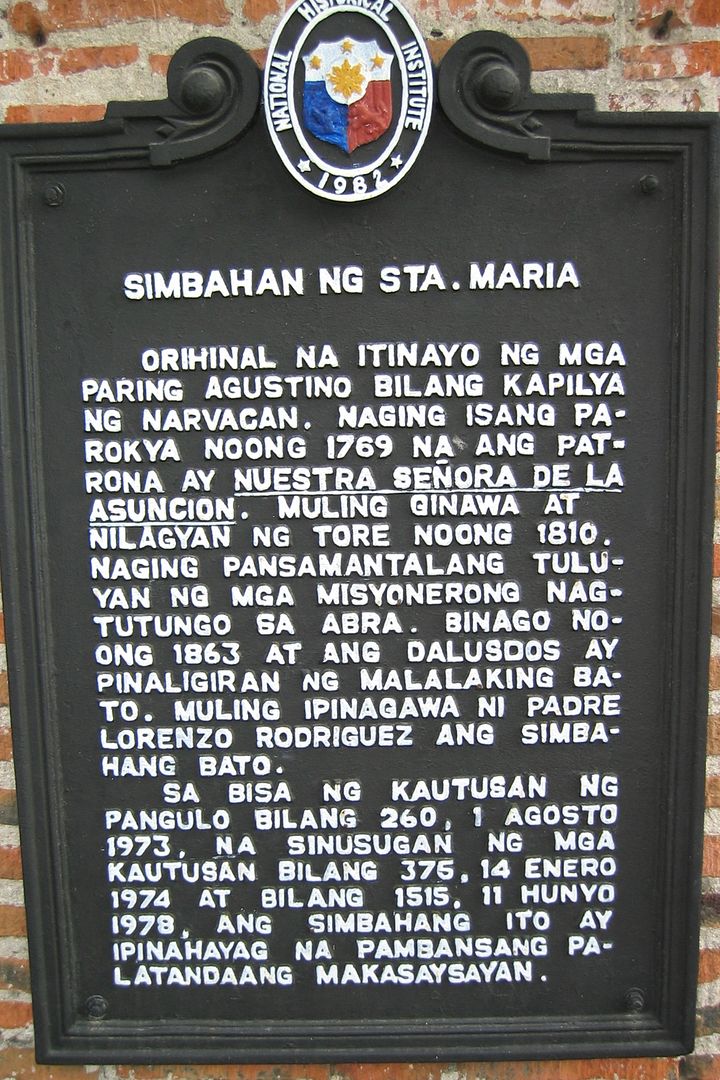


For the bilingually-challenged, it says that the Church of Santa Maria was originally constructed by the Augustinians as a sub-parish chapel attached to the neighboring town of Narvacan. It became an independent parish in 1769, under the patronage of Our Lady of the Assumption. The church was rebuilt and expanded with a bell tower in 1810. It was frequently used as a transit stop by missionaries on the way to the neighboring province of Abra. In 1863, the steep slope was overlaid with a wide staircase and the church underwent a major rebuild under Father Lorenzo Rodriguez. On the basis of Presidential Proclamation Number 260 dated 1 August 1973 as amended by Proclamation 375 dated 14 January 1974 and Proclamation 1515 dated 11 June 1978, the church was designated a National Historical Landmark.

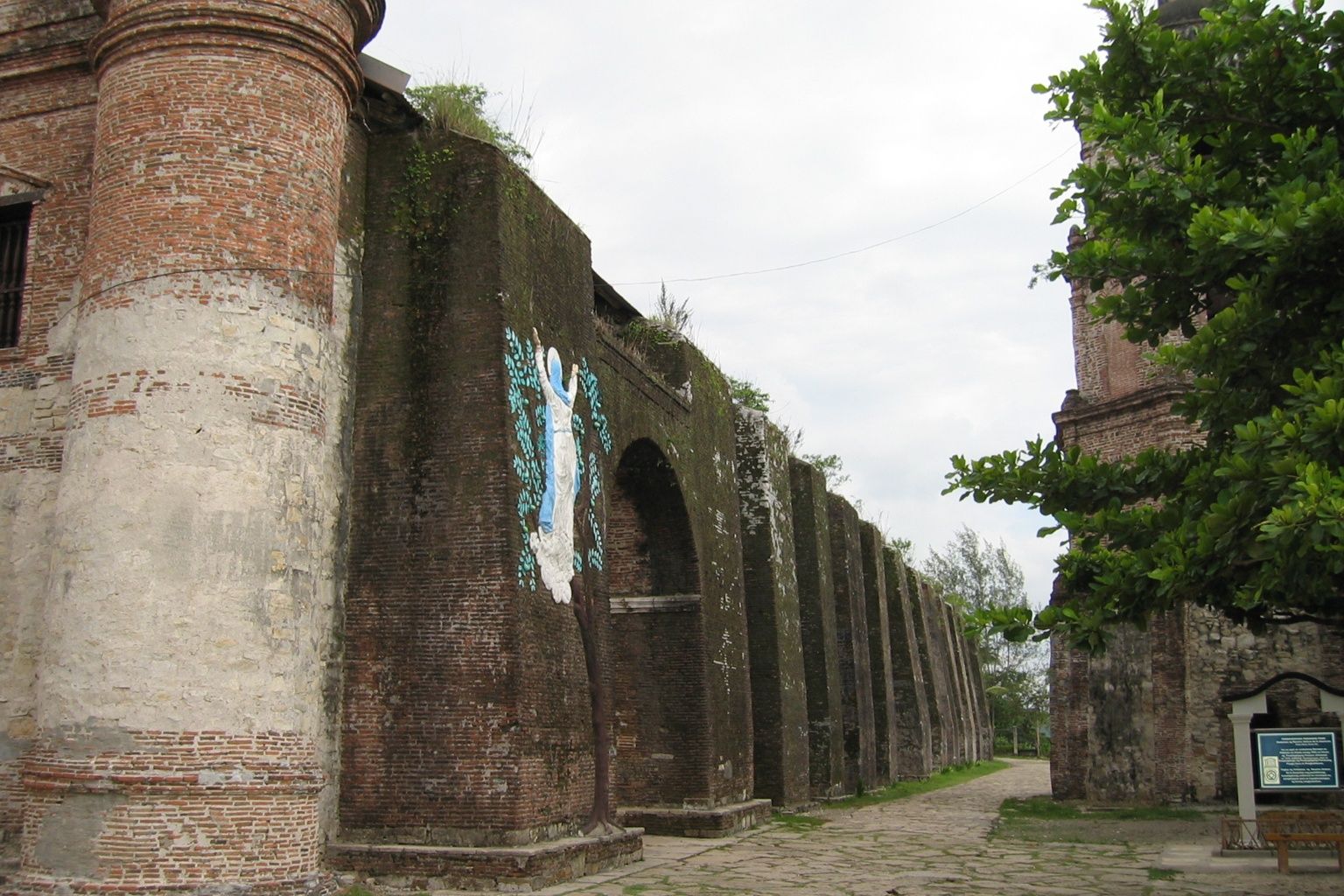
Since the main door is shut, we instead go to the side of the church and view the length of the structure, defined by thick stone buttresses. They’re obviously not as elegant-looking as Gothic-style flying buttresses, but they’re what give the walls the structural strength necessary in this part of the world, hence the name of the style that the four aforementioned Philippine churches supposedly share – “earthquake baroque.”


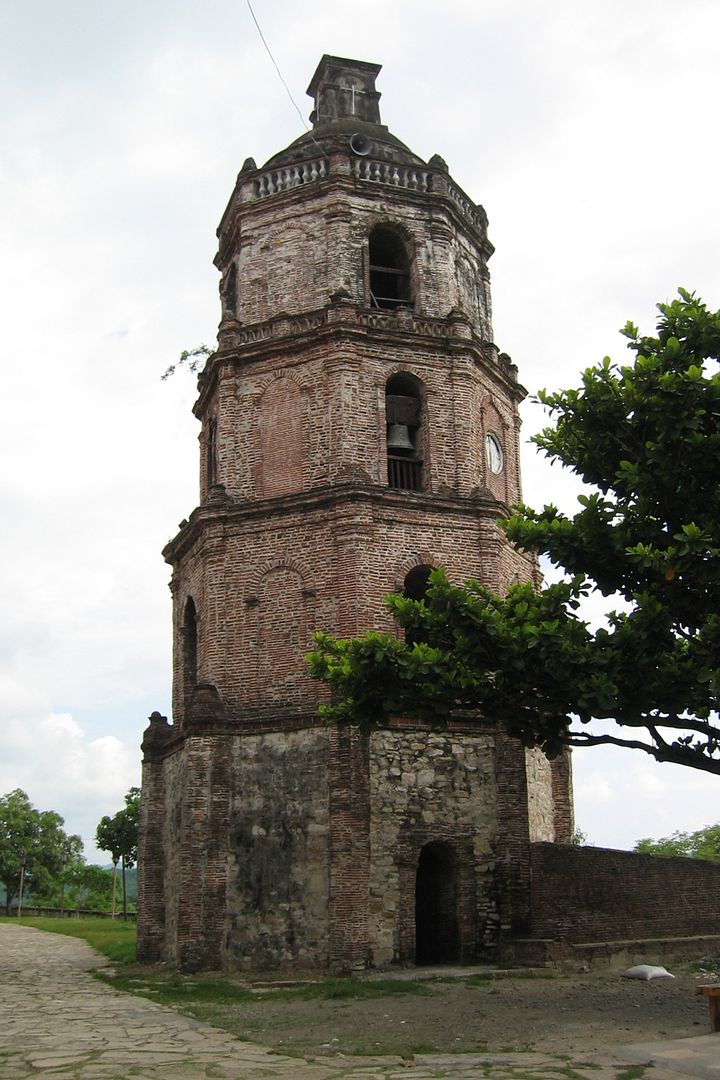
Before we walk down that inviting path, we take a look at the church’s bell tower, like Bantay's a rare separate structure from the church, and which, as the historical marker said, was built in 1810:


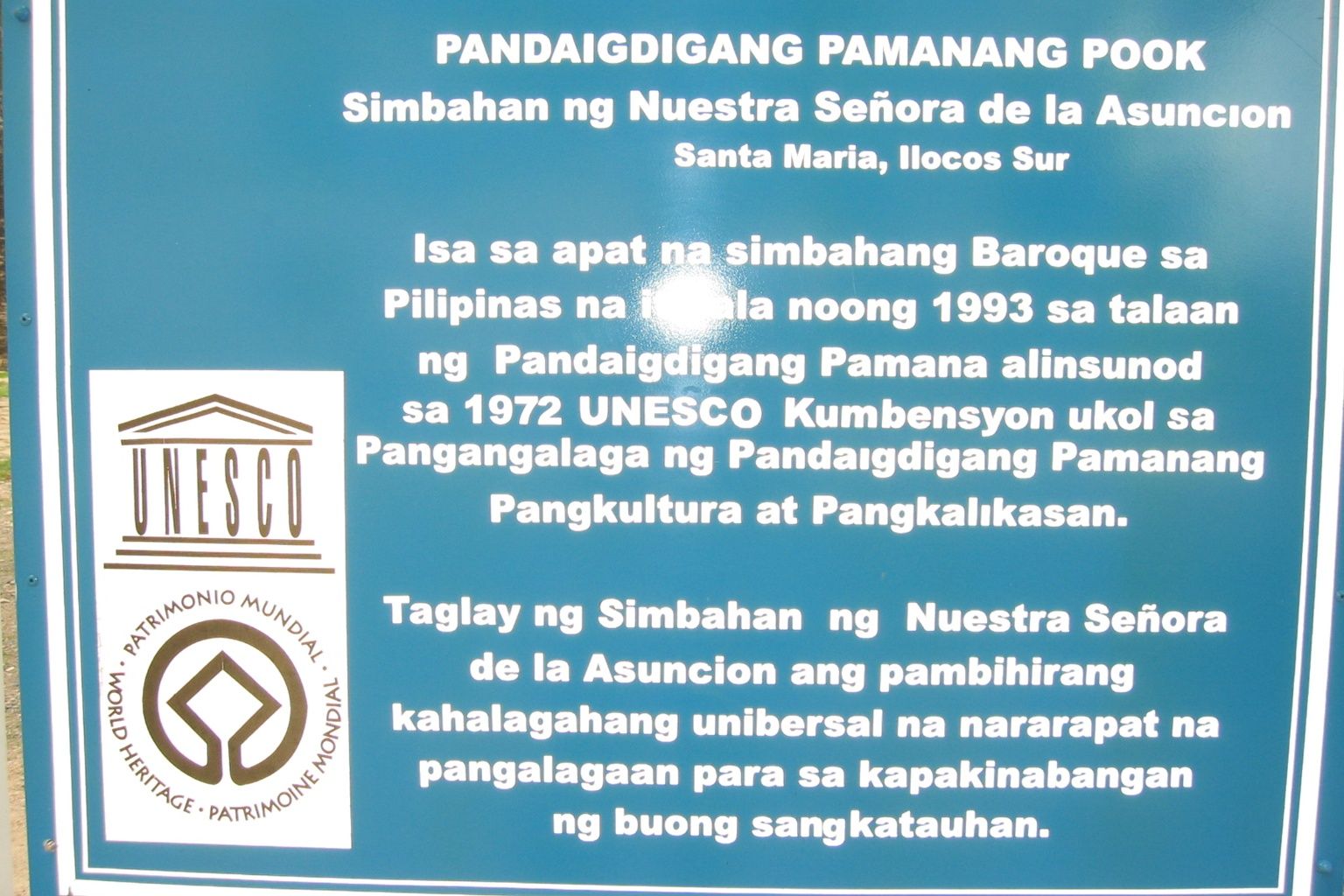
Sharp-eyed readers would have noticed an incongruous light blue-colored thing in front of the bell tower in the earlier photo. That is actually the UNESCO World Heritage Site marker itself, which we walk up to to take a closer look:


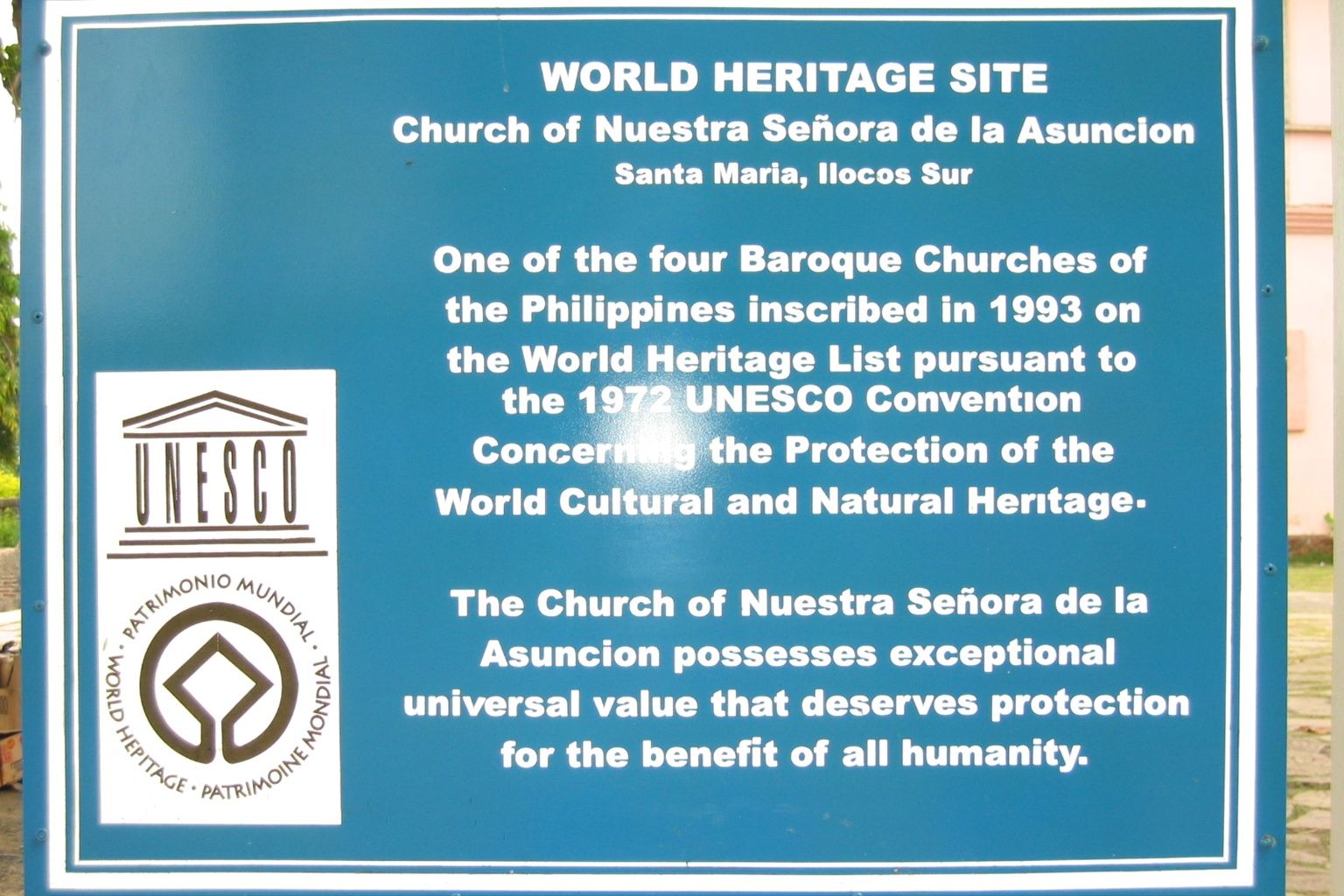
For the bilingually challenged, these standard UNESCO markers already come properly translated on the reverse:


We now walk down the paved footpath:
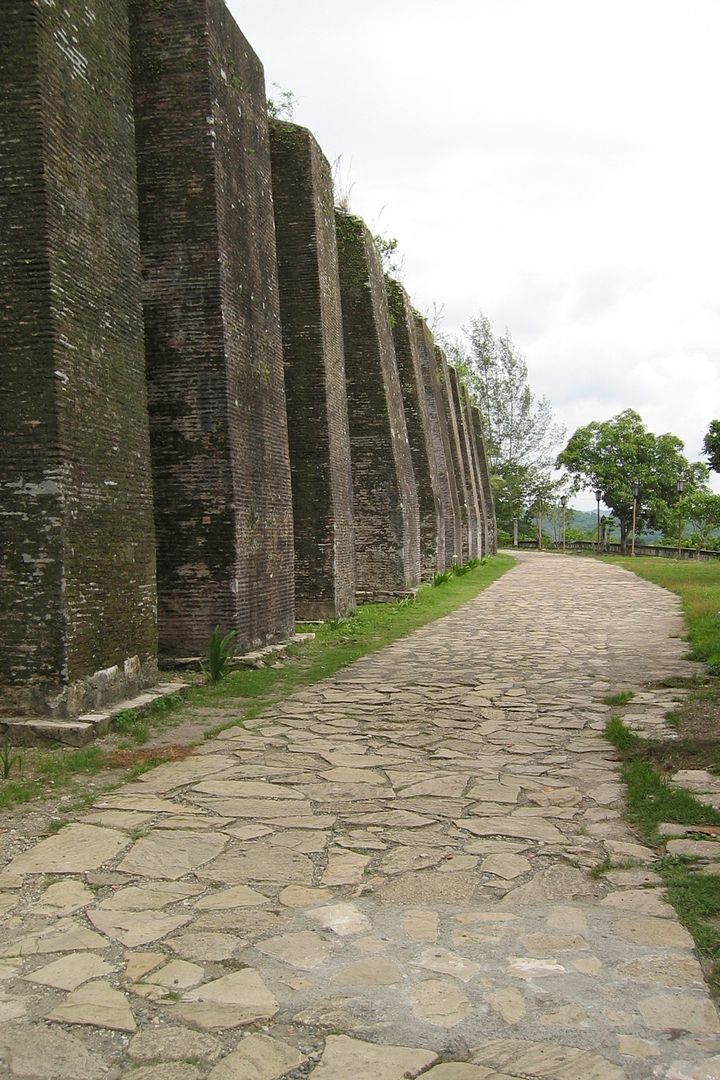


And when we get to the end, we stop and look in the other direction. (After all, “Ang hindi lumingon sa pinanggalingan ay hindi makakarating sa paroroonan.”)
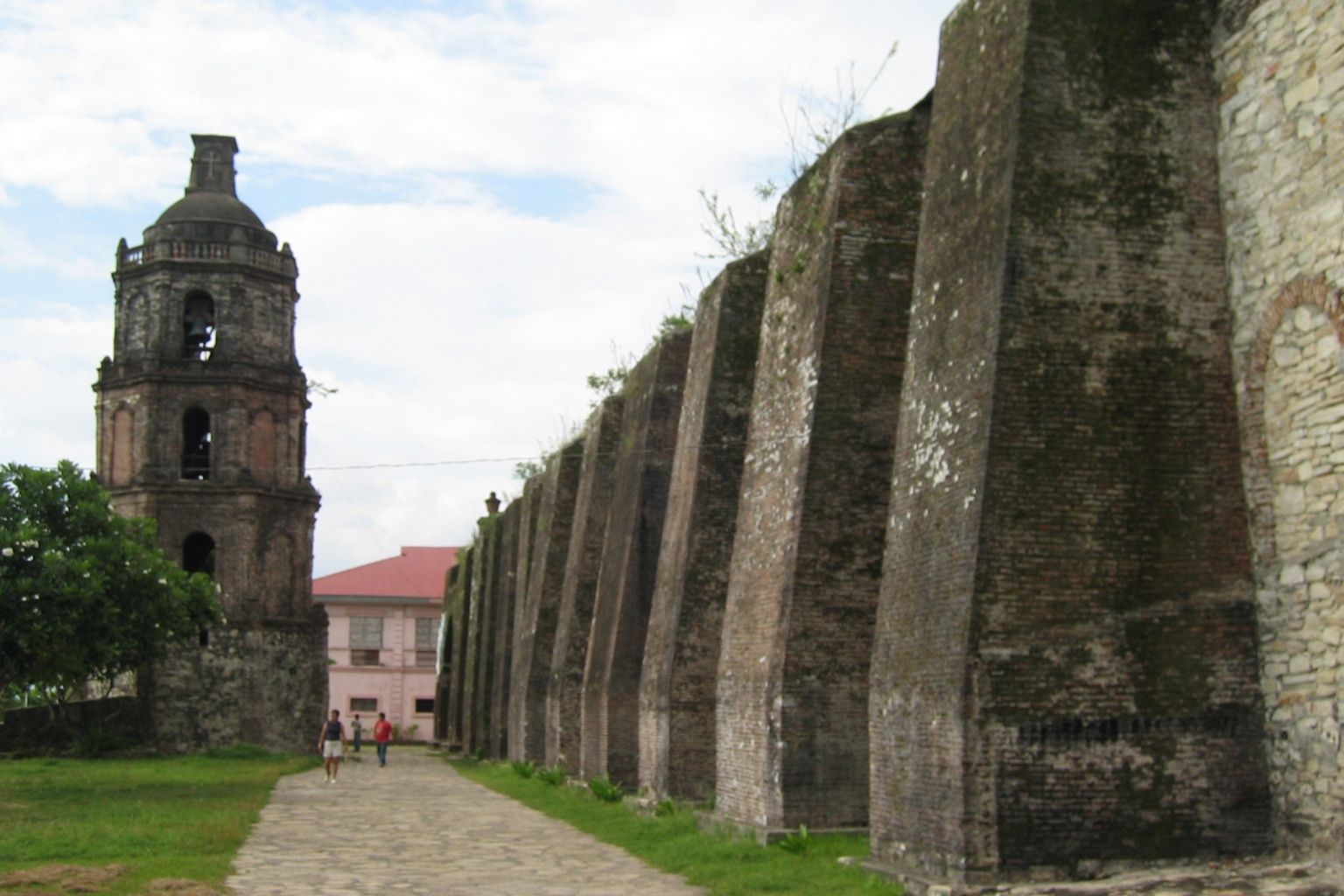


In the rear of the church is the actual working convento today,
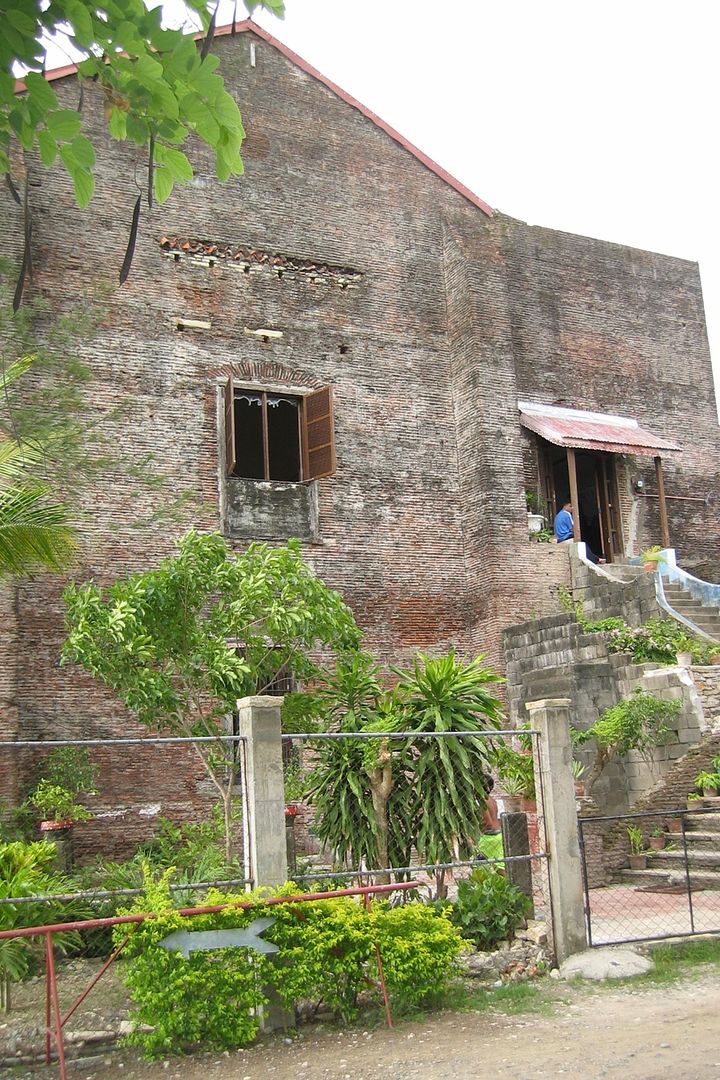


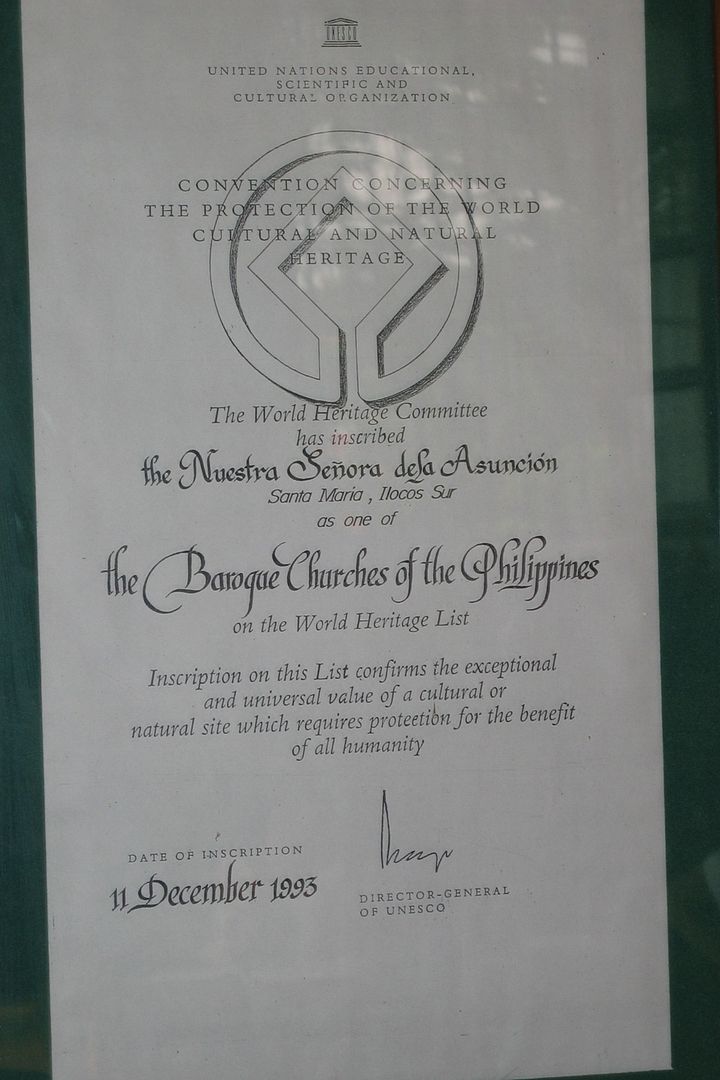
on the ground floor of which is the parish office. In this office is the actual certificate of the church's inscription into the World Heritage list: 


The parish office connects to the sacristy, which allows us to enter the church. Despite the bright afternoon sun outside, it’s awfully dark inside, 
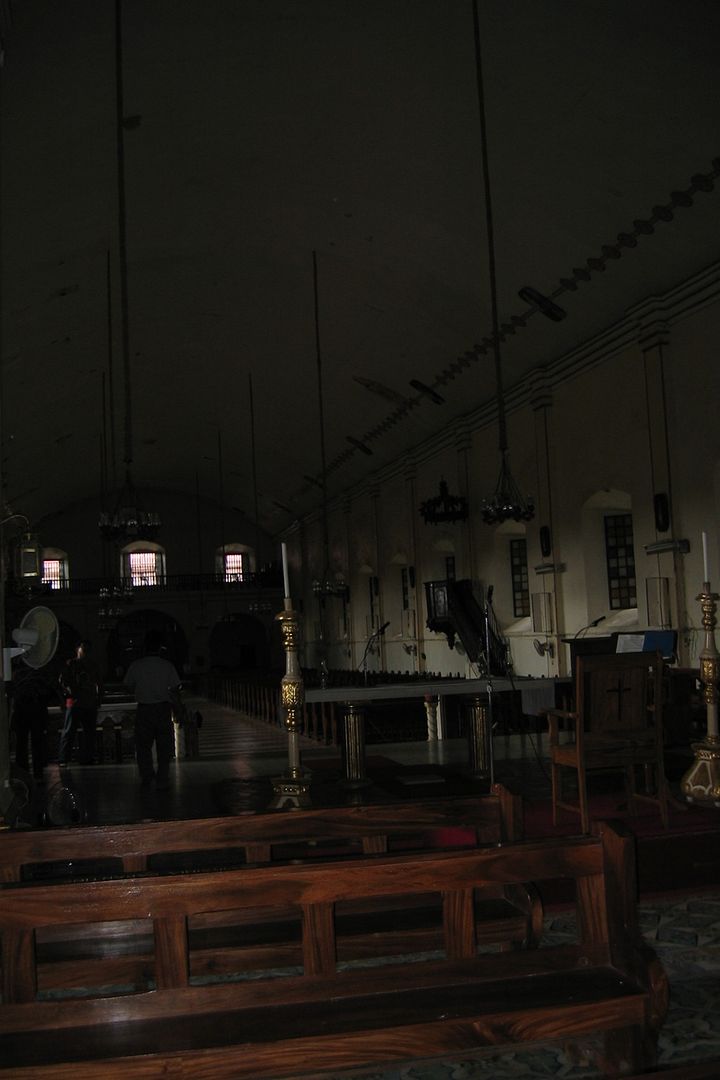


making it very difficult to note specific interior details and examples of religious art. But looking towards the main altar, we notice that it is partly lit, 
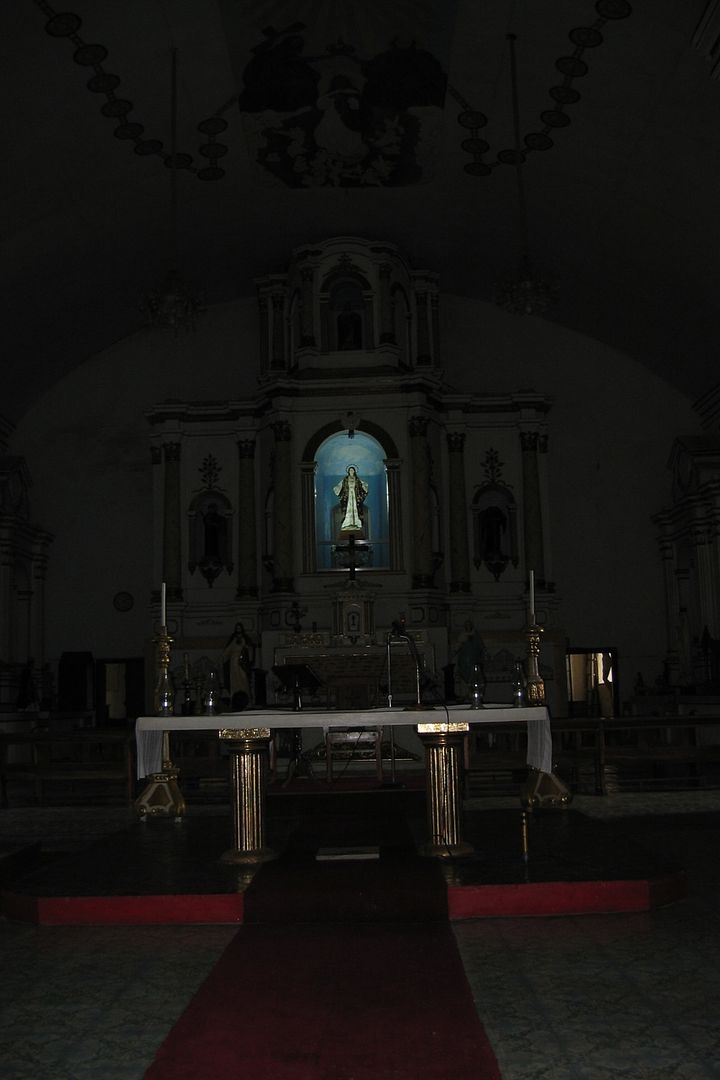


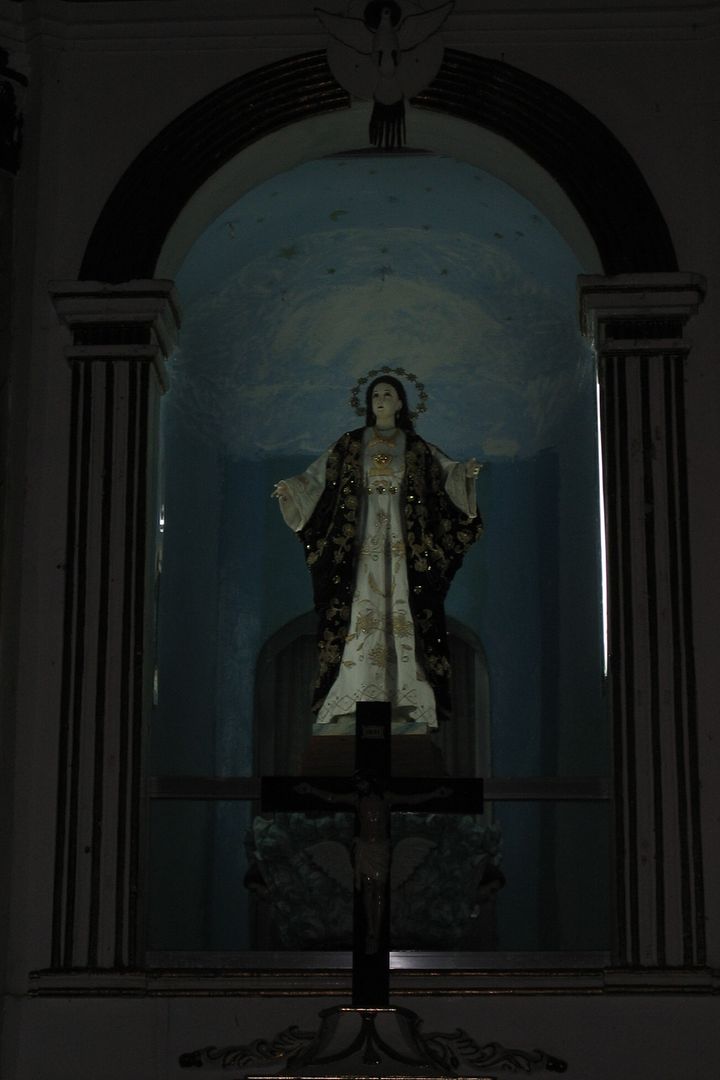
and we move up closer to get the best possible (under the circumstances) view of the image of the town’s patron, Our Lady of the Assumption: 


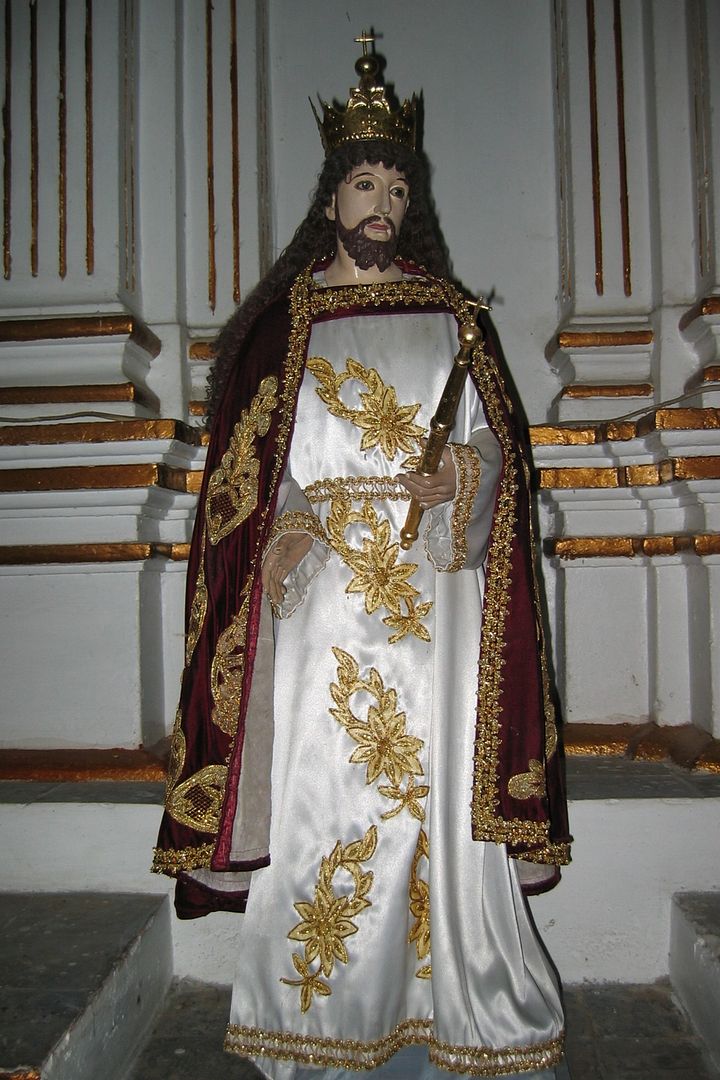
More accessible is a side altar, on which is placed a full-sized clothed image of Christ the King, complete with crown and scepter, and perhaps unusually, standing rather than seated on a throne: 


Going back outside to the rear of the church, we espy a partly-tree-lined clearing on the other side of the church. 
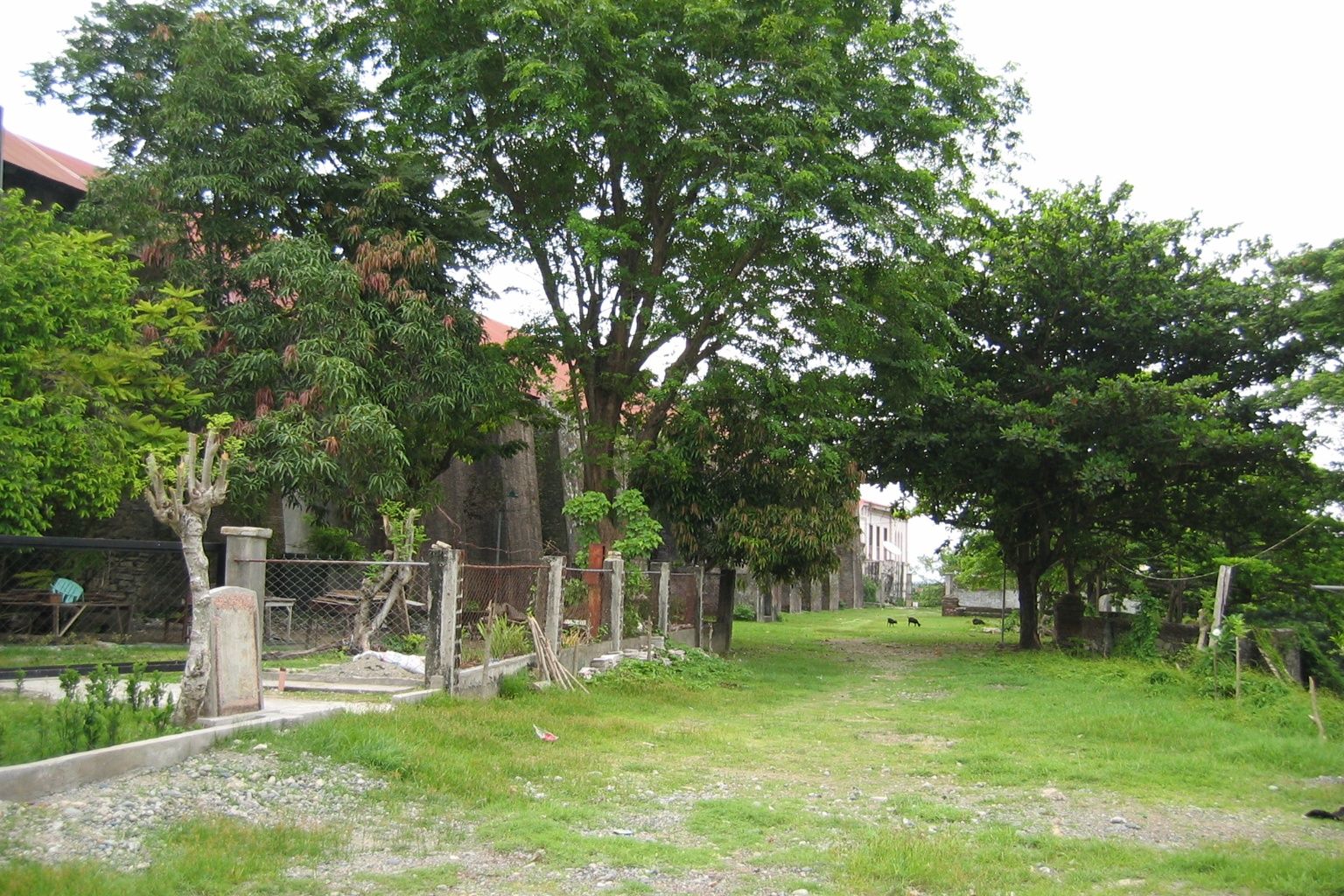


But just like the old convento, this area is off-limits and is fenced off from potential trespassers like me.  

Instead, we then walk back to the front of the church, and descend the 1863 staircase back to the main road.  
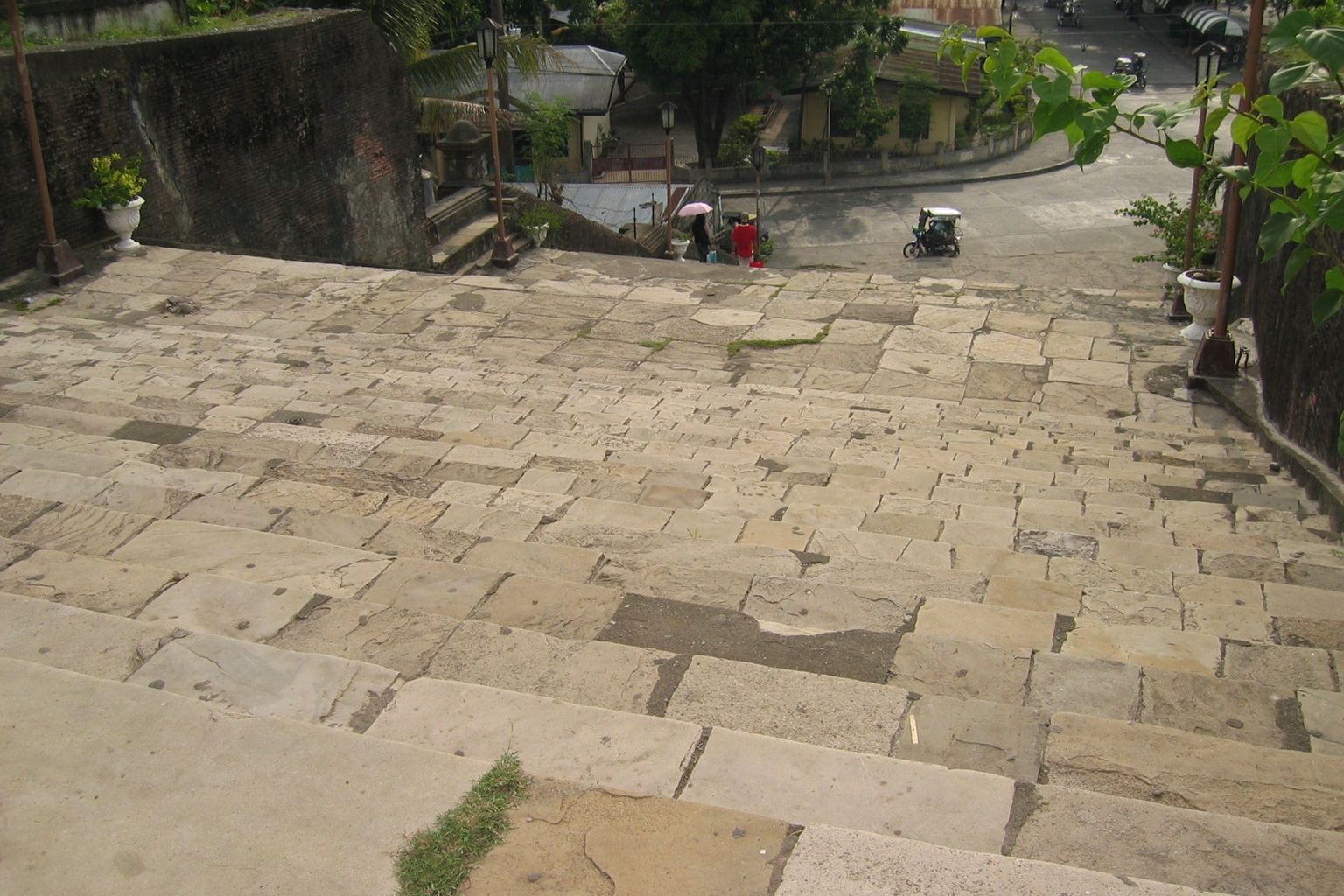


Thus ends our perhaps slightly uneventful and anticlimactic visit to one of the four Philippine churches on the World Heritage list. But this only means that we need to try to visit the other three. Memo to self: Add to to-do list.

Originally published on 19 January 2007.  All text and photos copyright ©2007 by Leo D Cloma. The moral right of Leo D Cloma to be identified as the author of this work has been asserted.


XXI. Can't Get Enough of Vigan: Santos, Silver, and Shopping

Before we broke off for our three-part survey of aparadors and for the requisite Christmas feature, we were in Vigan. Actually, we haven’t left Vigan yet. We may be done with the ancestral houses, but there are other great places to visit in and around town. 

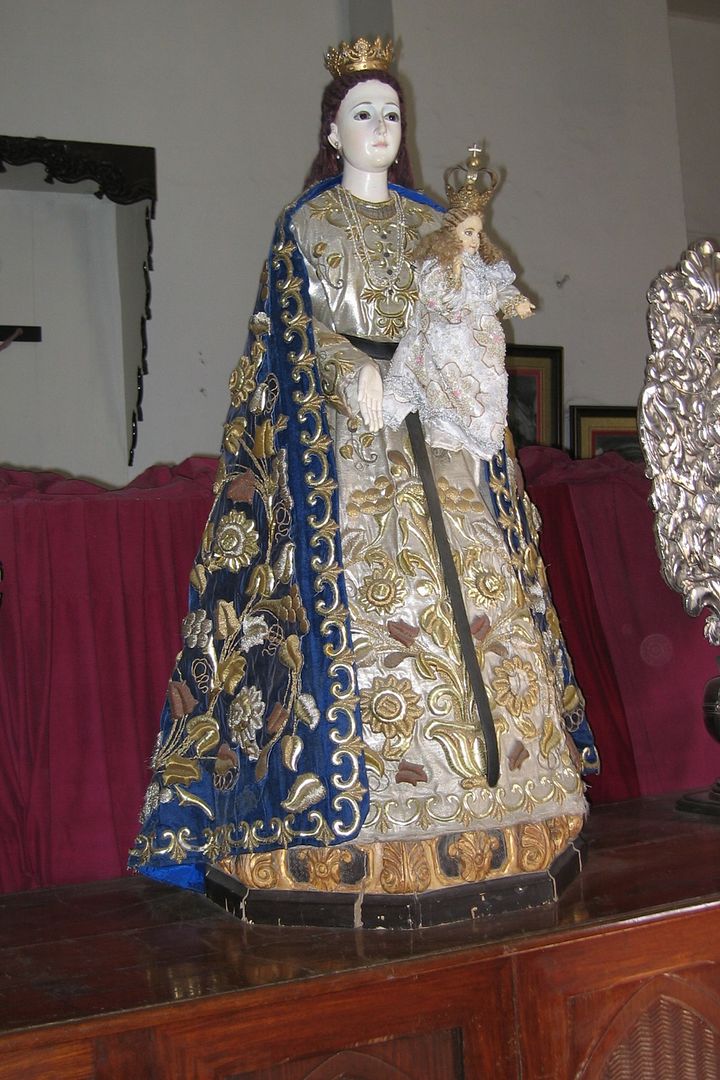
For starters, in the rear of the Vigan Cathedral is an interesting Museum, which displays a platoon of antique religious images, possibly all church-owned. I couldn’t check directly, lest I be arrested for attempted theft, but this looks like an ivory image of the Virgin and Child:


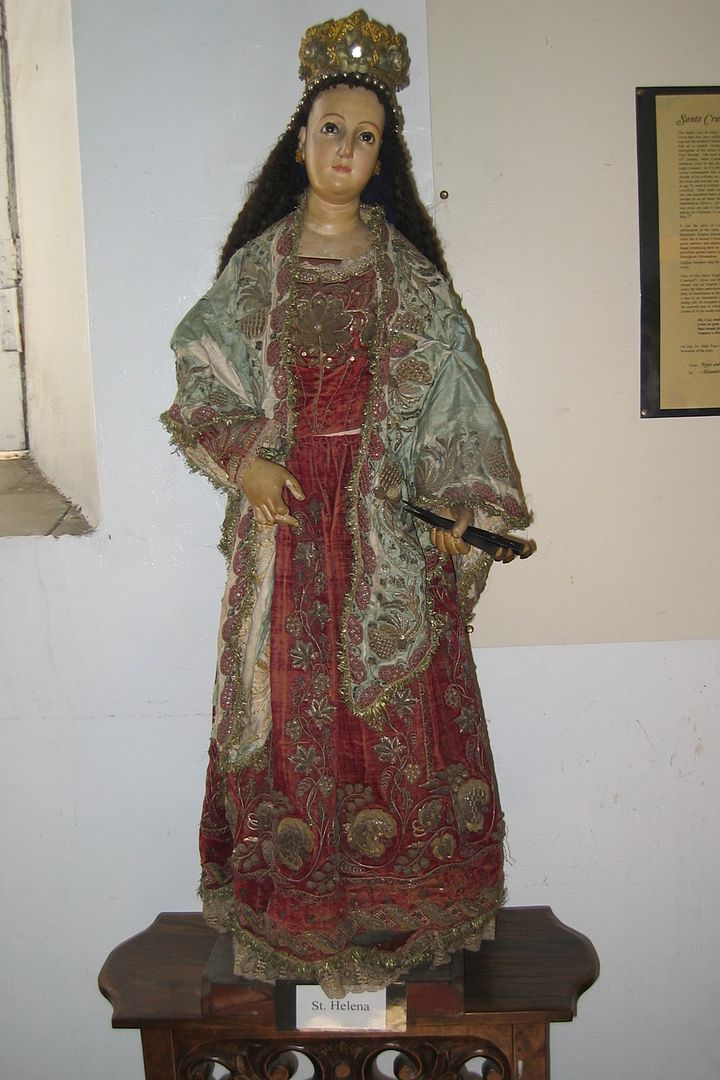
Here’s an image of Santa Elena, holding the nails that presumably she found together with the True Cross:


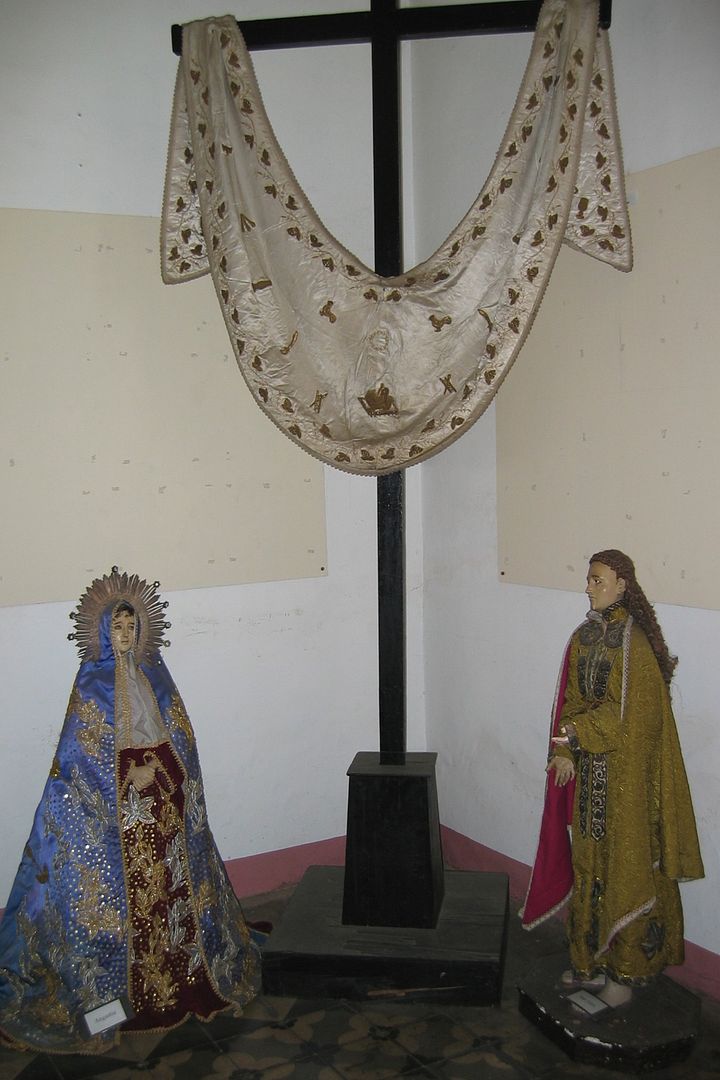
Here’s an incomplete Calvary tableau, with the Sorrowful Mother and Saint John:


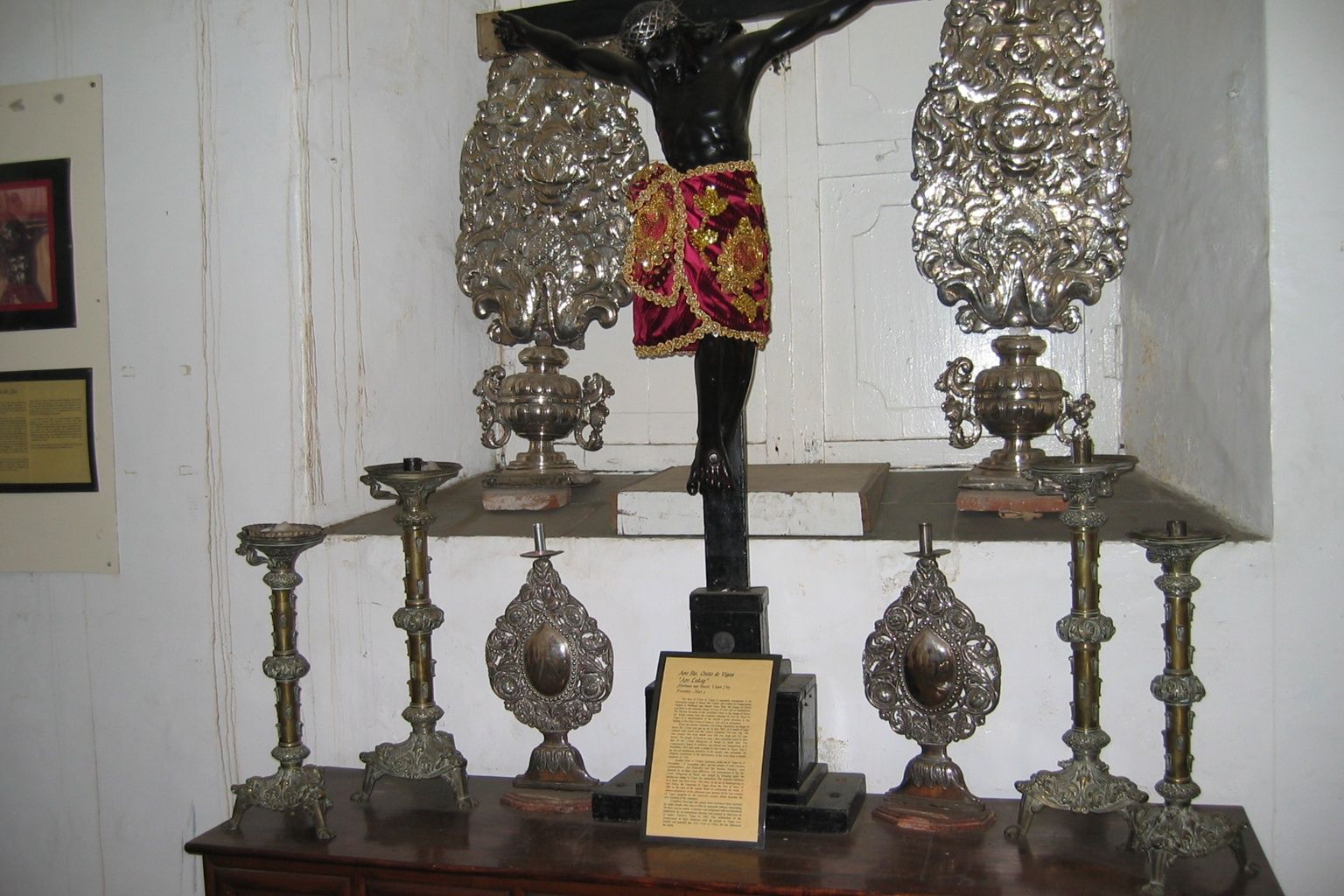
Apart from the jet-black Corpus on this Crucifix, allow yourself to be distracted by the ornate brass candlesticks and silver altar adornments around it:


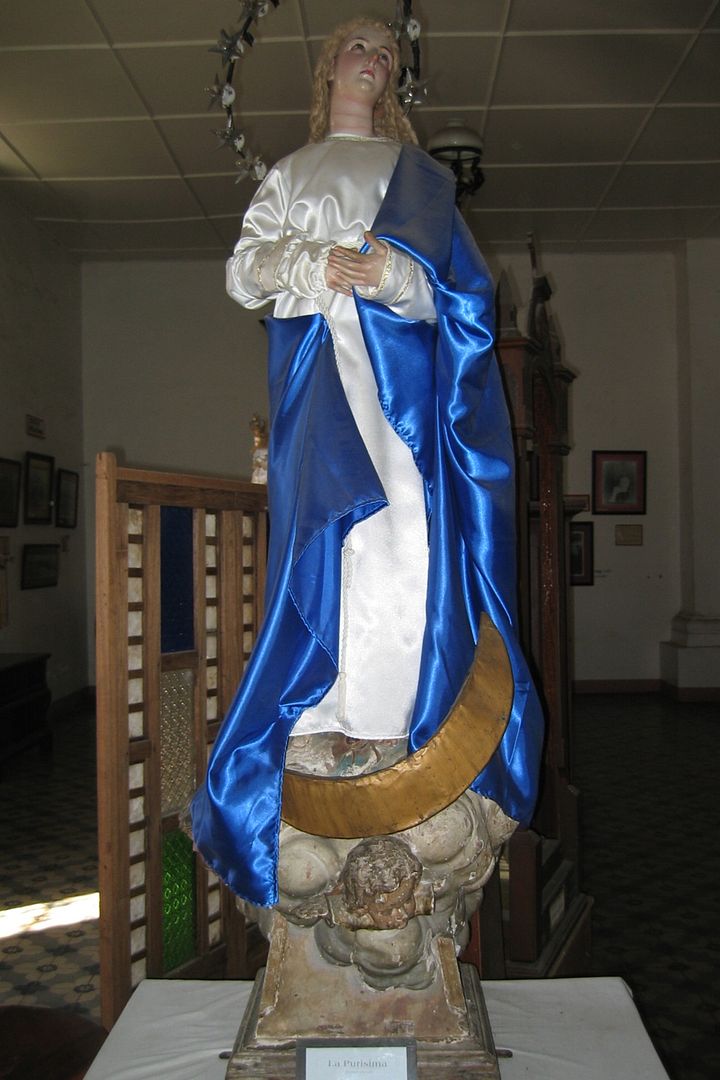
This Immaculate Conception is easy to identify because of her standard garment colors of blue and white and of that large quarter-moon jutting out from the clouds. 


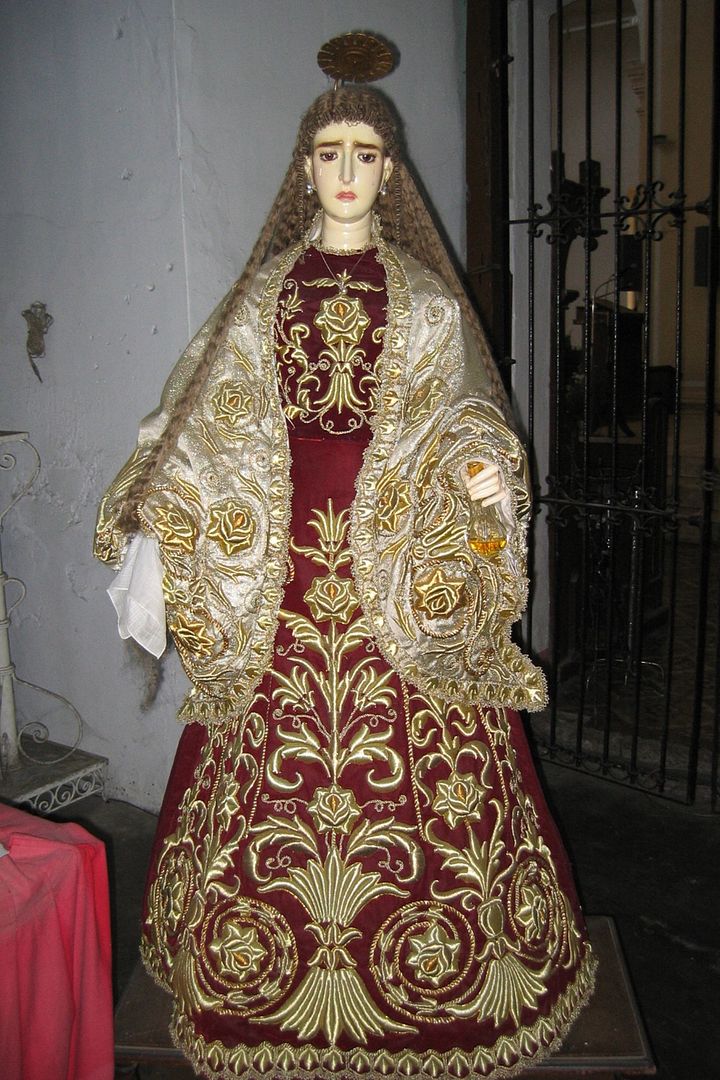
This next Holy Woman appears to be a traditional representation of Mary Magdalene, holding a bottle of perfume in one hand and her hair in the other, ready to perform the penitential act of perfuming the Lord’s feet and wiping it with her hair.


(N.B.: Please do not write to me complaining that I have erroneously identified the Penitent Woman in the Gospel account with the Magdalene. I have heard all that before. I have also been told [scolded] for identifying either or both of those Holy Women with Mary the sister of Martha and Lazarus. Let us please stop discussing this. In my view it is simply not an interesting subject, except maybe for church historians and Bible scholars.)


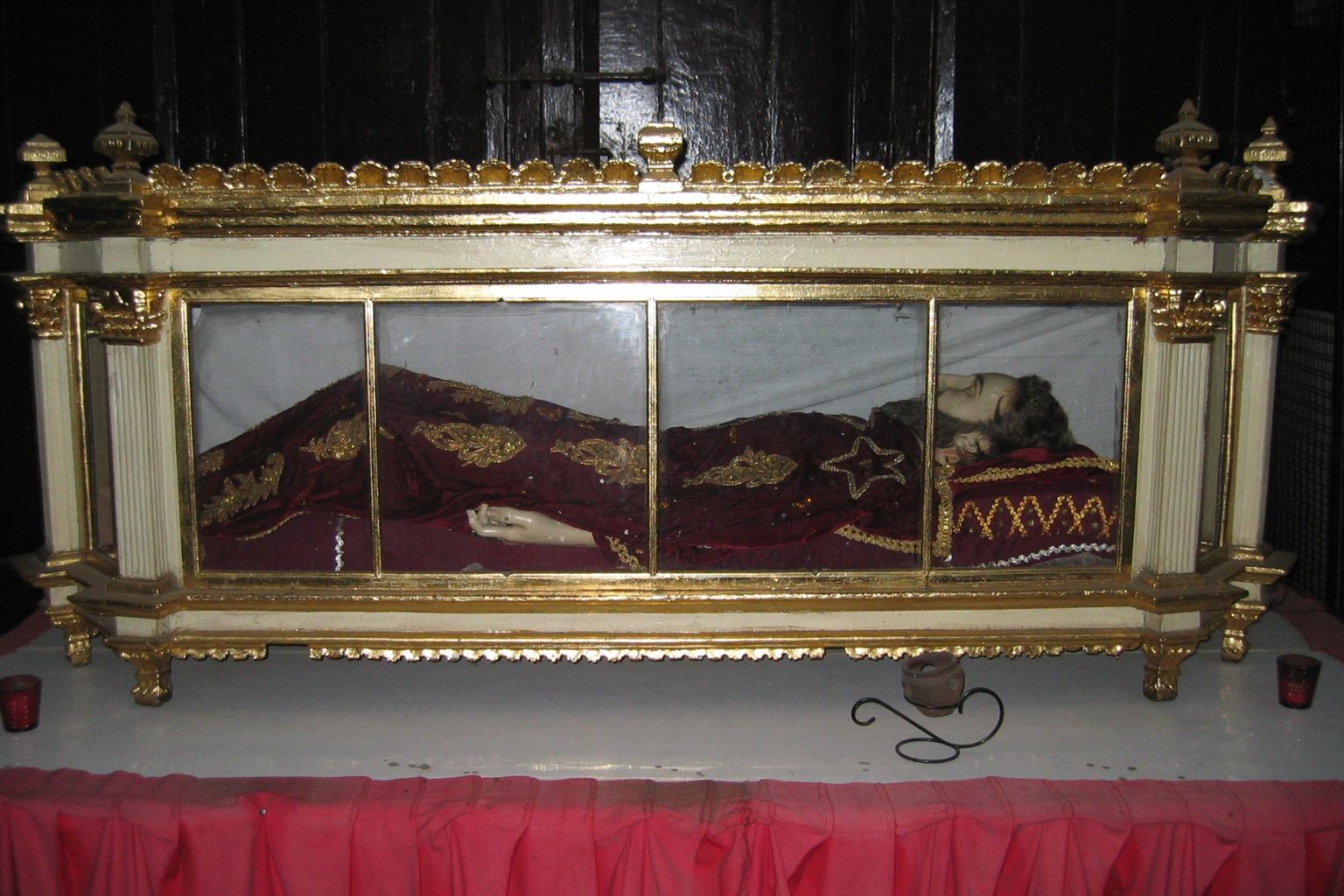
A church museum would be incomplete without a life-sized image of the Dead Christ:


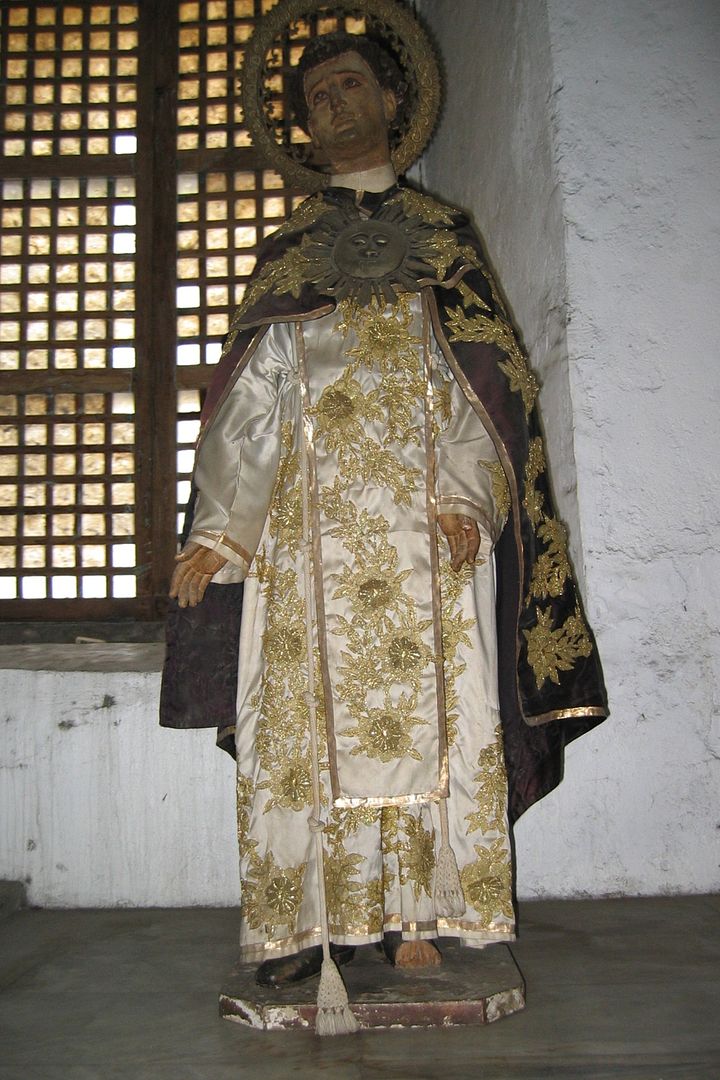
We now turn to a pair of Dominicans, Saint Thomas Aquinas (with a sun on his chest),


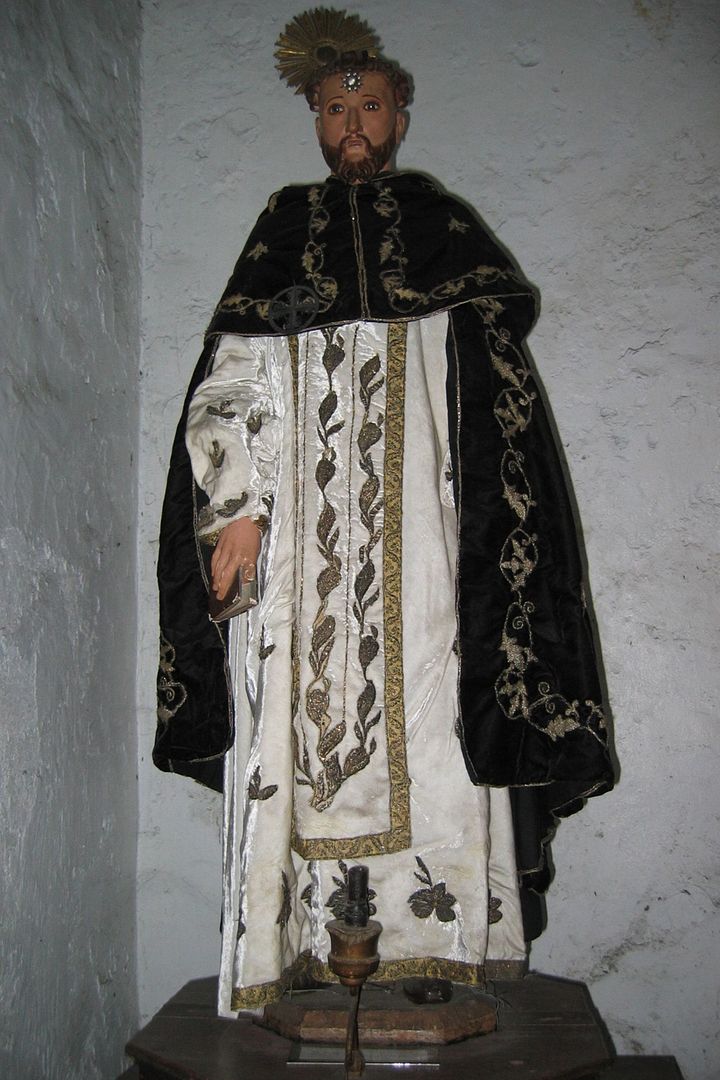
and the founder himself, Saint Dominic de Guzman.


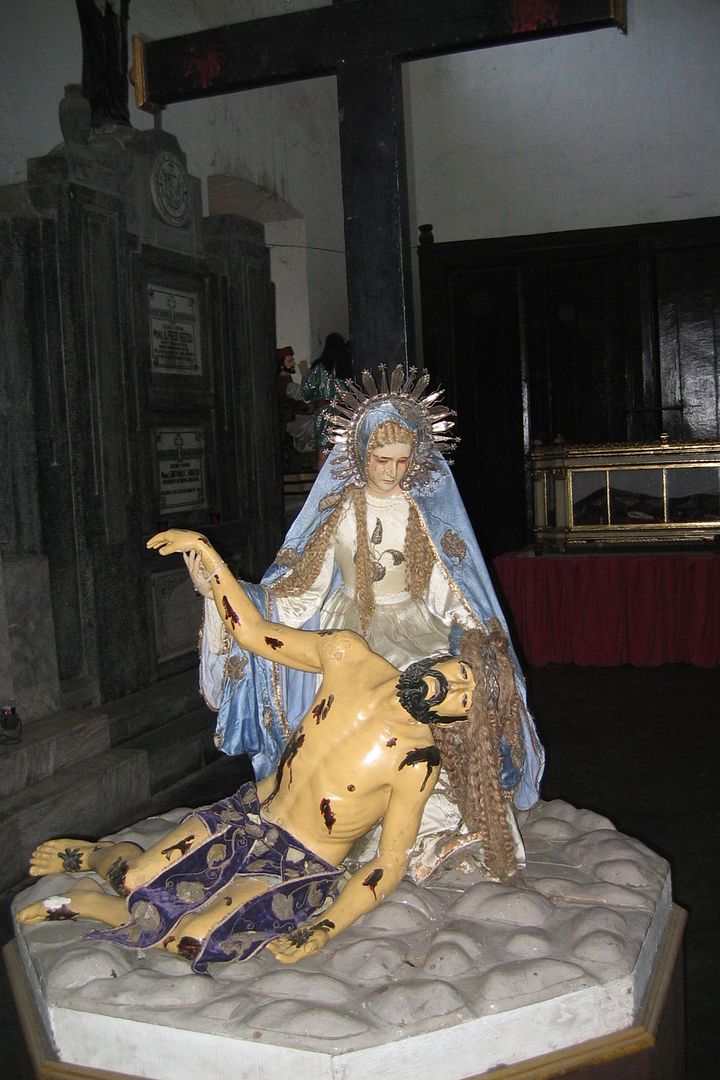
The museum also has a smaller-than-life tableau of the Pieta, with a classically-styled Virgin but folksy-looking Christ.


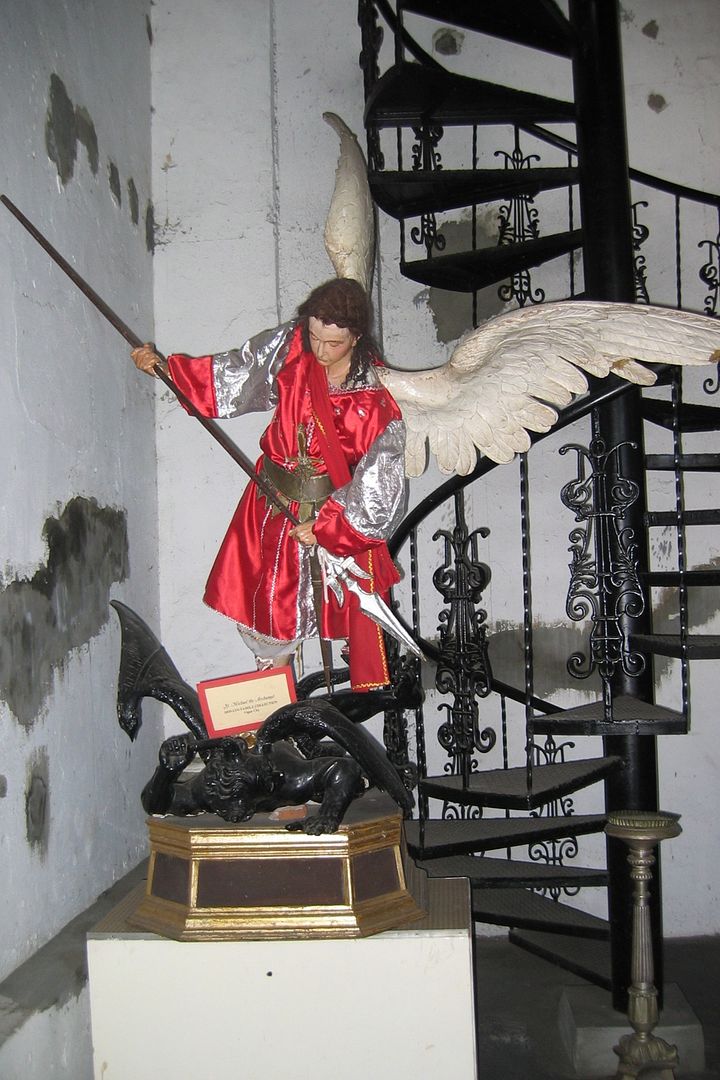
Probably the most impressive piece in this (apparently) permanent exhibit was Saint Michael contorting the heck out of the Devil.


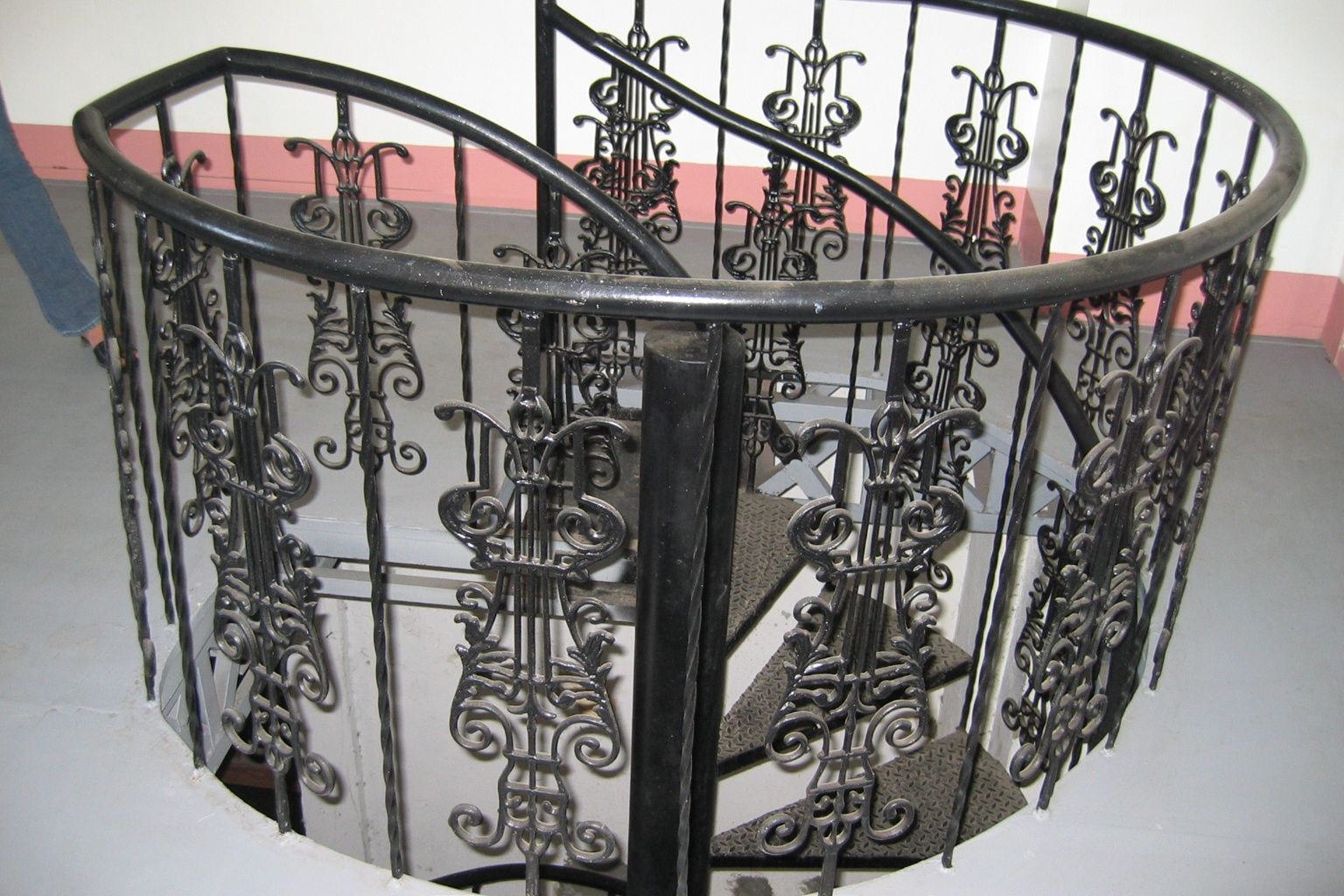
That spiral staircase behind Saint Michael was just too tempting to resist climbing, so I did not (resist, I mean). It led to another floor, which was still empty and undergoing renovation at the time; it appeared to be an additional room for possibly more exhibits. But at least I got to see the top of this staircase, whose details were suitably ornate (though perhaps not really antique and original):


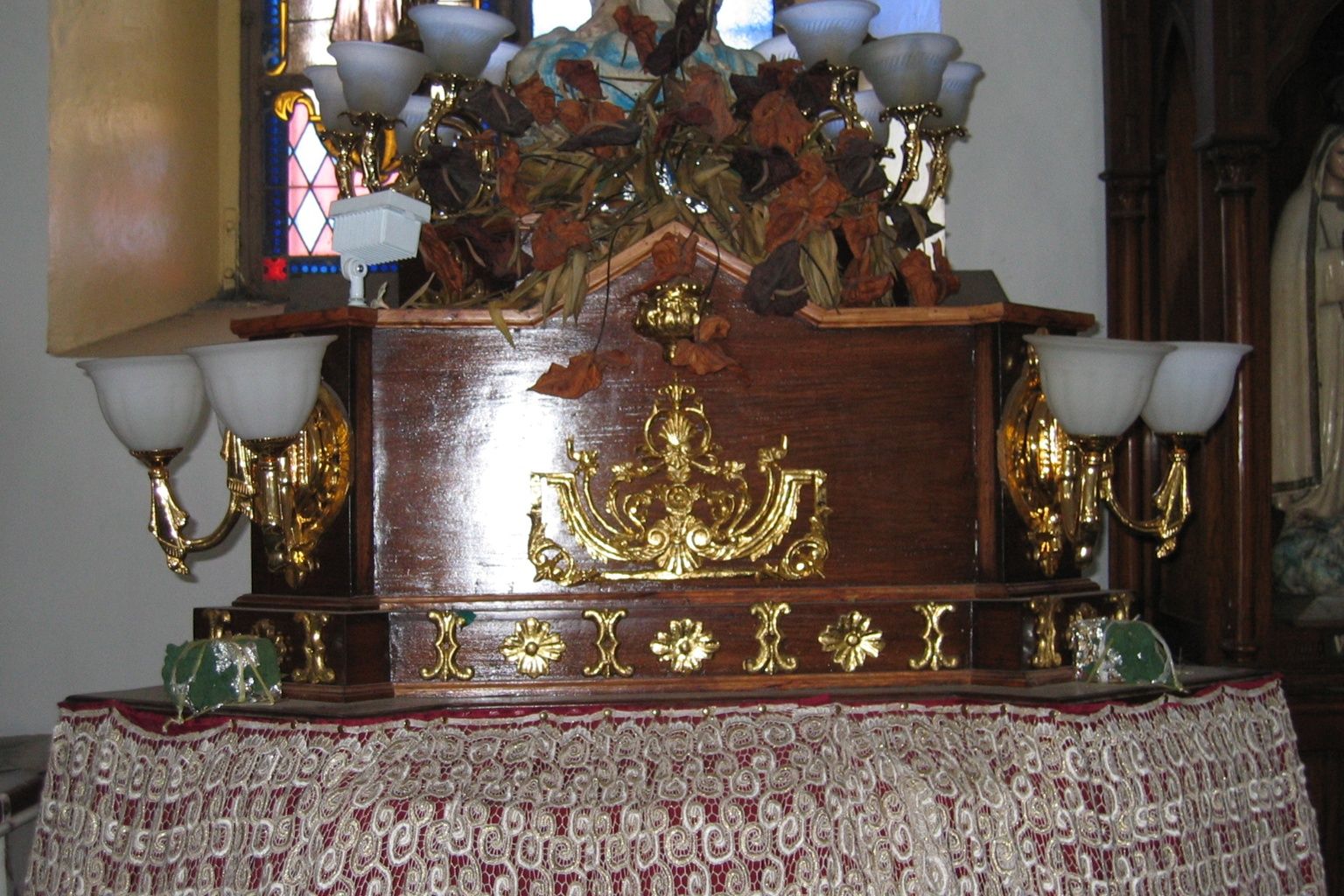
Our next stop is the Vigan Cathedral itself. Just wandering around the side aisles inside, we find an unmounted wooden carroza with gold-colored appliqués, just parked and ready to go.


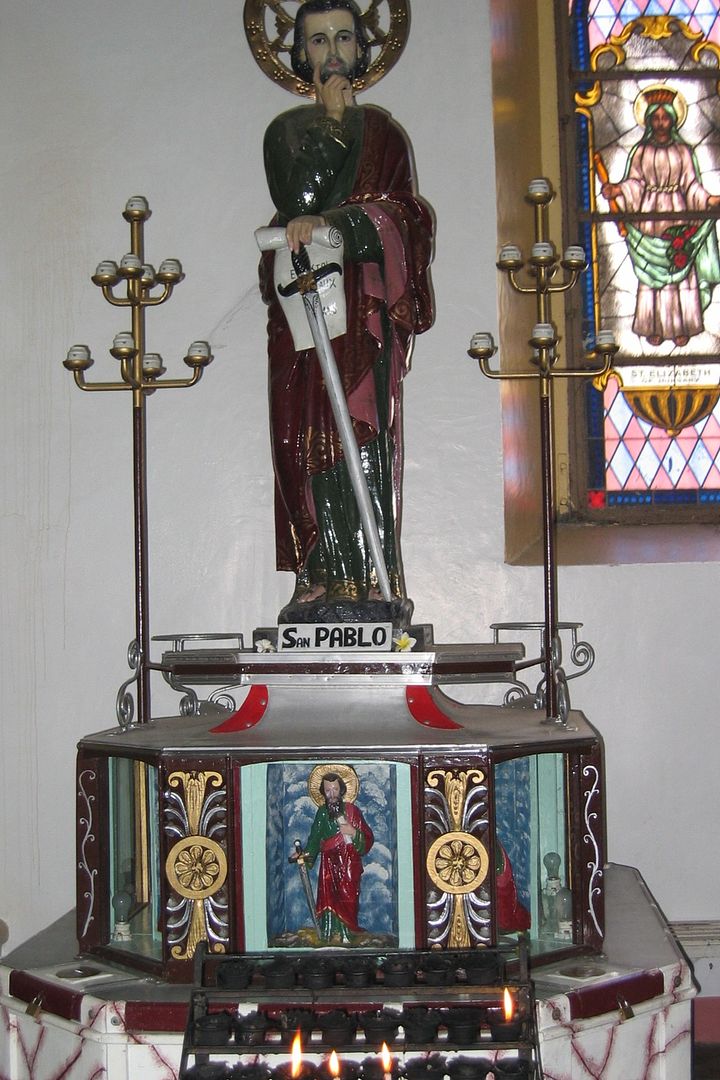
This next one is best described as a “faux-carroza” – you’d think it was one, until you try to push it and realize that it’s a solid stone structure, anchored to the floor. Saint Paul, Vigan’s patron, is wondering what in heaven’s name you were trying to do.


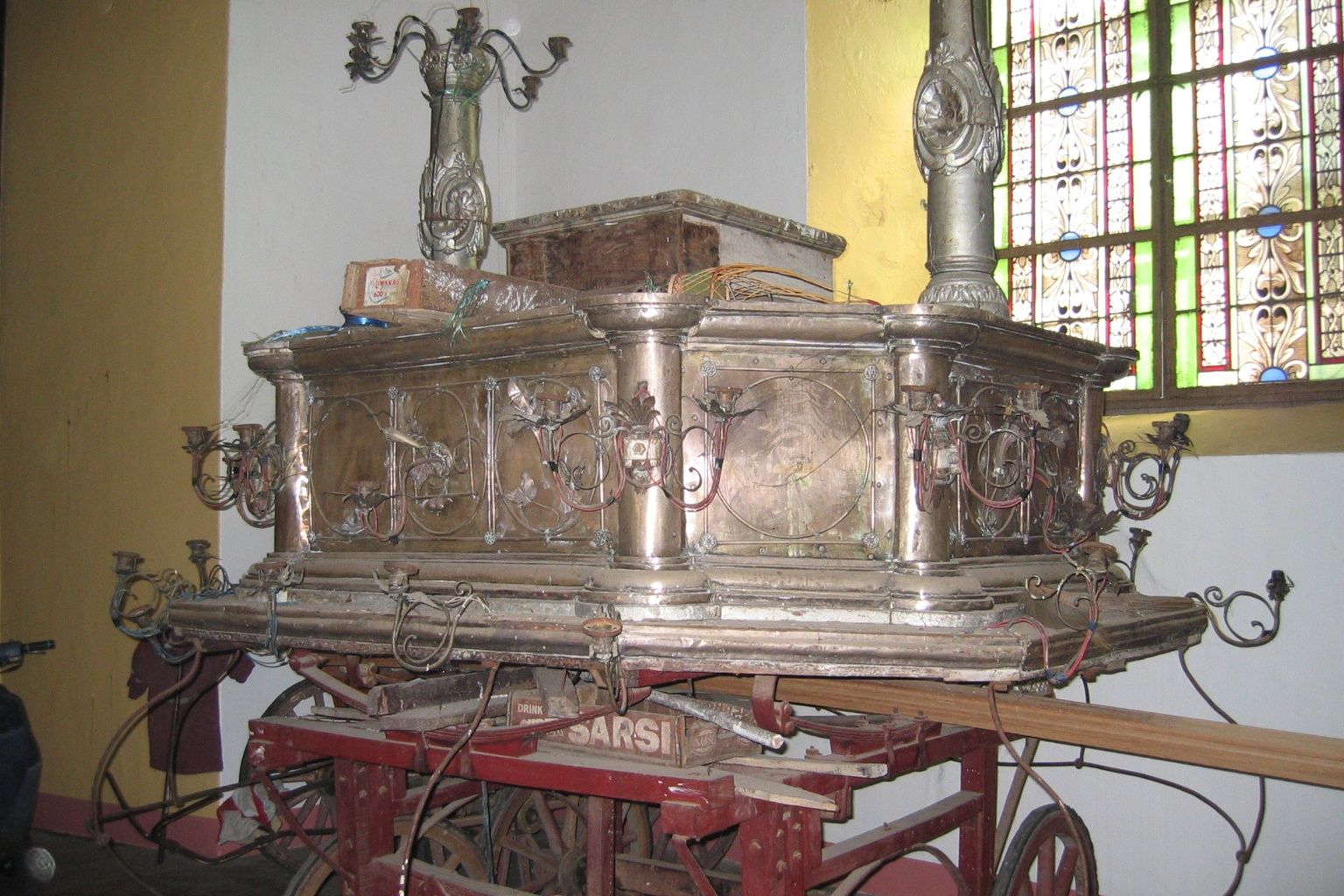
Finally, there’s another carroza parked in another corner. This is a most interesting one, as it’s silver (or silver-plated), and obviously started life as a shoulder-borne platform (anda), that just received a chassis and wheels later on. The neoclassical-cum-Art Nouveau design is unique and unusual. And never mind the use of a softdrink case to prop up the leaf-spring suspension system.


We next cross the street from the Cathedral and enter the adjacent building. This is the Archbishop’s Residence, yet another very old residential building in Vigan. It may be entered and visited, as the staff are quite hospitable, although photography is forbidden on the main (second) floor. This is unfortunate, as here is where one finds the most impressive displays of antique church treasures – mainly altar silver and ceremonial vestments. The interior spaces are expectedly old and impressive as well, with wide floorboards that automatically appeal to wood fetishists (like myself).


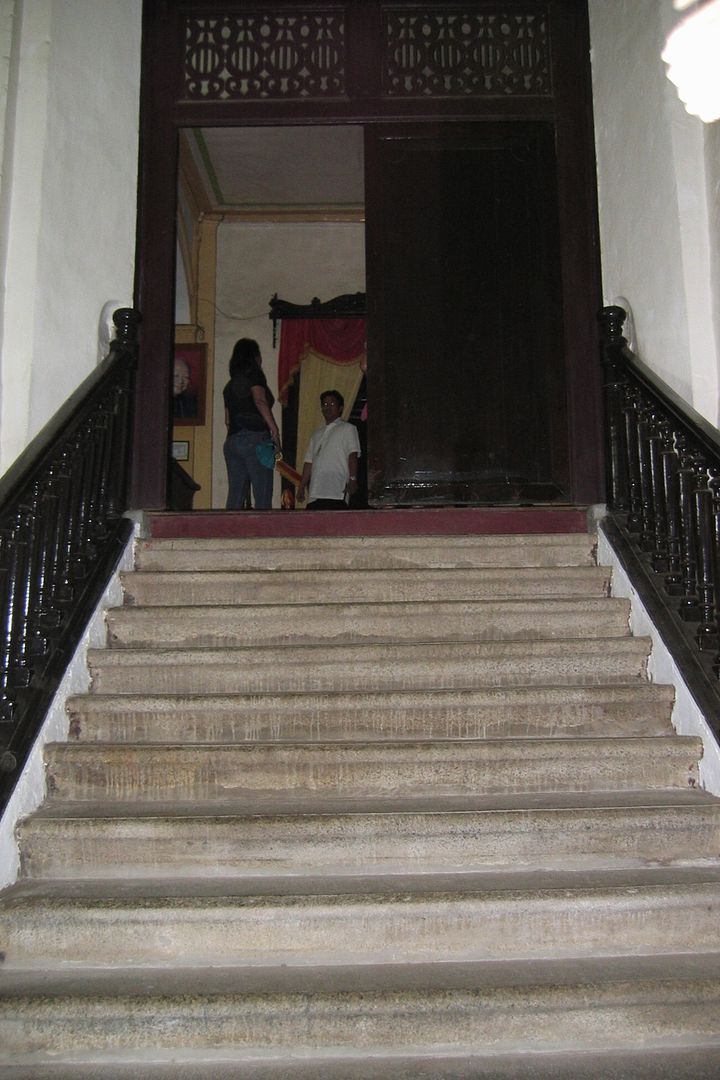
Given this restriction, we have to content ourselves with a photo of the entrance to this floor:


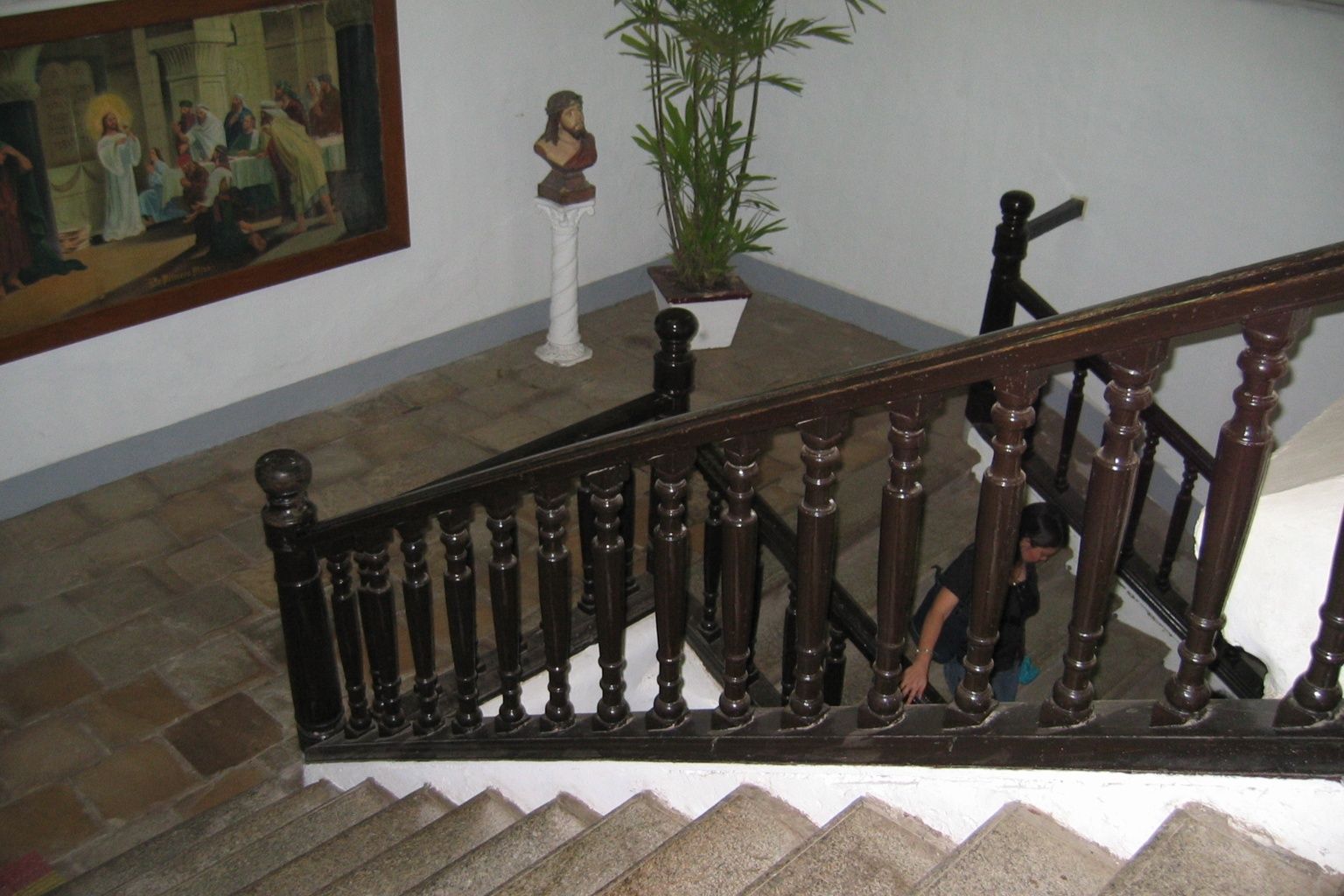
And with a shot of the wide balustraded staircase as we descend after our visit.


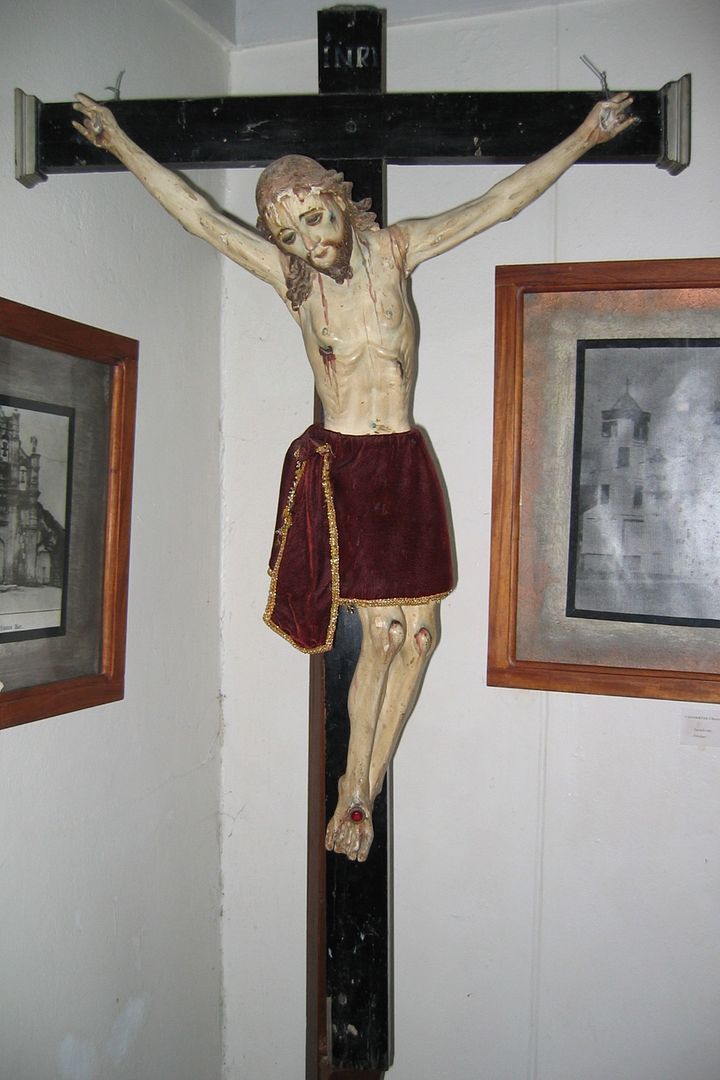
But hold on, our guide tells us. There is yet another museum, on the ground floor of this Archbishop’s Residence. And photography is allowed there. So what else do we do but click away, starting with this beautiful naïve-style Crucifix:


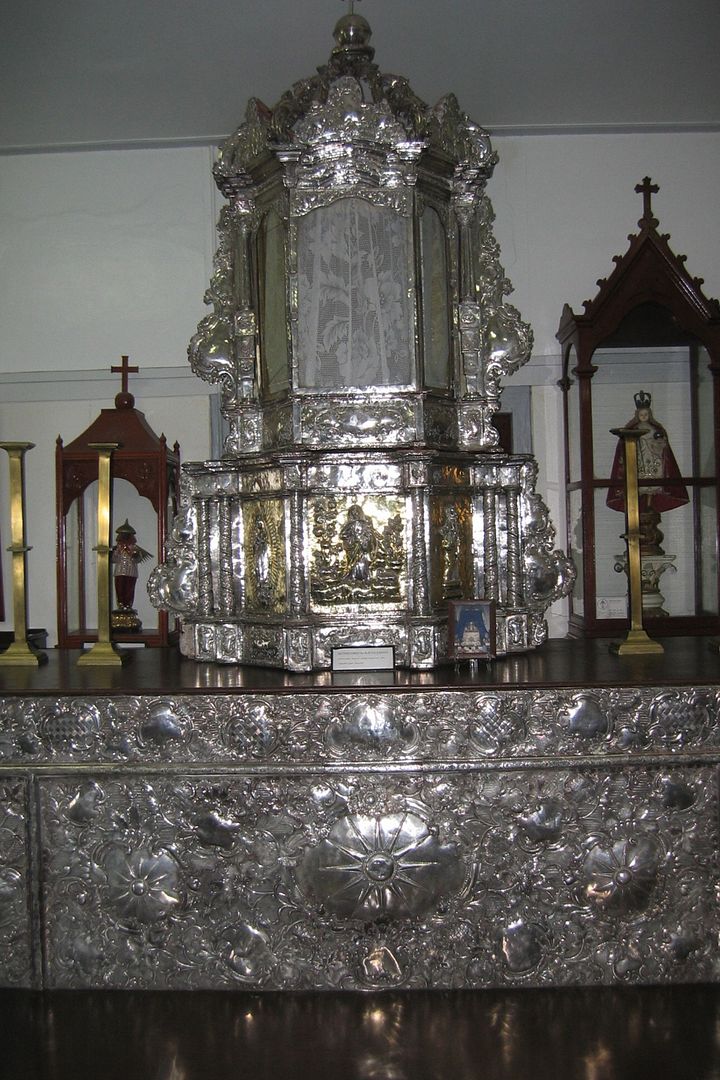
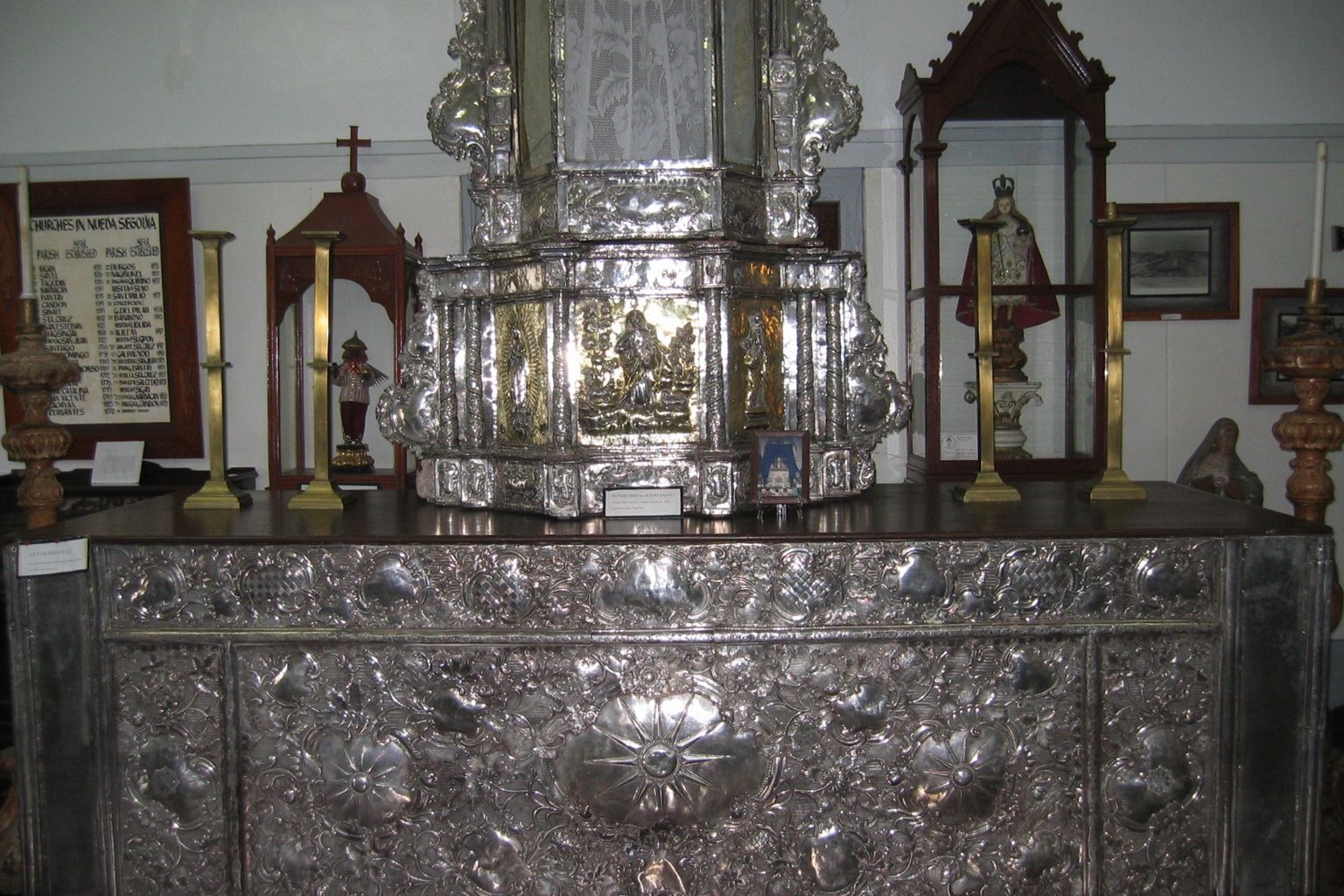
It’s not too bad that we didn’t get to photograph those magnificent silver altars on the second floor, because we have a somewhat more modest but still impressive example down here:


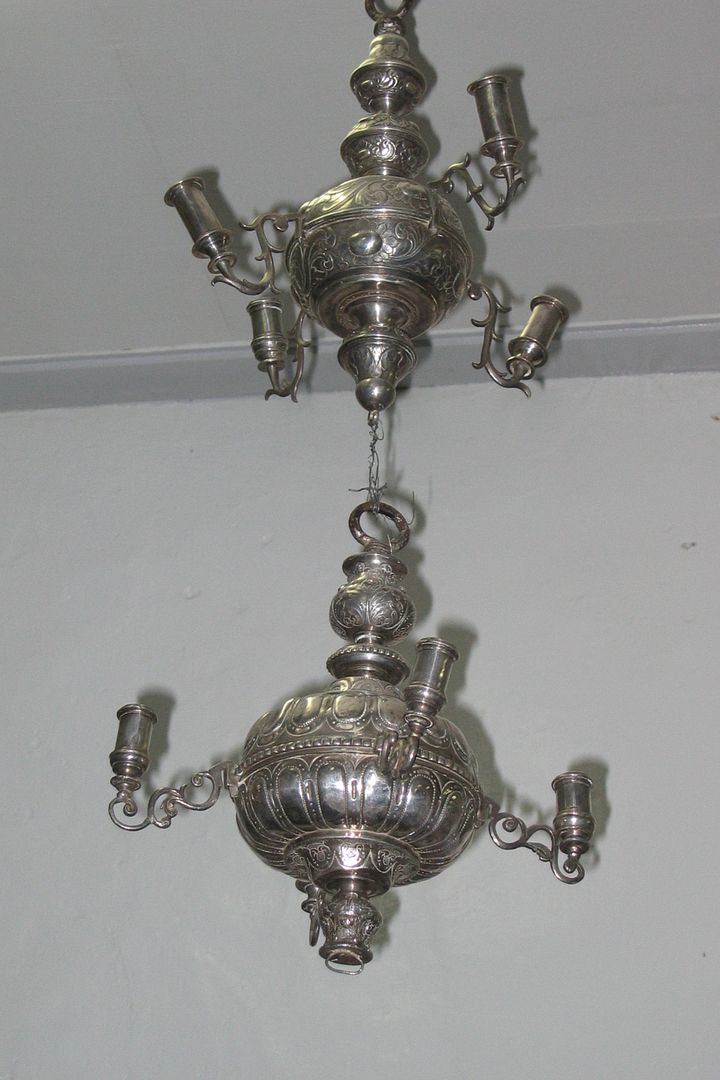
This unusual sanctuary lamp-candelabra blends in nicely here.


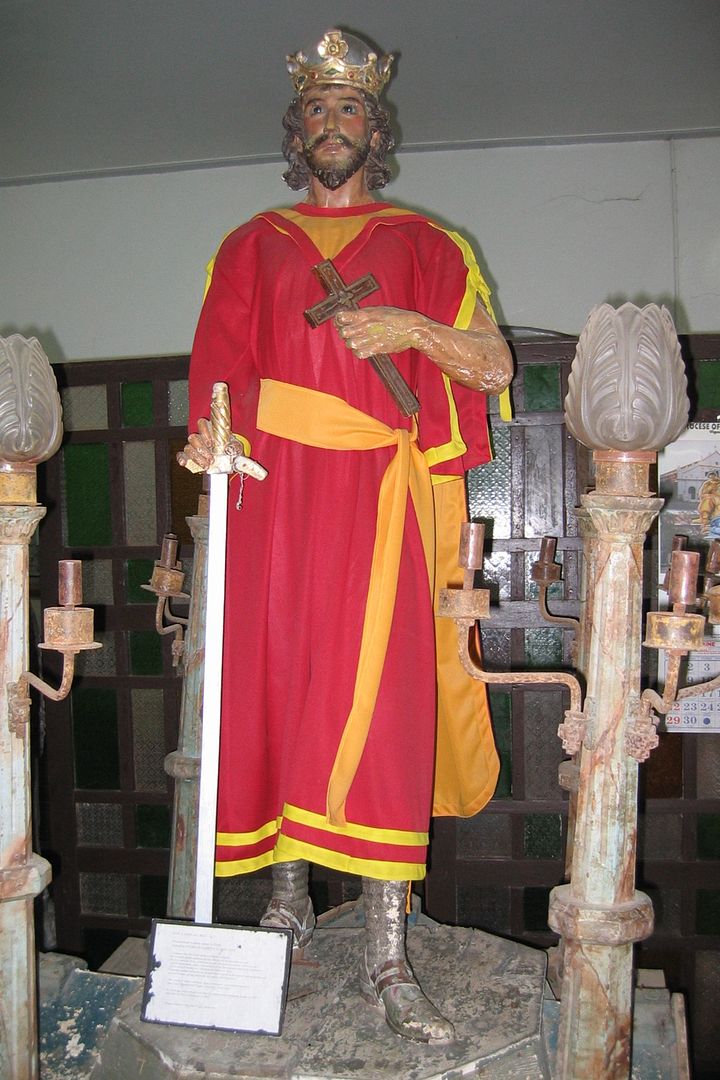
And finally, we meet up with this unusual character, presumably some medieval saint-king:


Subsequent inquiries and generous feedback from others lead one to hypothesize that this is most likely Saint Ferdinand, King of Castile, who lived from 1198 to 1252. As Ferdinand III, he reigned over Castile from 1217 and over Leon from 1230, permanently uniting the two kingdoms the following year. Many towns and cities named "San Fernando" were founded throughout the Spanish Empire, including the capital of neighboring La Union, and the present capital of Pampanga.

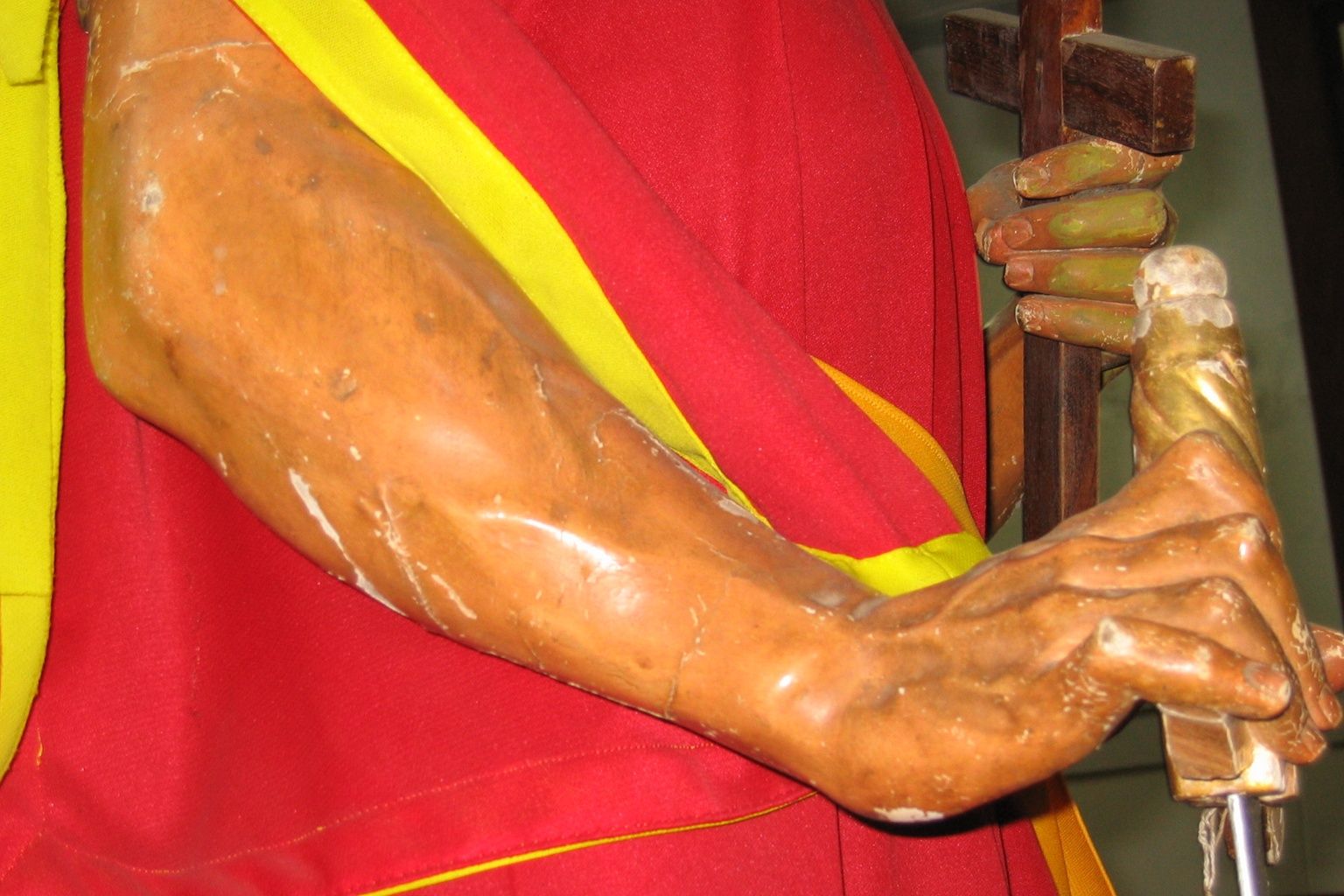
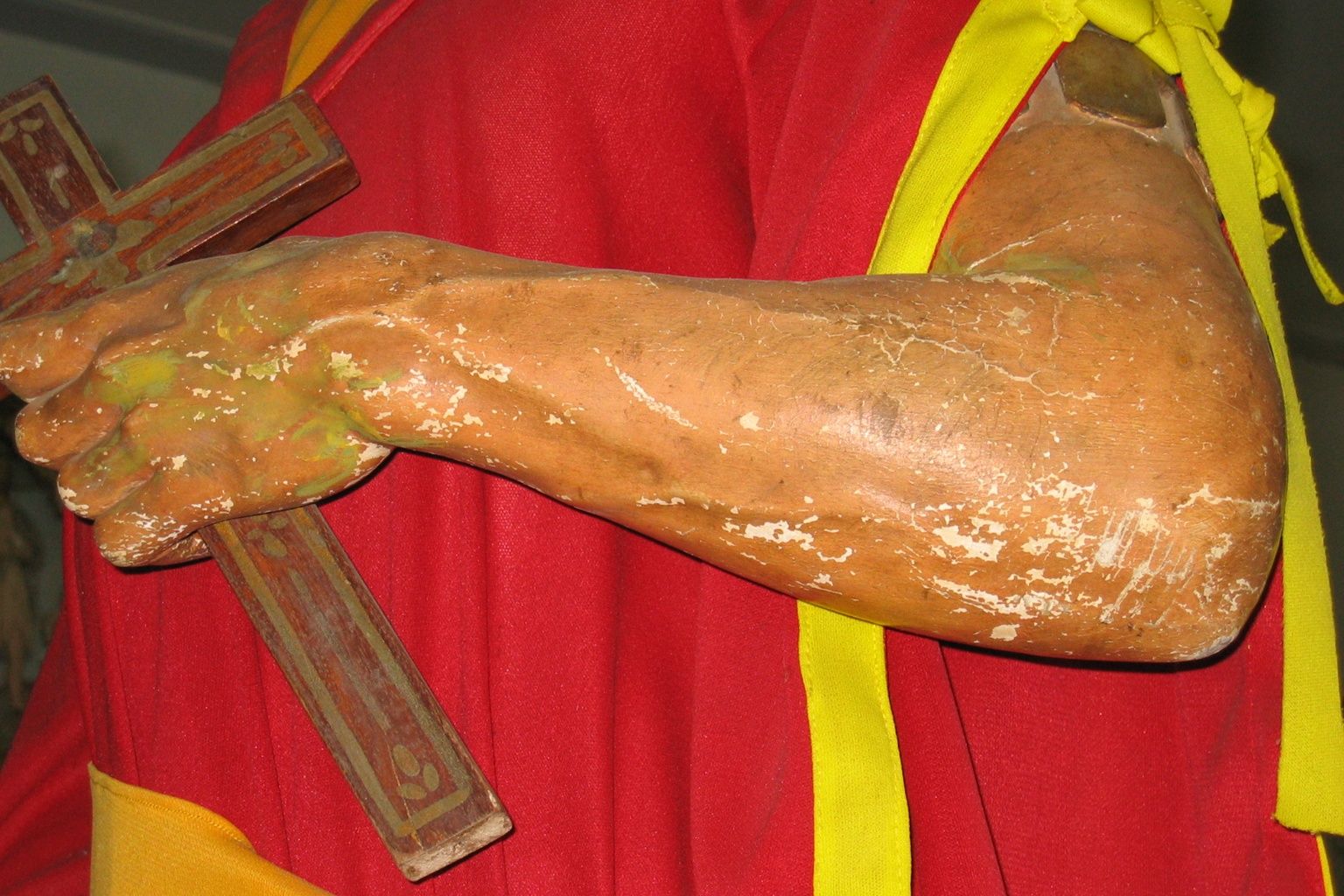
Though the image is now in need of restoration and refinishing, it is clearly evident that the original sculptor, probably early in the 20th century, paid close attention to detail, as can be seen here:


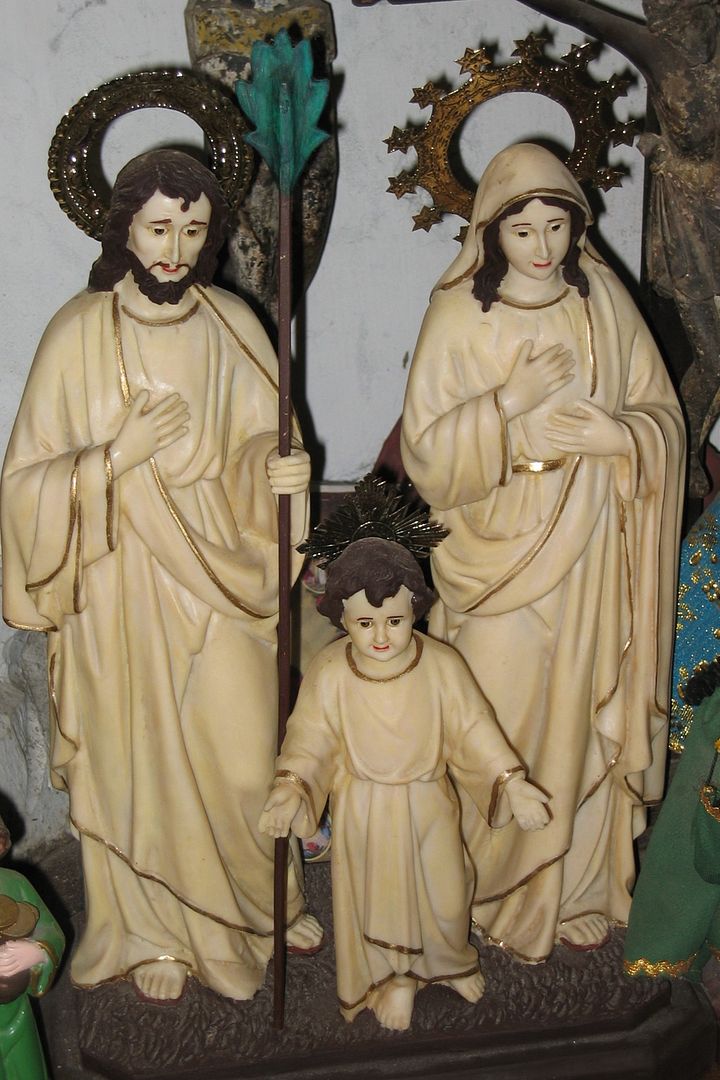
Just down the road from the Cathedral and into the main heritage area anchored by Crisologo Street is an array of souvenir and antique shops. There are many shops that sell reproduction antique “Vigan-style” furniture, whatever that means. There are also shops that proffer new religious images made of wood or composite material finished to look like ivory, such as this Holy Family tableau:


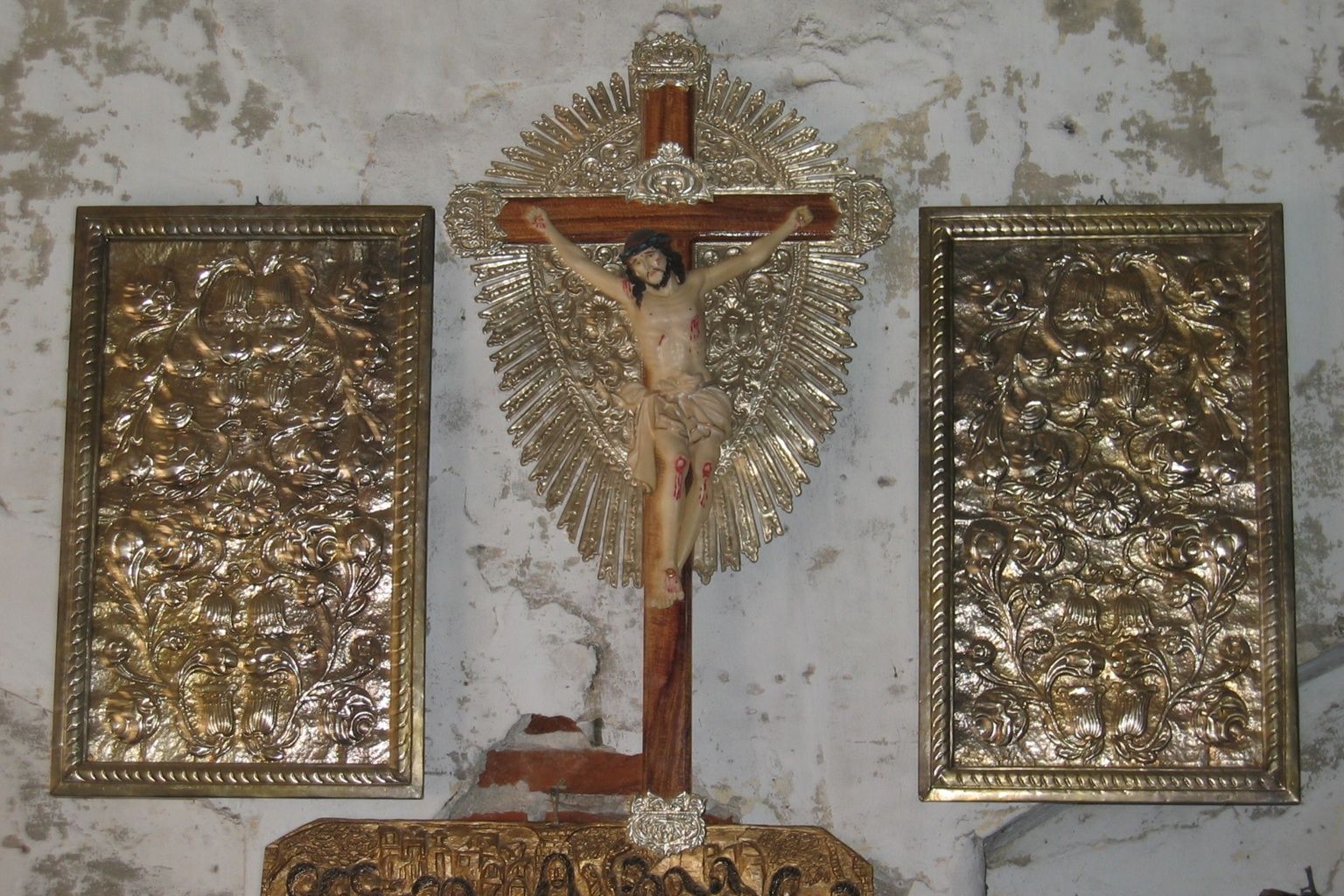
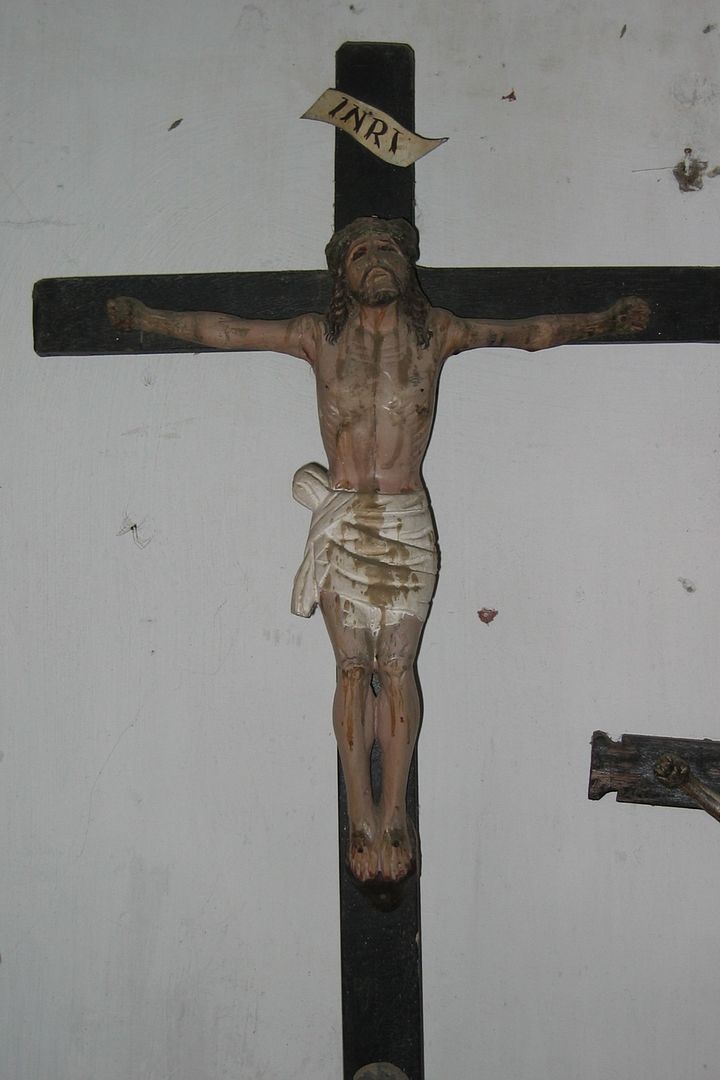
There are the more usual reproduction antique images in classical style, exemplified by this Crucifix displayed between decorative beaten-metal panels:


Or in primitive style, as with this larger Crucifix.


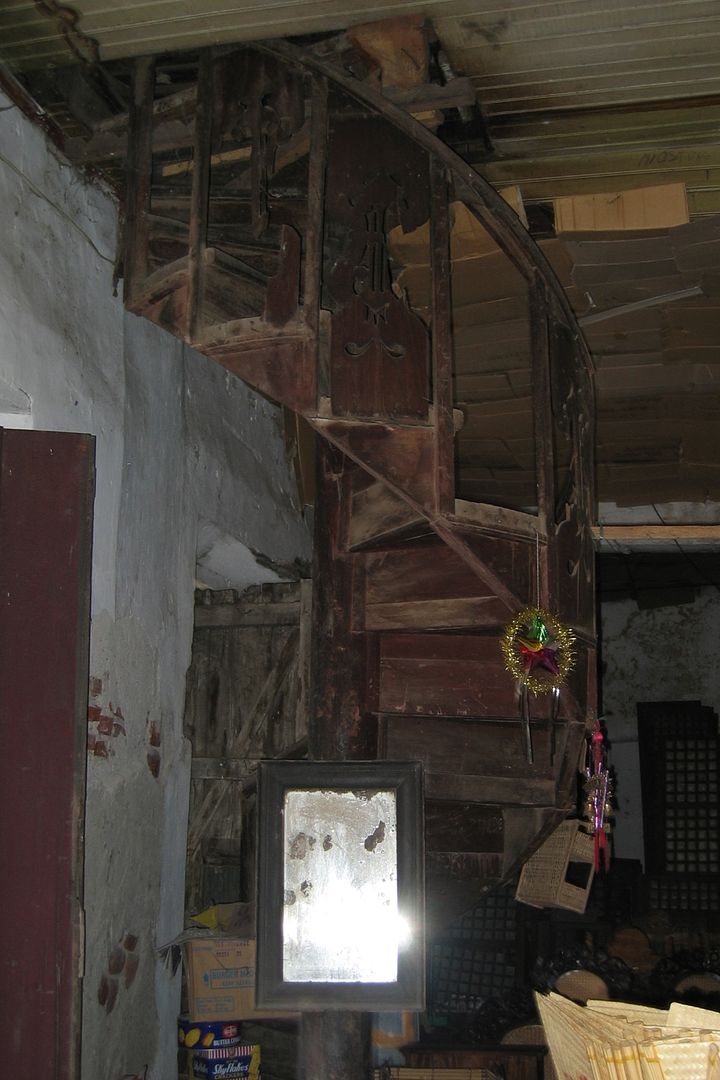
These shops are on the ground floors of the old Vigan mansions, so one shouldn’t be too surprised to see unsafe (or creepy -- choose your poison) -looking spiral staircases inside them, such as this one:


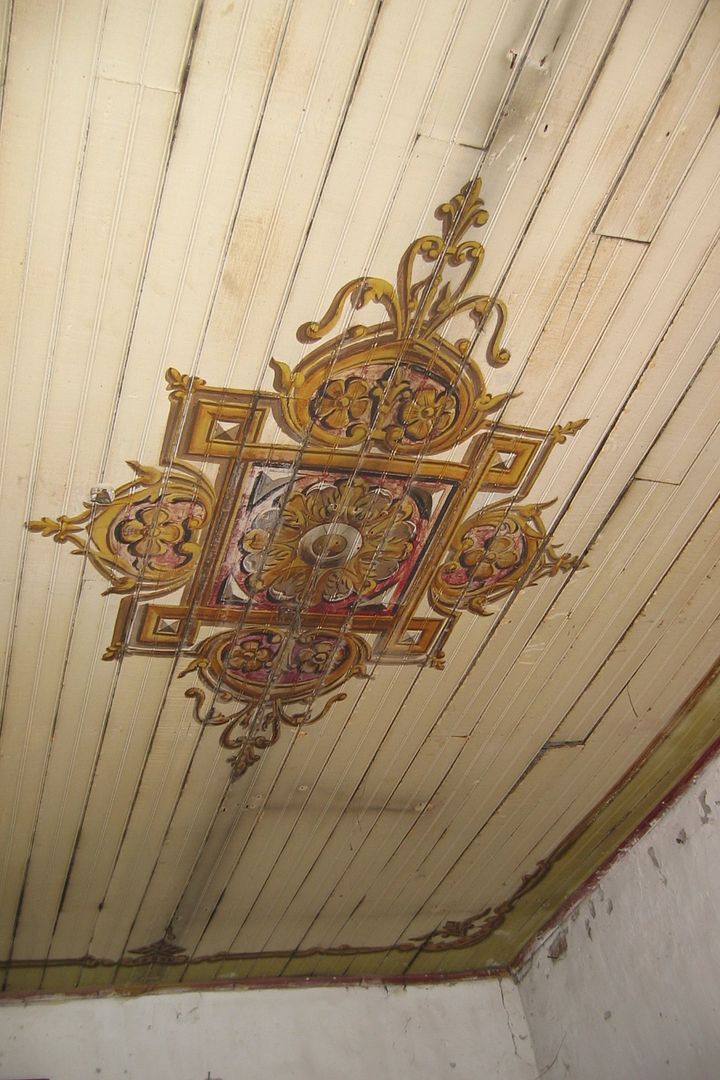
Or fancy painted ceilings like this:


A buyer's caveat is appropriate here: Beware of shops in Vigan, particularly those selling antique or reproduction antique furniture, that demand a deposit against your merchandise order or intended home delivery. They will ask you for a deposit of, say, five hundred pesos, to supposedly secure your reservation of an aparador or a baul (chest) pending delivery to your home (e.g., in Metro Manila) in a week or so. You will never see your five hundred pesos again, despite innumerable follow-ups. Fortunately, it would only be a relatively small write-off. But it’s still quite a racket, isn’t it, if they do it frequently enough to naïve city slickers.

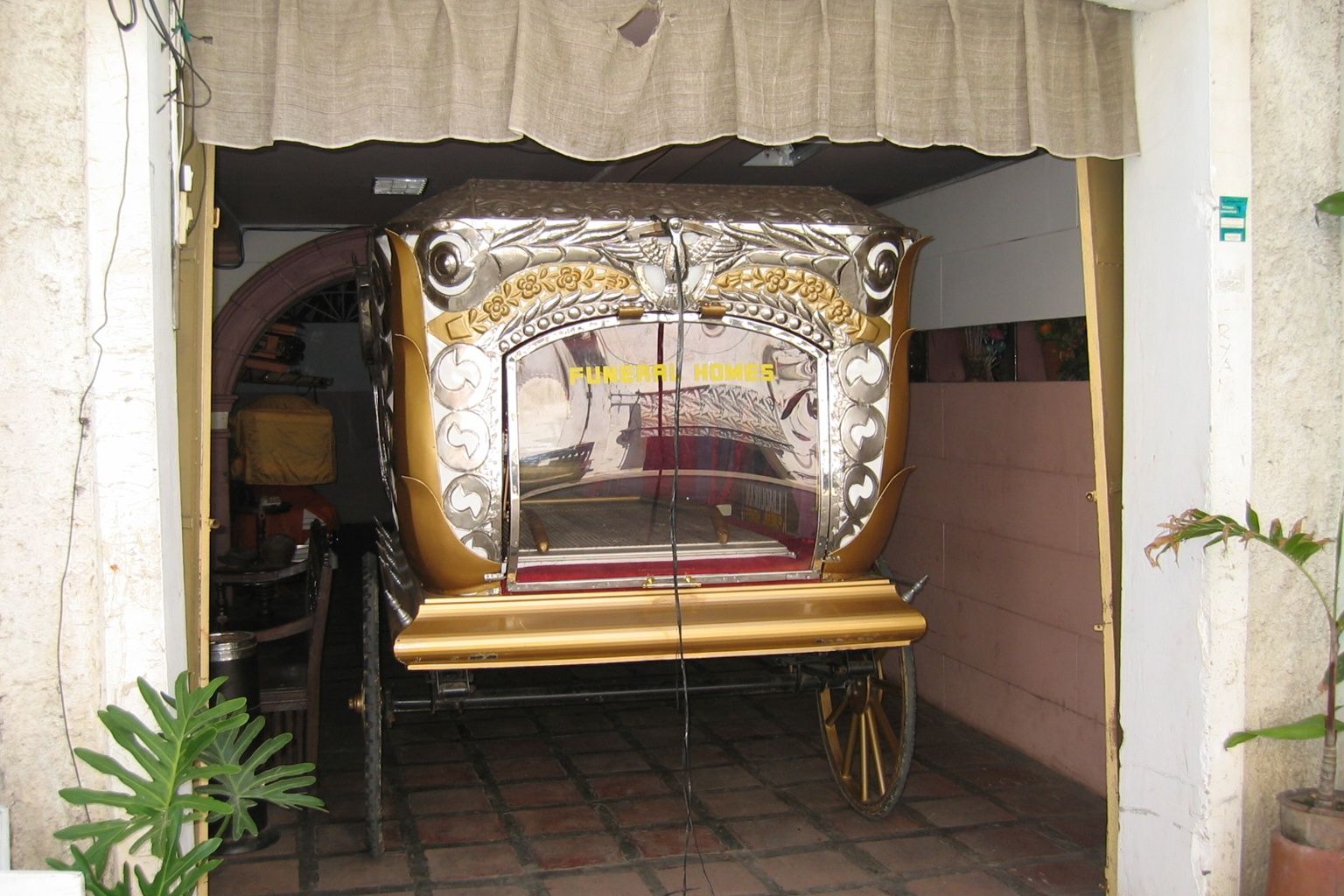
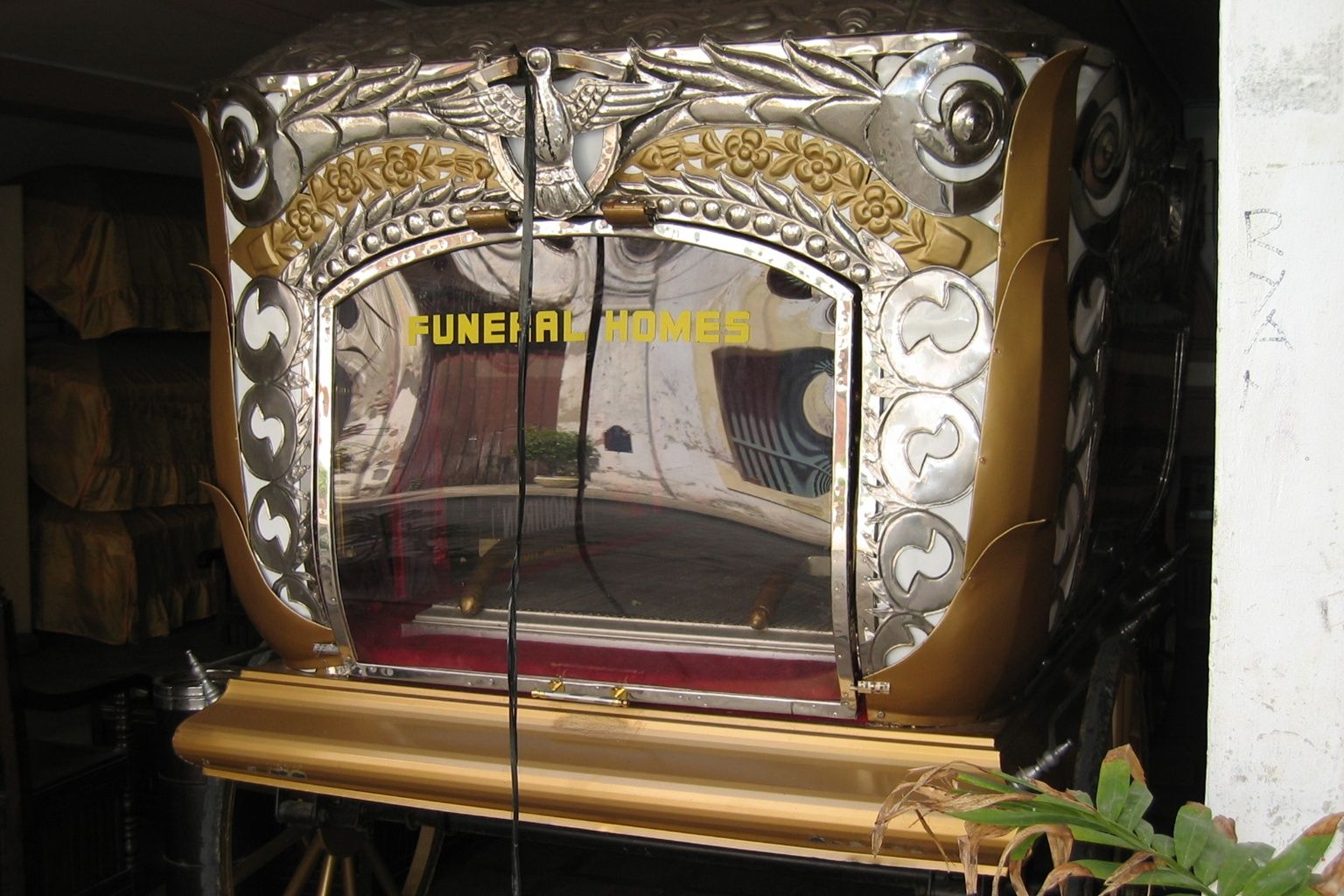
Thankfully, I had contented myself with the standard Vigan heritage town T-shirt (which comes in children’s sizes as well). But if you ever get victimized by an unscrupulous shop in Vigan, you may decide to take some drastic action and arrange to have the proprietor prematurely avail of the following service down the main road:


Well, at least he’d be going out in authentic Vigan style.


Originally published on 15 January 2007.  All text and photos copyright ©2007 by Leo D Cloma. The moral right of Leo D Cloma to be identified as the author of this work has been asserted.
Original comments:

arcastro57 wrote on Jan 17, '07
A feast for my eyes. I was breathless after reading your Vigan account.


rally65 wrote on Jan 17, '07
I was breathless myself during that actual real-time day. Ha! Ha!


noniboy wrote on Jan 17, '07
great experience


kalikun wrote on Jan 17, '07
You know, your site is also good as a tourist guide. I'll make sure I will visit these places when I go home.


victorancheta wrote on Jan 17, '07, edited on Jan 17, '07
There's an "de vestir"" Ivory Madonna and Child, a Virgen del Rosario I believe, here at the Vigan Museum. Is it still there?

Are they doing some renovations? Older pictures from this museum show a different layout and appearance.


I'm just happy that Vigan Church still has some of its treasure. I'm just afraid some dumbass collector would unscrupulously pay some of the staff to pilfer some of them one by one. Is the security lax?


rally65 wrote on Jan 17, '07
No, security wasn't lax at all -- there was always a uniformed guide or a security guard around. The security guards were neatly-dressed in short-sleeved barongs. There was almost always a token entrance fee, even as low as PHP 10, and a proper gate to control the flow of visitors and ensure that people don't just wander freely in and out of these places.

Vigan is highly aware of its status as a UNESCO World Heritage town -- everyone (from the Mayor to ordinary residents, even those who do not live in ancestral houses) seemed very knowledgeable and highly sensitive to their situation; I don't believe that any citizen would knowingly participate in a theft or pilferage anywhere in this city.


I took photos of every single image on display where photography was not forbidden. It's also possible that some images were elsewhere, in storage, or upstairs in the "no photography" floor.


kiko38 wrote on Jan 18, '07
Sir Leo,
It is so nice to see the pictures of these santos from St. Paul Metropolitan Cathedral in Vigan. Thanks for sharing them. It just like I'm back home again.


mike10017 wrote on Jan 18, '07
Those beaten metal panels, what were they for and how much were they? They would make nice carroza decor.


arcastro57 wrote on Jan 18, '07, edited on Jan 18, '07
The beaten metal panels I believe are actually reproduction altar frontals. I've seen similar ones in Pampanga and they go for about 4K apiece. Should cost less in Vigan. I like the ramilletes though...


robbyandharry wrote on Jan 18, '07
thanks leo for sharing these to us... para na din akong nagtravel pa-vigan :)


overtureph wrote on Jan 18, '07
Thanks for sharing your trip with us again. Could the saint you mentioned (San Estanislao de Ungria) be St. Louis of France (San Luis)?


rally65 wrote on Jan 18, '07
Normally, San Luis, Rey de Francia would be holding a Crown of Thorns, since that is what he supposedly recovered from the Holy Land during one of his Crusades. So I would guess that this medieval saint-king in Vigan isn't really him.


victorancheta wrote on Jan 18, '07, edited on Jan 18, '07
I think it's San Fernando Rey, which makes sense as he's a Spanish king and patron of a neighboring city, San Fernando, La Union.

Leo, I think that San Martin is really a Santo Tomas. :)


noniboy wrote on Jan 18, '07
victorancheta said
"I think it's San Fernando Rey, which makes sense as he's a Spanish king and patron of a neighboring city, San Fernando, La Union. Leo, I think that San Martin is really a Santo Tomas. :)" 
The dude with the sun on his chest is definitely Santo Tomas Aquino (Thomas Aquinas)


Possible, I guess. But was San Fernando Rey medieval -- when did he reign?


rally65 wrote on Jan 18, '07, edited on Jan 18, '07
Got it. Obviously I never even got within breathing distance of any Dominican institution. Will make changes as if it were always so. ;-) Thanks.


noniboy wrote on Jan 18, '07
rally65 said
"Got it. Obviously I never even got within breathing distance of any Dominican institution. Will make changes as if it were always so. ;-) Thanks.
hahahahahahaa. =p


victorancheta wrote on Jan 18, '07
Yes indeedly doo. San Fernando Rey is a medieval Spanish King. Quite a popular saint as there are numerous depictions of him scattered throughout the country but more abundant in Latin America.


arcastro57 wrote on Jan 19, '07
It's San Fernando, alright, King of Castille (and patron of San Fernando, Pampanga). The image is similar to that found in the city Cathedral. Saint Louis is a cousin of his.


Thanks, guys, for all the leads on the ID of this medieval saint-king. (However, I'll just reserve any necessary revisions to the text for when the book comes out -- when books have become obsolete.)


rally65 wrote on Jan 20, '07
On second thought, I decided to revise the text now to properly identify the medieval dude as Saint Ferdinand, King of Castile. I figured I might be too senile to do so if I wait until the book comes out. Thanks to you guys (and to Wikipedia) for the information.


techlonogy wrote on Feb 28, '08
Amen.


sunnycastillo wrote on Jul 9, '08
wow, i lived in vigan for a few months but never even get to these... i wonder if some of these statues are among those that they include in procession during holy week... thanks for the discovery!


sunnycastillo wrote on Jul 9, '08
And ey... the humor in the end is brilliant. i remember seeing one of those elaborate funeral processions ala Vigan... quite a show with a full marching band and crying ladies. :P


josemarihilario wrote on Jul 20, '09
Thanks Leo for this! I will definitely be more inquisitive next time I go to Vigan!


rally65 wrote on Jul 20, '09
josemarihilario said
"Thanks Leo for this! I will definitely be more inquisitive next time I go to Vigan!"   
Thanks for the visit and the appreciation!


josemarihilario wrote on Aug 8, '11
Again, thanks Leo! Just revisiting this thread and enjoying it once again!