Showing posts with label Bohol. Show all posts

Tuesday, July 26, 2016

CXXV. Visita Iglesia (Plus) Bohol X – The Maribojoc Church


With just an hour or so to spare before check-in time for my flight back to Manila, I make my way from Cortes to the next town northwards, Maribojoc. This is another old town, actually the mother parish of Cortes. While an earlier church was said to have been built in 1798, the present church dates from 1852 and was completed in 1872.

The church façade is wide, giving fair warning that the entire structure is quite massive.  A stone image of Christ the King exposing His Sacred Heart and with a Crown at His feet is positioned in the middle of the front yard
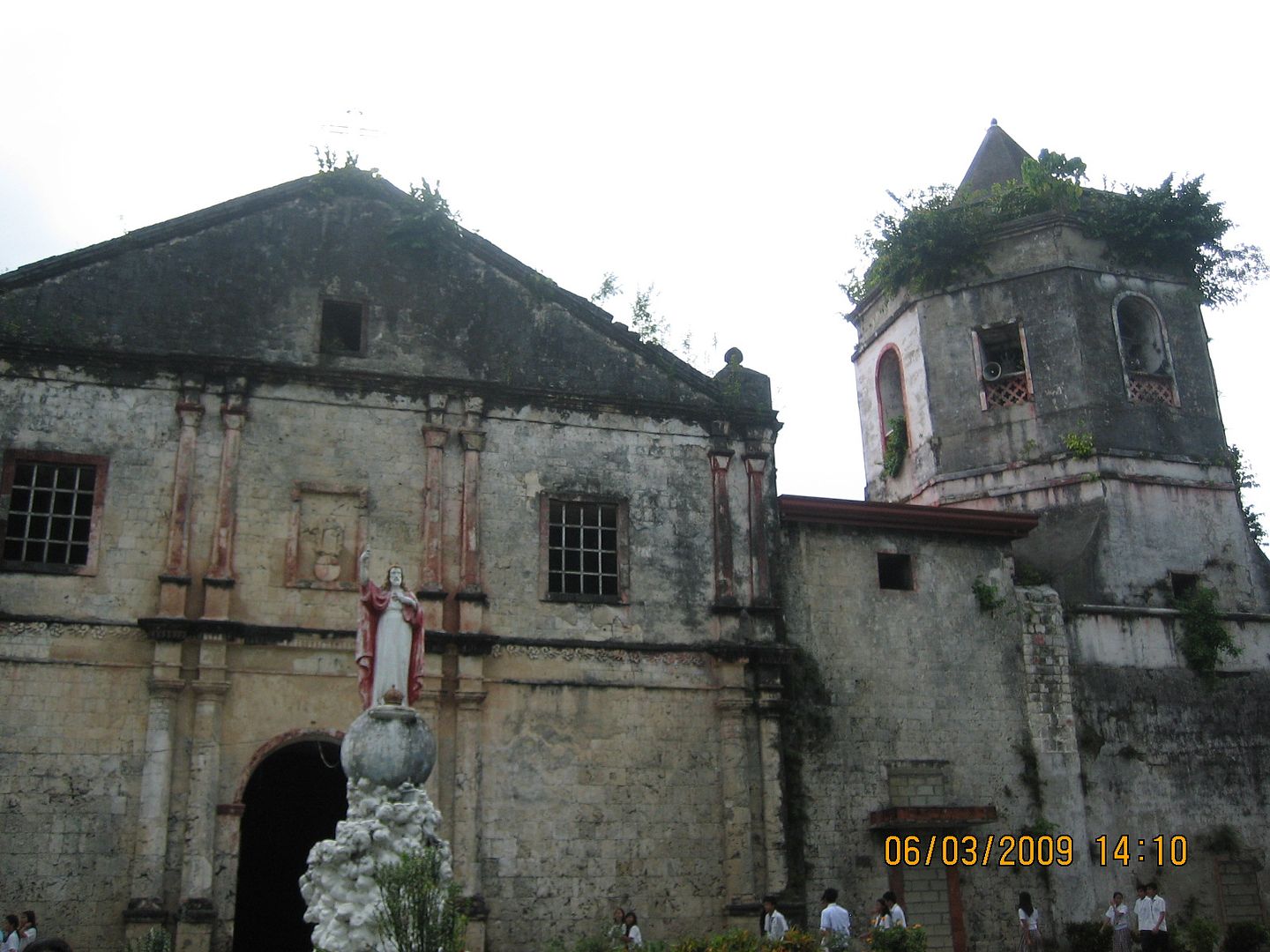

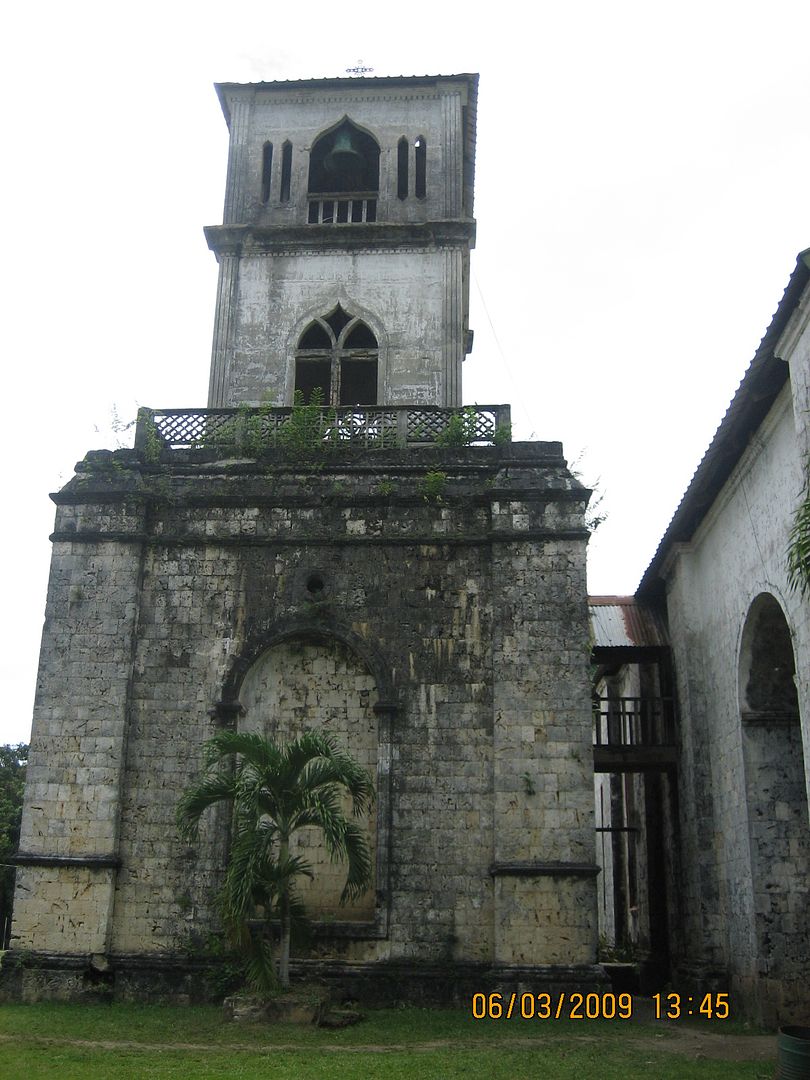
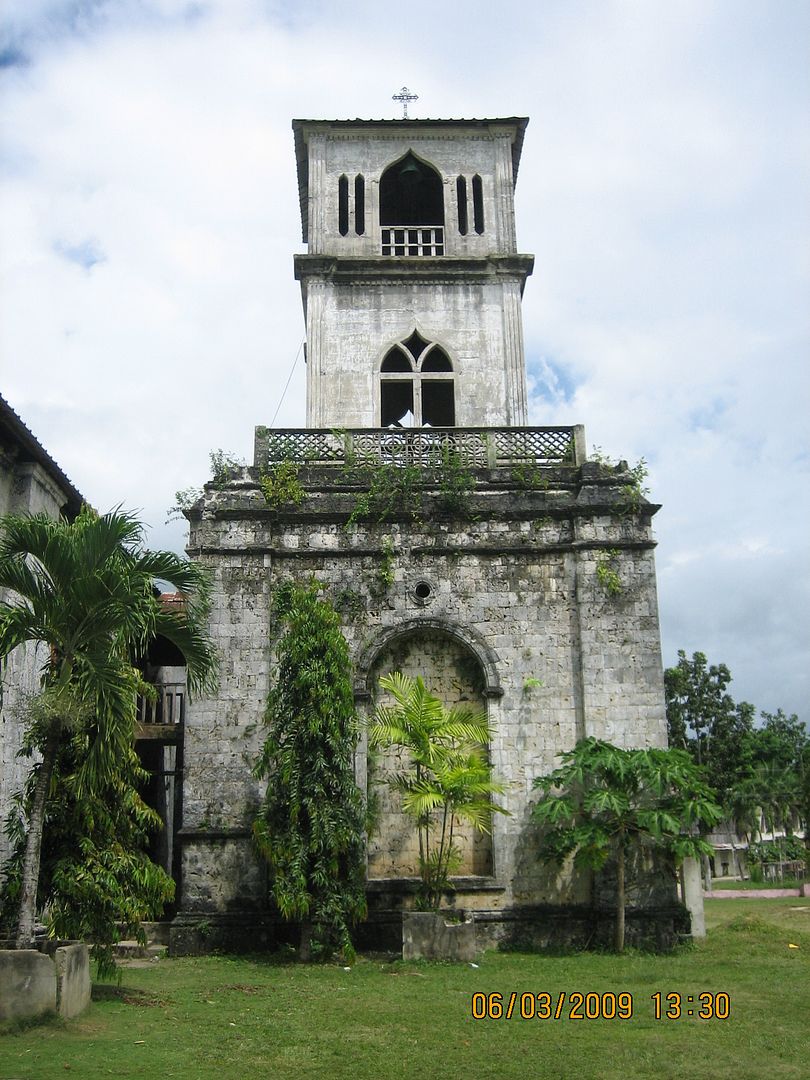
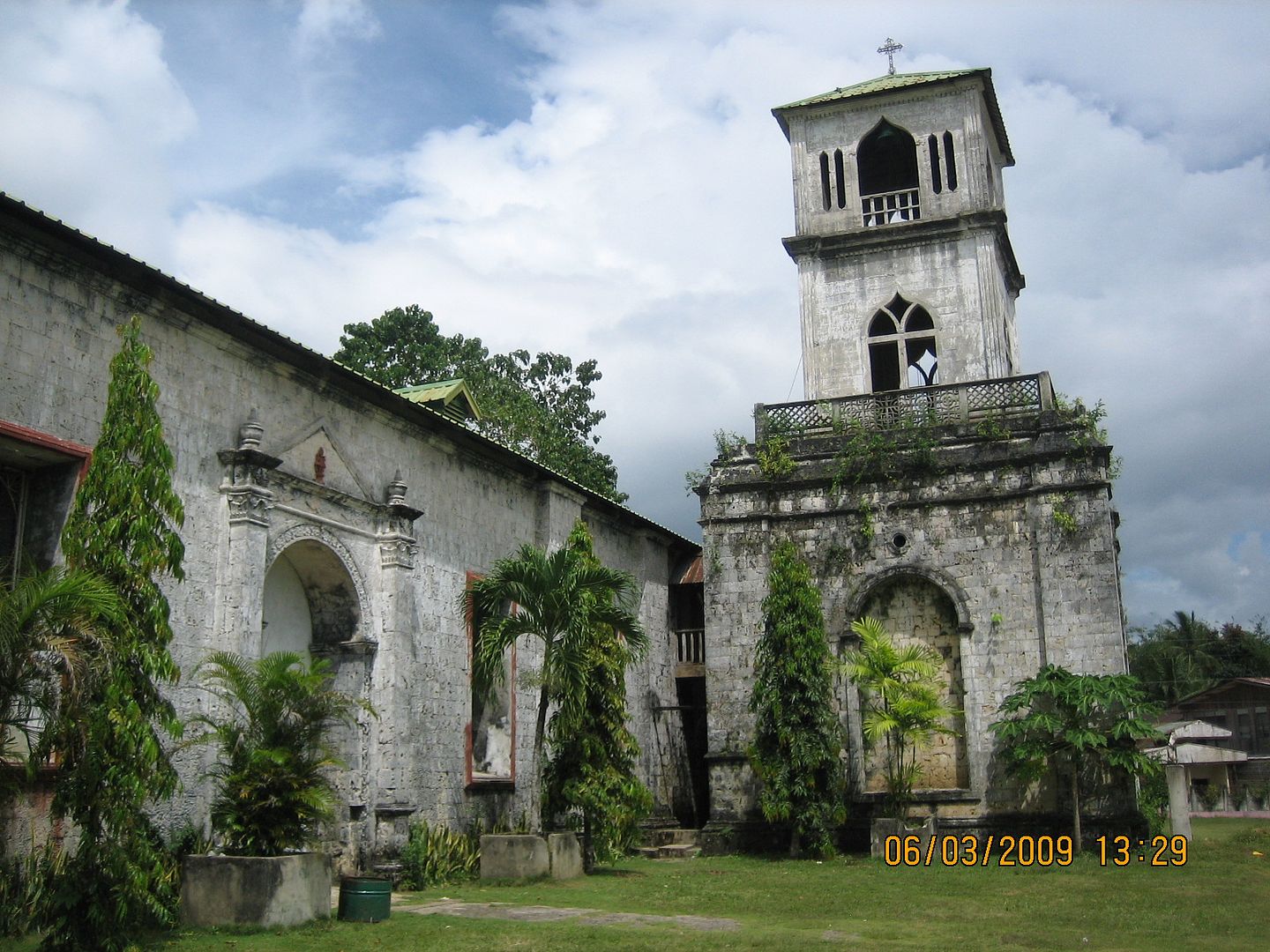
and a stout belltower stands on the right.
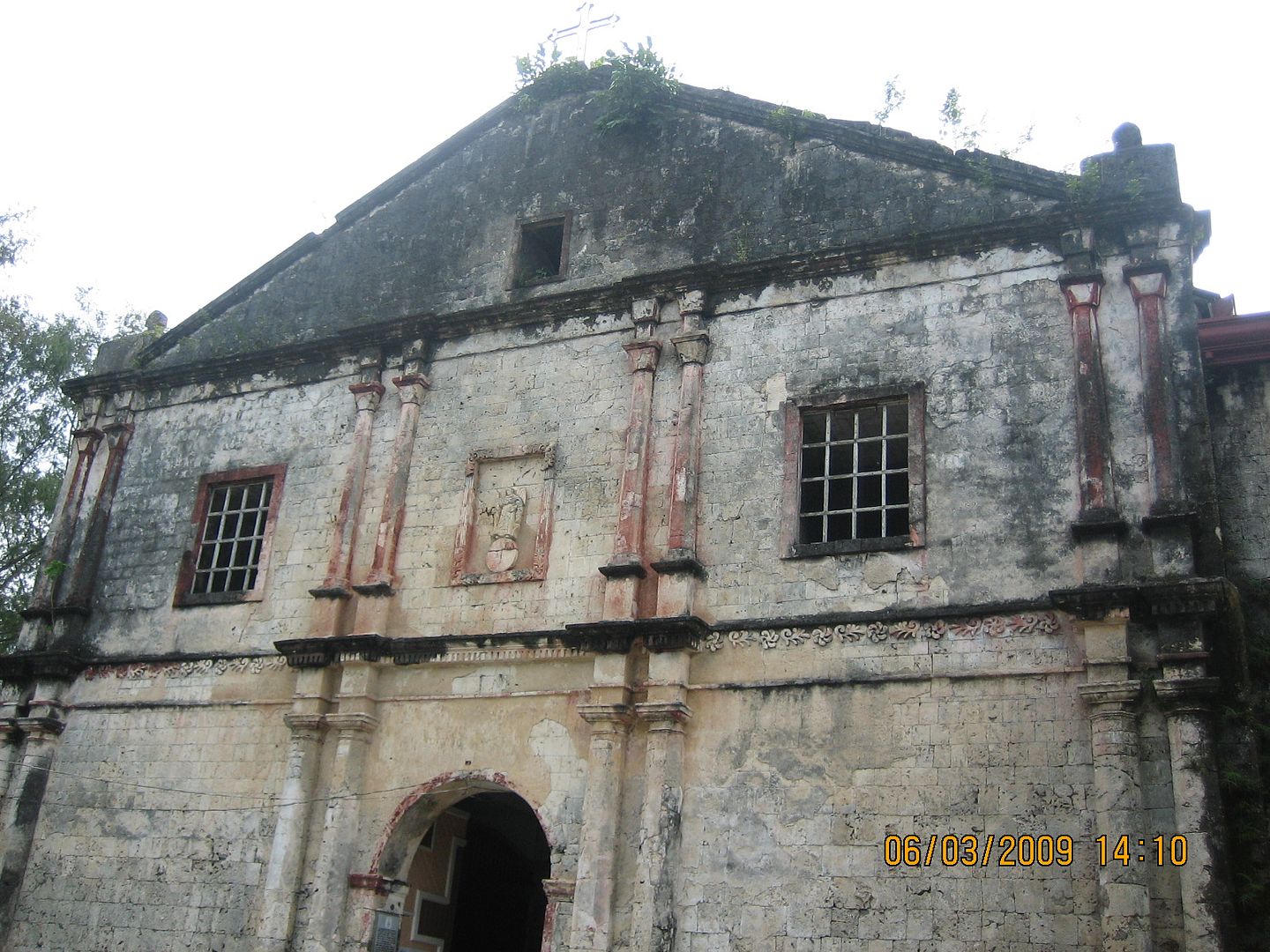

Above the main entrance and flanked by cross-hatched square windows is a stone relief depicting San Vicente Ferrer, the parish’s secondary patron.


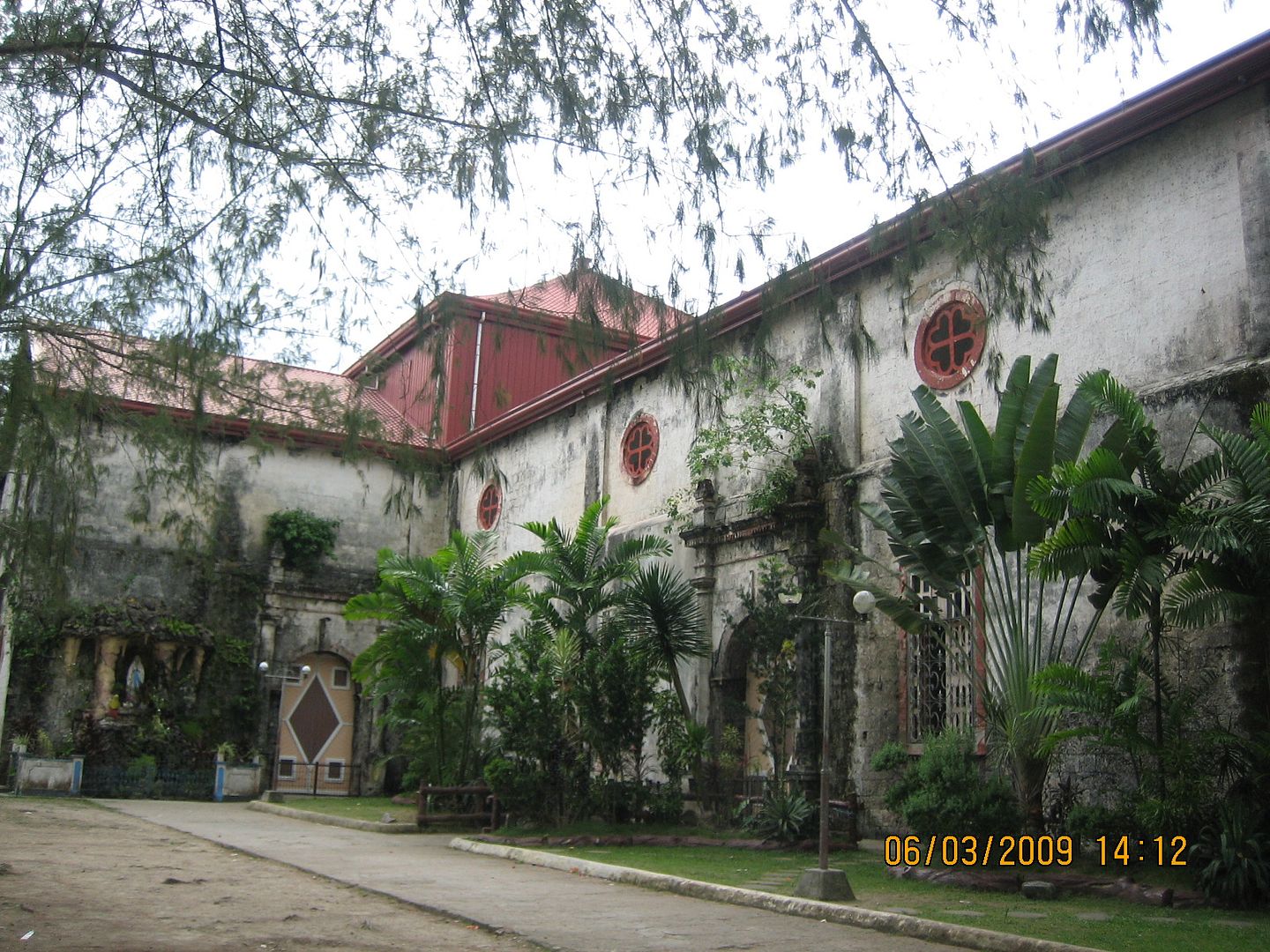
The sides of the exterior feature round windows along the upper half of the walls, and a four-sided red roof may be seen in the distance above the crossing.

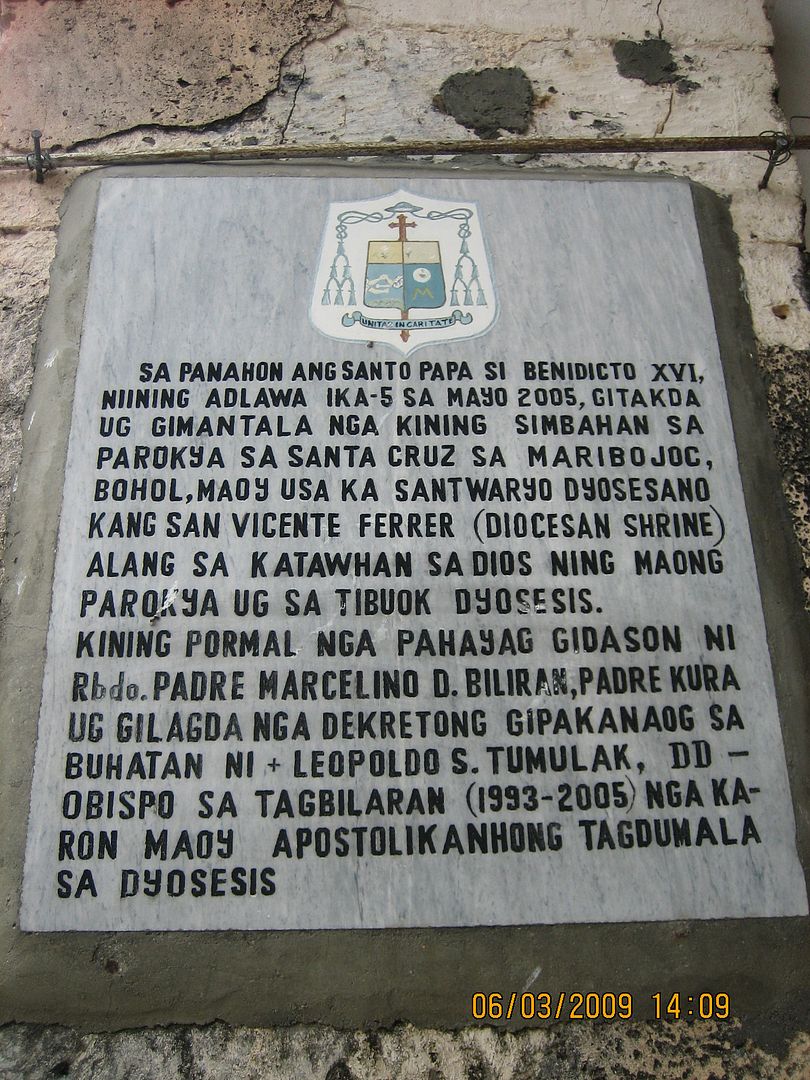
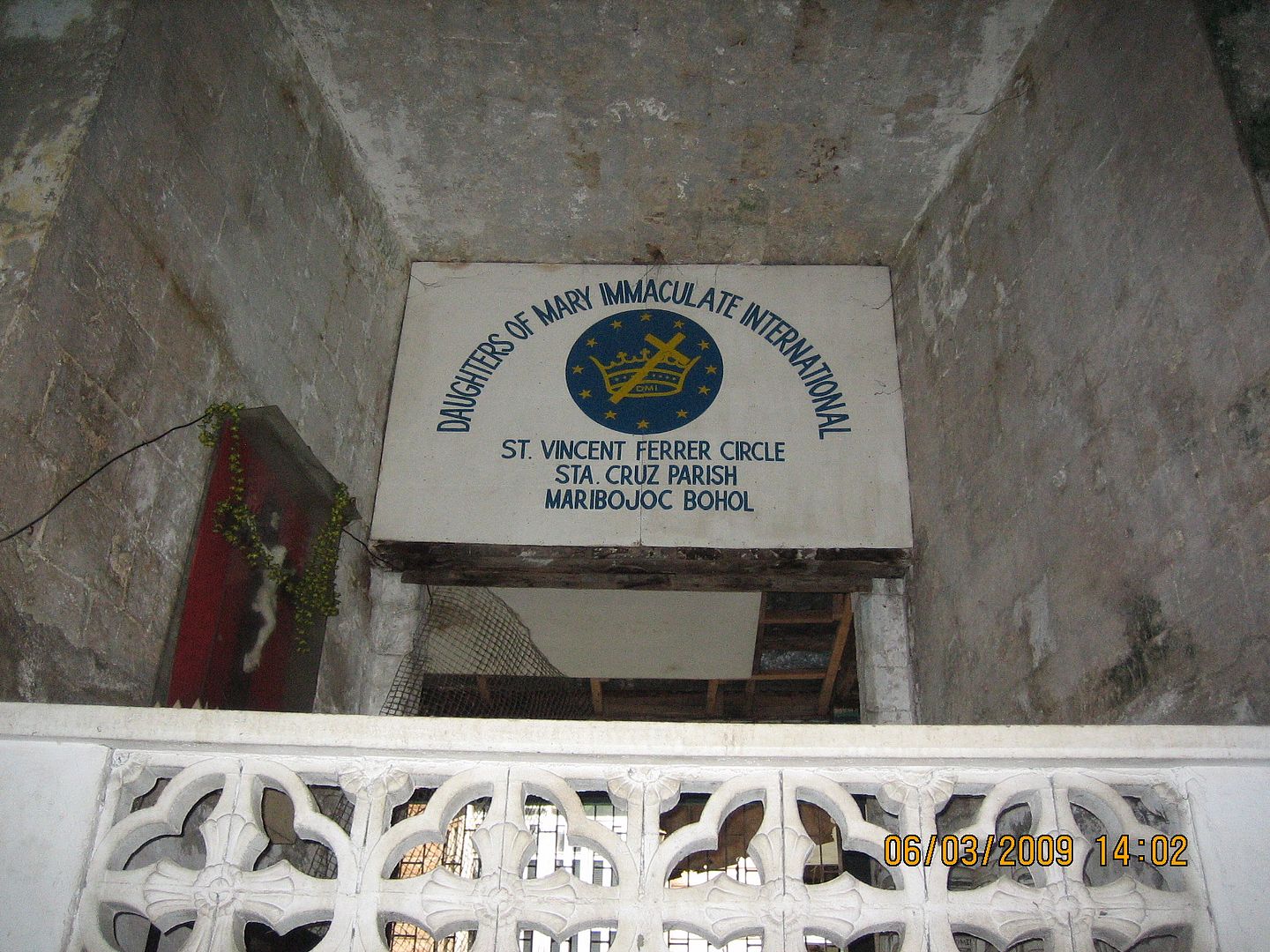
By the entrance is a marker to commemorate the establishment of this church as the diocesan shrine of Saint Vincent Ferrer.

The front doors are wide open, so we can enter by this way and pass right under the choirloft.
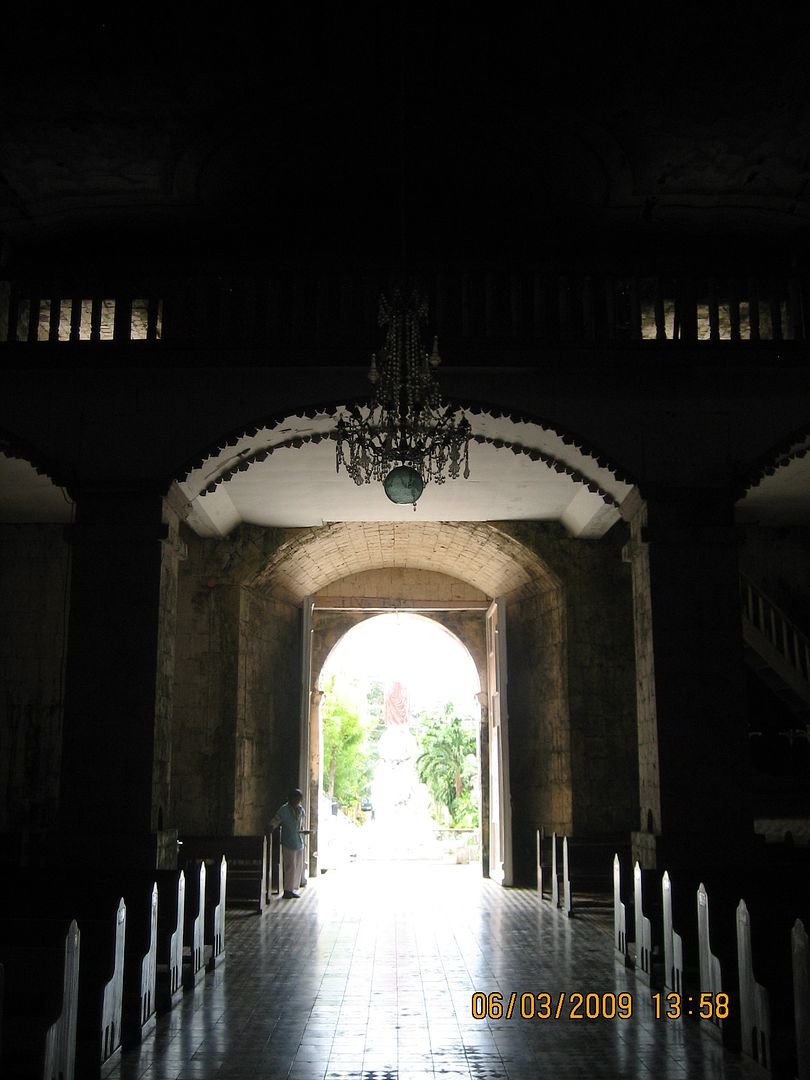

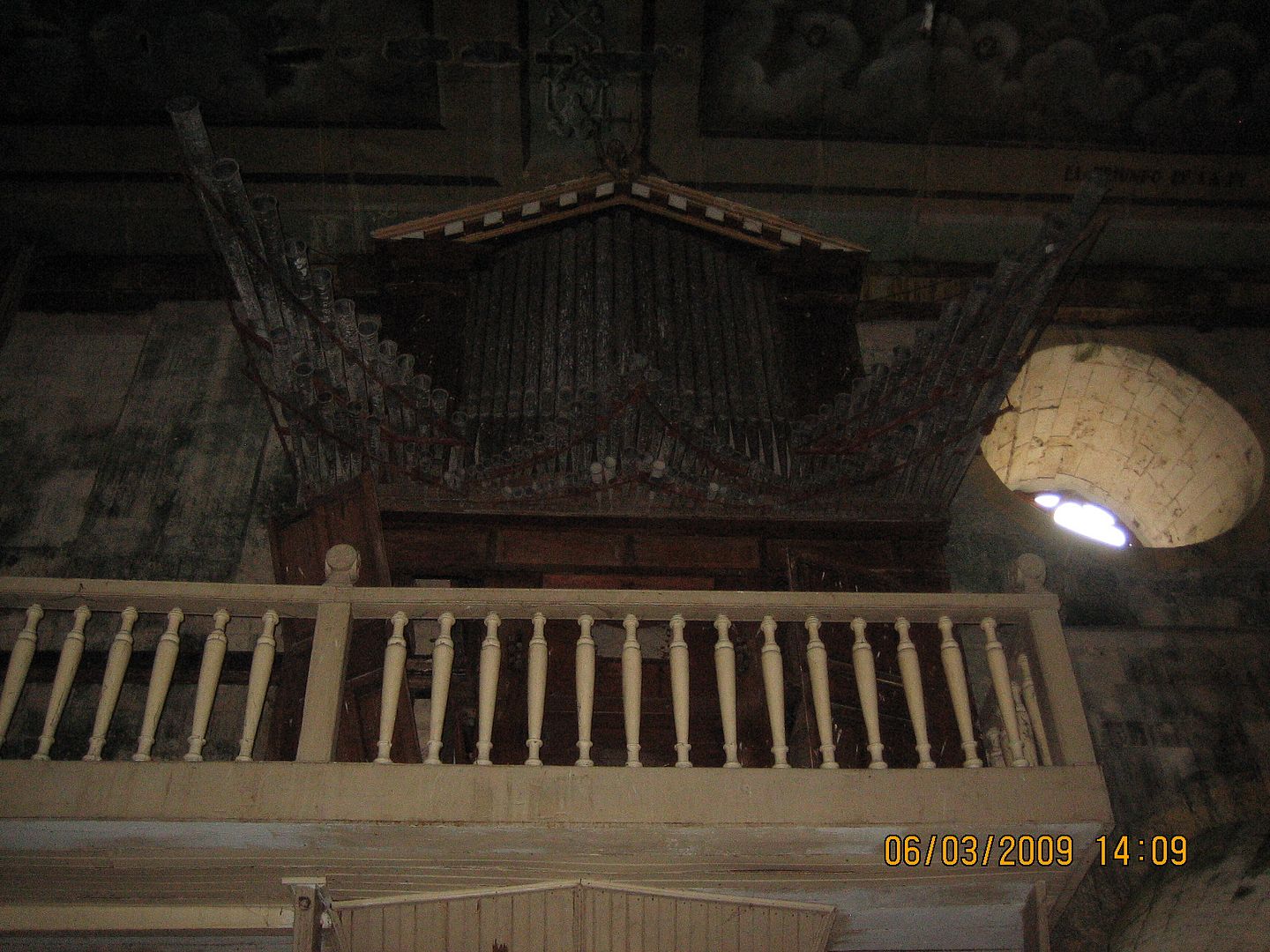
Adjacent to the choirloft, to the right side, is the pipe organ,
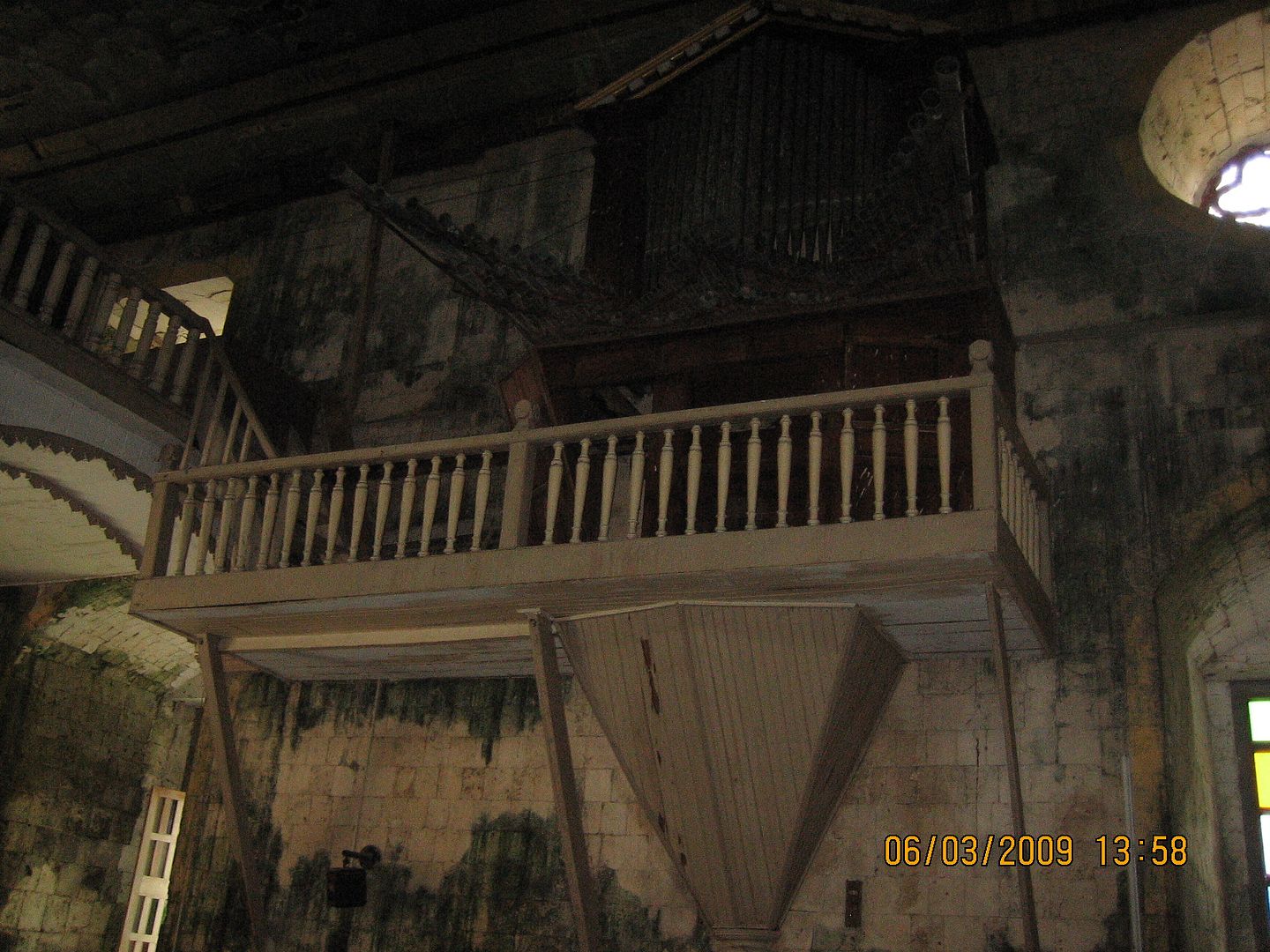

which is said to date from the 1890’s and is therefore newer than its early-19th century brethren in the other old Bohol churches that we have visited.

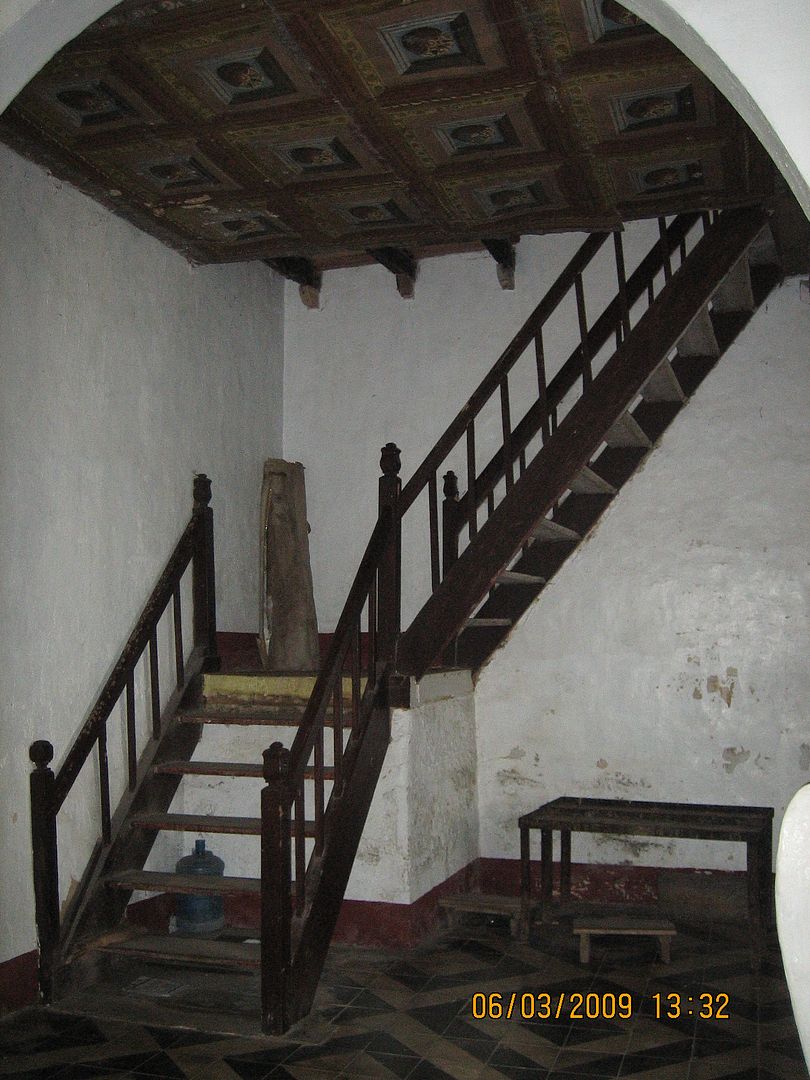
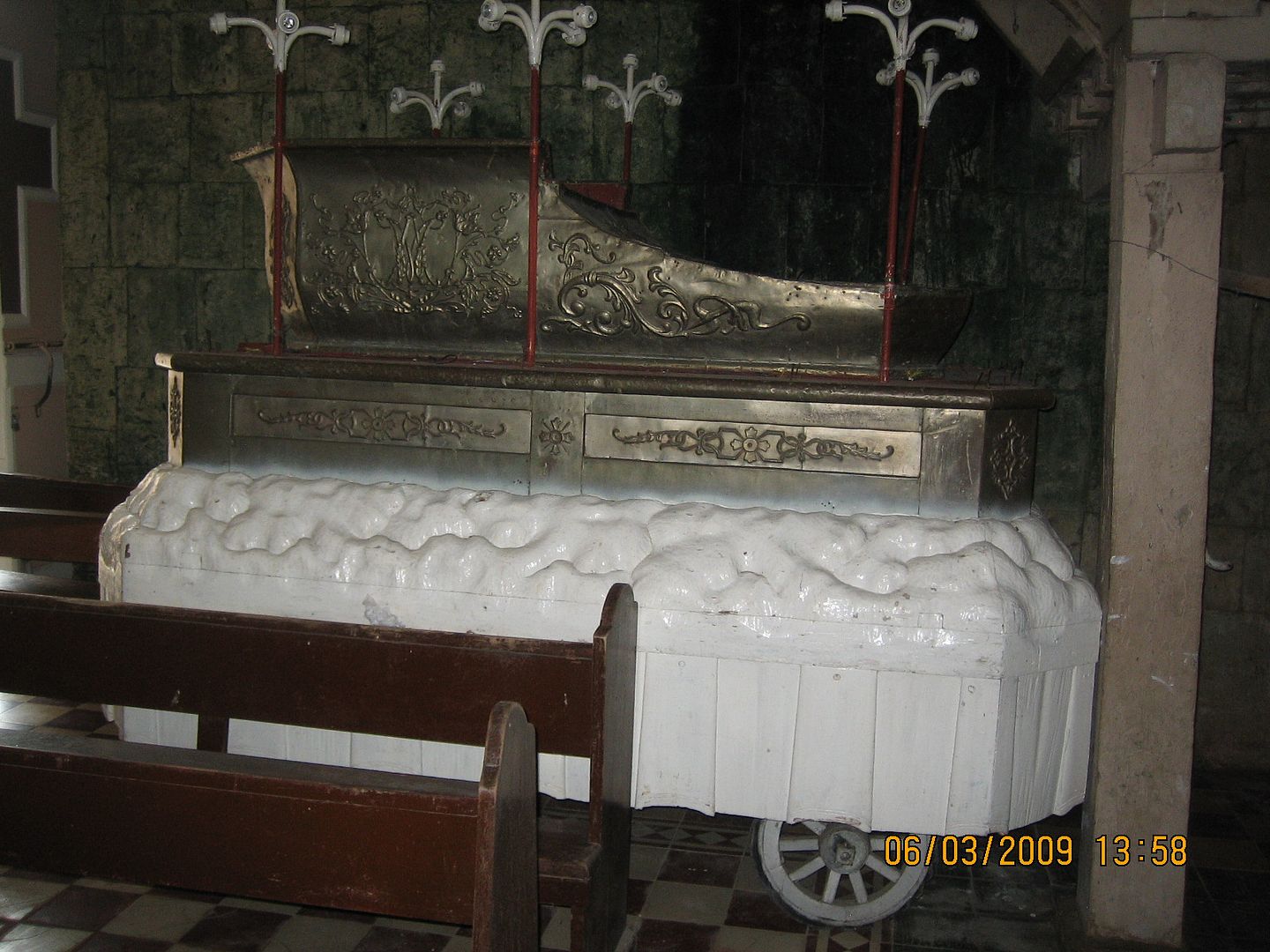
Right under the wooden staircase that leads up to the choirloft
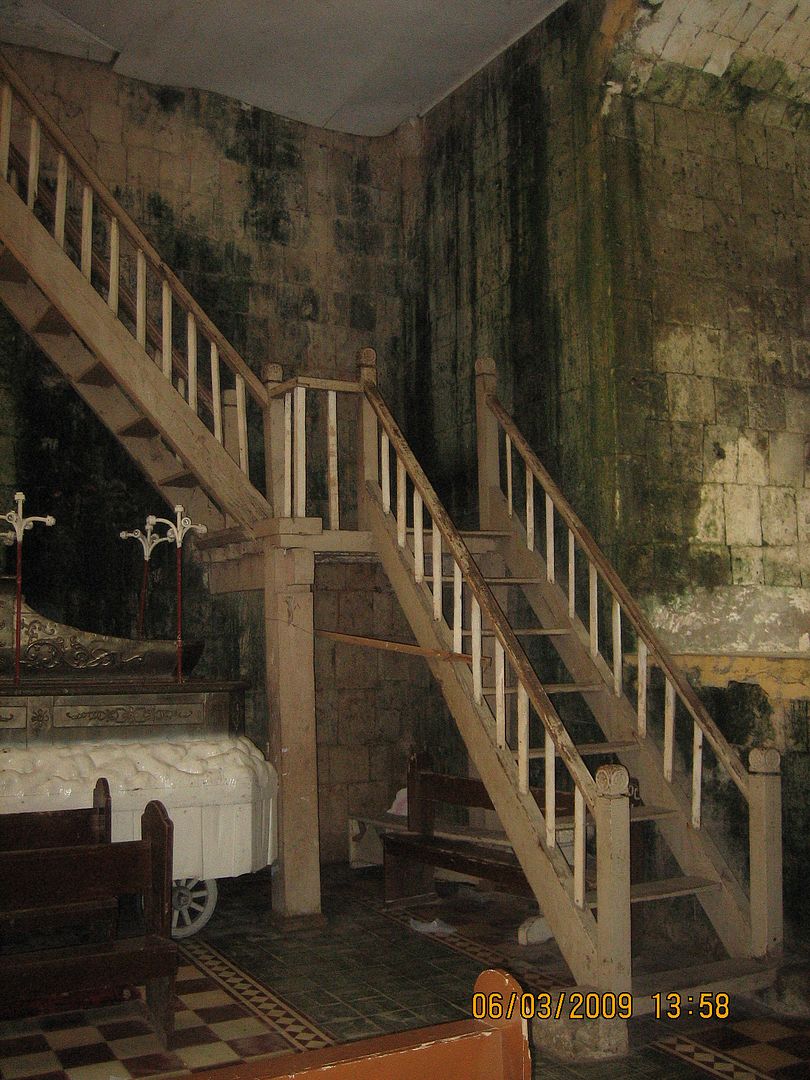

is a hammered-metal carroza with a white-cloud-skirt.

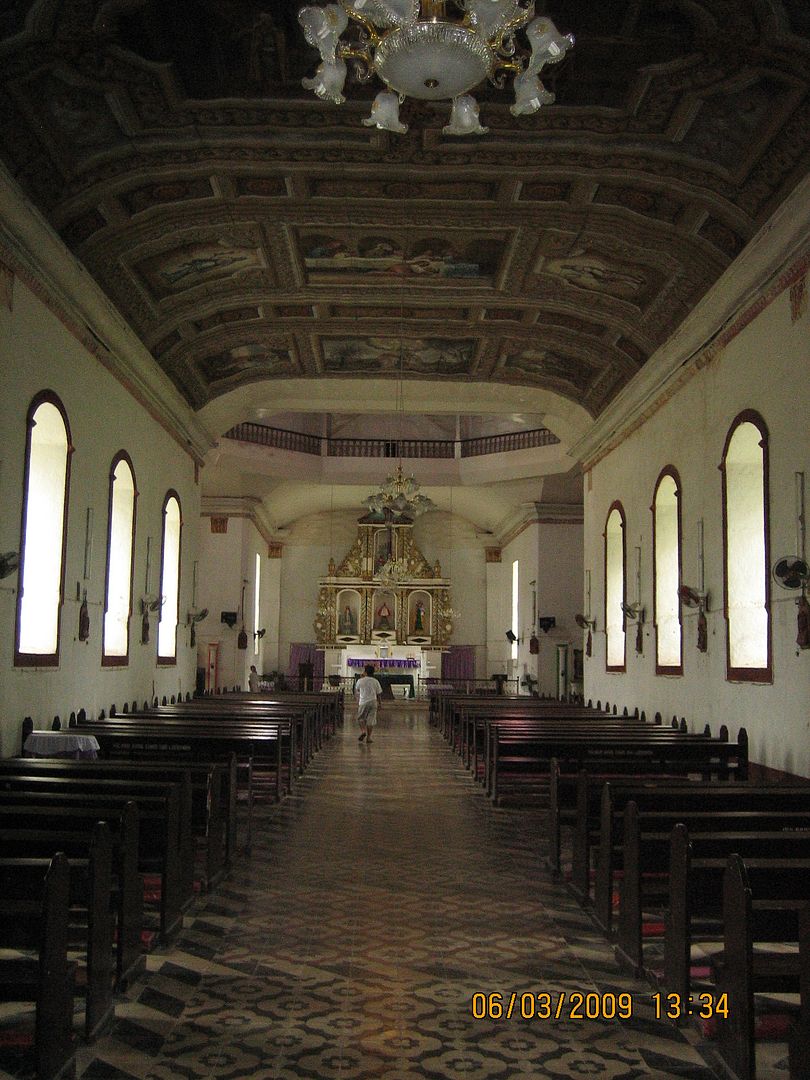
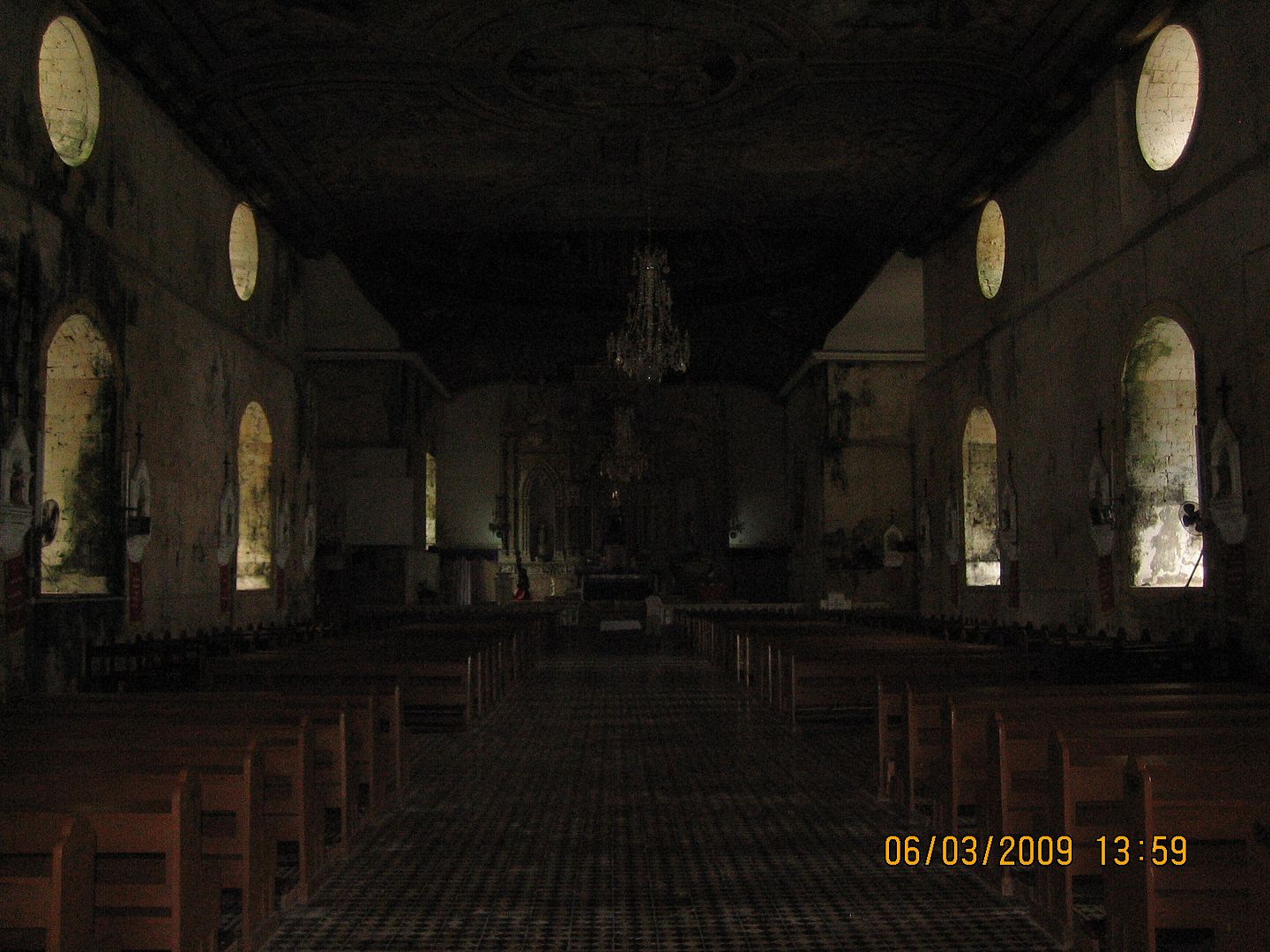
Making an about face, we admire the fine checkerboard floor
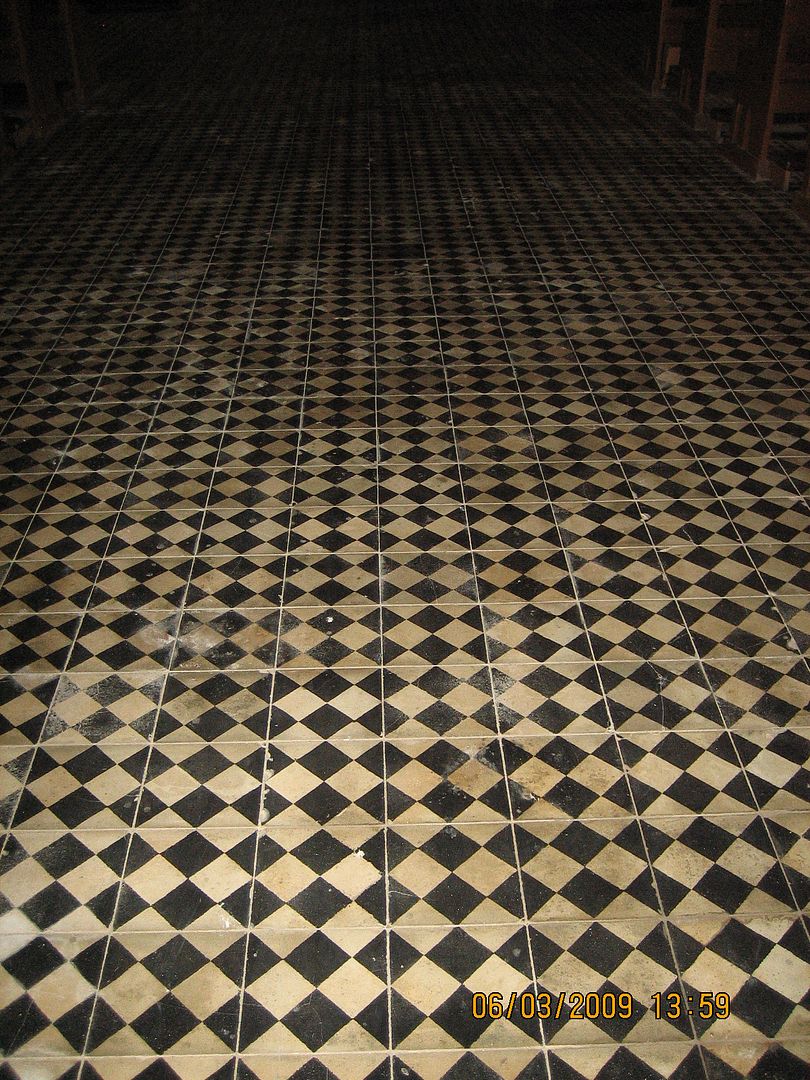

that paves the very wide aisle
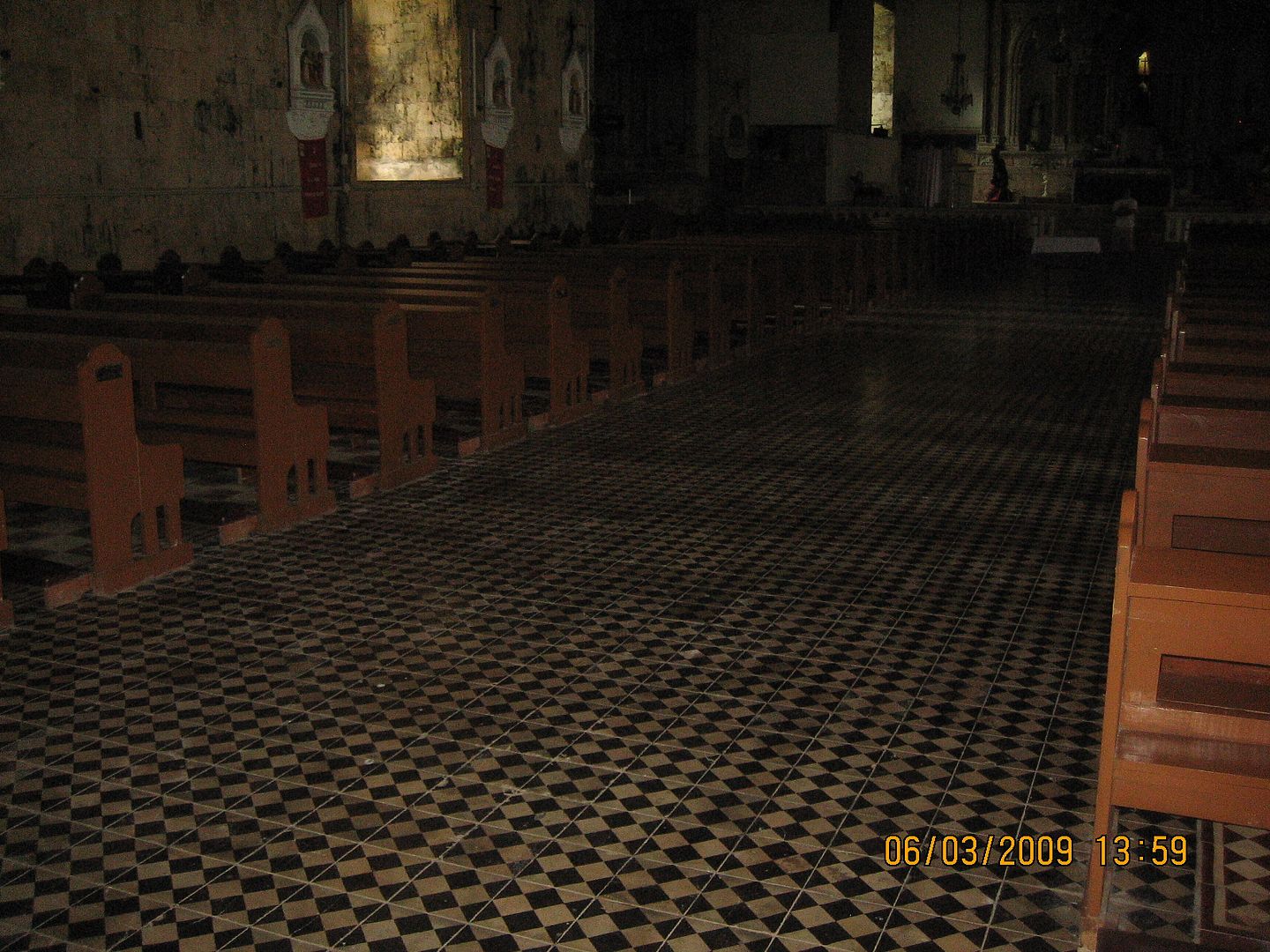

and leads to the altar in the far distance.

Elsewhere were other beautiful examples of old cement tiles, including a red-and-white checkerboard
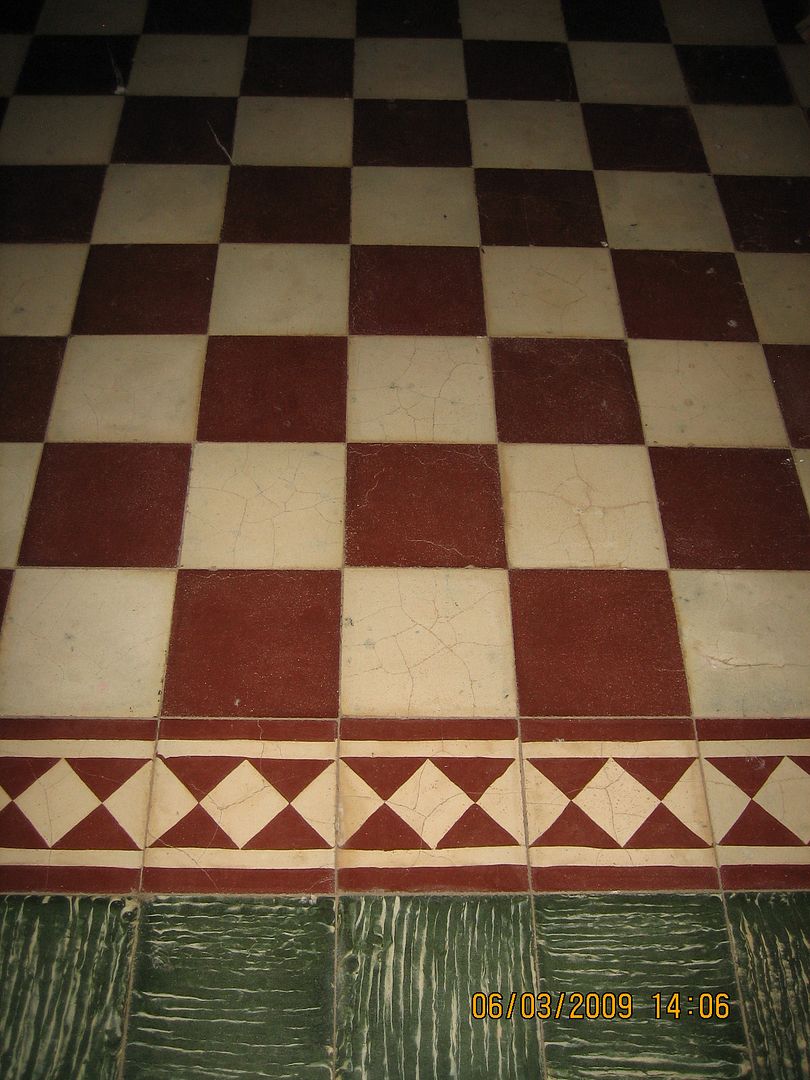

and something rather more colorful.
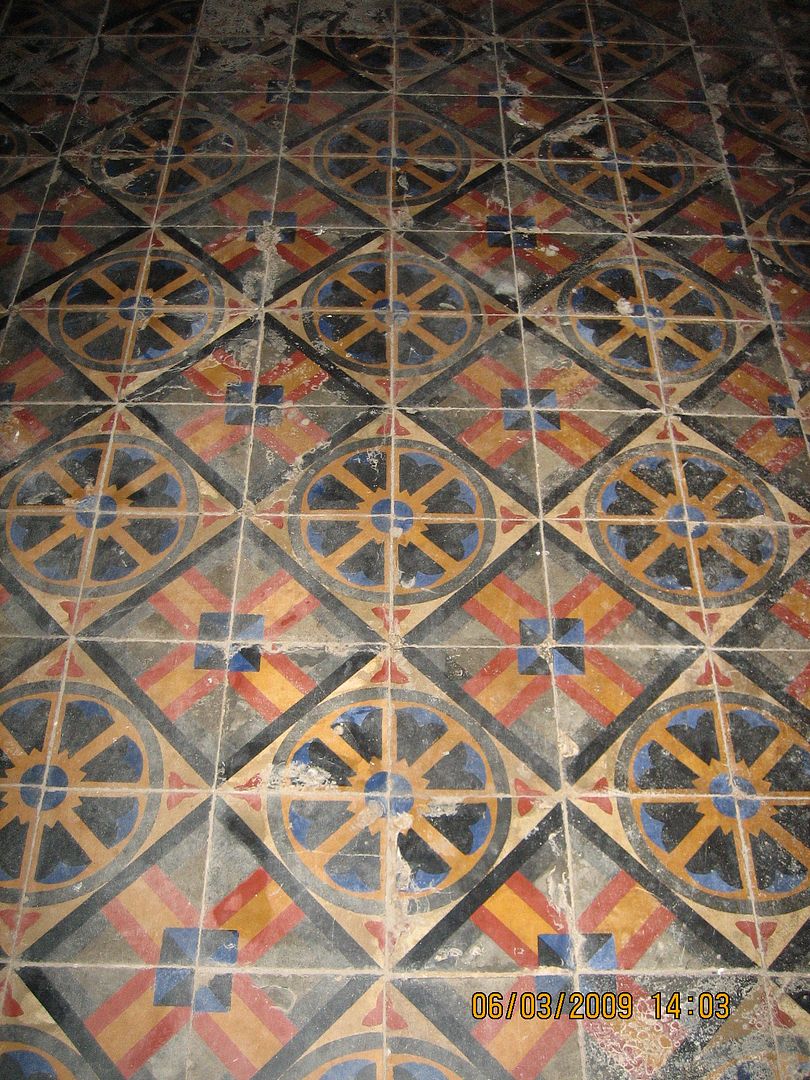

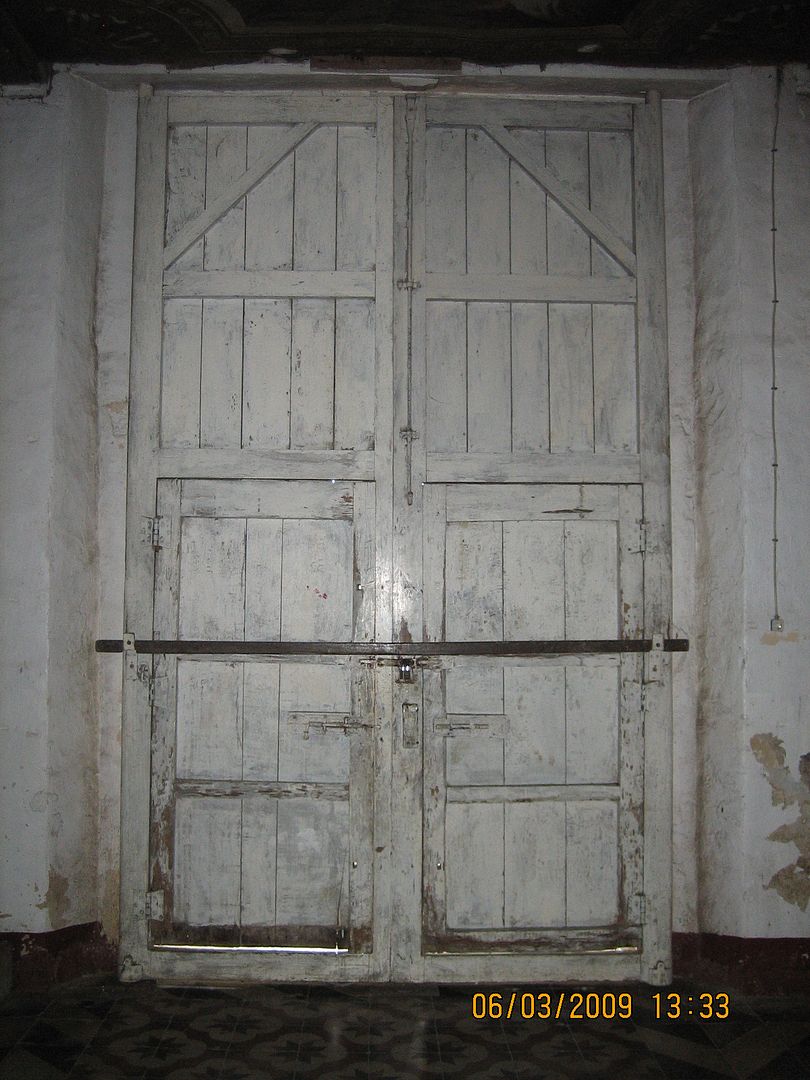
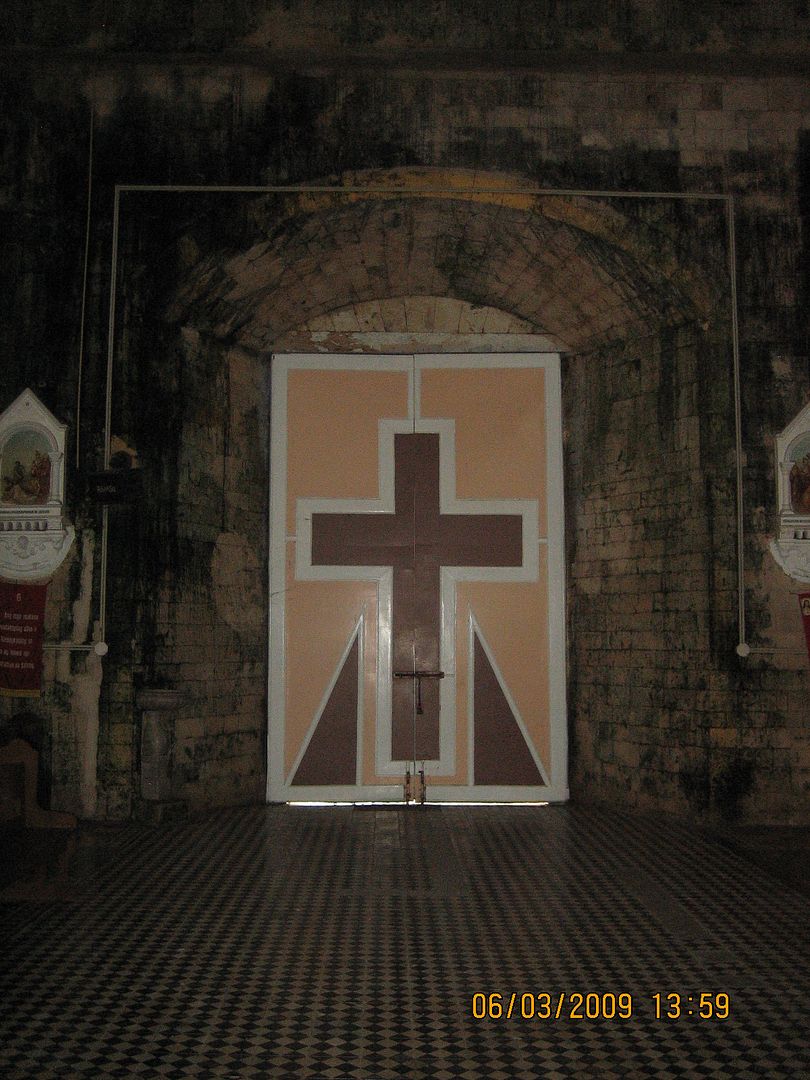
While walking up the aisle, one notices a doorway, currently shut.

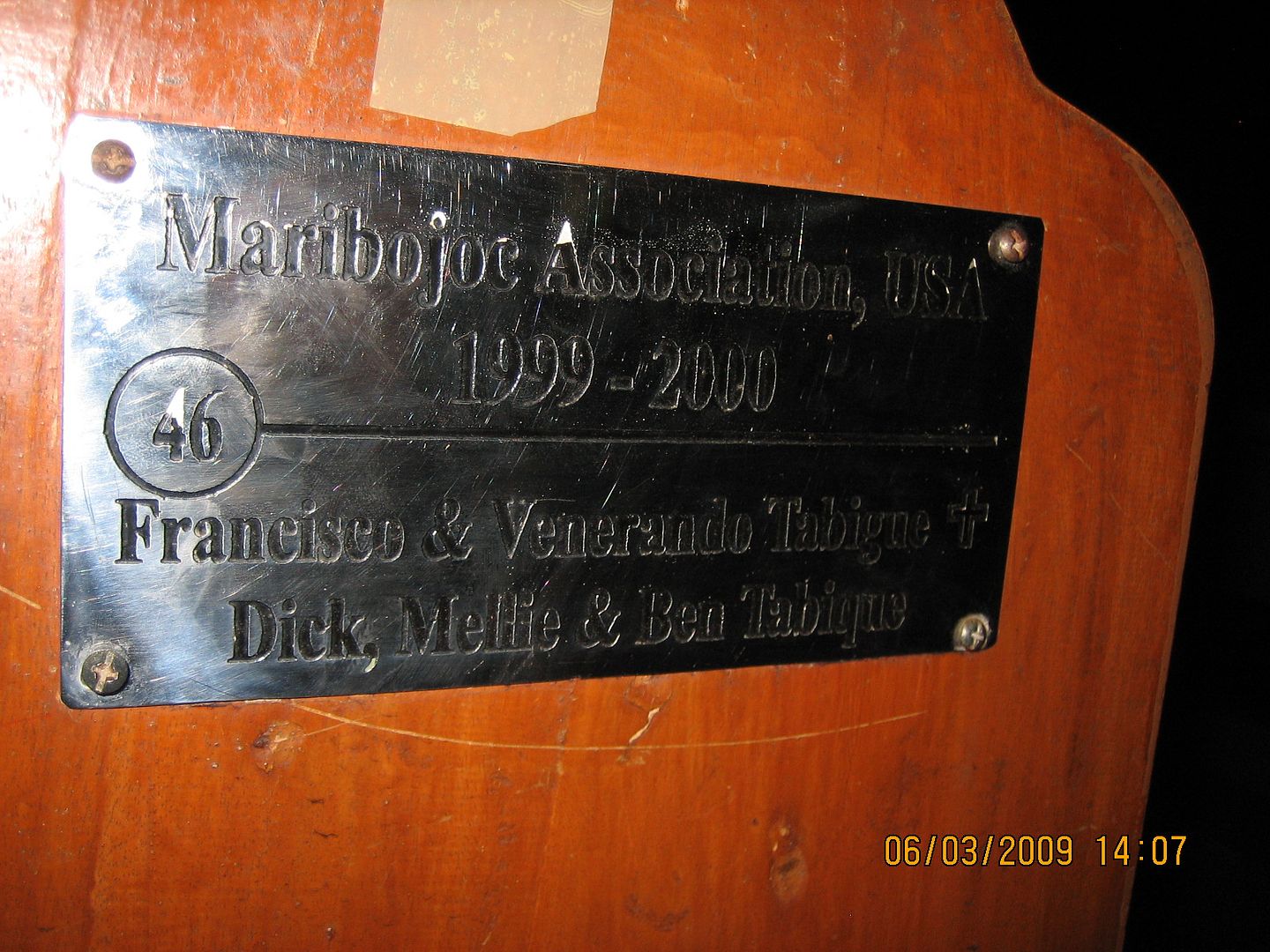
I also noticed that the pews had brass markers on them, acknowledging the generous patronage of the town’s natives who had since migrated to other parts.

Right under the dome of the crossing is an elaborate ceiling painting.

The Maribojoc church ceilings were painted by Ray Francia in the 1930’s; he and Canuto Avila painted many other church ceilings in Bohol, as we had already previously seen. Unfortunately, it was too dark inside this church to properly photograph this particular example.

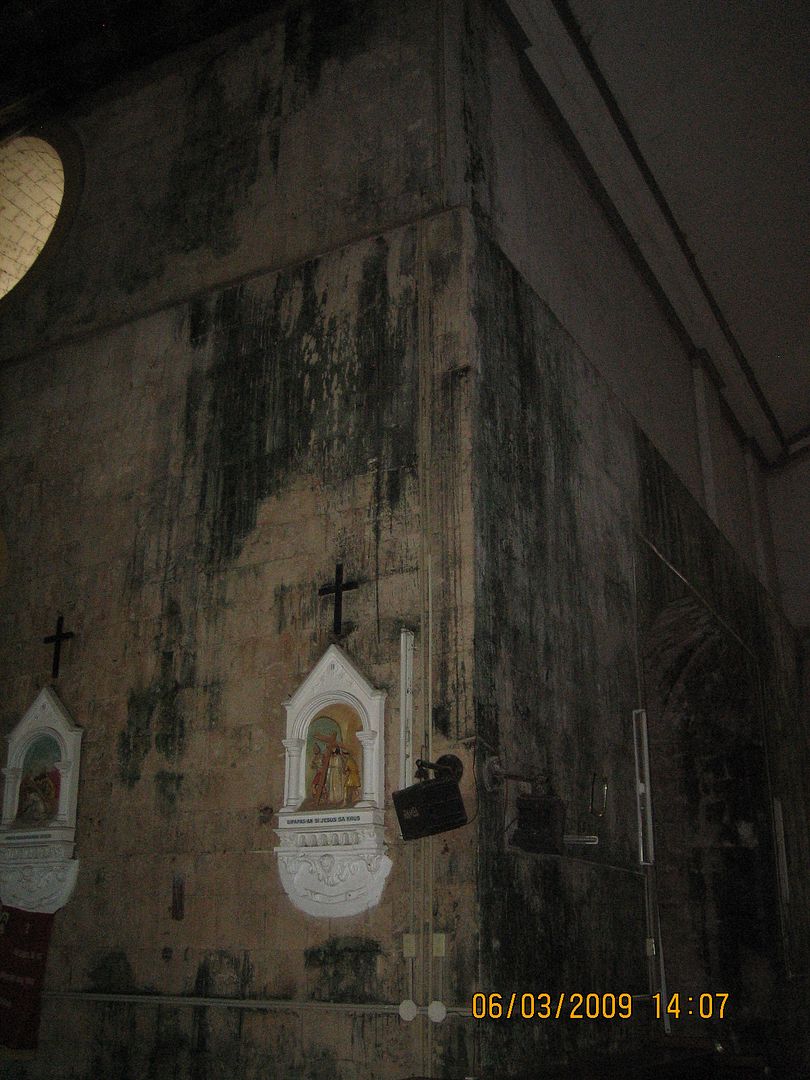
While the ceilings were lavishly painted, the walls were plain, with only the Stations of the Cross and some moss adorning them.

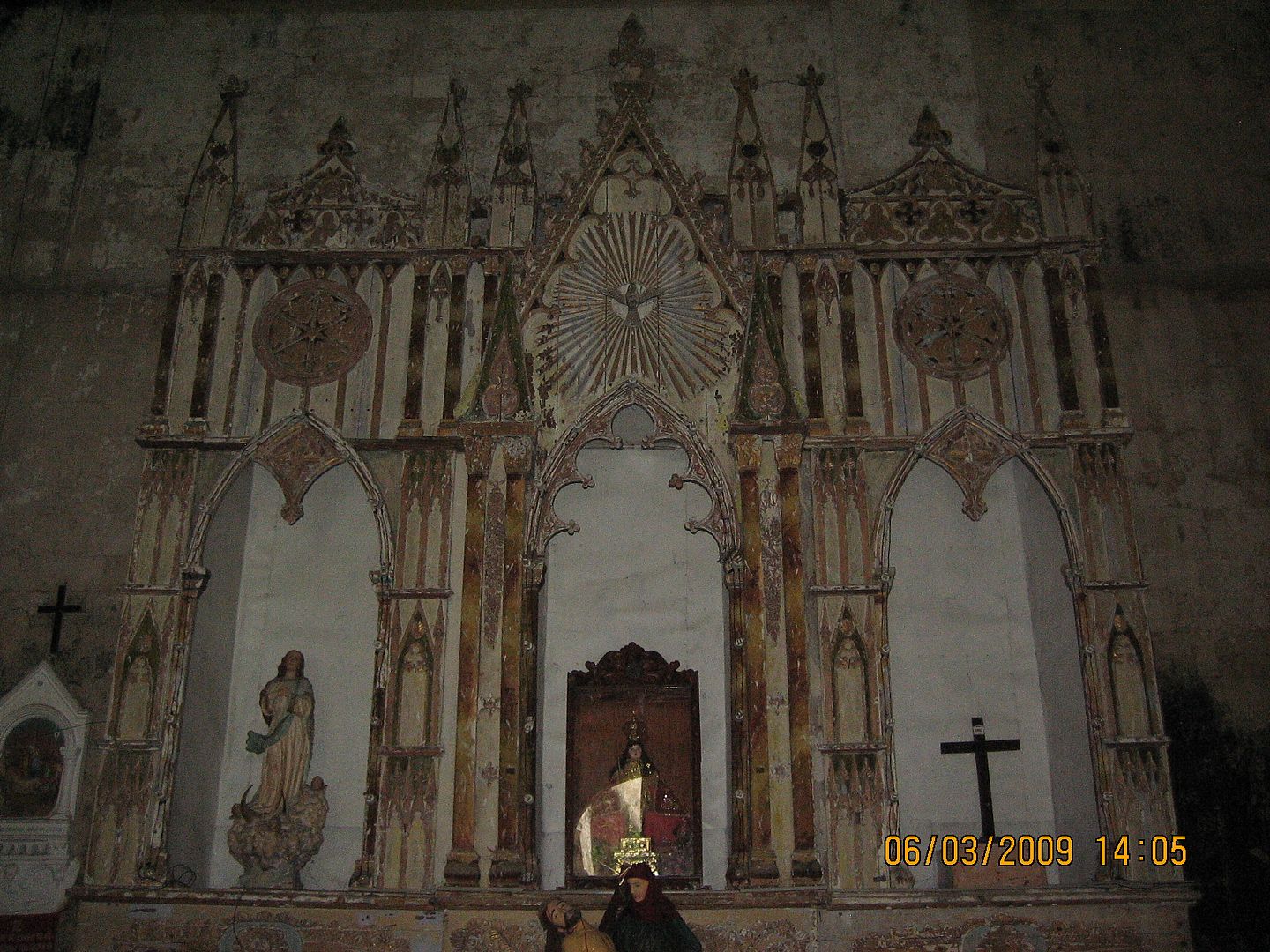
We move up close the sanctuary to take a good look at the main retablo.
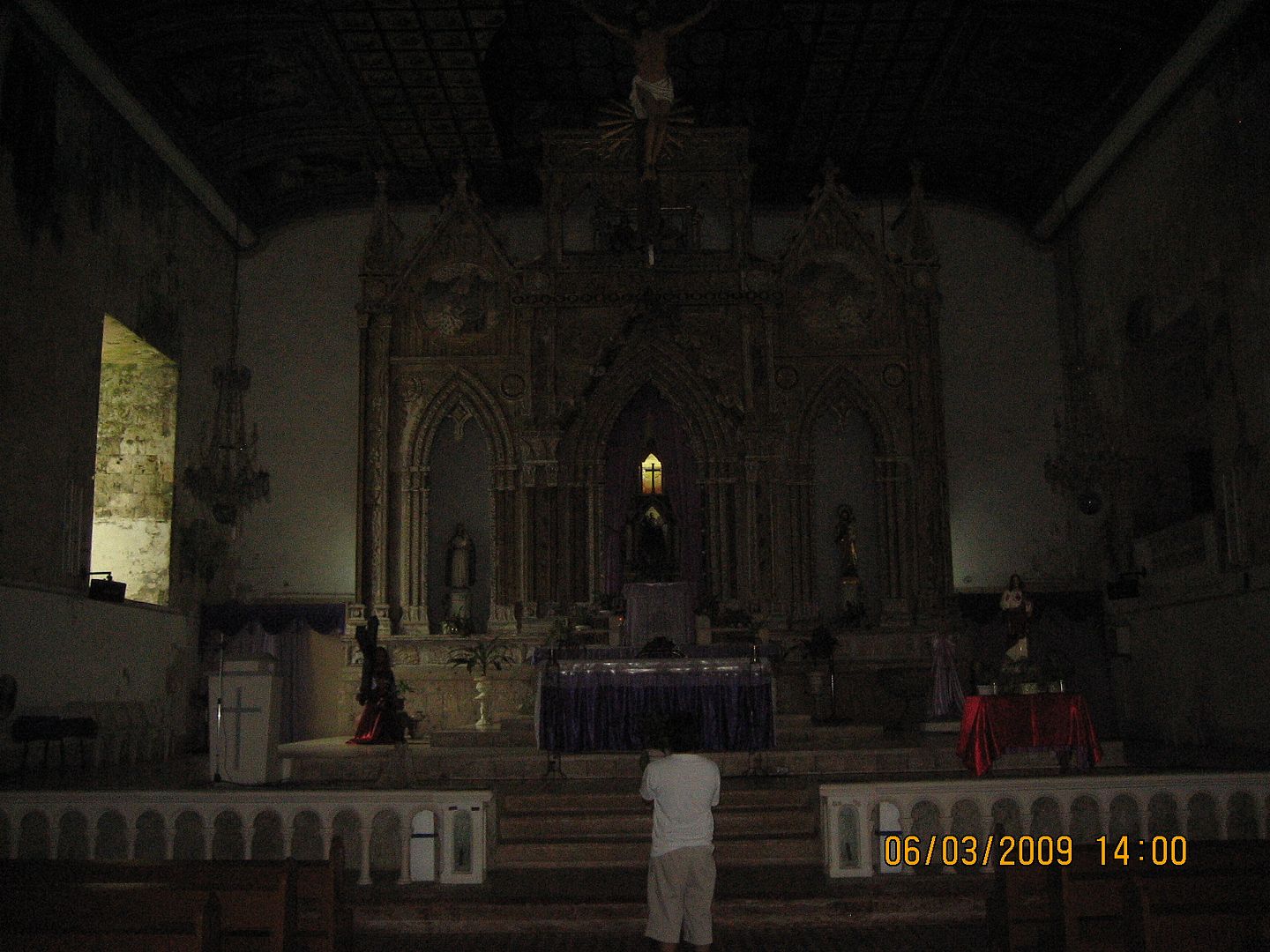


The pride of Maribojoc church must be its elaborate gothic-style retablos, dating from the 1930’s, all exceptionally well-carved and –painted. In the central niche of the main retablo is a small image of the secondary patron San Vicente Ferrer, right above which is a small image of the patron, the Santa Cruz (Holy Cross).
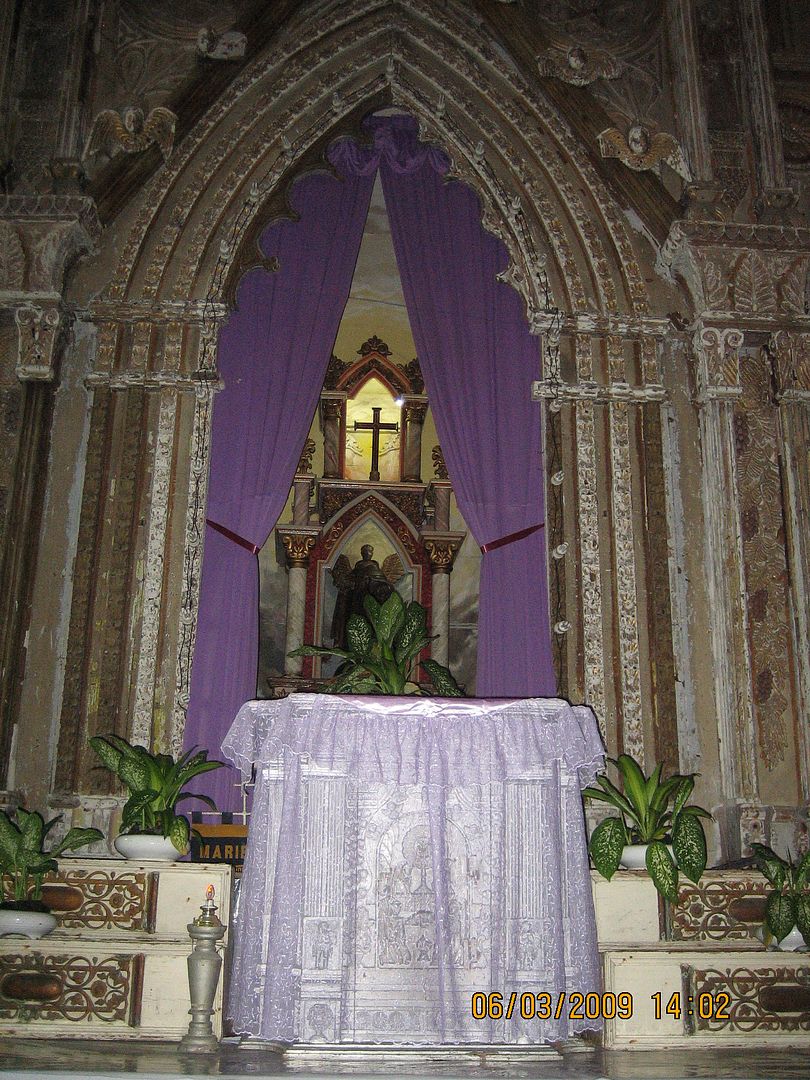

In the niche above is the Holy Trinity, which is flanked by roundels (round-shaped paintings), which according to our Visita Iglesia Bohol guidebook probably depicts allegories of the Finding and the Veneration of the True Cross.
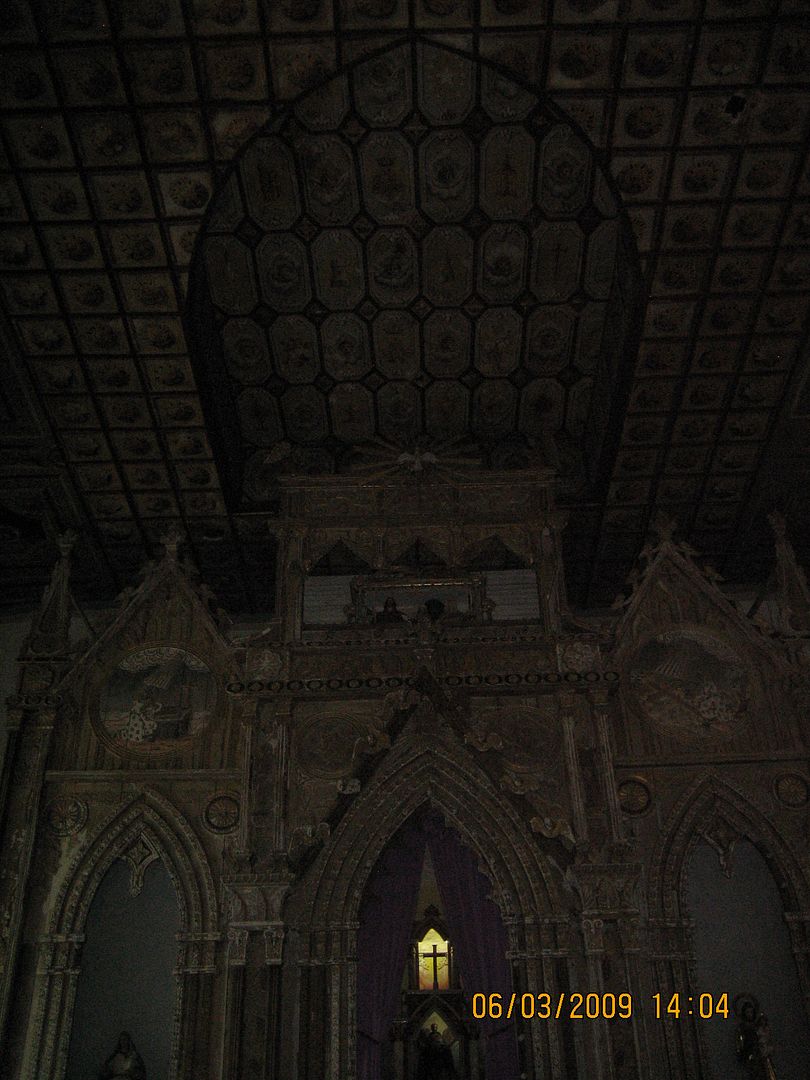

Below these and flanking the central niche are undersized images of the Madonna and Child and Saint Joseph and the Child Jesus.
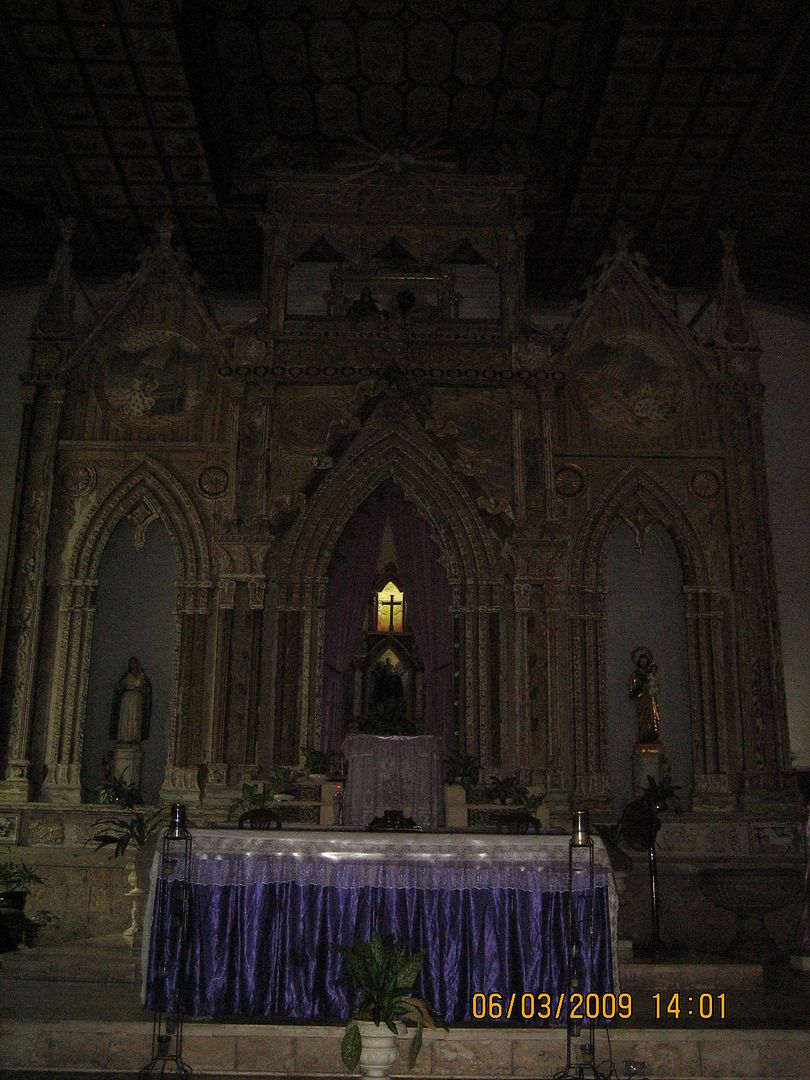

Overlooking the altar is a gallery, which unlike other altar galleries in other old churches is rather more exposed.

The left and right transepts have two other retablos each, also very finely carved and painted. The left-side retablos are these ones:
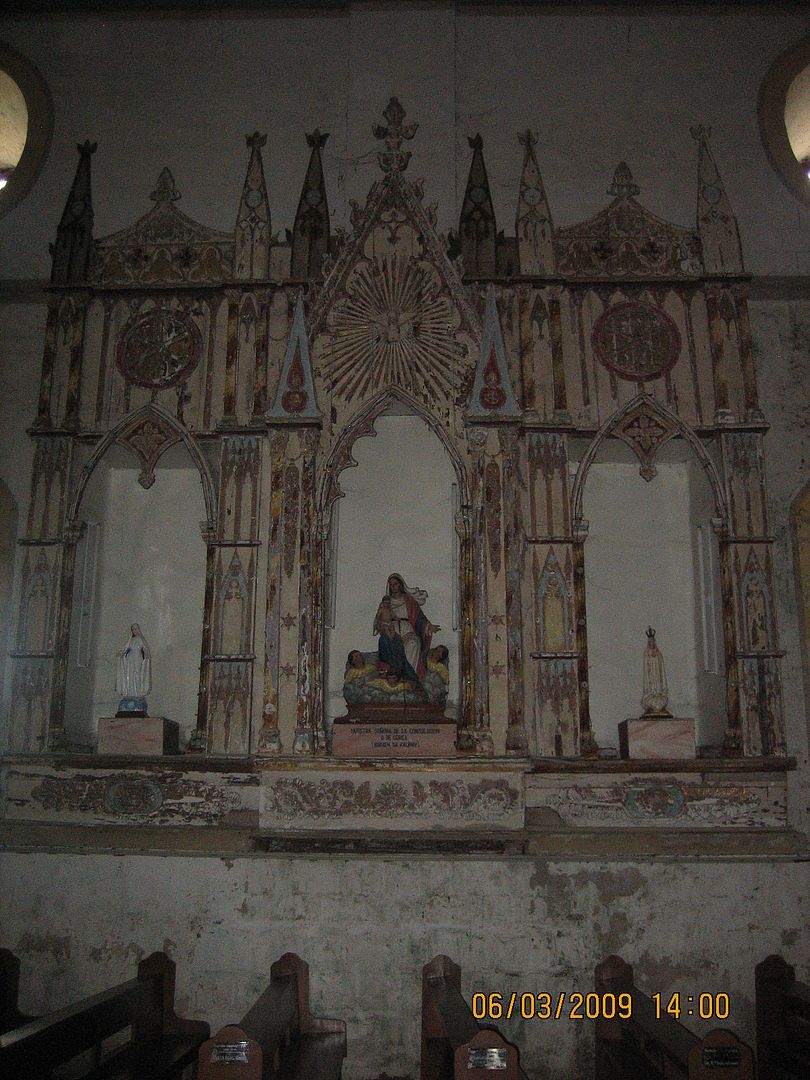
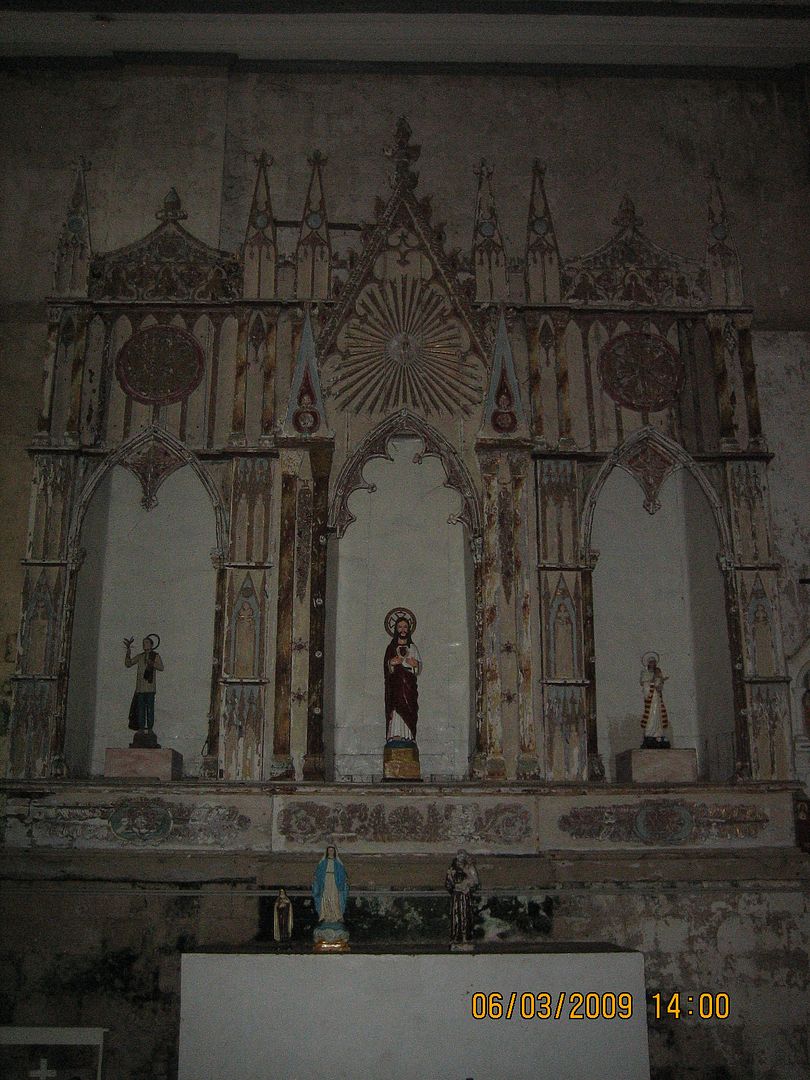

And the right-side retablos are these:
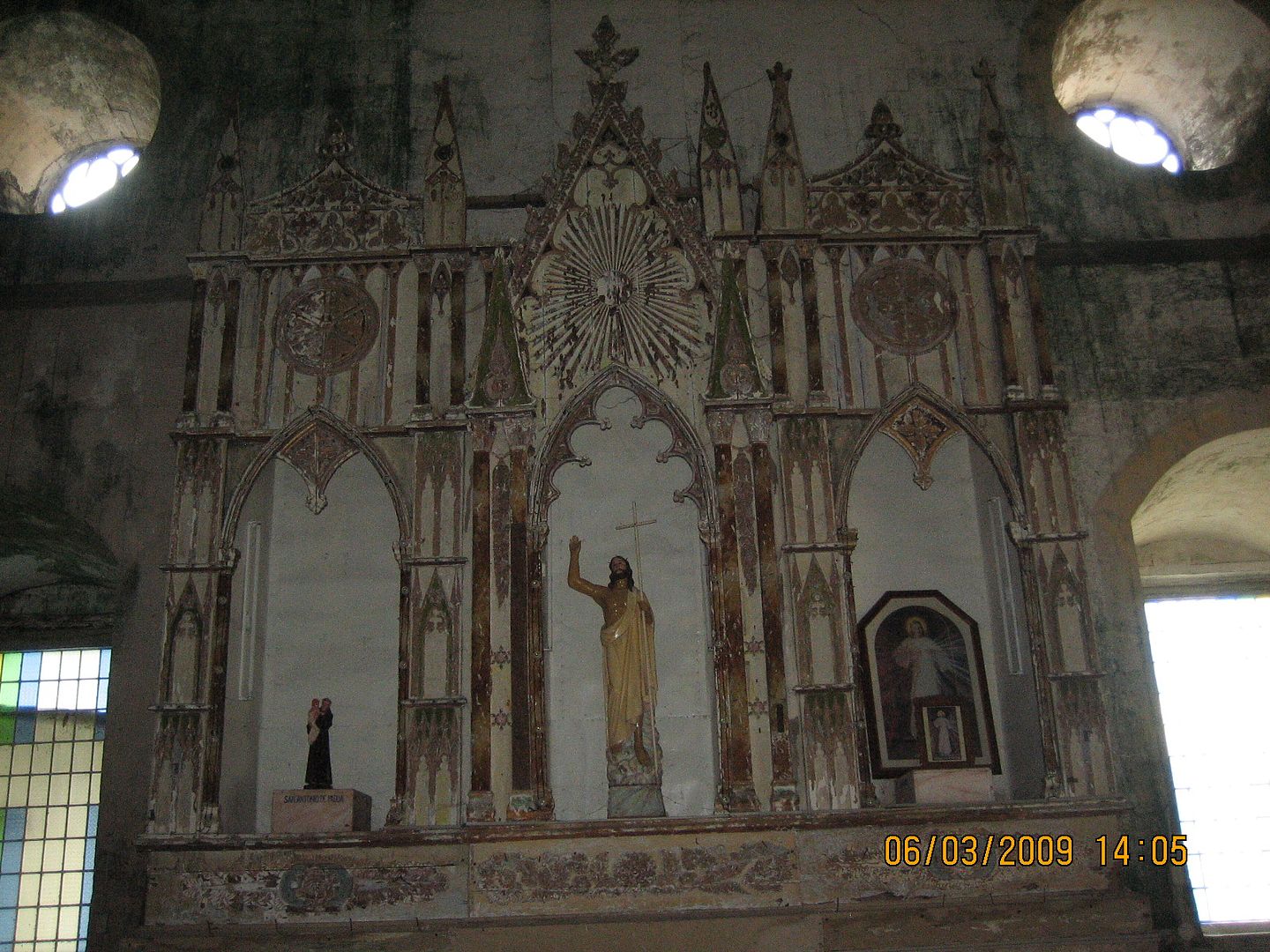


It is obvious that the images that they hold are far too small to be appropriate for these sizes of retablos. In the guidebook, Regalado Trota Jose surmises that perhaps the original images have been lost in the course of time, or even that funds had simply run out for commissioning proper images after paying for the retablos themselves!

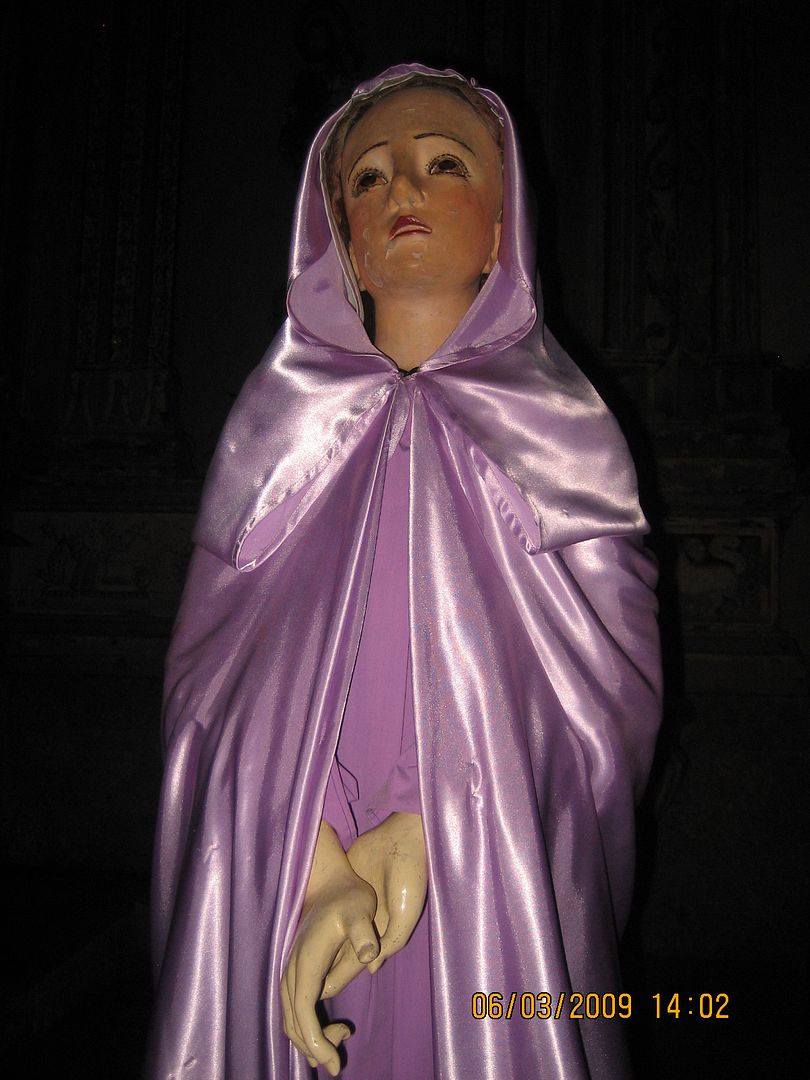
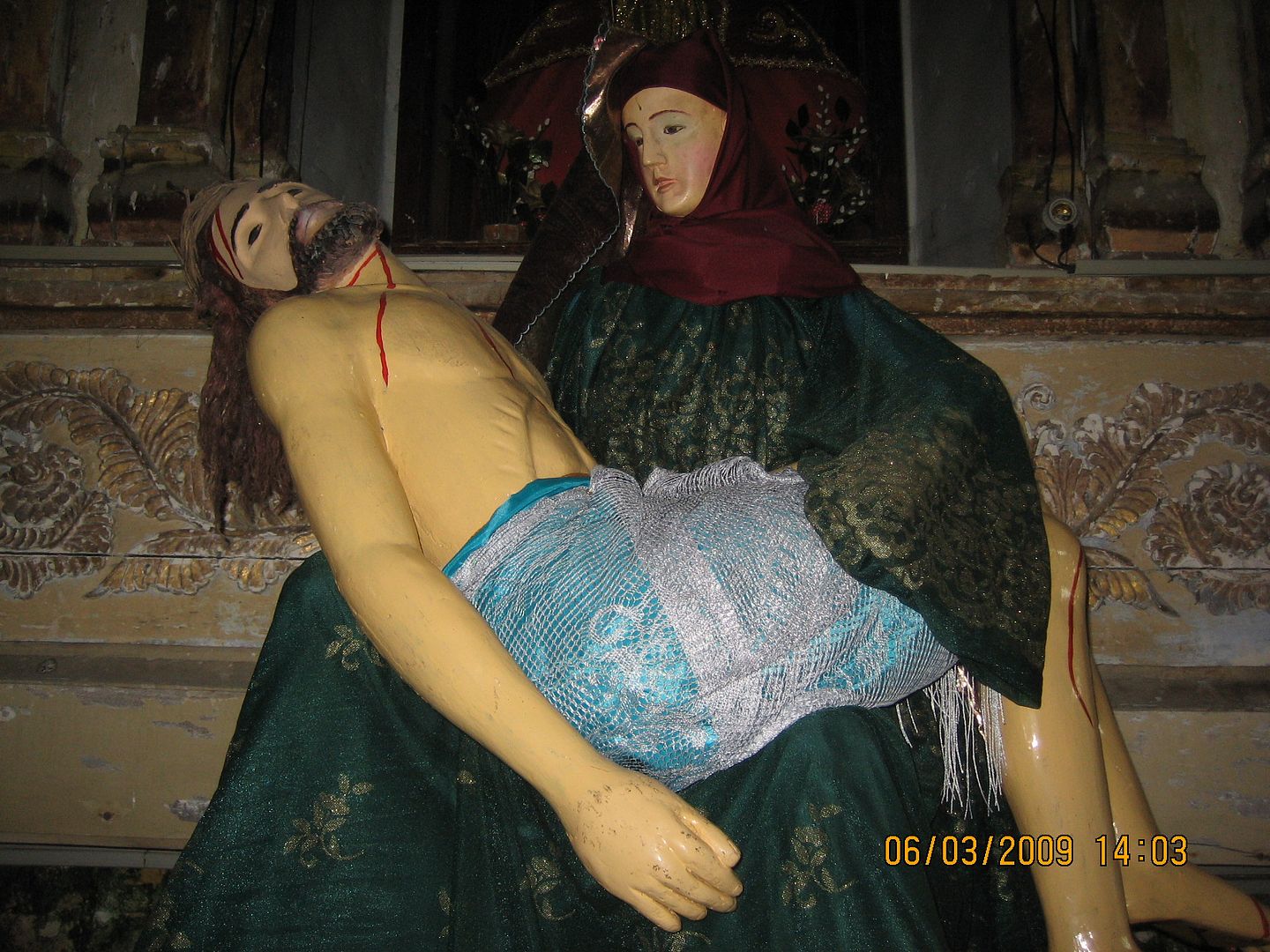
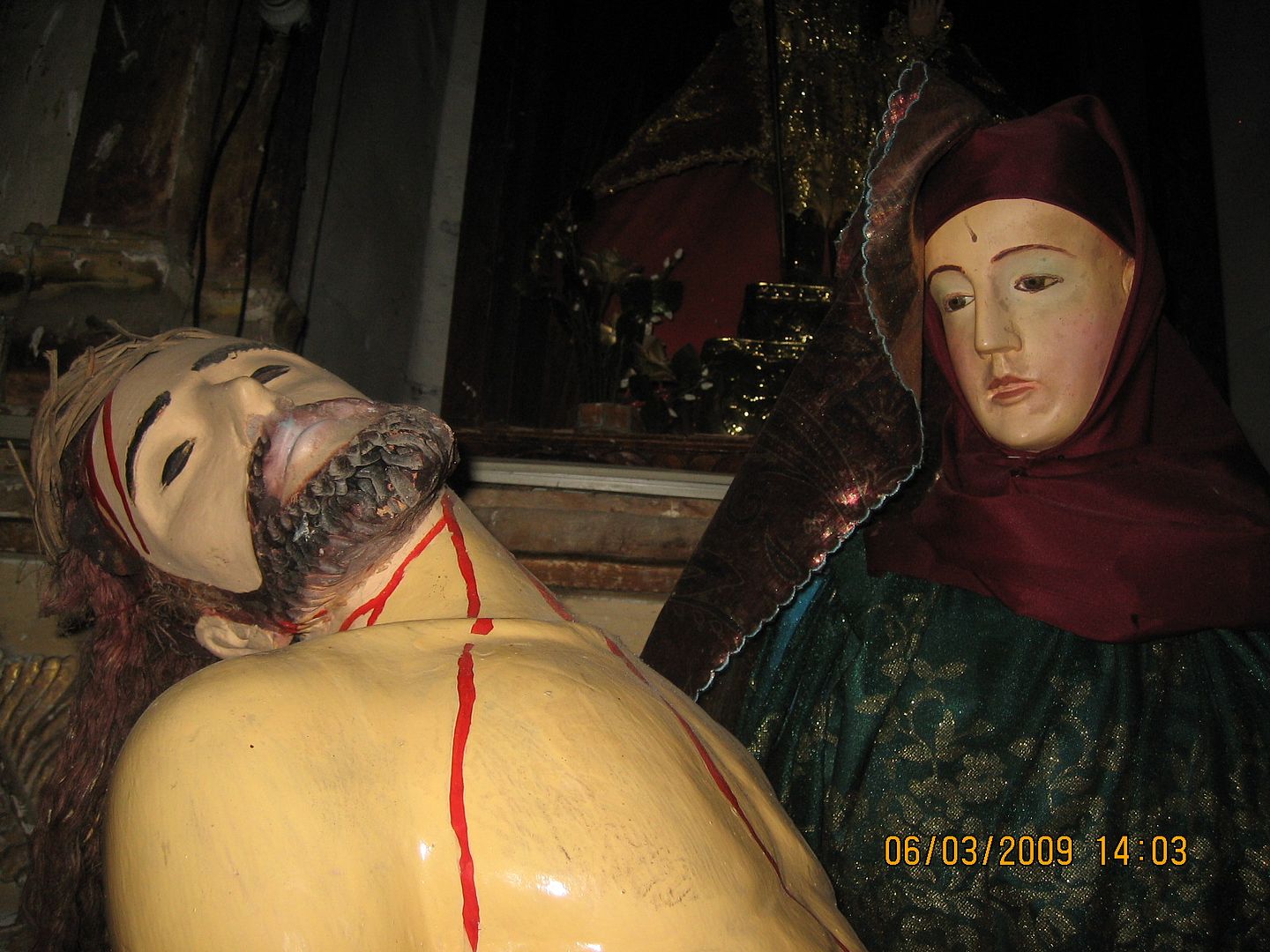
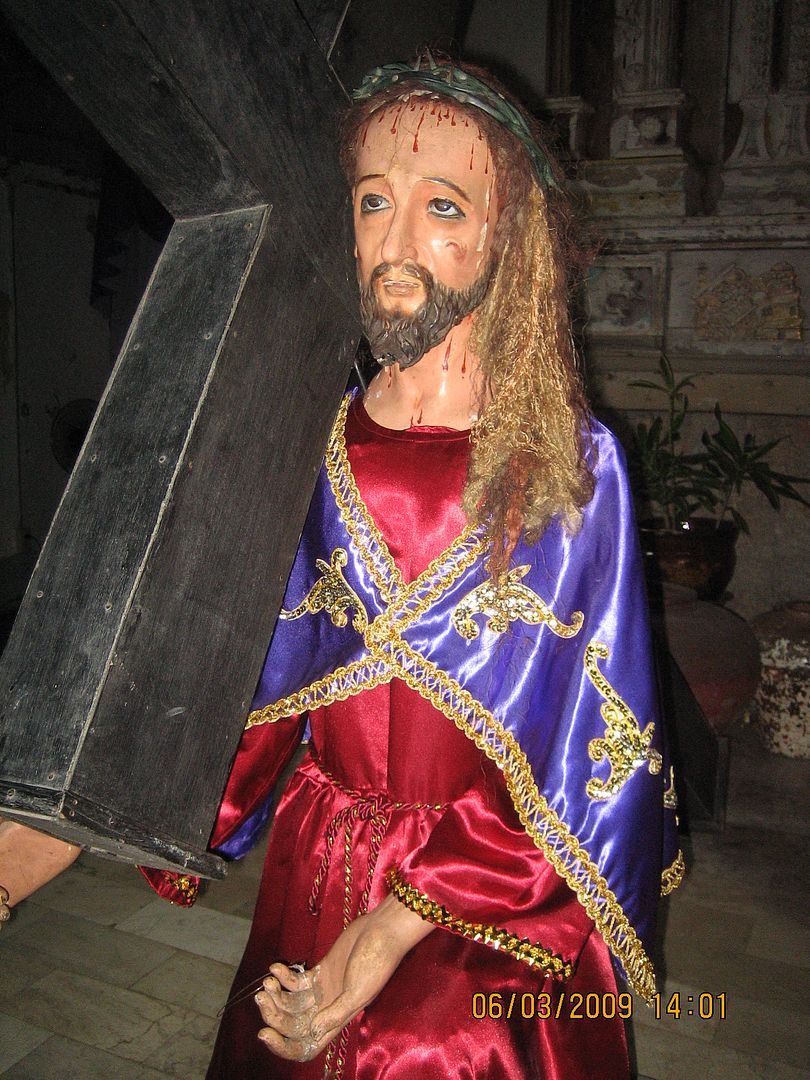
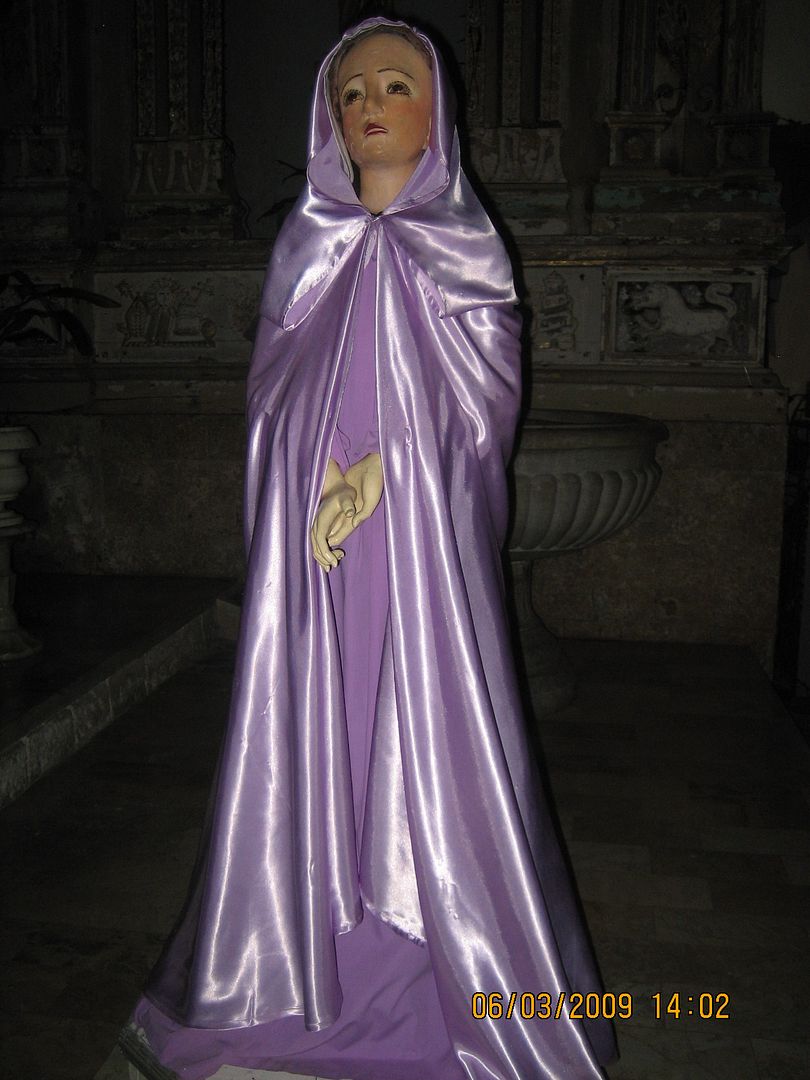
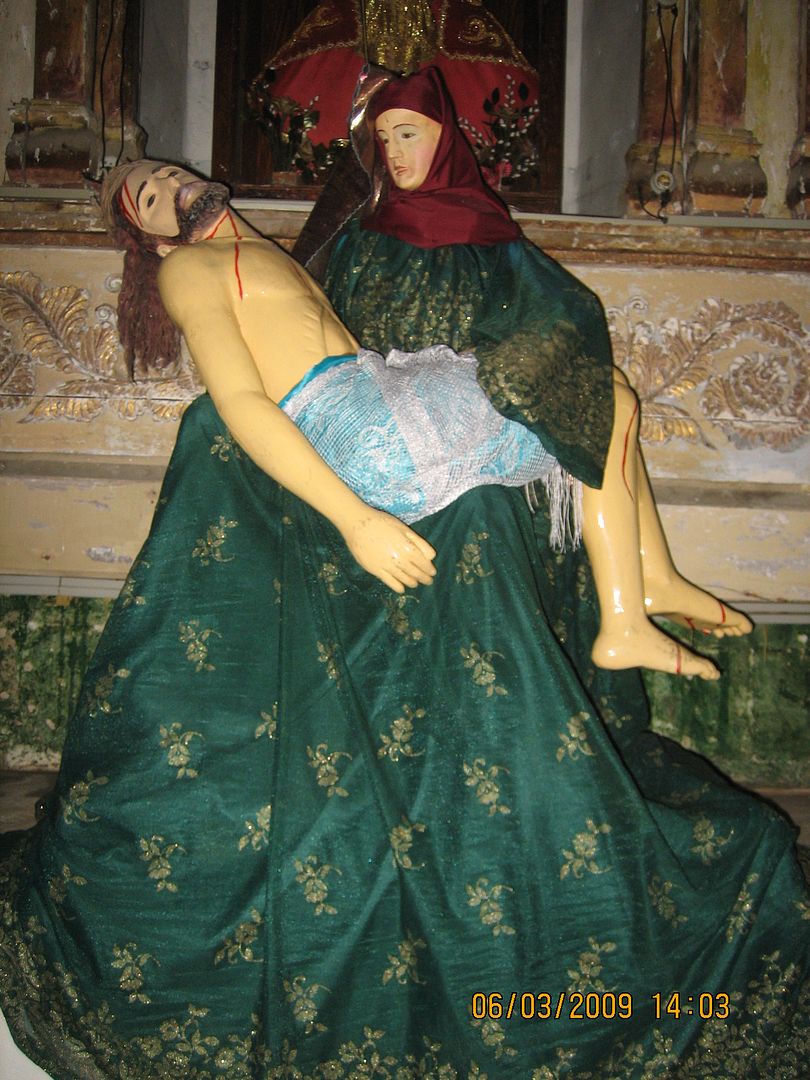
Fortunately, it was Lent when I visited, so Holy Week processional images were exposed and venerated in the sanctuary area, including this Nazareno
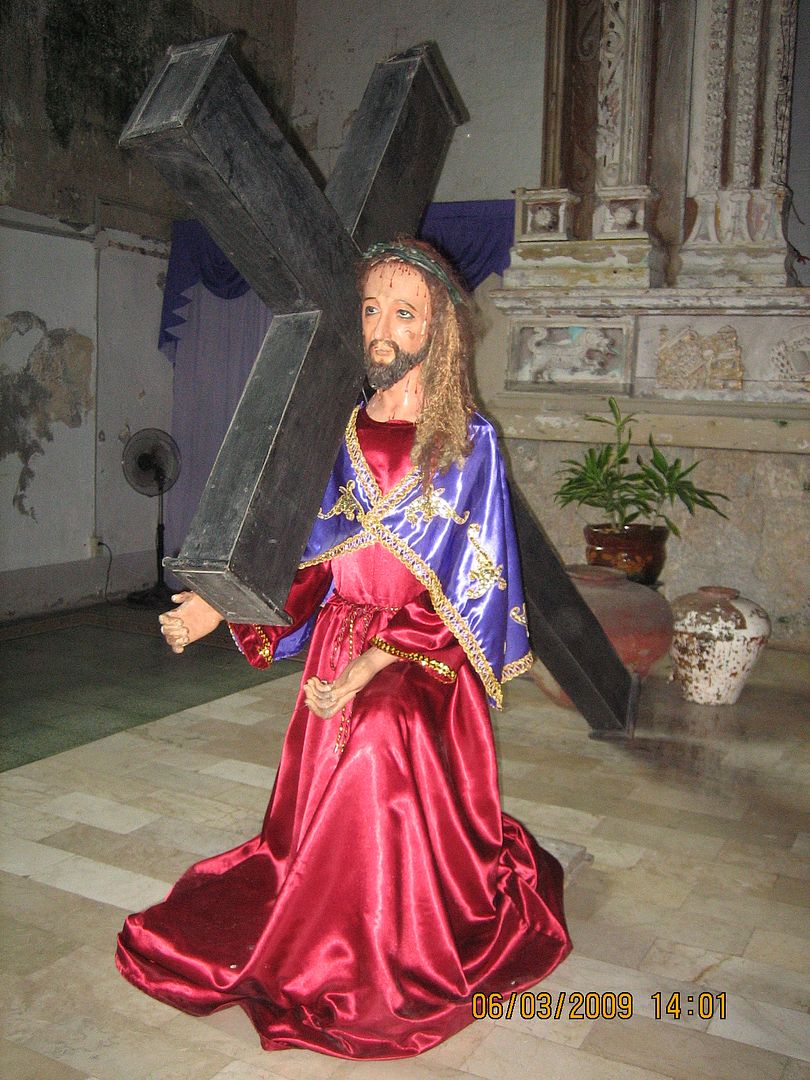


this Dolorosa


and this Pieta


And with just minutes to spare, I end this ten-part Visita Iglesia (Plus) Bohol, rush to the Tagbilaran airport, and resolve to do more of this at some future time. In the meantime, why not do your own self-guided Bohol nature and heritage tours yourself?

Originally published on 24 July 2011.  All text and photos copyright ©2011 Leo D Cloma. The moral right of Leo D Cloma to be identified as the author of this work has been asserted.


Original comments:

        Compare this with the Maribojoc church interior as it looked in 1912:
http://arcastro57.multiply.com/photos/album/66/BEFORE_STRANGE_ALTARS#photo=14


rally65 wrote on Sep 28, '11
The retablo looks to be exactly the same. It's interesting how there were so few pews in those days.

CXXIV. Visita Iglesia (Plus) Bohol IX – The Cortes Church

After leaving Loboc Church, we took a quick no-frills lunch in Tagbilaran the capital of Bohol province, and from there proceeded on a northwardly route with no specific destination in mind. Somehow we found ourselves in the quiet town of Cortes.


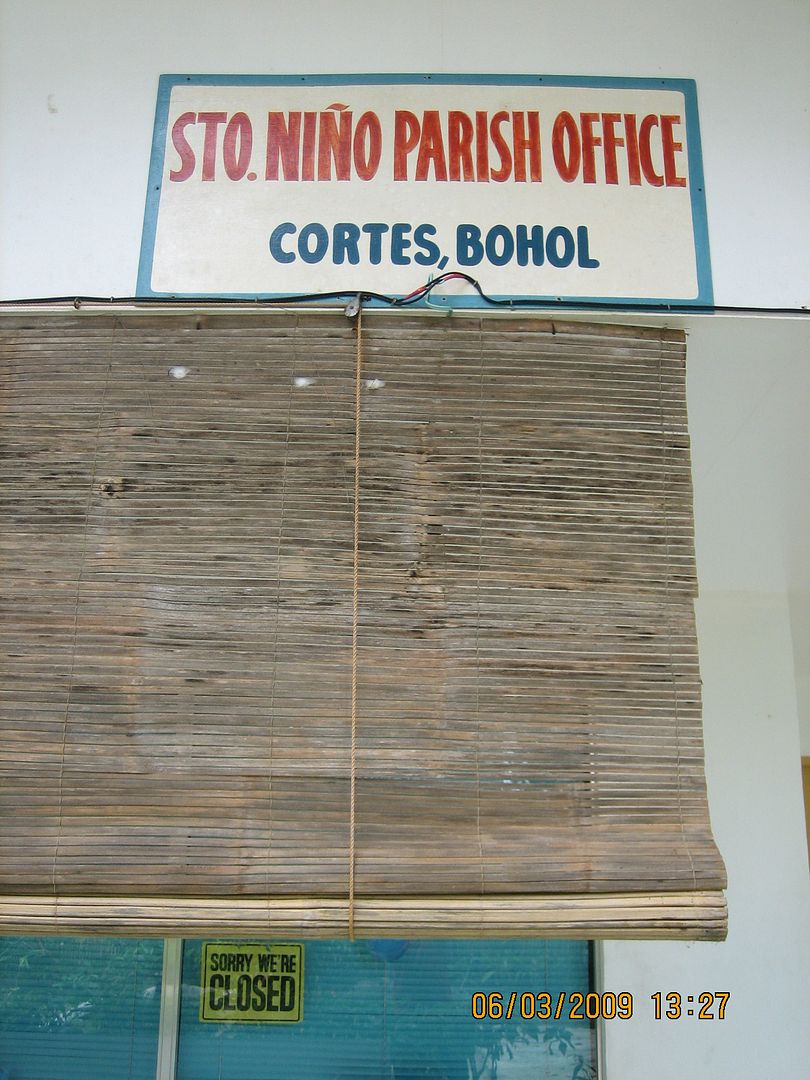
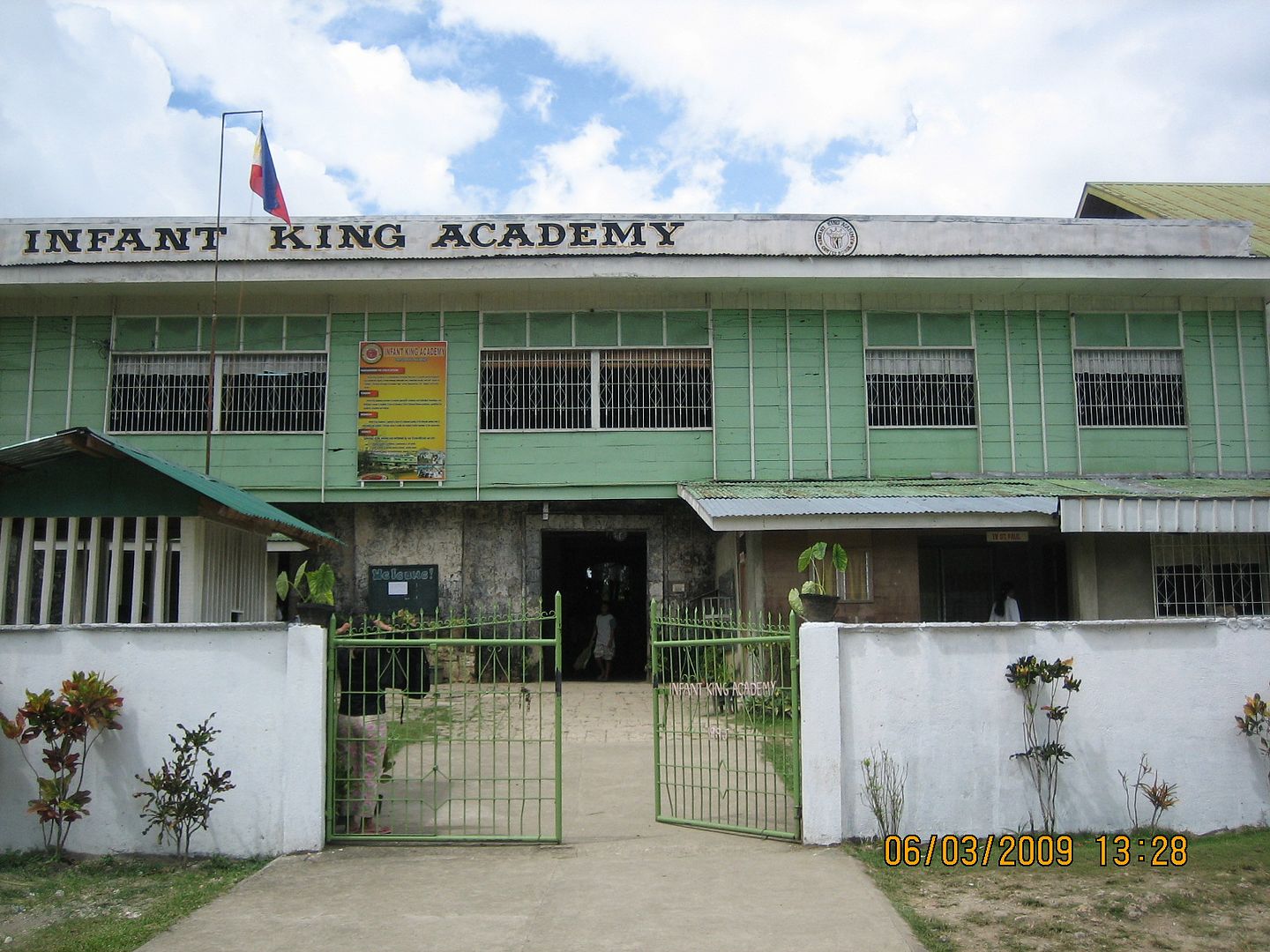
The parish office window in the photo above still being closed for lunch, we walked over to the school (formerly the convento) just behind the church to make inquiries as to how to enter the church itself, also closed.


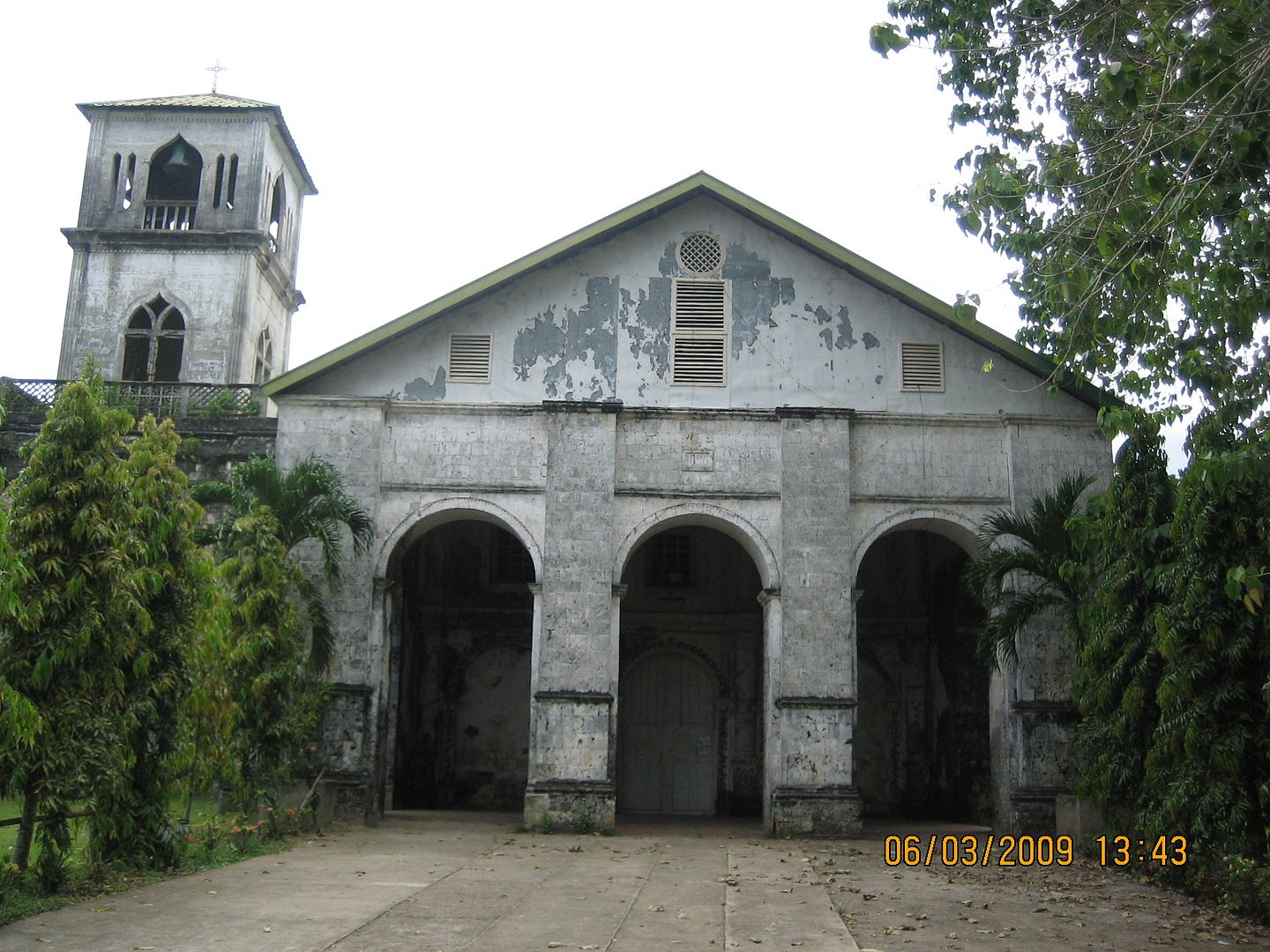
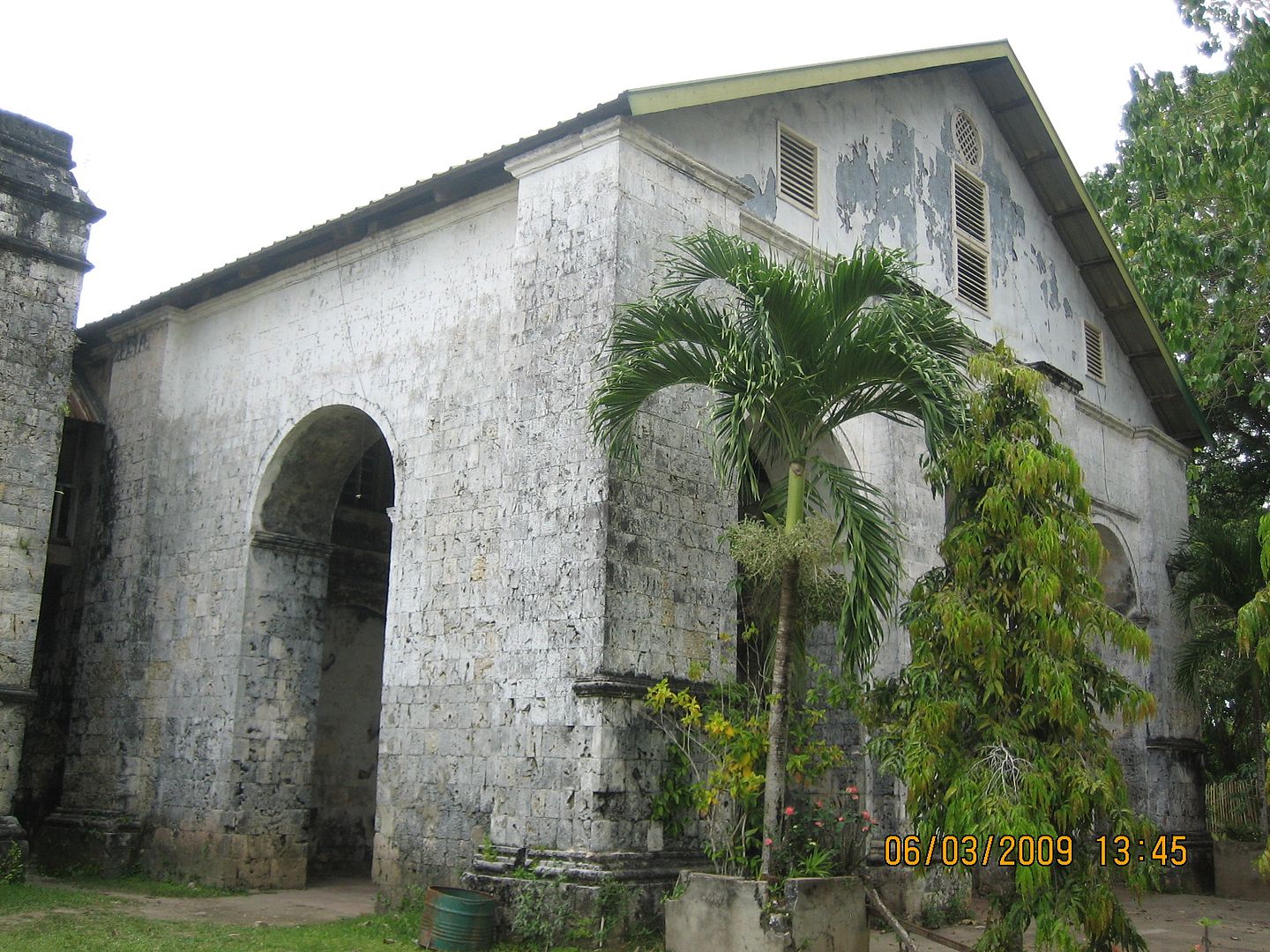
While waiting for the keyholders, we went around the church structure, which according to the Visita Iglesia Bohol guidebook was started in the 1880’s and completed in the 1890’s. The stone façade is simple,


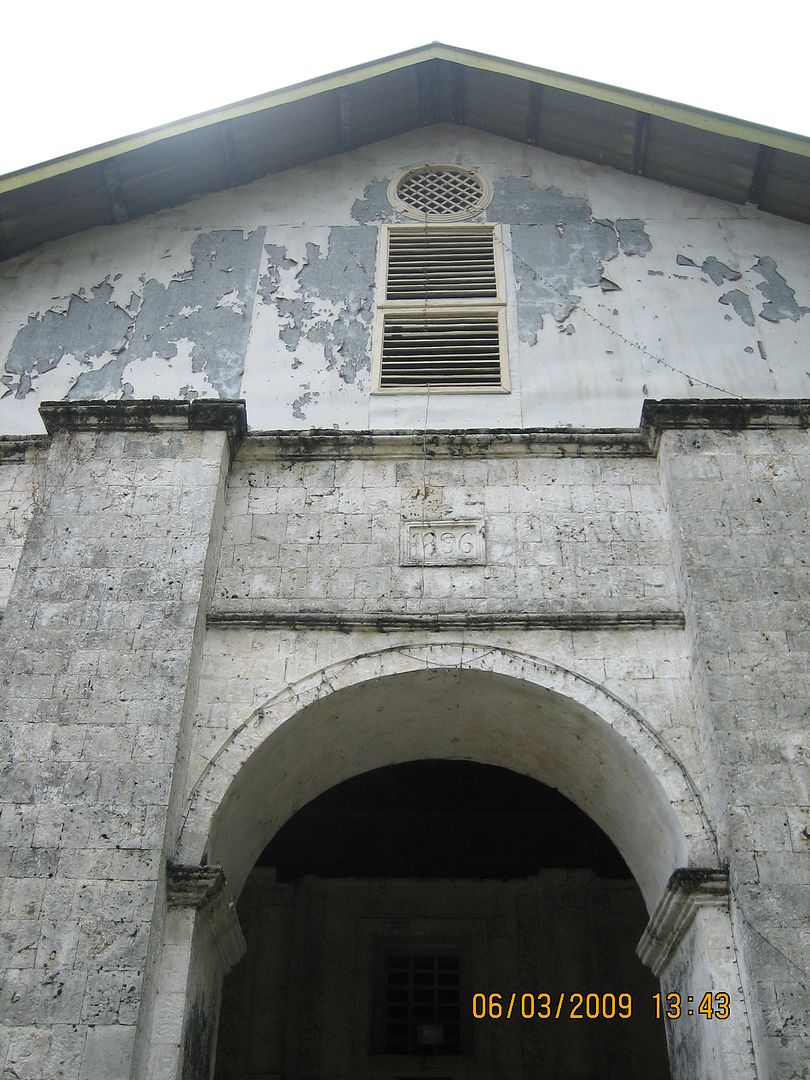
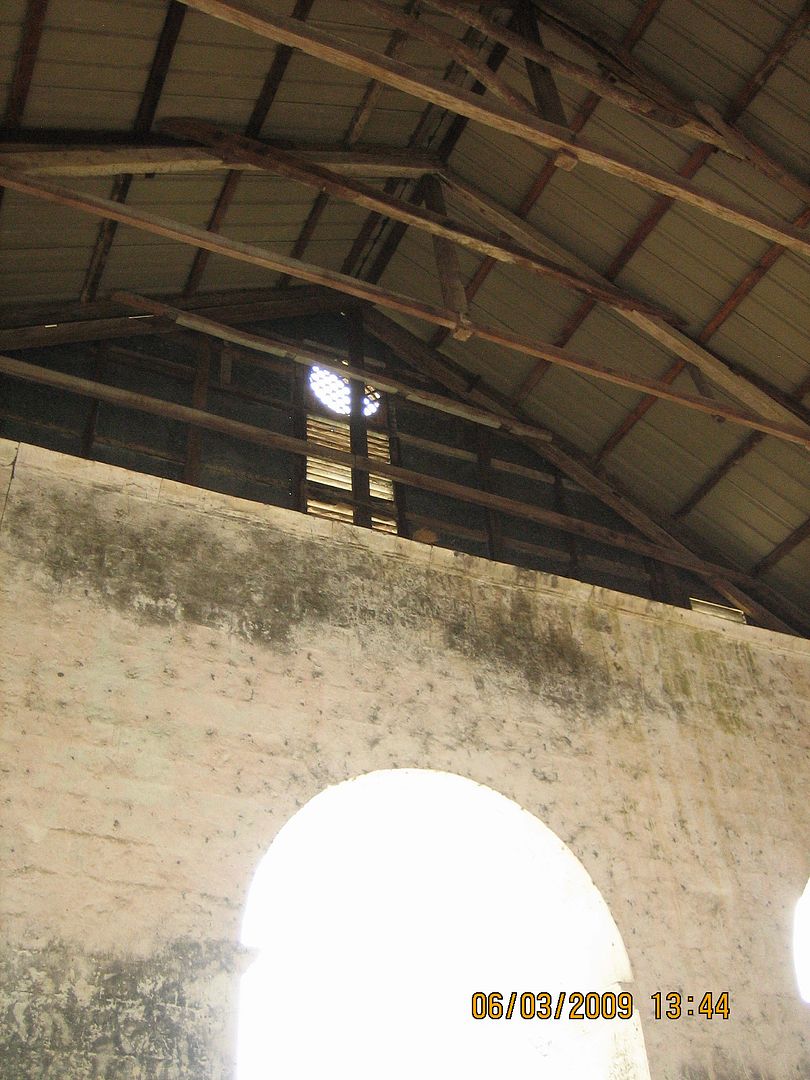
with a triangular pediment made of galvanized iron sheets as in Loboc, right under which the year 1896 is carved in stone above the central passageway.


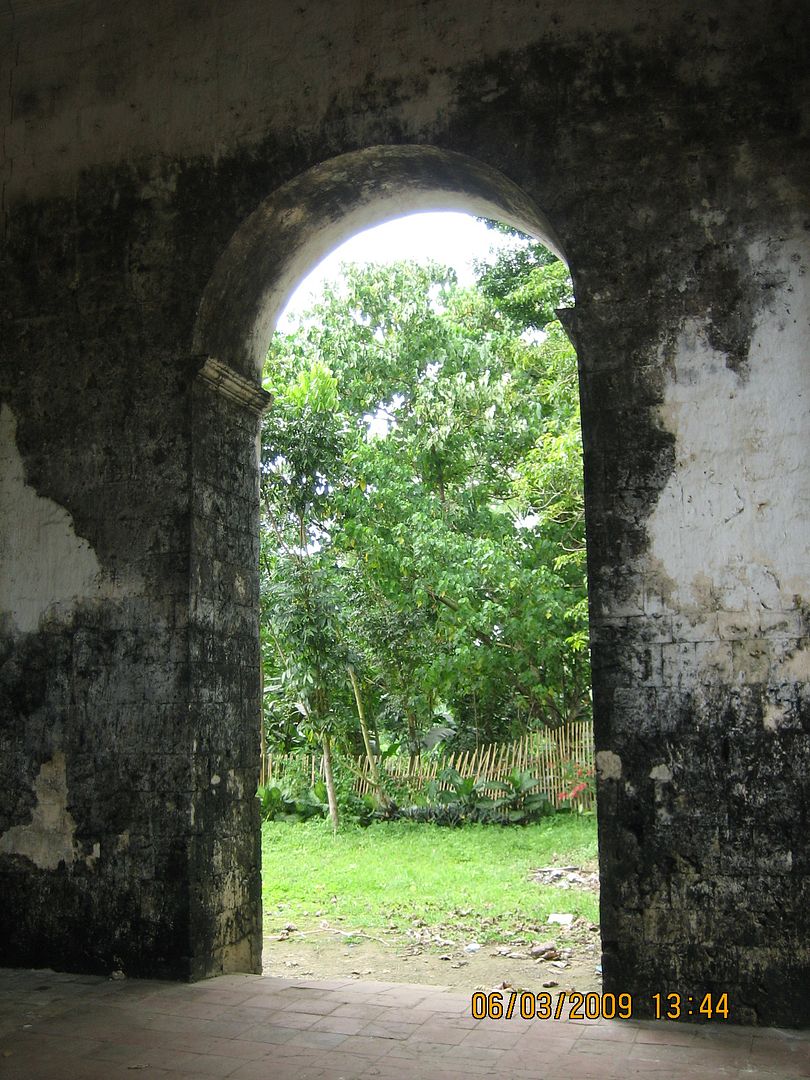
As in most other Bohol churches, the façade of the Cortes Church is actually an arcaded portico.


Inside the portico-façade,


one can see the inside of the triangular galvanized-iron-sheet pediment


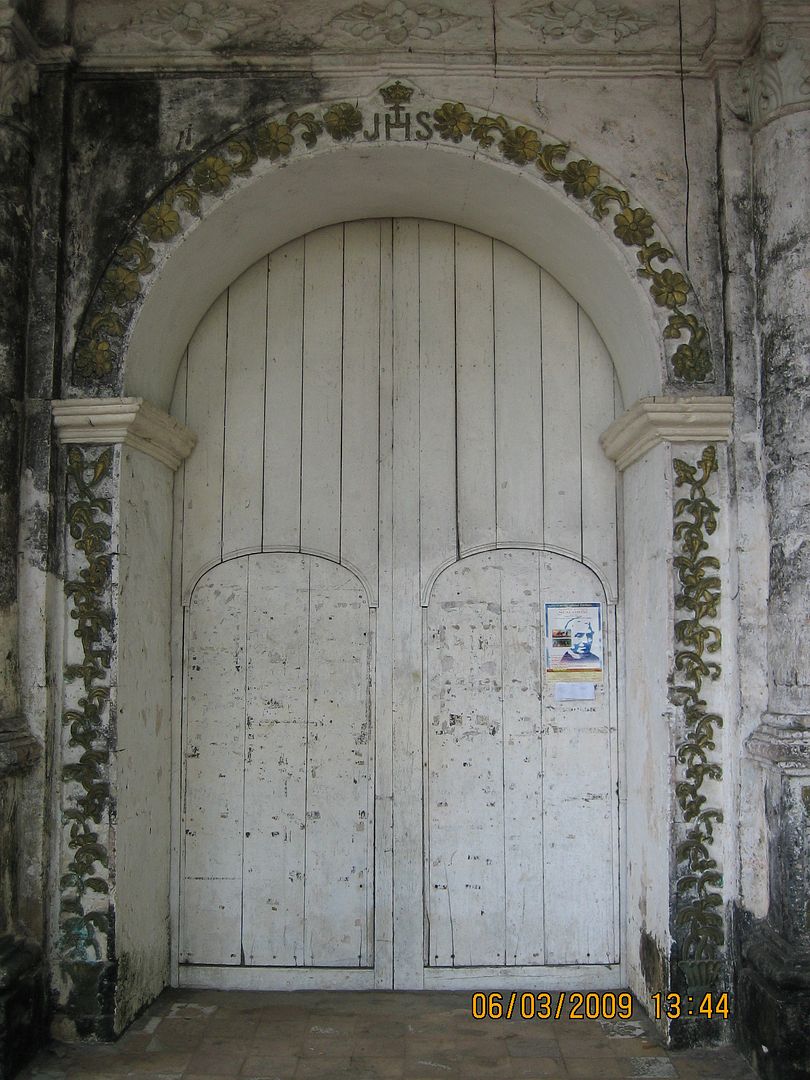
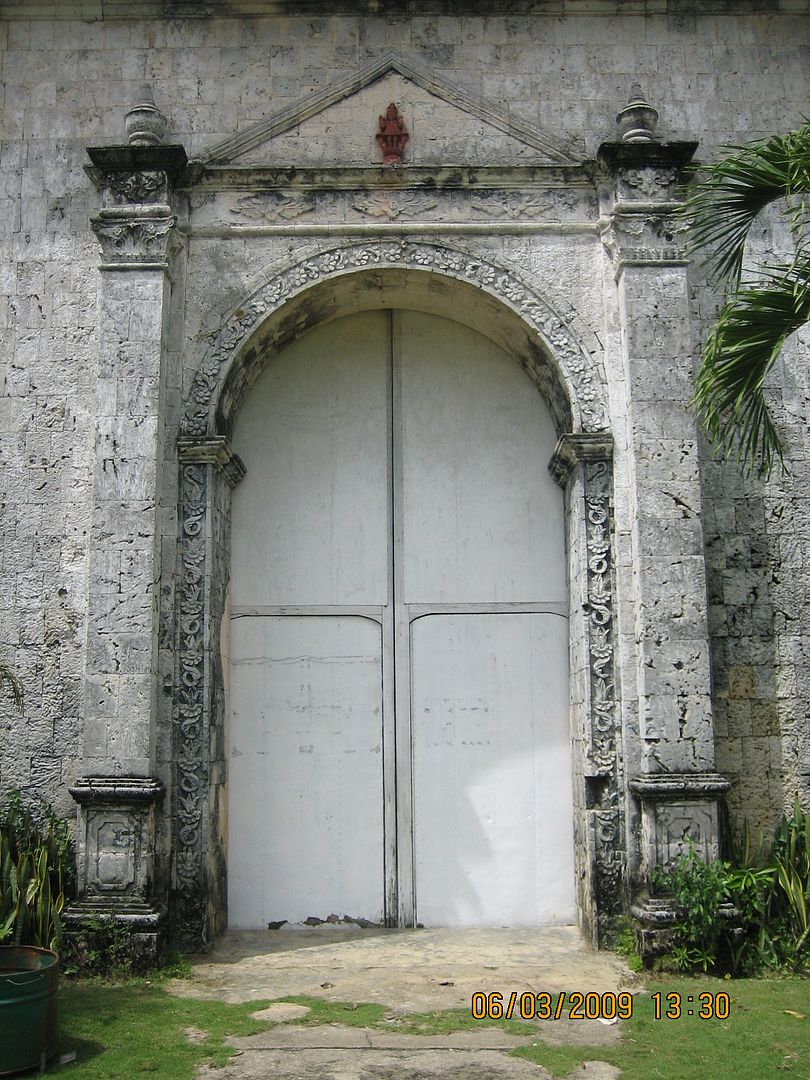
and the main wooden door up close, framed with floral decorations carved into the stone.


To the left of the façade is a belltower, with a hefty first storey and skinny upper storeys,


which connects to the main church structure via this narrow covered bridgeway.


Going around to the rear of the belltower,


we get to view the church’s left-side elevation,


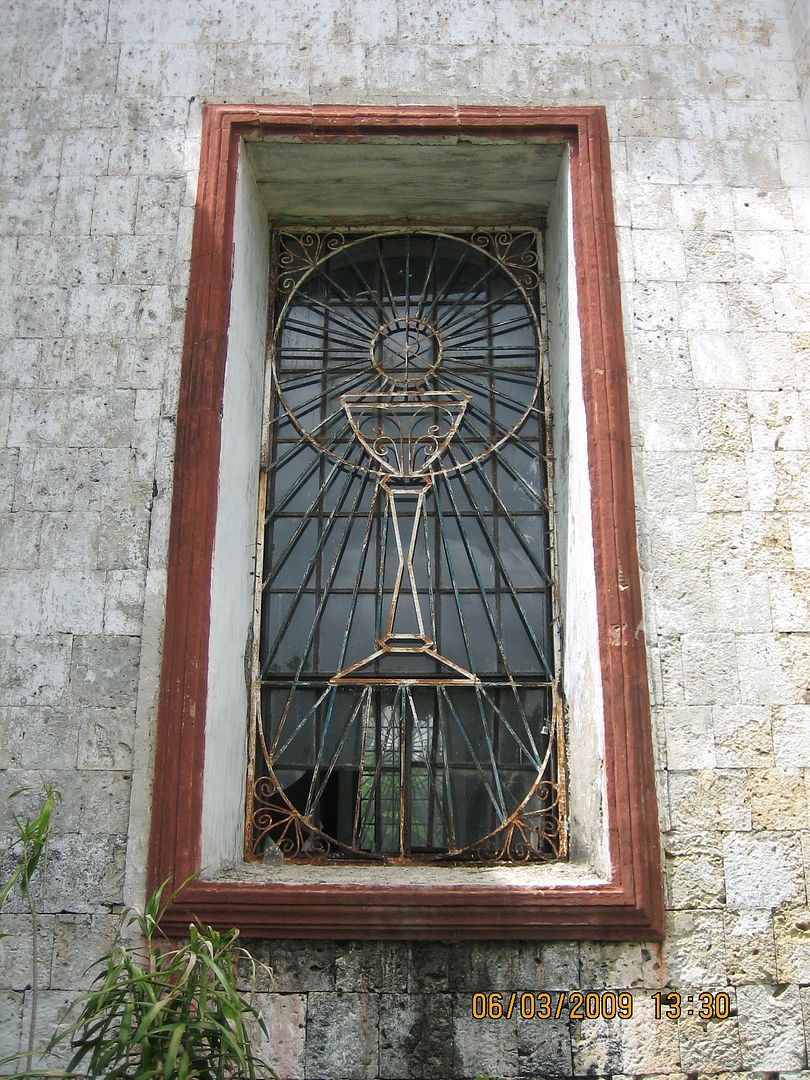
and along the way pass an ornately-grilled side window,


and a side entrance, also decorated with carved flowers as in the main entrance.


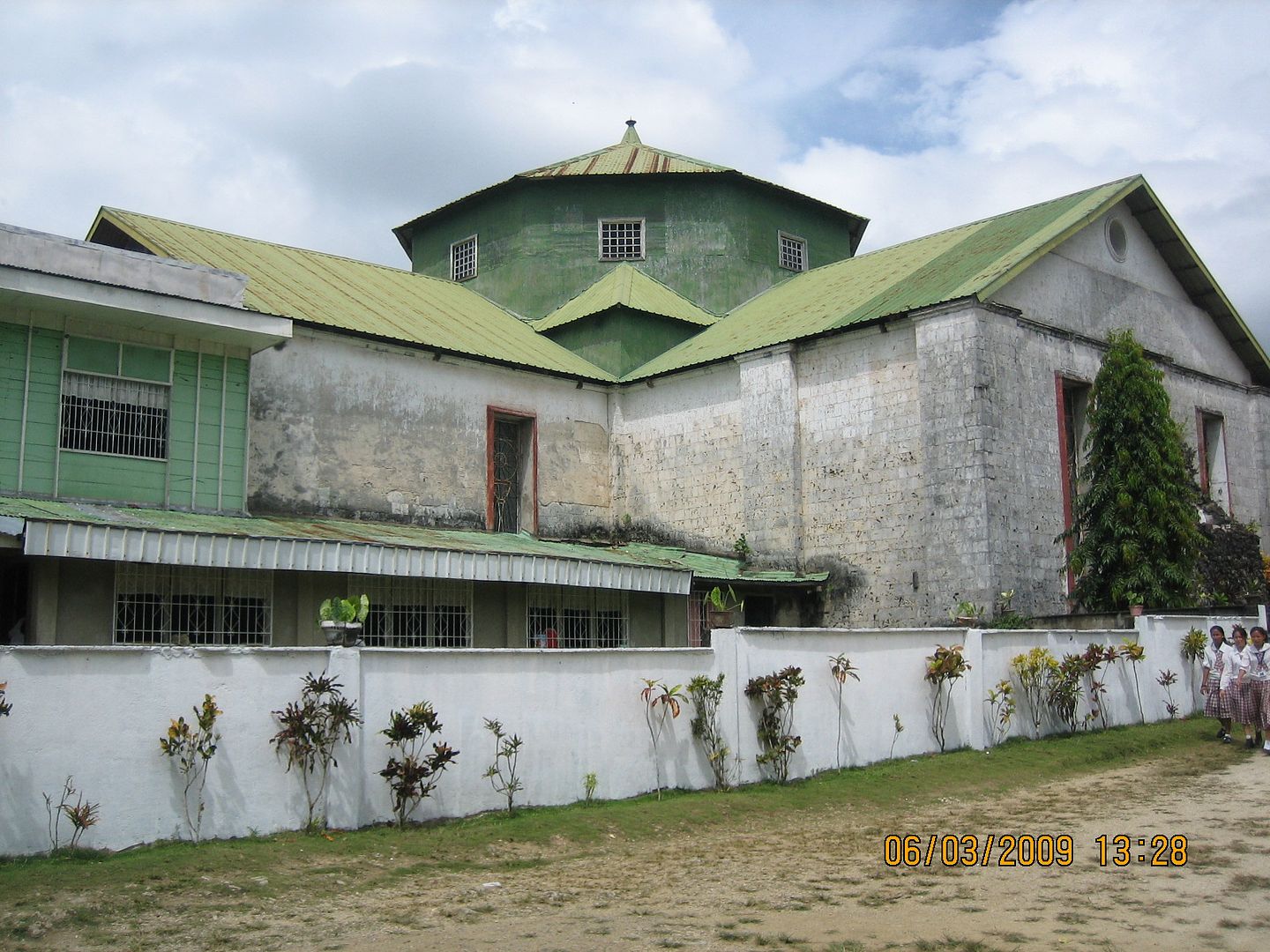
Further towards the rear of the church, we get a good view of the octagonal dome above the crossing,


with the parish office and the school to the left in the above photo.

It is through the school that we finally gain admittance into the church, via the sacristy and through main altar into the nave.

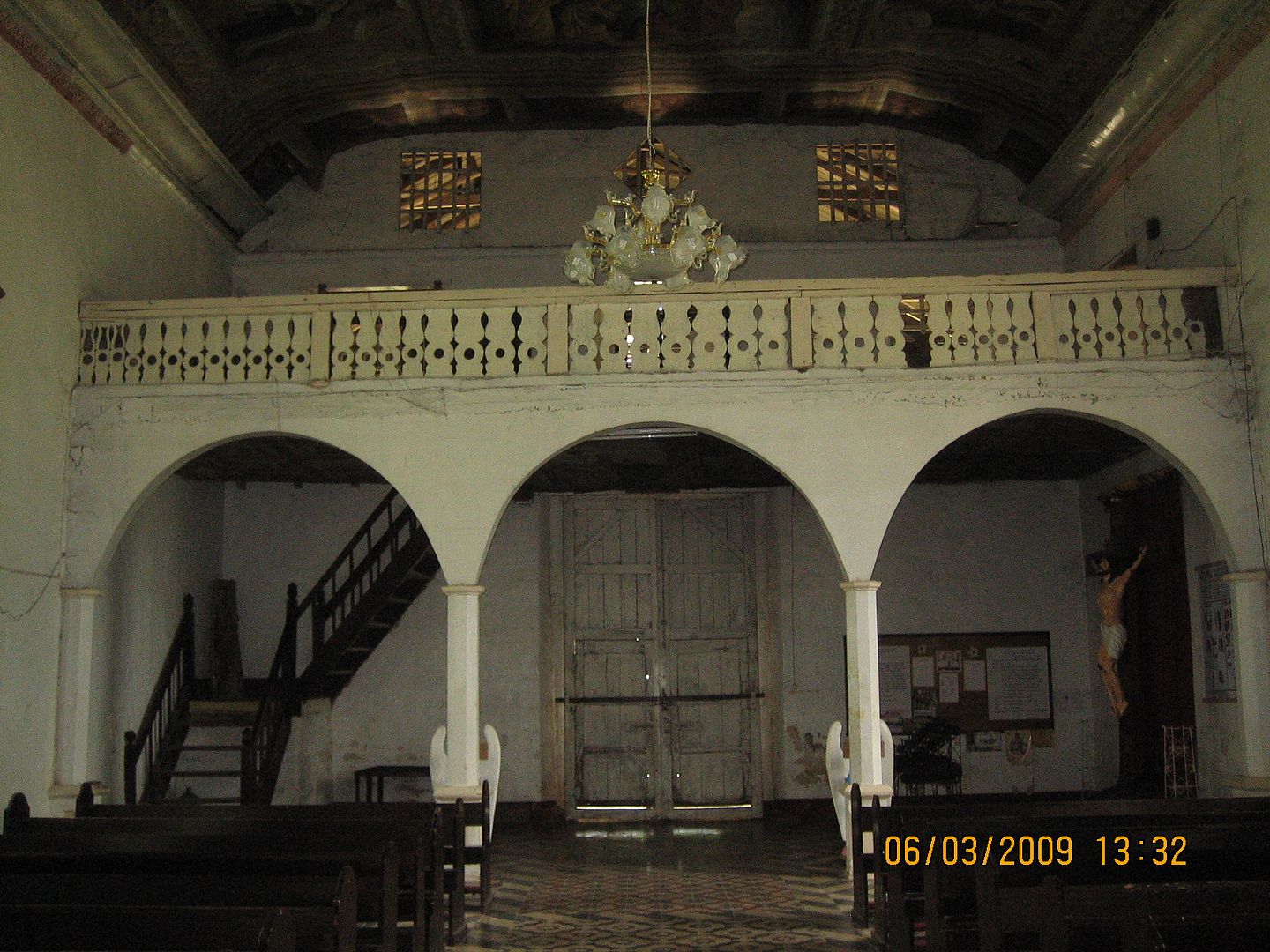
I first proceed to the rear of the church, near the main entrance, and take a look at the choirloft, whose balustrade resembles the transom panels inside late 19th century Philippine ancestral houses.


The inside of the main doorway that we saw earlier from outside is here.


In one corner under the choirloft is the staircase that leads up to it,


and on the opposite side is a large crucifix, greeting devotees as they enter.


From here, we walk up the long and narrow nave,


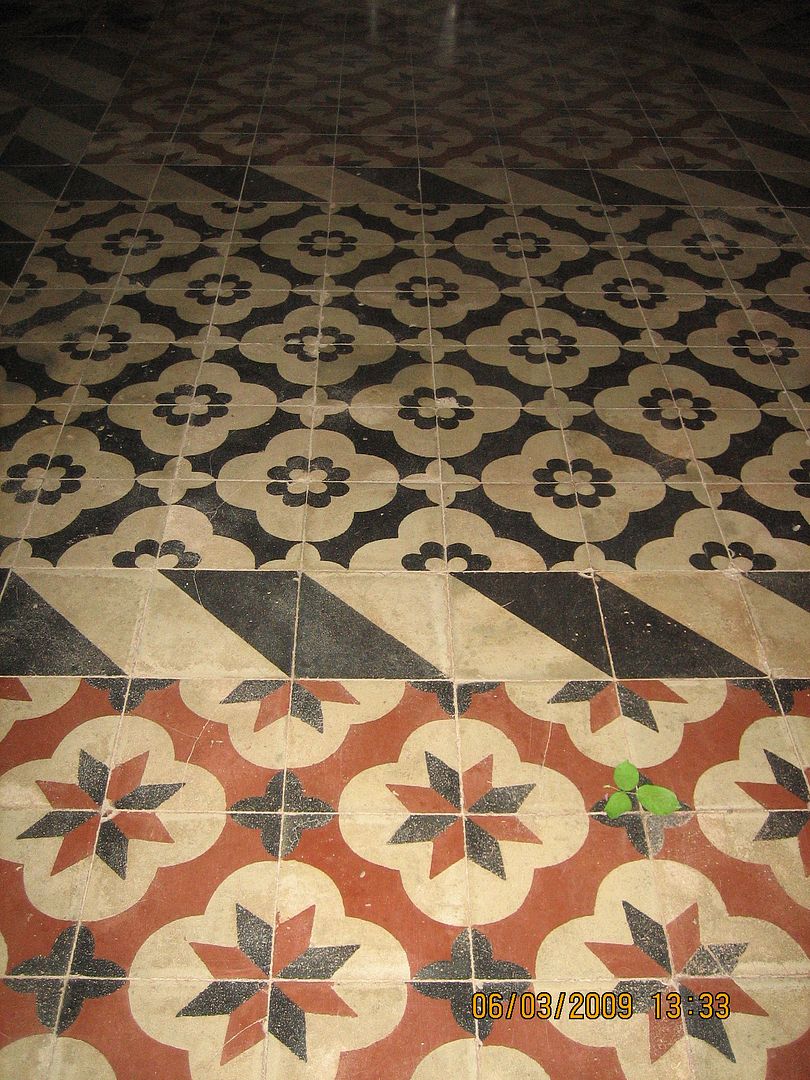
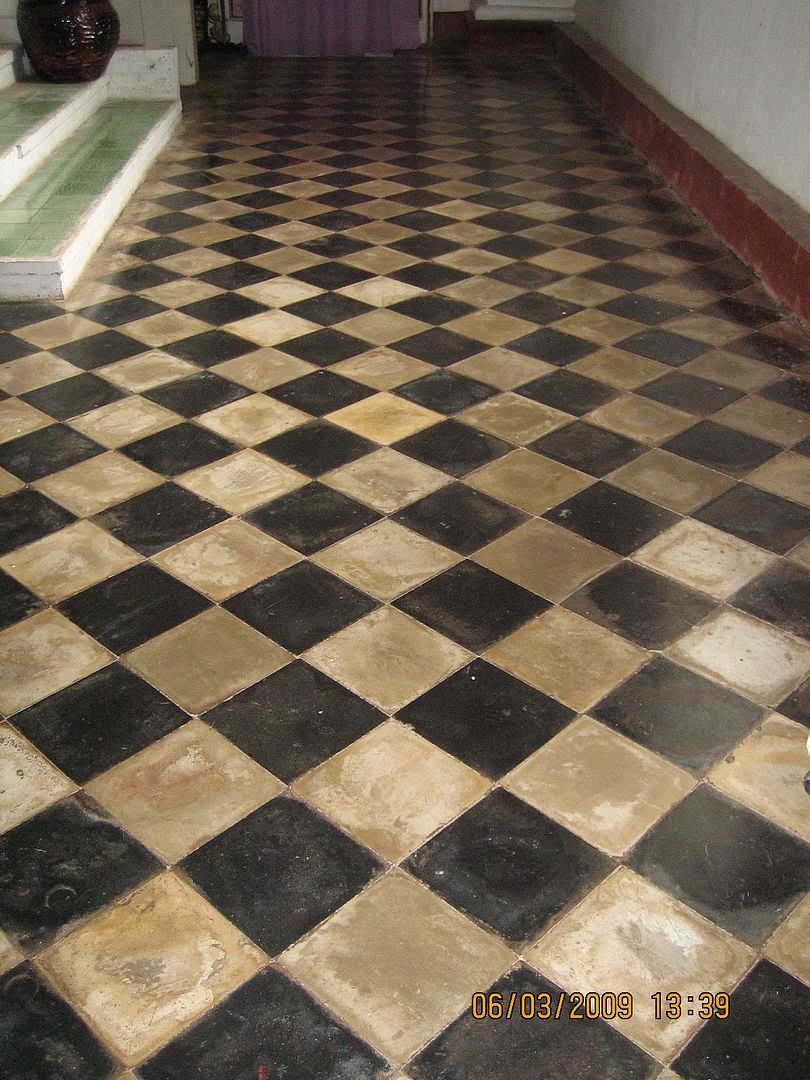
and tread on a variety of colored cement tiles, probably all original, or at least from the early 20th century.


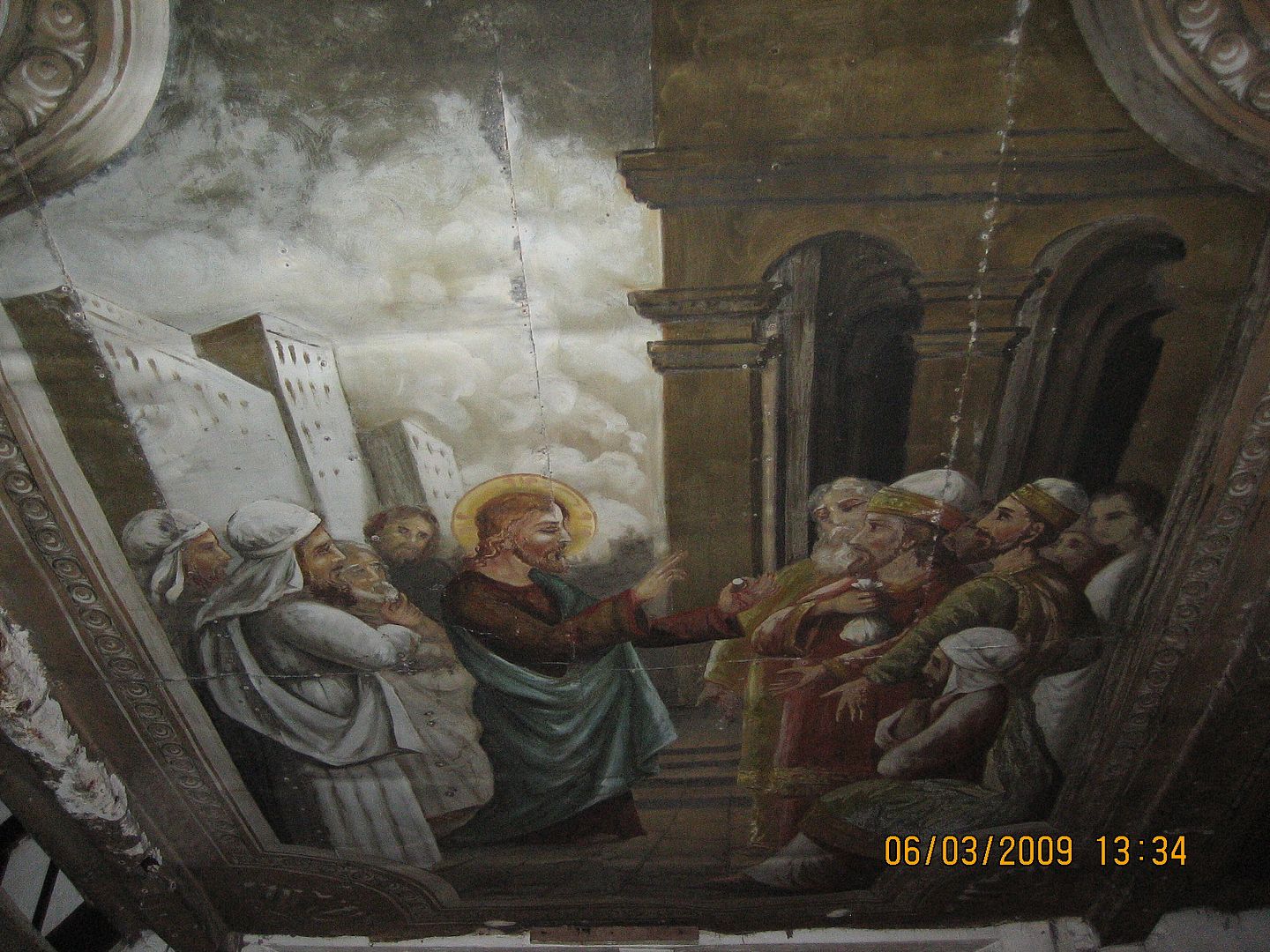
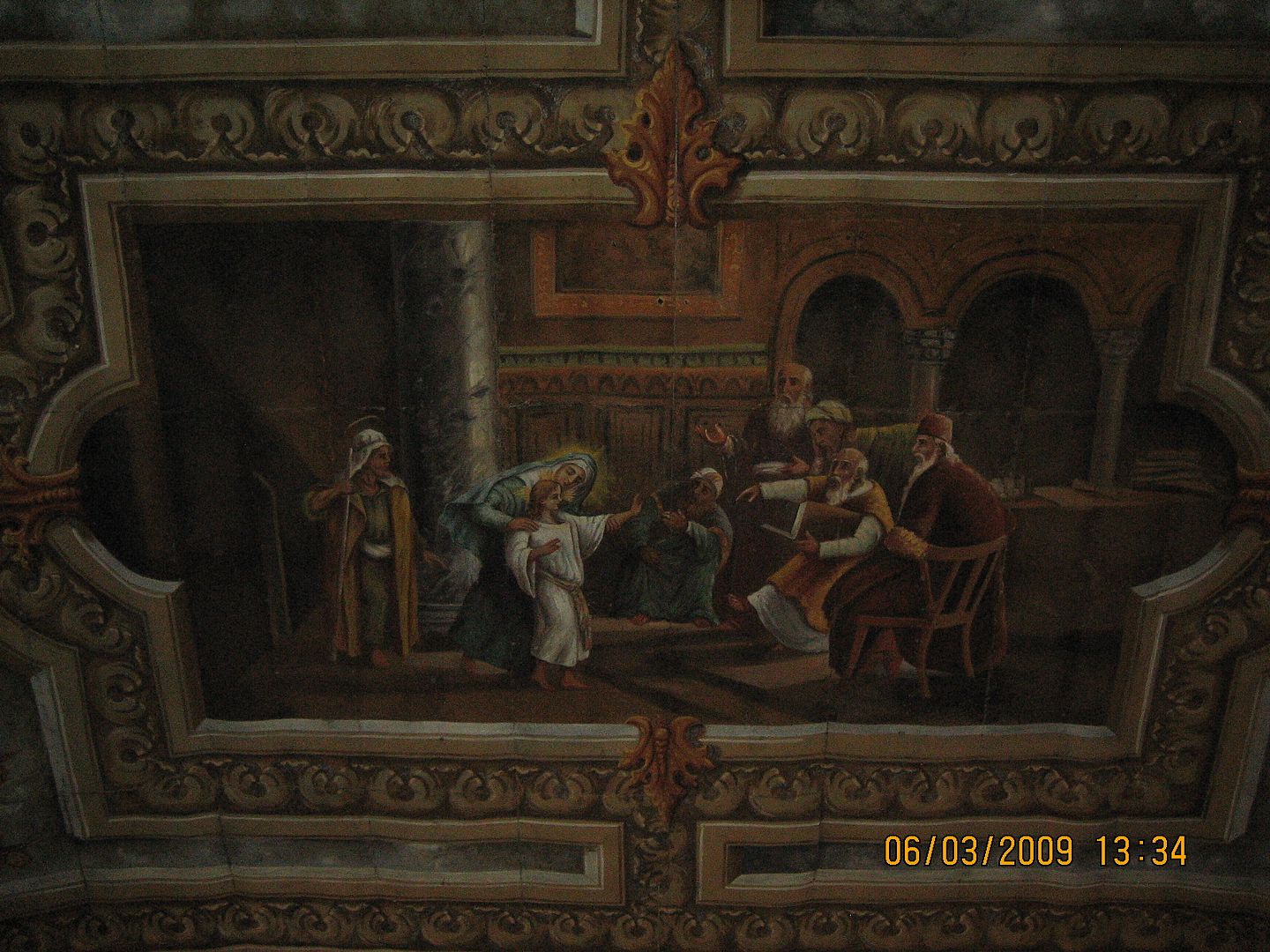
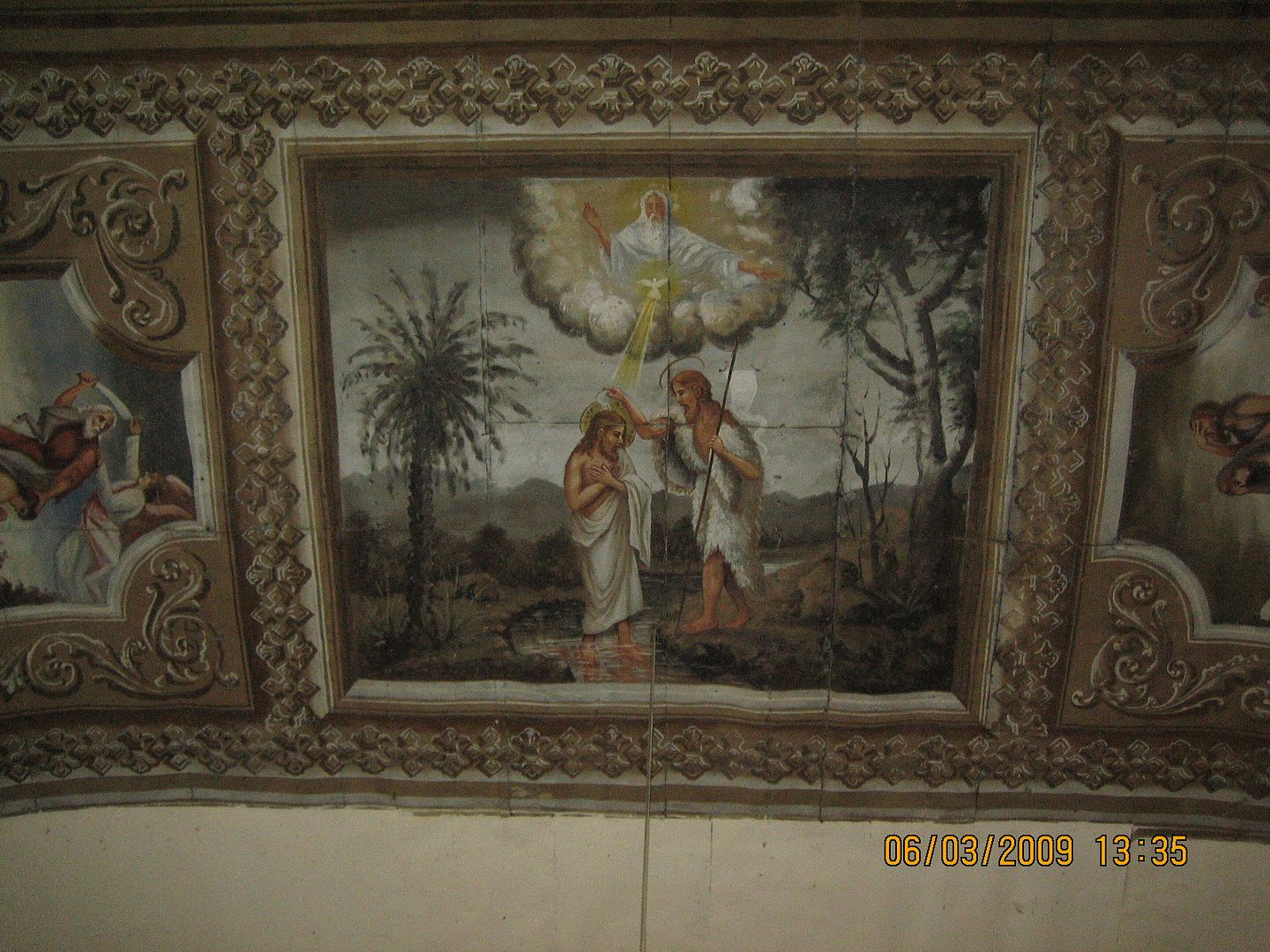
Like many Bohol churches, Cortes has a beautiful painted ceiling. These are attributed to Ray Francia, whose signature (which I did not get to see) is painted above the choirloft. A variety of interesting religious scenes are depicted, including Christ before the Pharisees “rendering unto Caesar what is Caesar’s,”


the Loss and Finding of the Child Jesus in the Temple,


and the Baptism in the River Jordan.


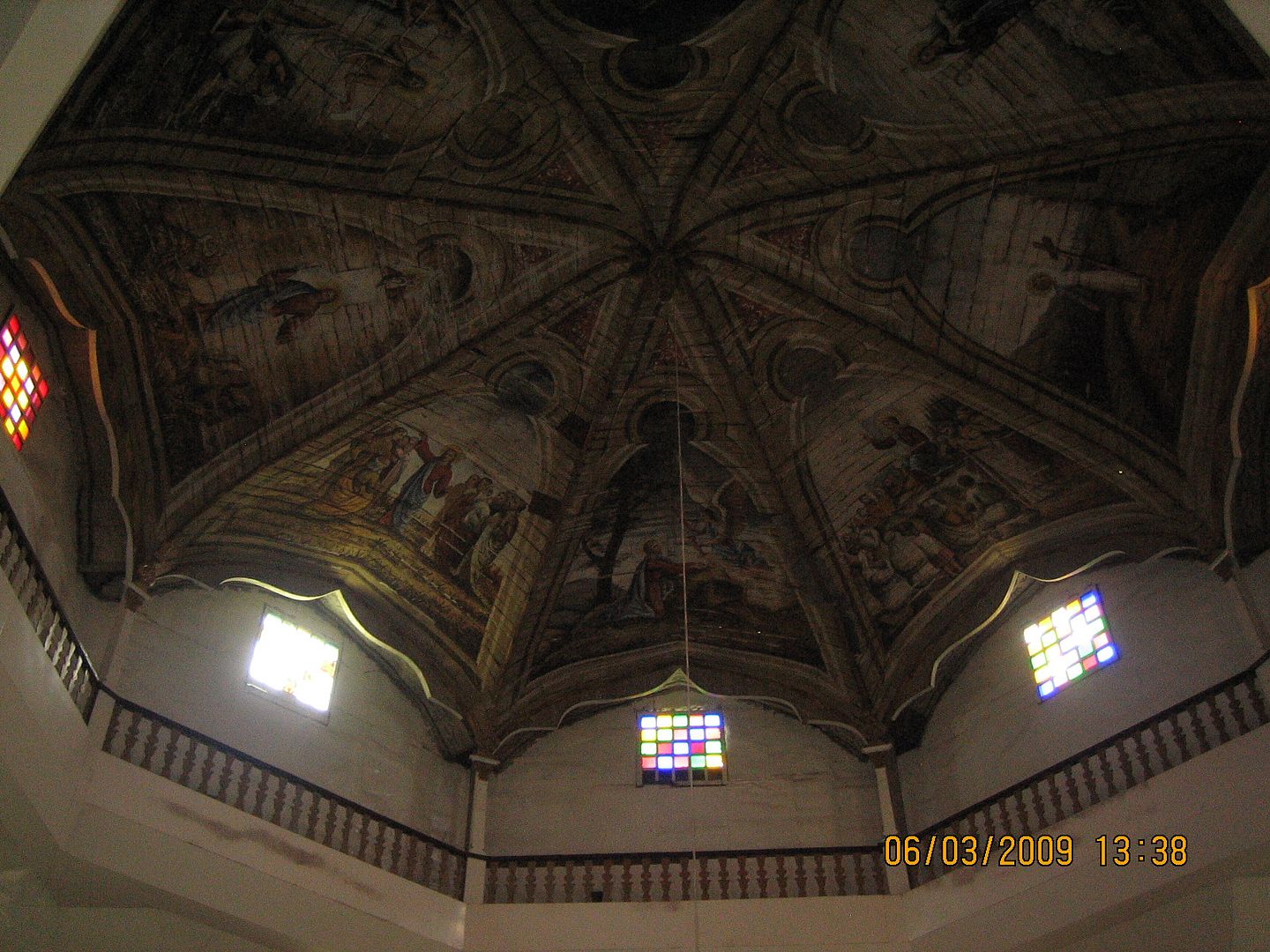
Above the crossing is a dome whose ceiling is painted with even more religious scenes.


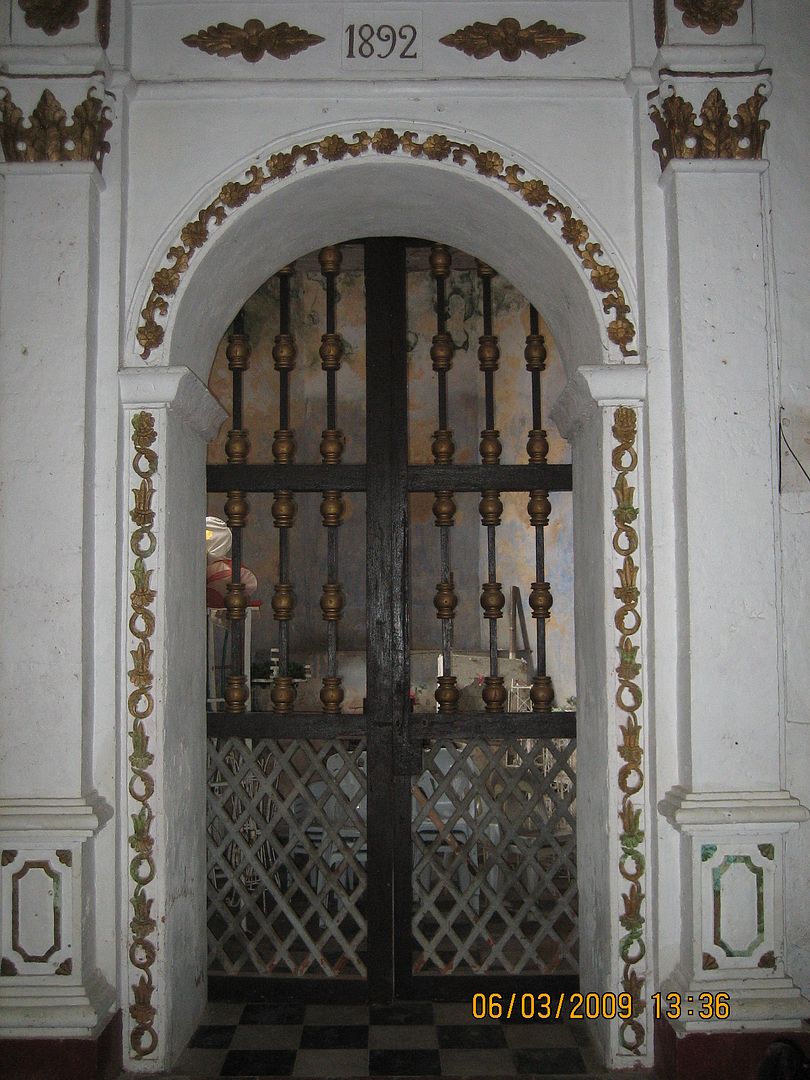
At the left-side end of the transept is a closed door with turned wooden bars that leads to the old Baptistry. Like the main entrance up front, it too is decorated with carved flowers, but this one is inscribed with the year 1892, making it somehow older than the façade.


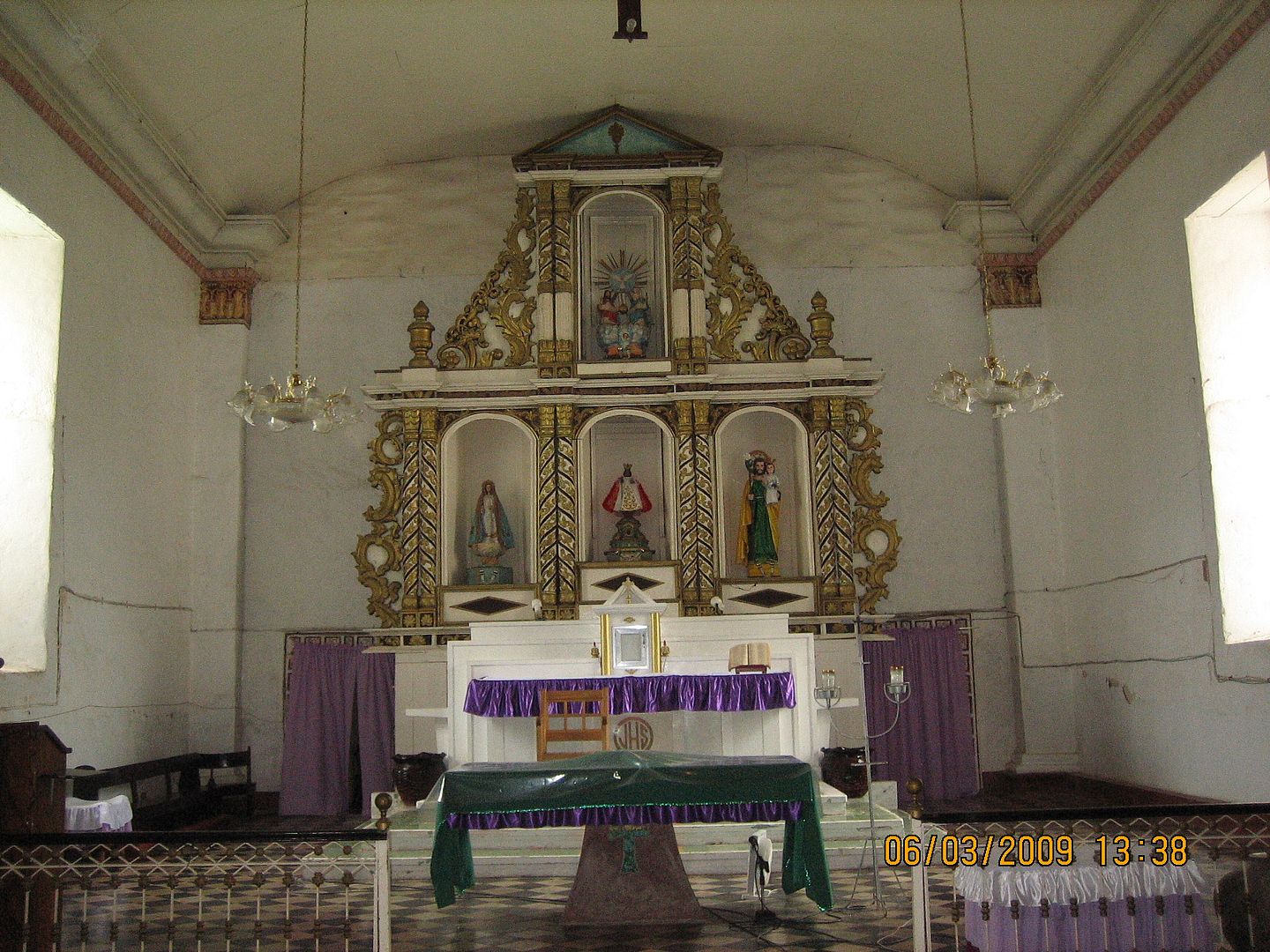
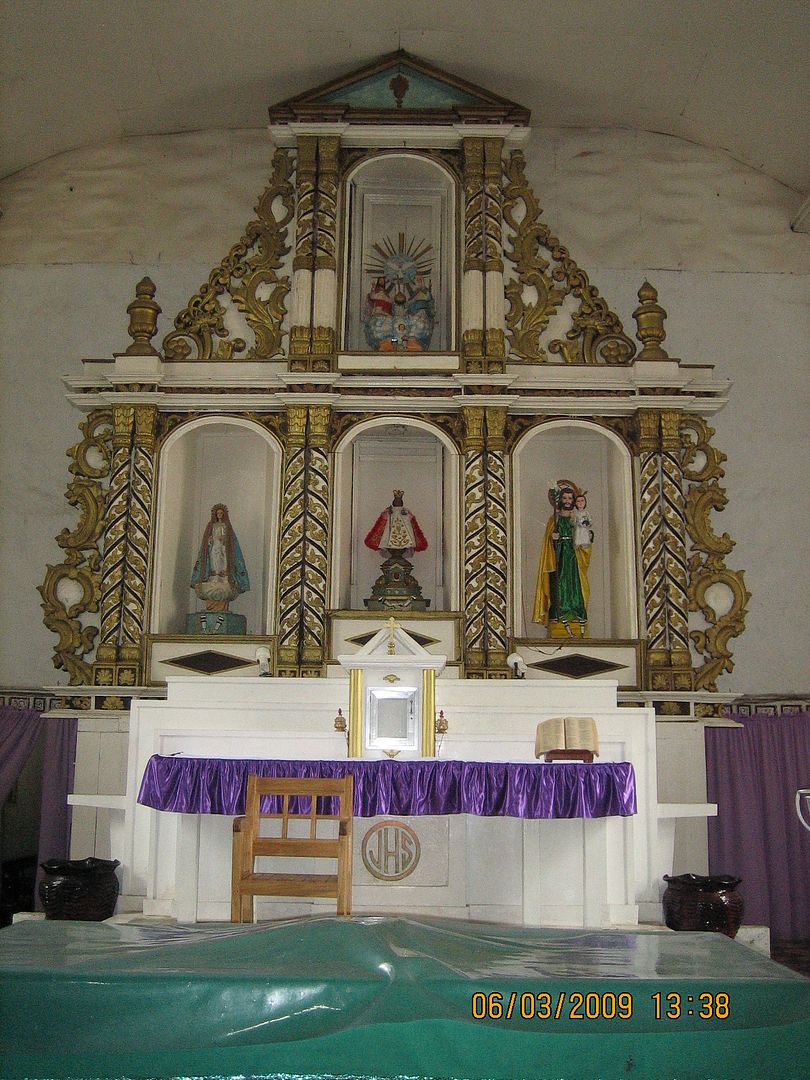
The main altar is simple and appropriate to this relatively modest church structure.


The floor of the sanctuary is made up of cement tiles in a checkerboard pattern.


In the central niche of the retablo is the patron, the Holy Child Jesus, flanked on the left by the Immaculate Conception and on the right by Saint Joseph holding the Holy Infant; in the top niche above is the Holy Trinity.


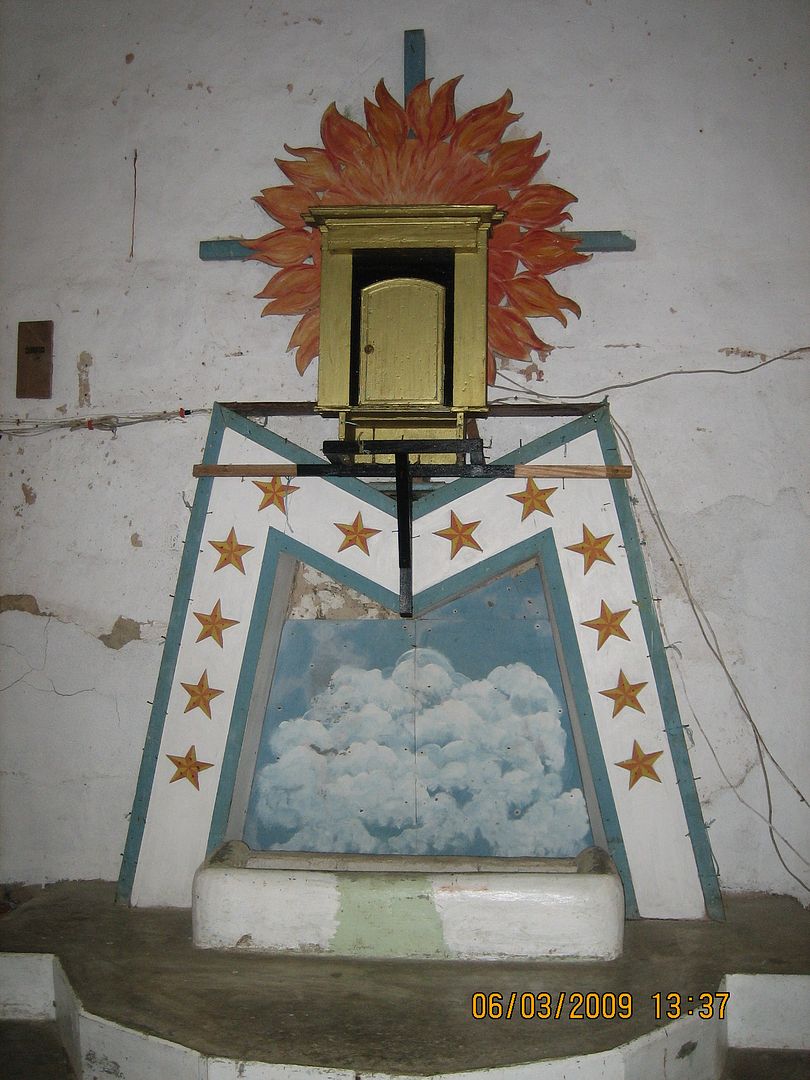
Off to one side of the main altar is the tabernacle above a large stylized Marian “M” with stars and clouds.


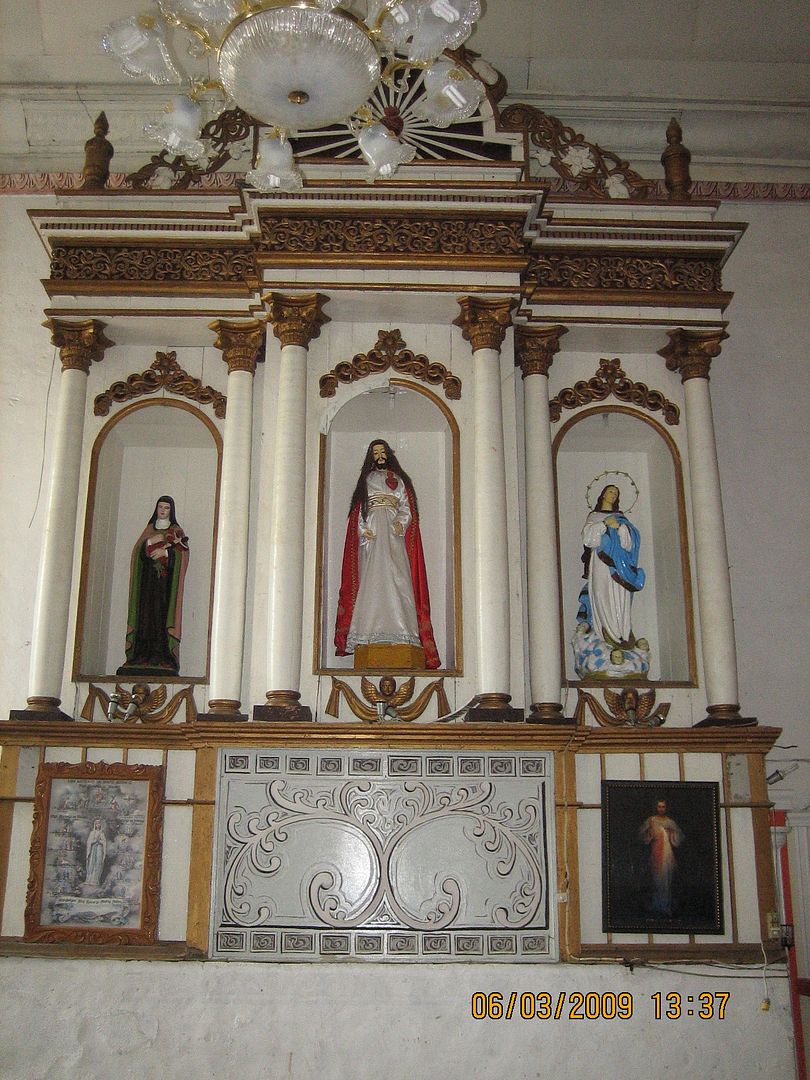
The side altar on the left features images of the Sacred Heart, Saint Therese of the Child Jesus, and the Immaculate Conception,


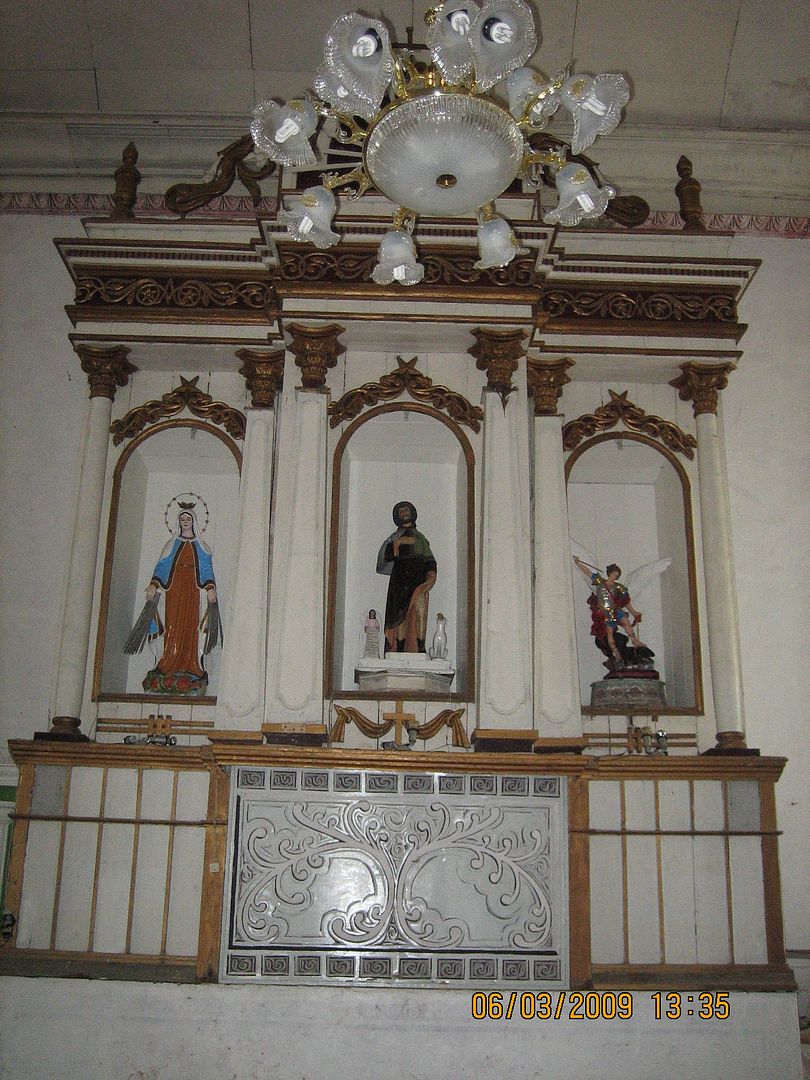
while the right side altar


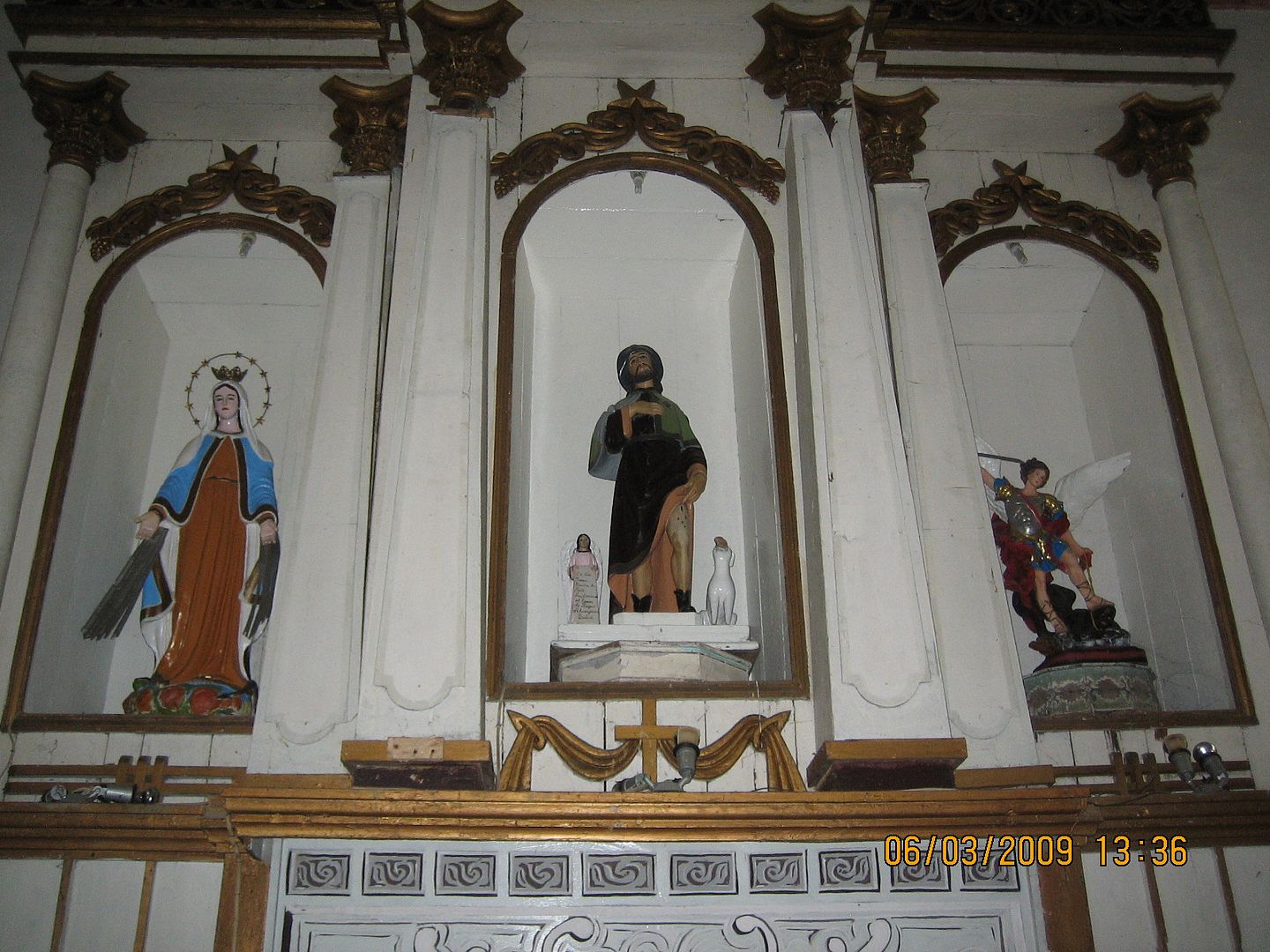
has Saint Roche, Our Lady of the Miraculous Medal, and Saint Michael the Archangel.


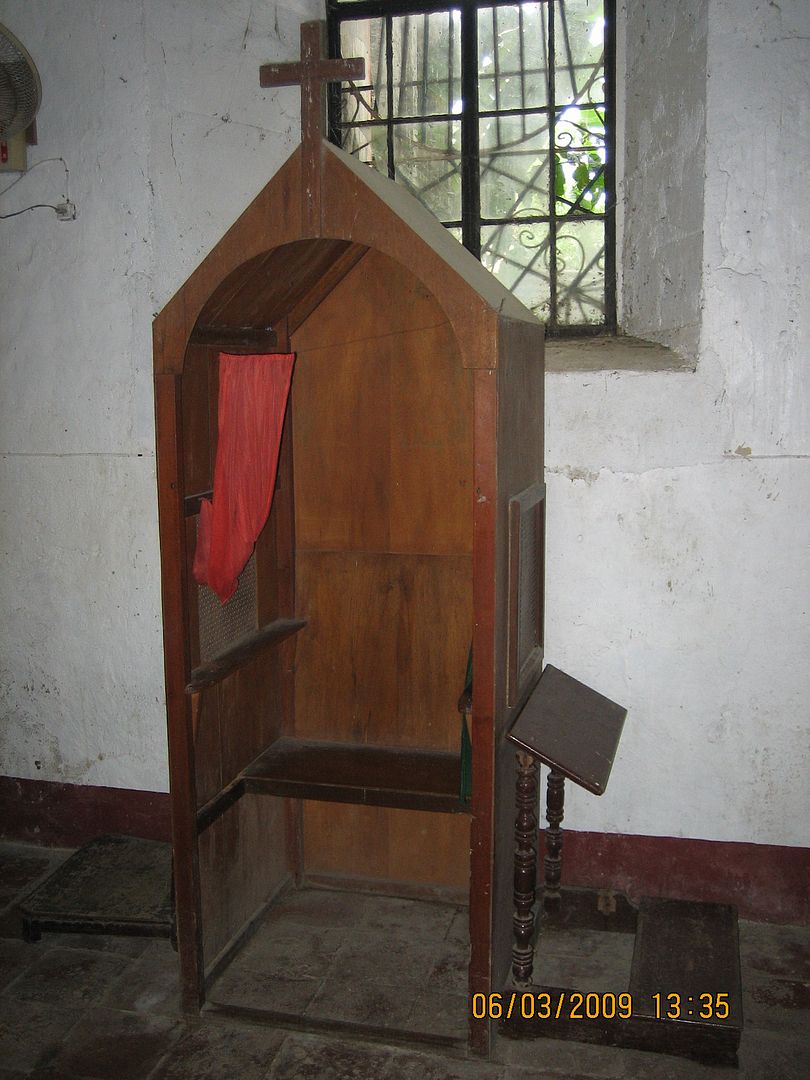
Elsewhere on the right side of the transept is a simple confessional.


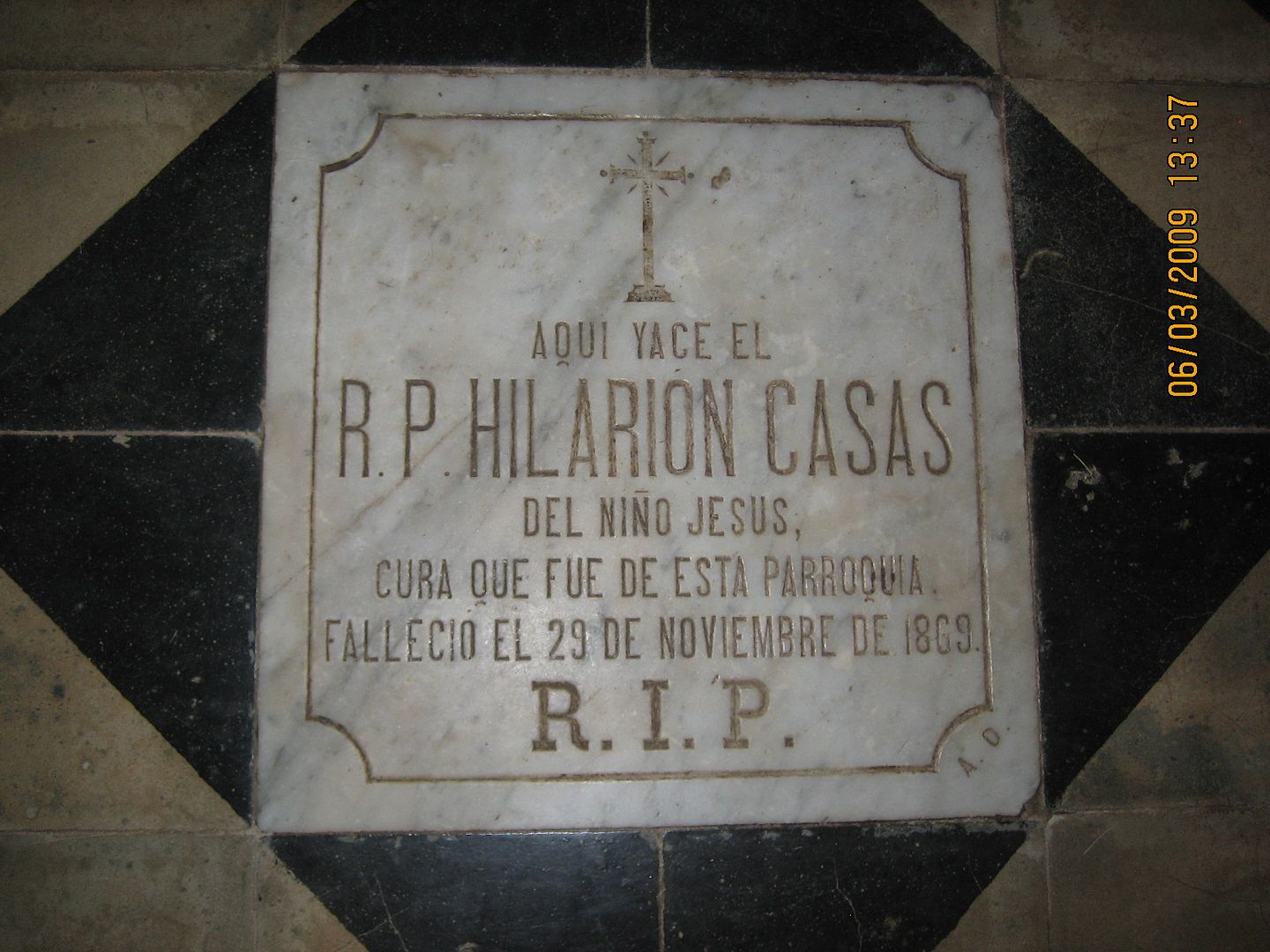
Cortes Church has not just one but two memorial stones set in the floor in the front part of the nave. The older one covers the remains of Reverend Father Hilarion Casas “of the Child Jesus,” who died on 29 November 1869,


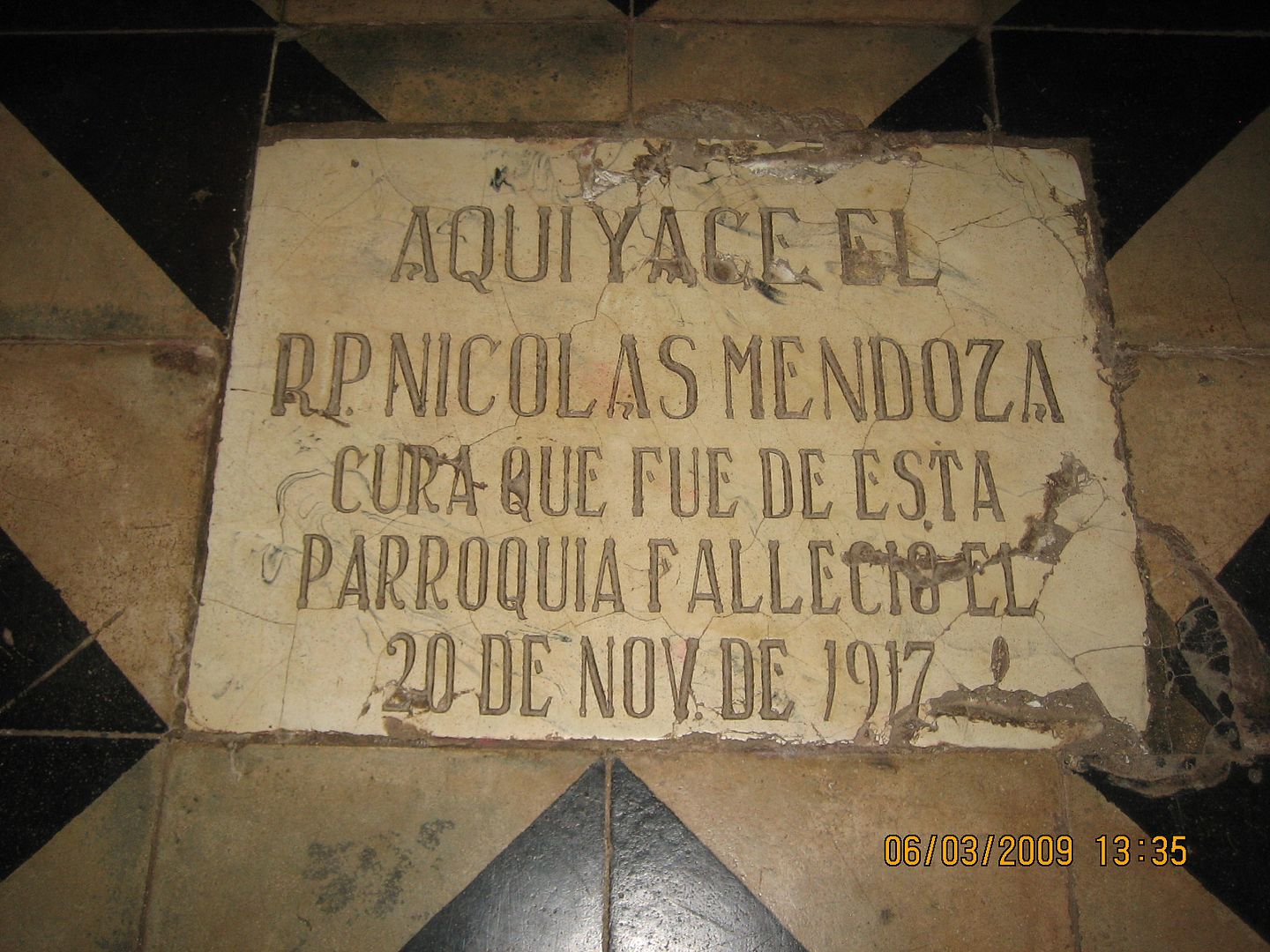
and the other marks the final resting place of Reverend Father Nicolas Mendoza, who died on 20 November 1917.


We leave the main church via the sacristy, right behind the main altar.


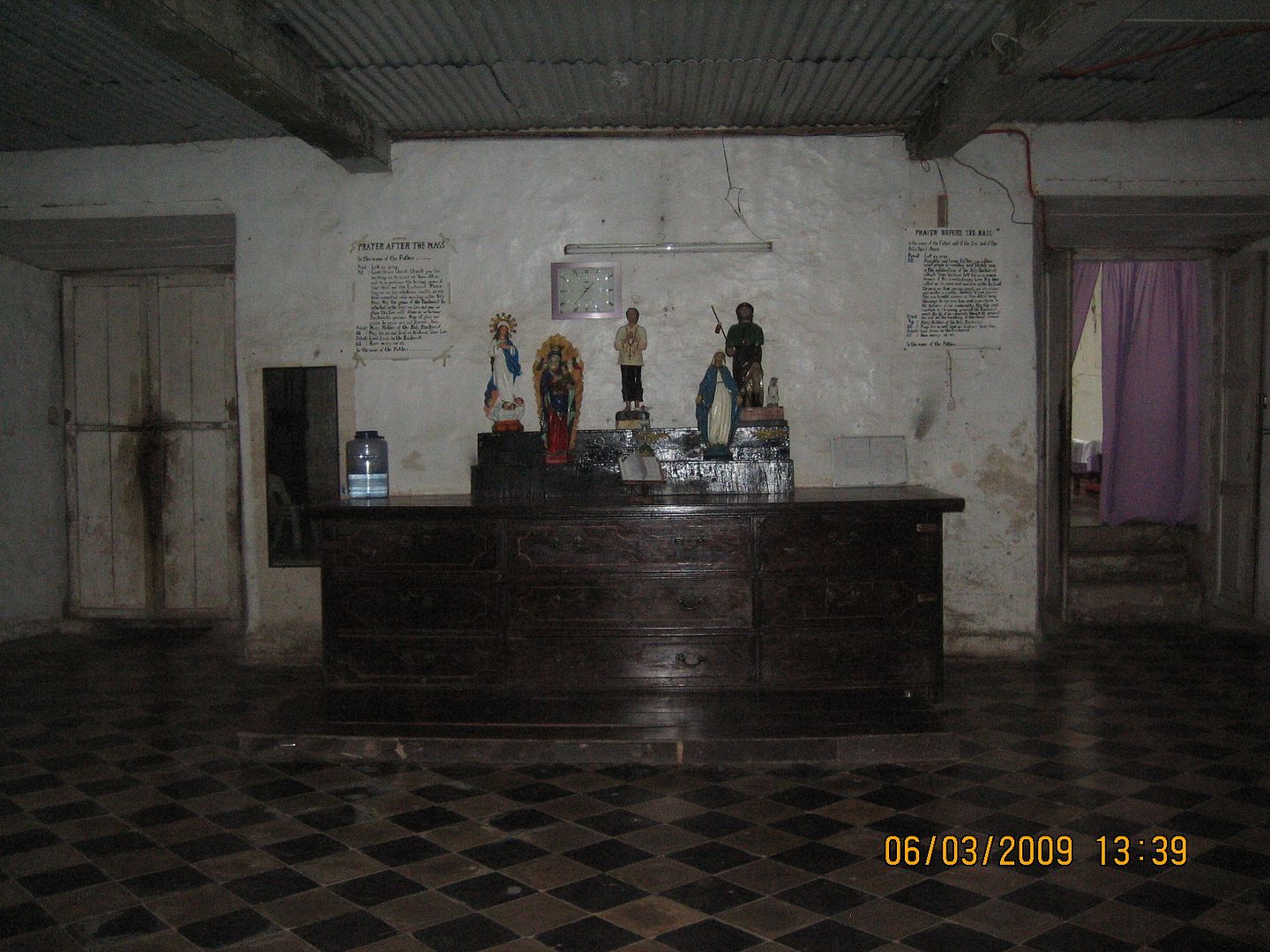
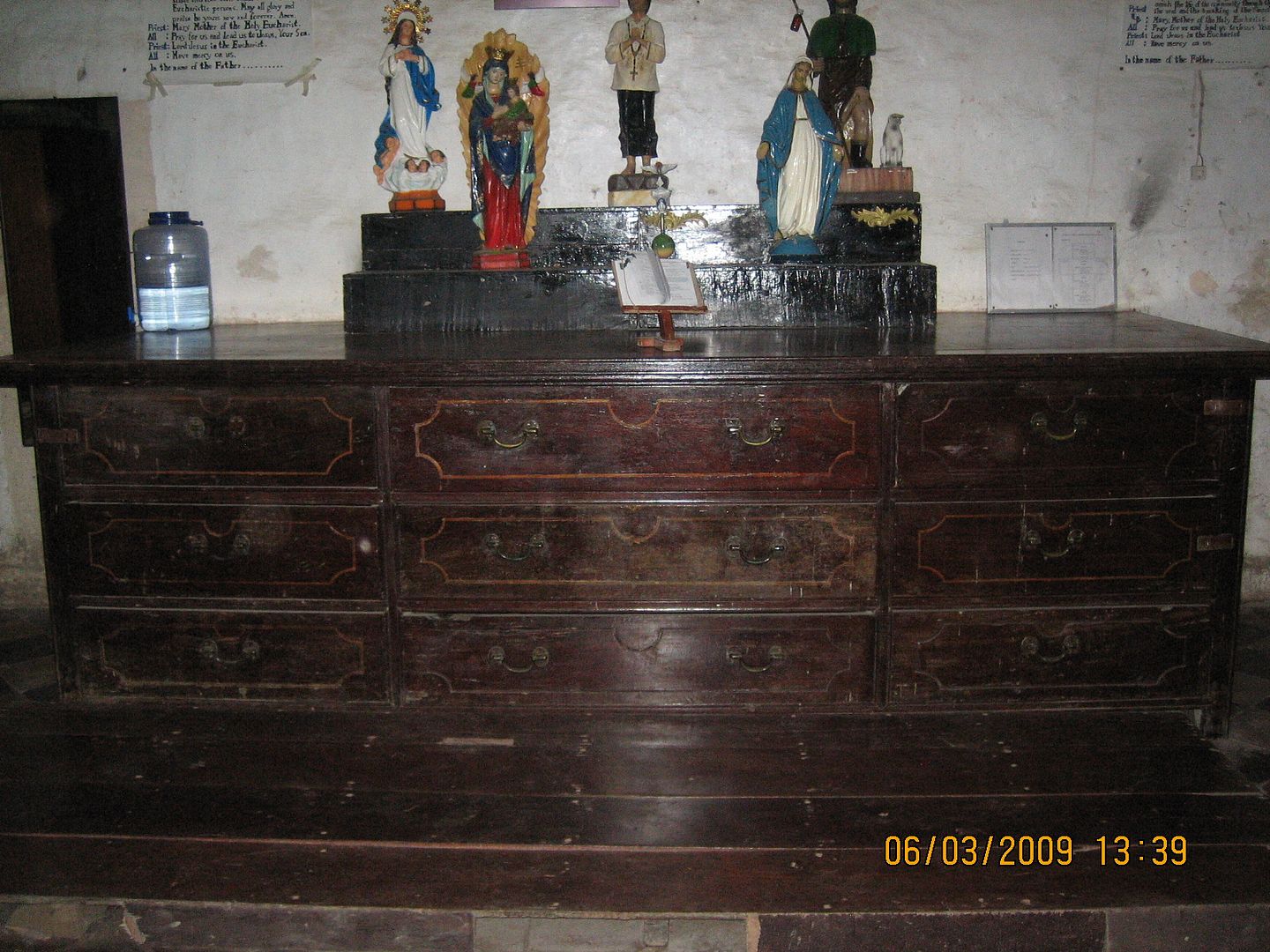
The sacristy has an impressive vestry cabinet, with a variety of small santos atop it.


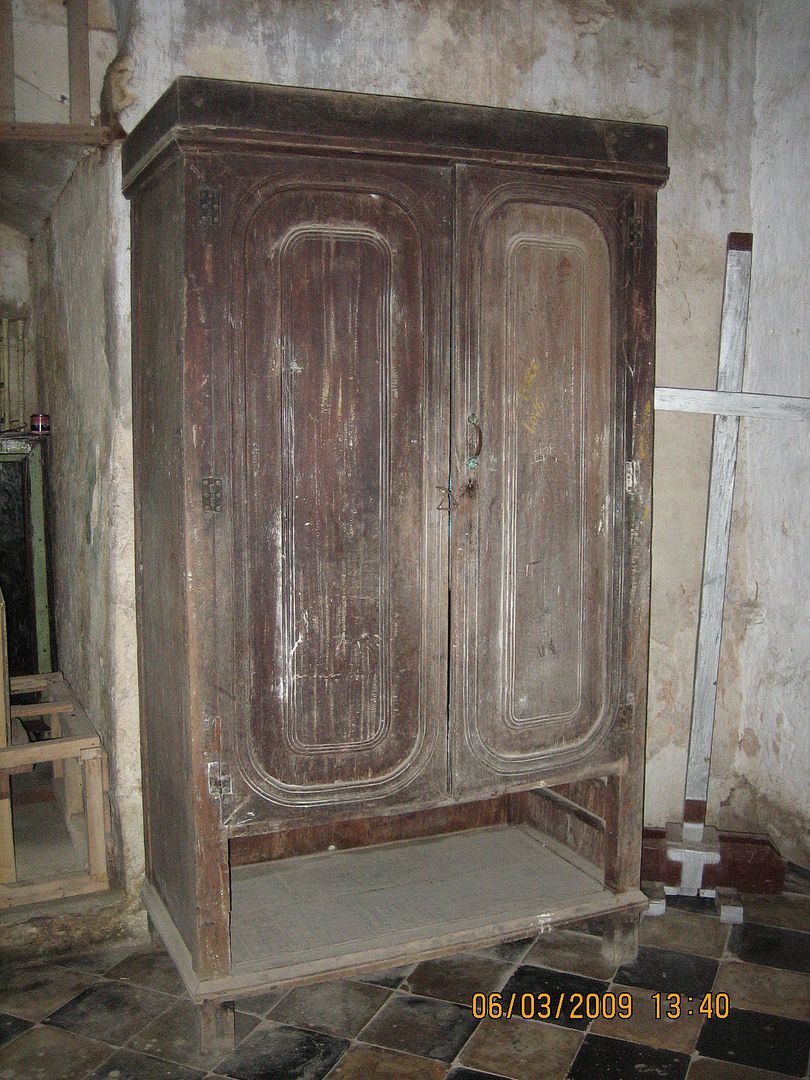
In a corner stands a large wardrobe, its bottom drawer now missing and perhaps decayed away.


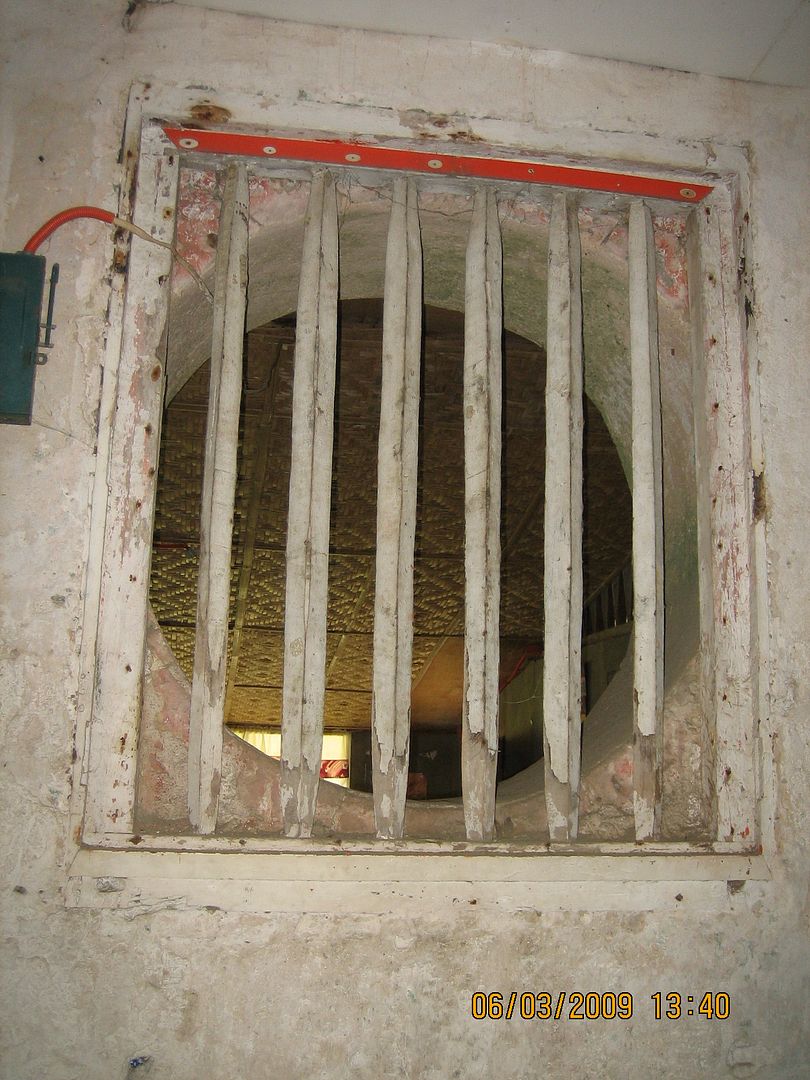
A wooden-barred round window is punched into one wall of the room.


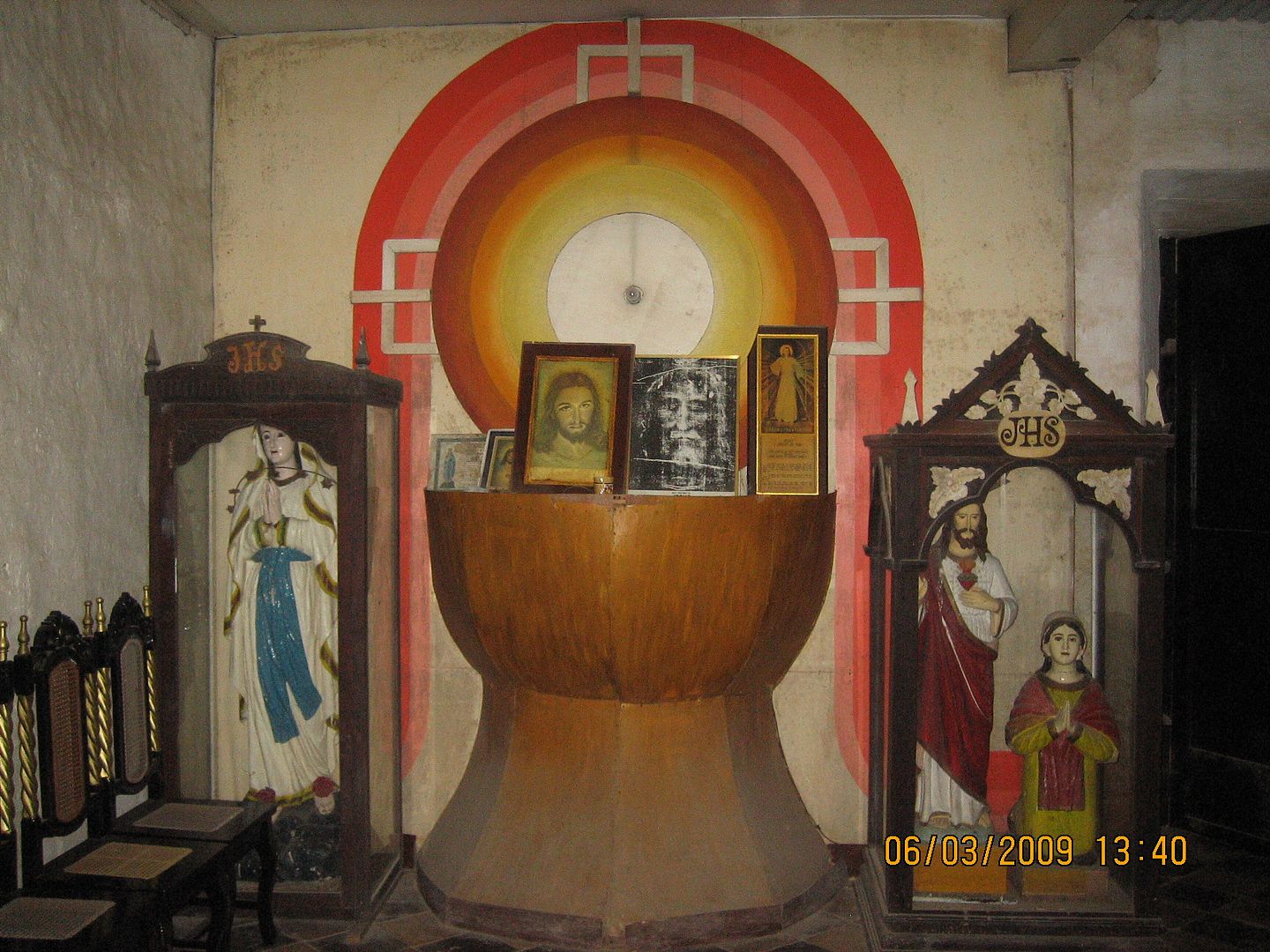
Another wall is decorated with a large chalice and a representation of the Blessed Sacrament.


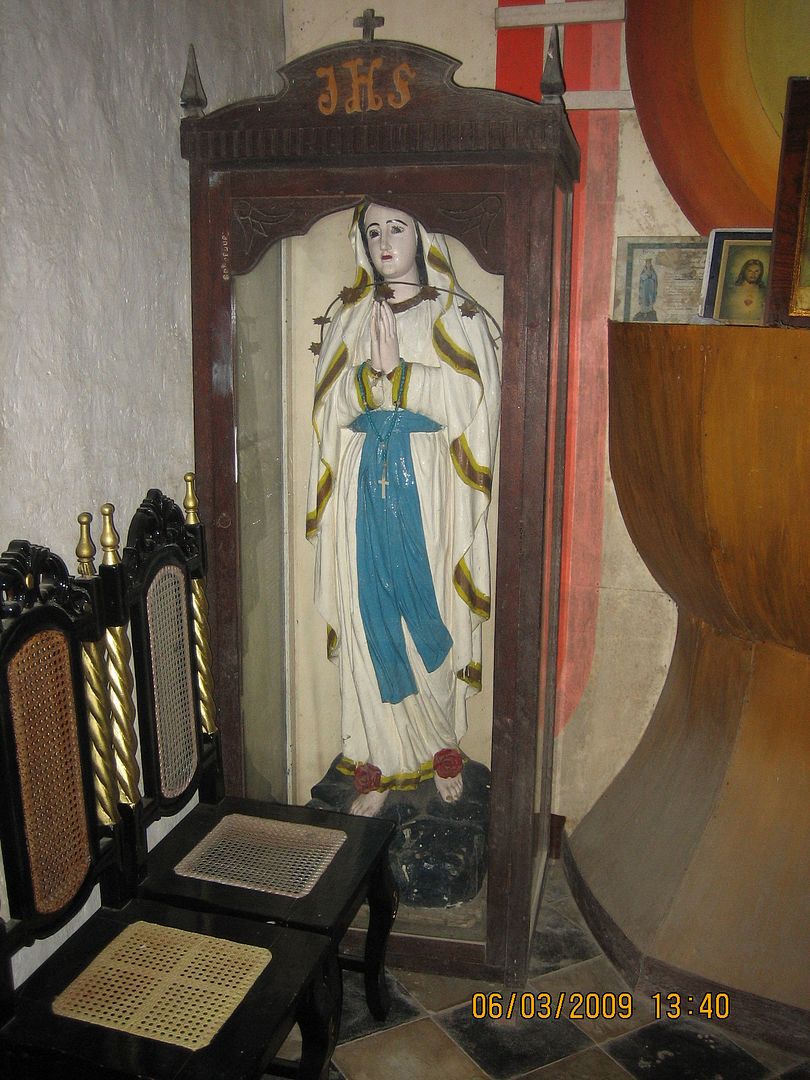
These are flanked by a large image of Our Lady of Lourdes, a bit cramped inside a wood-and-glass urna,


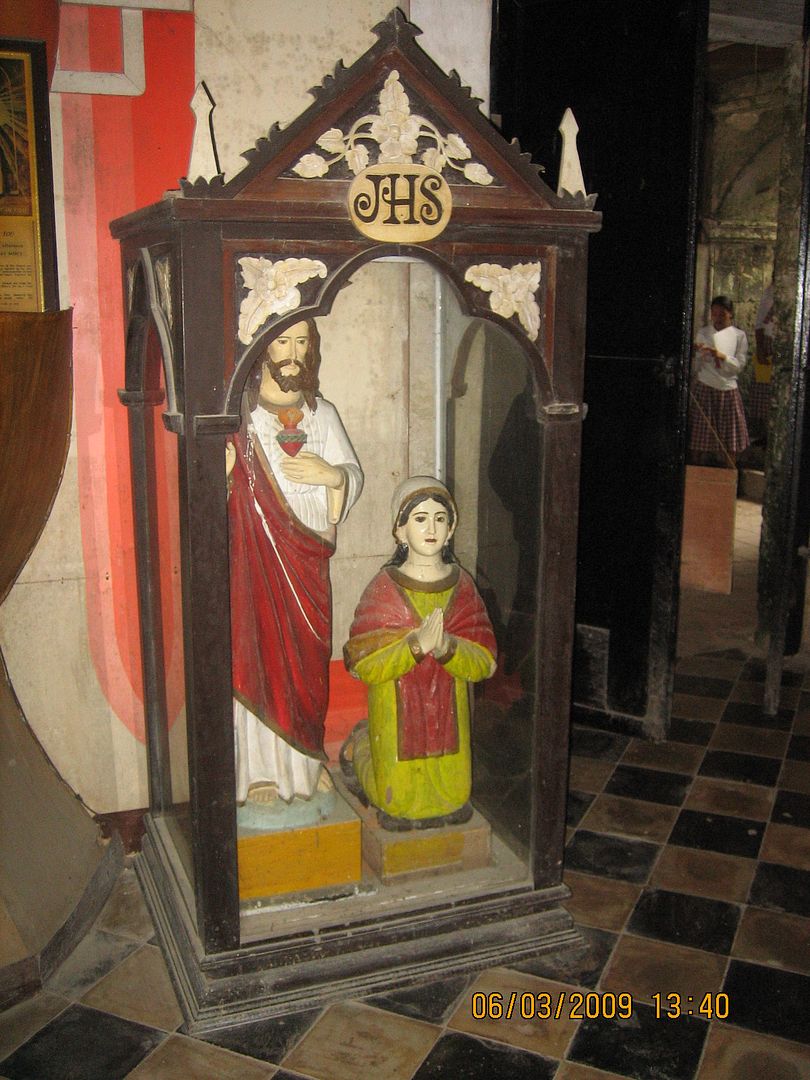
and the Sacred Heart of Jesus with the kneeling visionary Saint Margaret Mary Alacoque, in an unusual green-and-red habit.


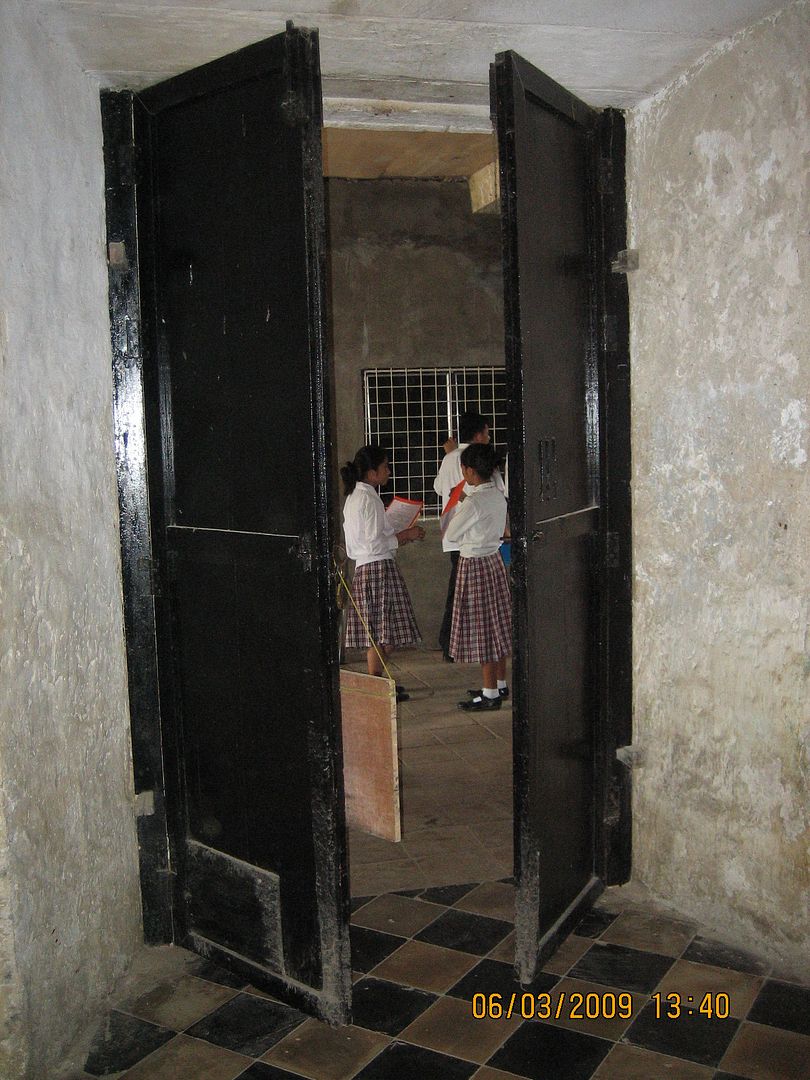
We end this church visit by exiting the sacristy and going through the school, the same way we came in.


And move on to the next and last leg of this our extended Visita Iglesia.

Originally published on 10 July 2011.  All text and photos copyright ©2011 Leo D Cloma. The moral right of Leo D Cloma to be identified as the author of this work has been asserted.


Original comments:

arcastro57 wrote on Jul 18, '11
I like the abject simplicity of this church.

zambaleno wrote on Jul 19, '11
The image of the Lady of Lourdes probably was housed outside in a grotto before being transferred to the urna. The "colorful" image kneeling next to the Sacred Heart is probably an image of St. Bernadette Soubirous that was part of the outdoor Lourdes tableau.

Love this church. Simple but solemn. The ceiling by Francia is glorious. And I would kill for that vestry cabinet!

overtureph wrote on Jul 19, '11
Simple and tastefully decorated.

rally65 wrote on Jul 19, '11
arcastro57 said
I like the abject simplicity of this church.

Yes, quite admirable after visiting so many grand Bohol churches previously.

rally65 wrote on Jul 19, '11
zambaleno said
The image of the Lady of Lourdes probably was housed outside in a grotto before being transferred to the urna. The "colorful" image kneeling next to the Sacred Heart is probably an image of St. Bernadette Soubirous that was part of the outdoor Lourdes tableau.

Love this church. Simple but solemn. The ceiling by Francia is glorious. And I would kill for that vestry cabinet!


I think it's possible -- that might be indeed Saint Bernadette and not Saint Margaret Mary, it just couldn't fit inside the urna with Our Lady of Lourdes!

Yes, that's a beautiful vestry cabinet -- looks like balayong even.

rally65 wrote on Jul 19, '11
overtureph said
Simple and tastefully decorated.
Yes, those ceiling paintings in particular are really tasteful and impressive.

johnada wrote on Aug 3, '11
This the hometown of one of my cousin's dad. The loveliest thing about this town is its location above a hill overlooking the Abatan river that separates it from Maribojoc. I asked the people there why the church is always closed and they told me that statues have been stolen when it was kept open. This is one of the most sleepy town I have ever been to. It is deserted after lunch time.

I went over my cousins' relatives house and for the first time saw the Bohol style style santos and urnas. They knew I was interested. I was repelled at the sight as I thought the statues look so primitive. Little did I know!