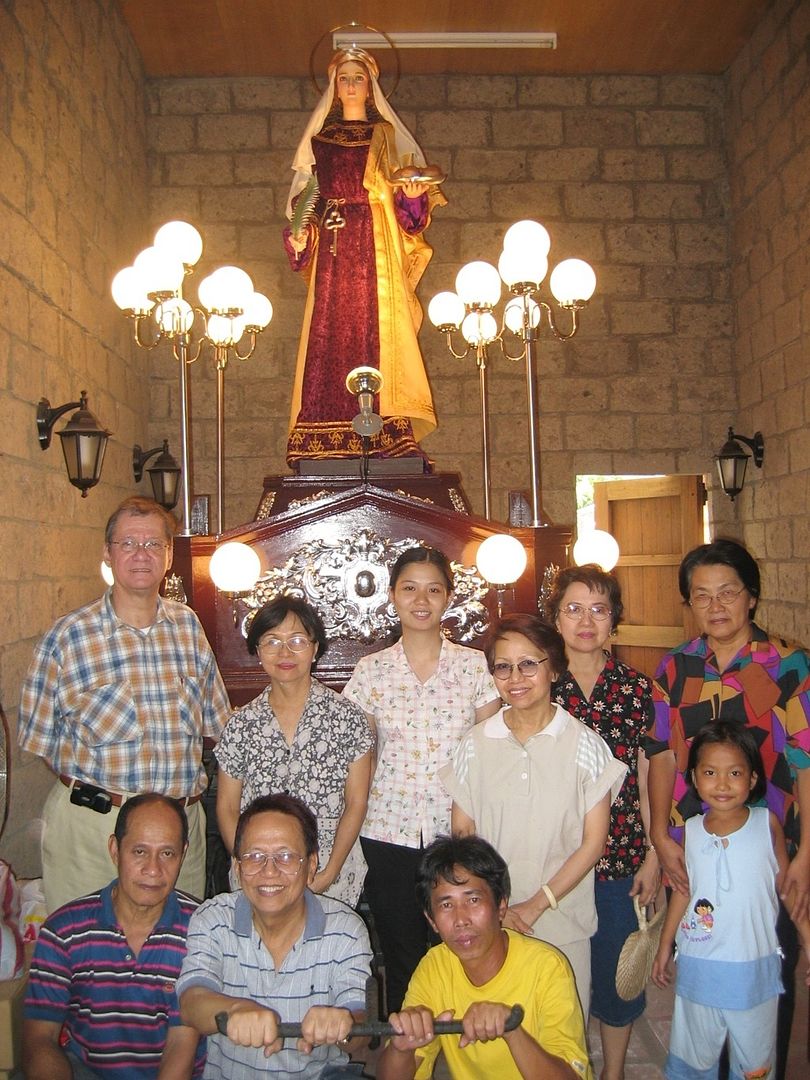
Showing posts with label Saint Martha. Show all posts

Tuesday, April 12, 2016

CVI. The Agony in the Garden, Part Two: Tales of the Unexpected

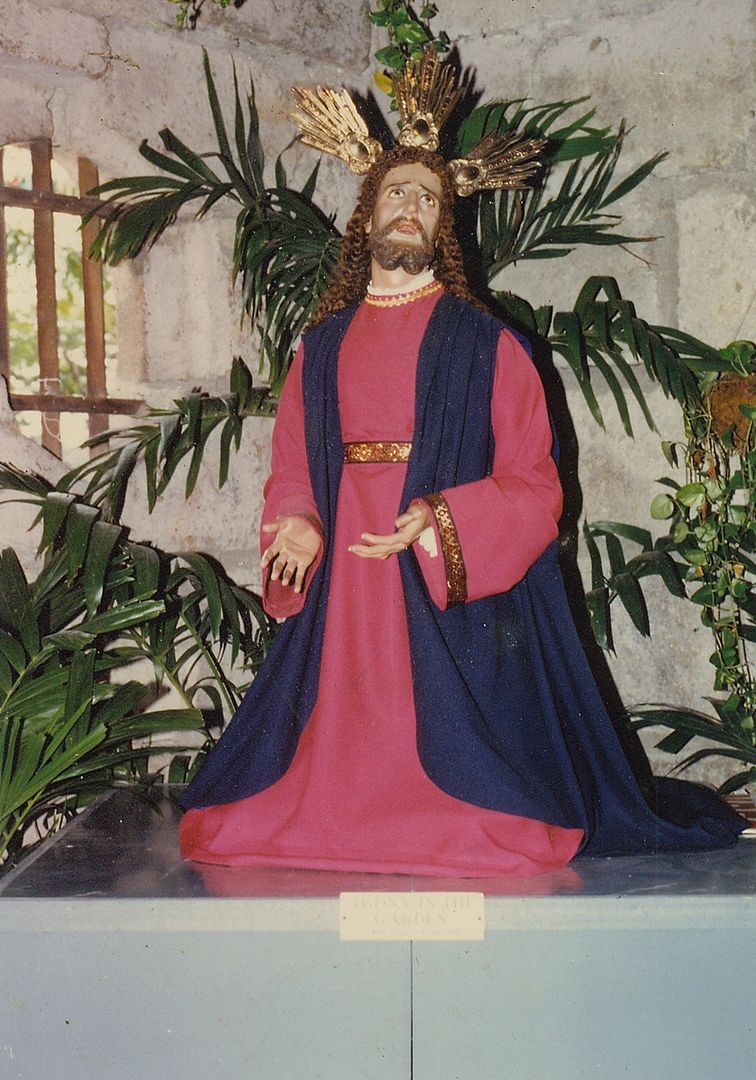
Apart from all those examples of different kinds of Agony in the Garden tableaux that we saw in Part One, the only other one that I had not come to was an antique, also from the Francisco Vecin Collection. Mr. Vecin had kept it for many years, and only rarely lent it out for exhibits, as in this old photo from his collection.

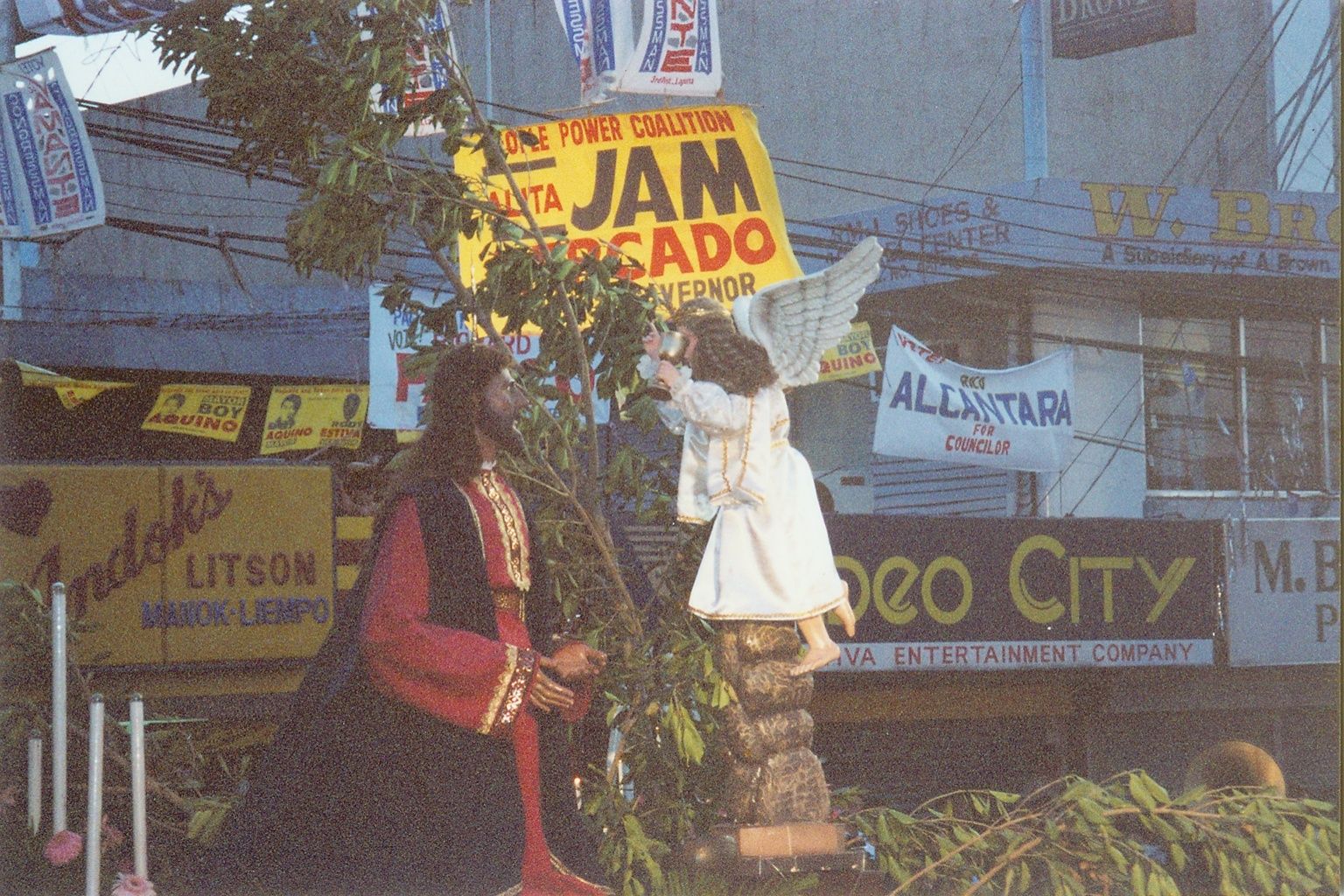
As the antique Cristo no longer had its original Angel, he made a new one for it, which was put to work when the tableau was borrowed for Holy Week processional use in San Pablo, Laguna some time ago, as seen in another page from Mr. Vecin’s photo album.

Eventually the Villa Escudero Museum acquired another antique Agony in the Garden from the Vecin Collection (as also seen in Part One), so this set no longer needed to do duty in San Pablo. Therefore it could be borrowed for use during Holy Week “Pabasa” activities in Mr. Vecin’s own neighborhood of Makati Poblacion. When I visited the Vecin Workshop shortly before Good Friday 2004, I saw and photographed the antique Christ all dressed up, waiting to be fetched by its volunteer minders.


The very good-looking Child Angel custom-made by the Vecin Workshop was also ready for picking up.


I thought to myself, these are it – these images are definitely the models for our desired Agony in the Garden tableau. I showed its photos to my family, who were also quite impressed with this particular pair, even after looking at all the other examples in the photos that Mr. Vecin had lent me.

Therefore, some weeks after that first post-Holy Week visit to the Vecin Workshop when we had first discussed the possibility of commissioning this tableau, I had phoned Mr. Vecin and told him that his own antique set was our preferred prototype. A few days later, I visited his office, where he had already brought out the head of Christ and put it on his desk for my examination up-close.


He also brought its body out of storage and allowed me to photograph the form.
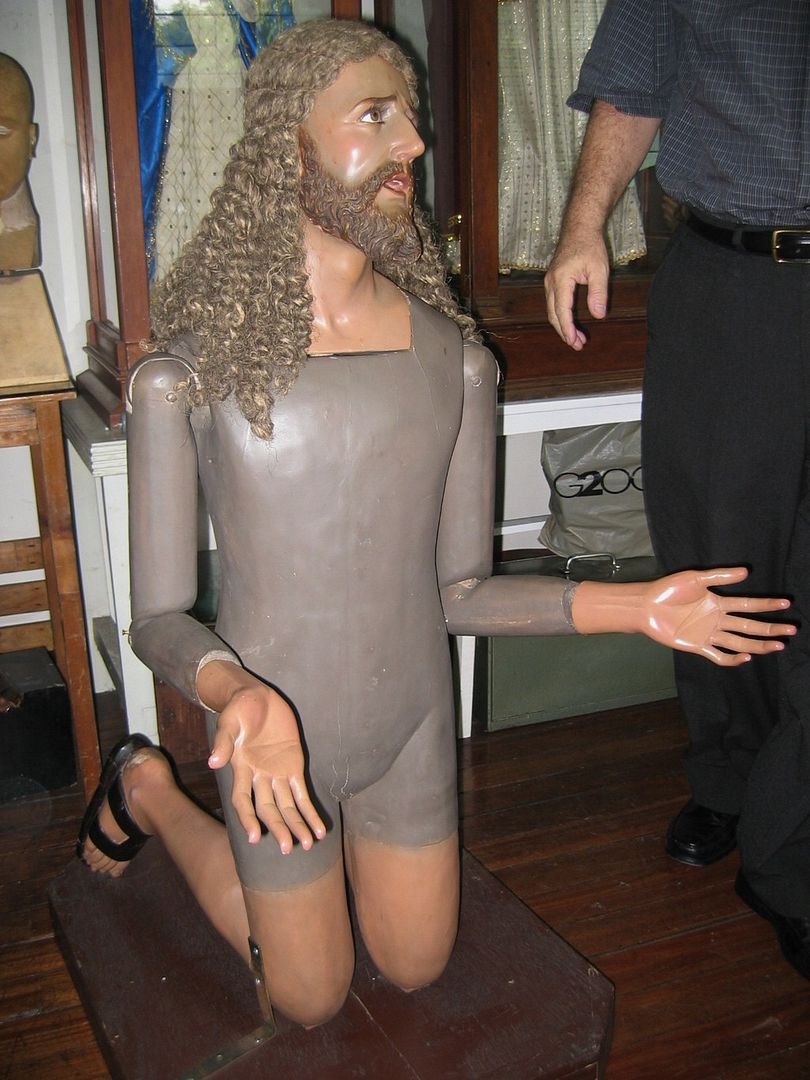

I then confirmed that this image was the one that we wanted replicated. On the other hand, we preferred a grown-up version of the Child Angel, as we wanted to conform to the traditional belief that it was the Archangel Gabriel who had arrived to offer relief to the Lord. Mr. Vecin responded that this would pose no problem at all – he and his craftsmen could “age-progress” the Child Angel (same process detectives use with photos of missing children?).

One other significant change with our commissioned tableau was that instead of the Angel holding the chalice, presumably containing some water to quench the Lord’s thirst, we wanted the Christ to hold the chalice, alluding to the part of Scripture that says

He withdrew about a stone’s throw beyond them, knelt down and prayed, “Father, if you are willing, take this cup from me; yet not my will, but yours be done.” (Luke 22: 41-42)

In our reading, the cup wasn’t an actual vessel containing cooling water that the Angel had carried from heaven, but a metaphorical one that represented Christ’s upcoming suffering and that He already had in hand. It is this latter interpretation that we sought to convey in our tableau.

Mr. Vecin thought over this idea, and after getting over his initial concern that this might lead a few devotees to confuse it for an image of Christ at the Last Supper, agreed that this represented a different and welcome take on the significance of this, the First Sorrowful Mystery, more than with just having some angel bring a cup of water.

- - - - - -

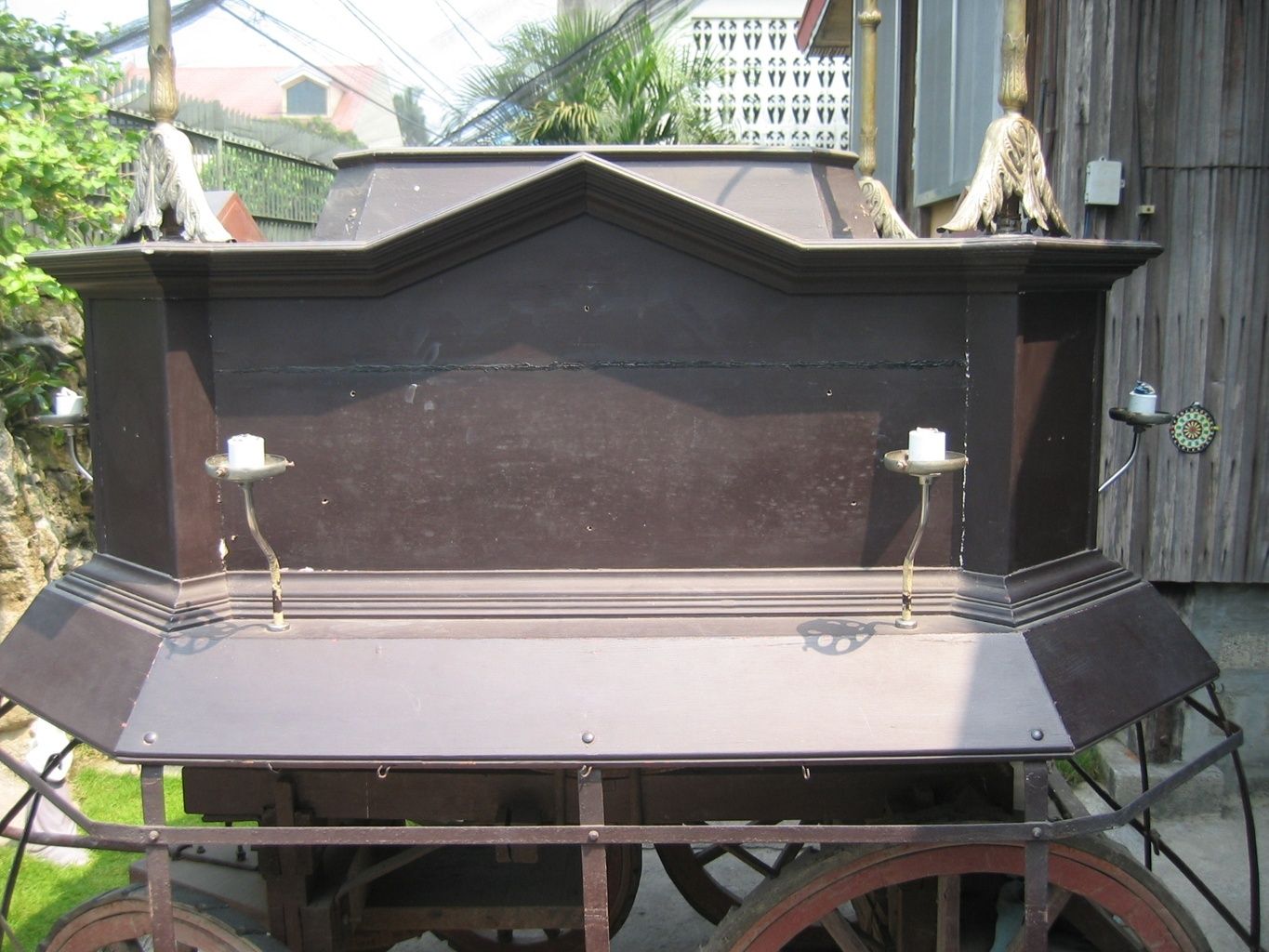
While the Vecin Workshop’s sculptors and painters got to work on these images, our discussions turned to what sort of carroza to employ for this tableau. Our photographic collection was helpful here, as we had interesting examples, for example, of the Lipa Agony in the Garden on what appears to be an all-metal (or is it silver-painted wood?) carroza.


Mr. Vecin and I agreed that it didn’t appear to be appropriate for what is really a somber and contemplative nighttime scene.

The Malolos Agony in the Garden was transported on this antique-looking metal-on-wood carroza.
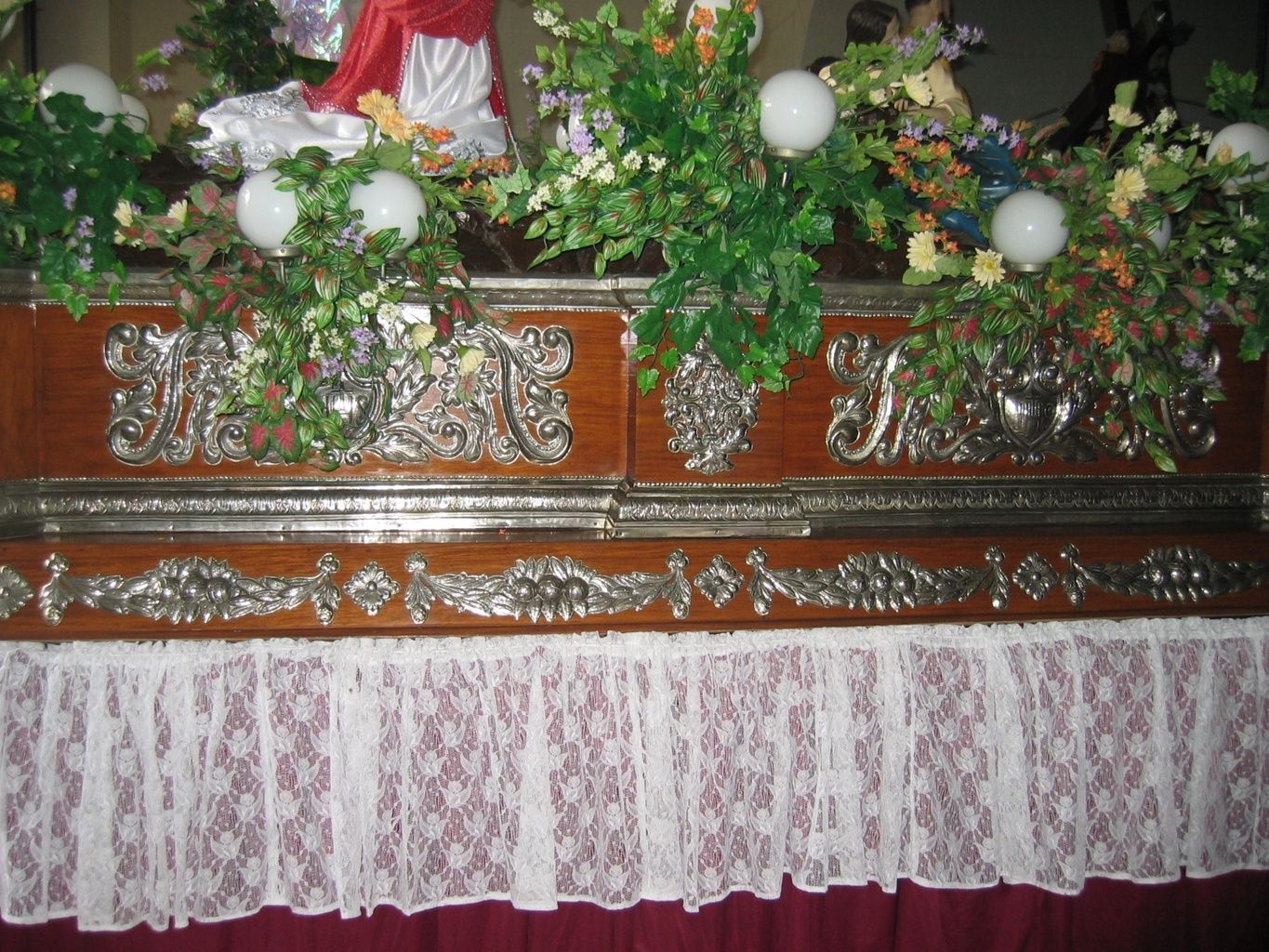

The metalwork was very well-designed and expertly-crafted.


The entire vehicle was large and impressive.
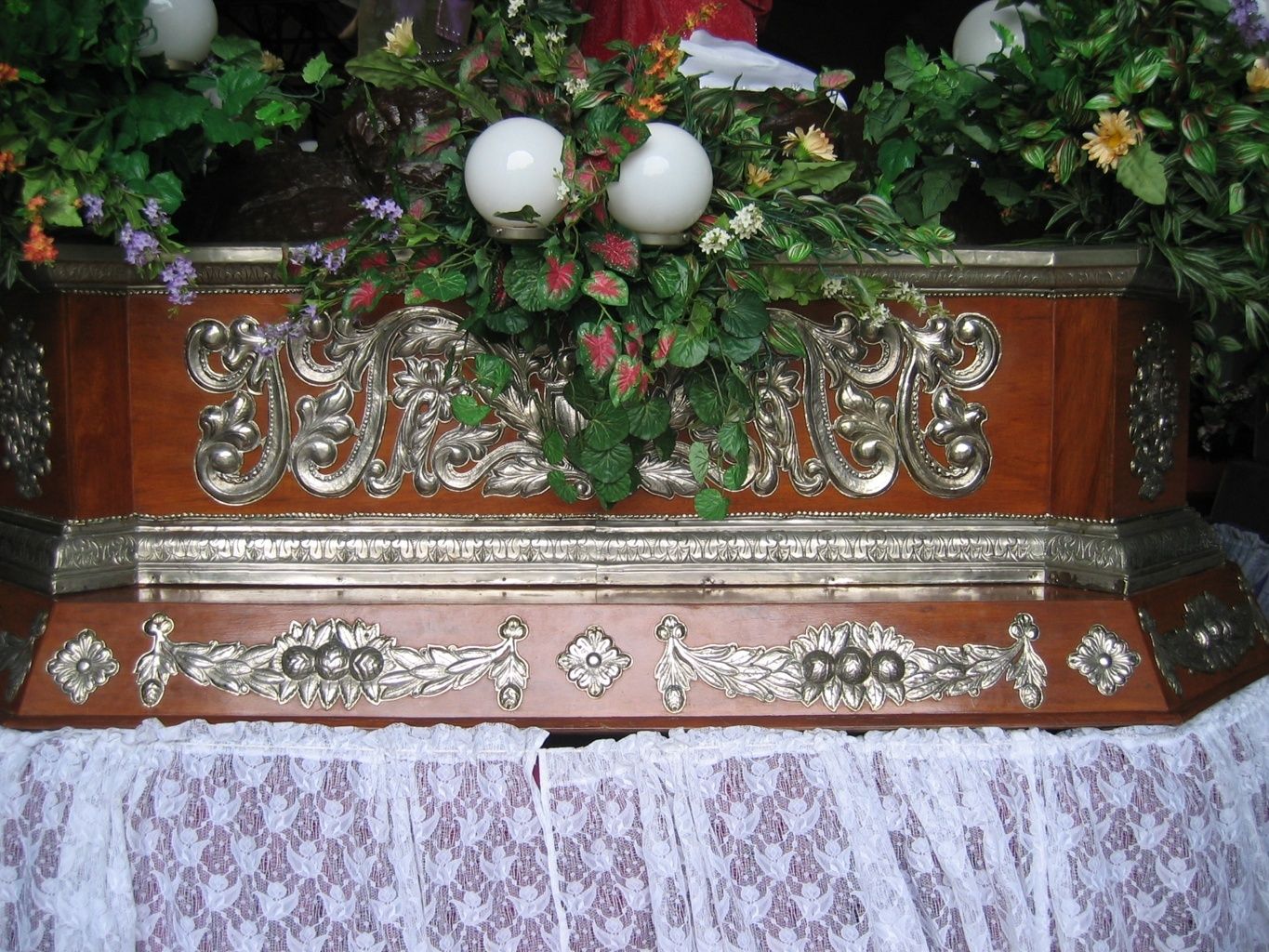

In fact, I thought it rather too large for a two-figure Agony in the Garden, which led me to speculate that perhaps it was not the original carroza for the Malolos tableau, and the newish-looking figures of the three sleeping Apostles (see Part One) were commissioned mainly to fill out all the extra space. I really wonder.

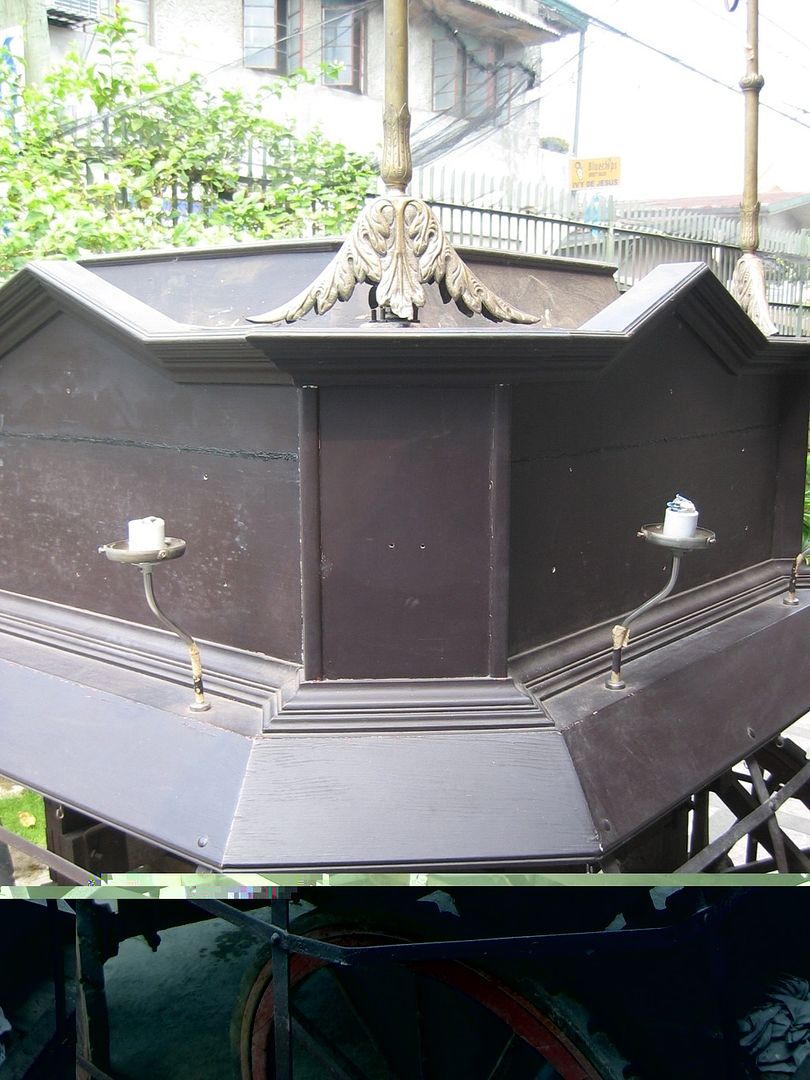
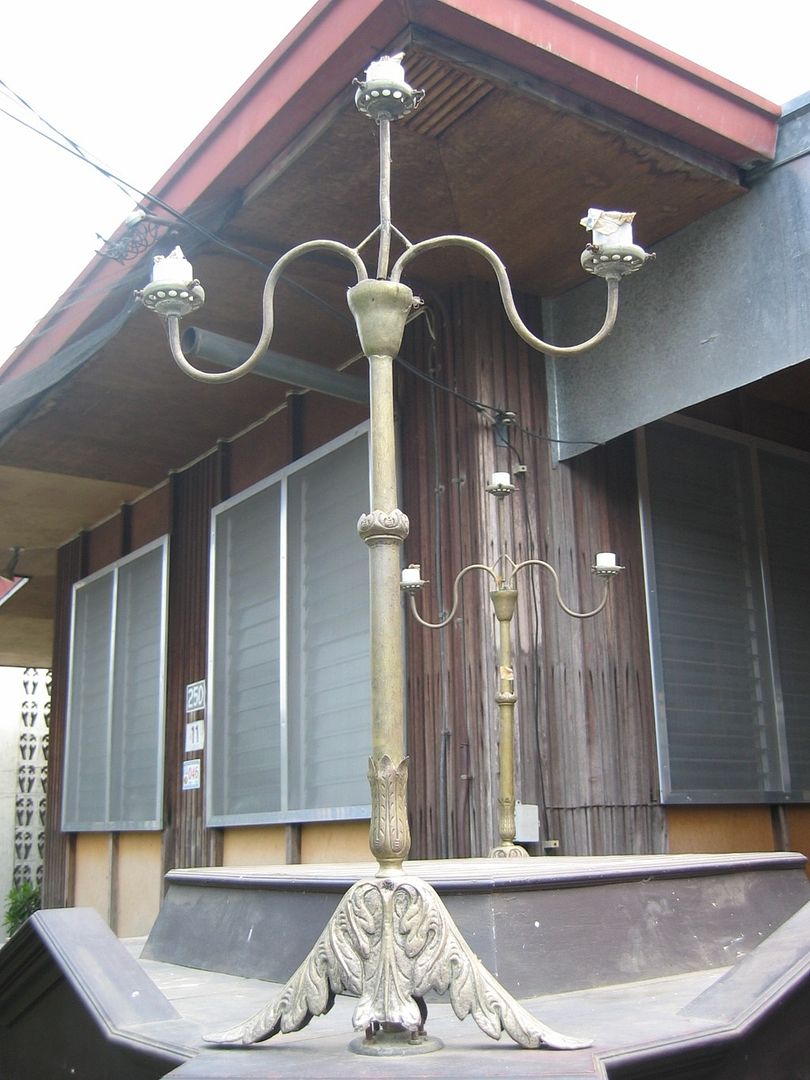
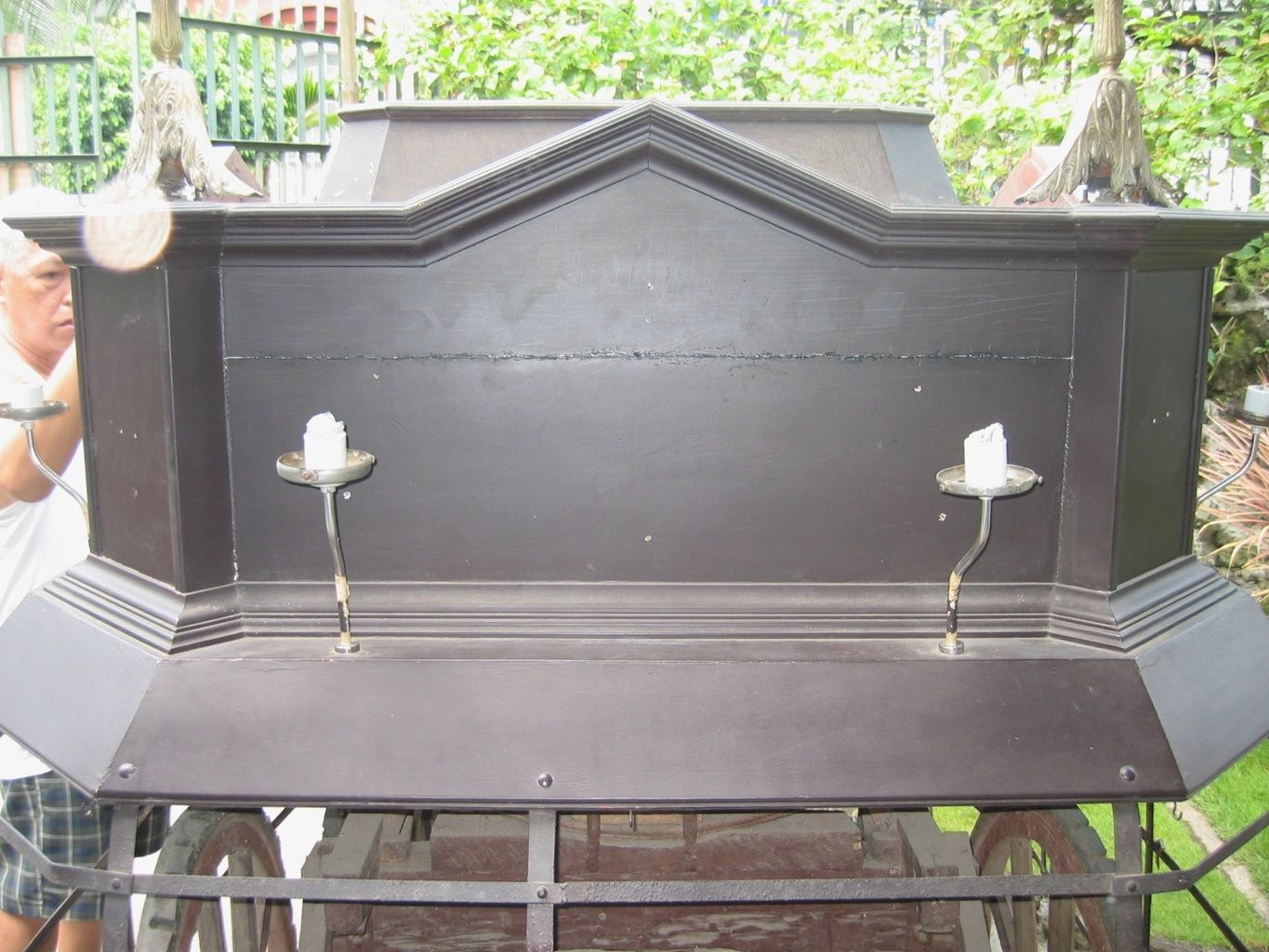
I told Mr. Vecin that since we had just commissioned a beautiful metal-on-wood carroza for our family’s Saint Martha (see series here), we should probably try something else and go for an all-wood scheme instead for a change. He agreed, and promised to get back to me with designs for my approval, before he actually builds the thing.

- - - - - -

Some months later, and right before Mr. Vecin was to start building the carroza, the plot took an unfortunate turn. The parish informed us that, in fact, our offer to introduce an Agony in the Garden tableau into the processional line-up would have to be kindly turned down, as another parishioner, who already had an Agony in the Garden tableau, insisted on participating with it.

The confusing turn of events was clarified somewhat when it was reported that this existing tableau had been part of the processional line-up in the neighboring parish. When our new parish was spun-off from that one and established as a quasi-parish, the owner, who was actually also from the new quasi-parish, continued to participate in the original parish’s Holy Week procession.

Until, according to the active parish hall gossip circuit (always a fertile field), the owner got into some unspecified dispute with the older parish, and, presumably discomfited, pulled out his tableau from there and now insisted on bringing it to his real home parish – which happened to be ours as well. Not a bad outcome really – except that it renders our still-in-the-making Agony in the Garden tableau stillborn, as it were.

I then call and tell Mr. Vecin the bad news, but confirm that while we will not order a carroza for it, we want to push ahead with the images. Not only is all the carving done and the wood just drying out before final painting, but we are also keen to see how the tableau will come out.

- - - - - -

Before Palm Sunday 2005, the completed images were ready, and Mr. Vecin and his small team trooped over to my aunts’ house to set them up – not for processional use any longer obviously, but just for devotional purposes.

The results were extraordinary. The Christ, modeled on the antique from the Vecin Collection but with chalice in hand, was absolutely life-like.


You could almost hear it saying, “Tell me again why I’m not coming out in procession, please?”

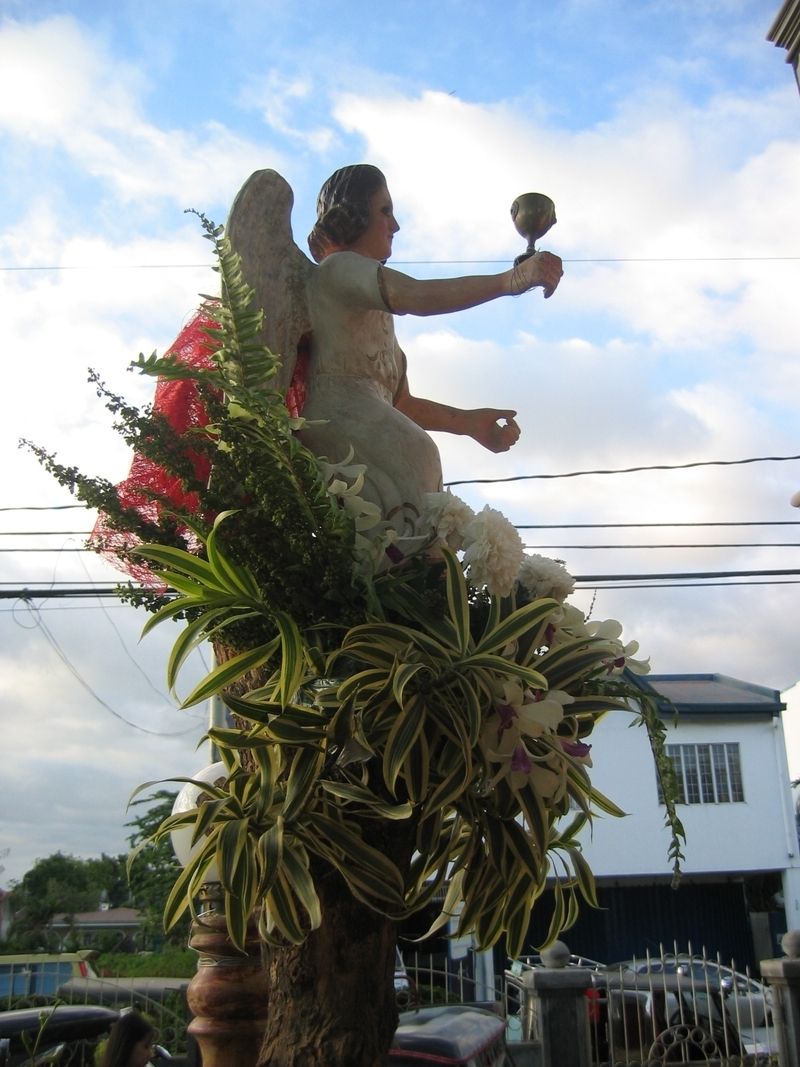
The angel, now all grown-up and with wings spread wide, was beautiful in an appropriately androgynous way.
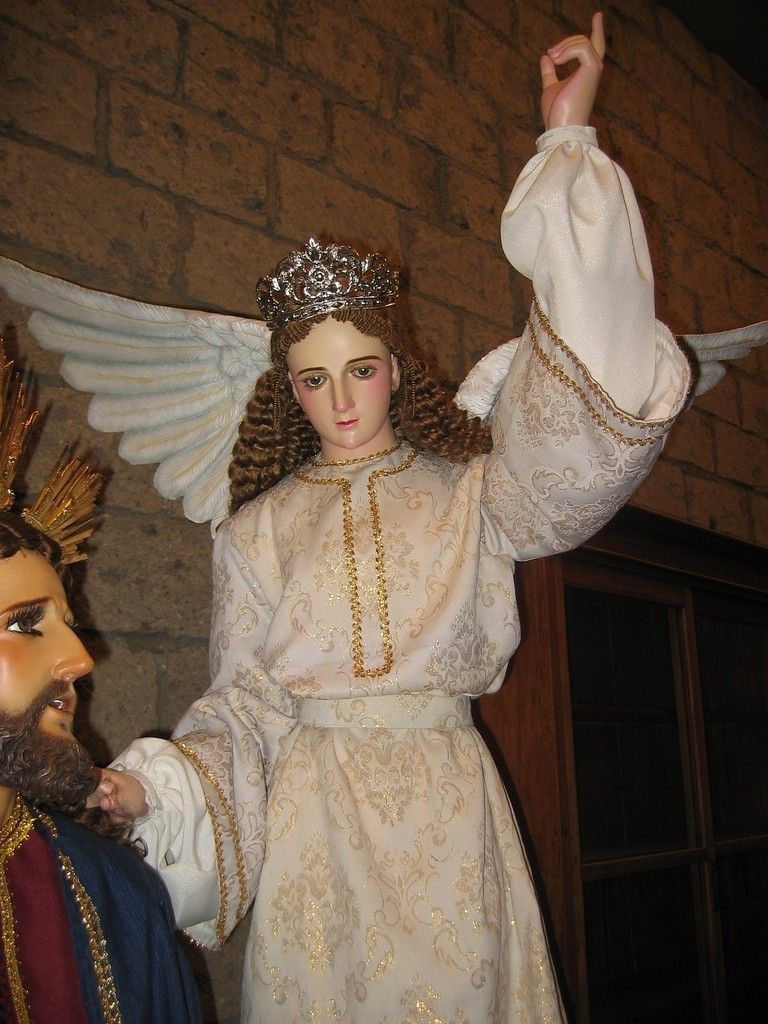

I could have sworn overhearing it say, “Don’t worry, I’ll stand right here while everyone else except us joins the procession.”

Together, I dare say that these images present stiff competition to those impressive teams from San Fernando, Angat, or Quiapo that we previously saw.
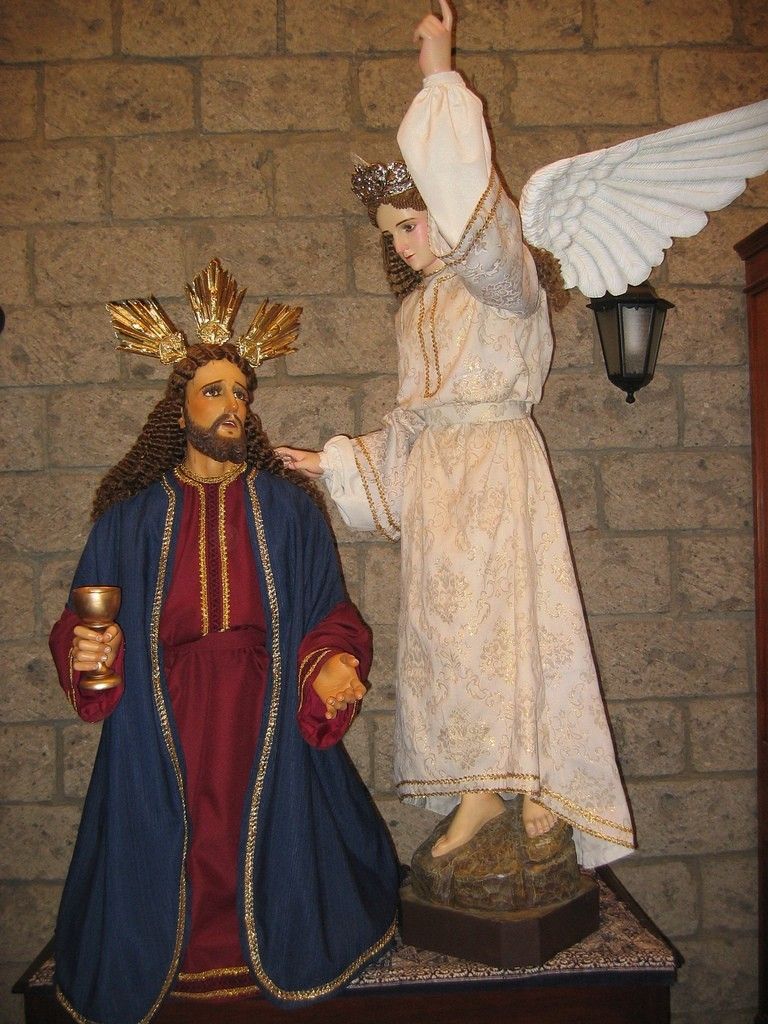


Unfortunately, it will have to sit out its debut on a table in the garage behind the carroza of Saint Martha.
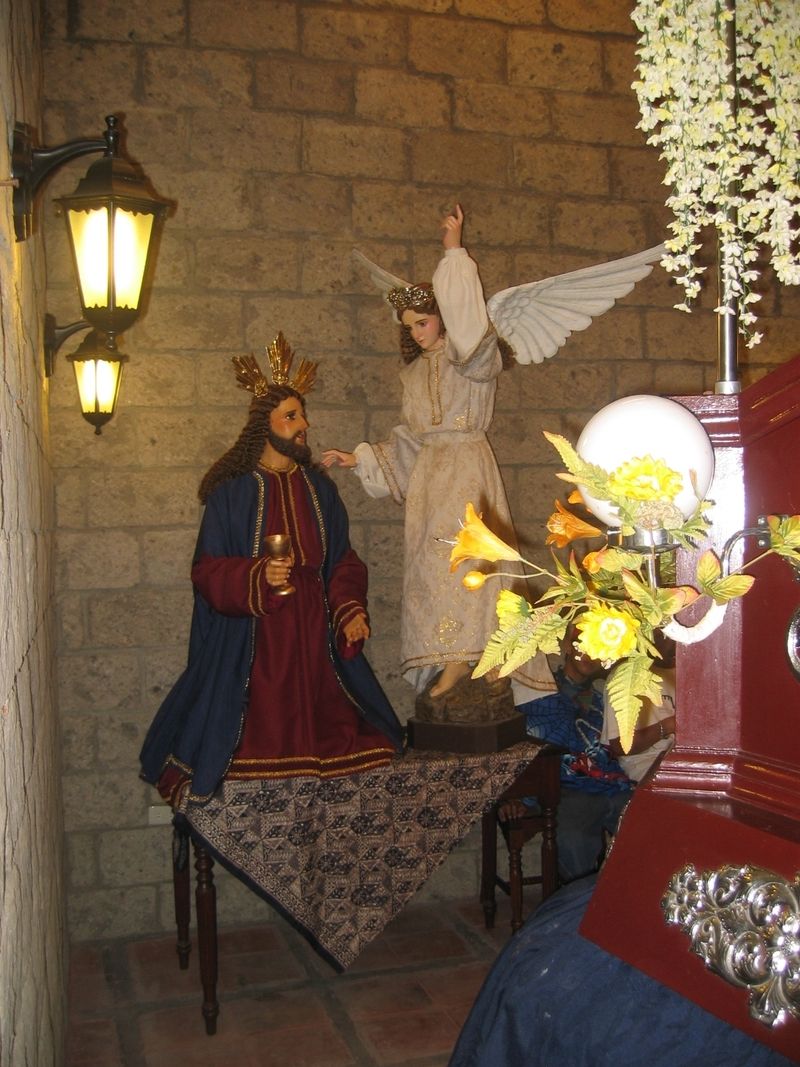

Some time after Holy Week, after Saint Martha and her carroza were cleared away for storage, the Agony in the Garden too had to be dismantled. The heads and hands were removed and the bodies wrapped up and stored inside the garage. Mr. Vecin had supplied torsos on which the heads could be mounted.
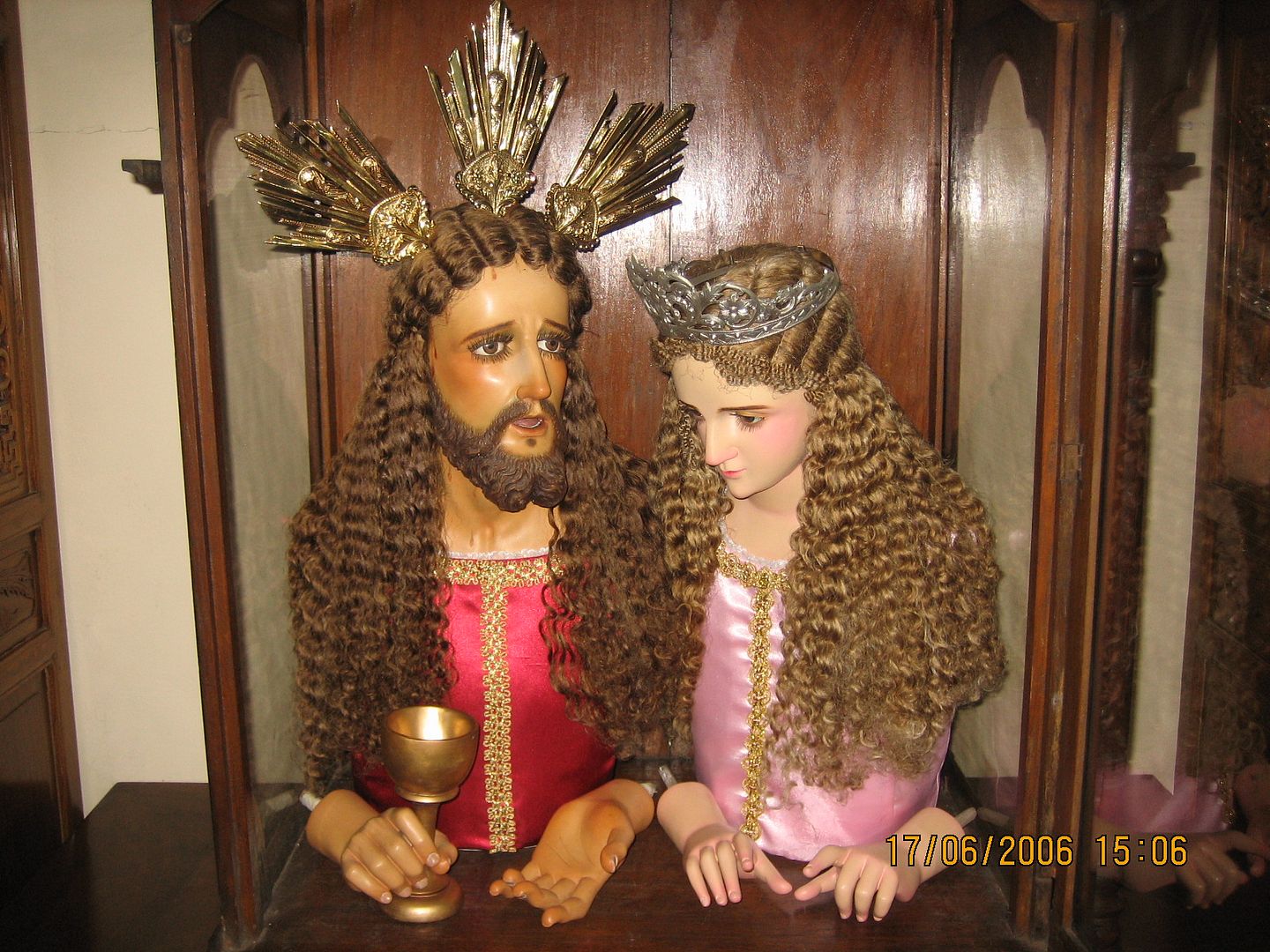
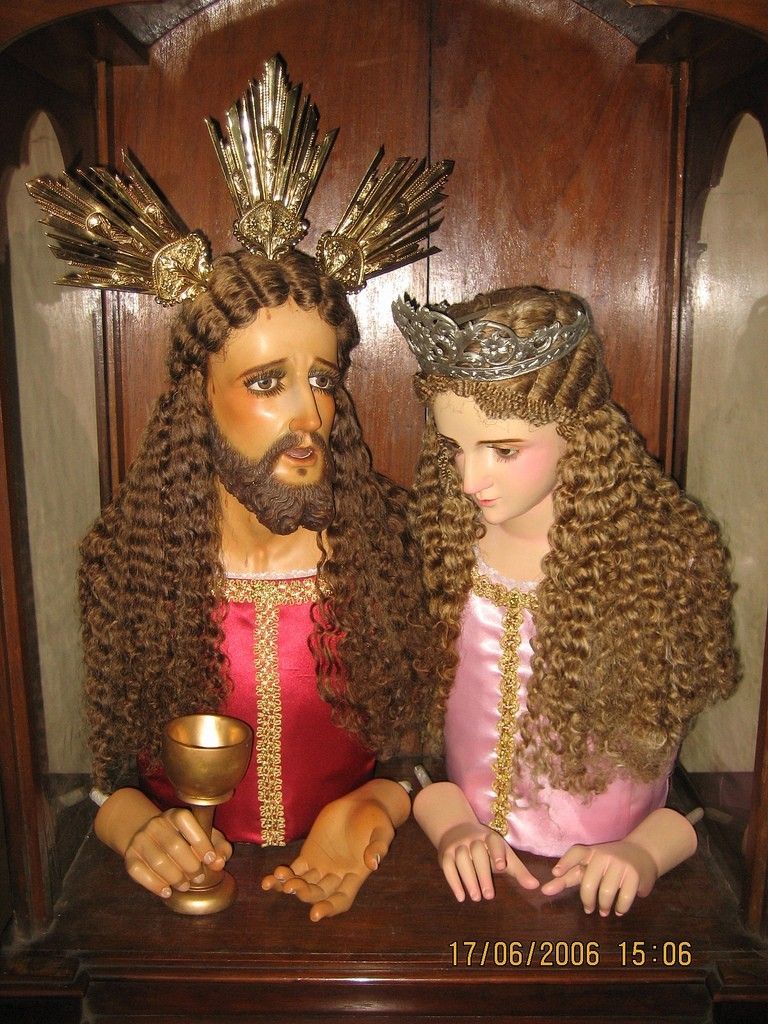


We had also acquired an antique balayong urna from the Vecin Collection, into which the busts fit very well.
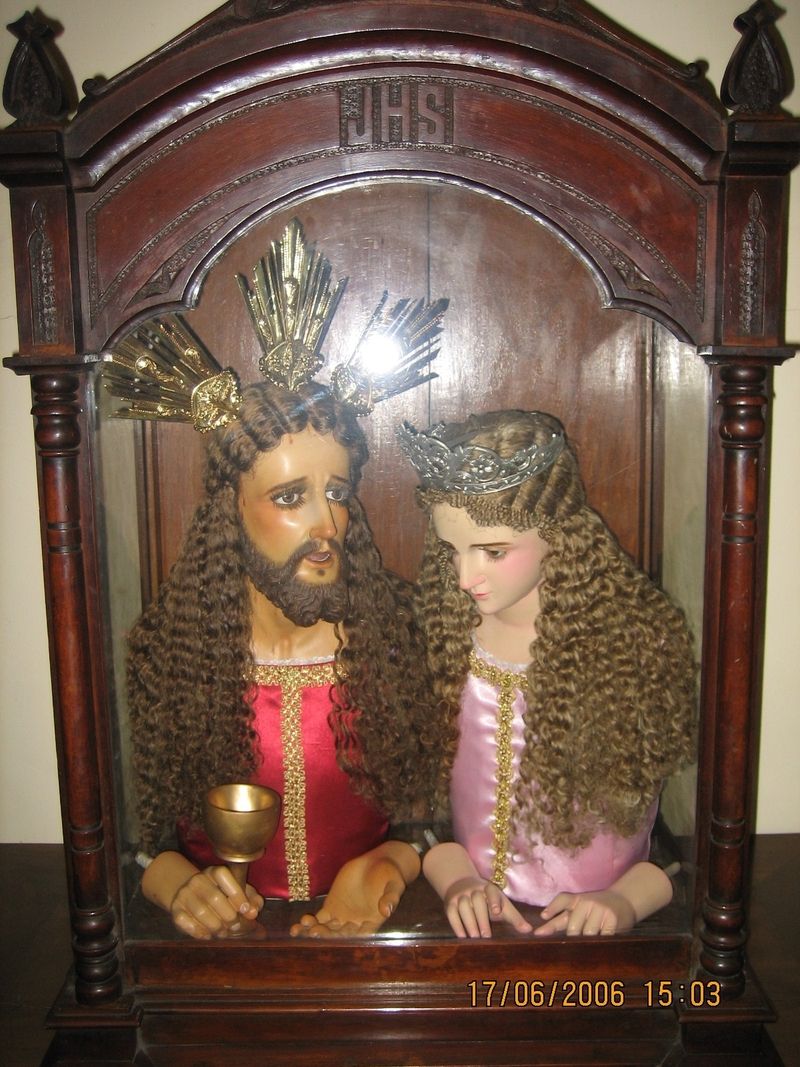

The pair could then be venerated indoors all year-round.
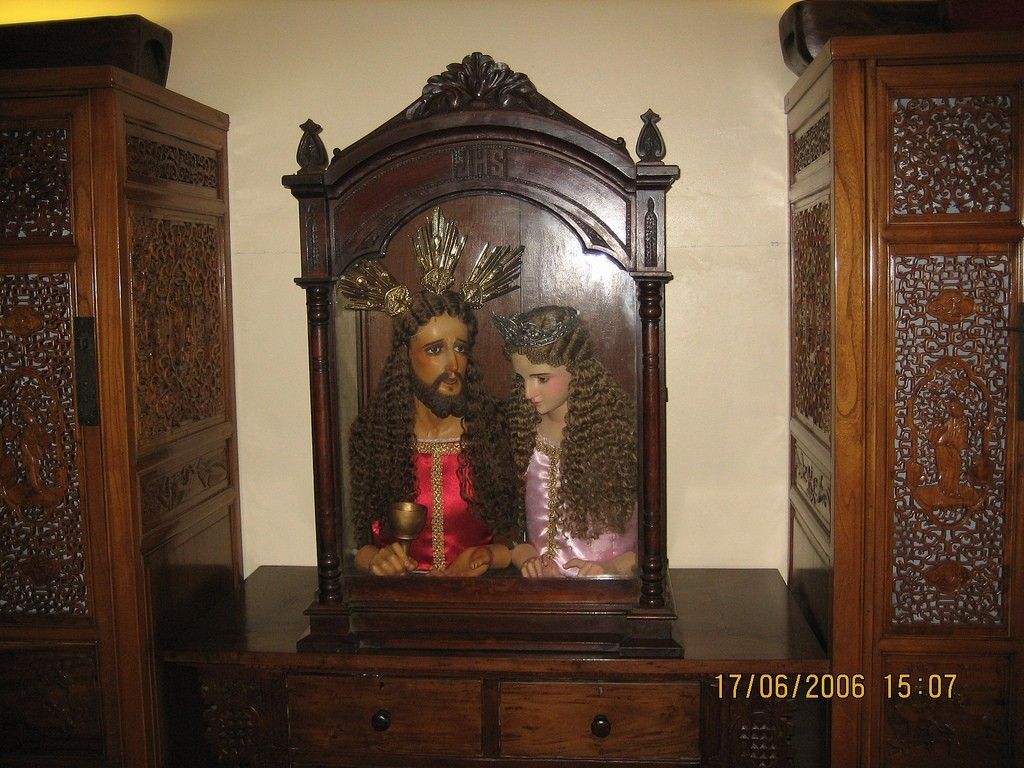

And this is where they will stay forever, not likely to ever be brought out in procession. (But before you place bets on it, let’s wait for this tale to unfold completely.)

- - - - - - -

As for the existing Agony in the Garden tableau that suddenly showed up to join the parish’s processional line-up, I got a first look at it that same Holy Week in 2005, right before the Good Friday procession.
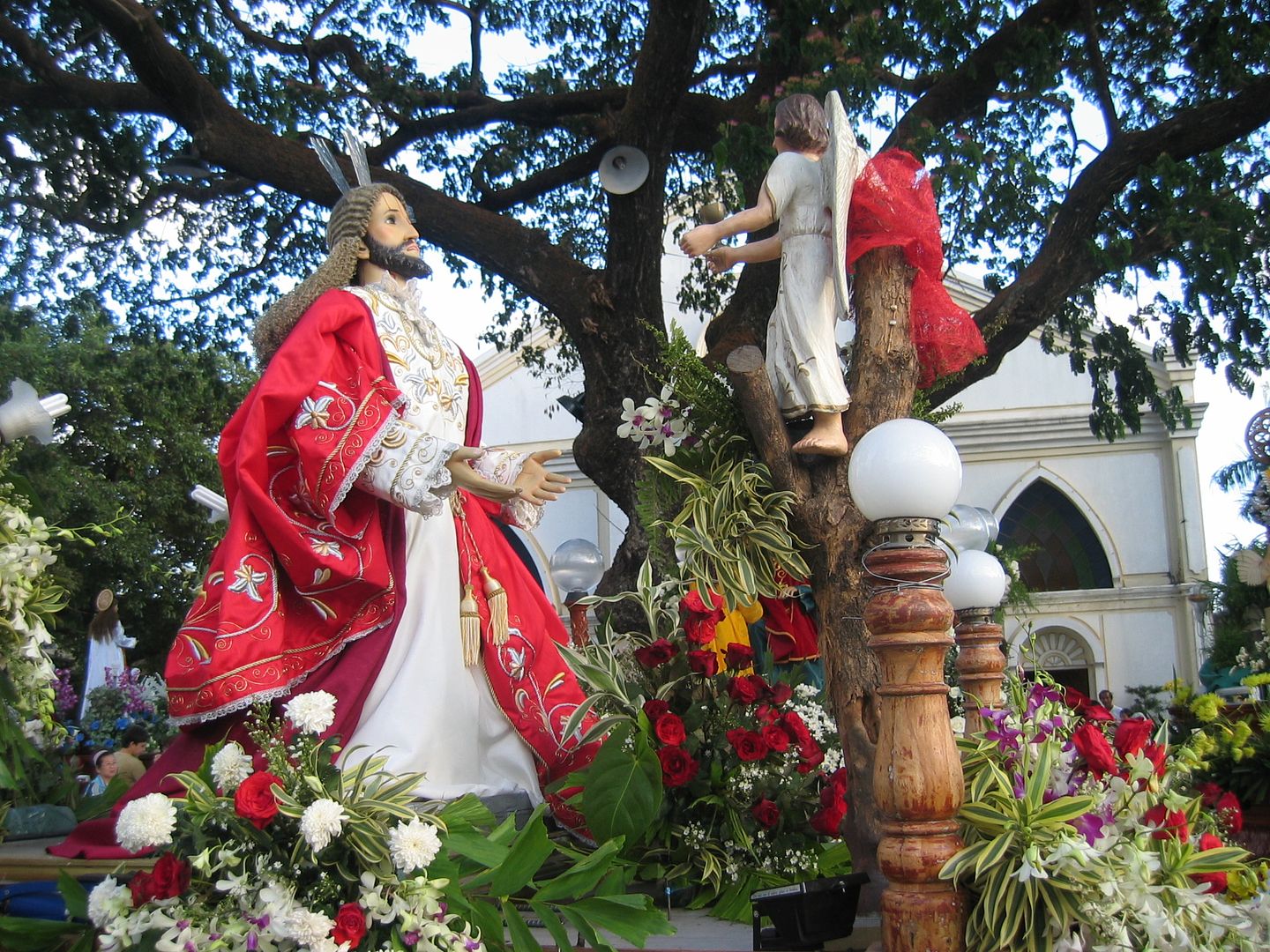

These images rendered me speechless, at least momentarily.
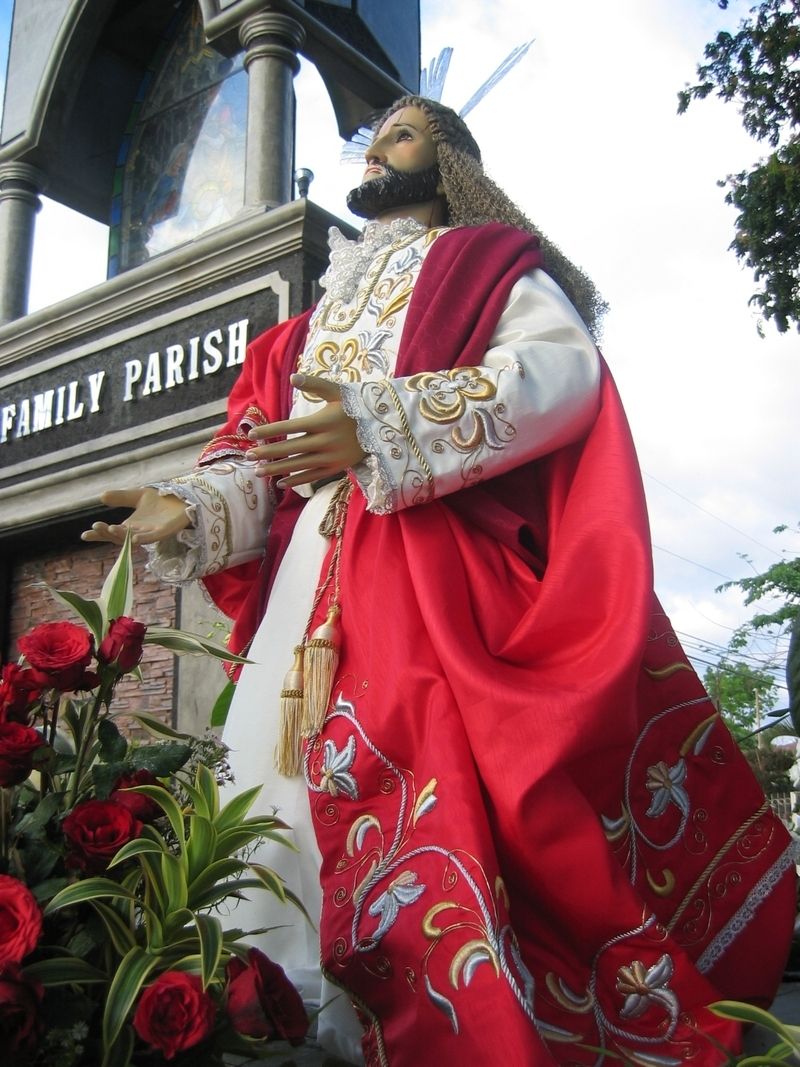


I’ll be polite and charitable now and not repeat my previous assertion that this has got to be the ugliest Agony in the Garden tableau ever.
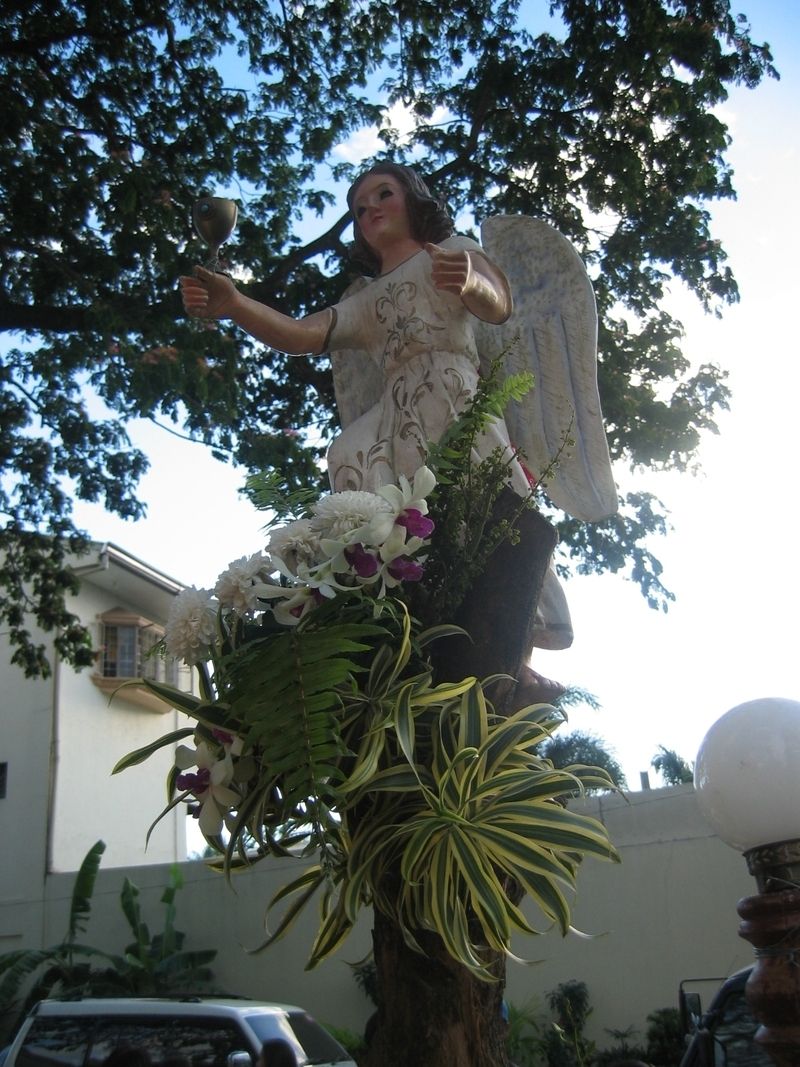

(Continued here.)

Originally published on 10 October 2010.  All text and photos (except as otherwise attributed) copyright ©2010 by Leo D Cloma. The moral right of Leo D Cloma to be identified as the author of this work has been asserted.

Original comments:

antigualla wrote on Oct 12, '10
Leo, your beautiful Agony in the Garden tableau might be needed in another parish, say one far away from San Rafael like...hmmm...can't think of any place right now but things always happen for a reason so, Im sure your beautiful Passion tableau will have its reason for being soon.

rally65 wrote on Oct 12, '10
Have you thought of branching out into astrology, fortune-telling, and predicting the future? Ha ha ha.

antigualla wrote on Oct 15, '10
Yes when it comes to santo! Hahaha. Anyway, may paggagamitan ka din niyang kagandagandang larawang iyan. Happy Weekend!

rally65 wrote on Oct 15, '10
You should try expanding those predictive skills to the Lotto! Ha ha ha.

iloveme97 wrote on Apr 18, '11
I really find the part in which you jokingly caption "You could almost hear it saying, “Tell me again why I’m not coming out in procession, please?”
irresistibly cute. along with the caption of the angel's picture "I could have sworn overhearing it say, “Don’t worry, I’ll stand right here while everyone else except us joins the procession.” offering relief indeed!

Thank you for making my day.

rally65 wrote on Apr 18, '11
iloveme97 said
I really find the part in which you jokingly caption "You could almost hear it saying, “Tell me again why I’m not coming out in procession, please?”
irresistibly cute. along with the caption of the angel's picture "I could have sworn overhearing it say, “Don’t worry, I’ll stand right here while everyone else except us joins the procession.” offering relief indeed!

Thank you for making my day.
Thanks for the visit and for reading through.


Tuesday, January 12, 2016

LXXI. How Saint Martha Became Part of the Family, Part Five: Lodged In Our House, Welcomed Into Our Home.

(Read Parts One, Two, Three, and Four first.)

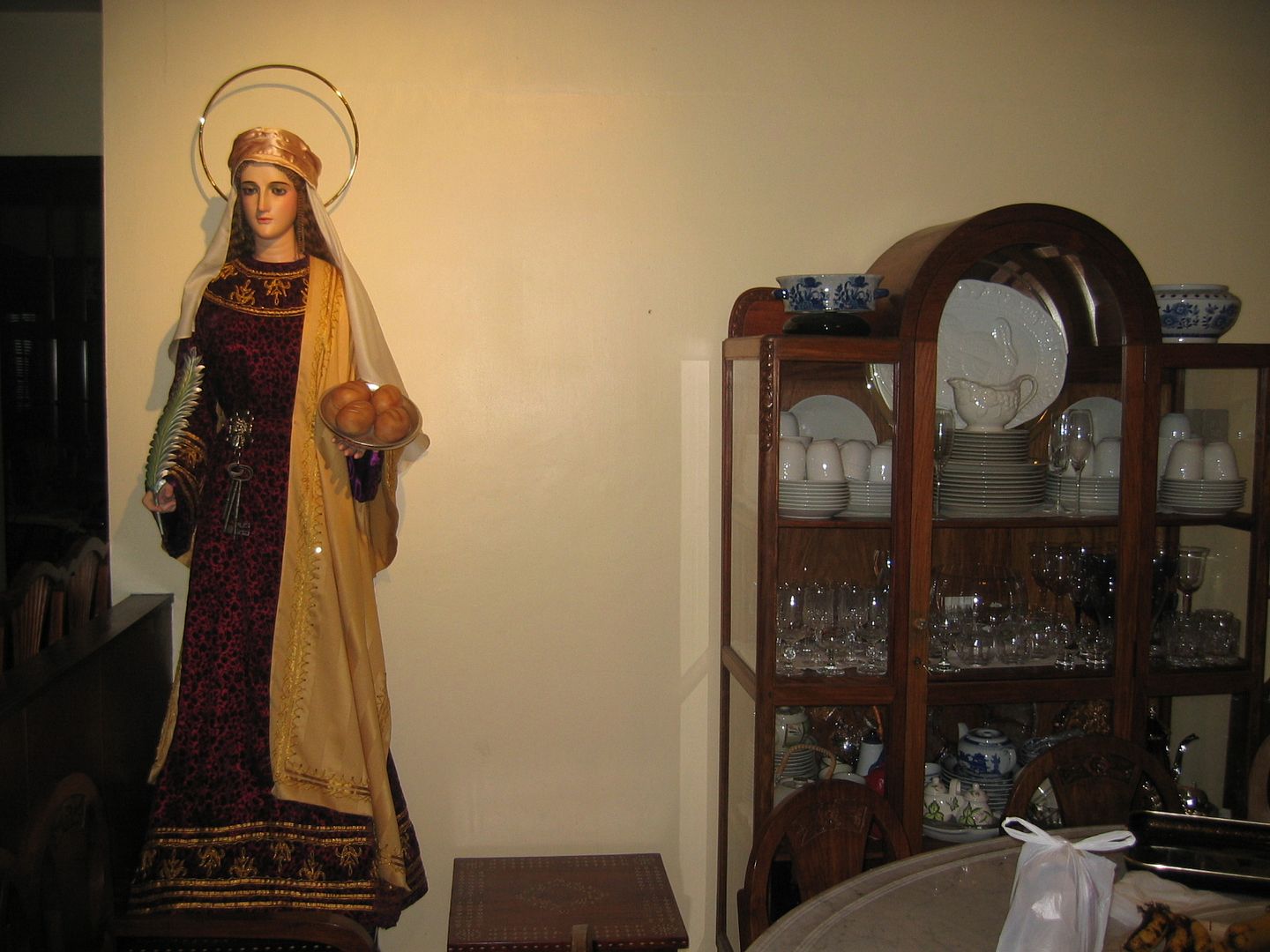
After her inaugural 2004 processions, we moved Saint Martha to pride of place, and stood her on a low table adjacent to the dining area inside my aunts’ house, illuminated by a specially-installed ceiling-mounted spotlight.


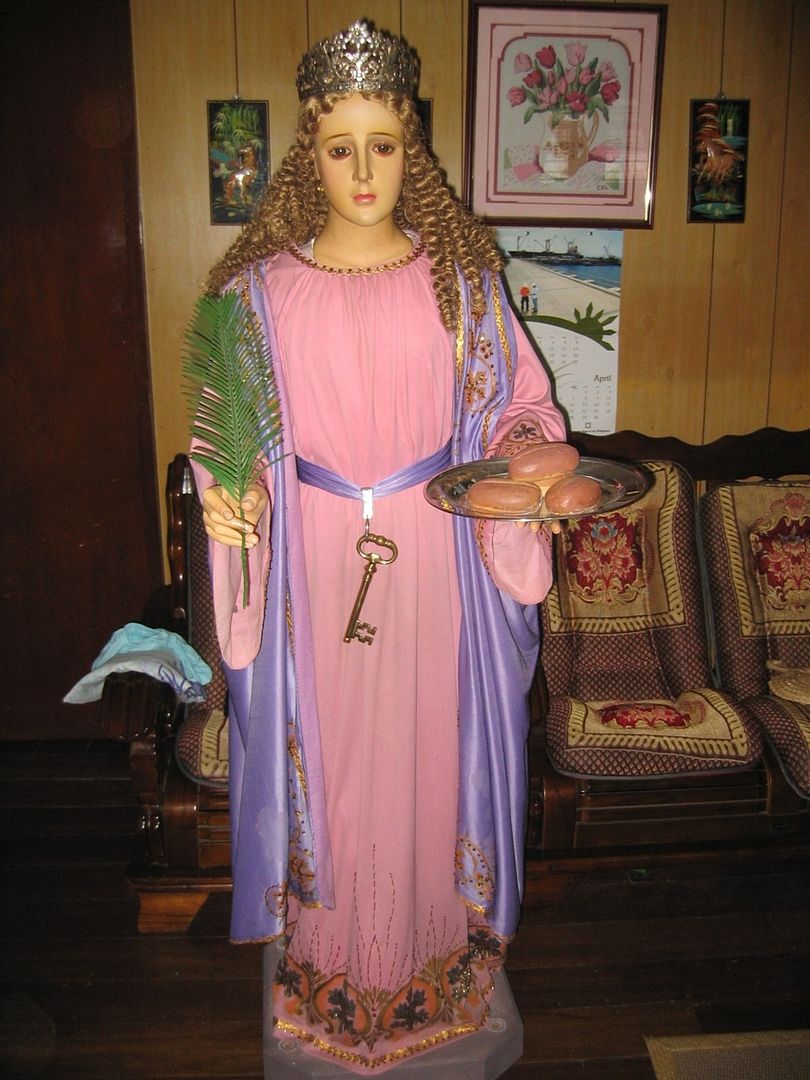
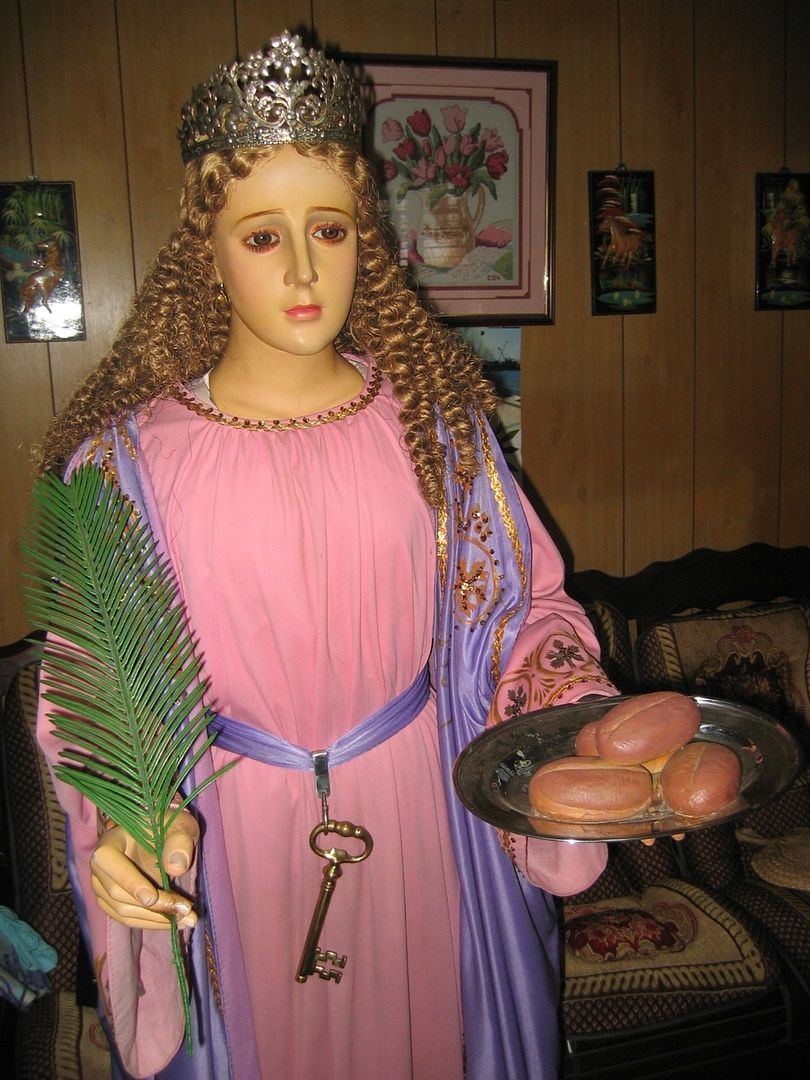
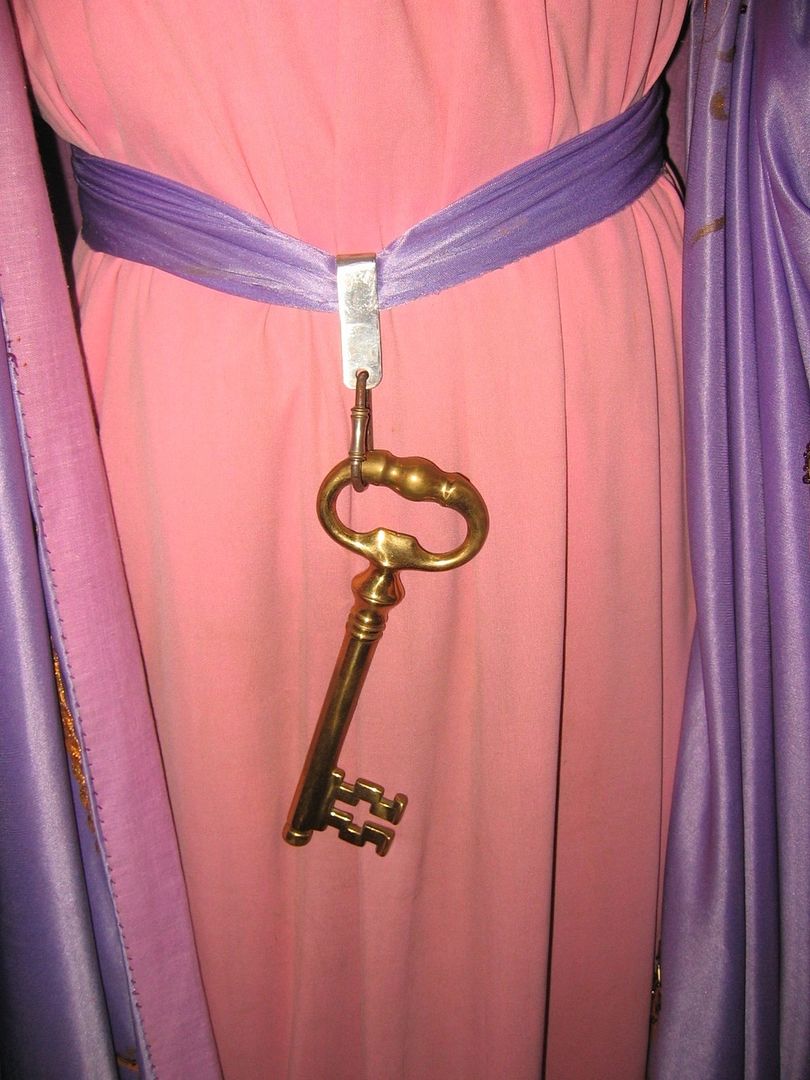
And in the months and years following these first processions, this family-owned image of Saint Martha went through a series of upgrades, beginning with a set of real antique metal keys, suspended from a key fob made by the Vecin Workshop and fastened to her belt, replacing her original single silver-painted wooden key.


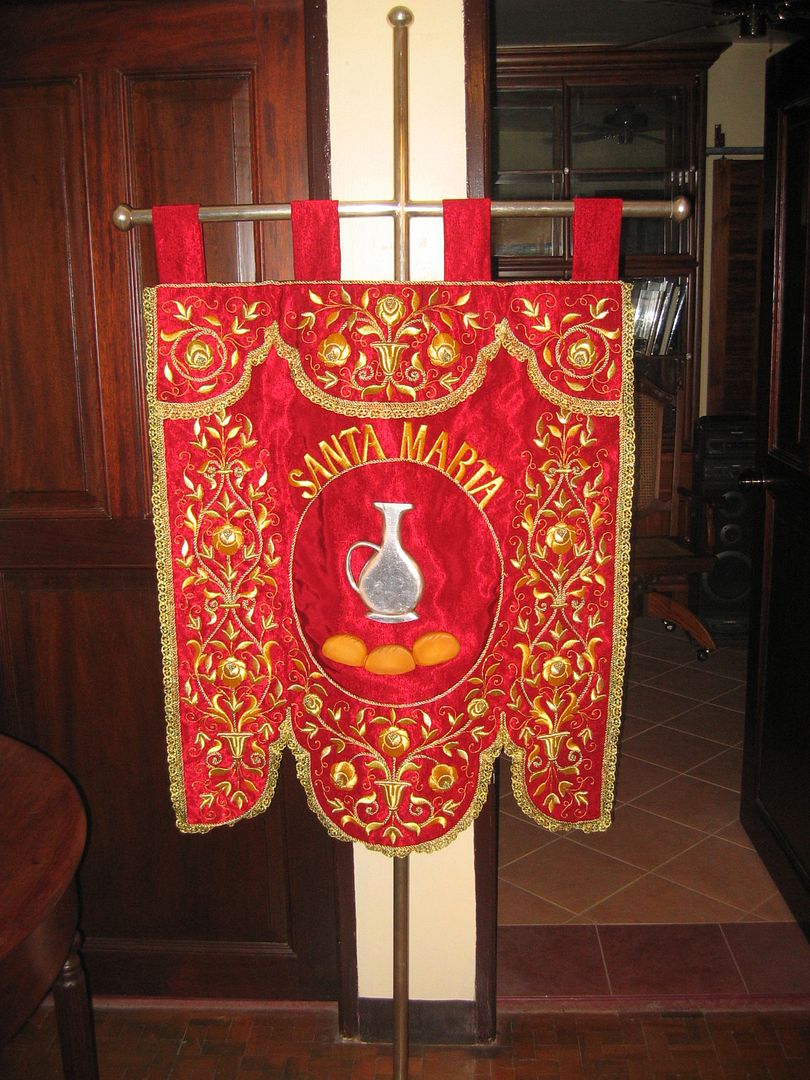
We also ordered a modest banner, which could be carried in procession a few meters in front of the carroza, to indicate to the clueless devotee that indeed, the lady with the halo around her head, keys hanging from her waist, and holding a tray of bread was Saint Martha.


In truth, there was not really a pressing need for this, but it at least enabled us to eschew the crude-looking computer-printed, or worse, pentel-pen-on-cardboard, signs usually foisted on helpless processional santos by well-meaning procession organizers.

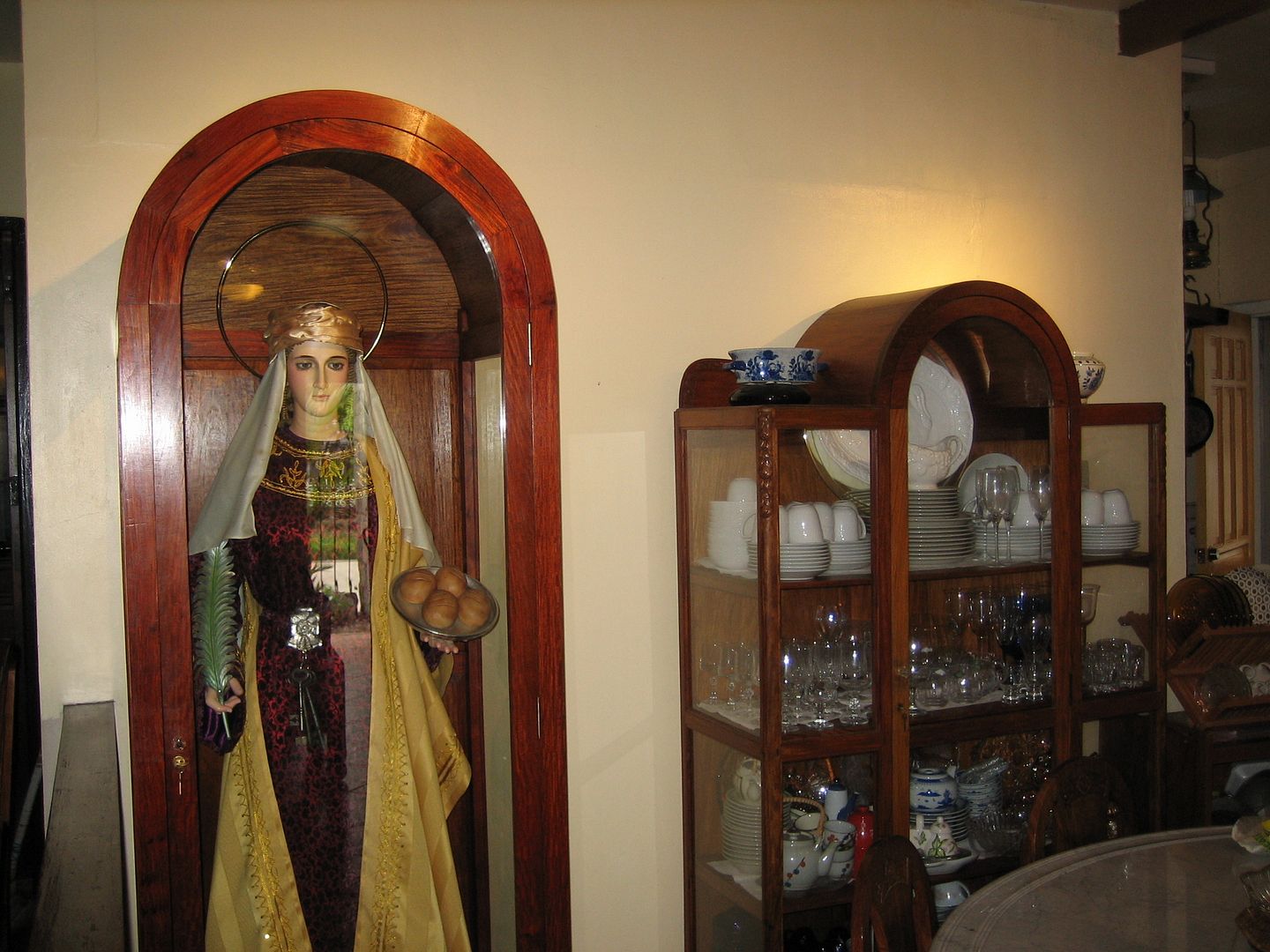
We next invested in a proper urna (case for santo images), which we commissioned from the Bloomquist Workshop of Lipa, Batangas.  Greg and Marilou Bloomquist decided to echo the arched design of a rare Art Deco platera (plate cabinet) standing nearby, that my aunts also acquired from them.


After raising the base of the image slightly, Saint Martha then stood more confidently inside her new narra-and-glass urna.


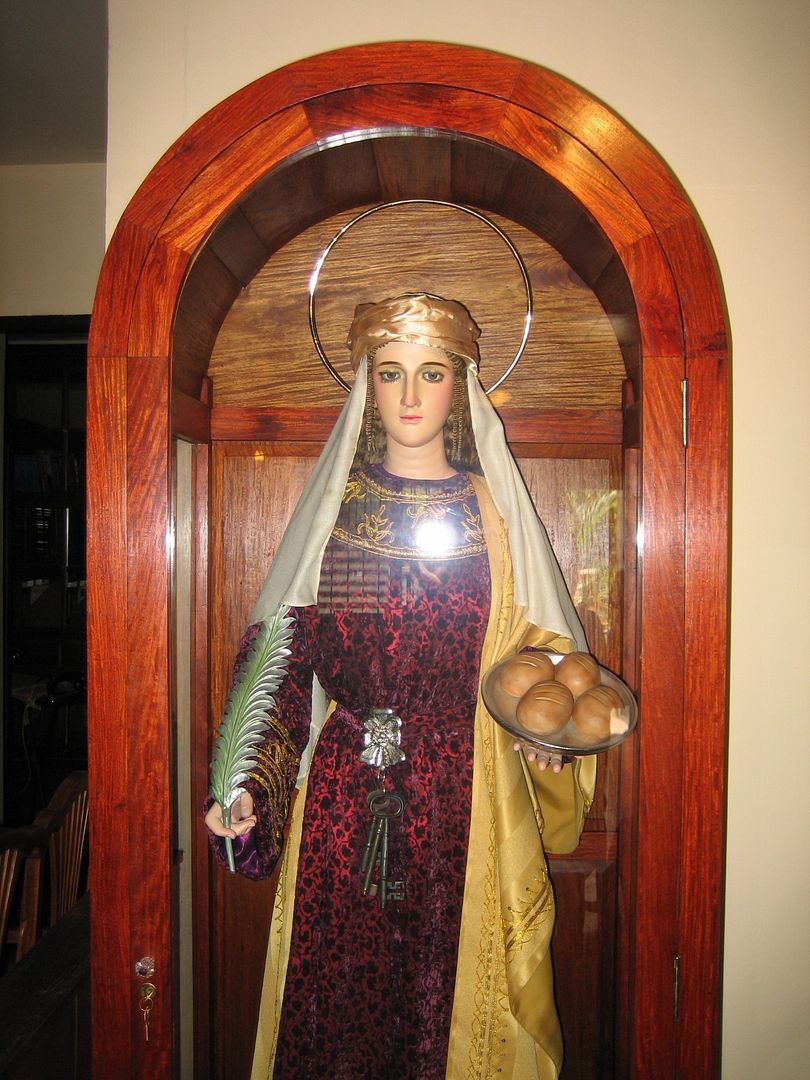
Like the Barasoain Santa Marta, our Saint Martha held a palm branch (made of plastic in the case of Barasoain, painted wood for ours).  This was an iconographic element long associated with her, from the tradition that after settling with her siblings Mary and Lazarus in southern France after the Crucifixion, she overpowered a ferocious dragon that was terrorizing the local populace by dousing it with holy water sprinkled with a palm branch, as is still sometimes done in Roman Catholic services today.  In fact, several devotional images of Saint Martha even depict her trampling upon the aforesaid dragon, sometimes morphed into a crocodile for added cuteness.

However, a palm leaf is also well-established in Christian tradition as a symbol of martyrdom – witness numerous saints’ images holding them.  To avoid confusion and since Saint Martha is not known to have been martyred, we decided to prematurely retire her palm leaf, and replace it with an "Easter" lily of purity, another of the symbols associated with her, Saint Martha having been long-venerated as a Holy Virgin even in the early Christian church.

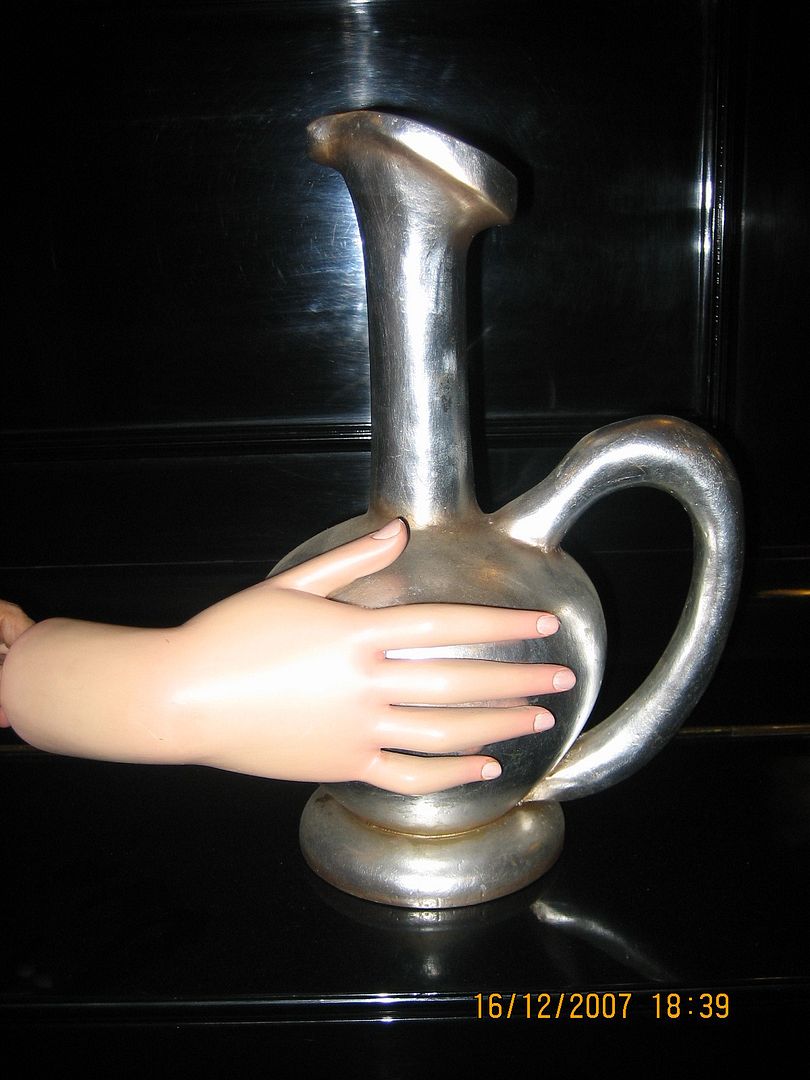
We could have gone for a jug of wine in her right hand – in fact even at the outset Mr. Vecin had made a silver-painted wooden jug, with a matching grasping hand even, in case we get tired of any of her other symbols.


But this would involve fastening the jug to her chest with screws, and therefore cutting holes through her beautiful garments – not exactly a savory undertaking.

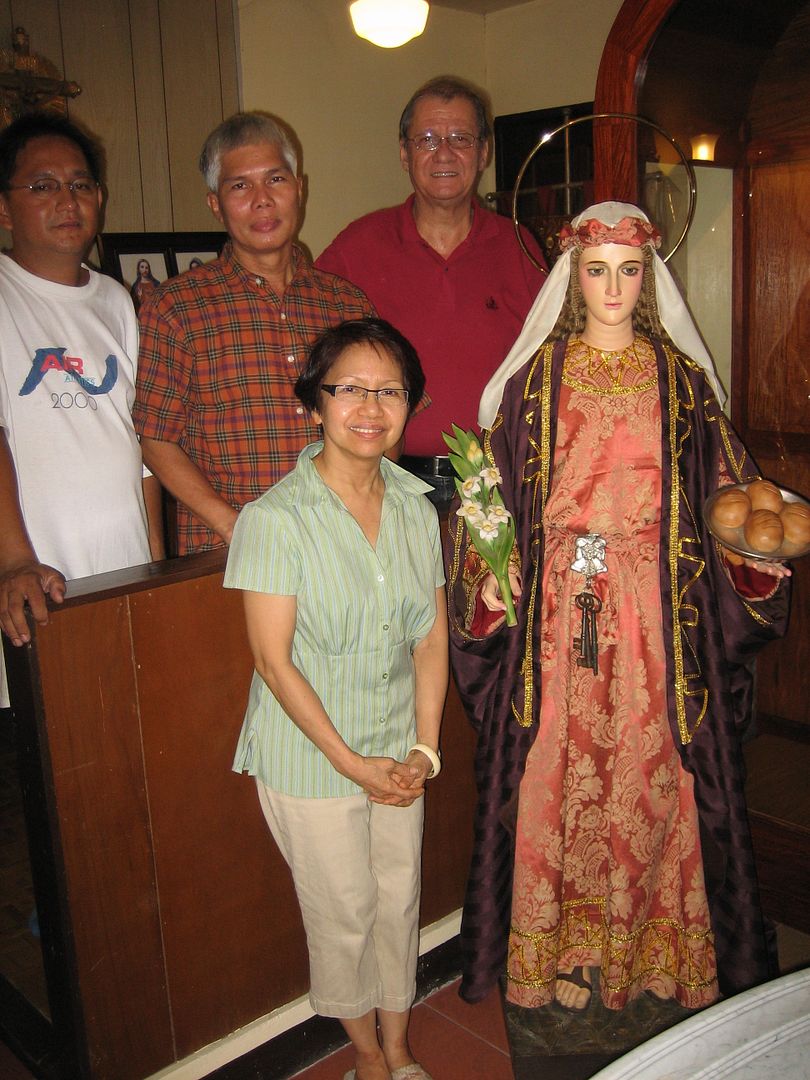
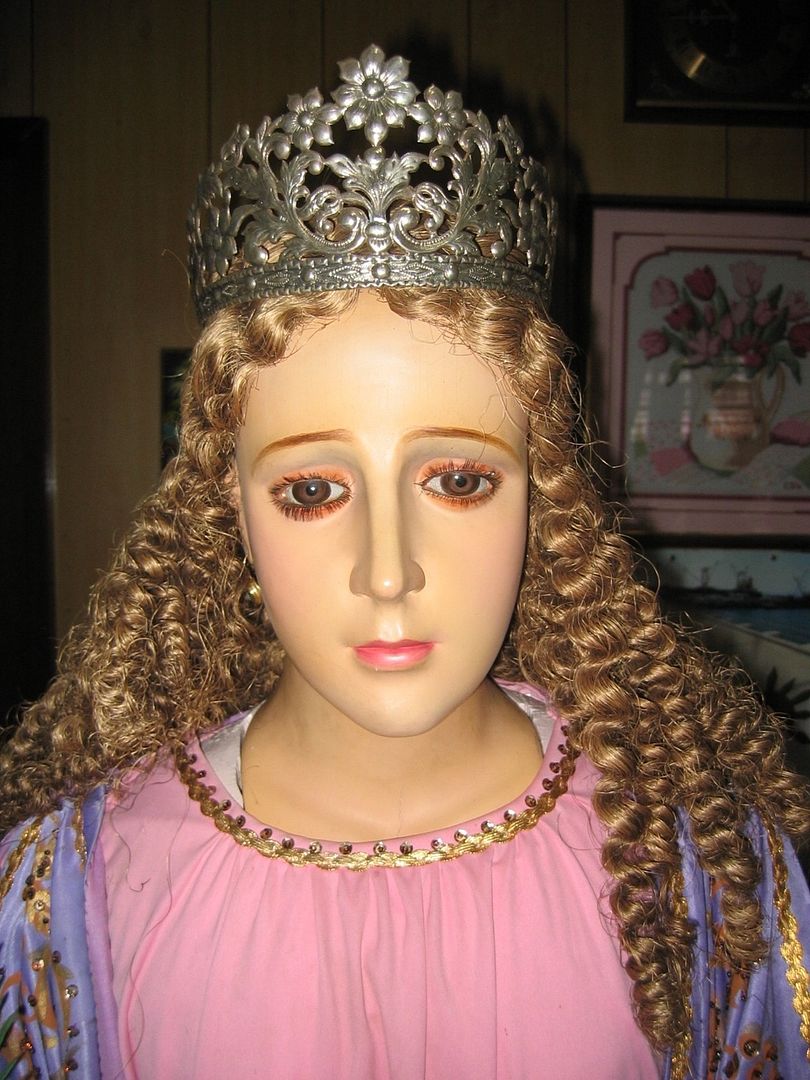
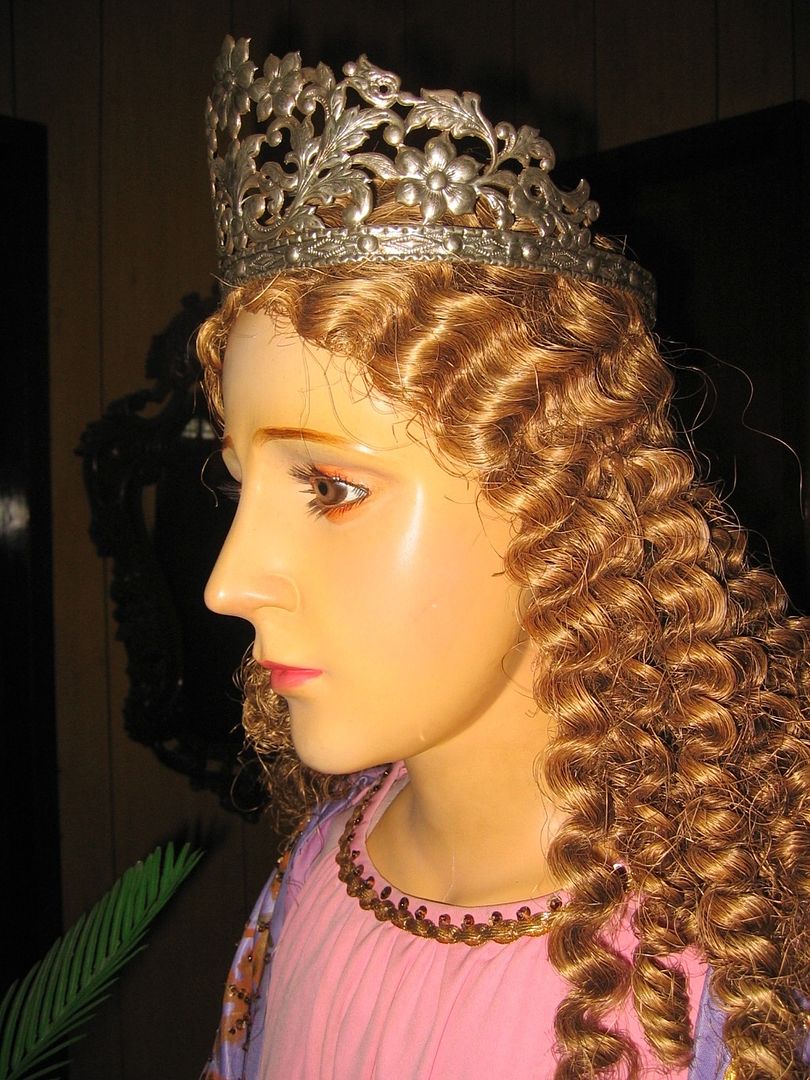
Therefore, for Holy Week 2007, we took the opportunity to replace Saint Martha’s wooden palm with an Easter Lily branch nicely-scuplted from wood and quite realistically painted.  While we were at it, we decided to retire her three-year-old garments, and commission a new set in a different style, still from the Vecin Workshop’s in-house garment maker, Ramon Gutierrez.  The result of these two changes was most pleasing.


And this group (my aunt in the foreground beside Saint Martha, with Mr. Buboy Rivera, another regular Vecin client; Dardo the Vecin Workshop’s in-house dresser; and Mr. Vecin himself) was most pleased to pose for this photo.


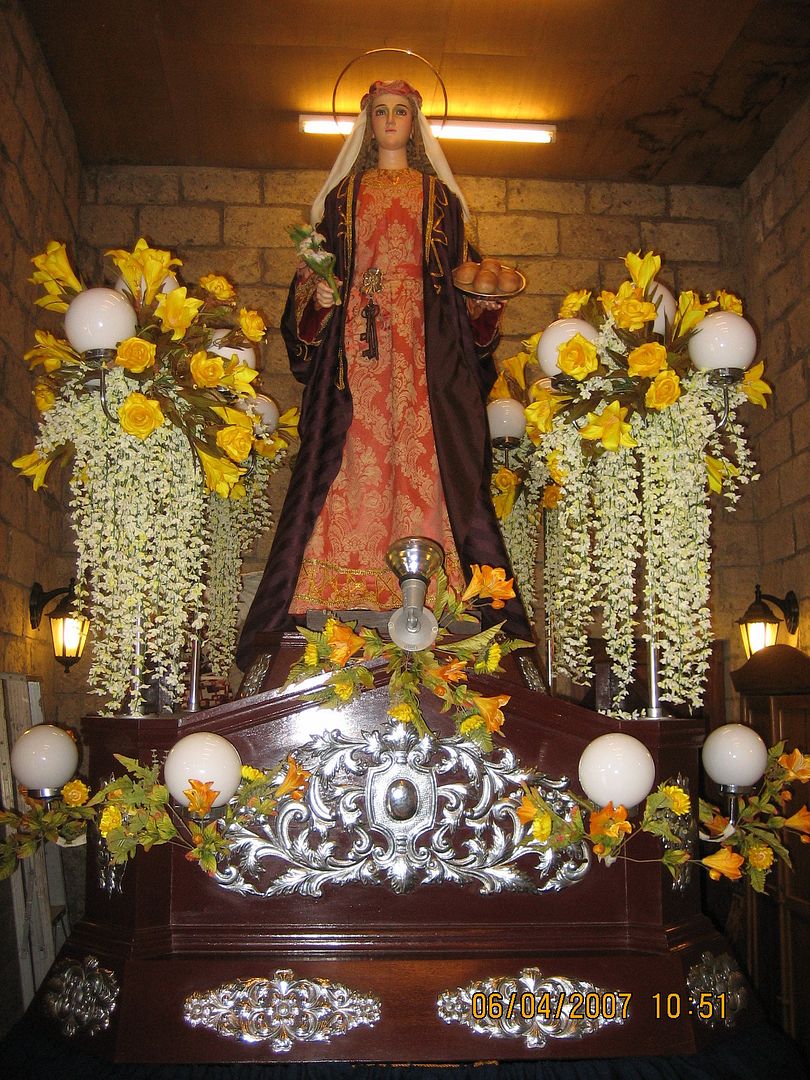
For Holy Week 2007, then, Saint Martha joined the procession in her new threads.


And for Holy Week 2008, the silk flowers were updated to more closely match her new garments’ colors.


This change in decorations, however, met with somewhat mixed (or even polarizing) reviews.

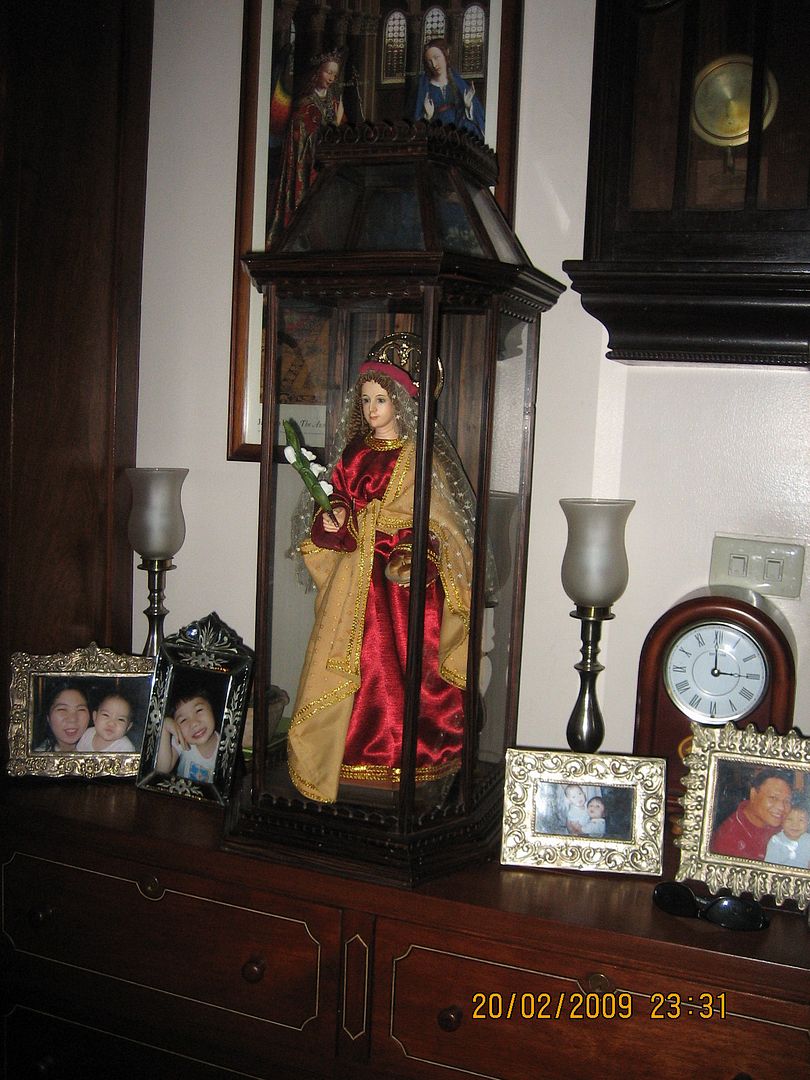
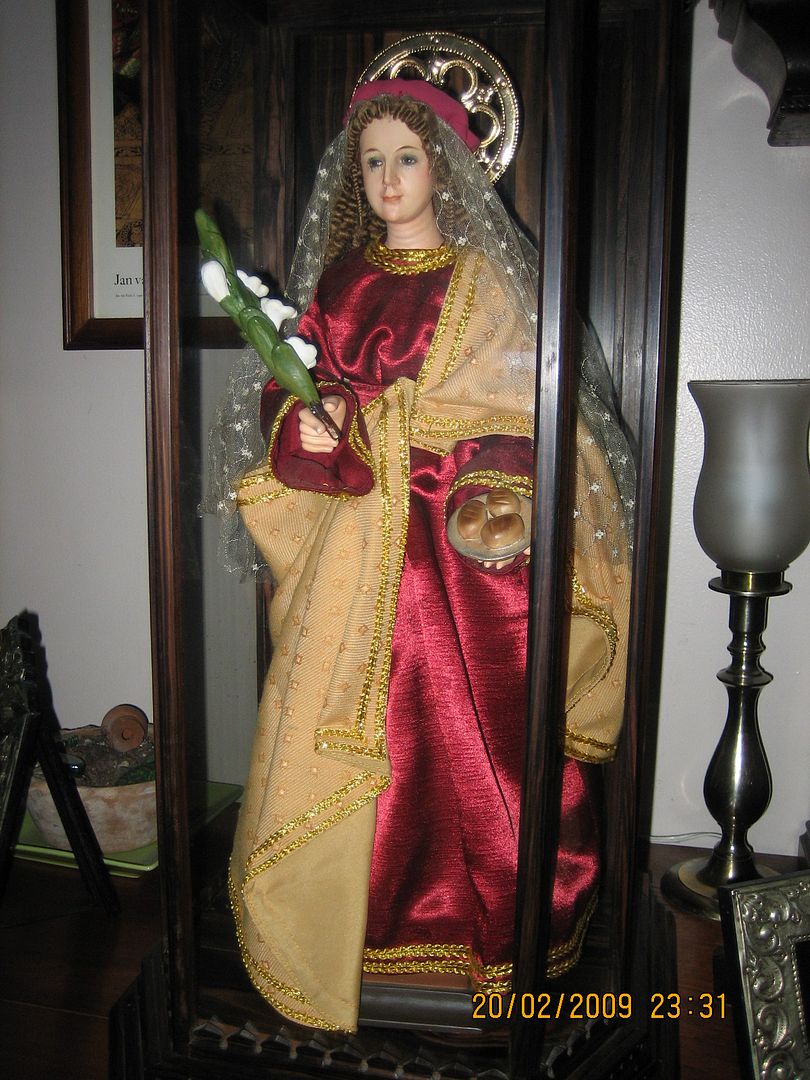
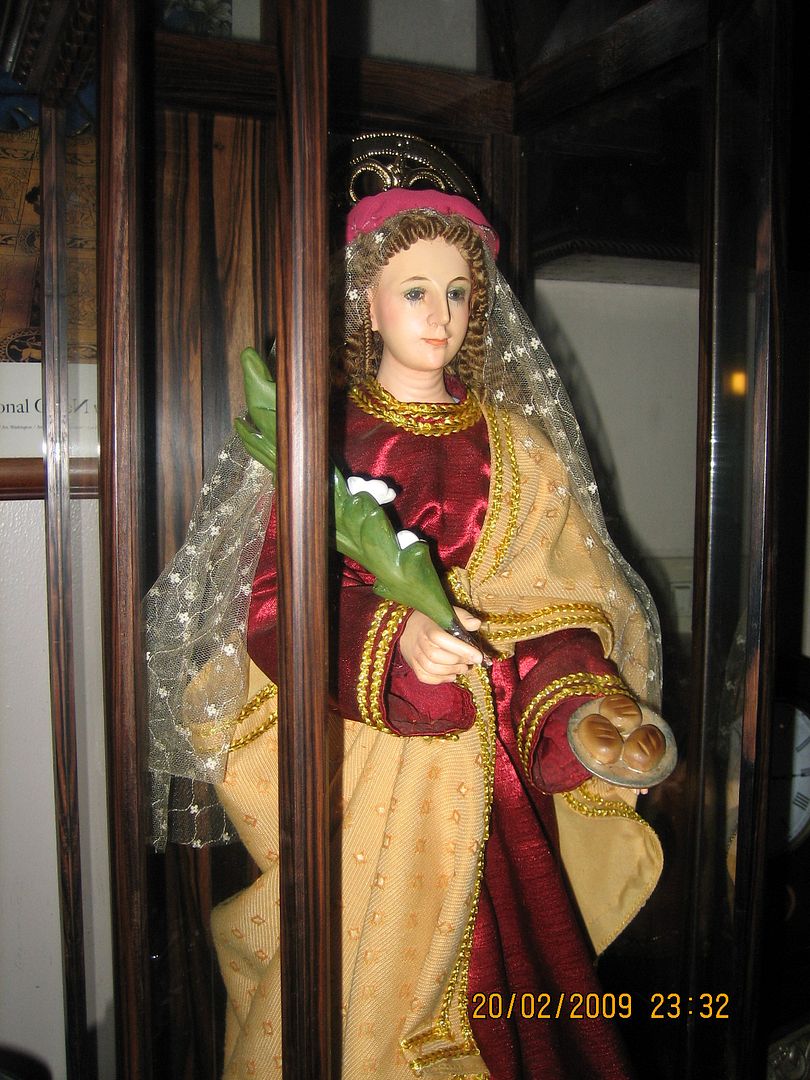
At a certain point, one wonders if perhaps overinvestment in certain areas has started to take place, leading to diminishing returns.  Our Saint Martha-loving family, however, is undeterred in our devotion.  We commissioned a small, 18-inch scale Saint Martha for home devotion, also from the Vecin Workshop.


And we also asked the Bloomquist Workshop to build an antique-style kamagong (ebony)-and-glass urna for it.


And as our family gears up to bring Saint Martha out in processions for her sixth-ever Holy Week in early April 2009, we all say

Saint Martha, pray for us and bless us!


Originally published on 13 February 2009.  All text and photos copyright ©2009 by Leo D Cloma. The moral right of Leo D Cloma to be identified as the author of this work has been asserted.

Original comments:

I like the idea of a duplicate Sta. Marta mini-santo for home devotion. I bet you're gathering materials for your next Desmayado article!

arcastro57 said
I like the idea of a duplicate Sta. Marta mini-santo for home devotion.

Which is why we ought to commission a Mini-Pagkarapâ as well!

This entire series has been terrific, Leo, beautifully written and photographed. Sooo ... when's that book coming out?

Leo, I agree with gregandmarilou. Your quest and realization of a family devotional icon is awe-inspiring. Thanks for sharing. By the way, are you and your family not considering feting Santa Marta on her feastday on July 27? The Lenten Season is not exactly conducive to a more festive celebration and July would be in Ordinary Time so the saints can rock as much as their devotees would like to. Just a thought. Regards.

hi!! Saint Martha is also the saint assigned to our family for the Holy Week procession for 2 years na. This 2009 is our third year. We would like to ask how we can order from you the St. Martha mini-santo duplicate for our home devotion. Please email me at mrsoliven@hotmail.com. Our family's family name is also Rivera from Cebu. Thank you so much.

annriv said
We would like to ask how we can order from you the St. Martha mini-santo duplicate for our home devotion.

I will just send you a PM with the contact detail of the Vecin Workshop. They also made the small Saint Martha for us.

jopas1 wrote on Sep 27, '09
I really enjoyed reading your article about how St. Martha became your family saint.I was almost tempted to do justice to our St. Martha by composing a write up as well.Many thanks.

jopas1 said
I really enjoyed reading your article about how St. Martha became your family saint.I was almost tempted to do justice to our St. Martha by composing a write up as well.Many thanks.

You should go ahead and write your story up as well, for all of us to read.

Hi! I would like to ask an approximate amount of how much did the life sized St. Martha cost? (if it is all right w/ you) I inquired because my family is planning to sponsor a 3 foot statue of the virgin mary and we haven't been able to inquire much yet. thank you

iloveme97 said
Hi! I would like to ask an approximate amount of how much did the life sized St. Martha cost? (if it is all right w/ you) I inquired because my family is planning to sponsor a 3 foot statue of the virgin mary and we haven't been able to inquire much yet. thank you

I've sent you a PM.

Monday, January 11, 2016

LXIX. How Saint Martha Became Part of the Family, Part Three: To Overcome Our Distractions and Worries.

(Continued from Part One and Part Two.)

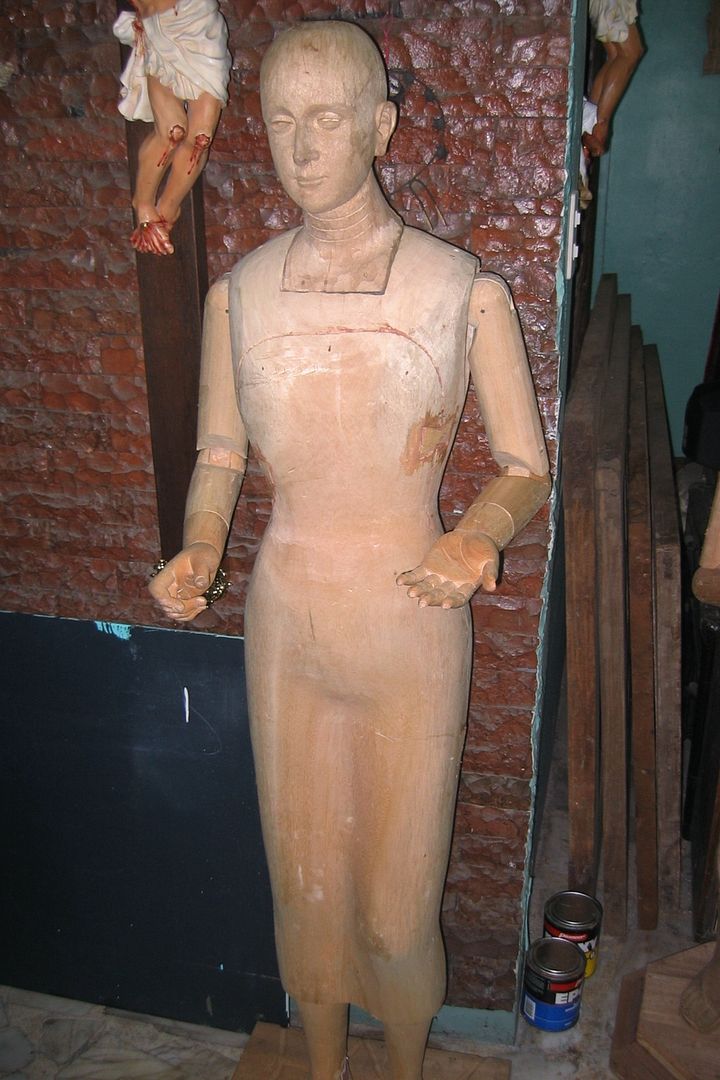
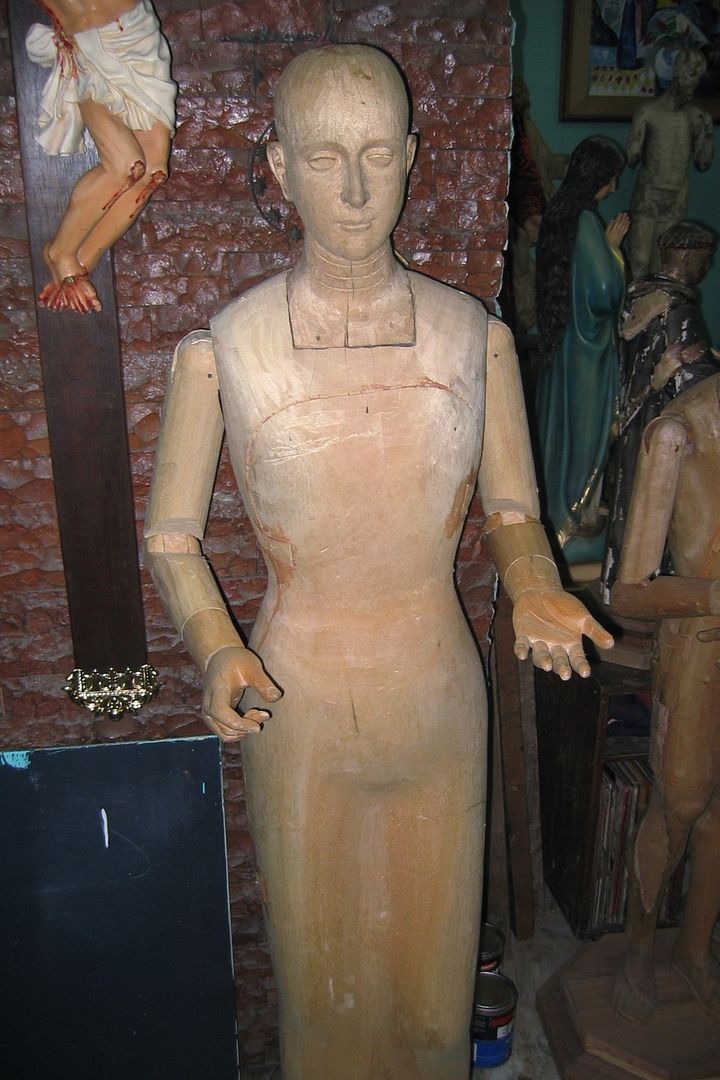
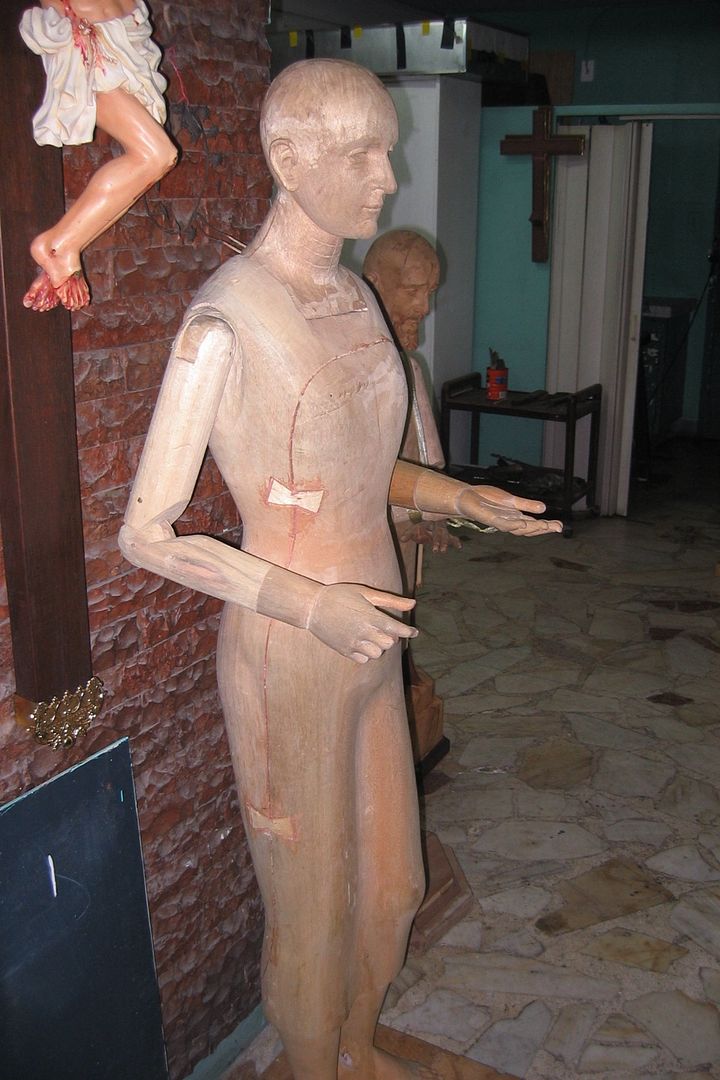
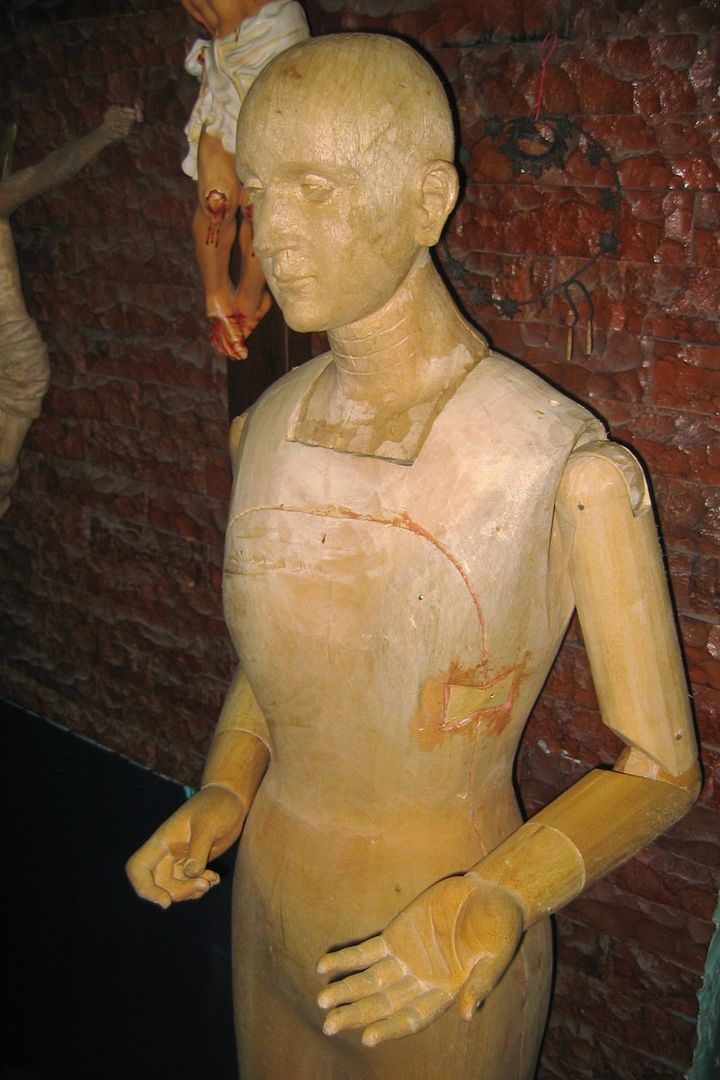
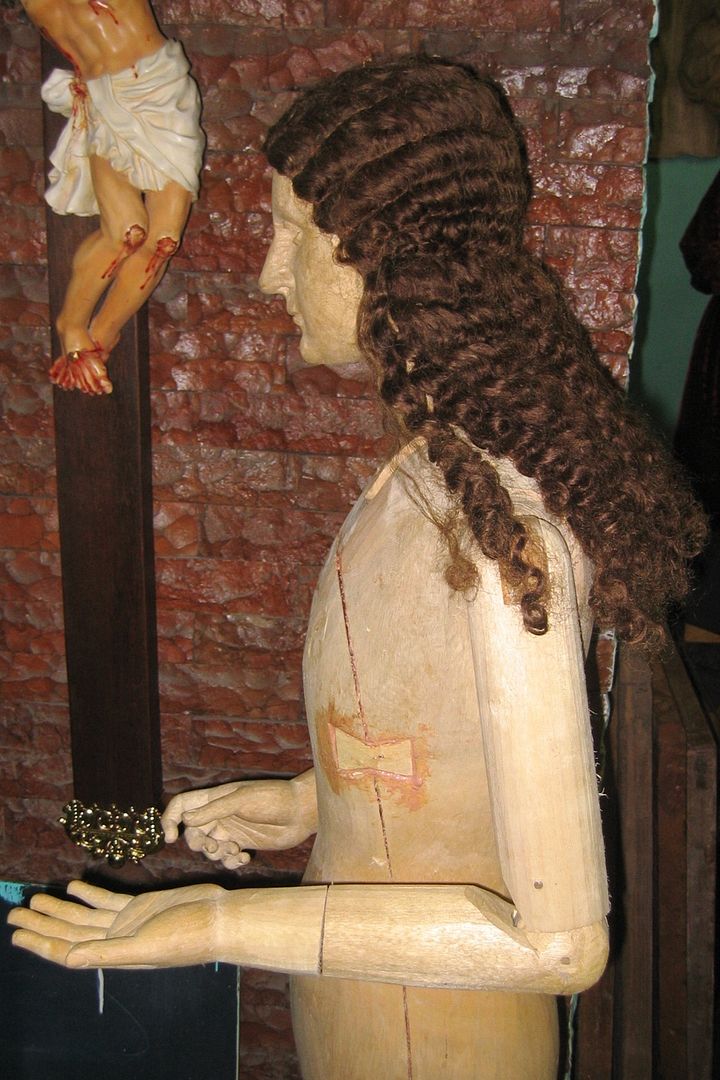
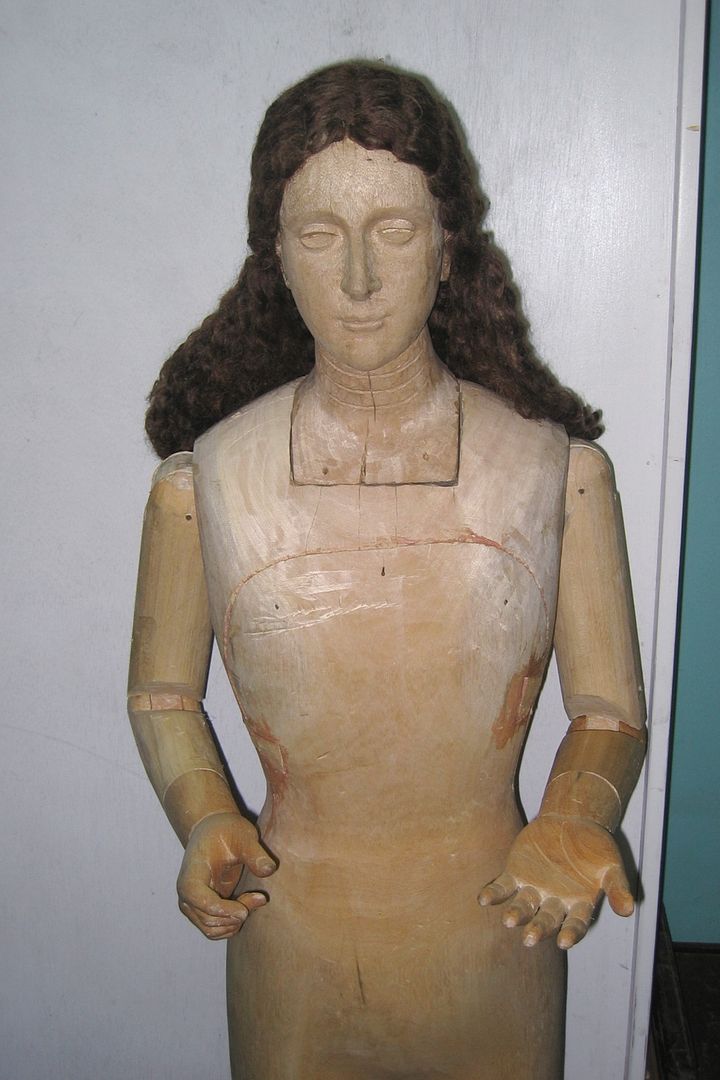
By July 1st, 2003, or barely three months since we placed the formal order, the basic sculpture of Saint Martha had been completed by the Vecin Workshop’s talented artisans.  This was entirely in baticuling wood, the softwood species traditionally used in the Philippines for religious sculpture.


The left hand was outstretched to hold a tray of bread, and the right hand positioned to grab a palm leaf, just like with the Barasoain Santa Marta.


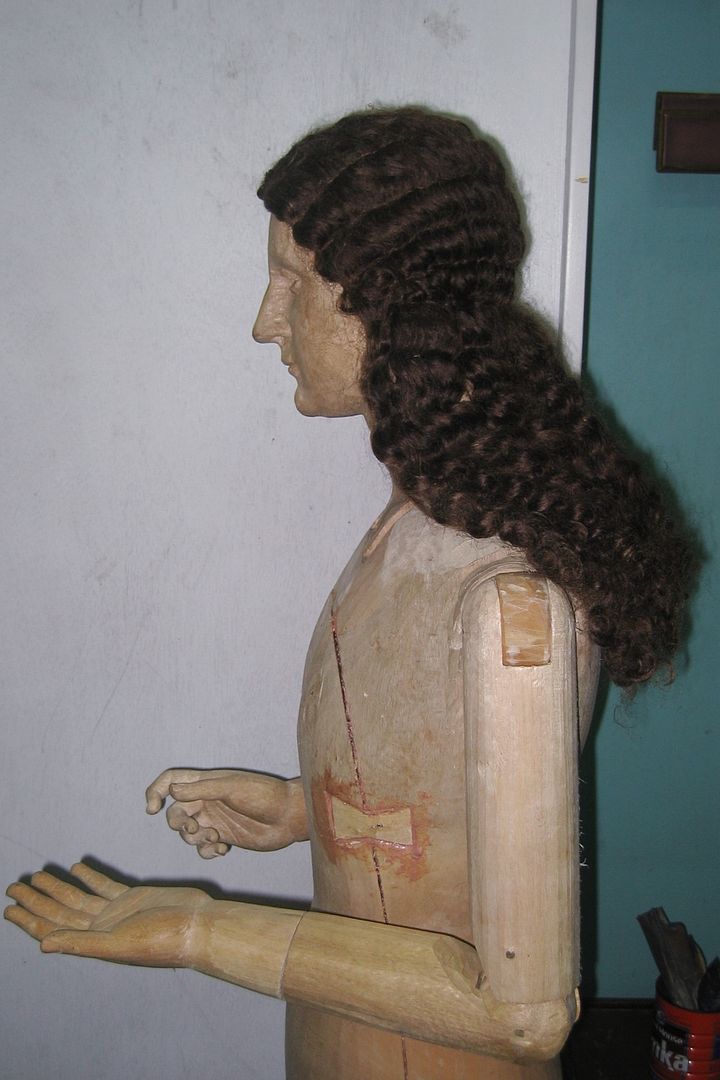
The front part of the image’s body had earlier been cut away to enable it to be hollowed out.  This facilitated the drying process – essential in order to avoid undesirable cracking later on – as well as reduced the statue’s finished weight.  This torso front was then put back and secured in place with butterfly joints, clearly seen in this next photo.


The head too had been earlier scalped to scoop out its contents, likewise helping it dry out better and making it lighter.  No butterfly joints needed for that, just wood glue to put the scalp back in its place.


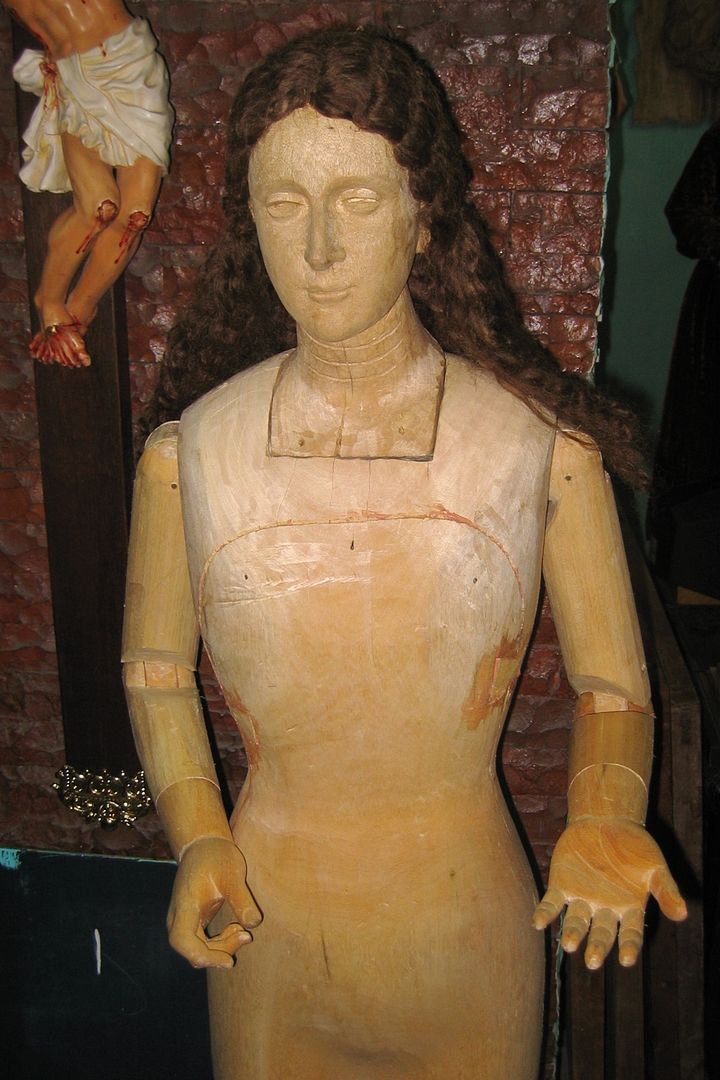
Ever tactful when dealing with newbies like myself, Mr. Vecin suggested that I take photos as well with a borrowed wig on the image.  Taking one of his several hundred-odd wigs in storage or lying around the workshop and fitting it on Saint Martha’s head, he figured that it would be easier for me to appreciate the sculpture’s appearance and therefore extrapolate its finished look if we allowed it to stop channeling Sinead O’Connor too much (my thoughts, not his).


And perhaps a lighter background might help even more, so Mr. Vecin drags Saint Martha across the room towards another wall.


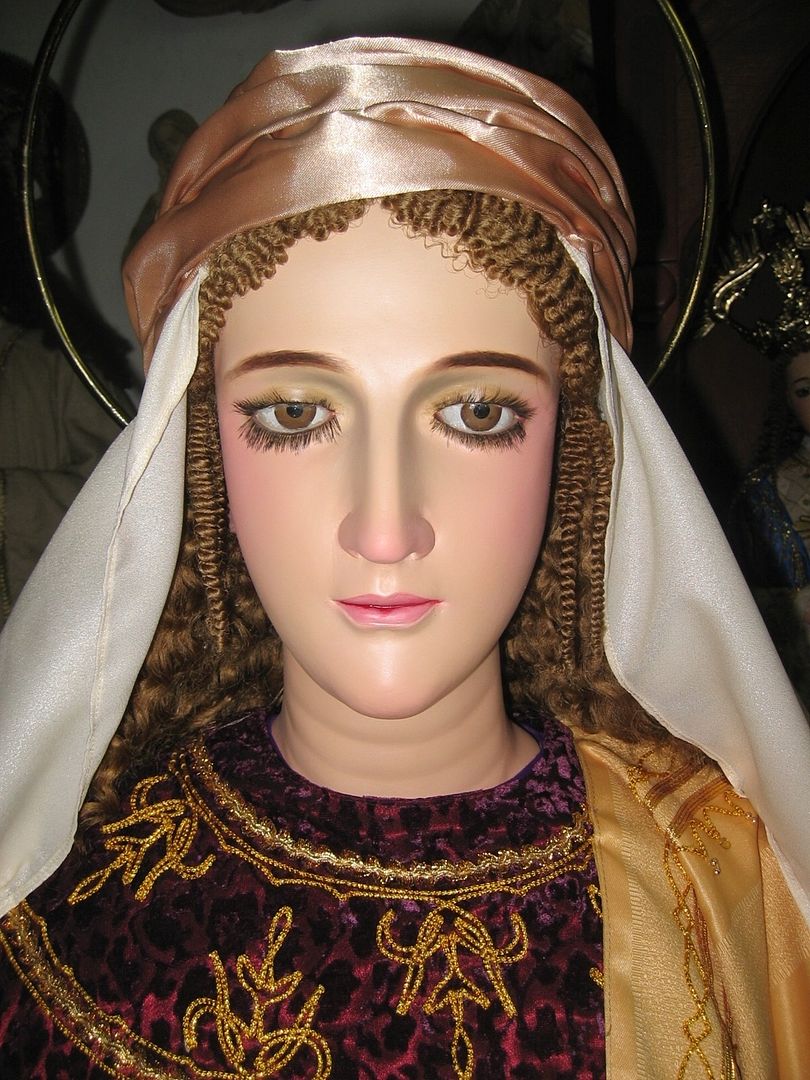
Mr. Vecin and I took the opportunity to agree on some key points for the final painting, mainly that unlike perhaps other Holy Week processional images of Holy Women around, Saint Martha would not look overly distraught (hence the way her face had been sculpted), and would not even have tears (whether of the glass or the “varnish” kind), but would instead look simply serious and stoic, like its two models the Barasoain Santa Marta and the Quiapo Hidalgo Veronica.

From this point in time, we were looking at a wait of several months, to allow the wood to dry completely inside the workshop, with oil painting to be done just shortly before delivery in the first quarter of 2004.

Indeed, the next major change happened to Saint Martha only right before Mr. Vecin called me back to his workshop, in the fourth week of Lent.  I showed up a few days later, early in the morning of Friday, March 26th, 2004, and saw this:


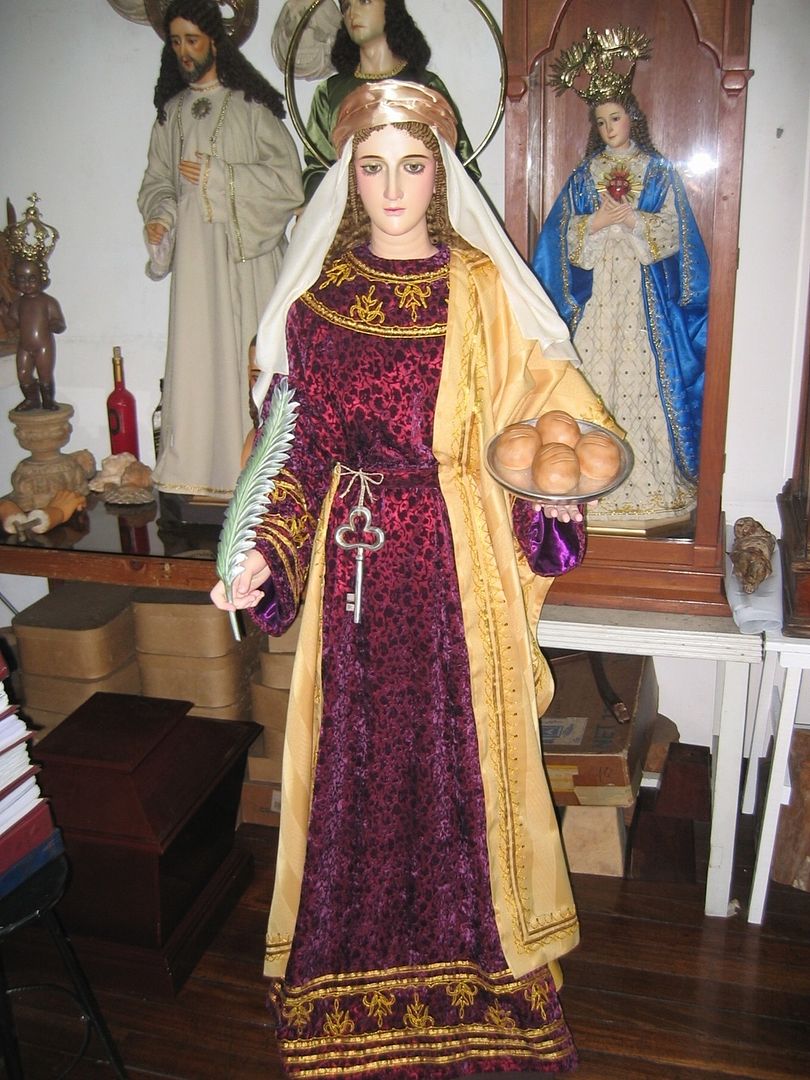
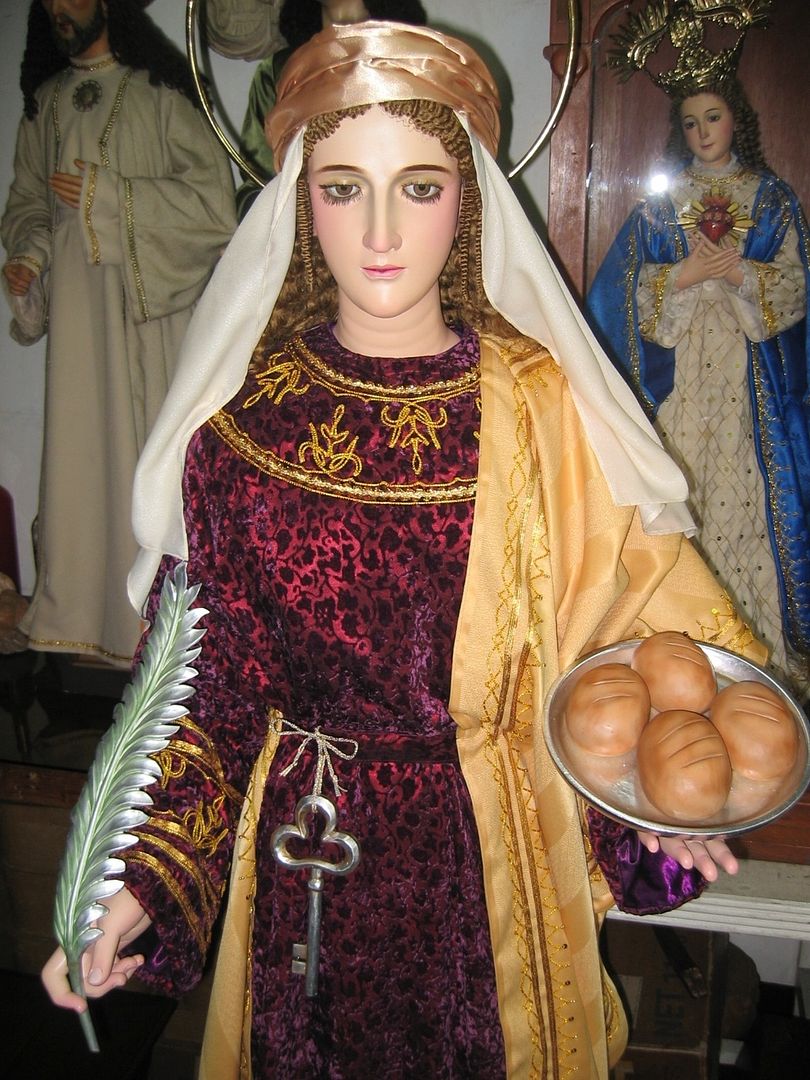
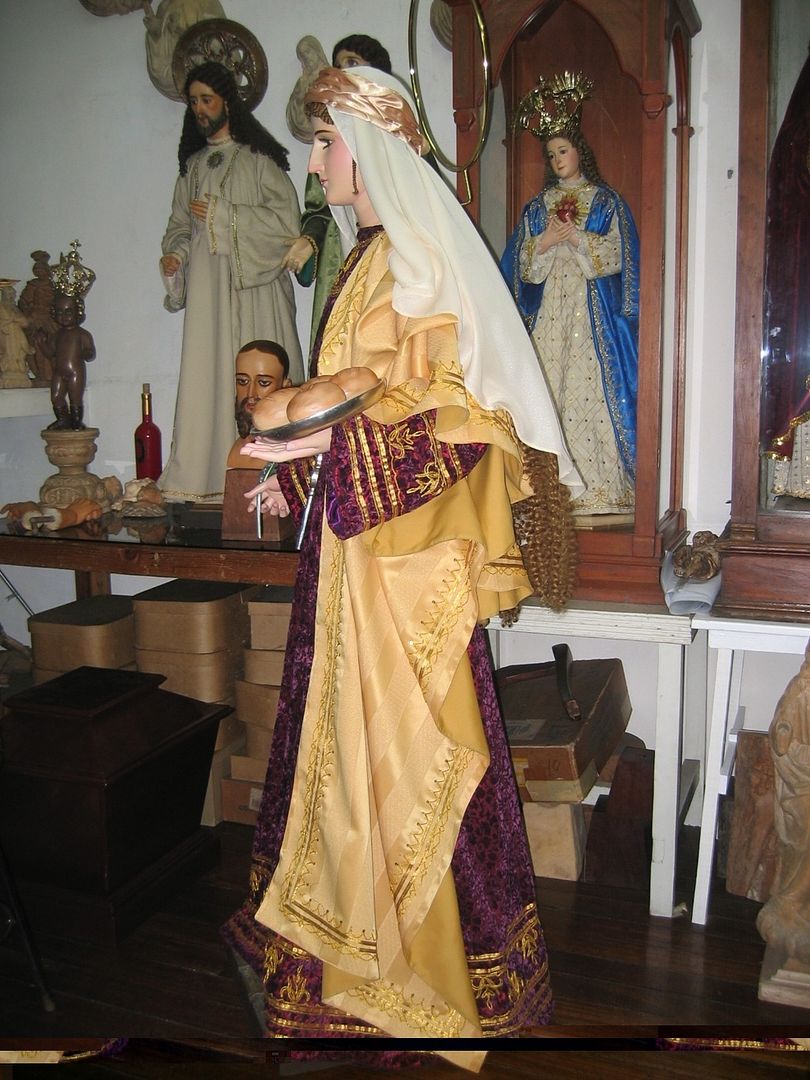
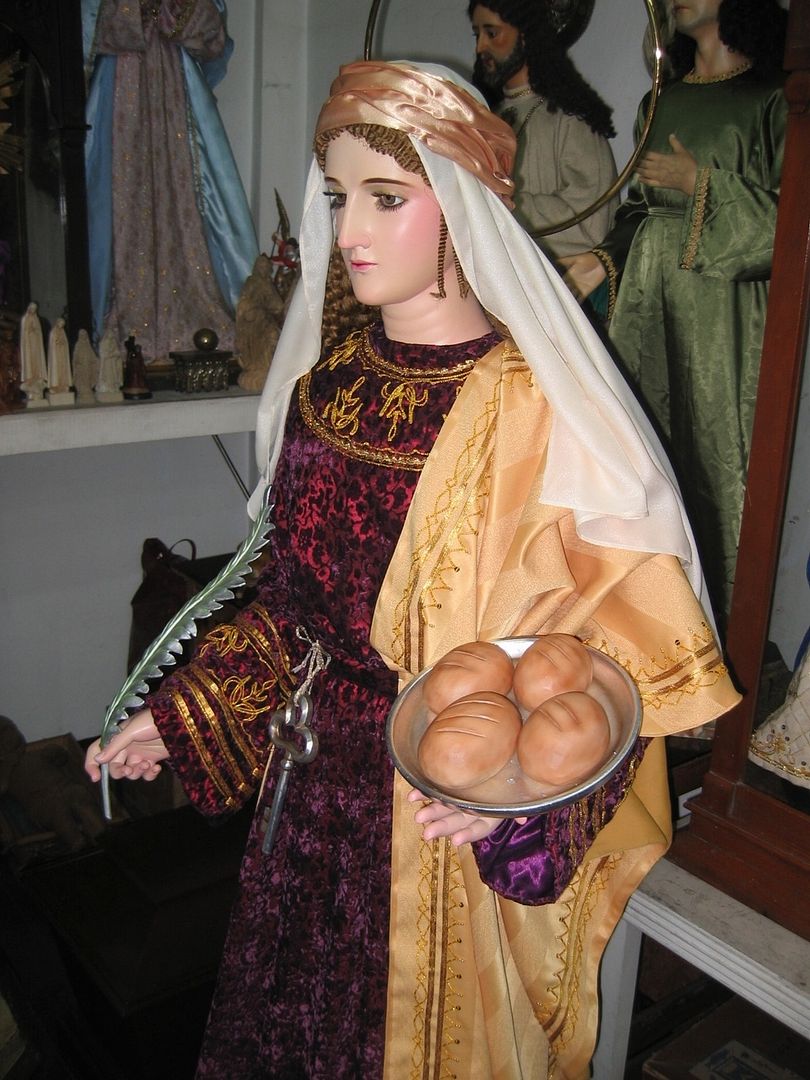
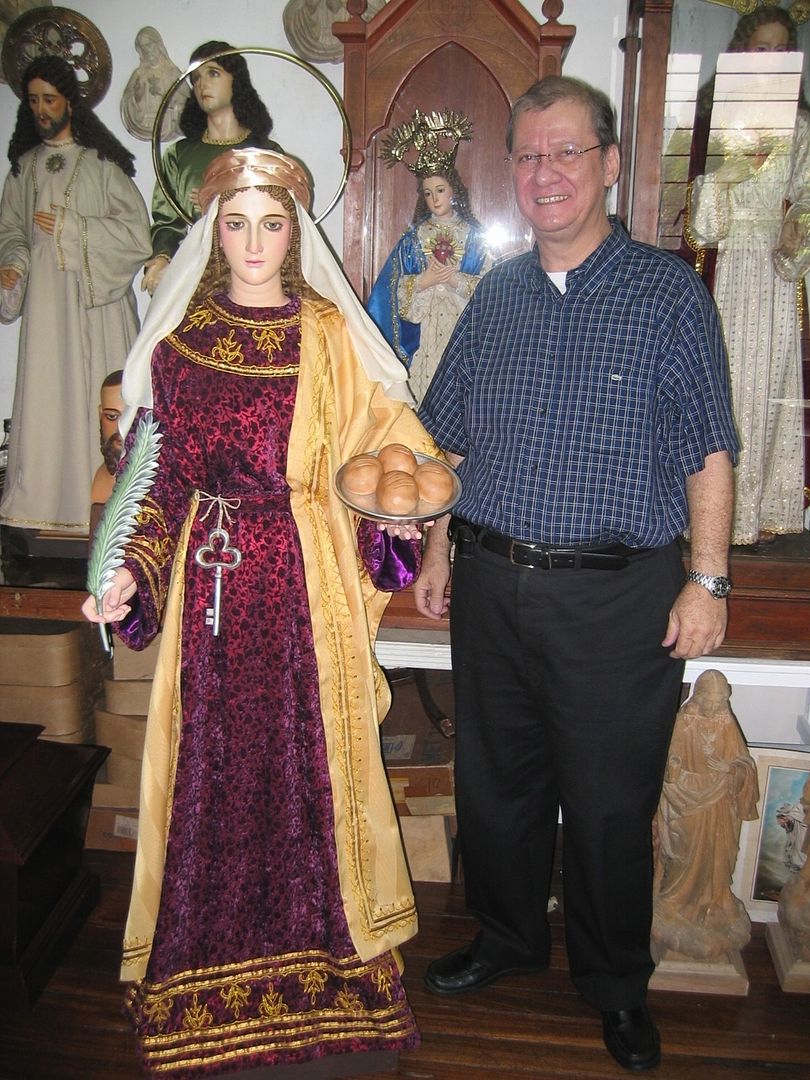
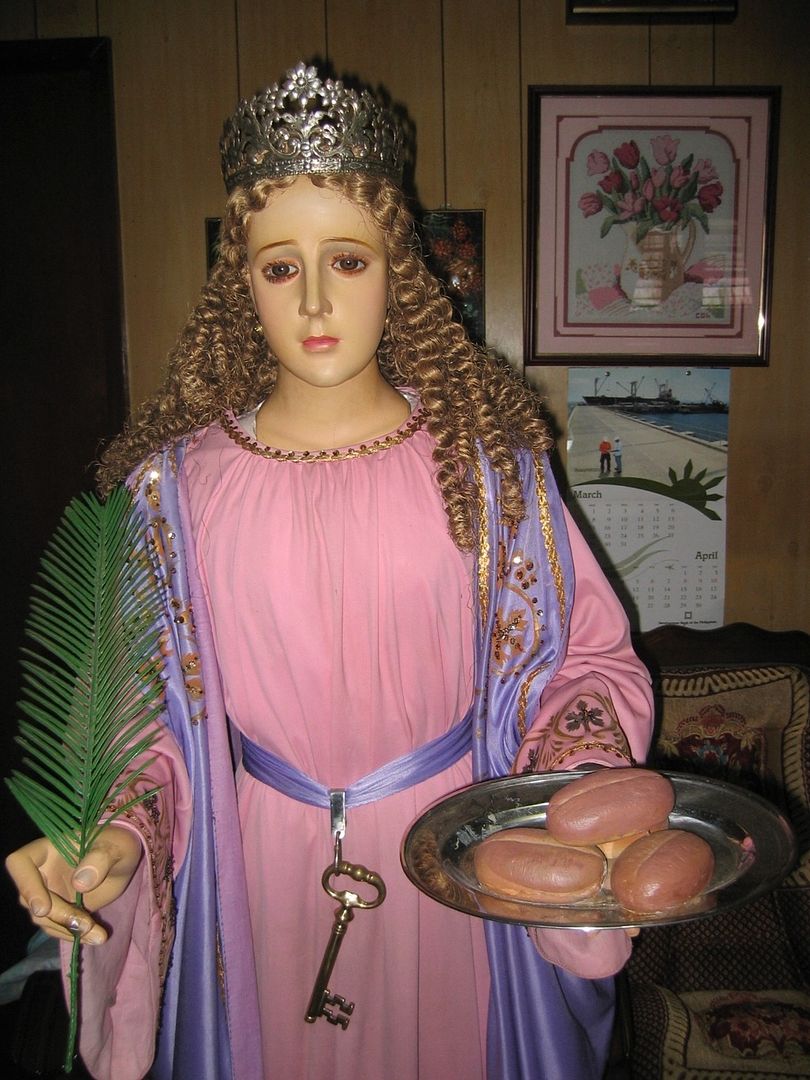
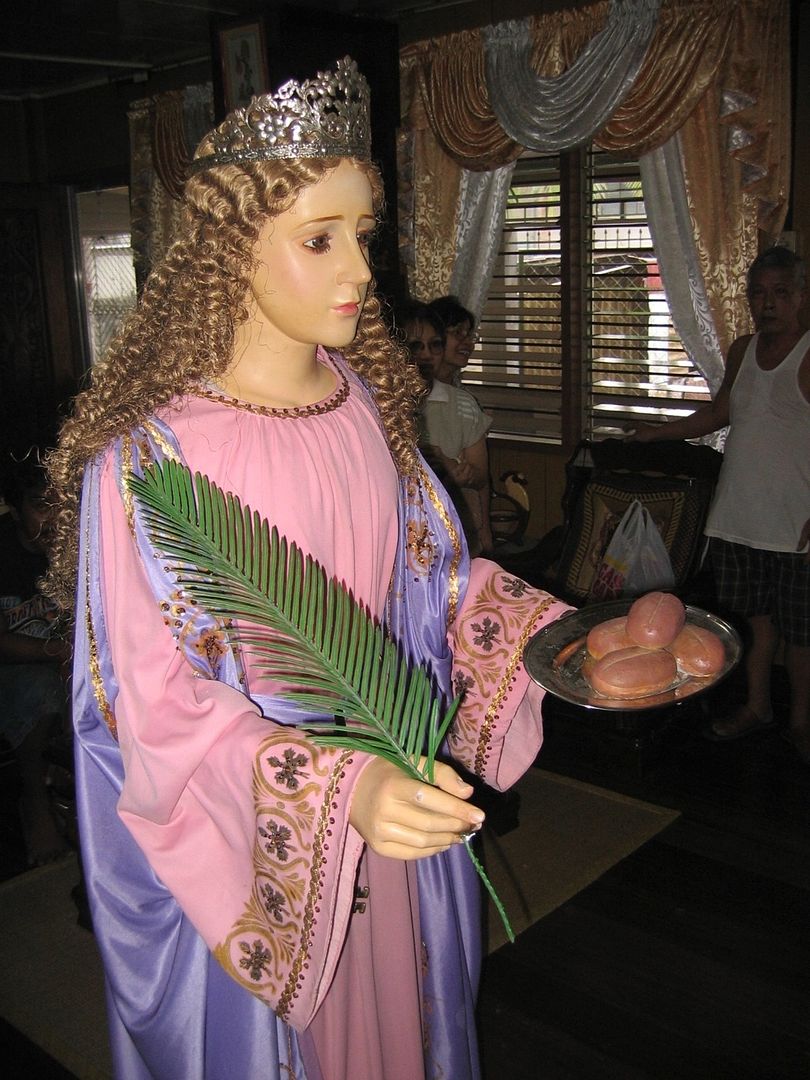
Just like the Barasoain Santa Marta, “our” Saint Martha, now completely oil-painted, had her requisite tray of bread, palm branch, and large key hanging from her waistband.  To save on weight, she eschewed a real heavy metal key and had a painted wooden model instead.


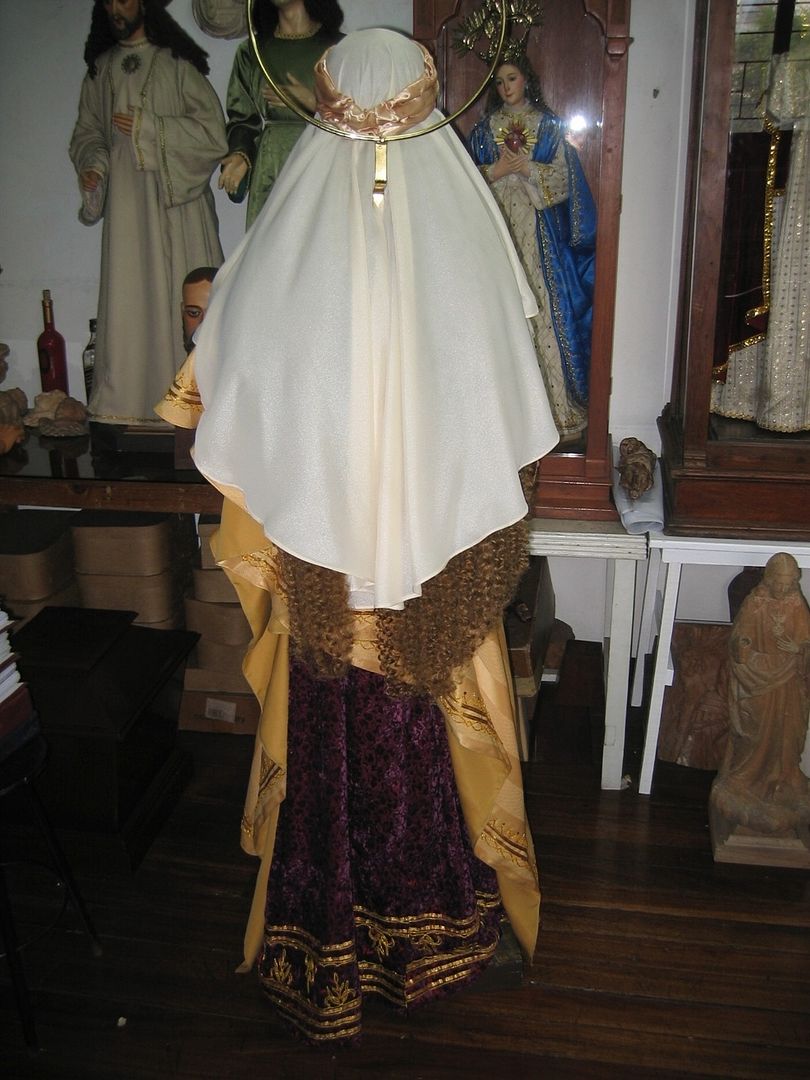
She was garbed quite closely to the circa 1900 Quiapo Hidalgo Veronica on which her dressing style was modeled, from the draping of her cape to her cloth headdress.


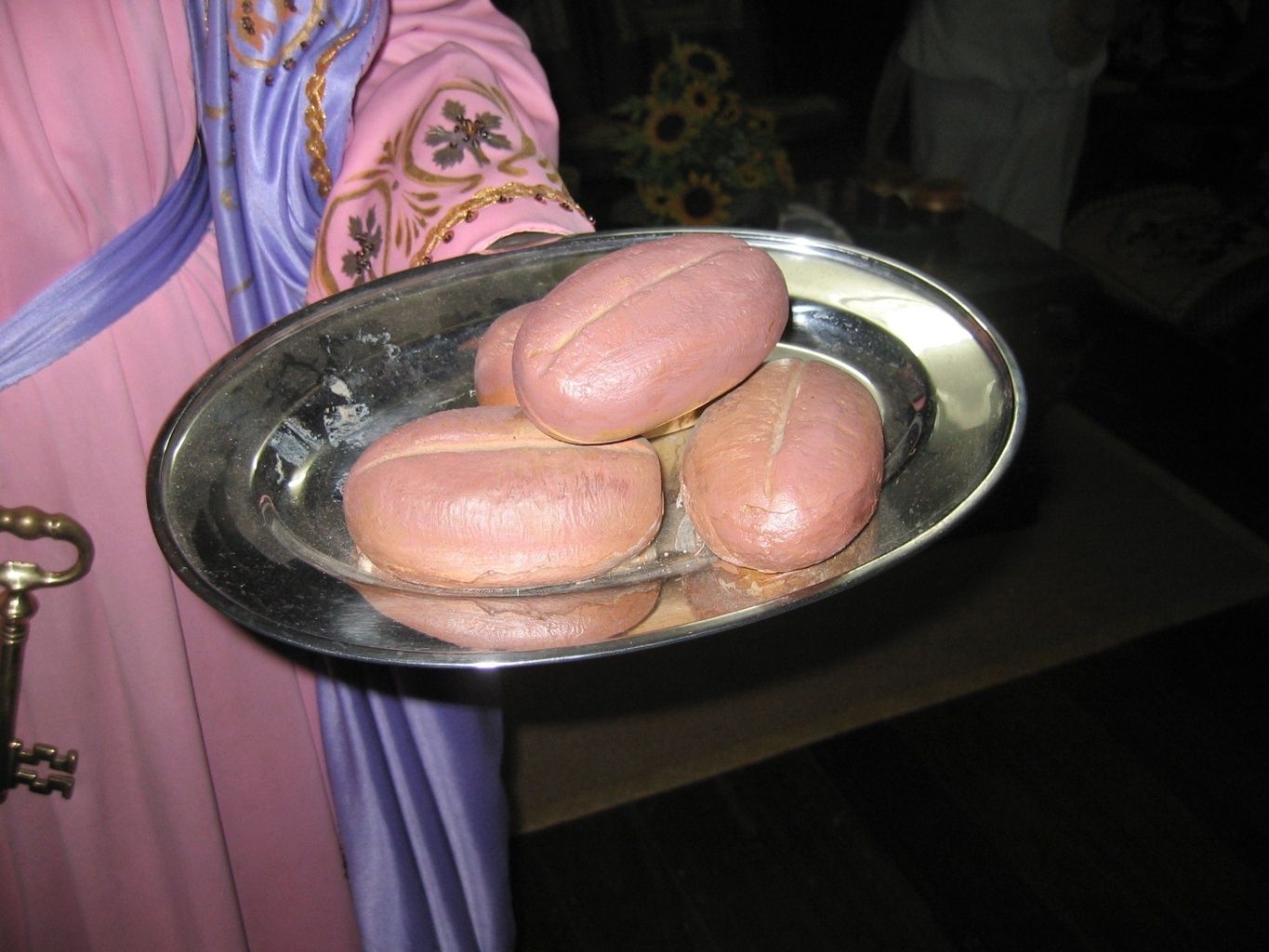
Her tray, which was of silver-painted wood, looked convincingly metallic, and the buns of bread on it, also of wood, looked good enough to eat.


Her simple round halo was mounted on a metal rod that pierced her veil and her ample jusi (raw silk fiber) wig.


And as we specified, Saint Martha was not distraught, mournful, or teary-eyed, but simply serious.  Her relatively large, wide-open eyes, while potentially unflattering up close, ensured that once she was perched on top of her carroza, she would not appear half-asleep to devotees on the ground.


Clearly, Mr. Vecin had much to be proud of, with this, the latest in a long line of Holy Week processional images from his workshop.


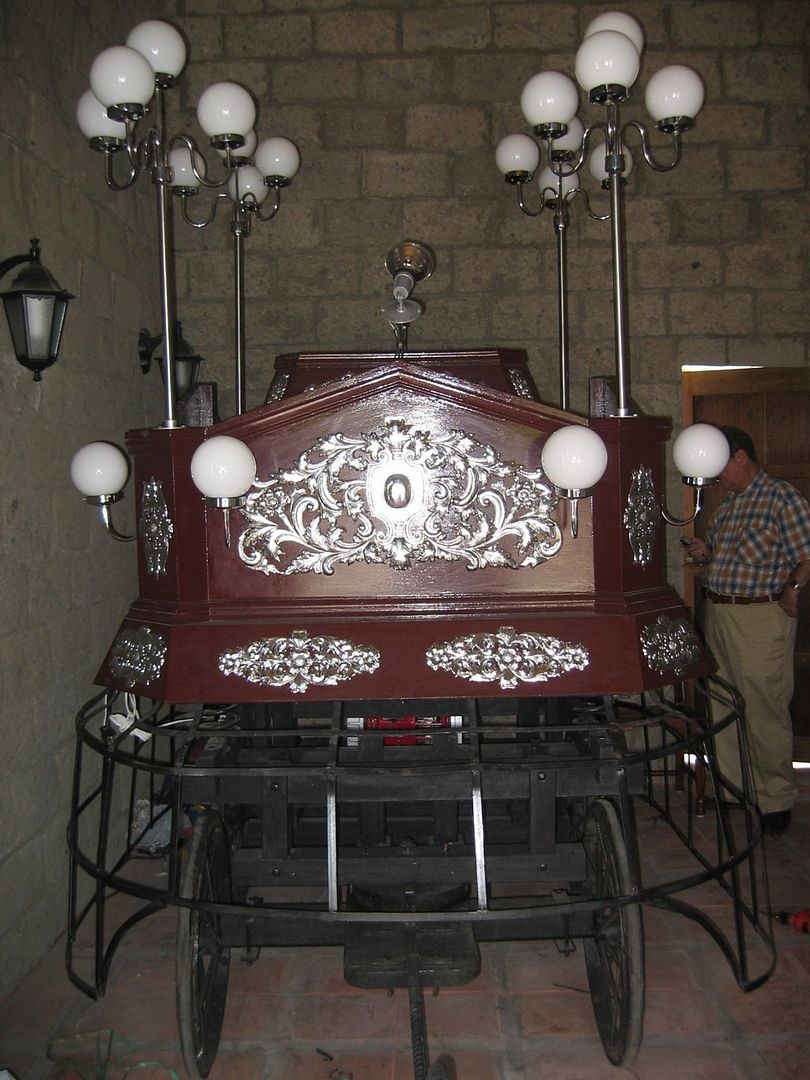
Which meant that the only thing unaccounted for was Saint Martha’s carroza.  I had actually first seen it a couple of weeks previously, when it was still without its metal appliqués.

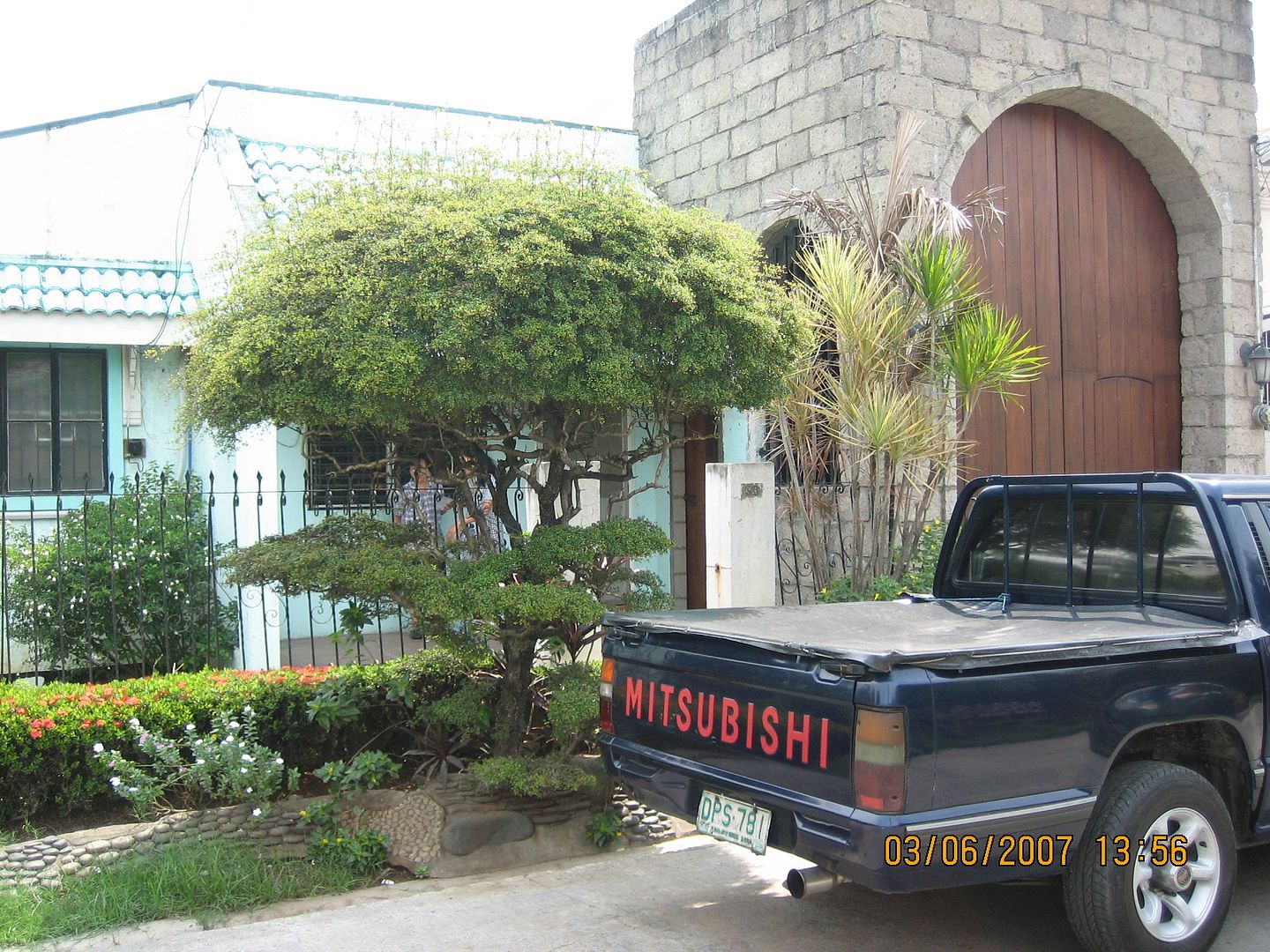
But later on this same day, it was delivered by Mr. Vecin’s team to my aunts’ purpose-built garage in Violeta Village, Guiguinto, Bulacan, (the imposing all-adobe structure with large fourteen-foot-tall wooden double doors that we nicknamed "Casita Marta," on the right in this next photo).


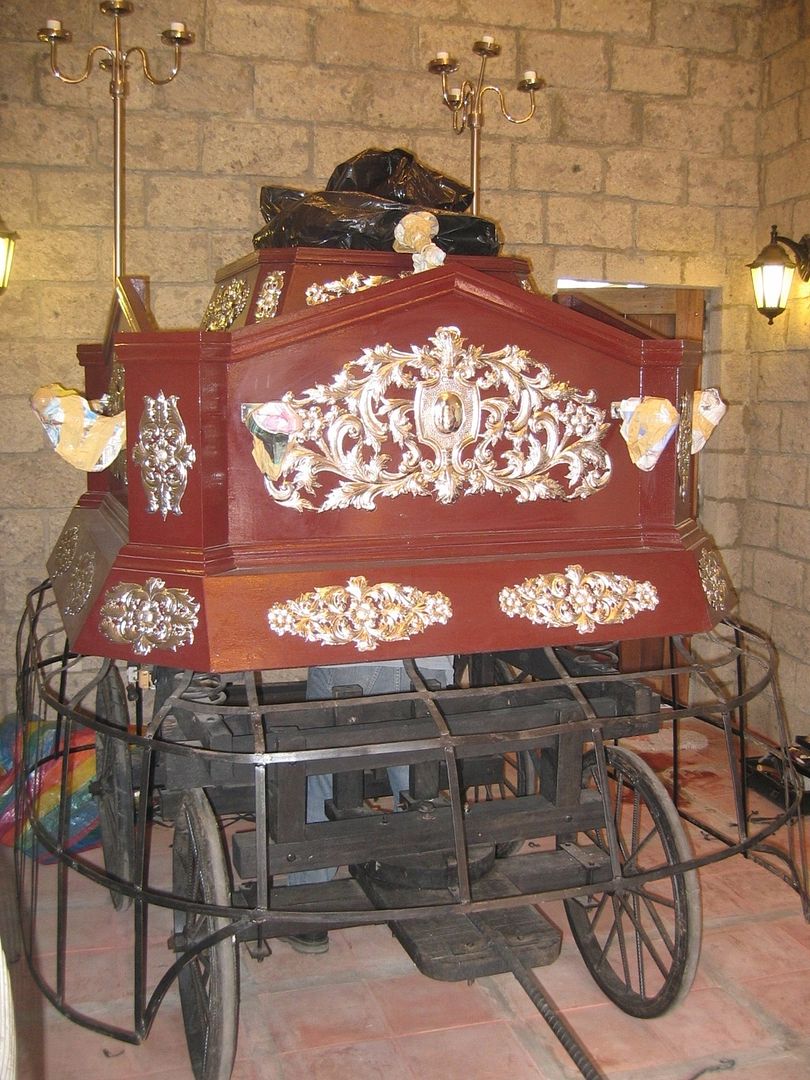
The following day, Saturday March 27th, or eight days before Palm Sunday, I saw the finished vehicle for the first time, inside this new "old" garage.


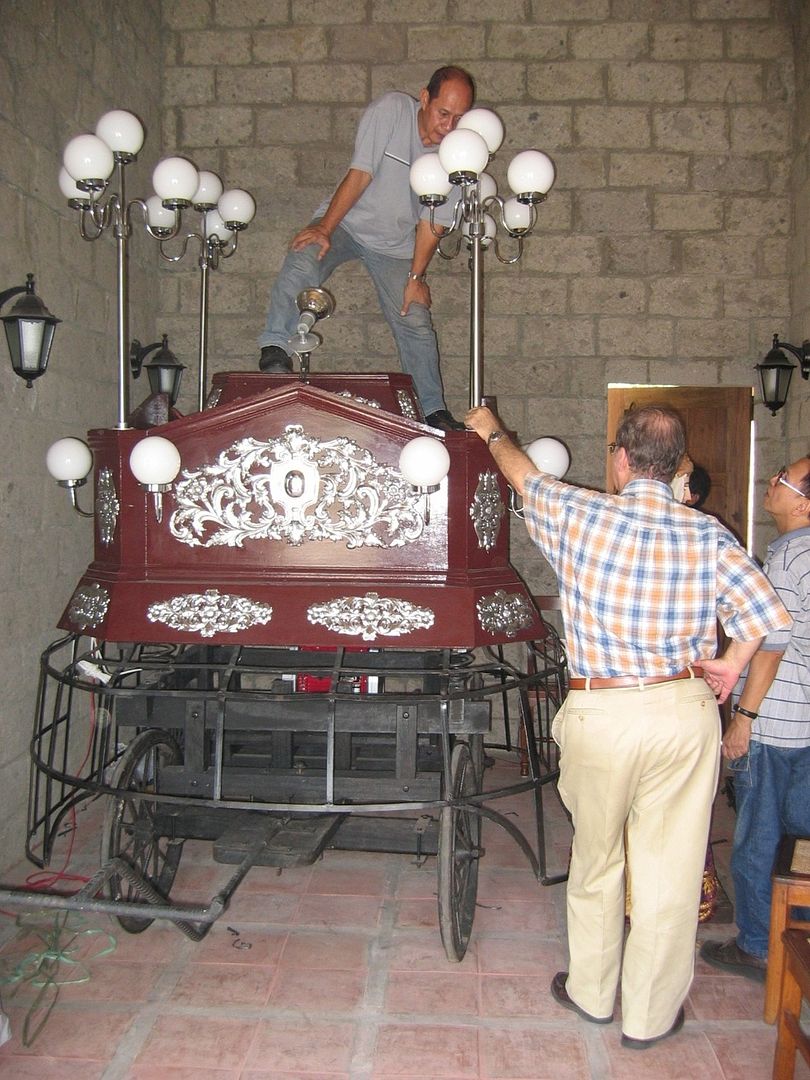
Strangely enough, Kiko Vecin and I decide to take an excursionary break, while his assistant Mang Jun Puato completed the installation of the arboltantes (lampposts) and pescantes (single perimeter lights).  But it wasn’t just any break, as we took the opportunity to pay homage to the Barasoain Santa Marta.

Based on the printed sign on its carroza that I had photographed the previous Holy Week, the owner was a certain Mr. Celestino Ople and his family.  In the succeeding months, my aunts made several inquiries in the Barasoain Parish, only to be told alternatively that this Mr. Ople was no longer a Malolos resident, or was deceased, or was otherwise unfamiliar to the community.

It just goes to demonstrate how unreliable conventional wisdom and groupthink are, because as my aunts found out many months after making initial inquiries, (1) “Ka Celing” Ople was alive and well, and lived just a block away from Barasoain Church with his family, (2) His family had been Barasoain residents for several generations already, and (3) He was even the father of a grade school classmate of mine. (Of course, I didn’t make the connection right away – twenty-five years is a long time.)

So it was while our own carroza was being put together that Ka Celing and his family very graciously allowed us to take a look at theirs.  Here it was, in their driveway, about to be cleaned, and with its silver-plated appliqués still detached.


Its arboltantes were of a beautiful classical design.


The virinas (lamp shades) too still had yet to be reinstalled.


Here is one painted wooden angel already reattached to its chamfered corner.


And here’s one delicate metal appliqué (also called “labor” = originally Spanish for “embroidery” or “needlework”), perhaps inappropriately with an "AVM" monogram, back in its place.


I thought that it was curious that some of these appliqués were customarily detached and stored separately, as with this carroza, so I asked Mr. Vecin about it.  He said that indeed, that was sometimes the case with some carrozas, but he advised against this because repeated detaching and attaching will only increase wear and tear, especially for relatively fine and delicate examples.  Instead, he recommended that the entire carroza simply be stored in a clean, dry, and well-shaded garage – which protects not just the appliqués but the rest of the carroza as well.  (Hence, our "Casita Marta.")

Inside the Ople home, we find Santa Marta standing in the middle of the living room, as if to meet and greet us.


She seemed pleased just to be let out of her unpretentious storage case, inside a small storeroom off the sala.


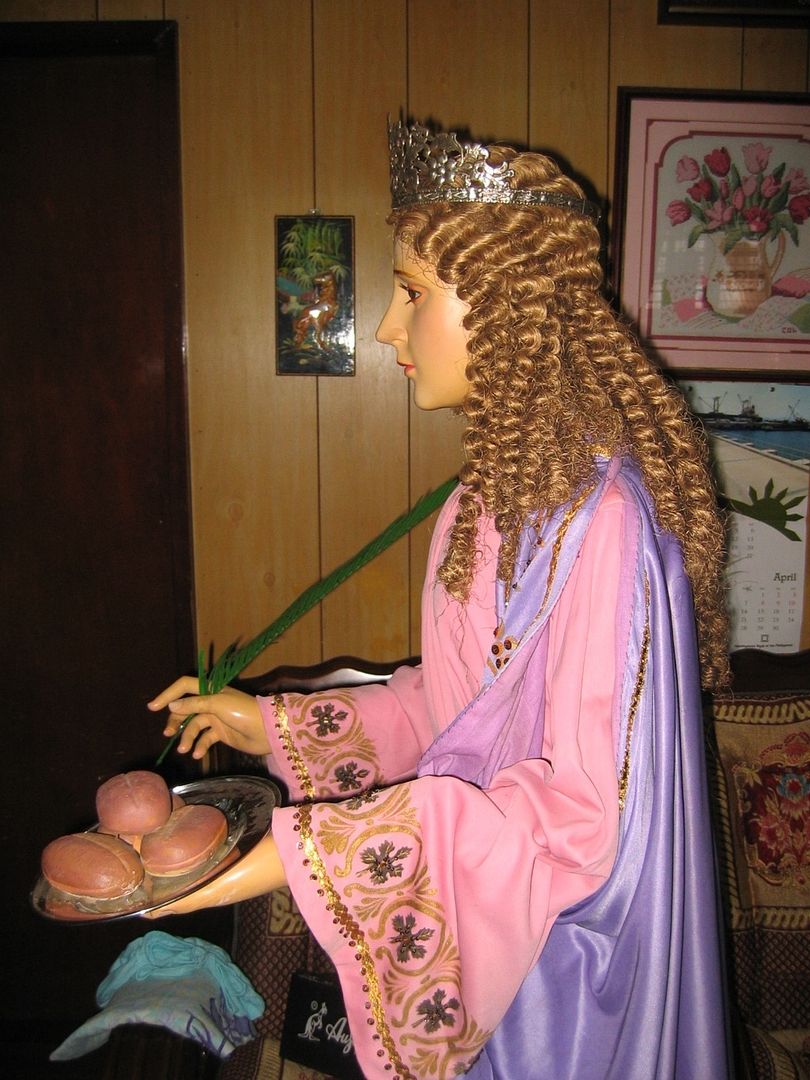
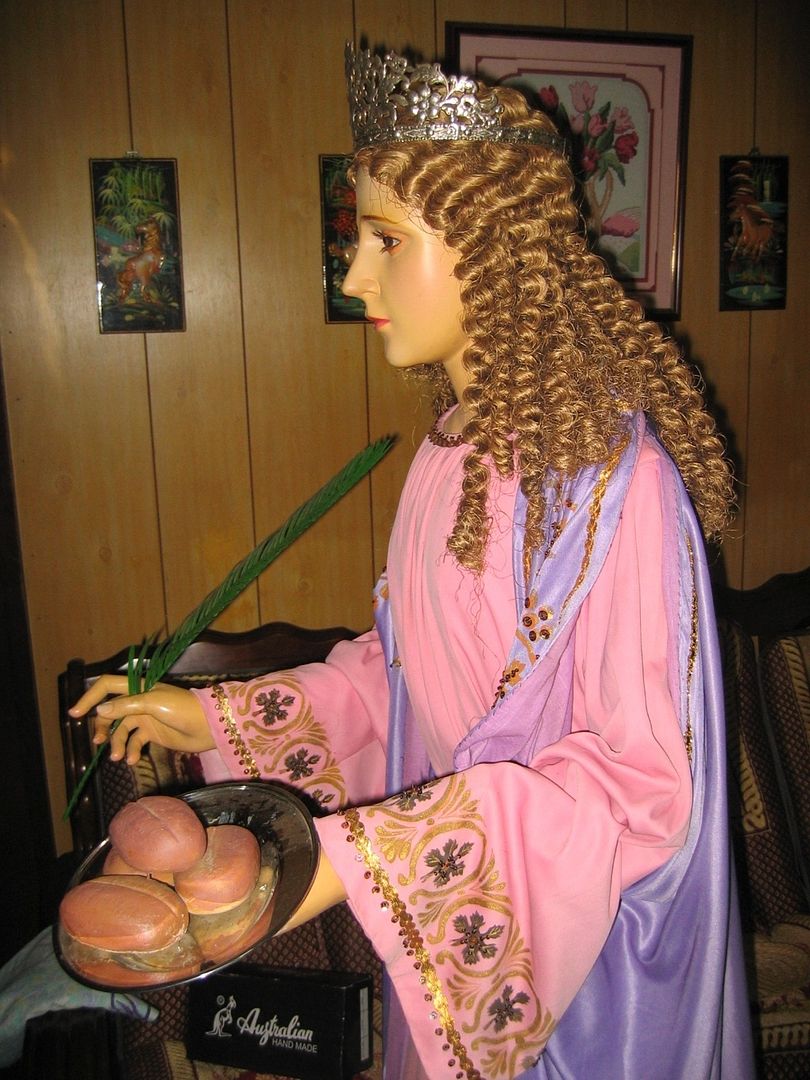
She had a real metal tray, with realistic-looking bread buns


and a plastic palm leaf.


Her solid metal key appeared to be genuinely heavy.


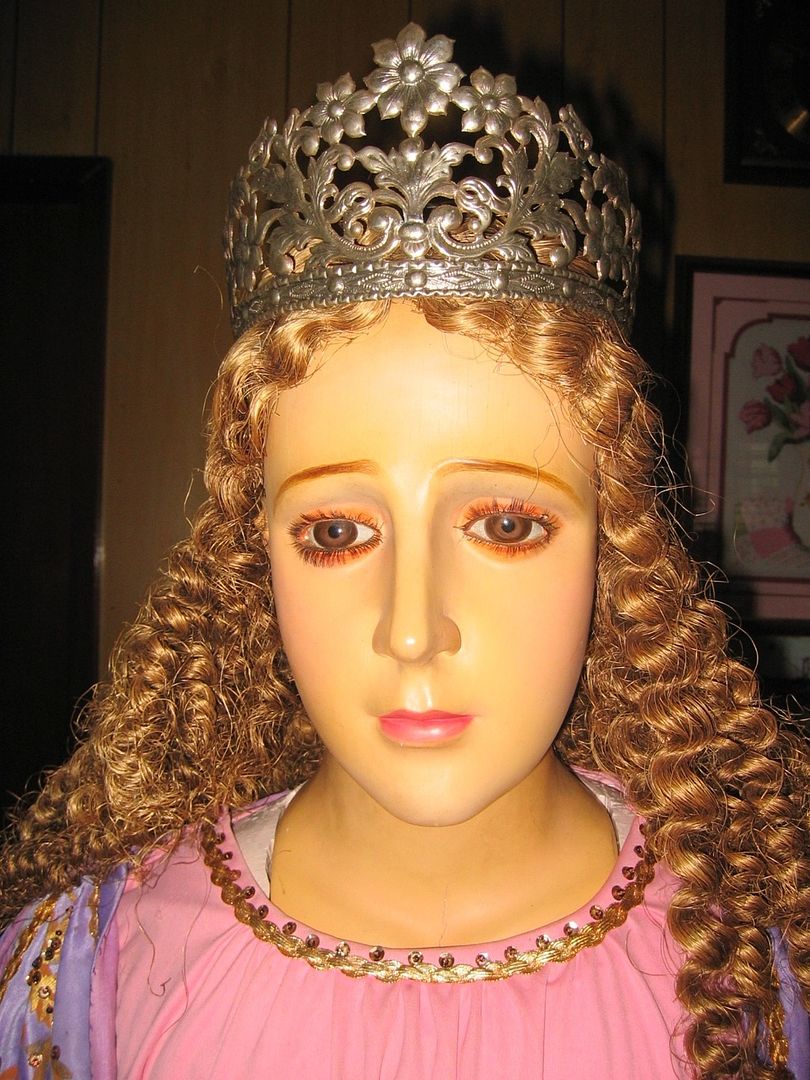
A close-up of her face put her in the most flattering light.


But from any angle


or even in profile


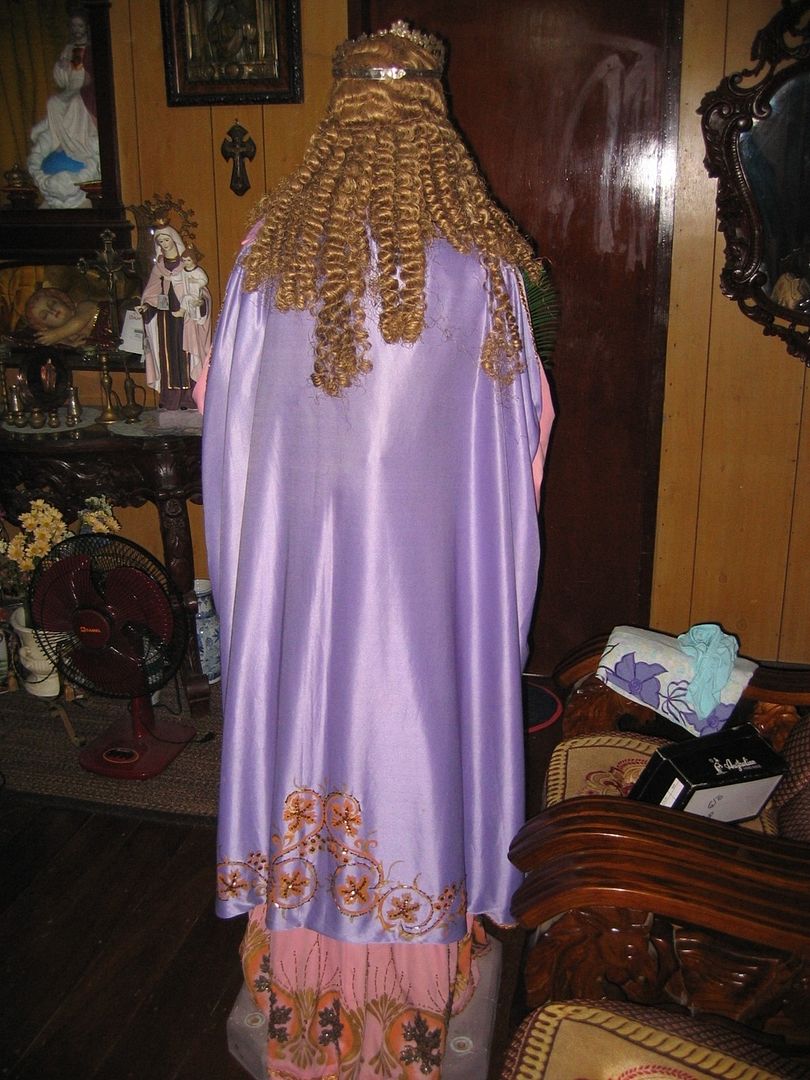
or perhaps even from behind


this was clearly an extremely well-made image.

The proverbial 800-pound gorilla in the room was the as-yet-anonymous creator of this piece.  Ka Celing thankfully reveals all, by saying that his late father, who for most of his life was the sacristan mayor of Barasoain Church, was a friend to Santiago “Mantiago” / “Mang Tiago” Santos, the famous master sculptor from Santa Cruz, Manila, active from the 1950’s to the 1970’s.

The elder Ople had commissioned this image from Mantiago in the 1960’s, with the latter’s brother “Mang Baning” the master encarnador painting it.  (The Oples had ordered the carroza from elsewhere at the same time.)  This image had therefore been processed in Barasoain every Holy Week for about forty years already.


At about this time in the storytelling does an 800-pound elephant emerge, for Mr. Vecin reveals that Mantiago Santos was in fact the closest that he ever had to a mentor in the field of sacred images, having been a virtual pupil of the master since Mr. Vecin's youth in the 1960’s until Mantiago passed away in the early 1980’s.

Thus did Mr. Vecin realize why this Santa Marta as he saw it in the photographs that I had given him nearly a year previously looked quite familiar, even though he may never have actually seen it in the Mantiago Workshop of the 1960’s. For it is well-known that an artist’s works always contain his “signature” – something that indicates that it came from him and from no other – which those in the know will usually be able to “read.”

[According to Mr. Vecin, Mantiago’s works (over his long career, he made several processional images for various towns in Bulacan and Manila, among other places) have certain telltale characteristics.  Will Mr. Vecin’s own works reveal his signature for future generations?  Or do they already show specific characteristics even today?]

After a few more moments to allow Mr. Vecin to admire one of the "rediscovered" works of his mentor some more, I take one more shot of this Mantiago Santos Santa Marta of the 1960’s


before we bid it a temporary farewell, and look forward to seeing it again very soon.

By the time we return to our aunts’ house in Guiguinto, it is time to have lunch.  Which is exactly what we do.  But not before we check out how the carroza has progressed.  Not only are all the lighting fixtures now in place, but the bulbous central protrusion of the hammered-metal appliqué also does its job of bouncing off light from my flashbulb quite well.


As all the lampposts (four of four lights each) and single lights (a total of eight around the sides) are now affixed and even have their spherical shades in place, evidently, Mang Jun has made productive use of the entire morning.


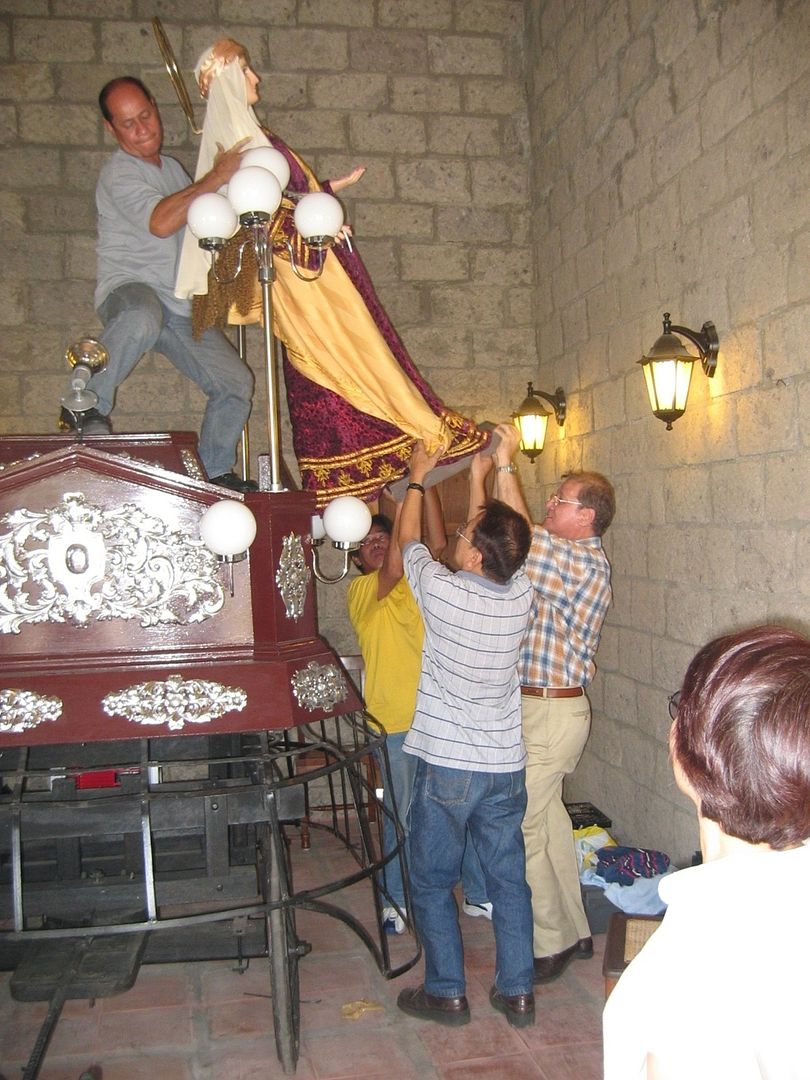
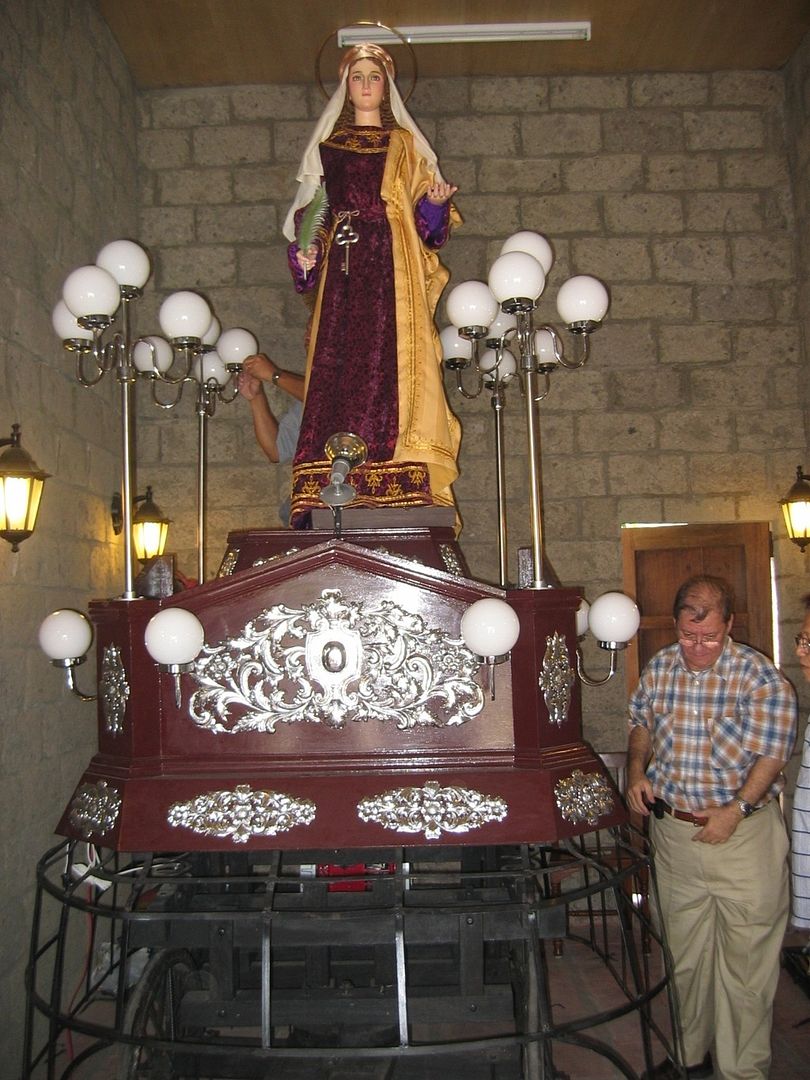
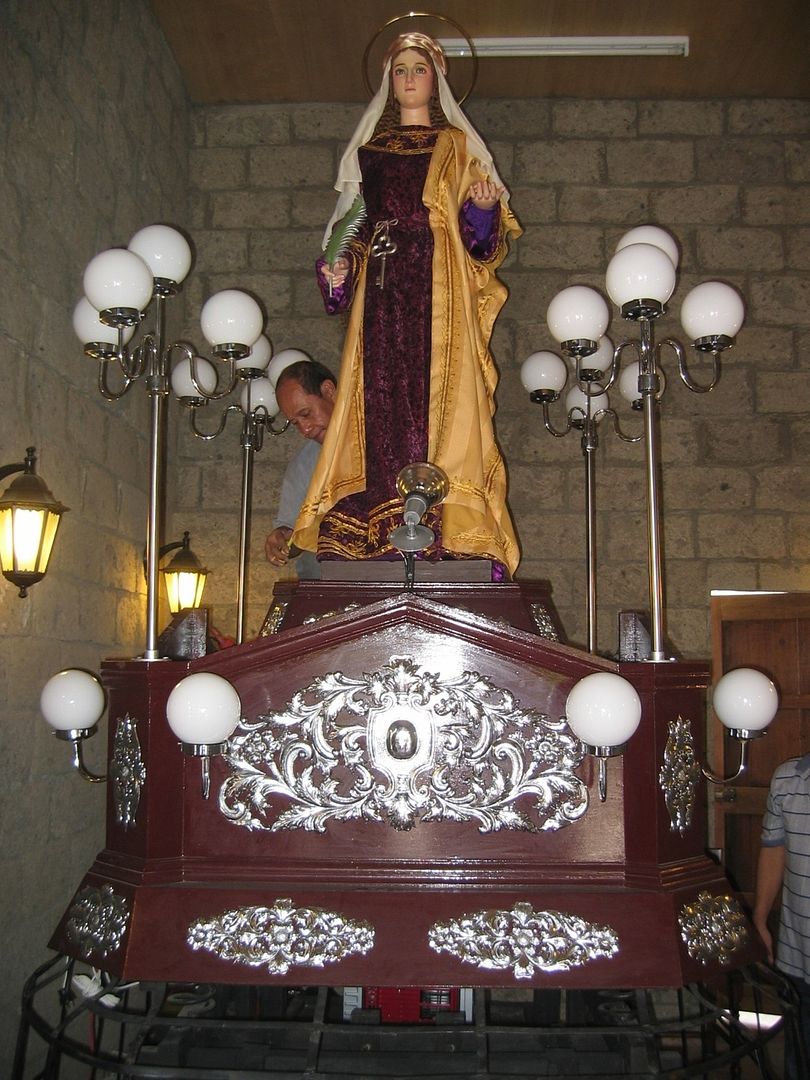
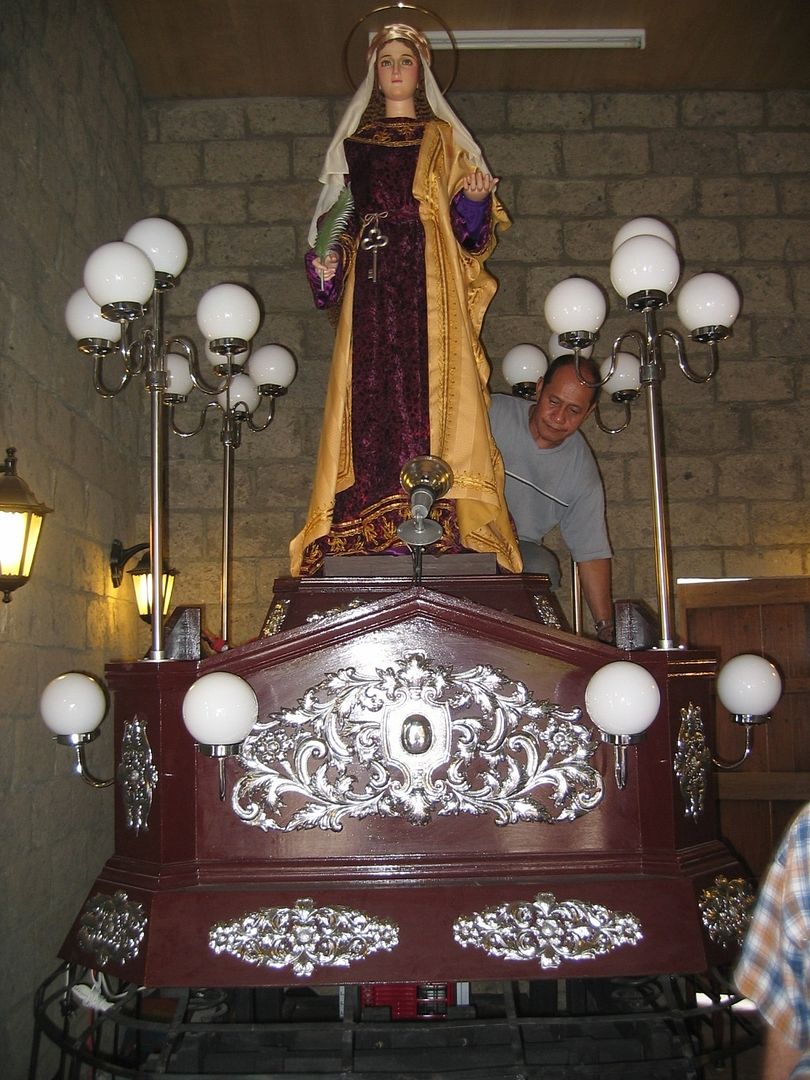
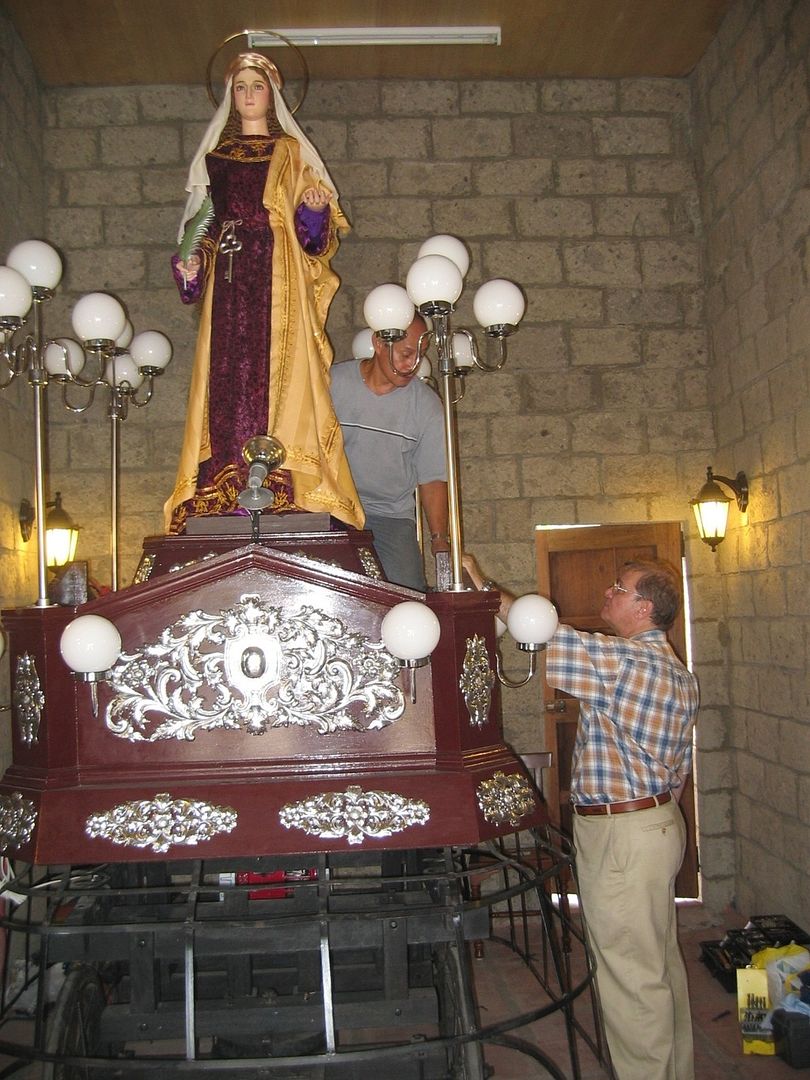
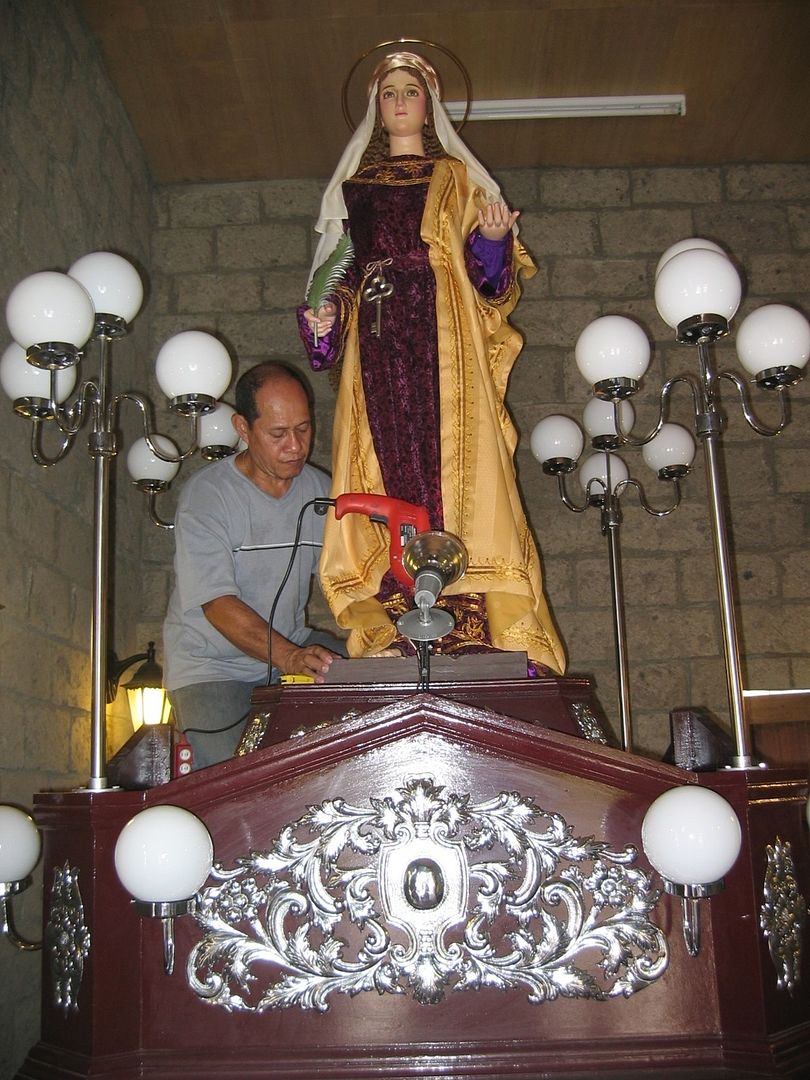
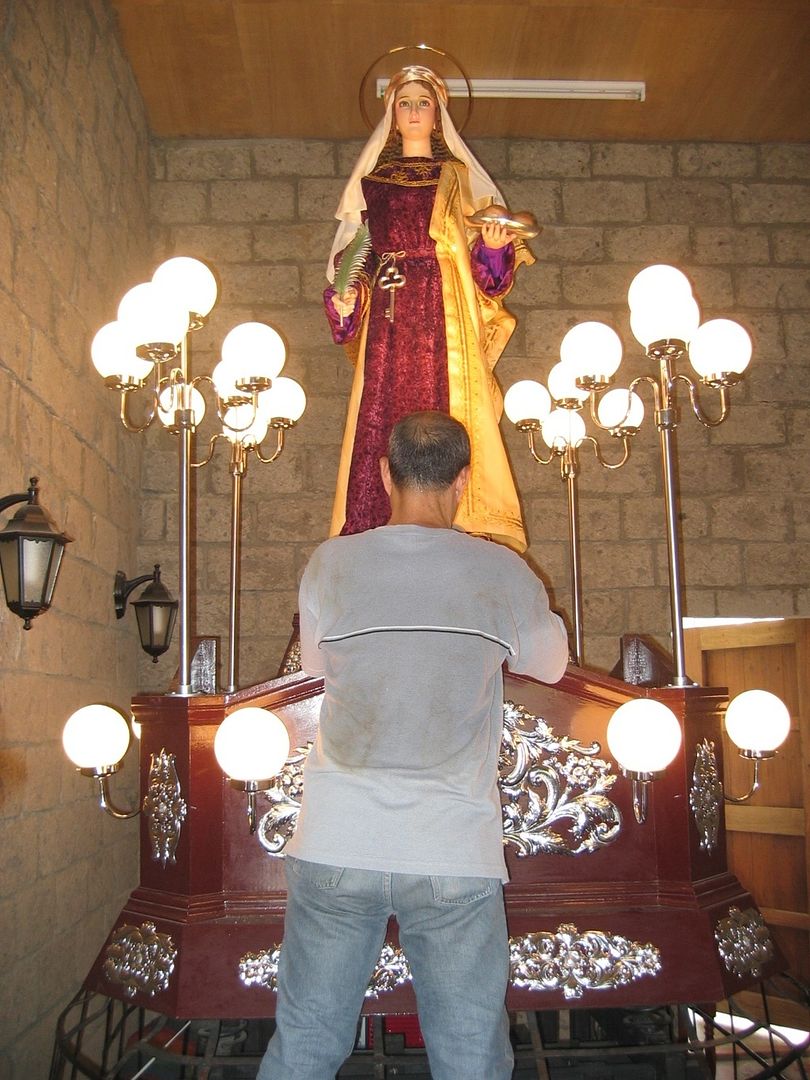
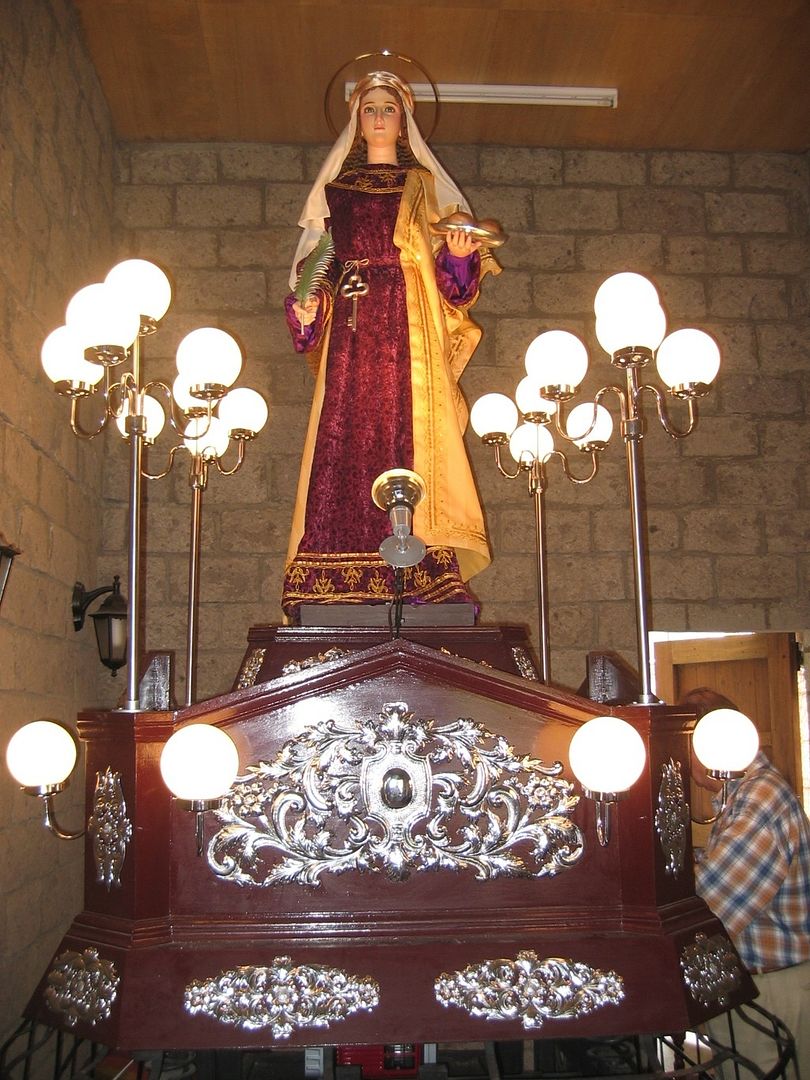
After lunch, it was time to mount Saint Martha onto her chariot.  Which Mang Jun, Mr. Vecin, our driver, and my uncle manage to do quite easily.


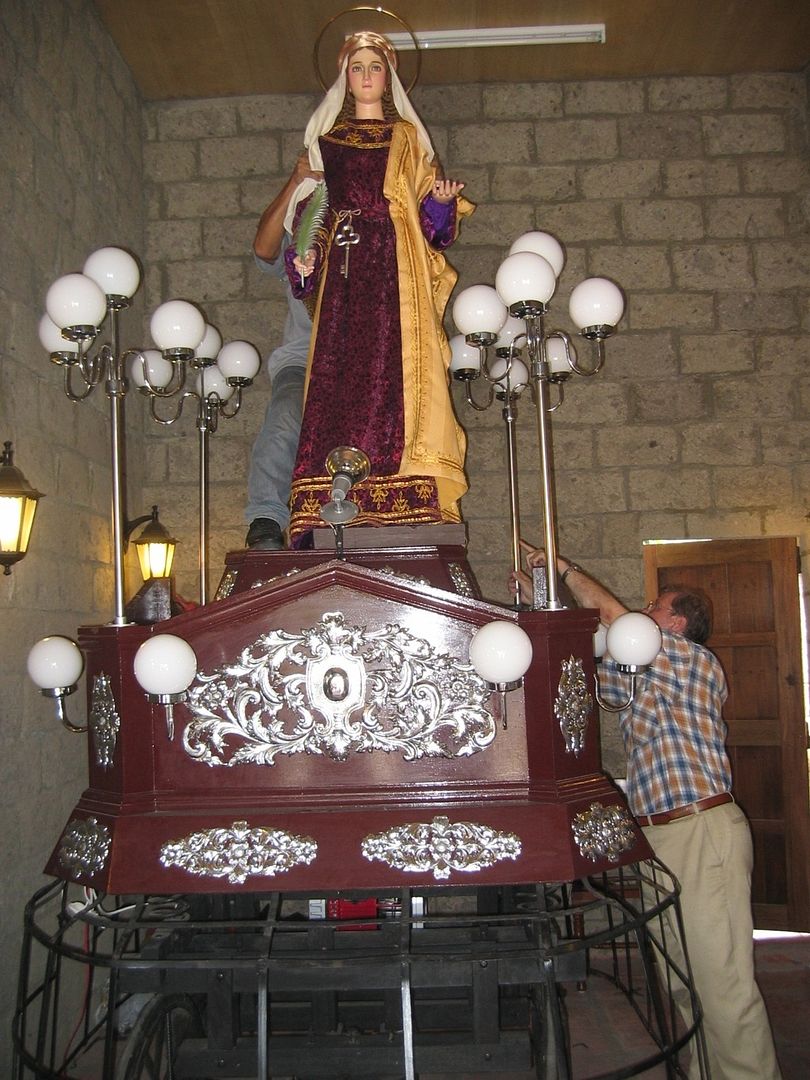
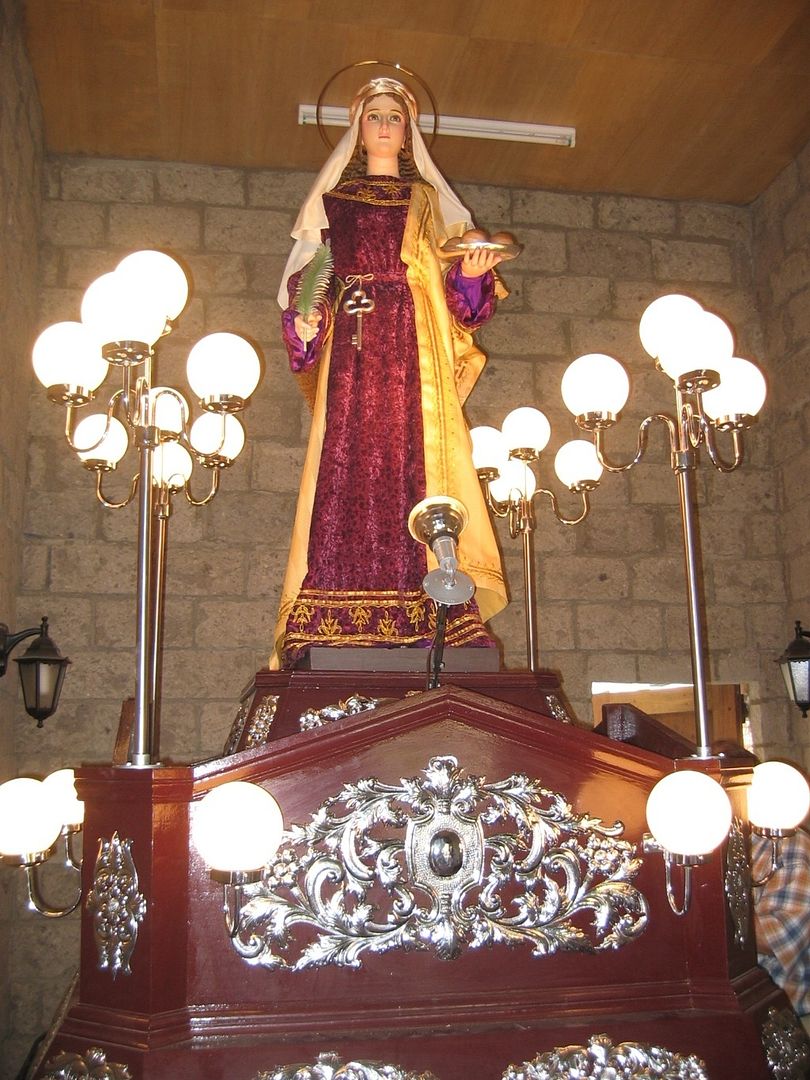
With the top platform of the carroza being between six and seven feet from the ground, and Saint Martha being about six feet tall overall (five feet from head to foot, plus about a foot more for the thick wooden base below and her halo above), the overall height of the ensemble worked out to nearly thirteen feet, well within the maximum allowable vertical clearance of fourteen feet needed to get past most road obstructions.

Next step was to fix Saint Martha’s base onto the floor of the carroza, using a pair of large nuts and bolts, one fore and one aft.


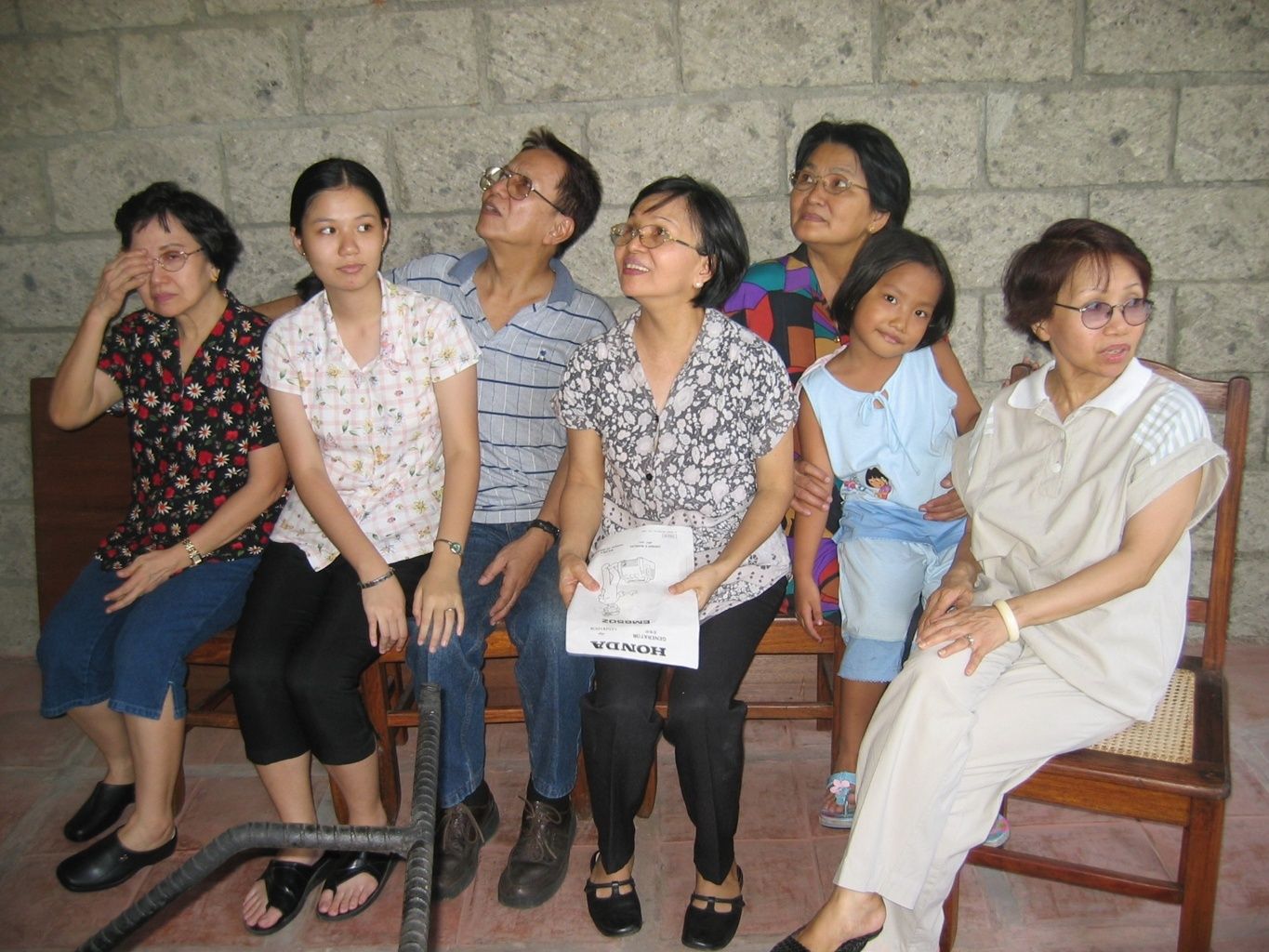
Throughout this process of setting-up, my family of fellow newbies sits watching inside "Casita Marta," all wide-eyed, like they were born yesterday.


Mr. Vecin soon joins them, hopefully closing the experience gap.


Their work not being over yet, Mang Jun and Mr. Vecin fine-tune the positioning of the image, affix the tray of bread onto her left hand (heretofore empty), and plug the lights into the wall outlet to make sure that they all light up.


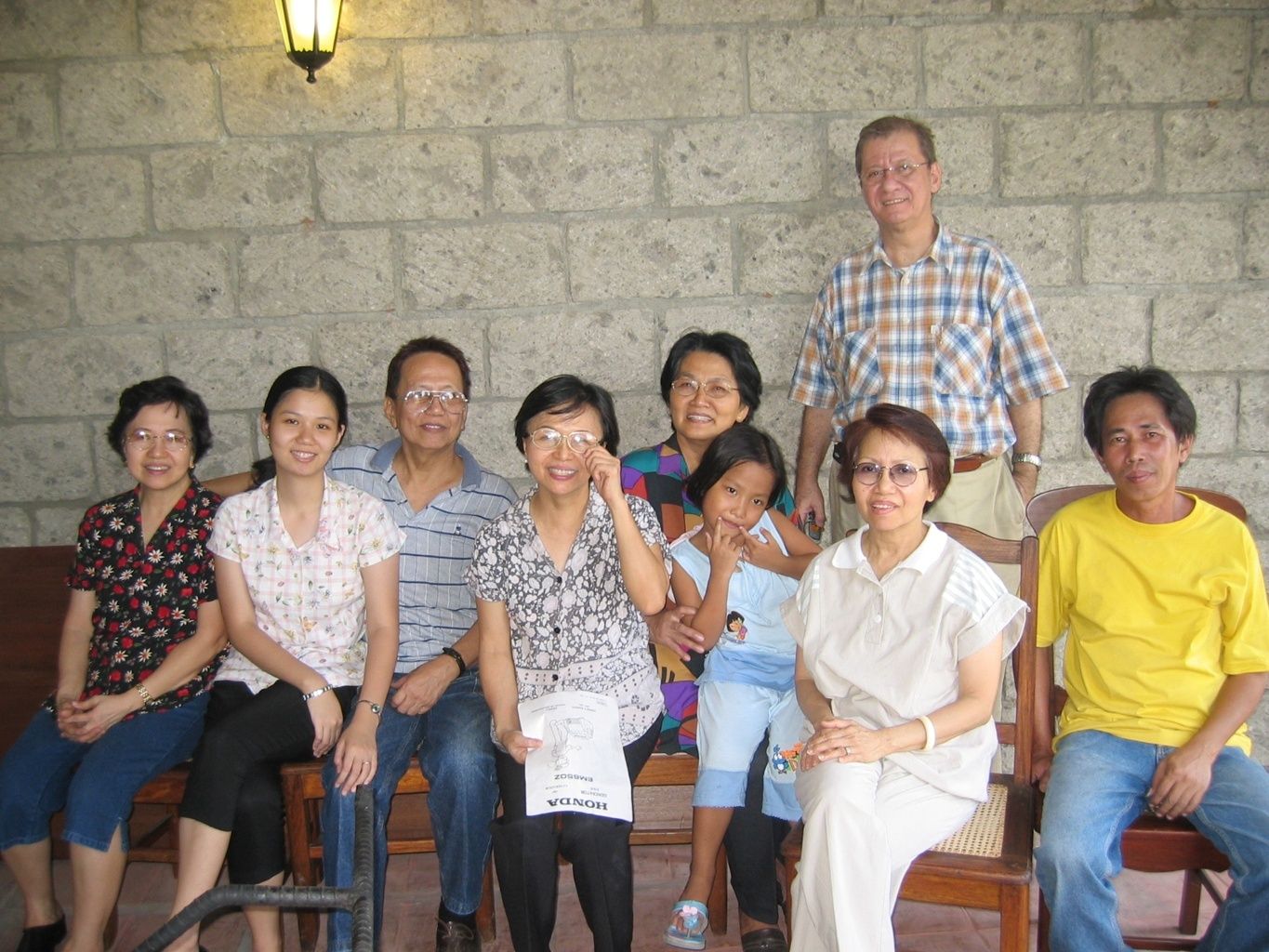
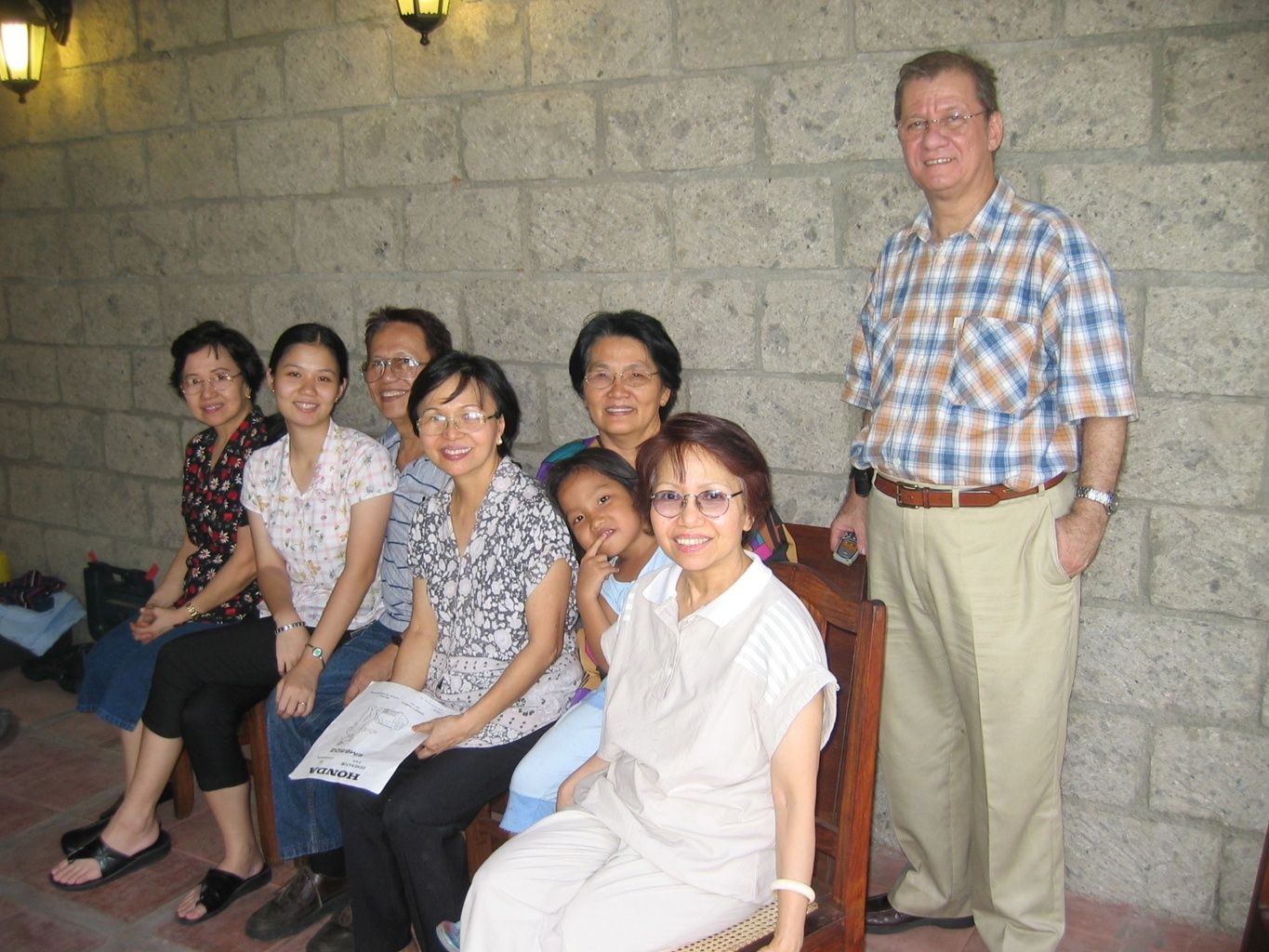
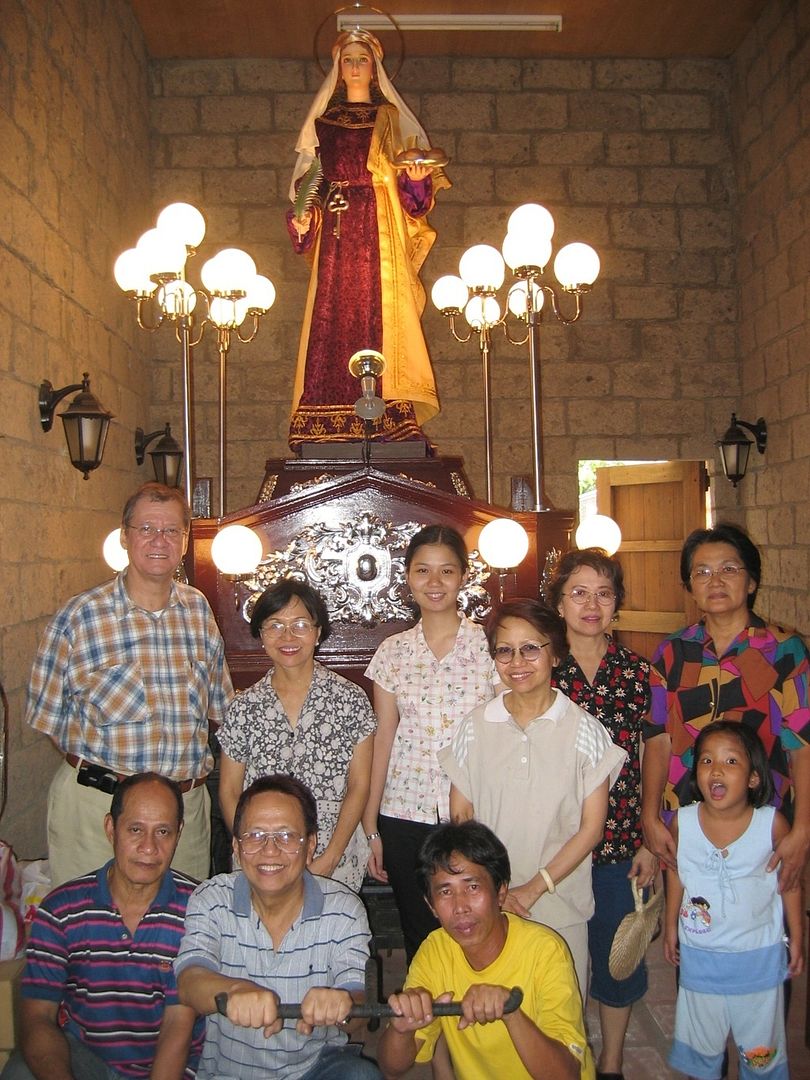
Finally, everything is done for the day, and all then present pose for a couple of souvenir shots (excluding the photographer, myself).


And yet, quite a few things remain to be done to get Saint Martha ready for the processions less than two weeks away.

Next in Part Four: Saint Martha in Procession.

Originally published on 30 January 2009.  All text and photos copyright ©2009 by Leo D Cloma. The moral right of Leo D Cloma to be identified as the author of this work has been asserted.

Original comments:
jamaica1ph wrote on Feb 12, '09
leo,

thank you for writing and sharing this amazing story. thank you too for the help your in my quest for the repair of my Sn. Pedro.

Your sharing with me the ground work and research for your Sta. Marta helped me a lot in my own project.

I salute you and Kiko for a job well done.

warm regards,


michael

arcastro57 wrote on Feb 12, '09
You can say that your Sta. Marta has a twin! Uncanny similarity between your image and Ople's santa.

padua08 wrote on Feb 13, '09
Leo: A very interesting read. I look forward to your Part 4.
Michael: Would it be possible for you to share the picture of your San Pedro? Thanks.

rally65 wrote on Mar 25, '09
padua08 said
Michael: Would it be possible for you to share the picture of your San Pedro? 
The story of Mike's San Pedro has just been posted in Flickr Semana Santa Filipinas -- http://www.flickr.com/groups/semana_santa_filipinas/discuss/72157614126461116/#comment72157615866103886
(only viewable to group members).

Thank you Leo for your reply. Perhaps one day I could be a member of SSF so I could view the San Pedro. I wish you well on this year's Holy Week procession.
padua08 said
Thank you Leo for your reply. Perhaps one day I could be a member of SSF so I could view the San Pedro. I wish you well on this year's Holy Week procession.

It is very easy to join Flickr Semana Santa Filipinas -- there are no membership fees or extraordinary membership requirements.

Just open a (free) Flickr account, upload some photos that you yourself have taken (of yourself, your religious images, whatever), and then click on "join this group" on the Semana Santa Filipinas page.
hindi po ba galit si Ka Celing and his family kasi po ginaya nyo po ung kanilang santo?
On the contrary, Ka Celing and family were and still are very supportive -- they have even helped my aunts in the setting up of the karo of Santa Marta and the dressing of the image each Holy Week.

It probably helped that Mr. Vecin was mentored by Mantiago Santos, who was the sculptor of the Ople Family's Santa Marta.

In general, I observe that Holy Week processional image owners are quite generous and charitable to their fellow santo owners, as they understand that the activity is a devotion, and that the more devotees, the better.