Showing posts with label pipe organ. Show all posts

Tuesday, July 26, 2016

CXXV. Visita Iglesia (Plus) Bohol X – The Maribojoc Church


With just an hour or so to spare before check-in time for my flight back to Manila, I make my way from Cortes to the next town northwards, Maribojoc. This is another old town, actually the mother parish of Cortes. While an earlier church was said to have been built in 1798, the present church dates from 1852 and was completed in 1872.

The church façade is wide, giving fair warning that the entire structure is quite massive.  A stone image of Christ the King exposing His Sacred Heart and with a Crown at His feet is positioned in the middle of the front yard
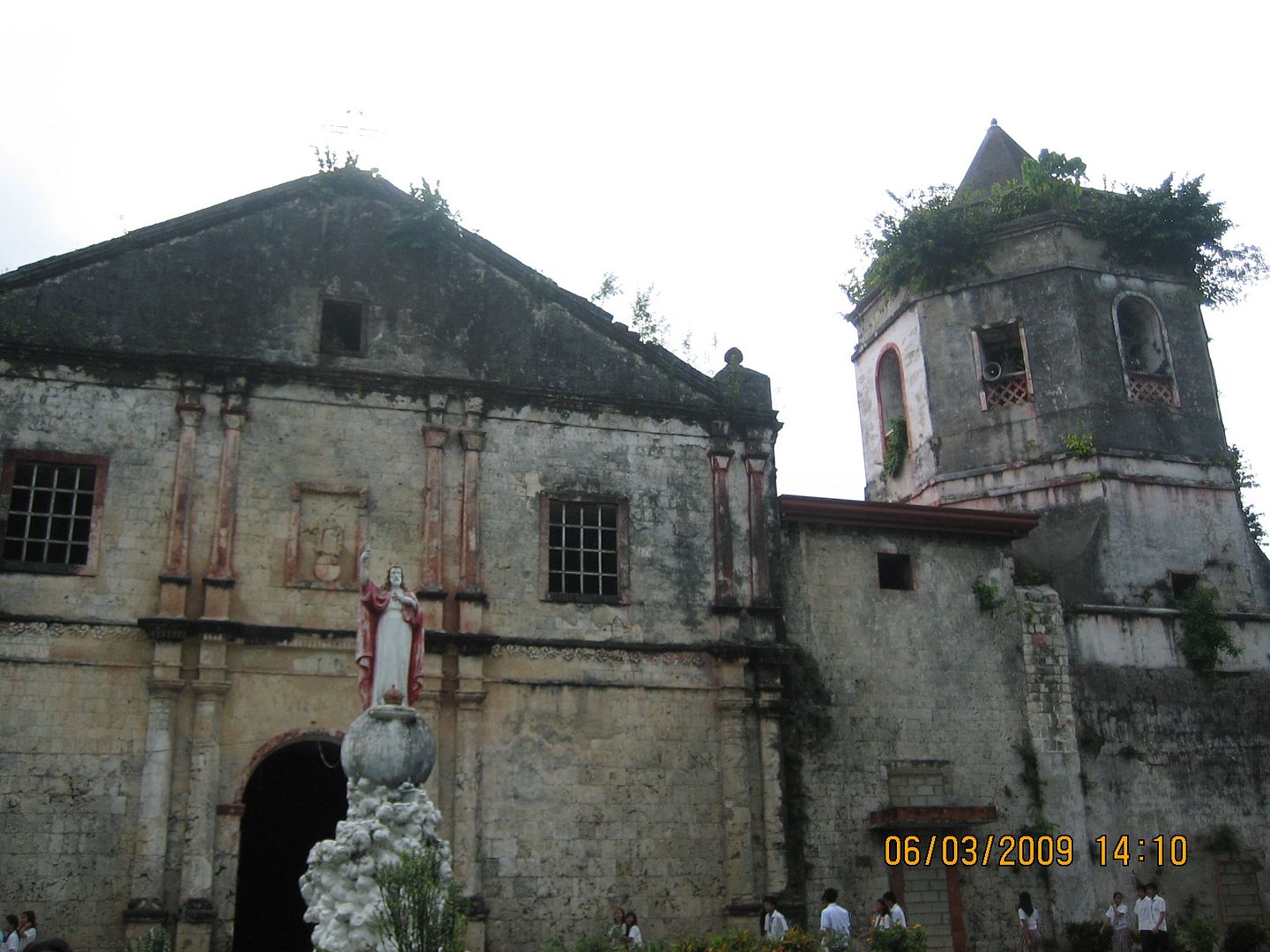

and a stout belltower stands on the right.
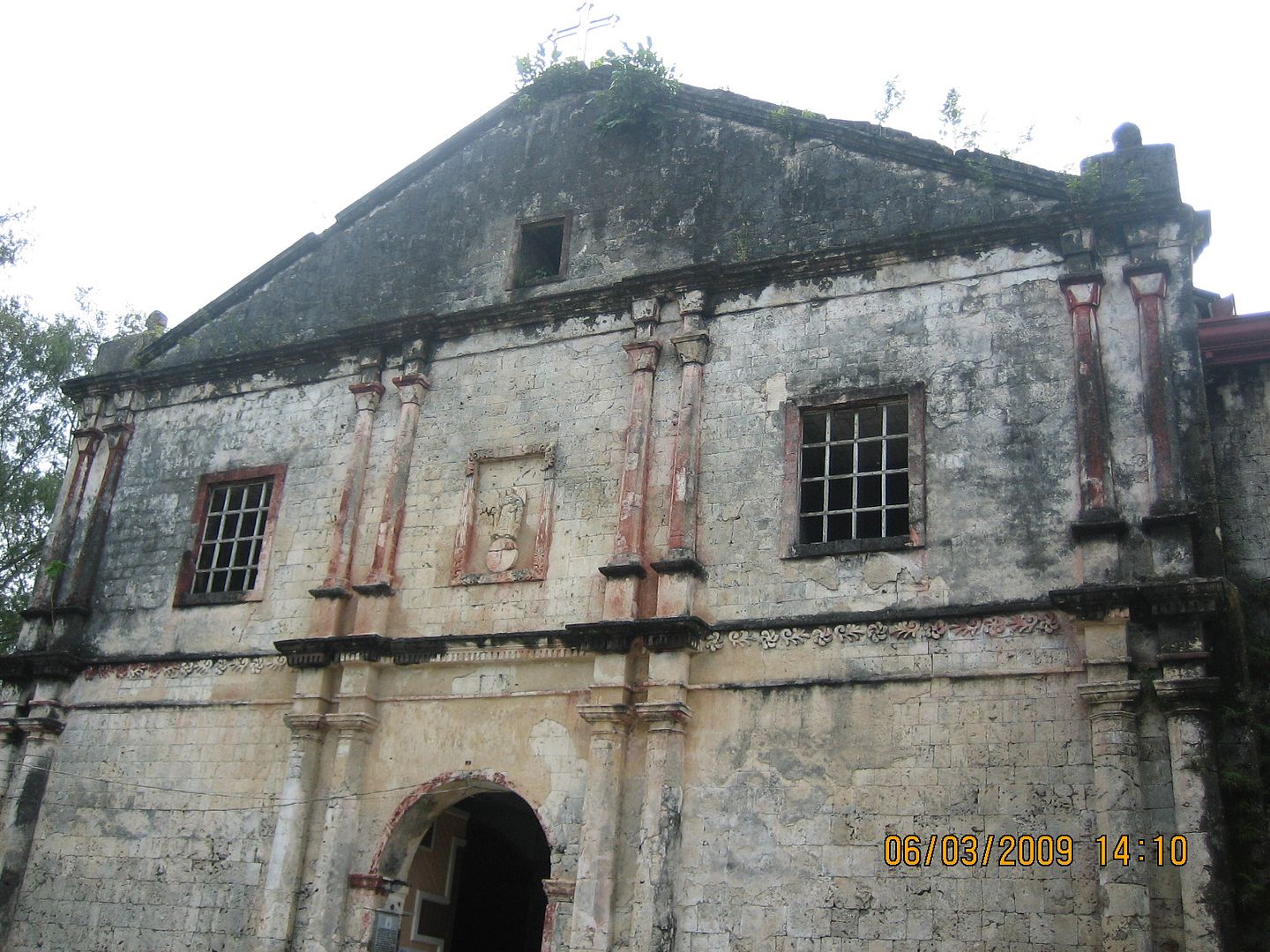

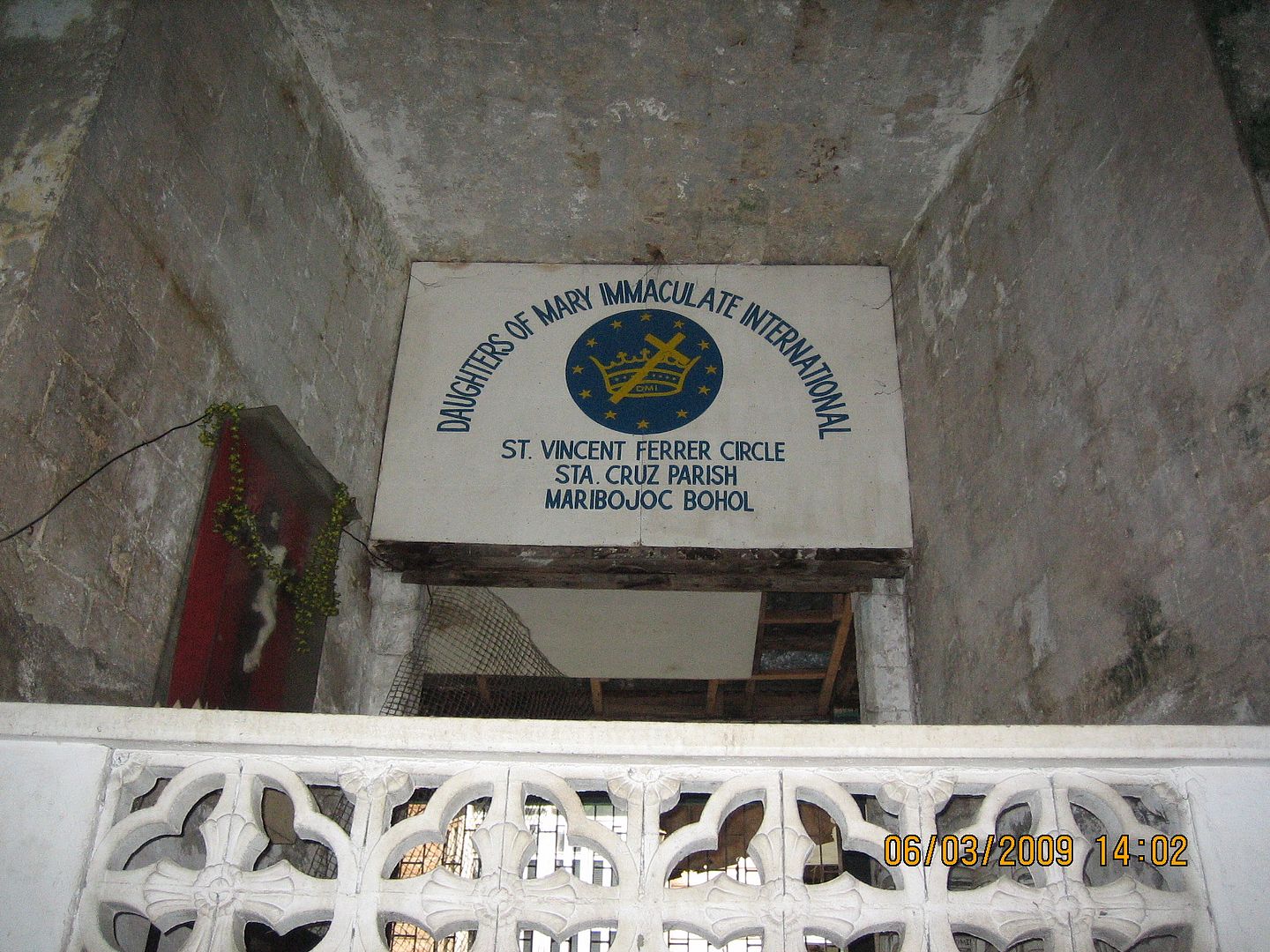
Above the main entrance and flanked by cross-hatched square windows is a stone relief depicting San Vicente Ferrer, the parish’s secondary patron.


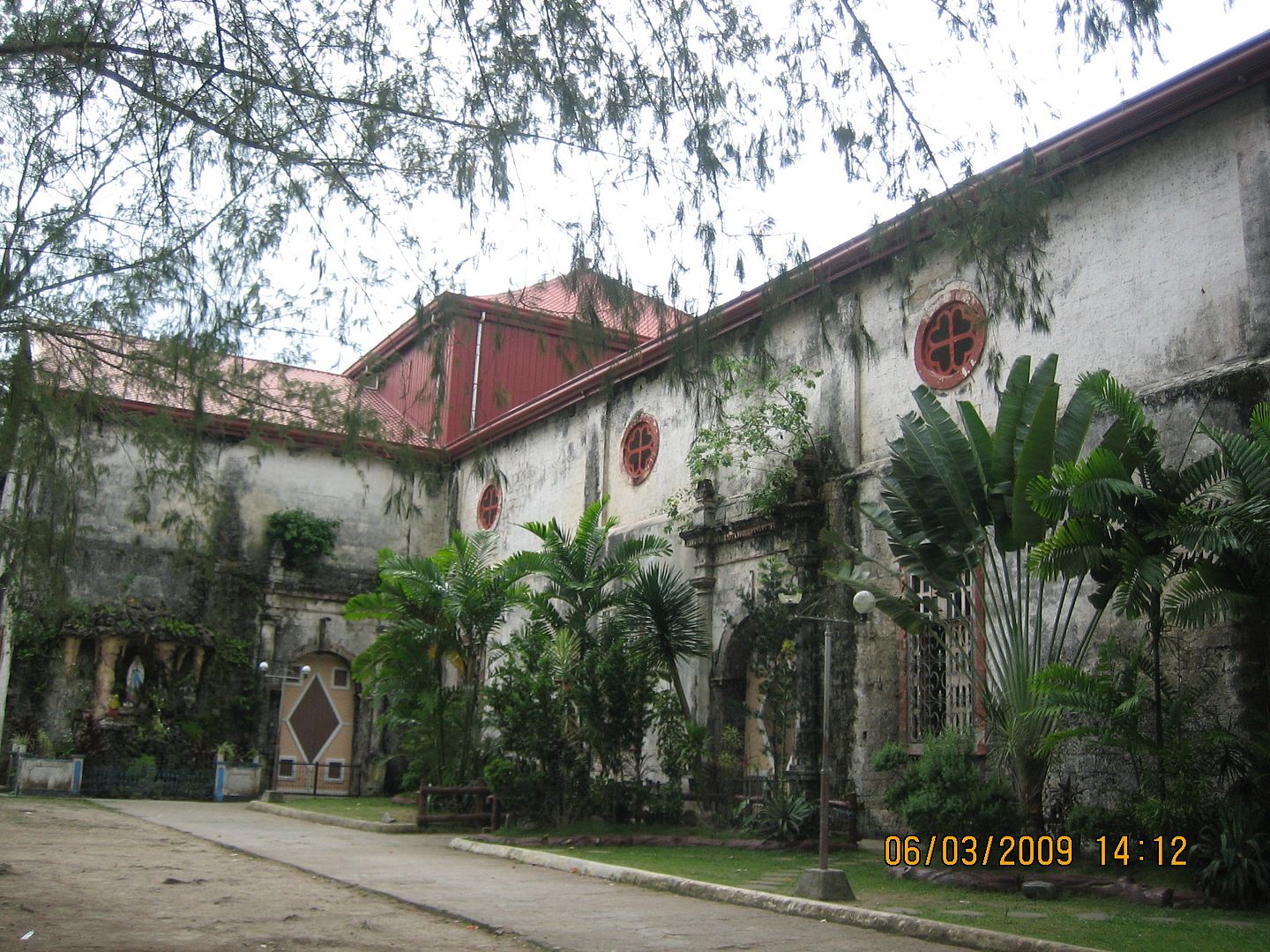
The sides of the exterior feature round windows along the upper half of the walls, and a four-sided red roof may be seen in the distance above the crossing.

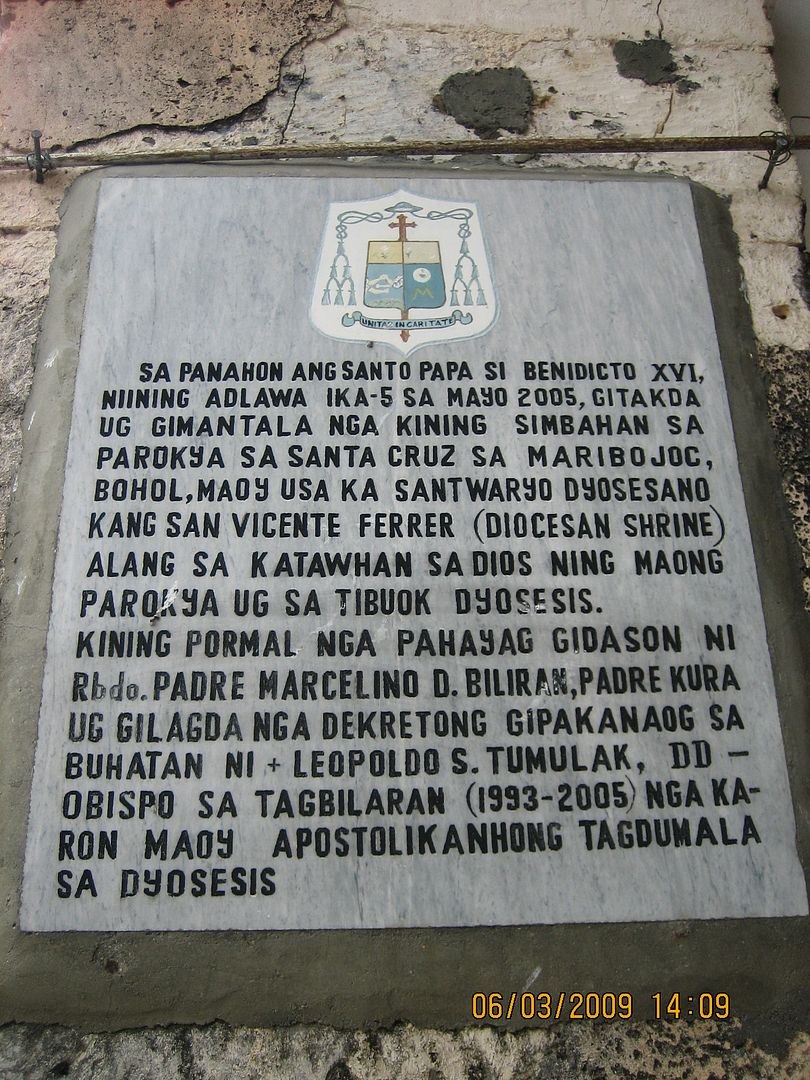
By the entrance is a marker to commemorate the establishment of this church as the diocesan shrine of Saint Vincent Ferrer.

The front doors are wide open, so we can enter by this way and pass right under the choirloft.
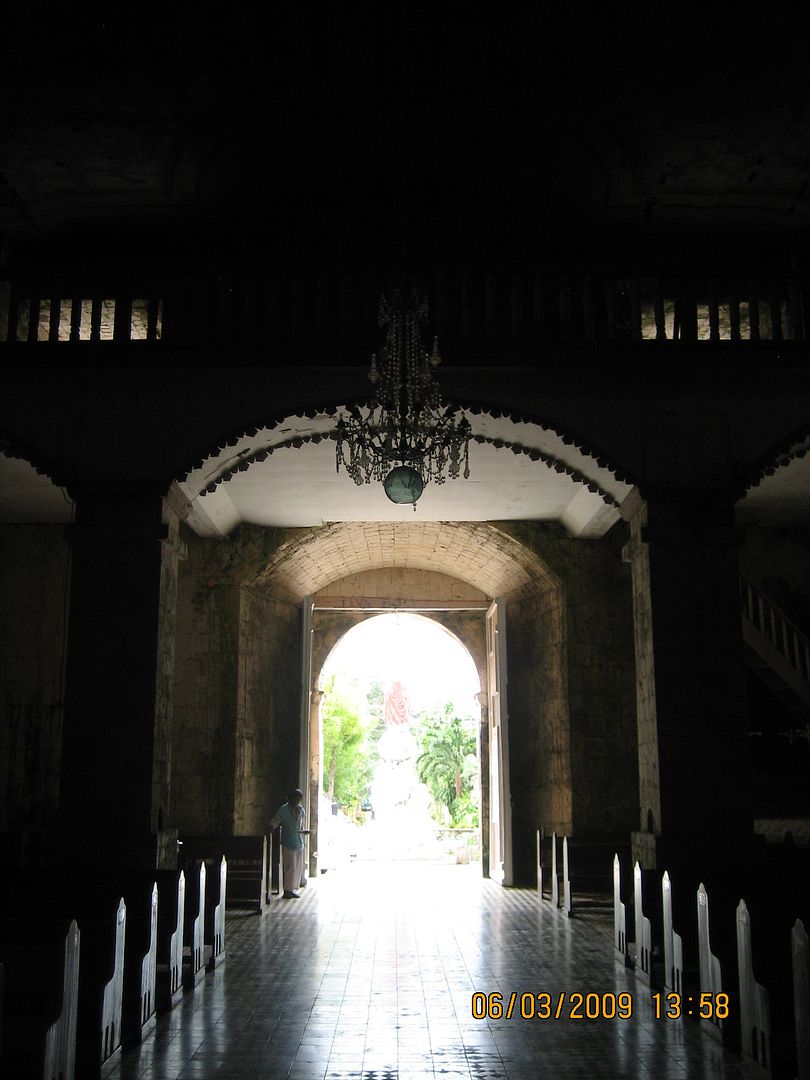

Adjacent to the choirloft, to the right side, is the pipe organ,
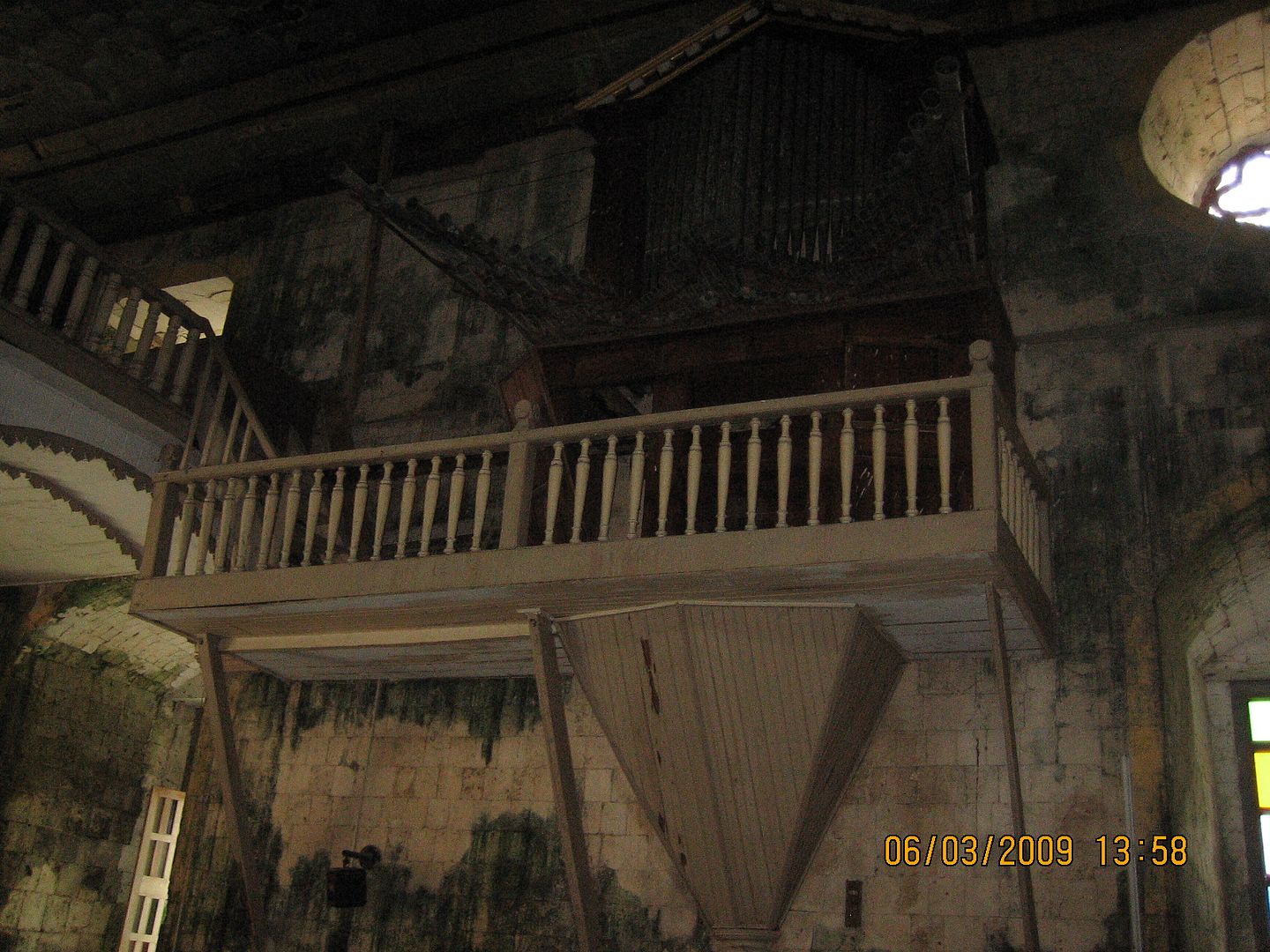

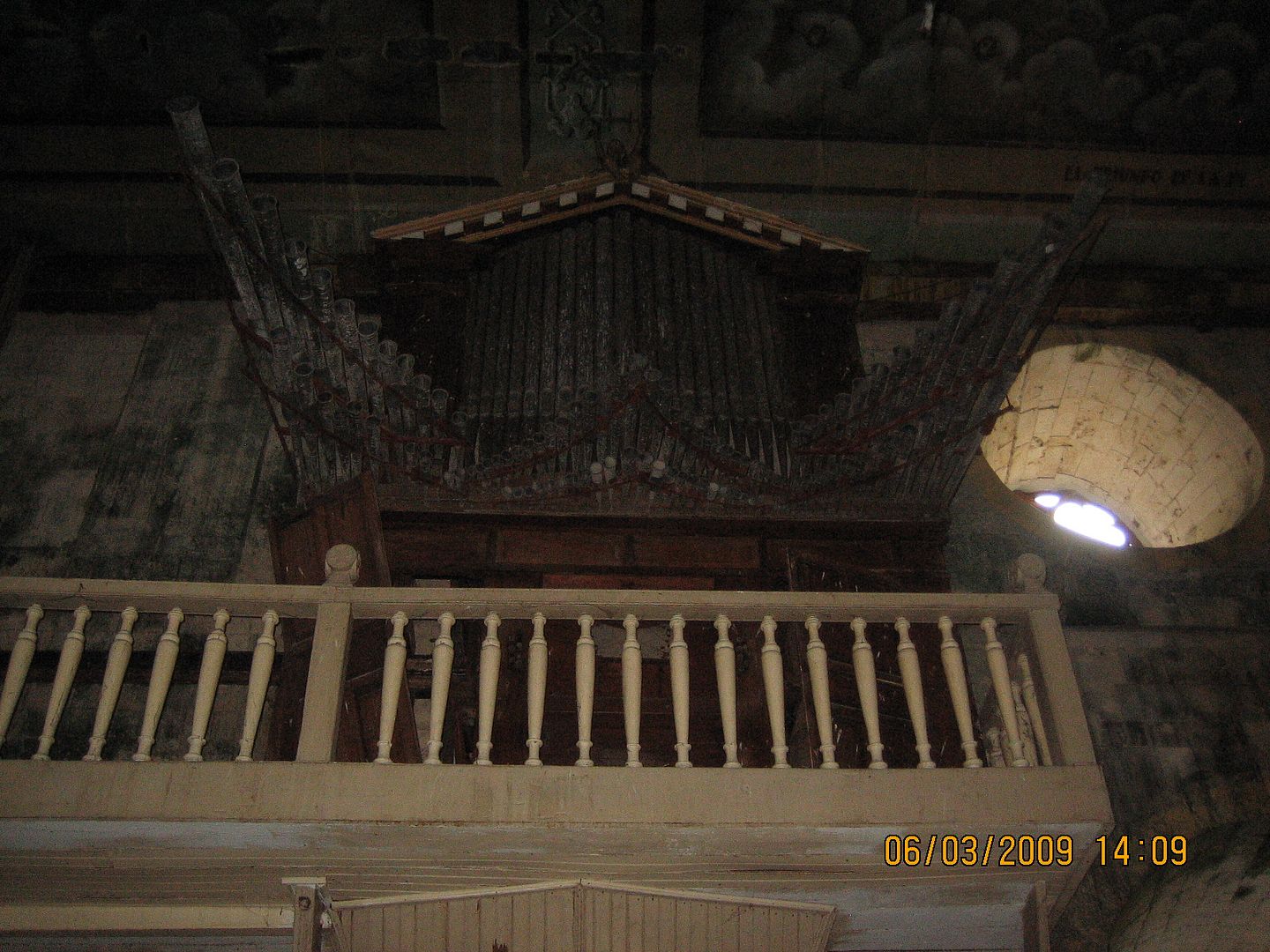
which is said to date from the 1890’s and is therefore newer than its early-19th century brethren in the other old Bohol churches that we have visited.

Right under the wooden staircase that leads up to the choirloft
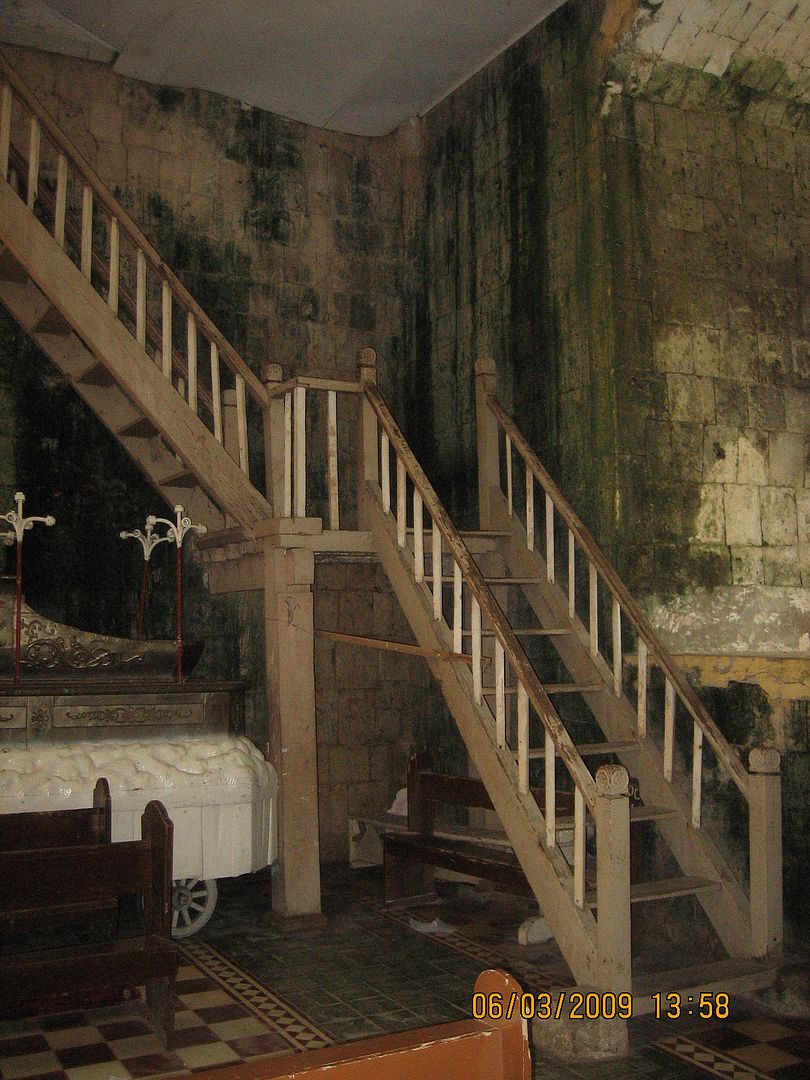

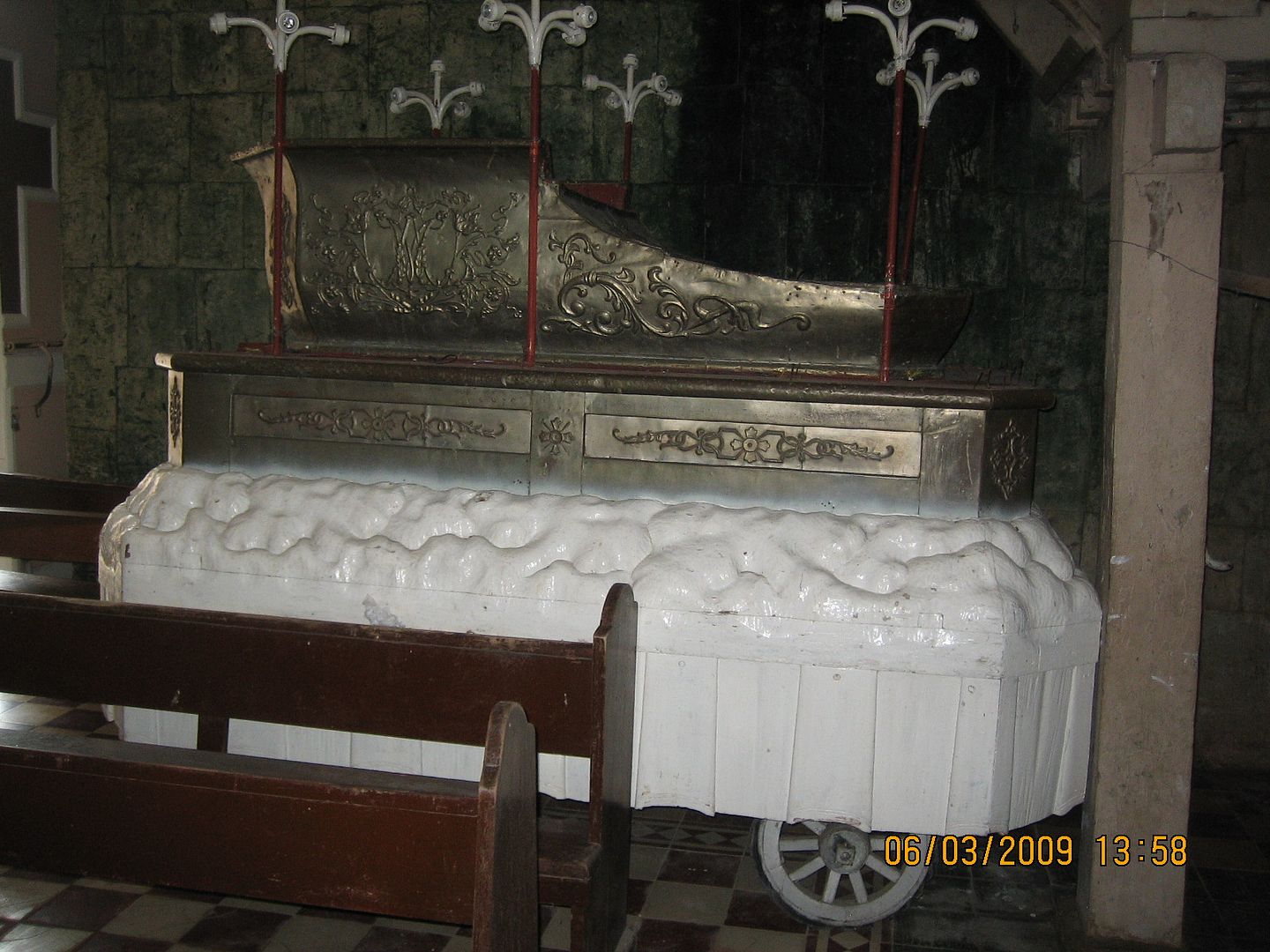
is a hammered-metal carroza with a white-cloud-skirt.

Making an about face, we admire the fine checkerboard floor
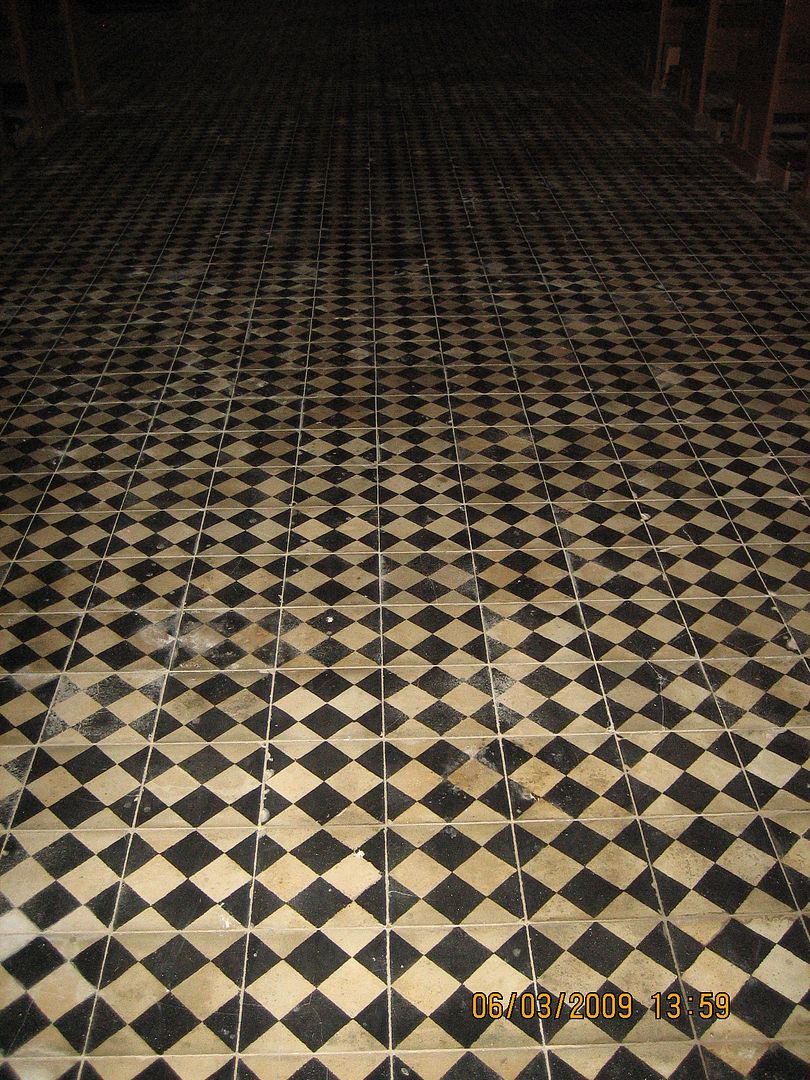

that paves the very wide aisle
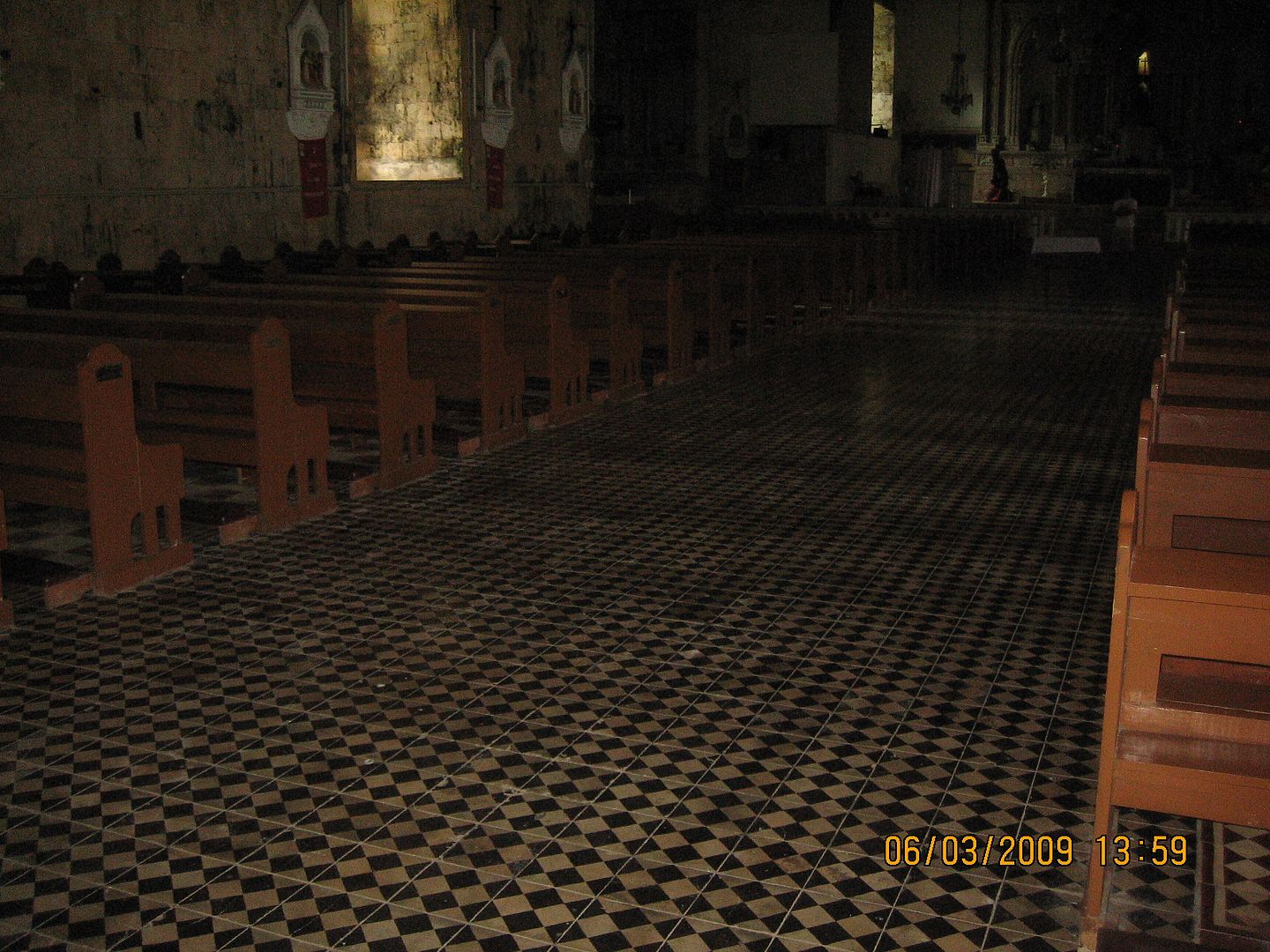

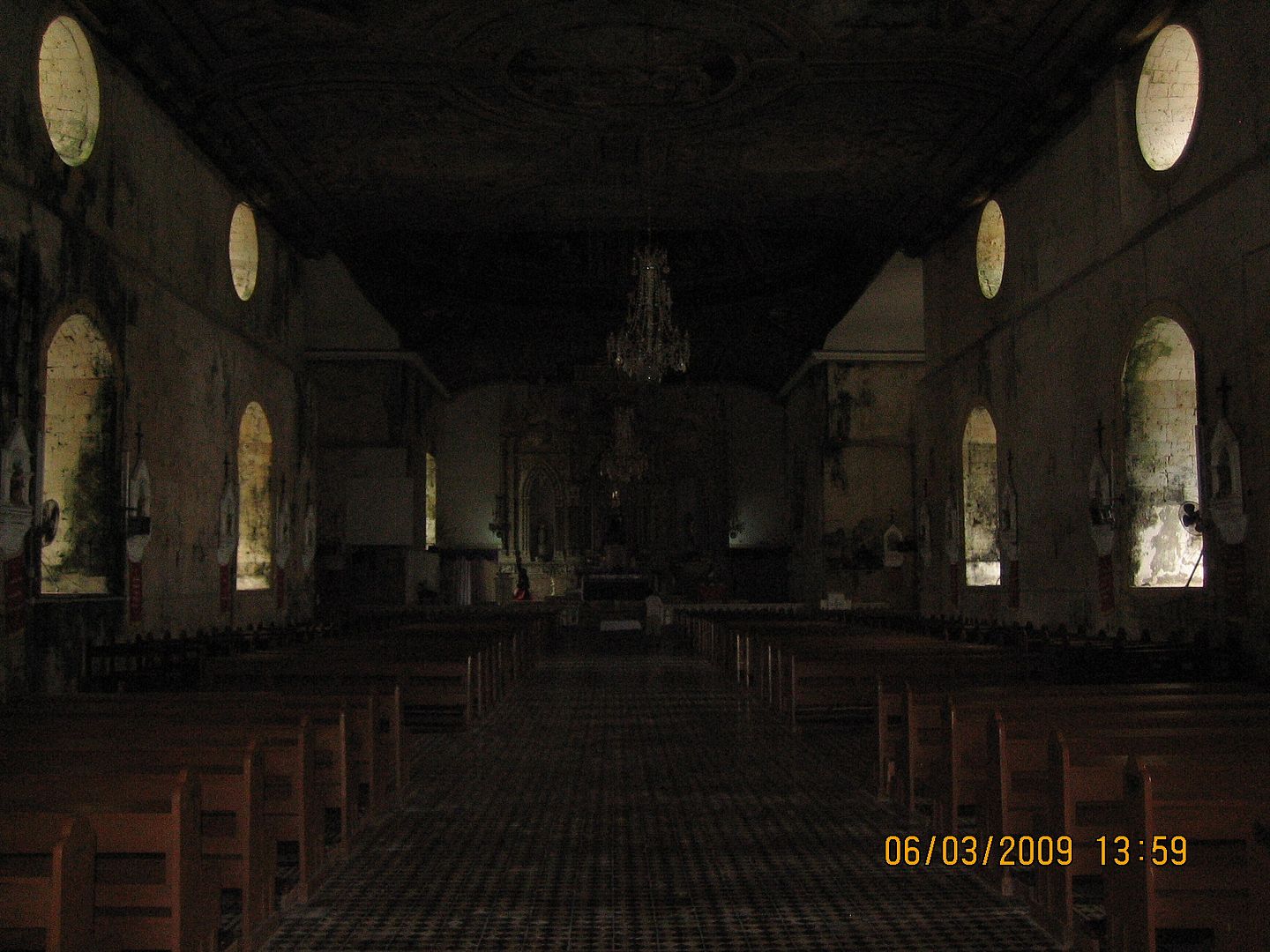
and leads to the altar in the far distance.

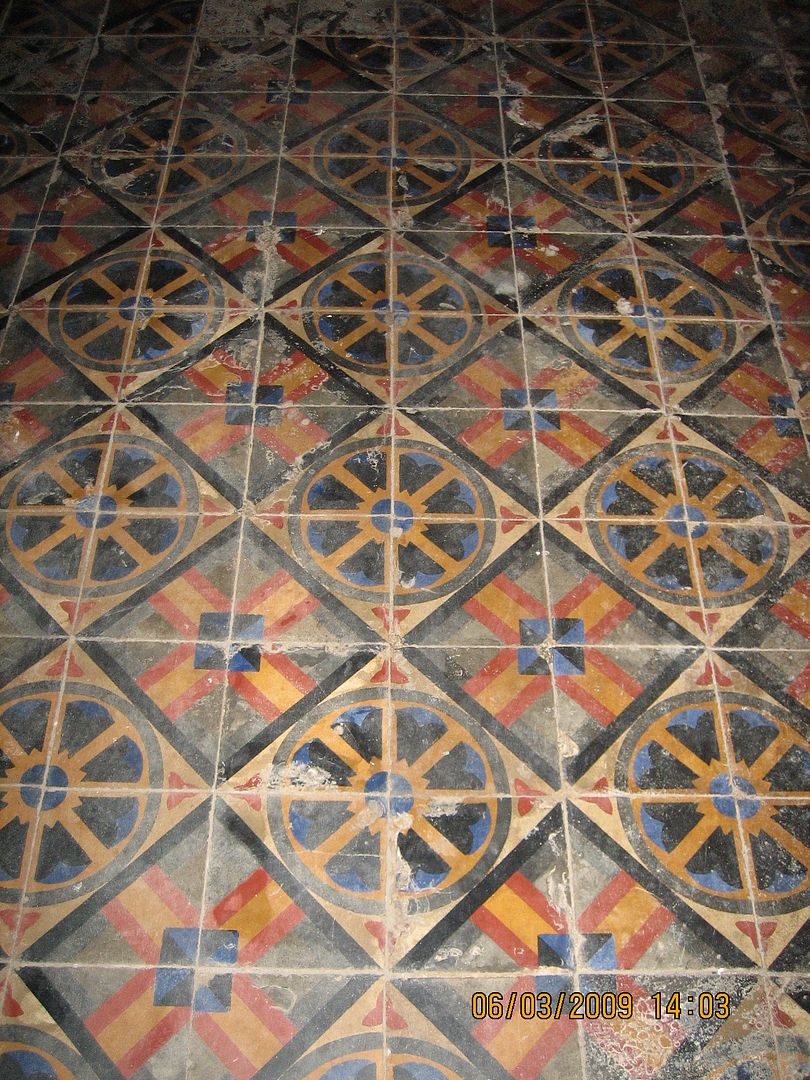
Elsewhere were other beautiful examples of old cement tiles, including a red-and-white checkerboard
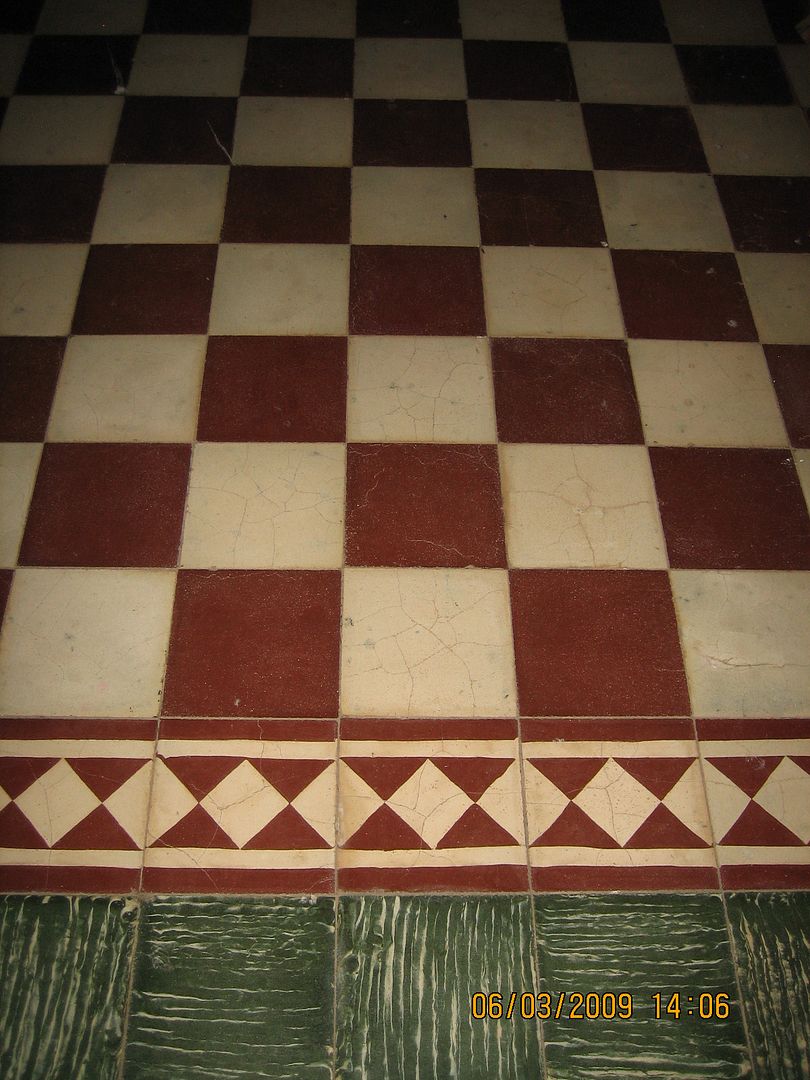

and something rather more colorful.

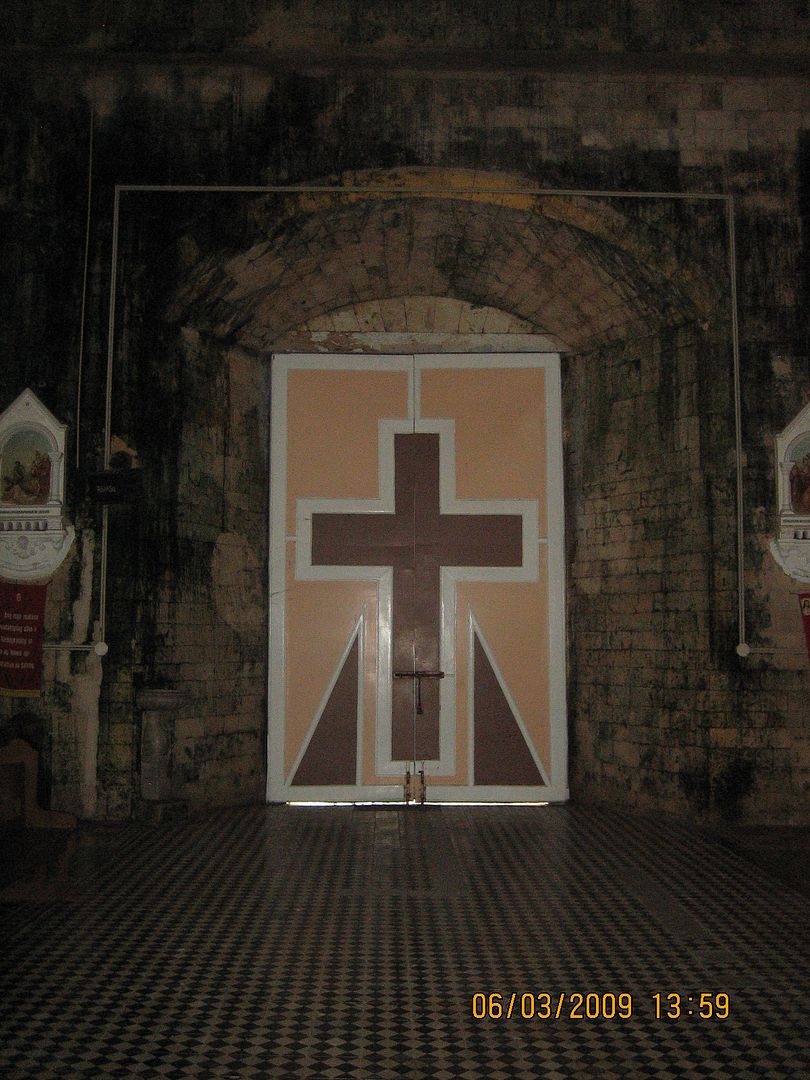
While walking up the aisle, one notices a doorway, currently shut.

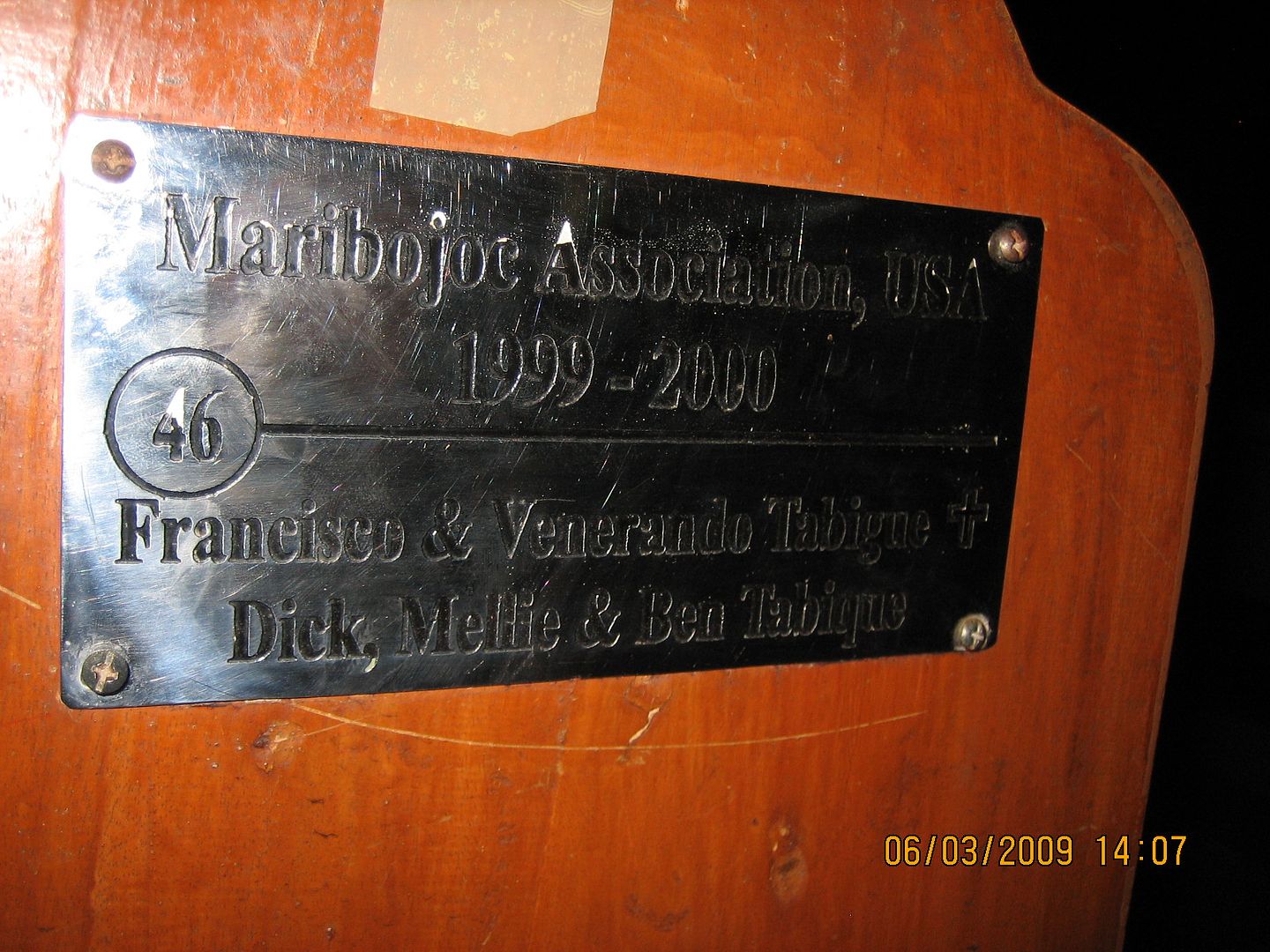
I also noticed that the pews had brass markers on them, acknowledging the generous patronage of the town’s natives who had since migrated to other parts.

Right under the dome of the crossing is an elaborate ceiling painting.

The Maribojoc church ceilings were painted by Ray Francia in the 1930’s; he and Canuto Avila painted many other church ceilings in Bohol, as we had already previously seen. Unfortunately, it was too dark inside this church to properly photograph this particular example.

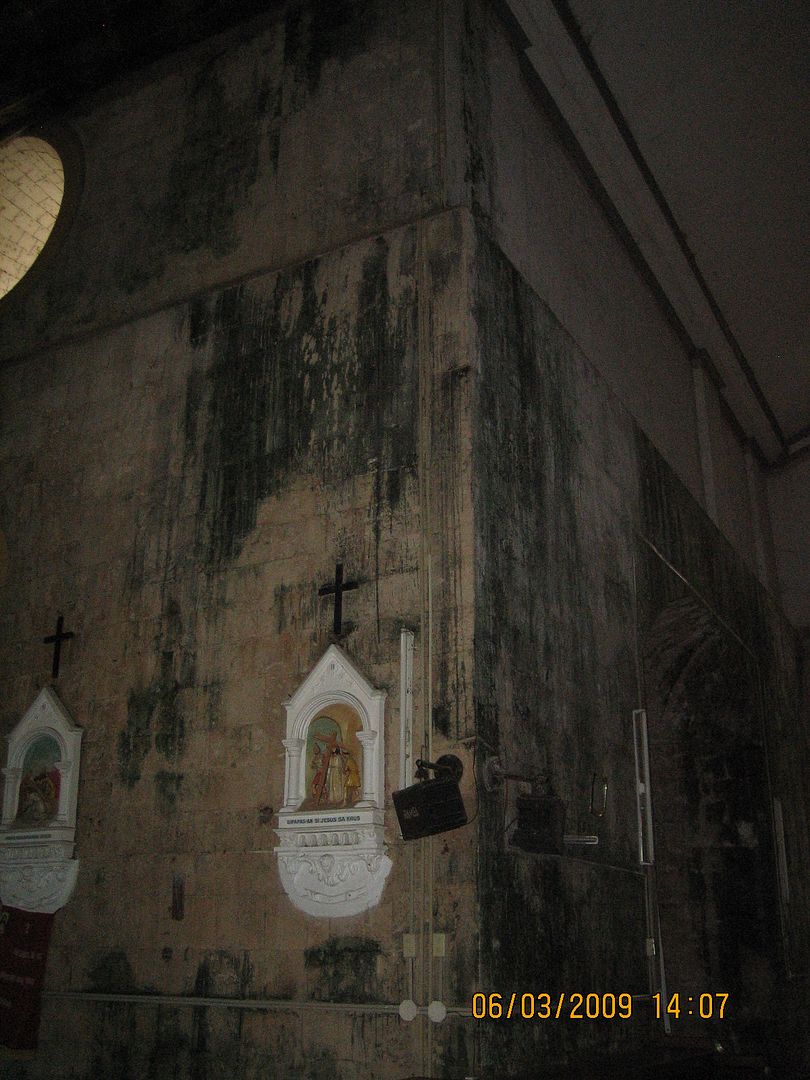
While the ceilings were lavishly painted, the walls were plain, with only the Stations of the Cross and some moss adorning them.

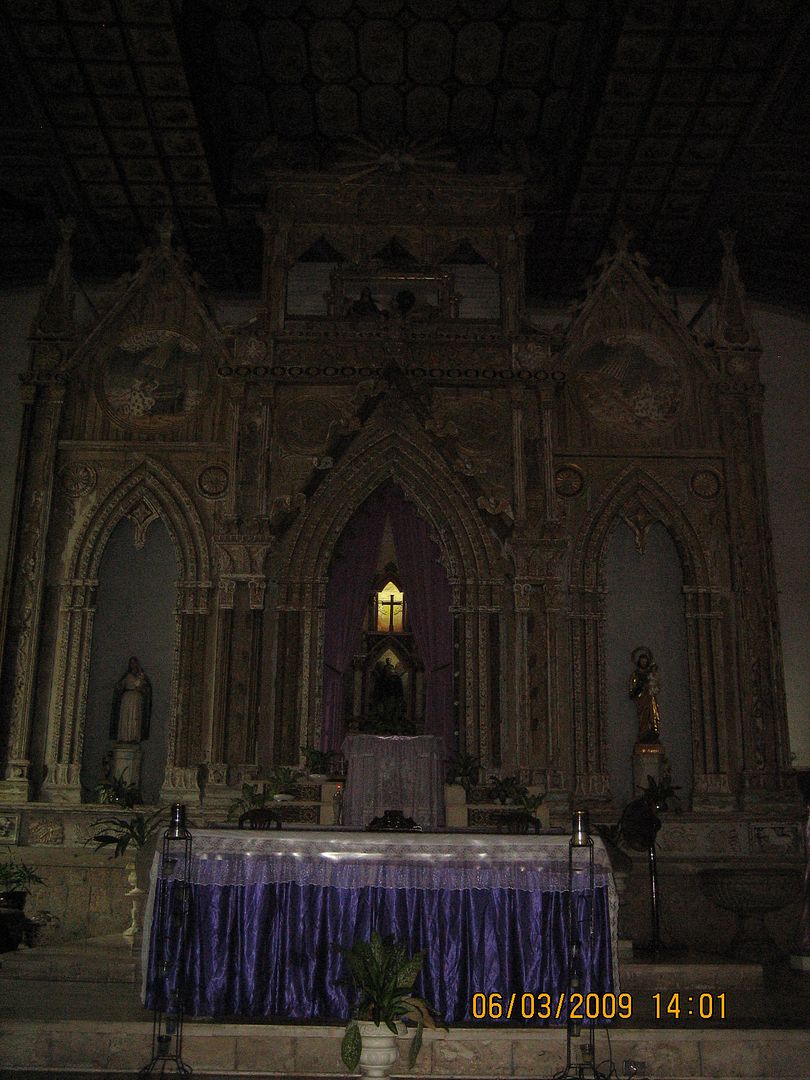
We move up close the sanctuary to take a good look at the main retablo.
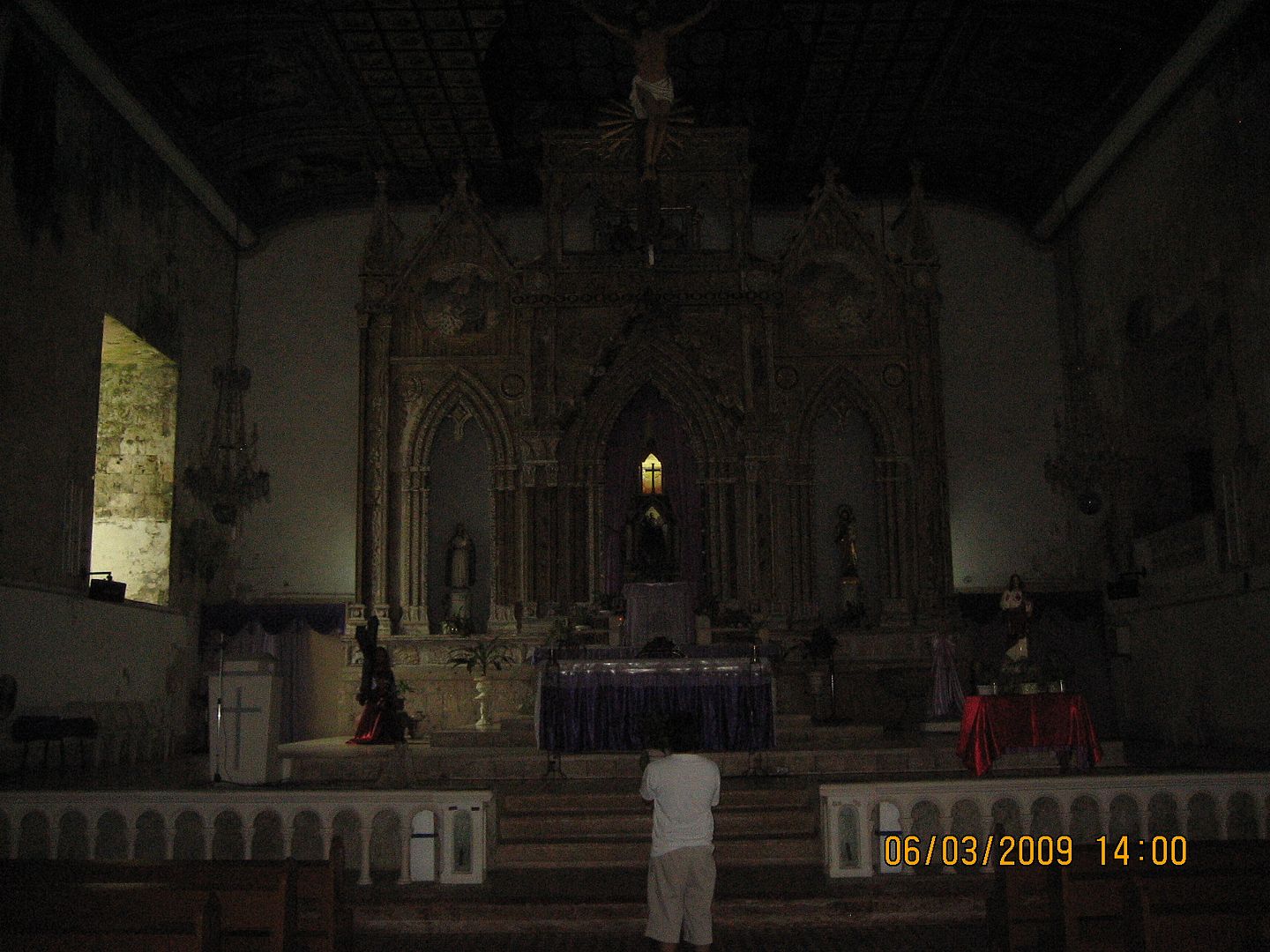


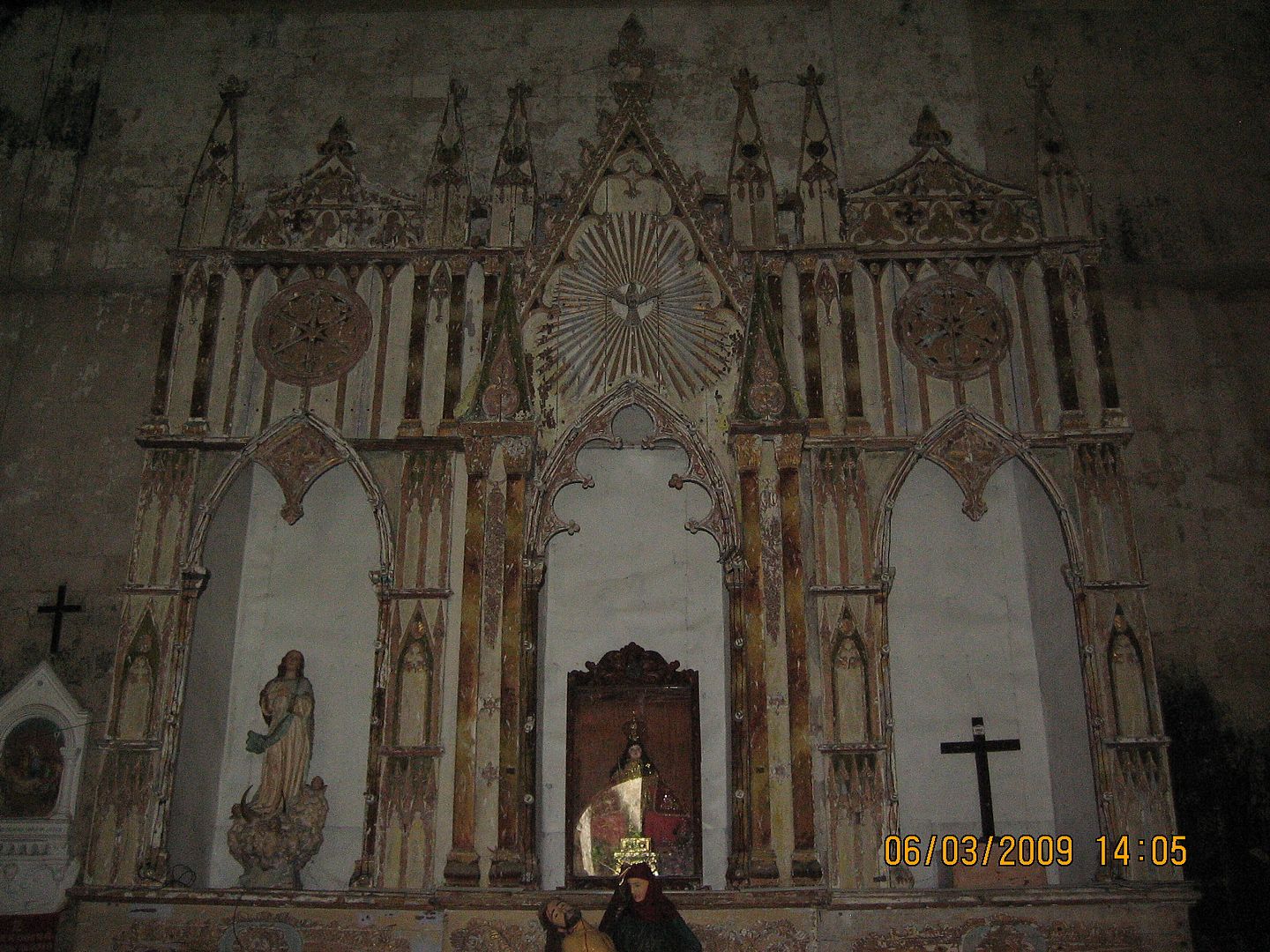
The pride of Maribojoc church must be its elaborate gothic-style retablos, dating from the 1930’s, all exceptionally well-carved and –painted. In the central niche of the main retablo is a small image of the secondary patron San Vicente Ferrer, right above which is a small image of the patron, the Santa Cruz (Holy Cross).
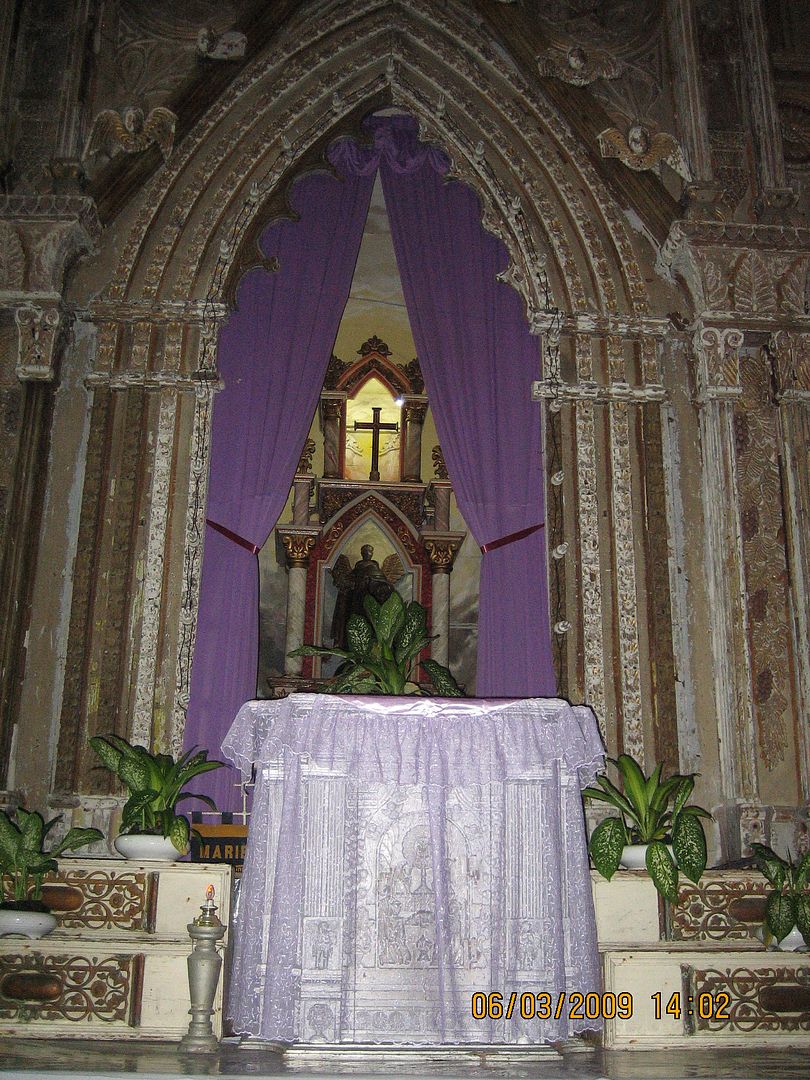

In the niche above is the Holy Trinity, which is flanked by roundels (round-shaped paintings), which according to our Visita Iglesia Bohol guidebook probably depicts allegories of the Finding and the Veneration of the True Cross.
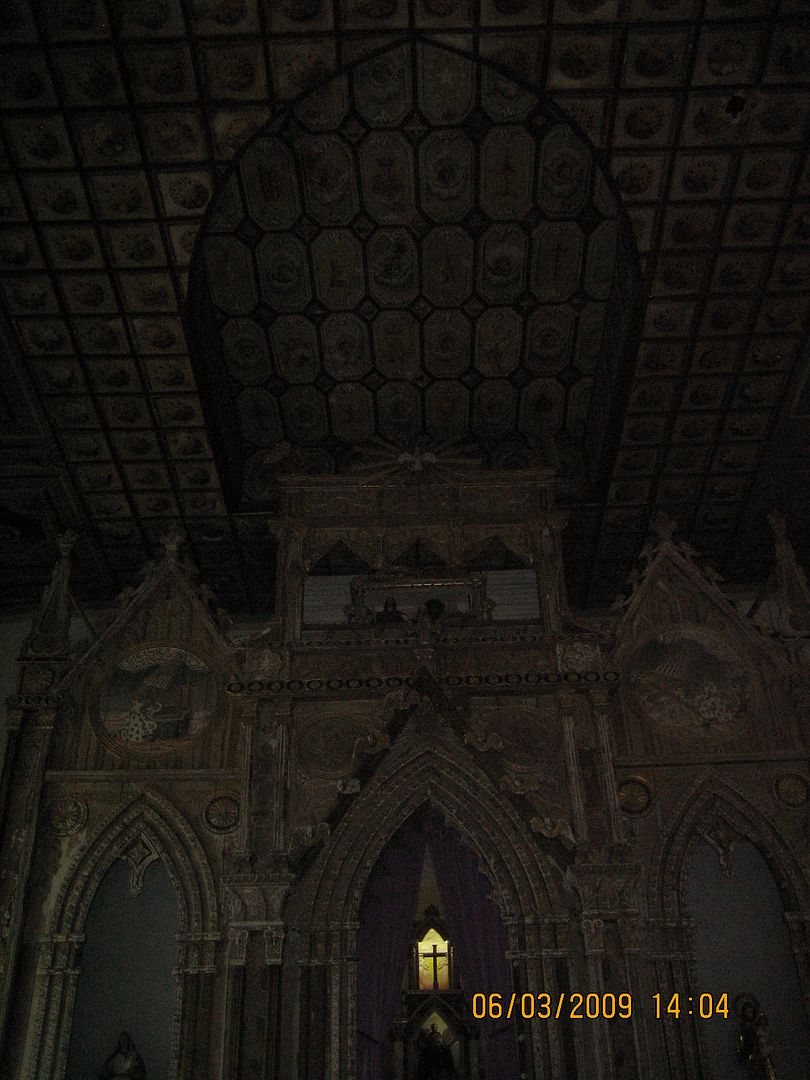

Below these and flanking the central niche are undersized images of the Madonna and Child and Saint Joseph and the Child Jesus.

Overlooking the altar is a gallery, which unlike other altar galleries in other old churches is rather more exposed.

The left and right transepts have two other retablos each, also very finely carved and painted. The left-side retablos are these ones:
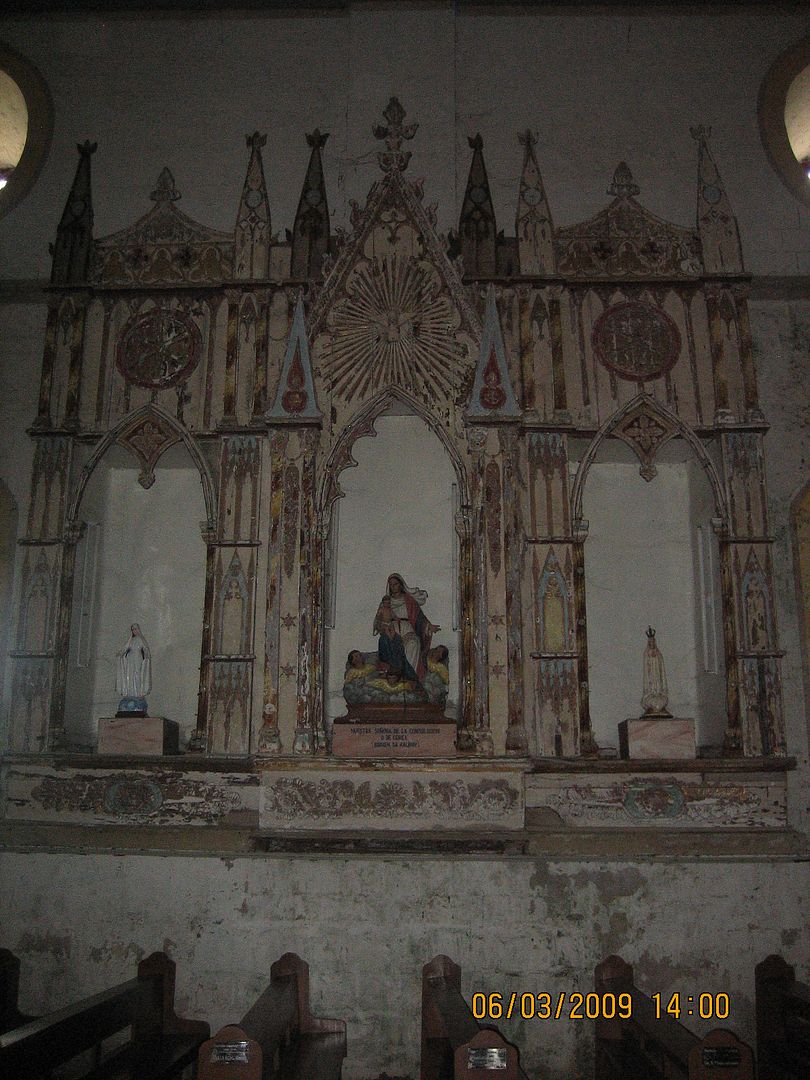
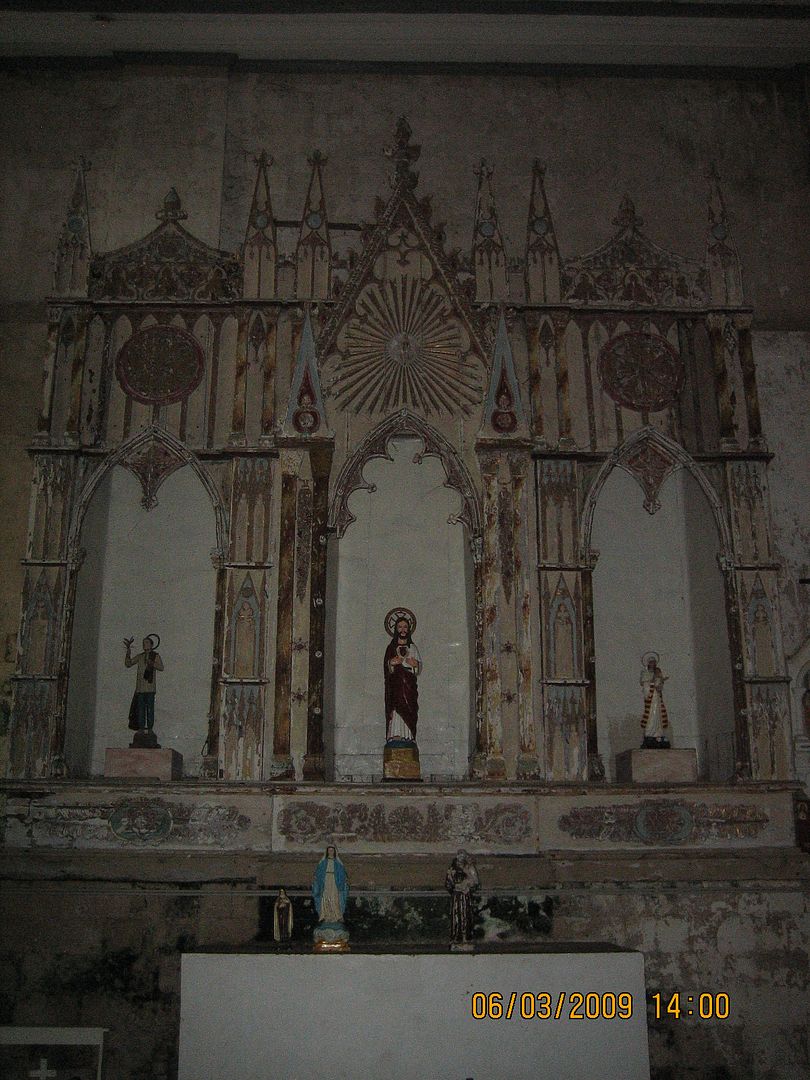

And the right-side retablos are these:
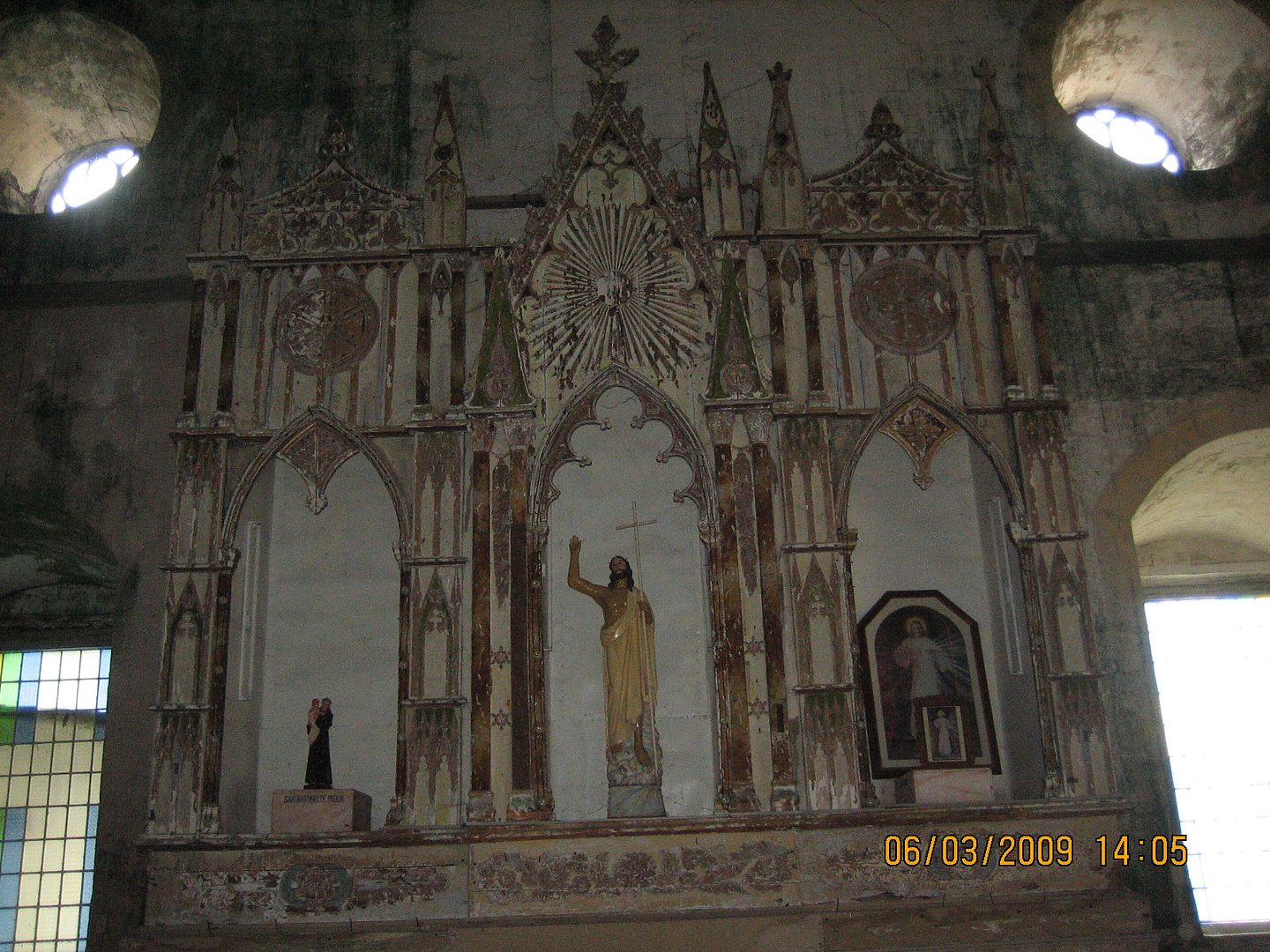


It is obvious that the images that they hold are far too small to be appropriate for these sizes of retablos. In the guidebook, Regalado Trota Jose surmises that perhaps the original images have been lost in the course of time, or even that funds had simply run out for commissioning proper images after paying for the retablos themselves!

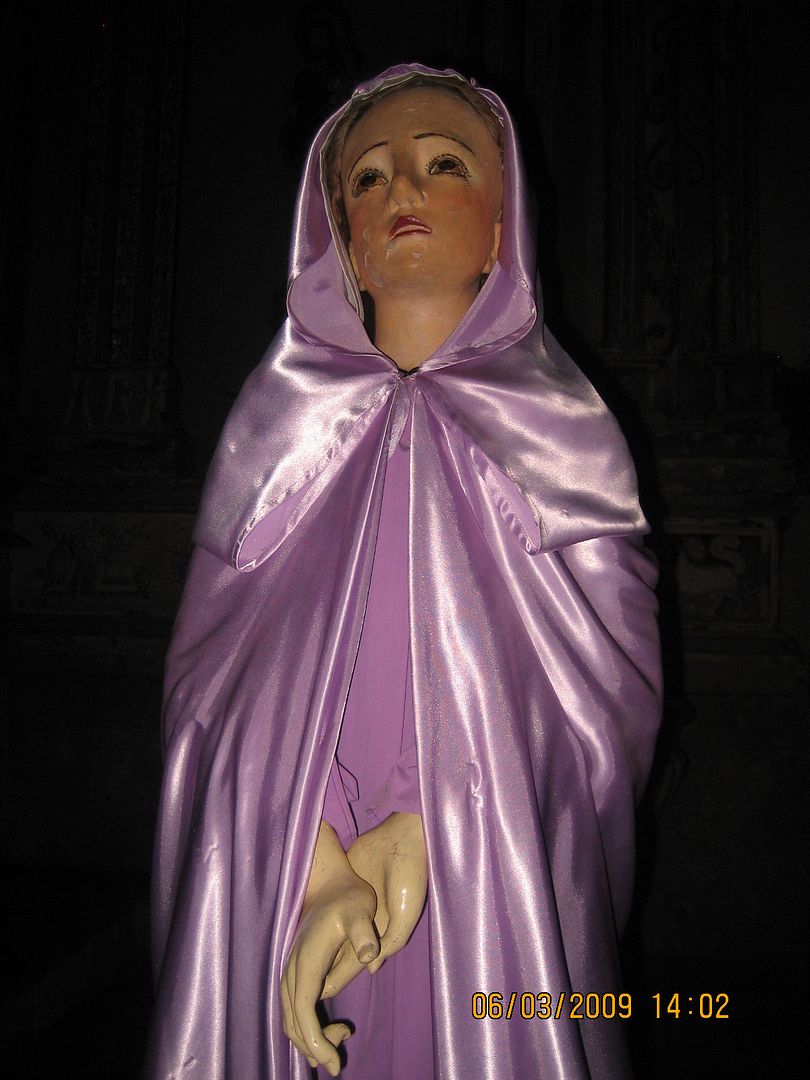
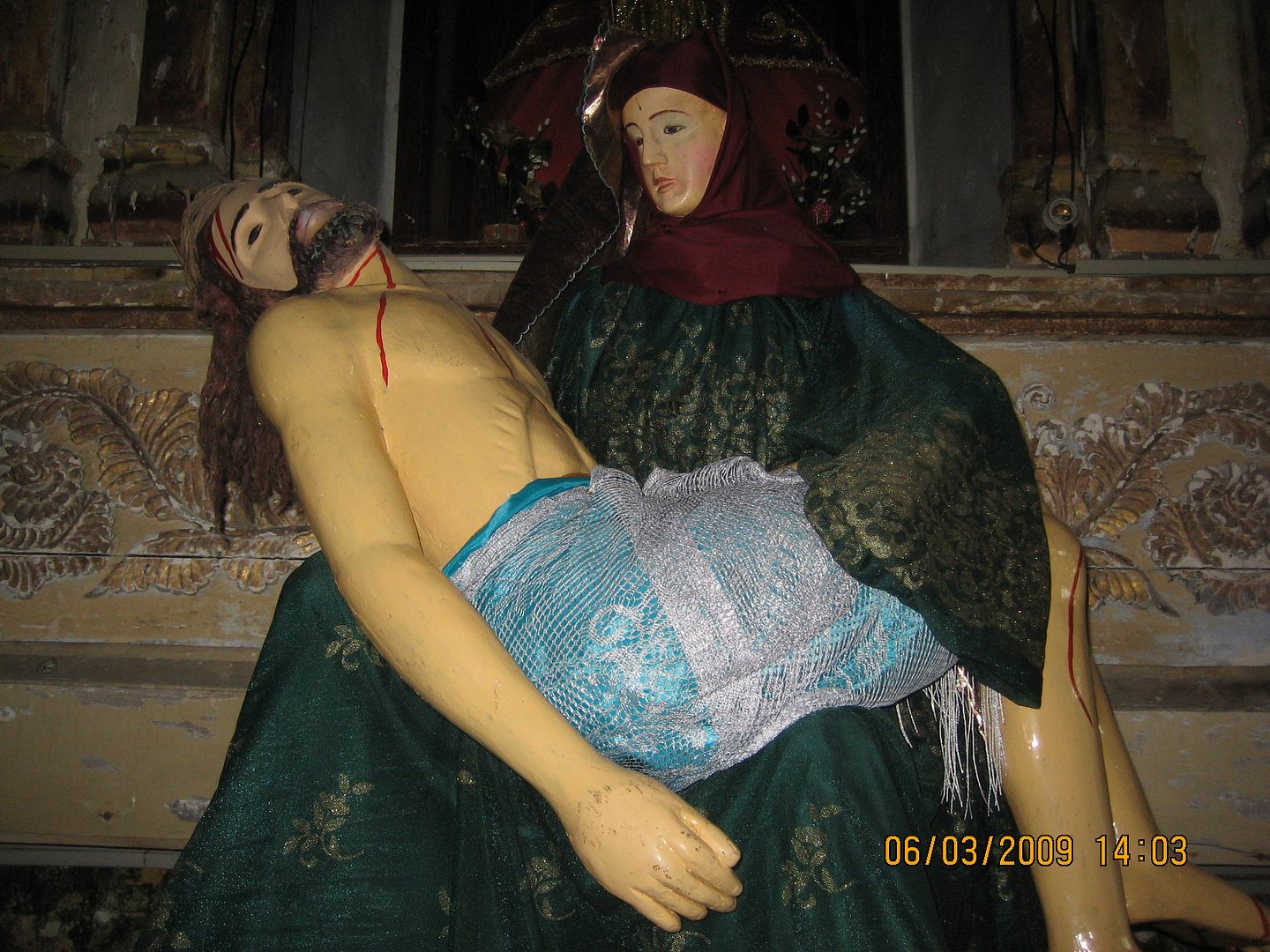
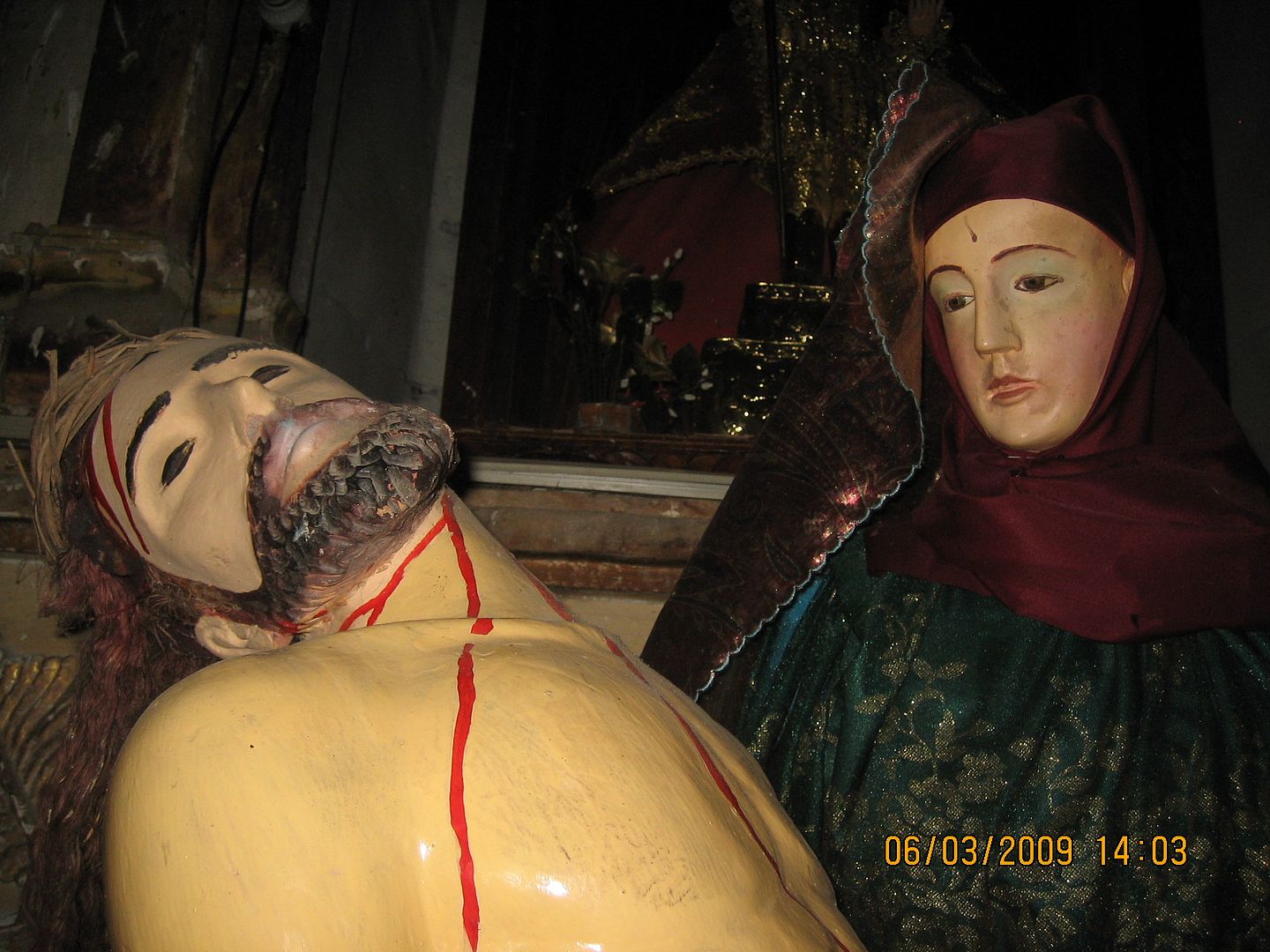
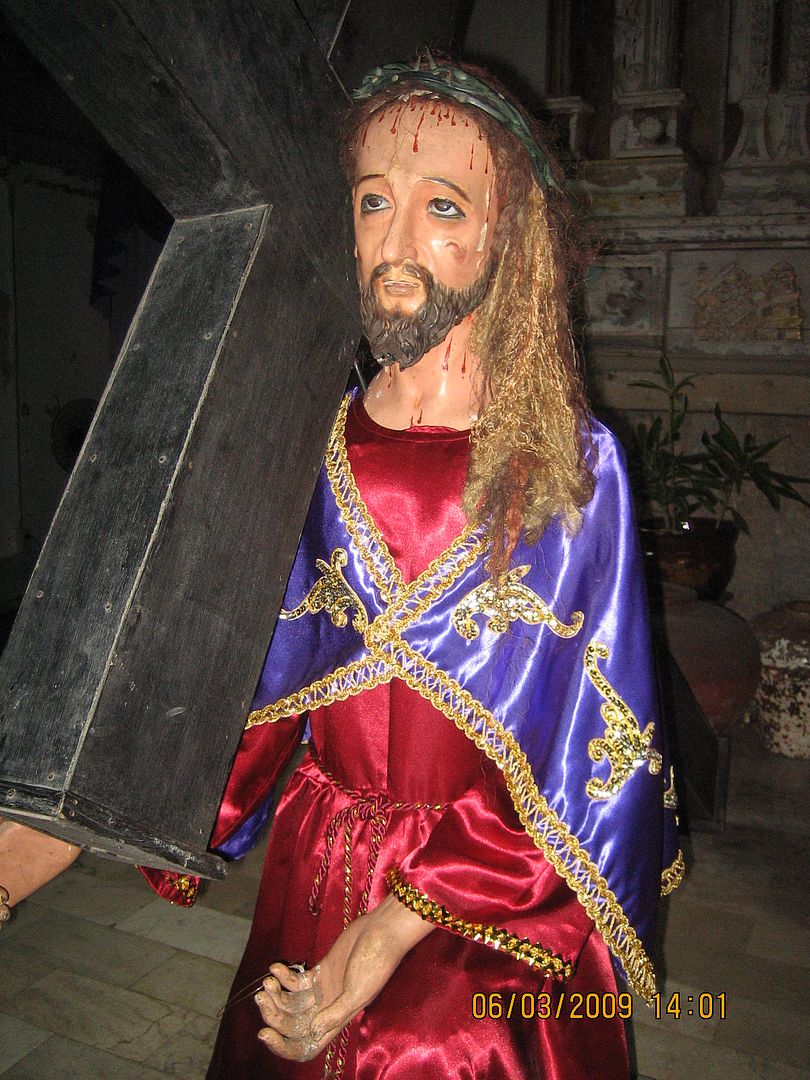
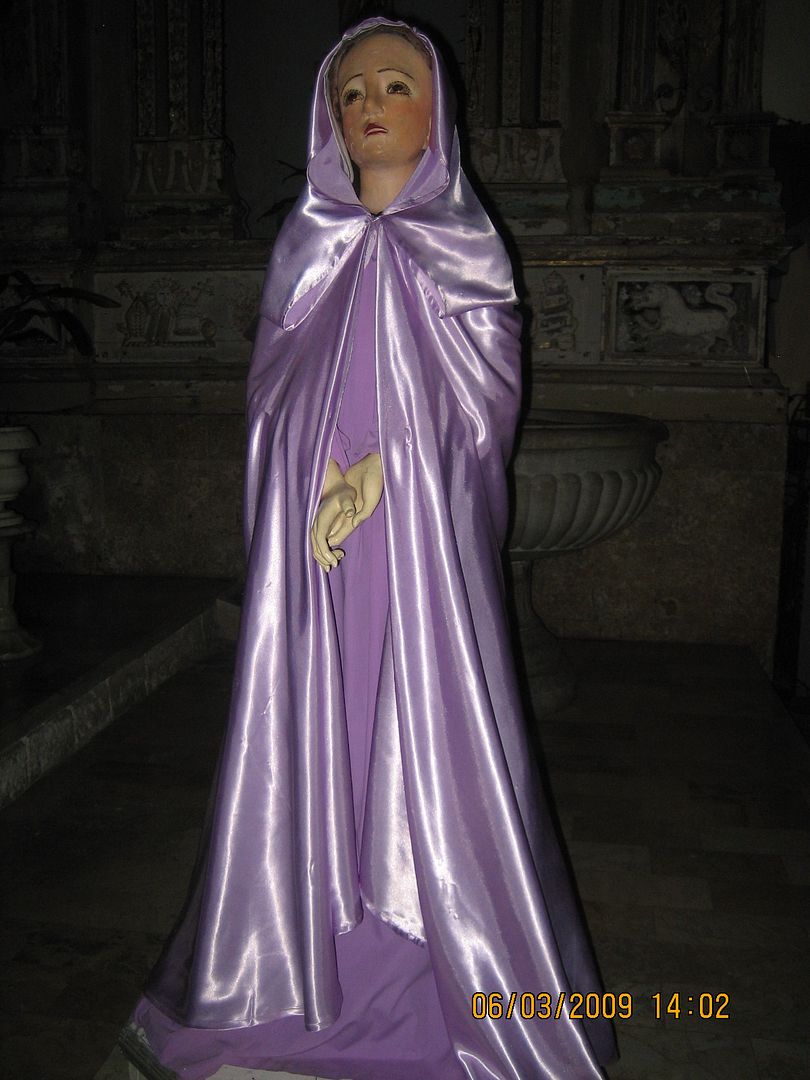
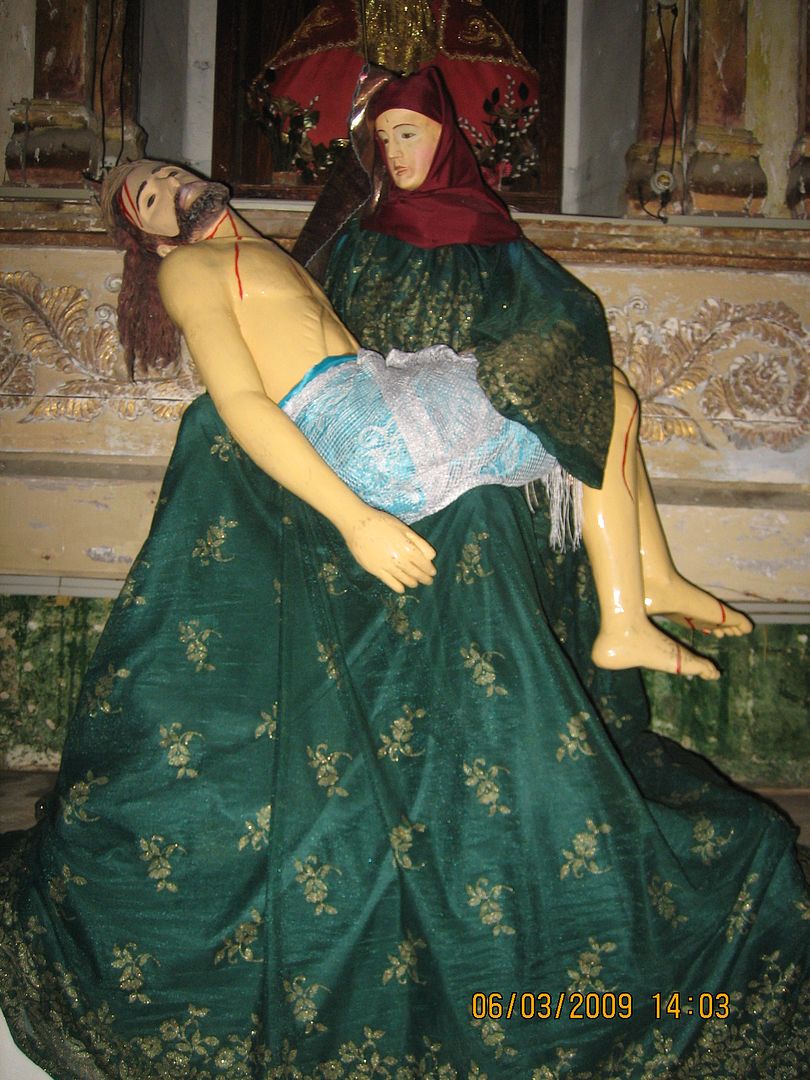
Fortunately, it was Lent when I visited, so Holy Week processional images were exposed and venerated in the sanctuary area, including this Nazareno
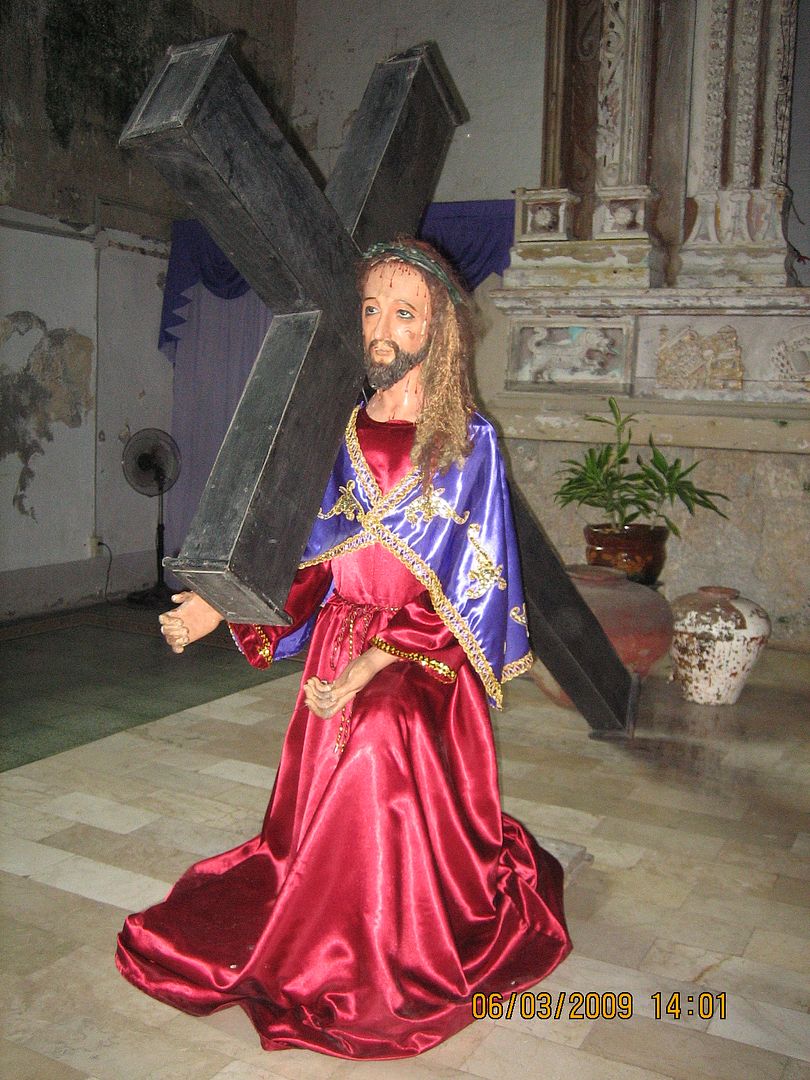


this Dolorosa


and this Pieta


And with just minutes to spare, I end this ten-part Visita Iglesia (Plus) Bohol, rush to the Tagbilaran airport, and resolve to do more of this at some future time. In the meantime, why not do your own self-guided Bohol nature and heritage tours yourself?

Originally published on 24 July 2011.  All text and photos copyright ©2011 Leo D Cloma. The moral right of Leo D Cloma to be identified as the author of this work has been asserted.


Original comments:

        Compare this with the Maribojoc church interior as it looked in 1912:
http://arcastro57.multiply.com/photos/album/66/BEFORE_STRANGE_ALTARS#photo=14


rally65 wrote on Sep 28, '11
The retablo looks to be exactly the same. It's interesting how there were so few pews in those days.

CXXIII. Visita Iglesia (Plus) Bohol VIII – The Loboc Church

Upstream on the Loboc River from Loay, about fifteen minutes by motor vehicle, is the town of Loboc.  In fact, we were here just the day before, to do our Loboc River cruise, as attentive readers will recall.  We’ve returned today specifically to visit the church, easily rivaling and maybe even beating Baclayon as the most formidable on the island.

According to historians, this church was built by the Jesuits in 1734.  Like elsewhere in Bohol they were replaced by the Augustinian Recollects in 1768, who in around 1866 added a portico over the original façade – now a common feature of most Bohol churches as we have already seen.  The pediment (the triangular section in the upper third of the façade) is made of galvanized iron sheets decorated with wooden reliefs, including the papal tiara with crossed keys, the symbol of the parish’s patron, Saint Peter the Apostle (and first Pope).


The original Jesuit façade had a pair of towers, one bulging from each side.  Our handy Visita Iglesia Bohol guidebook surmises that they might have been merely decorative rather than functional since there is hardly any space within them.  This next photo shows one of these vestigial towers and a good profile view of the latterly-added portico-façade.


On the left-side elevation can be seen a side entrance, which like the façade has a pediment made of galvanized iron sheets.


The Recollects also built a hexagonal mortuary chapel to the left of the façade in around 1868, which has since been nicely repurposed as the parish’s Adoration Chapel.


And further beyond is yet another typical Bohol churchyard structure – the elevated platform from which the Child Angel of the Easter Dawn Salubong removes the Blessed Virgin Mary’s mourning veil.


Rarely for Bohol but just like in Loay (which we just visited), Loboc’s belltower is separate from the church.


It is a four-storey hexagonal structure, across the road that runs beside the church, directly across the plaza in front of the church, by the riverbank.


Right beside the belltower and pointed directly at the church is a concrete bridge begun more than two decades ago.


While I saw that it spans the Loboc River, I still don’t clearly understand what its supposed utility was – where it was supposed to go, for one thing.  Its completion would have required the demolition of at least the front part of the church; happily a public outcry ensued before that happened.  As a result, today it is merely a pedestrian walkway from which promenaders from the riverside can view the church – and a strange and unique historical landmark of poor infrastructure planning.


Behind the church and connected to it at a right angle is Loboc’s massive convento.


Unusually, it has three storeys.


In fact, research indicates that this was actually the original Jesuit church, completed in around 1670, and possibly the oldest extant church structure in Bohol.  When the Jesuits decided to build an even bigger church, they simply appended it to the old one perpendicularly, and made the old structure the new convento.


Since obviously it was so tall, they could get three functional storeys out of it,


and around the massive stone walls of the original church could be built cantilevered exterior corridors on the second and third storeys, resulting in voladas or “flying” galleries.


Since the front entrance to the church was closed on this weekday noon, I instead find an alternate passage through the convento, whose entrance vestibule is in the space between the old and new churches.


The wooden floor of the third storey of the convento is overhead in this space.


On the left side wall, actually the rear wall of the new church’s sacristy, is a historical marker giving some dates and facts about the structure.


At the far end of the vestibule is a wide staircase,


with beautiful old colored cement tiles,


that takes the visitor up to the second and third storeys.


Despite the numerous signs both outside and inside the convento advertising the Museo de Loboc, I decided to postpone going there (on the third floor), and instead turn left into the sacristy and from there the church interior.  I make my way right through, just behind the main entrance, and view the choirloft


and the circa 1830 pipe organ, yet another attribution to the Las Piñas-based Recollect Father Diego Cera.


This was restored to playing order by his 21st-century namesake, the pioneering Diego Cera Organbuilders firm, still of Las Piñas, in 2003.


Both choirloft and organ are now put to regular use by the world-famous Loboc Children’s Choir, unfortunately not in residence on the day I visited.

From this end of the church, I could get a good view of the altar area,


and as I make my way to the front, I note the patterned cement tiles beneath – laid in 1969 when the floor was raised by nearly a meter to avoid frequent flooding,


and the usual-in-Bohol painted ceiling overhead.


The kneelers of the front row of pews had Saint Peter’s symbols also.


And on the right side stands the brightly-painted pulpit with a neo-gothic style sounding board overhead.


The main altar has the patron Saint Peter and his traditional buddy Saint Paul in the topmost niche,


and the secondary patroness, an early 19th-century dark image of Our Lady of Guadalupe in the Spanish, not Mexican, tradition, in the center niche.  This niche is beautifully decorated in very finely-carved and gilded wood.


Flanking this center niche are Saint Lucy on the left,


and Saint Francis Xavier on the right.


Loboc Church has, rather generously, a total of five retablos.  To the left of the altar are two, one even more commodious than the main one.  Among its many occupants is Our Lady of Lourdes, the Sacred Heart, and Saint Joseph.


To the left of this is a smaller one, with the upper niche occupied by San Isidro Labrador, and the lower niche by a 19th-century Saint Joseph and the Child Jesus.


On the right side of the altar is a large retablo that is the twin of the one on the left.  Among the images here are Saint Vincent Ferrer, Saint Therese of the Child Jesus, and another Sacred Heart.


And predictably, to the right of this is a small retablo identical to the one on the other end, this one with a primitive-style crucifix in the larger niche and what appears to be Our Lady of Fatima in the smaller niche above.


And as if the visitor had not yet overdosed on santos by now, the sacristy just behind the altar holds another large old crucifix.


This hangs above a large vestry cabinet, on top of which is also placed a small image of Our Lady Mary, Mediatrix of All Graces.


The sacristy is so spacious that it might even function as some sort of private chapel.


In a corner is a graffiti-ornamented old pew,


and close by is some kind of cabinet built into one wall (I dared not open its large doors lest something jump out at me from inside),


as well as a venerable sink, aged from hundreds of years of daily use.


At the other end of the sacristy is a staircase


that leads up to the second floor of the convento behind.


Rather than ascend through here or via the other larger staircase that we saw earlier outside, I become conscious of time and decide to visit the Museo de Loboc on some other day.  Instead, I just congratulate the parish (many years belatedly) on its 400th anniversary, reckoned from the oldest parish records dated 1602 as cited in an 1886 survey (but since destroyed by the frequent flooding in this river town),


and look forward to another Loboc Church, Convento, and Museum visit in the future.

Originally published on 26 June 2011.  All text and photos copyright ©2011 Leo D Cloma. The moral right of Leo D Cloma to be identified as the author of this work has been asserted.


Original comments:

johnada wrote on Jul 2, '11
Another town with a separate belltower is Loon, one of the beautiful churches on the side facing Cebu. I pasted on another entry of yours, a link on the easter sunday salubong done in Loboc this year.

arcastro57 wrote on Jul 3, '11
The section housing the museum seems to be a bit more rundown than the last time I visited. The museum has many interesting pieces.

rally65 wrote on Jul 4, '11
johnada said
Another town with a separate belltower is Loon, one of the beautiful churches on the side facing Cebu. I pasted on another entry of yours, a link on the easter sunday salubong done in Loboc this year.
Thanks, John. I didn't get to go to Loon -- must go next time.


rally65 wrote on Jul 4, '11
arcastro57 said
The section housing the museum seems to be a bit more rundown than the last time I visited. The museum has many interesting pieces.
I must make time to go to the museum on the third floor of the convento next time.