Tuesday, November 3, 2015

XLI. Akyat-Bahay Meets SS-Files: Villa Escudero, Part One -- Like a Child in a Candy Store

I’ve been to Villa Escudero thrice – twice in the summer of 2004, and once this past summer. I don’t think I’ll ever tire of going. For me, my varied interests in Filipino culture, traditions, heritage, and secular and religious arts all manage to converge somehow in this place. In other words, it’s Akyat-Bahay meets SS-Files!

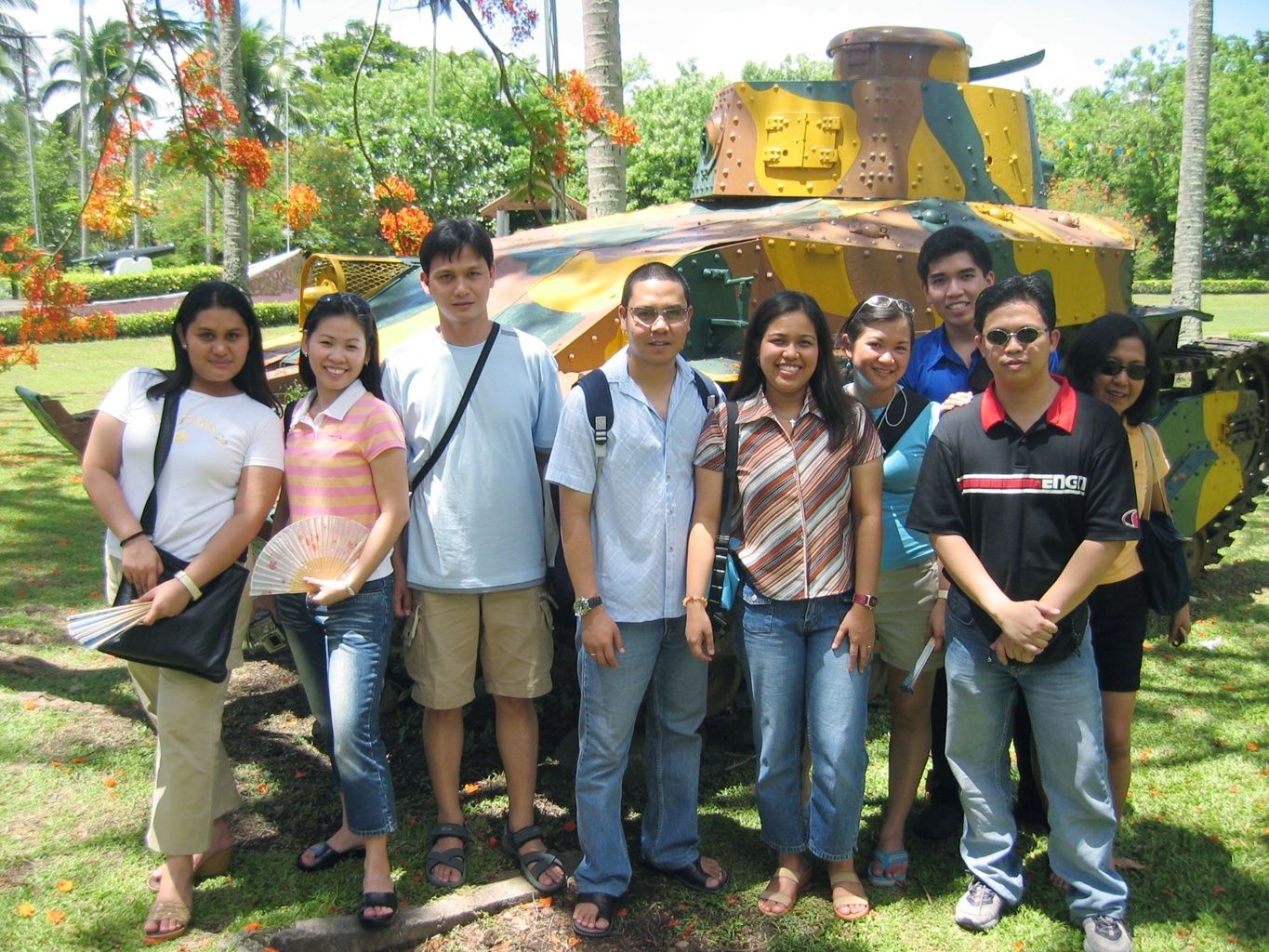
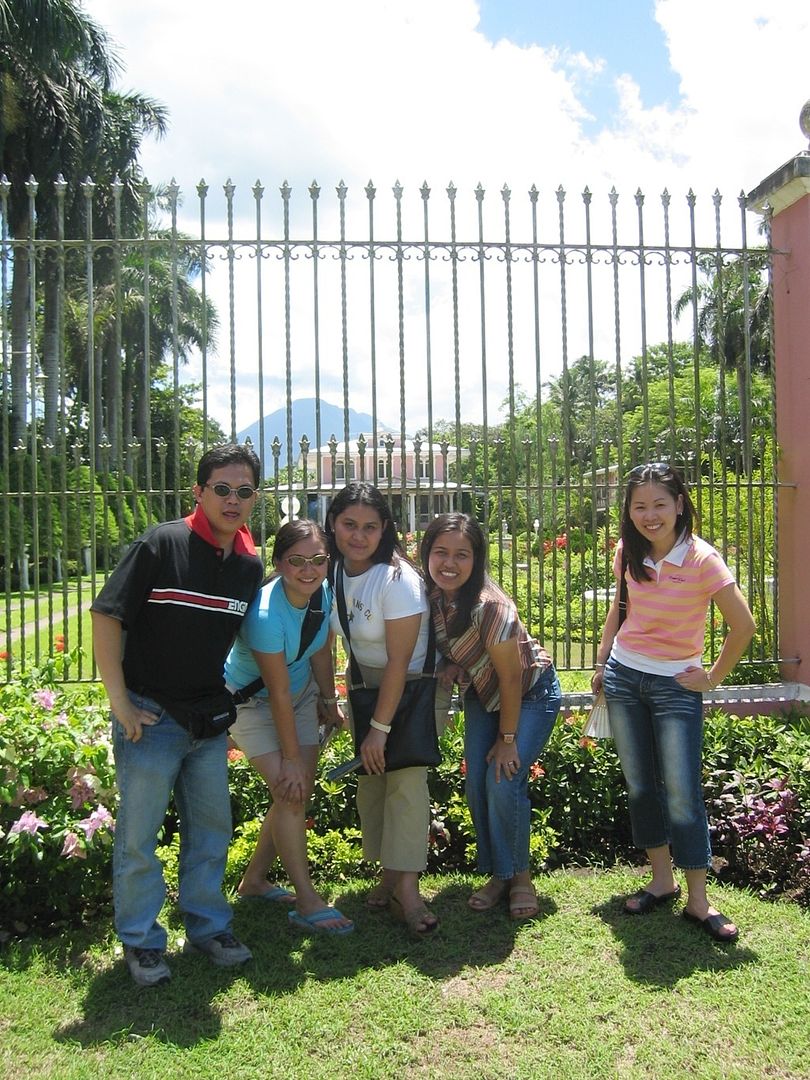
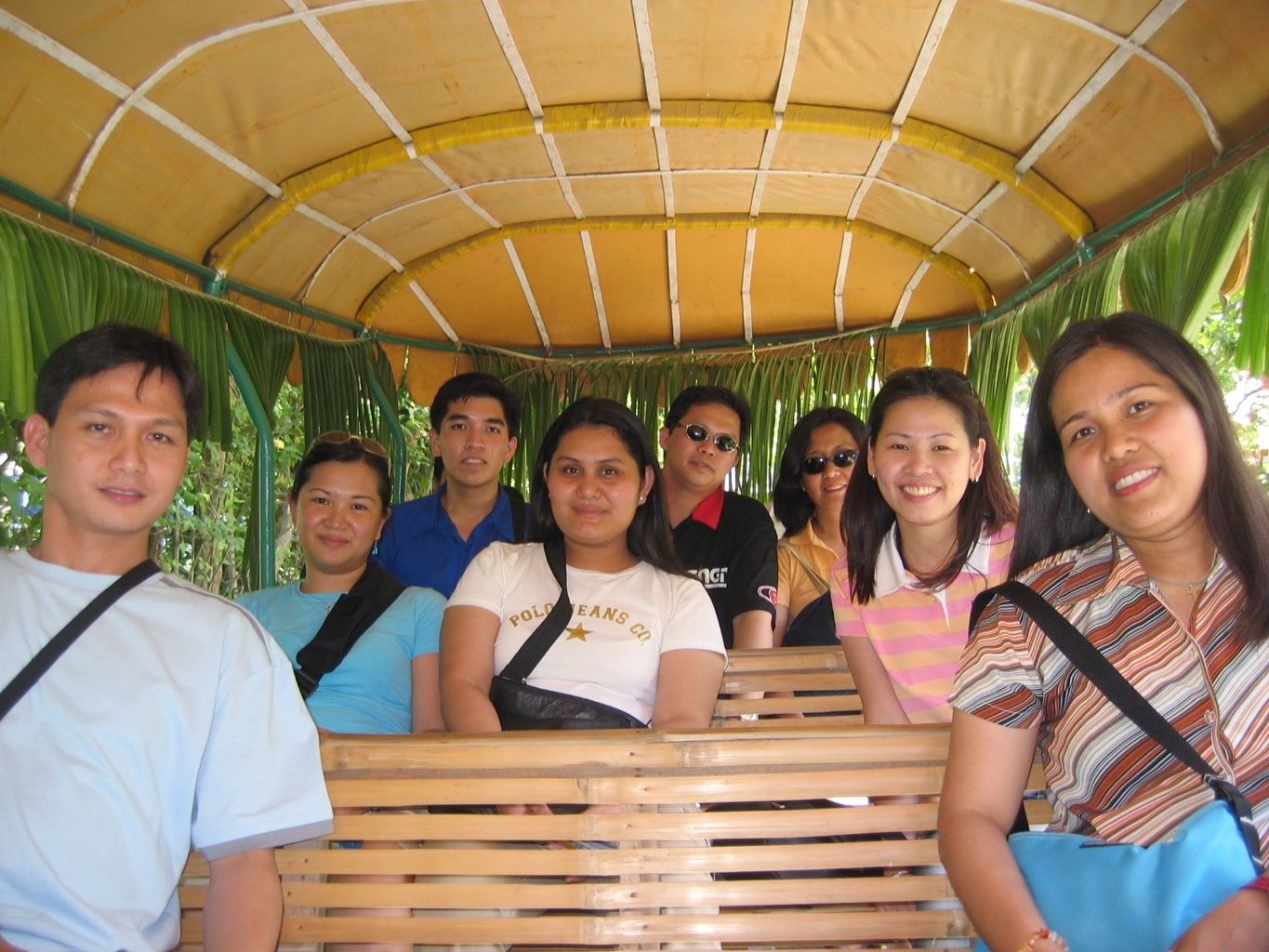
I first went there as part of my company’s departmental summer outing three years ago. Lots of families and companies do this all the time, and wind up taking photos not too dissimilar from these that I took of my colleagues.
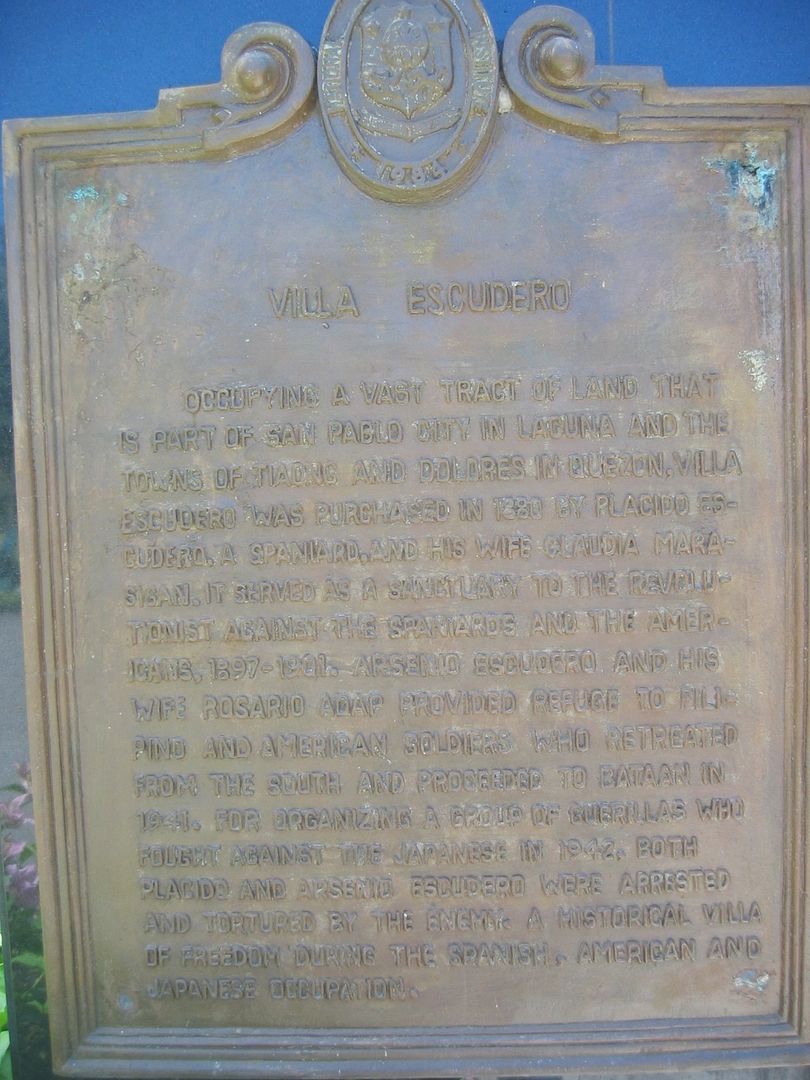
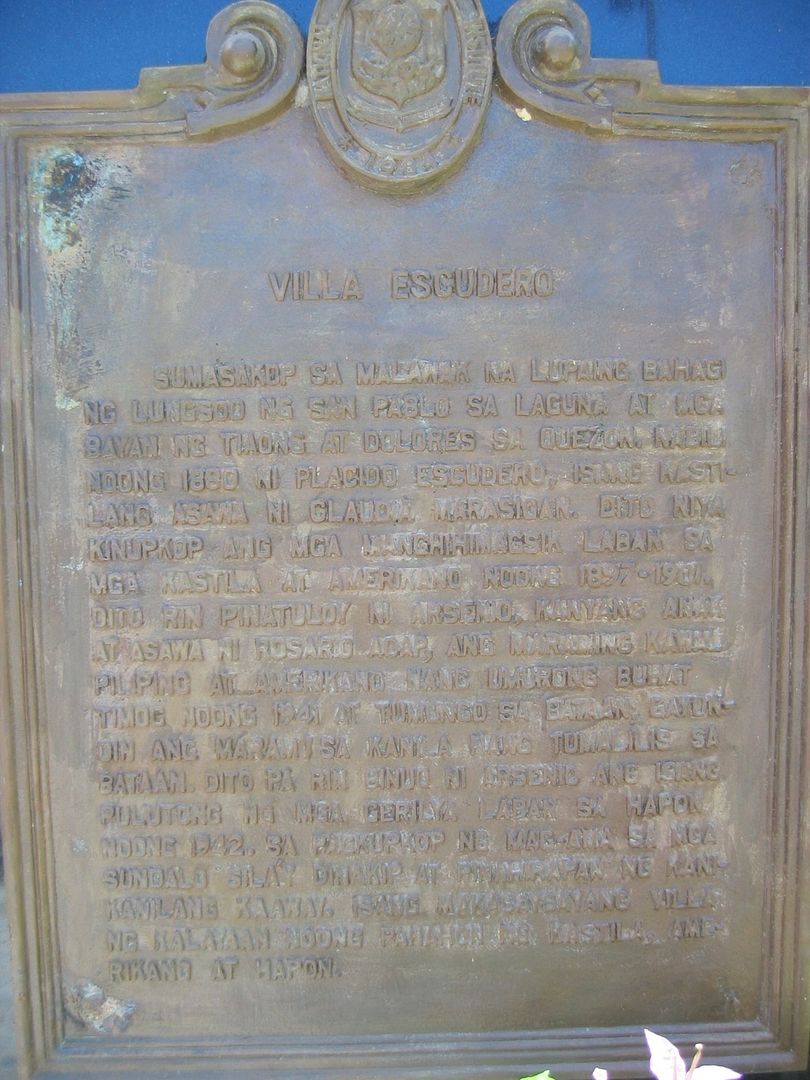
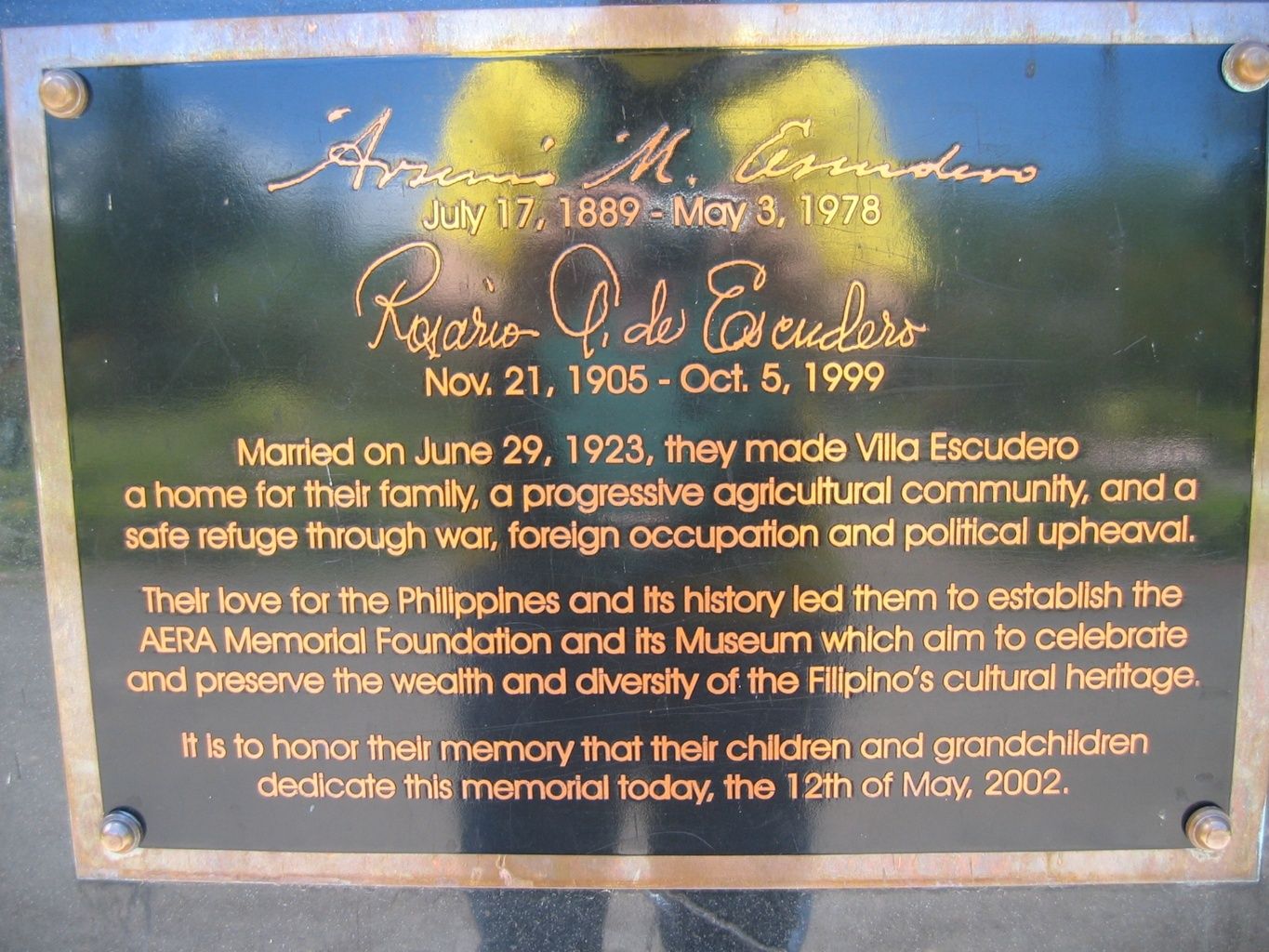
A pair of plaques about the Villa, one in English and one in Pilipino, was also available for photographing


But were so murky and unintelligible that it was fortunate that a more recent and very readable marker was nearby.
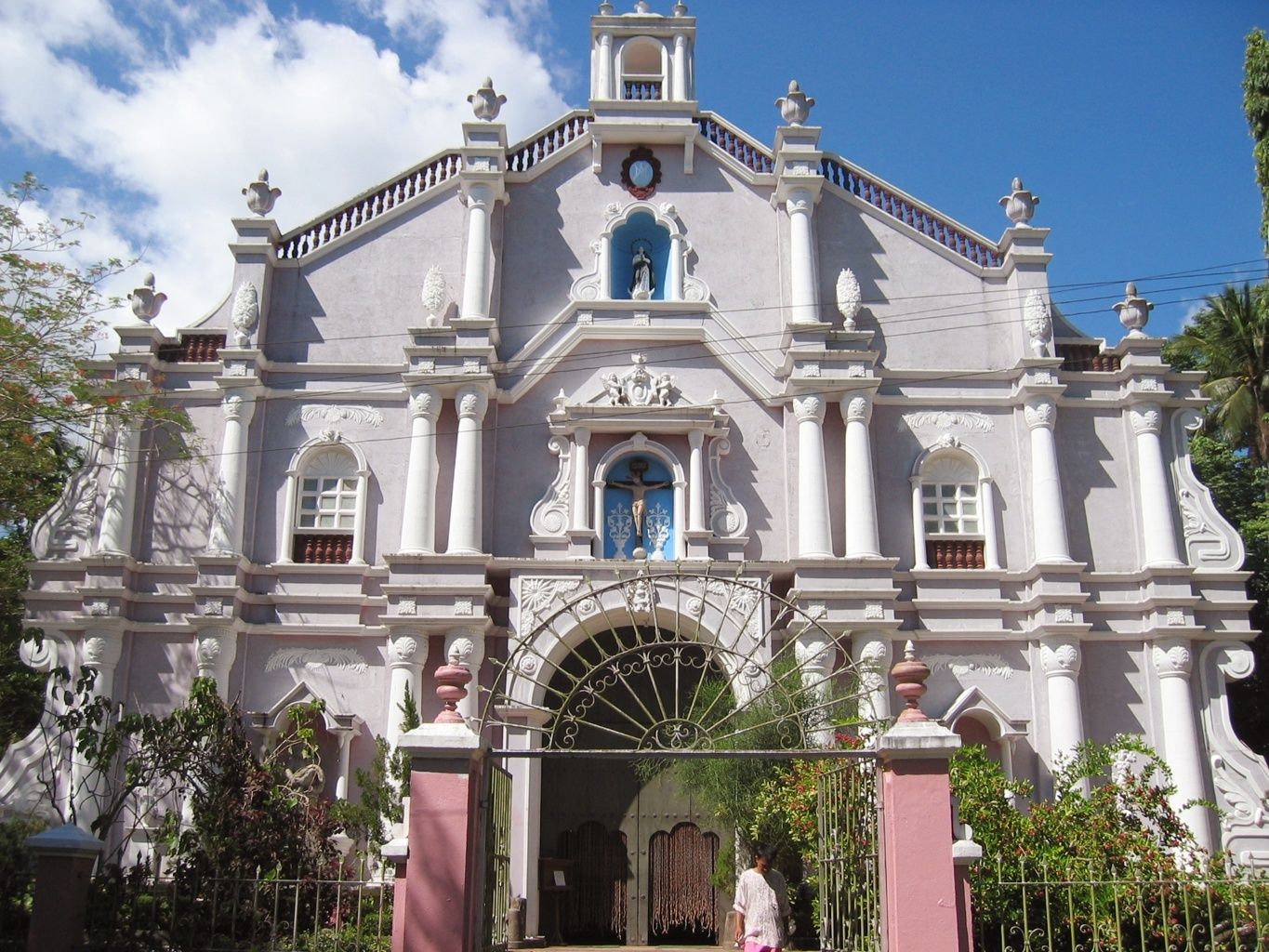
My colleagues and I first went to the famous Villa Escudero Museum


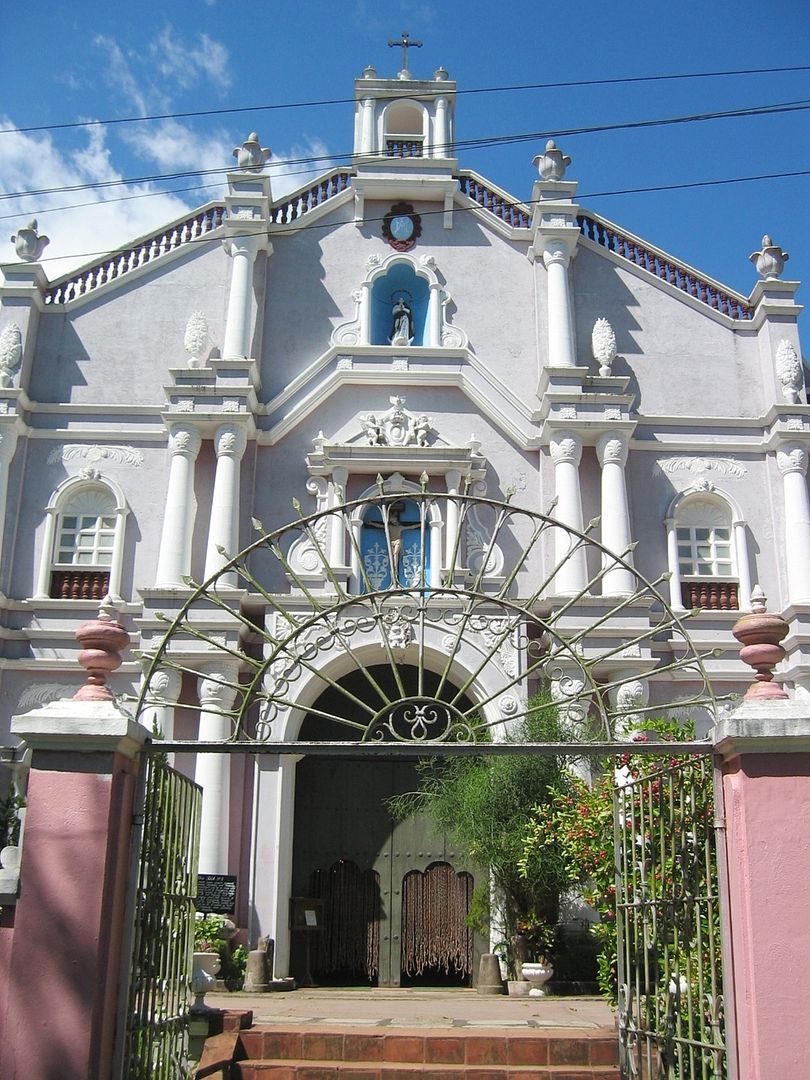
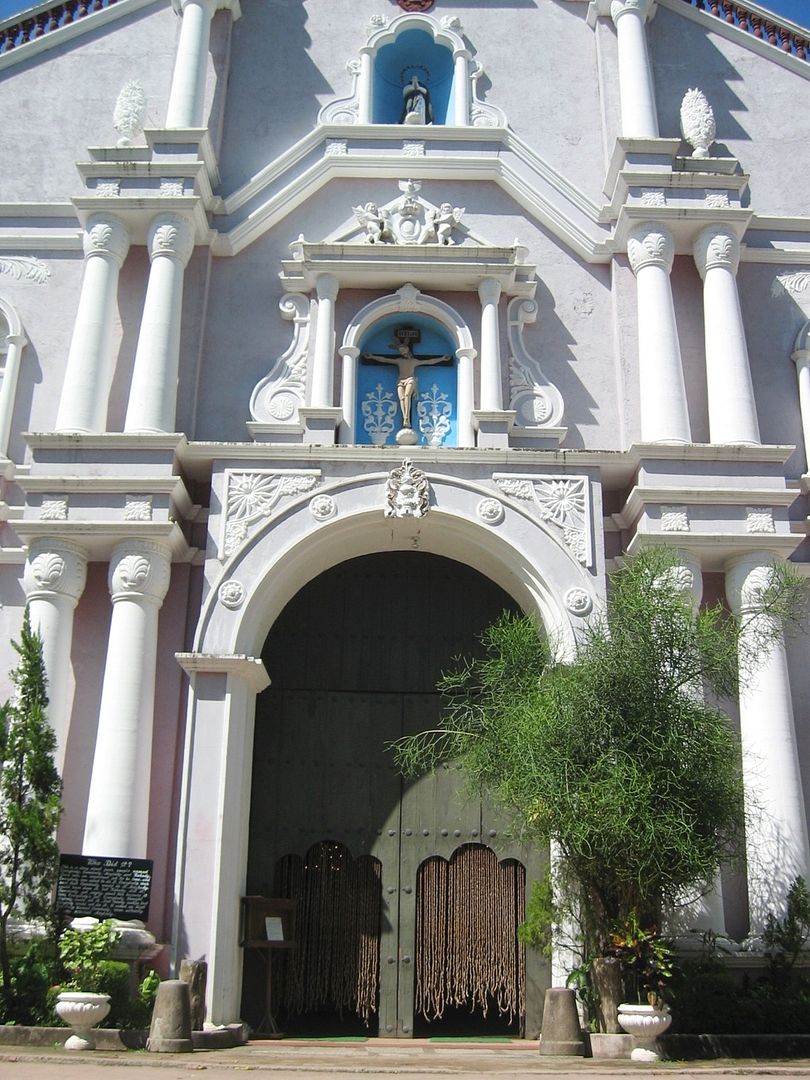
whose façade is modeled on that old Franciscan Church in Intramuros, destroyed during World War II.

As photography inside the museum was forbidden, I had to content myself with even more shots of that beautiful façade
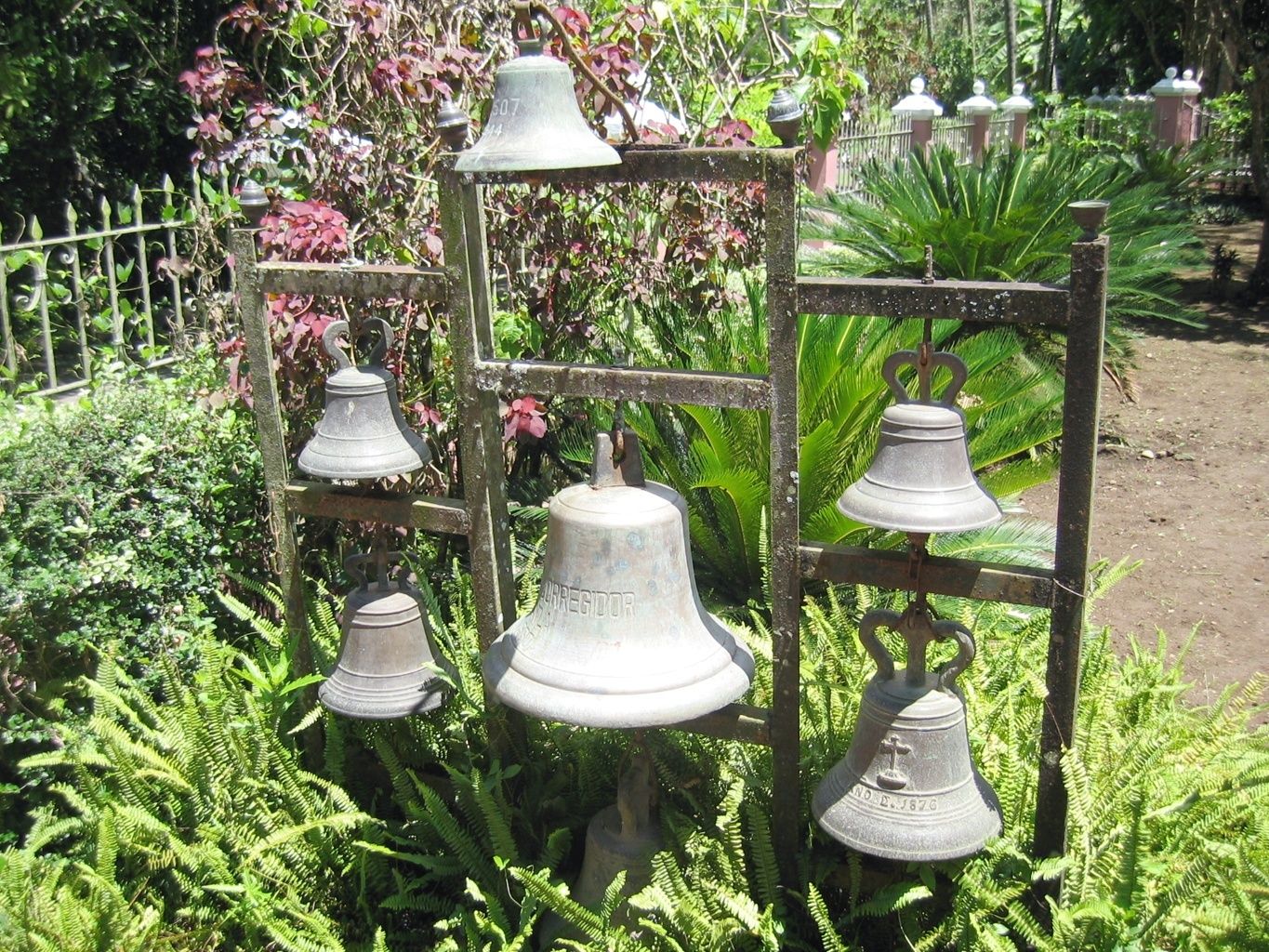
And of part of the Escudero’s bell collection, displayed right outside this church-like museum.


After spending the better part of the morning amongst the artifacts, it was time for lunch, which we all had at the estate’s famous open-air Filipino restaurant, where everyone is required to get his feet wet. (This is rather difficult to explain in words, so let me just say that one has to experience it first-hand to understand.)

Then it was time for the famous Villa Escudero post-lunch cultural program. But what my companions didn’t know was that I had slipped away from the group and made my way on foot (those carabao-drawn carts are picturesque but awfully slow) back to the museum. I had actually made prior arrangements with “management” to allow me to photograph inside; they had very kindly agreed but only if I would do so in the afternoon, when hardly anyone else would be there anyway so that they could shut down the place just for me and no one else would mind.

So like a child in a candy store, I shot away.

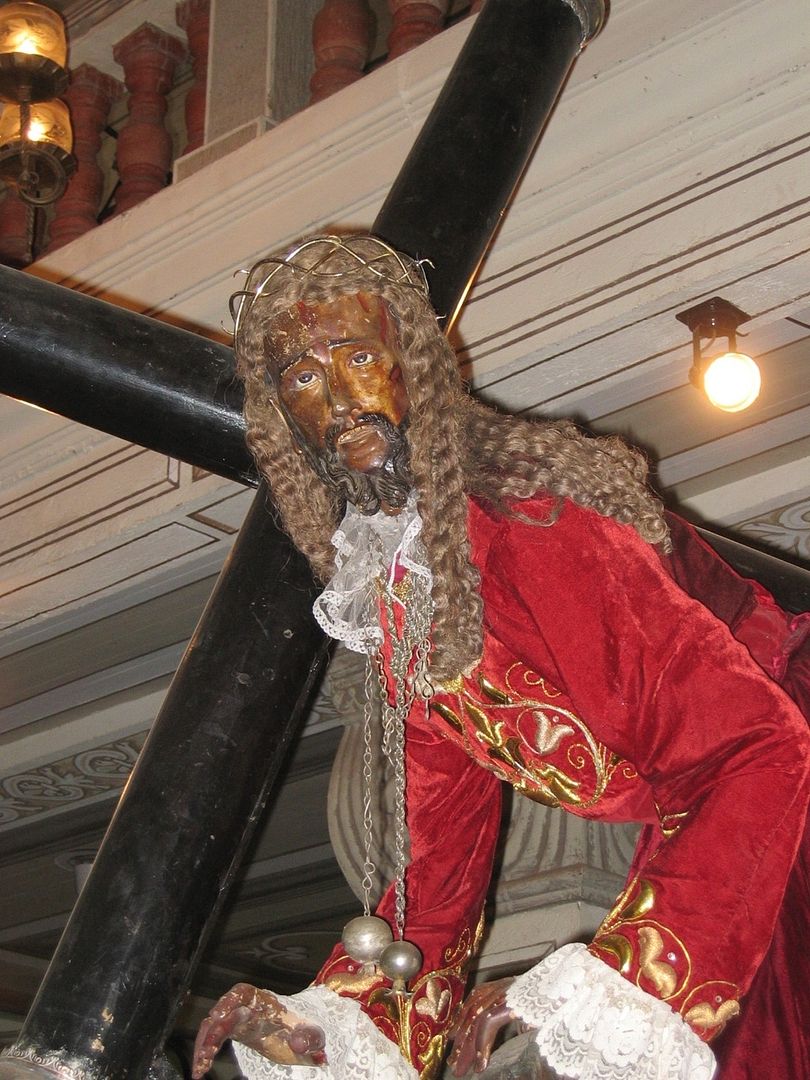
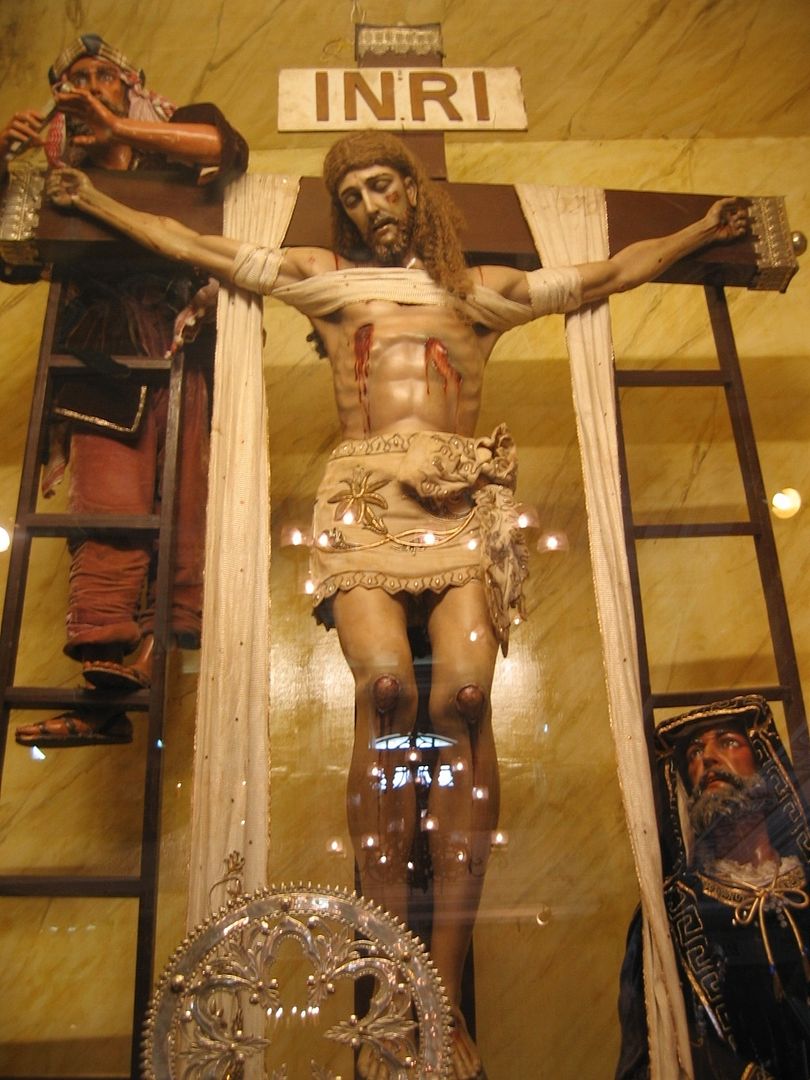
The first museum piece that struck me earlier in the day when I first entered was a most unusual, rather oversized, processional image of Christ from a tableau of the Fall of Christ. This is attributed to the famous master Irineo Cristobal, and dates from the early post-war period (i.e., the late 1940’s to the 1950’s).
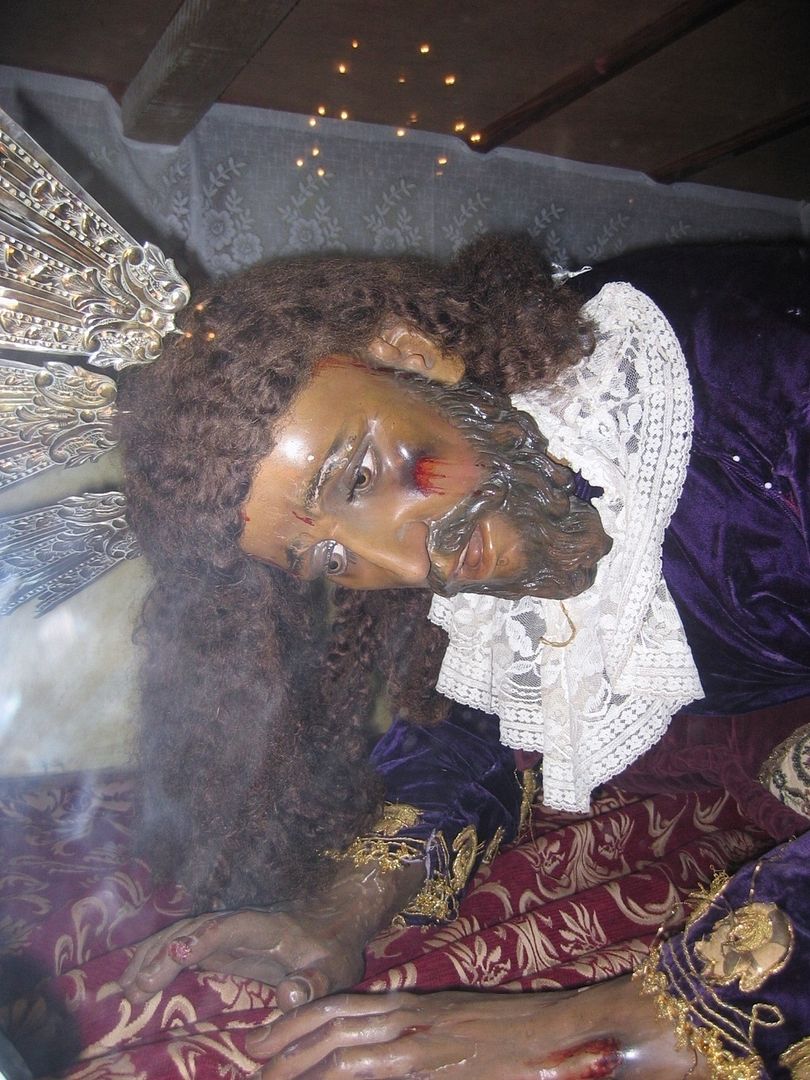
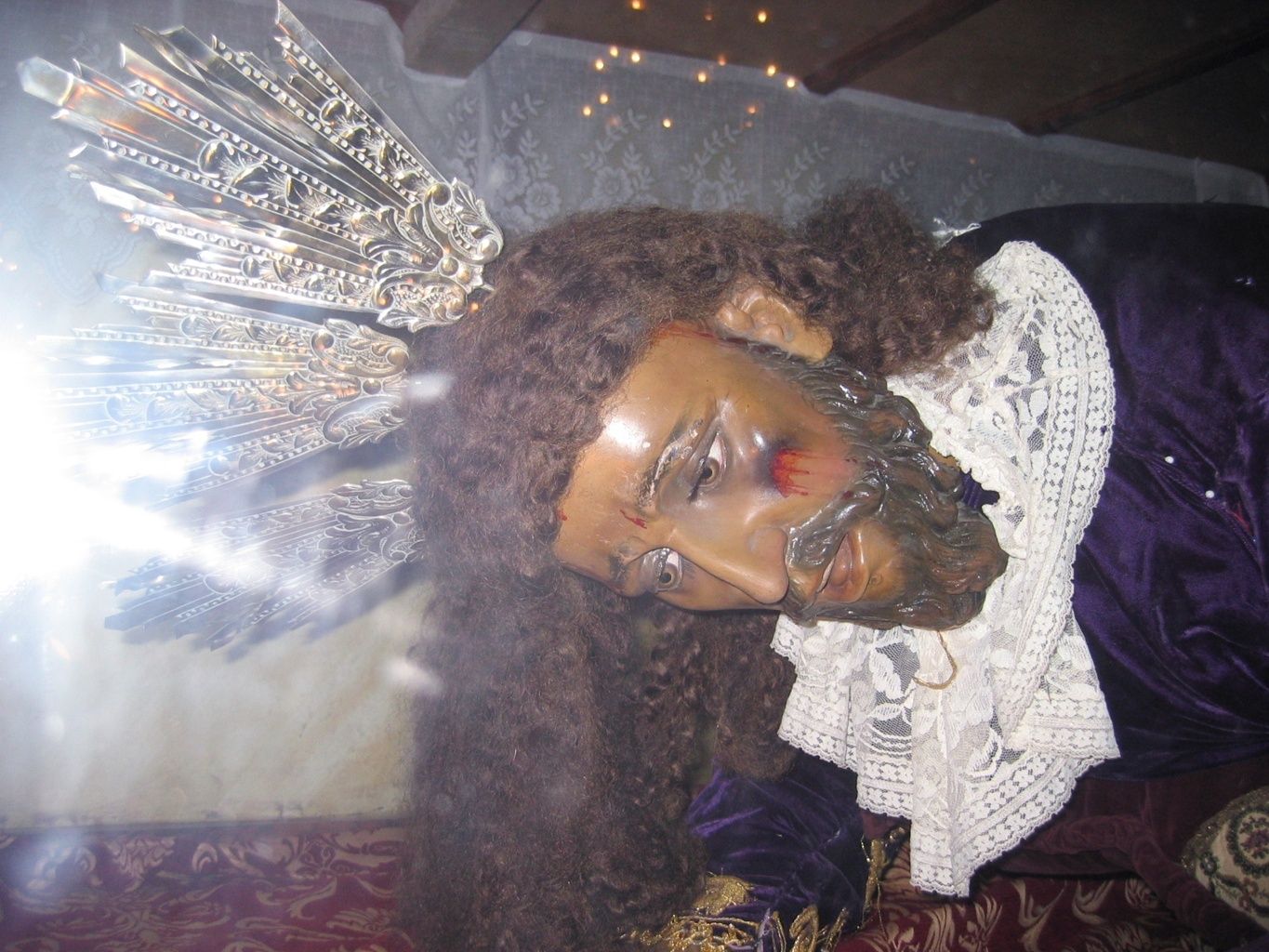

I don’t have photos of the full tableau, and have not even seen it yet, but just the Christ figure is remarkable enough, as it is so artlessly and gracelessly posed, unlike the more “elegant” fallen Christs up and down these islands.
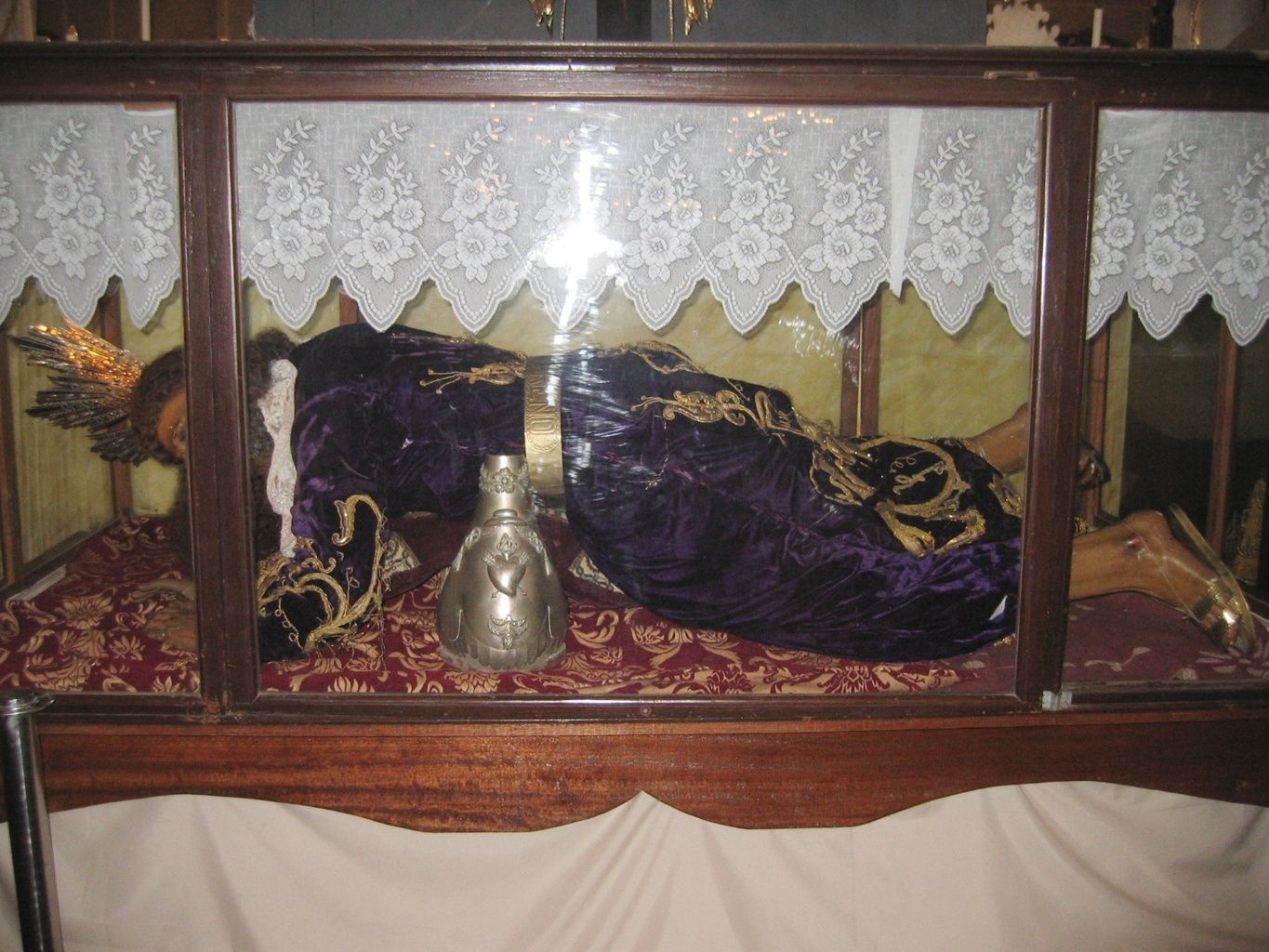
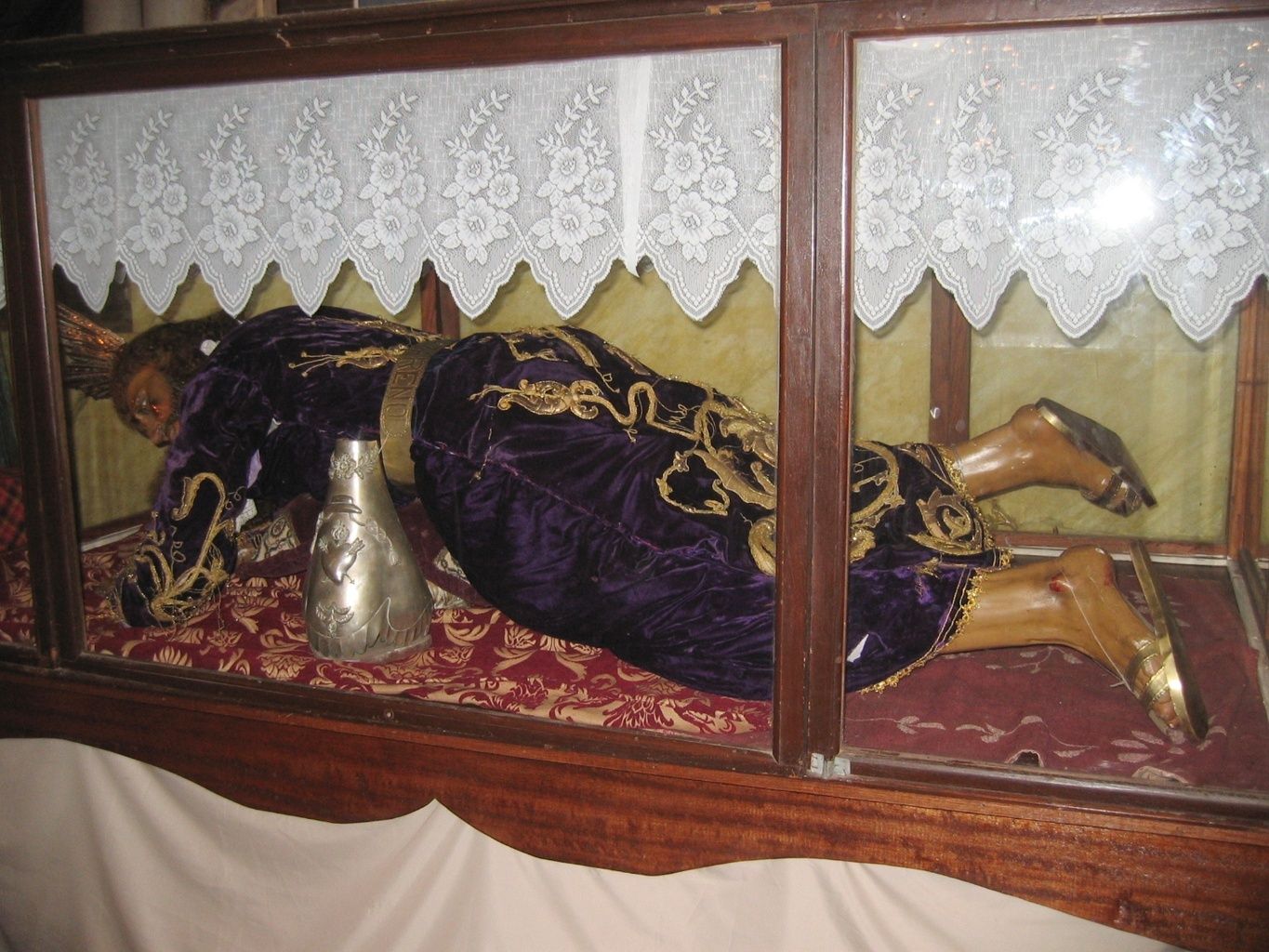

But the maladroitness of this Christ is made up for by its golden slippers!
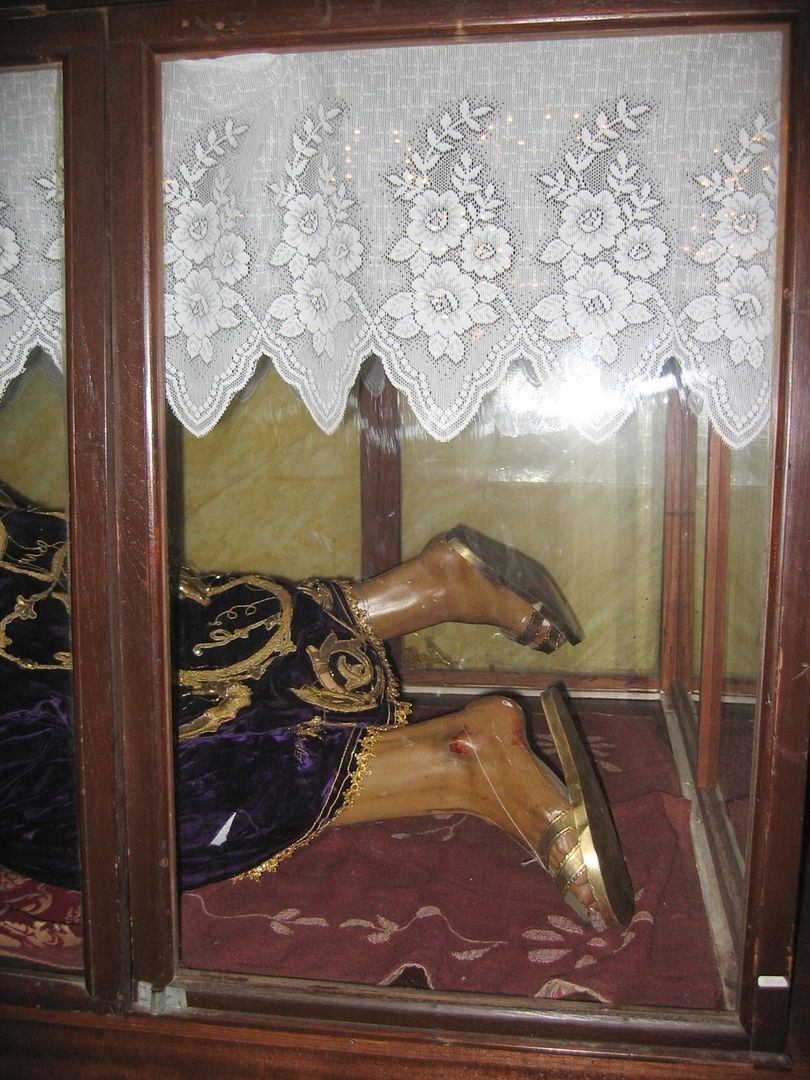

And by the fact that it is, after all, still by Irineo Cristobal.

The interior of the museum is really laid out like a church so it isn't just the façade. Holy Week processional carozzas are lined up from main entrance to altar area, as if ready to be brought out in a real procession, every day, all year-round, except ironically during Holy Week, when they're transported to the town proper of San Pablo, Laguna, for the actual Holy Week processions.

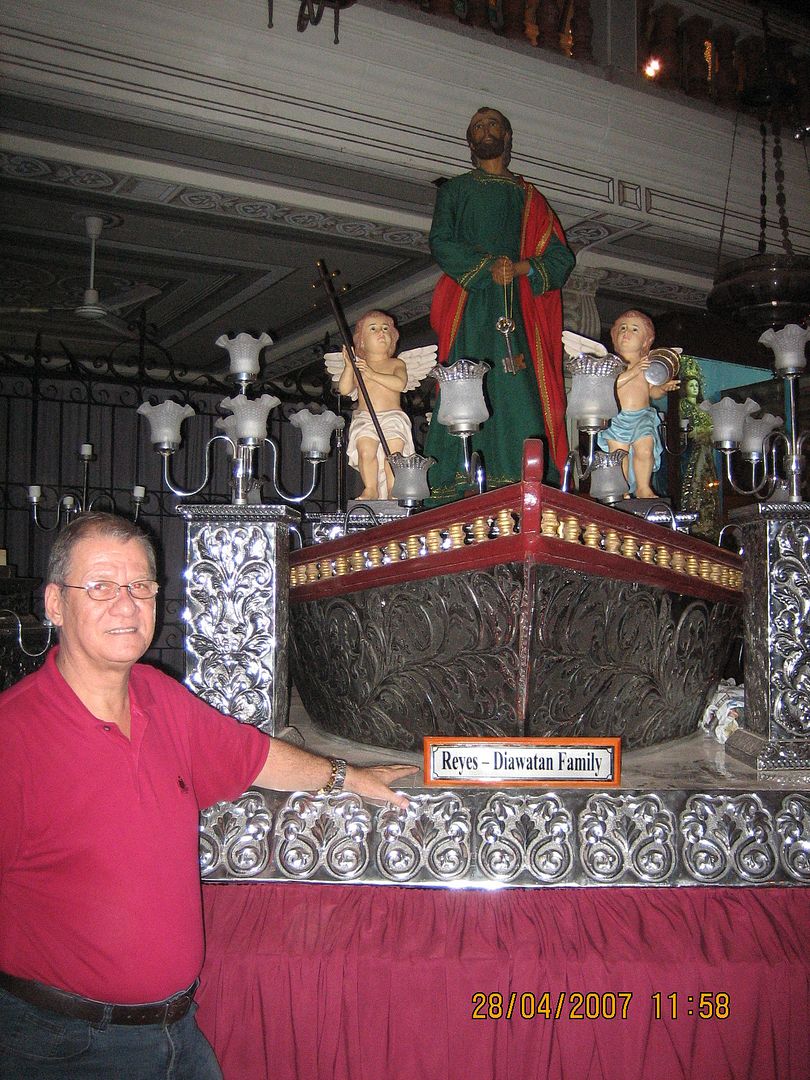
Among the tableaux and images on offer is that of Saint Peter:
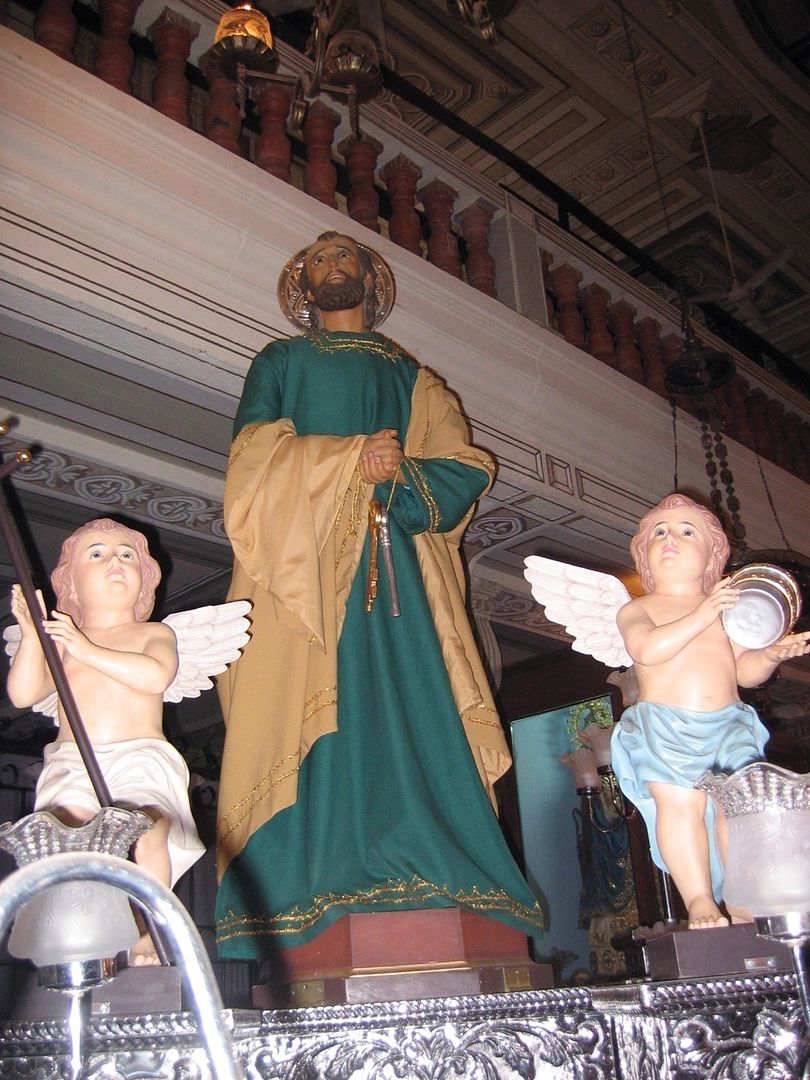

whose boat-shaped metal carroza was made for its owners (townmates and friends of the Escudero family) by Mr. Kiko Vecin (also a close friend of the Escuderos and their virtual in-house religious image restorer and maker).

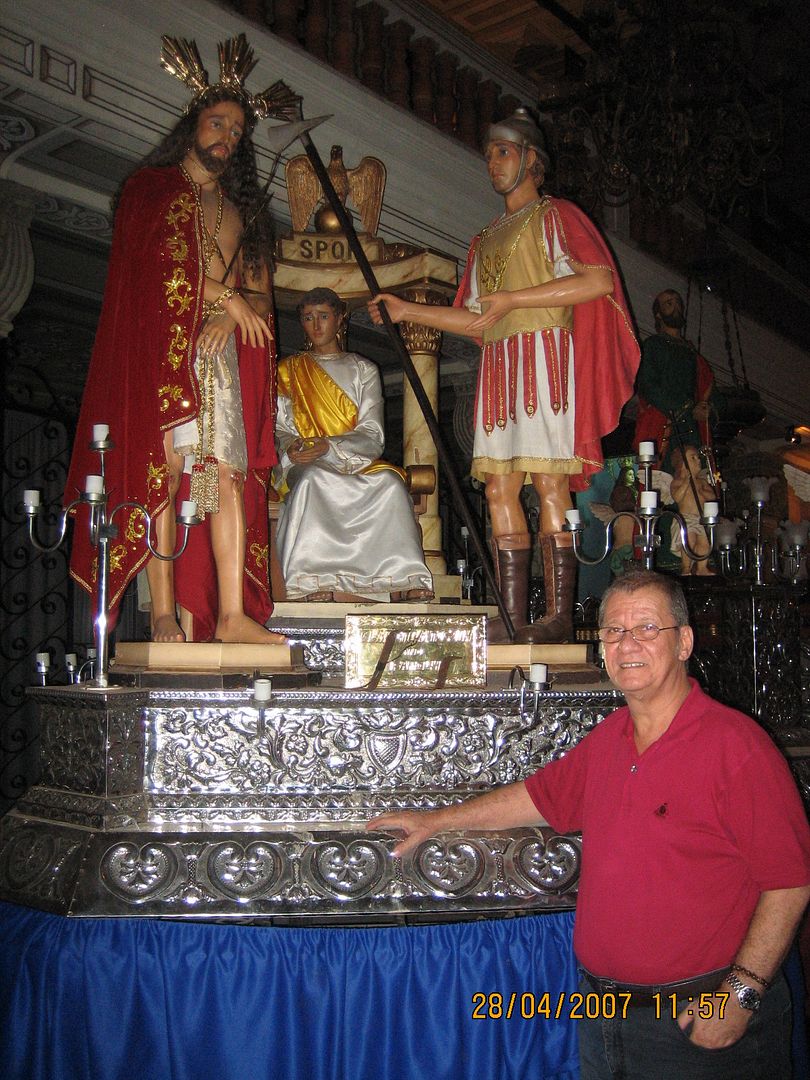
There’s also a Christ Before Pilate,
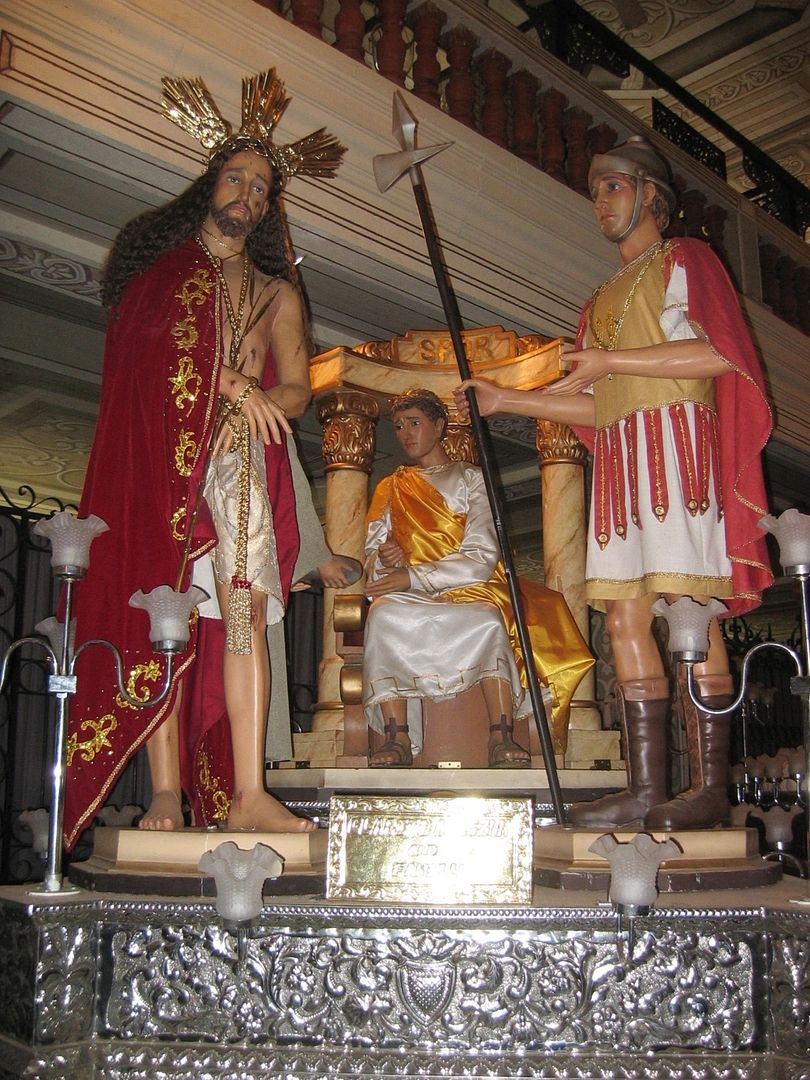

supplied as well by the Vecin Workshop.

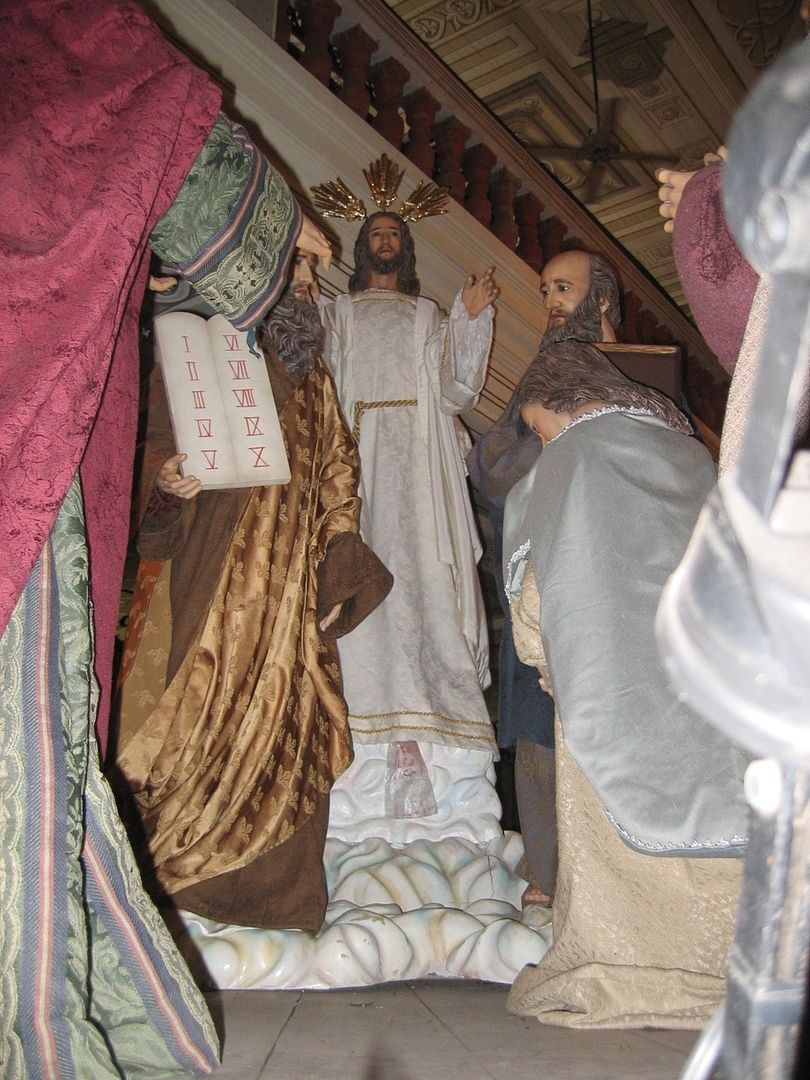
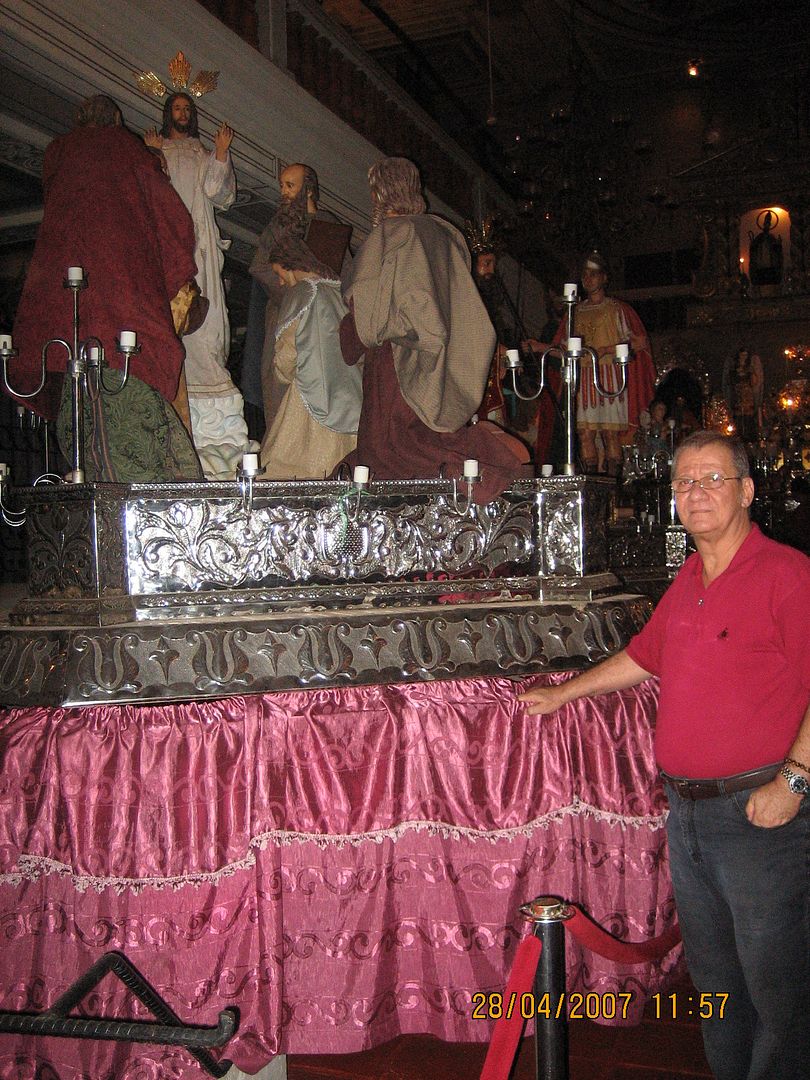
And a Transfiguration
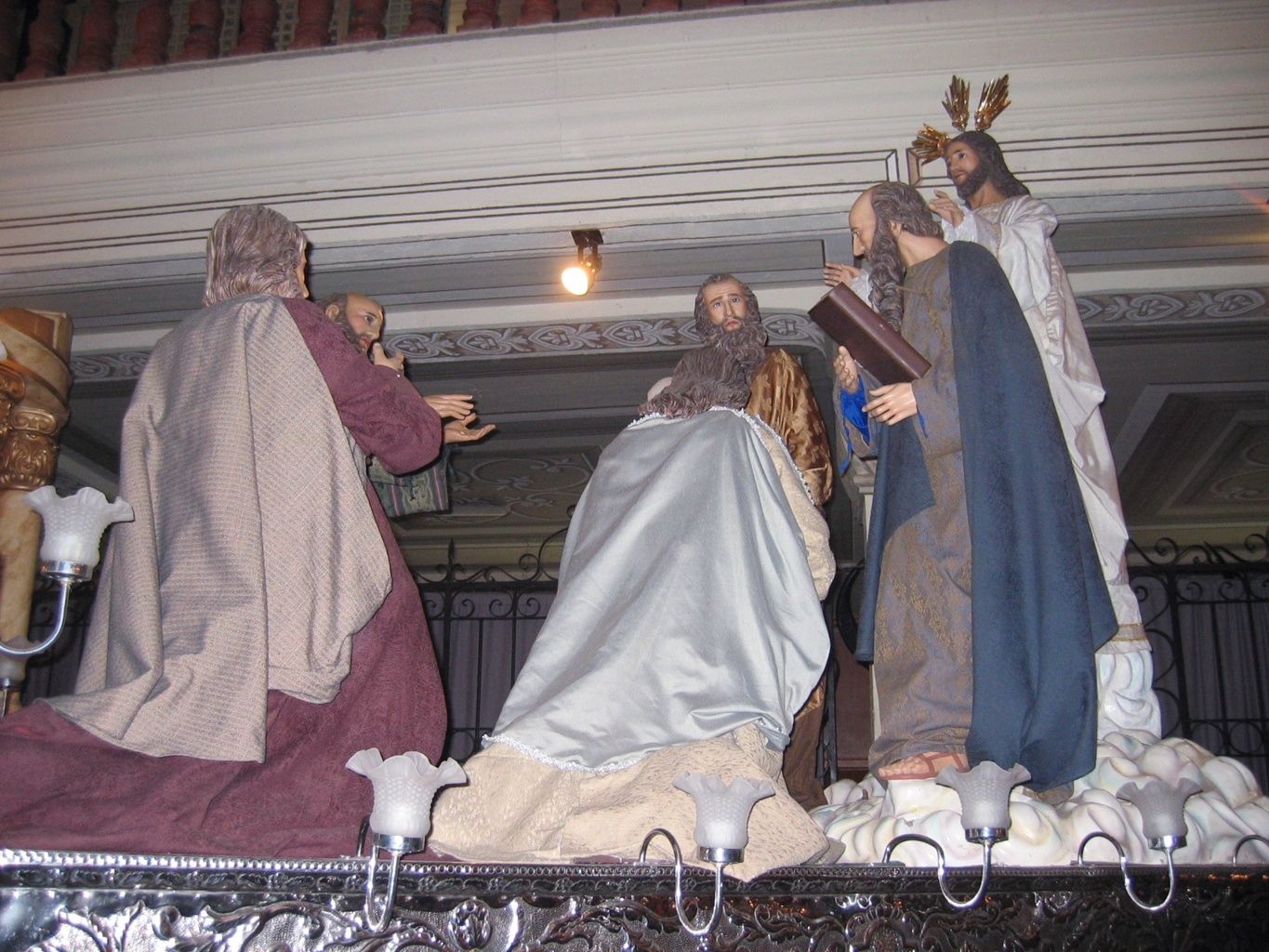


whose garments unfortunately were not supplied by the Vecin Workshop, thus wasting the beauty of the images. But that pink sayal is just so fetching! Not.


An antique Agony in the Garden had been acquired by the Escuderos from the Vecin Collection some years ago.
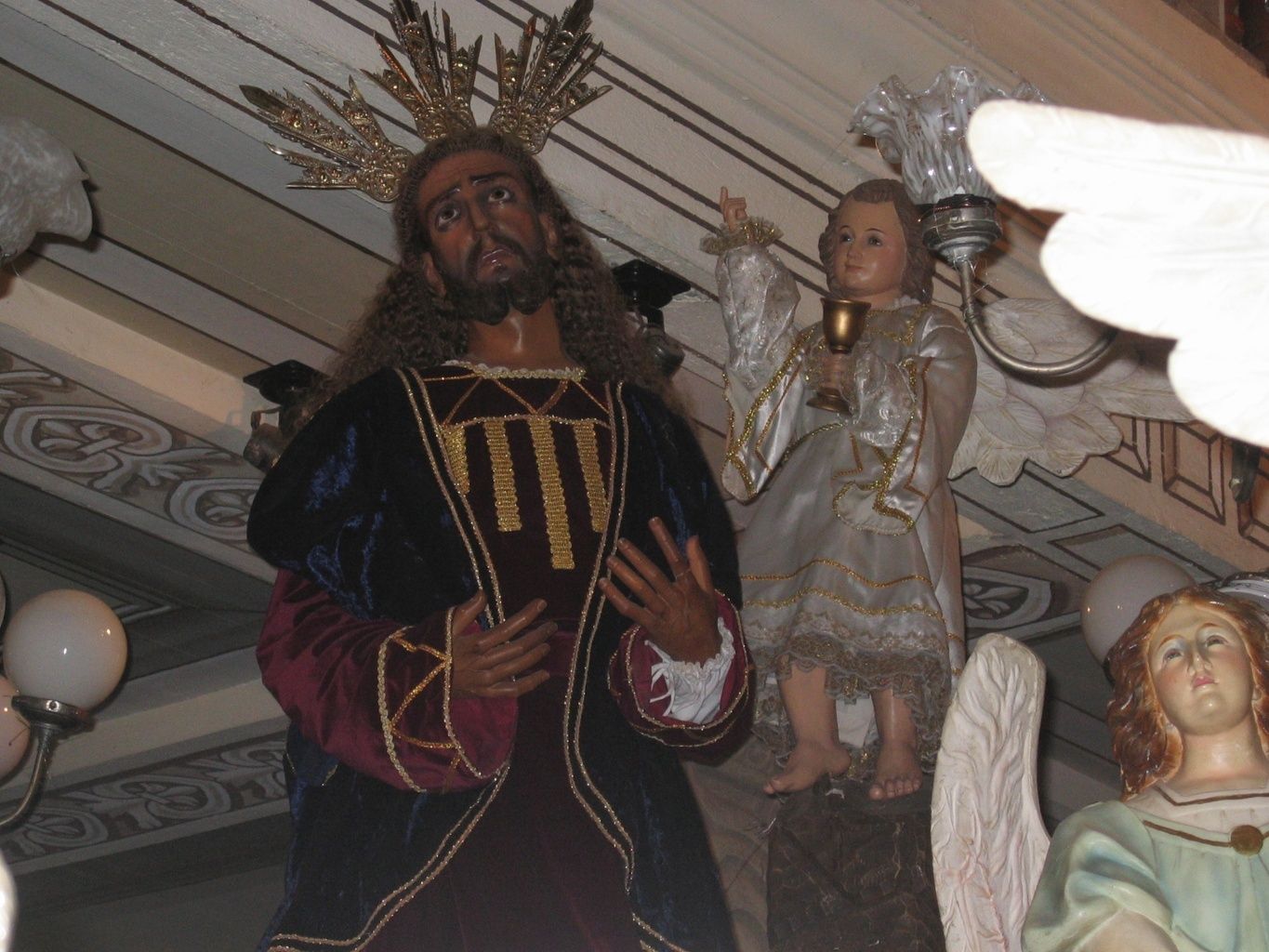
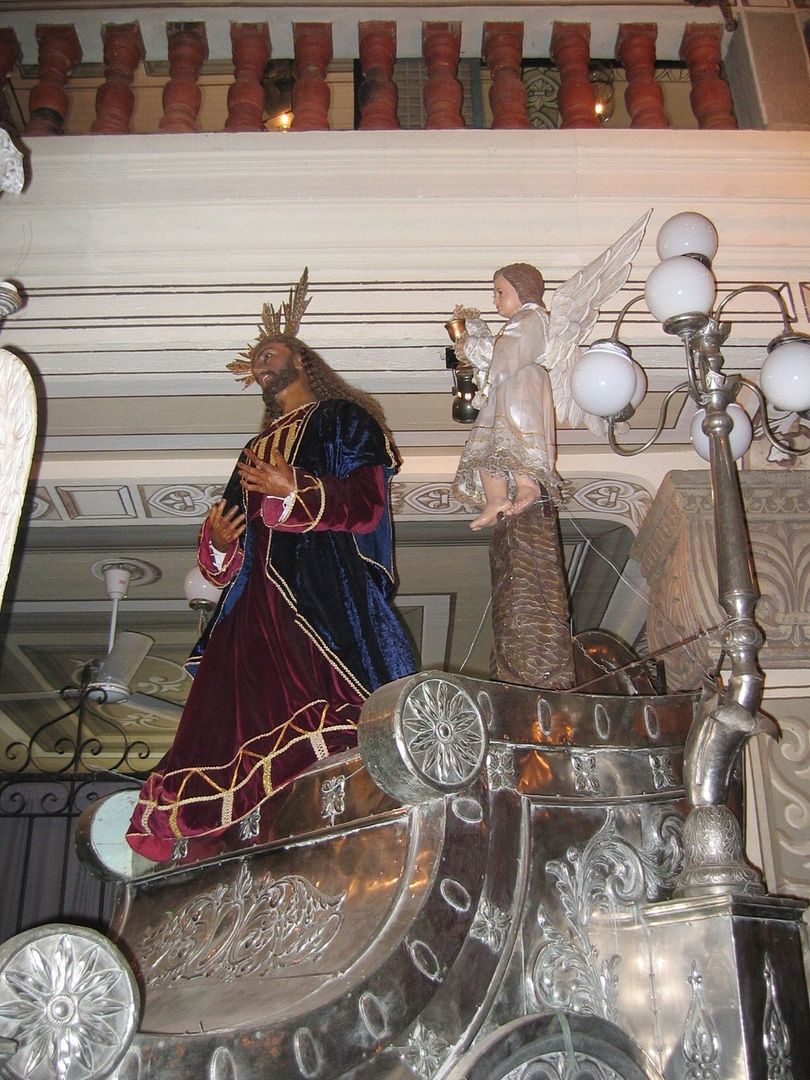

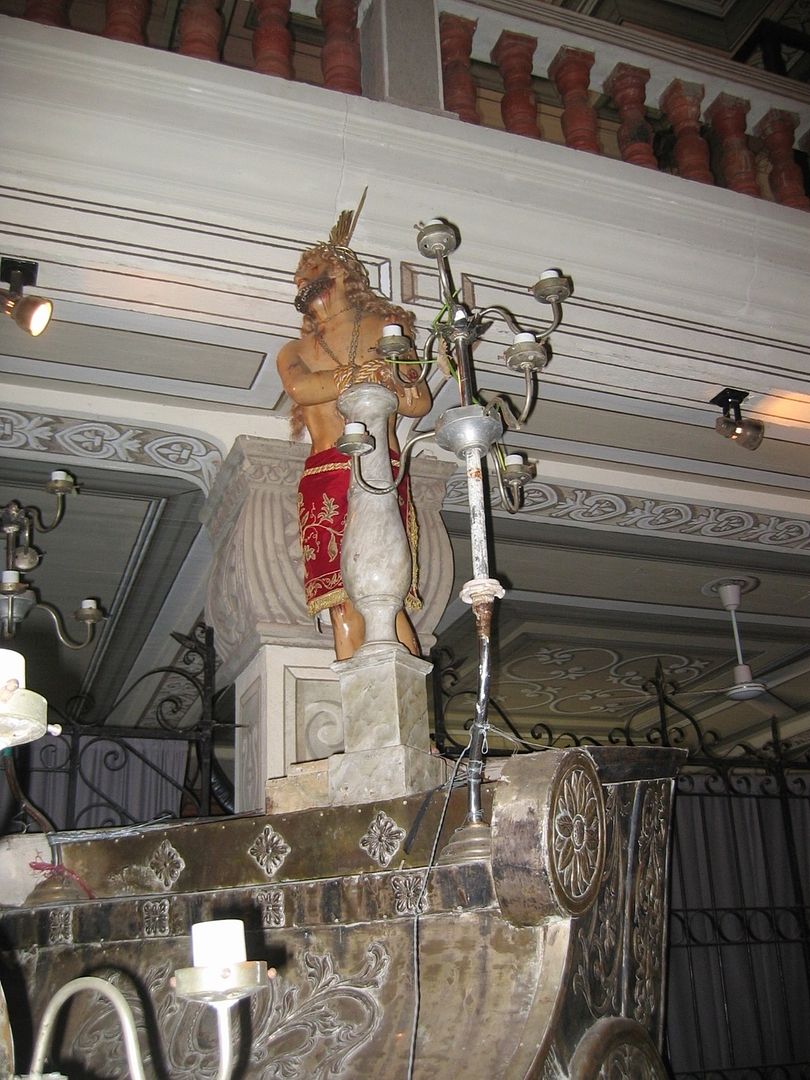
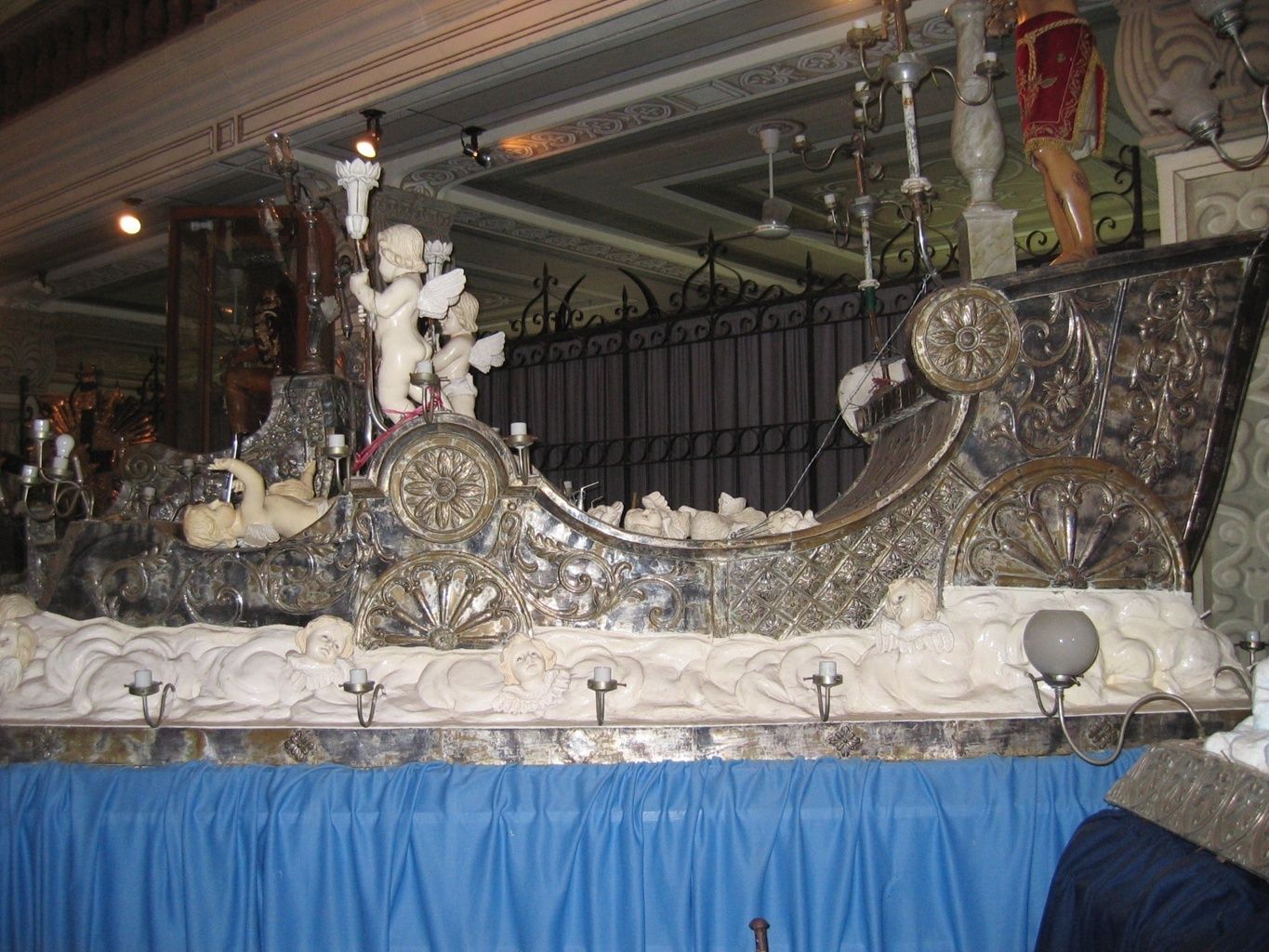
And, for the purposes of the museum’s year-round display (though presumably not for the actual Holy Week processions), is mounted on an antique silver chariot-style carroza, just one of several from the Escudero collection.
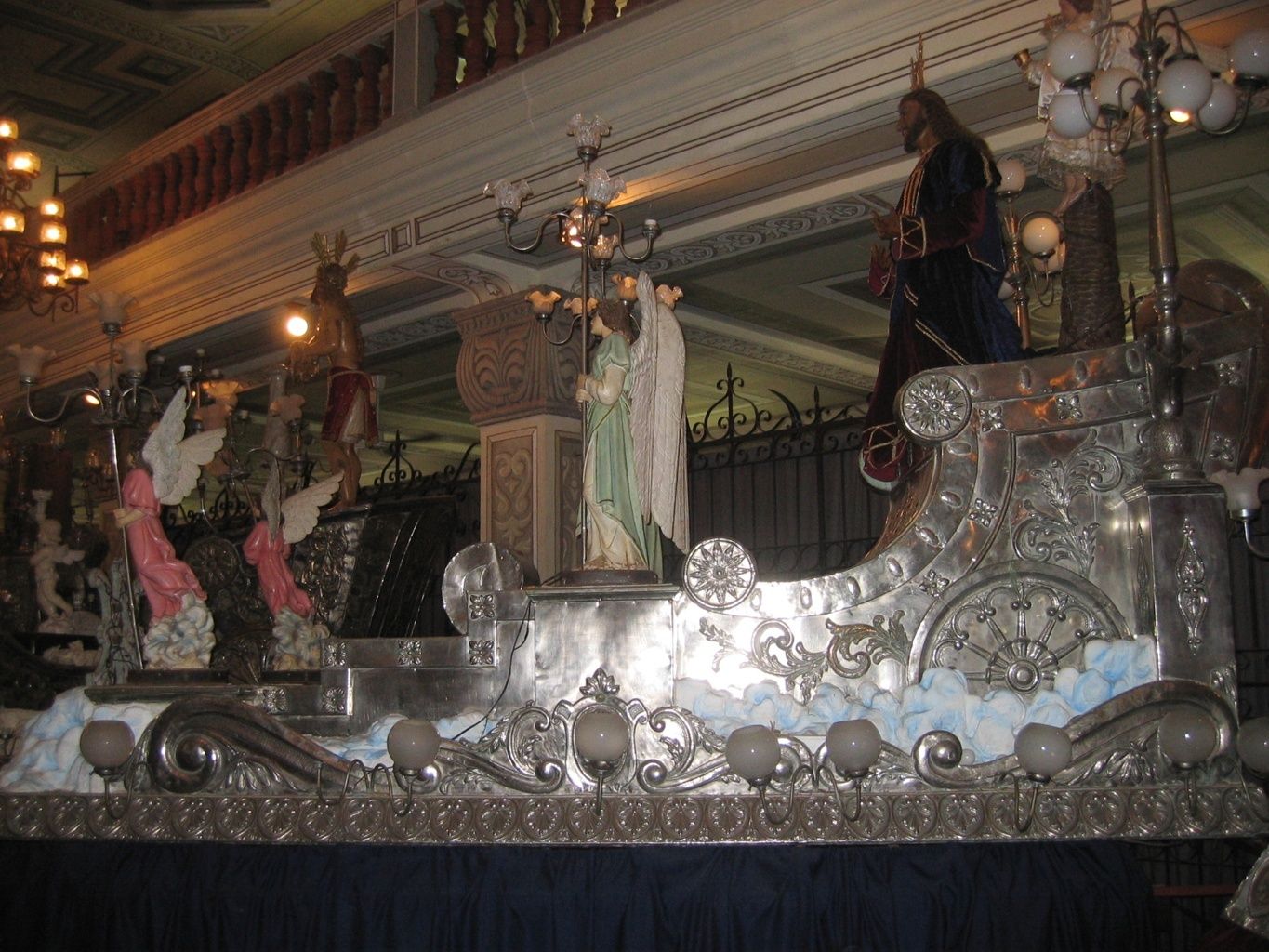

It’s the same for what appears to be an antique Scourging at the Pillar.
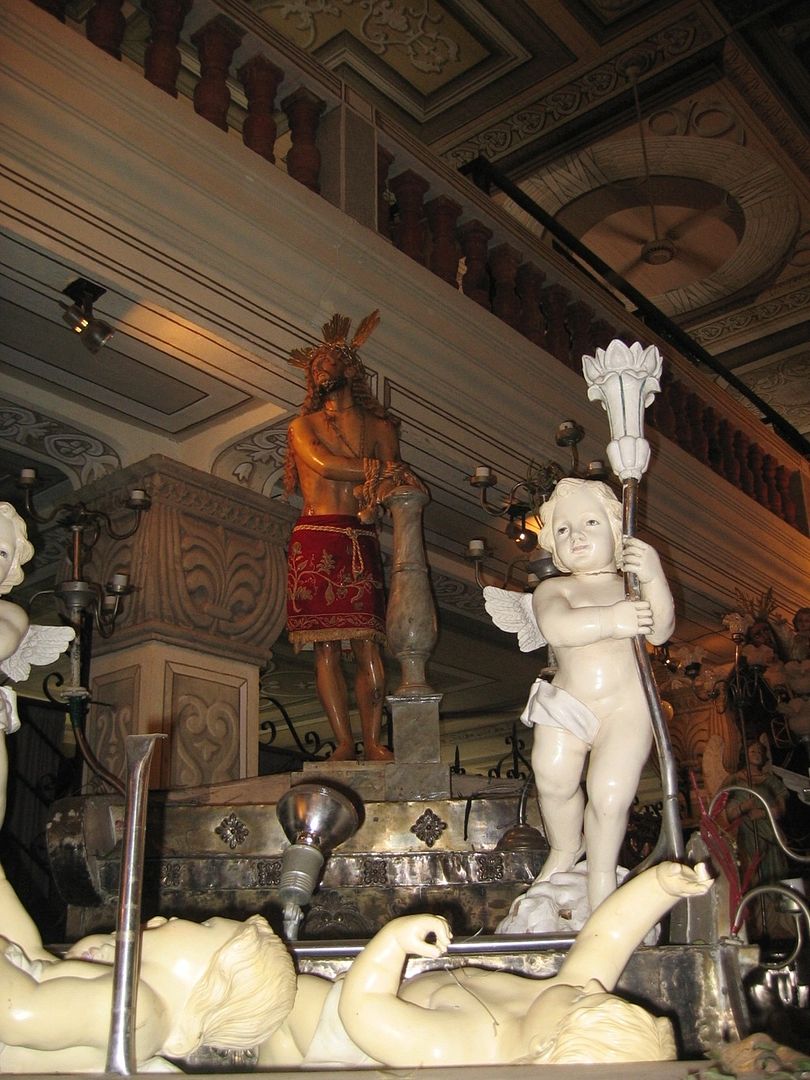


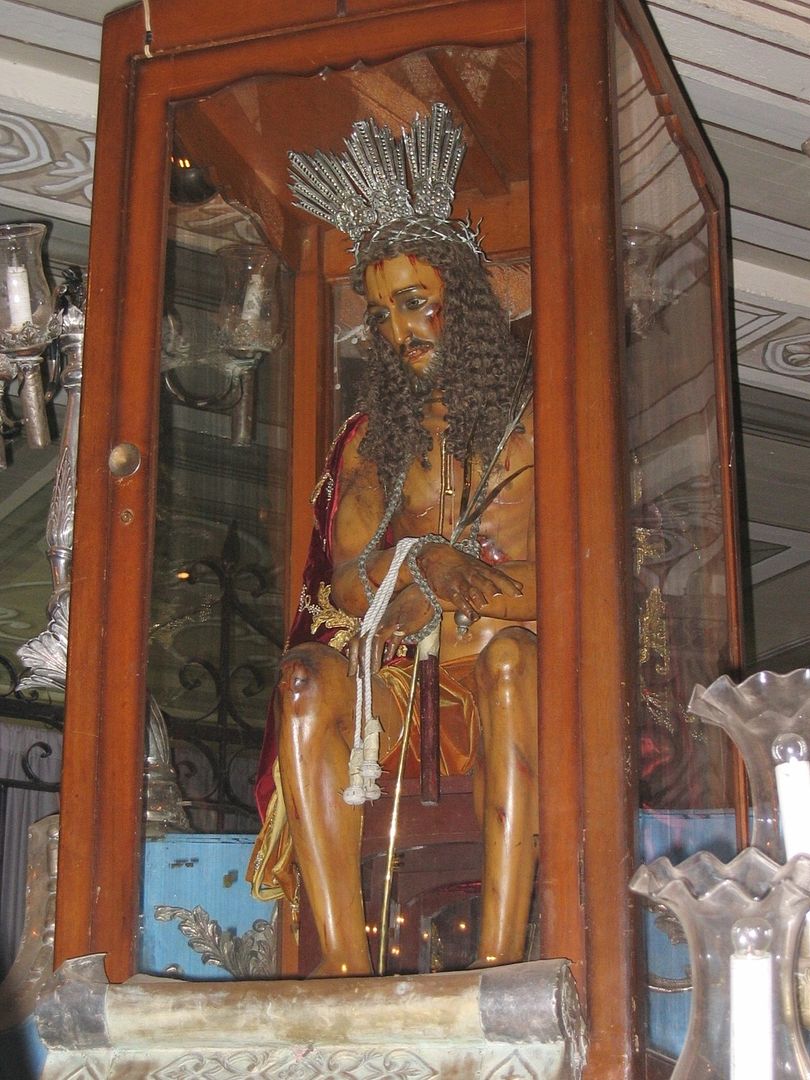
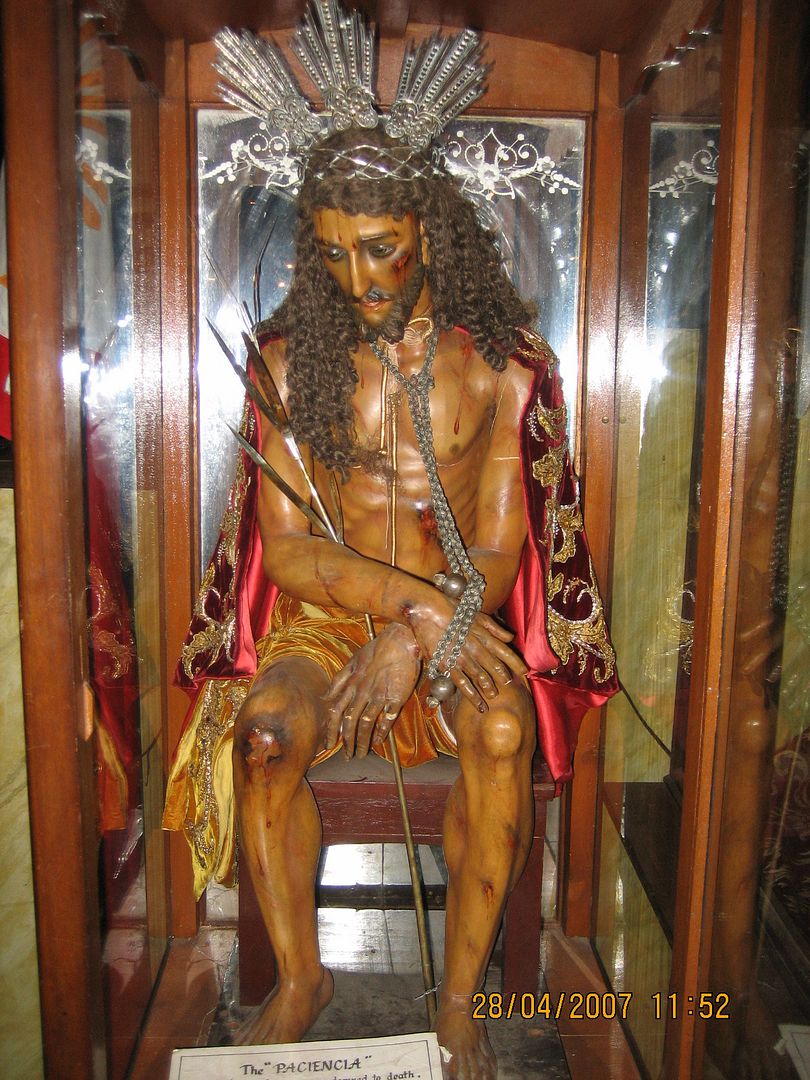
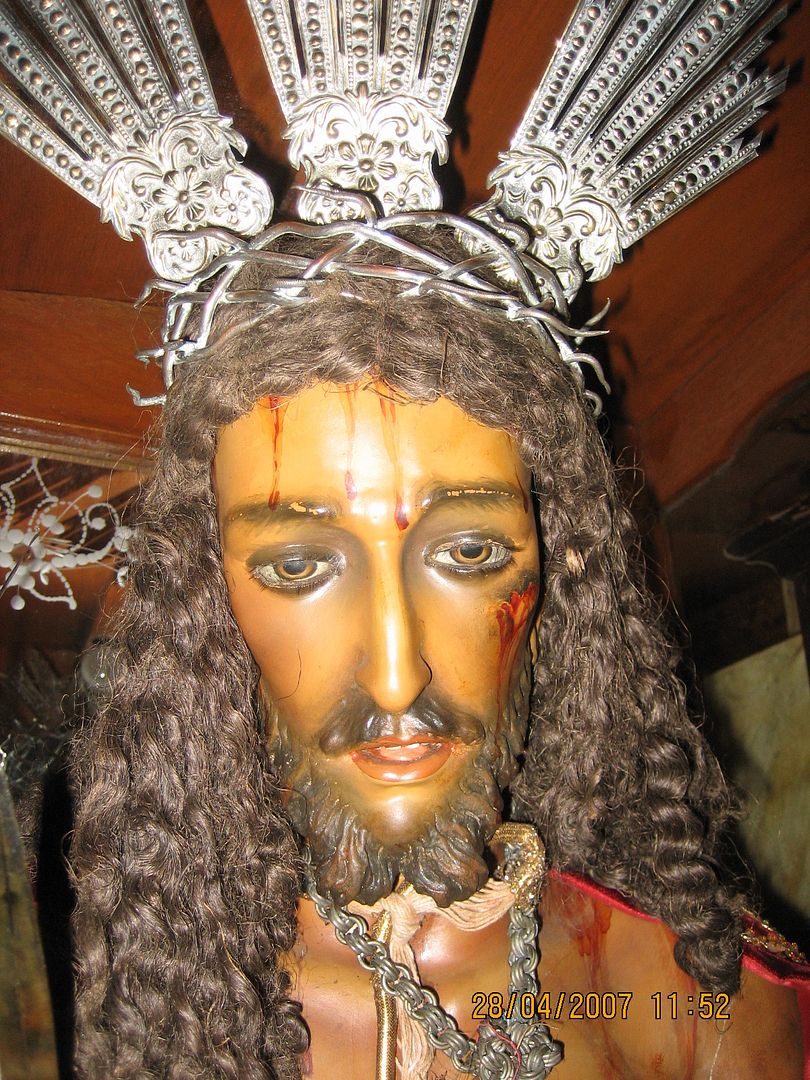
And a beautiful Paciencia, still in its wood-and-glass urna even when mounted on its silver chariot carroza.


Earlier this year when I returned to the museum, this image was no longer on a carroza but was instead positioned right next to the Irineo Cristobal Fallen Christ, allowing me to photograph it more closely.

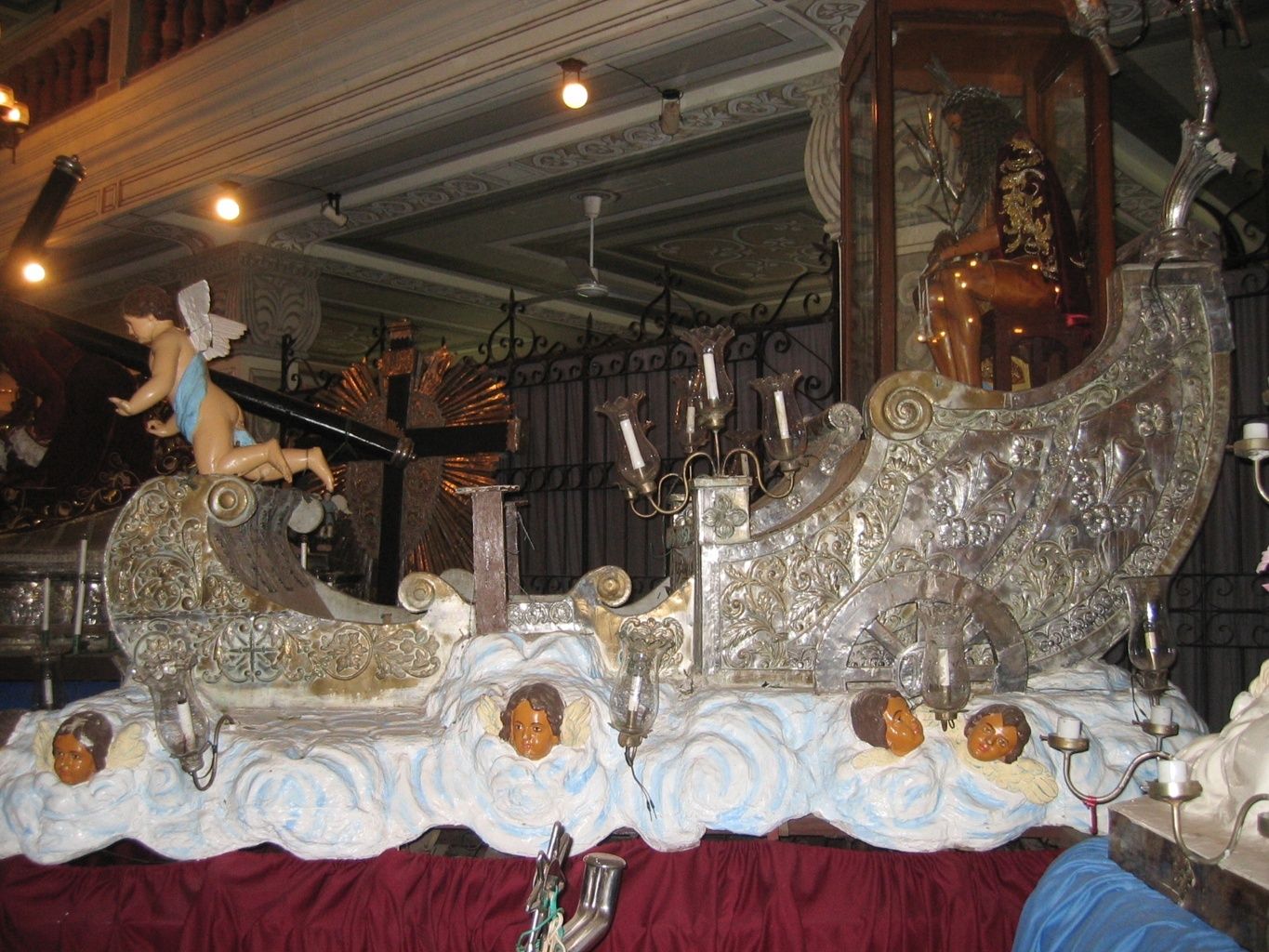
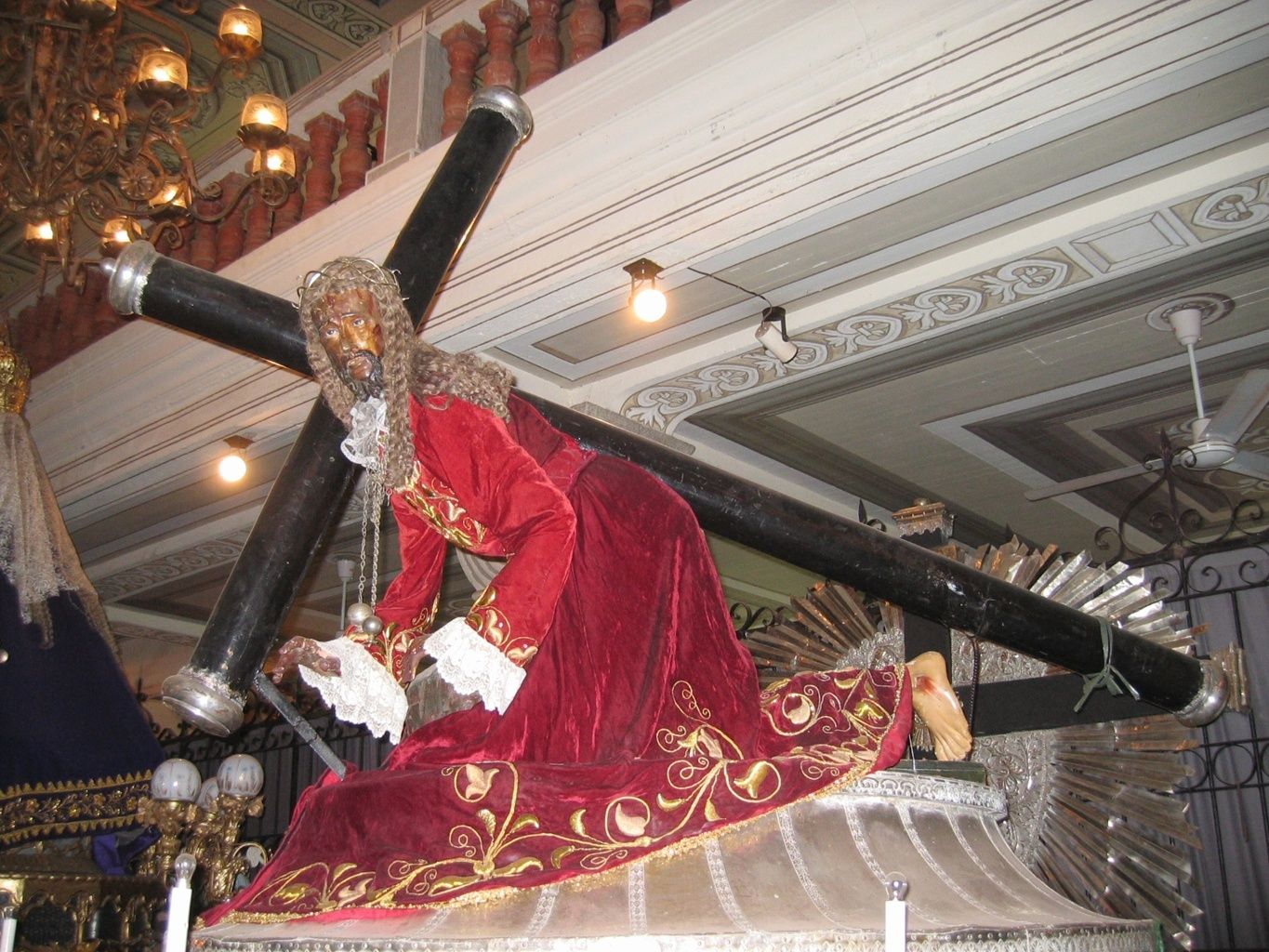
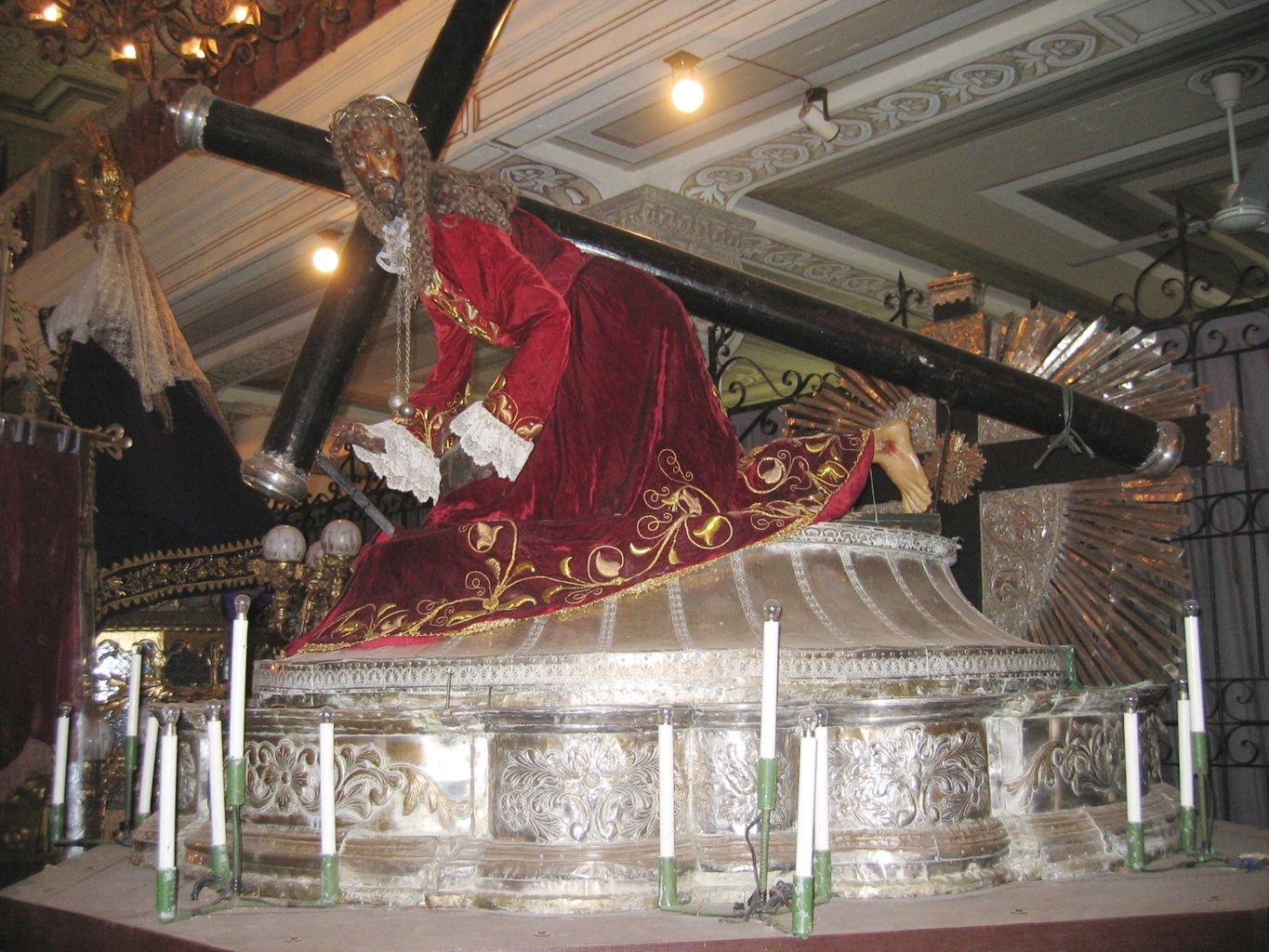
An unusual antique Nazareno is also available for beholding.
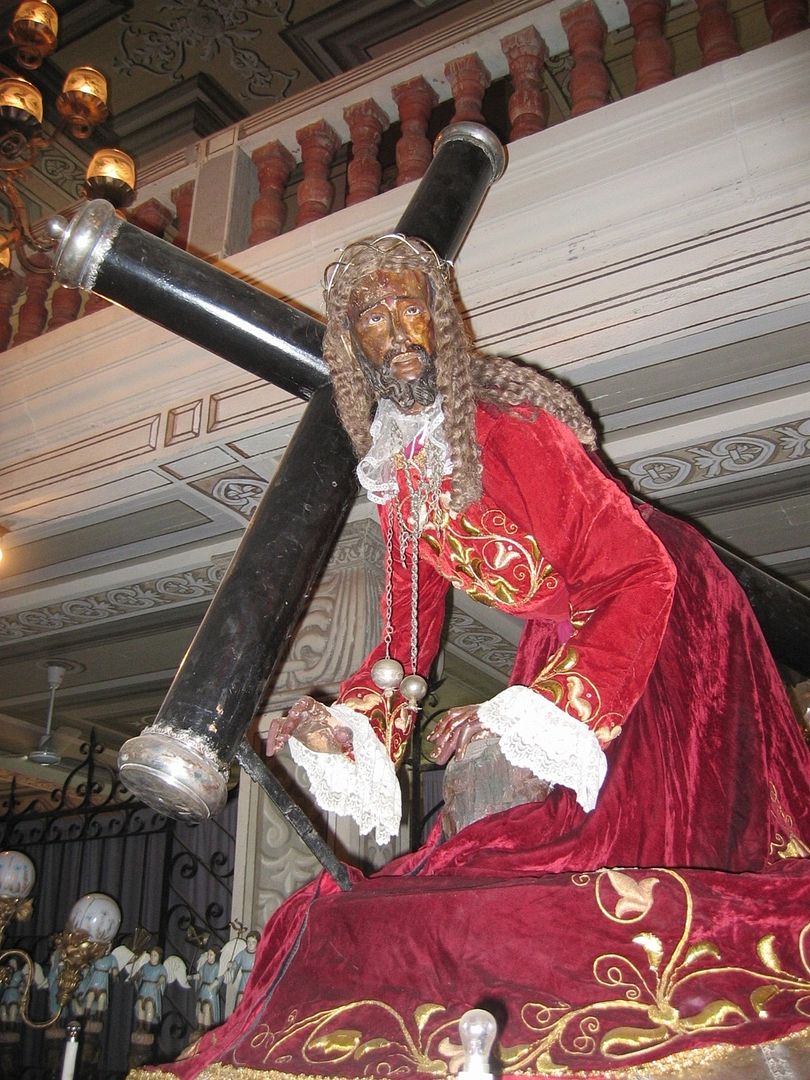


It is mounted on an even more unusual oval-shaped silver carroza, reputedly the original vehicle of the Quiapo Black Nazarene, sold to the Escuderos some decades ago when the church had to raise funds to pay for much-needed building repairs.

Nearby is the processional image of the Dolorosa of San Pablo
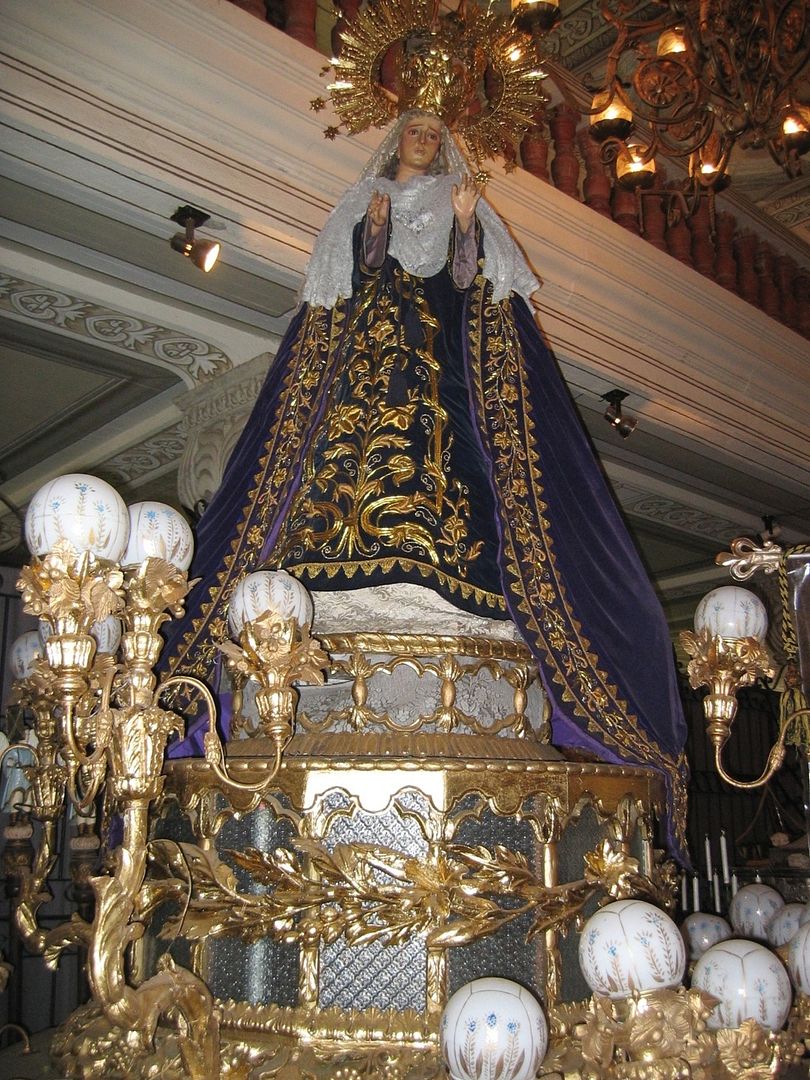

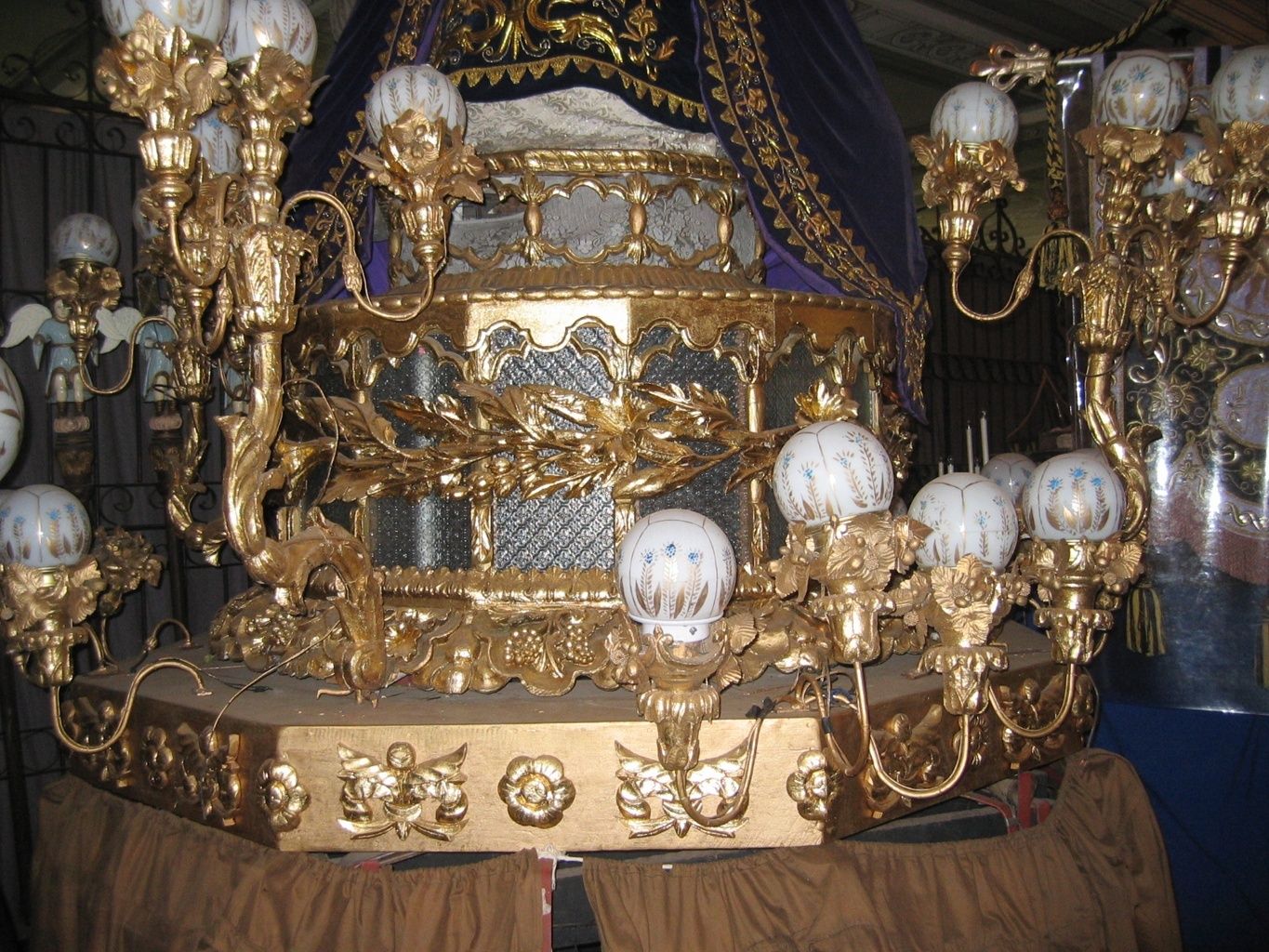
on what I feel is a rather garish-looking carroza

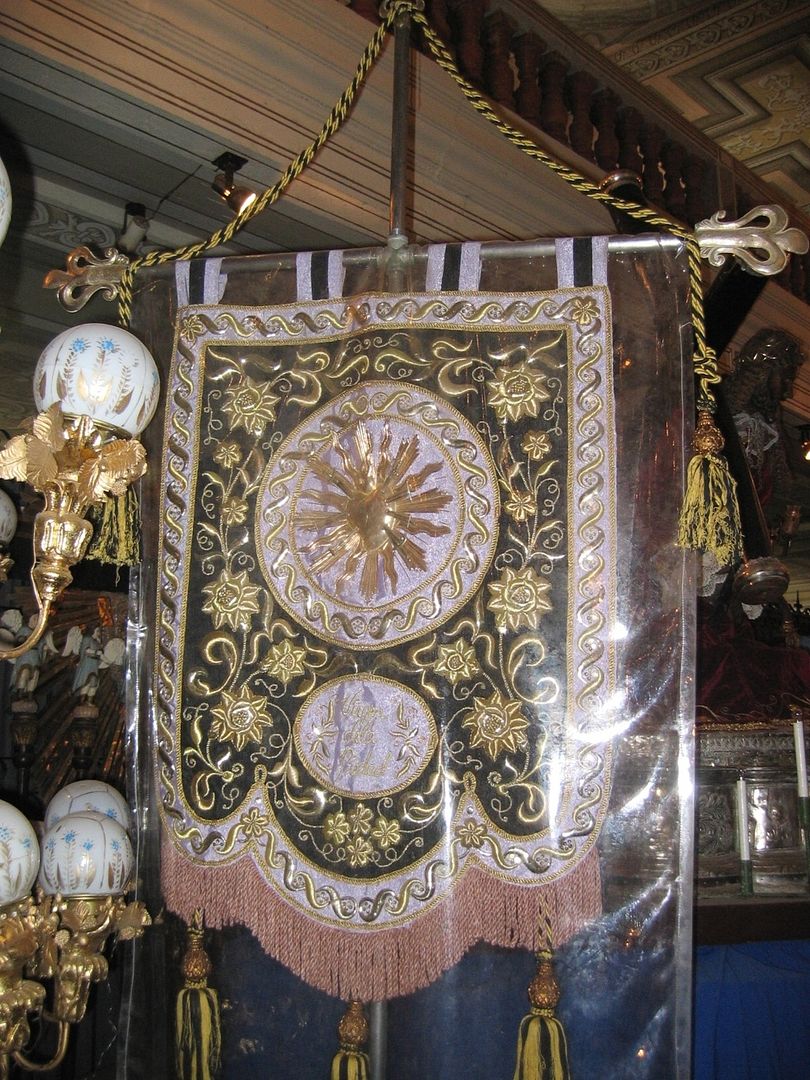
and with an equally opulent estandarte.

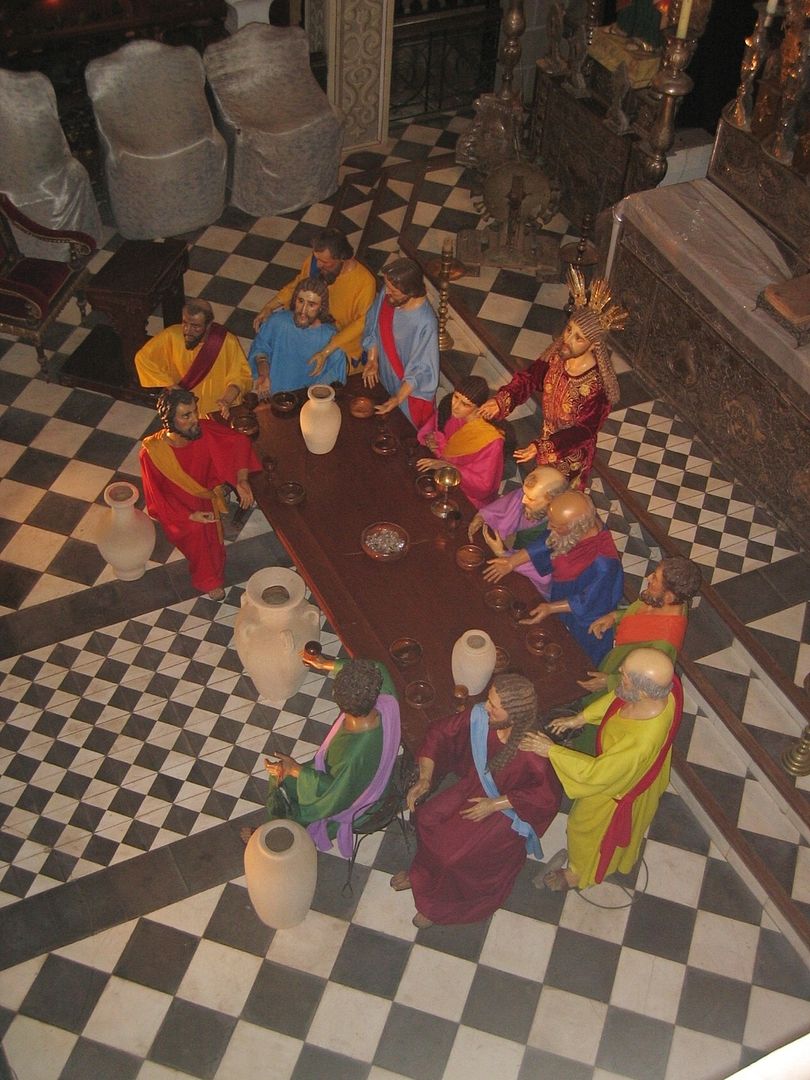
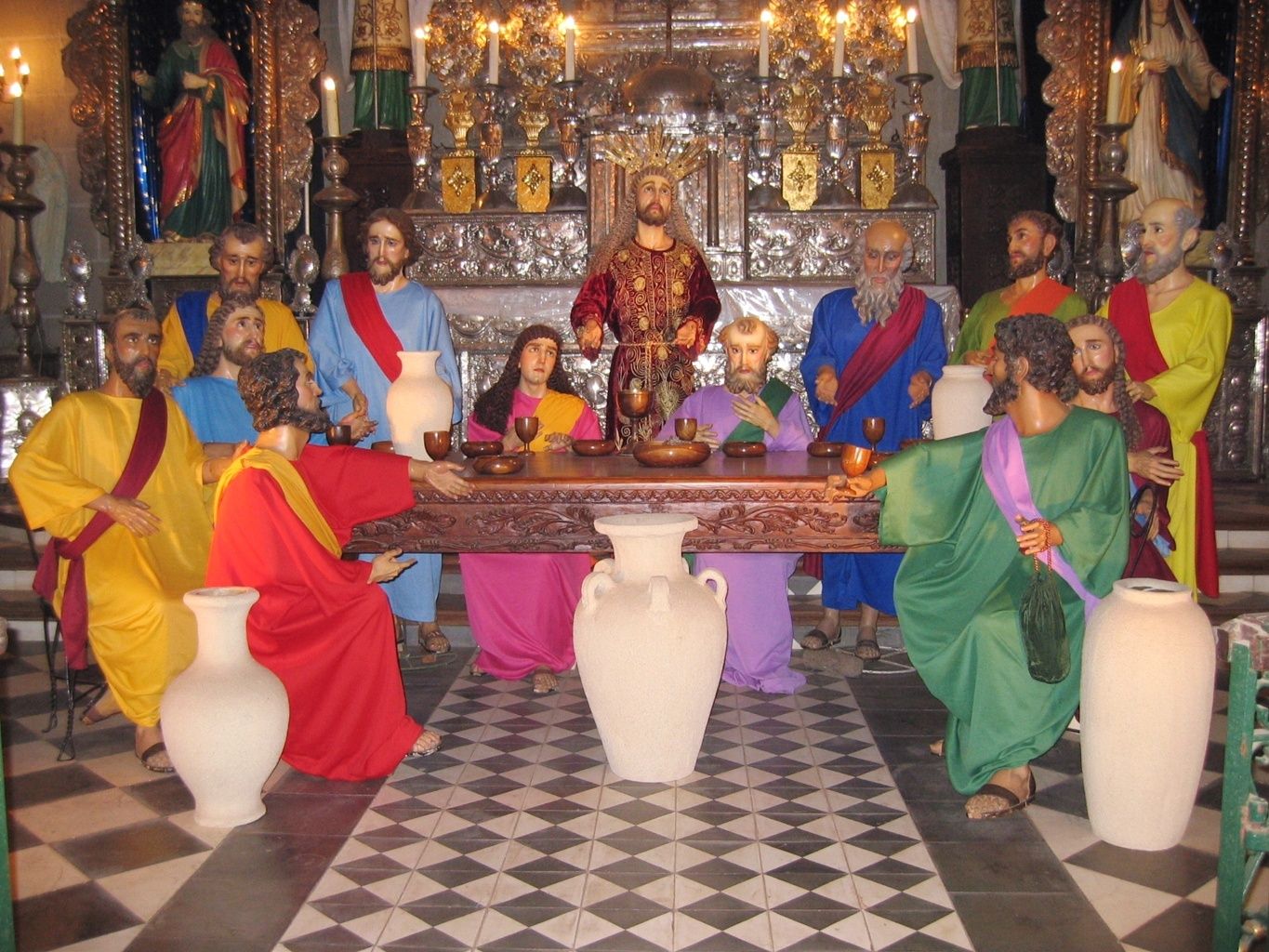
By the altar area is staged San PabloLast Supper processional tableau, owned by the Potenciano family and displayed in the museum year-round.
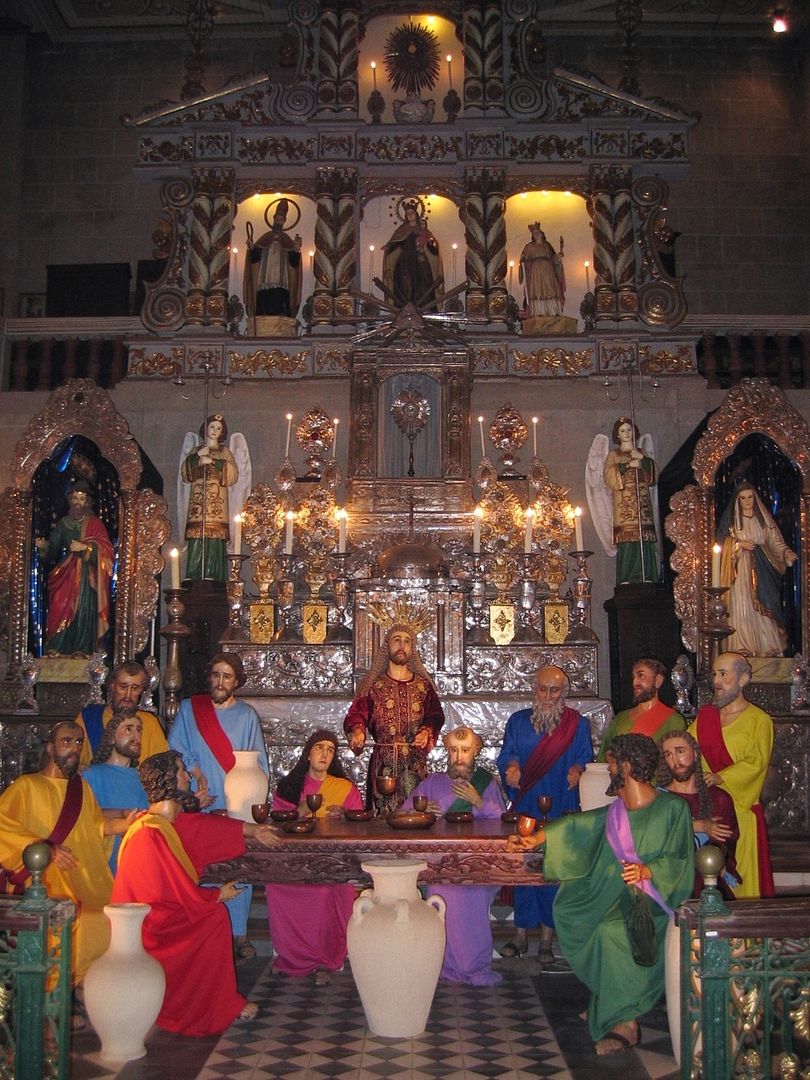


The images (obviously not from Irineo Cristobal, reportedly from a Paete carver) are unfortunately rather folksy-looking.
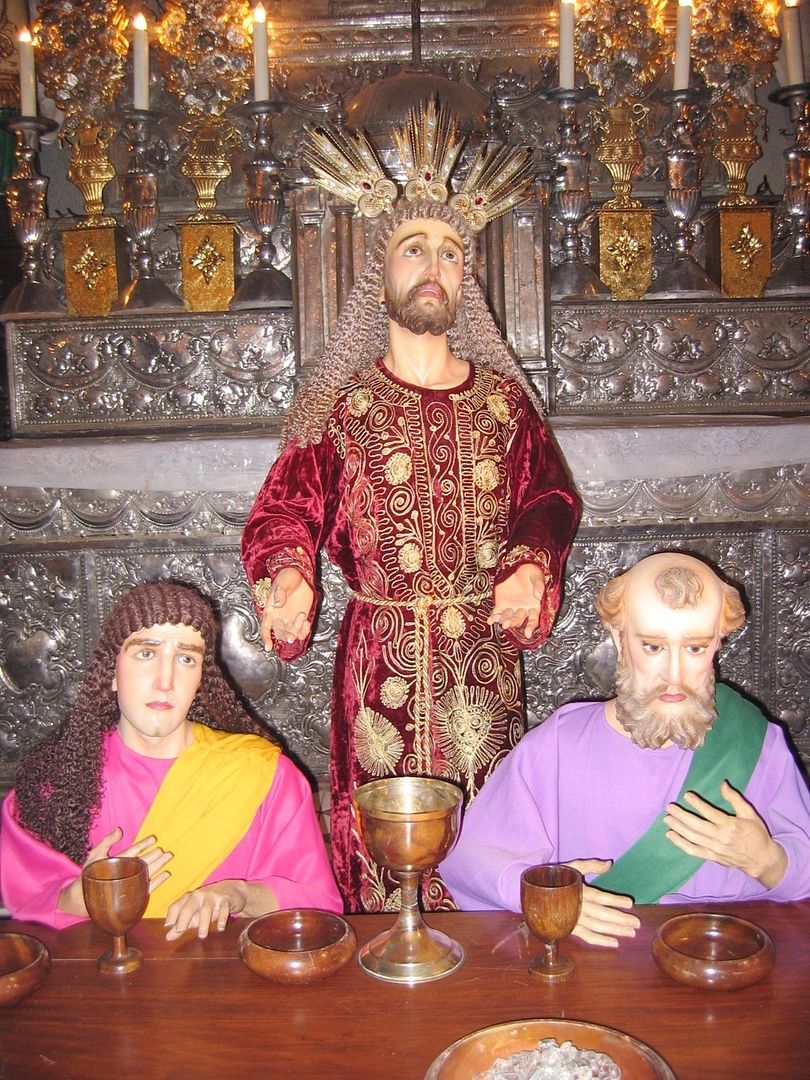

And the Walt Disney / Seven Dwarves –style garments don’t help at all.

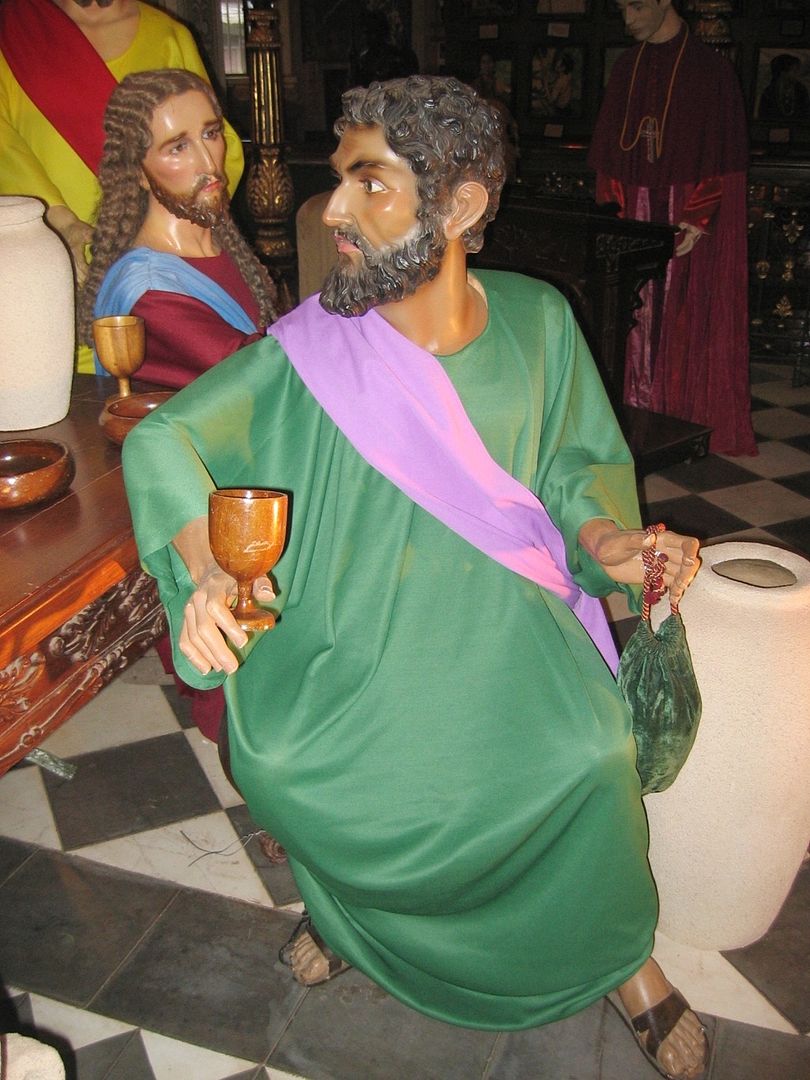
At least Judas appears to be taking his sinister role rather seriously nonetheless.

A most impressive tableau is The Descent from the Cross, another Irineo Cristobal masterpiece from the early post-war period.
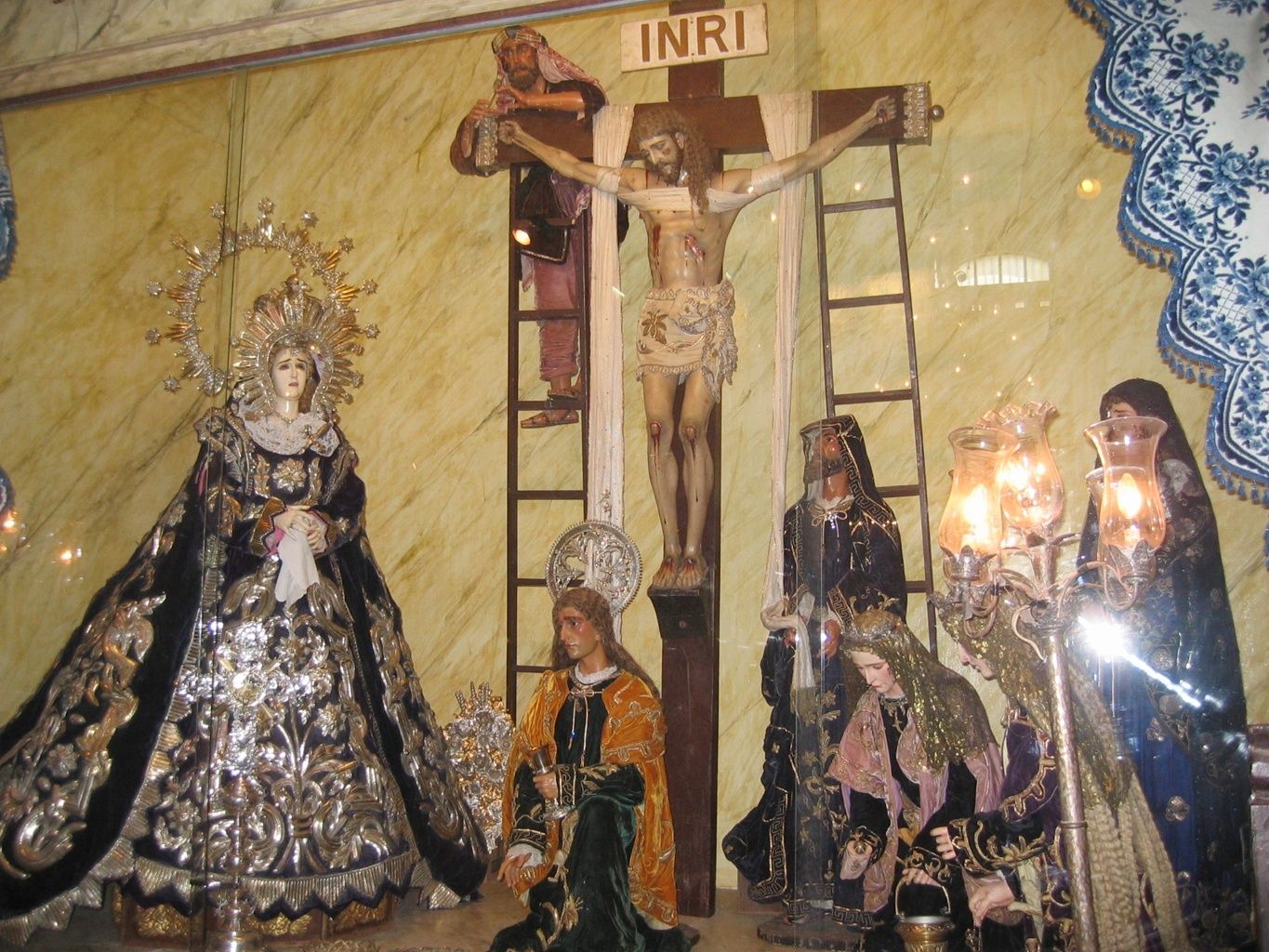
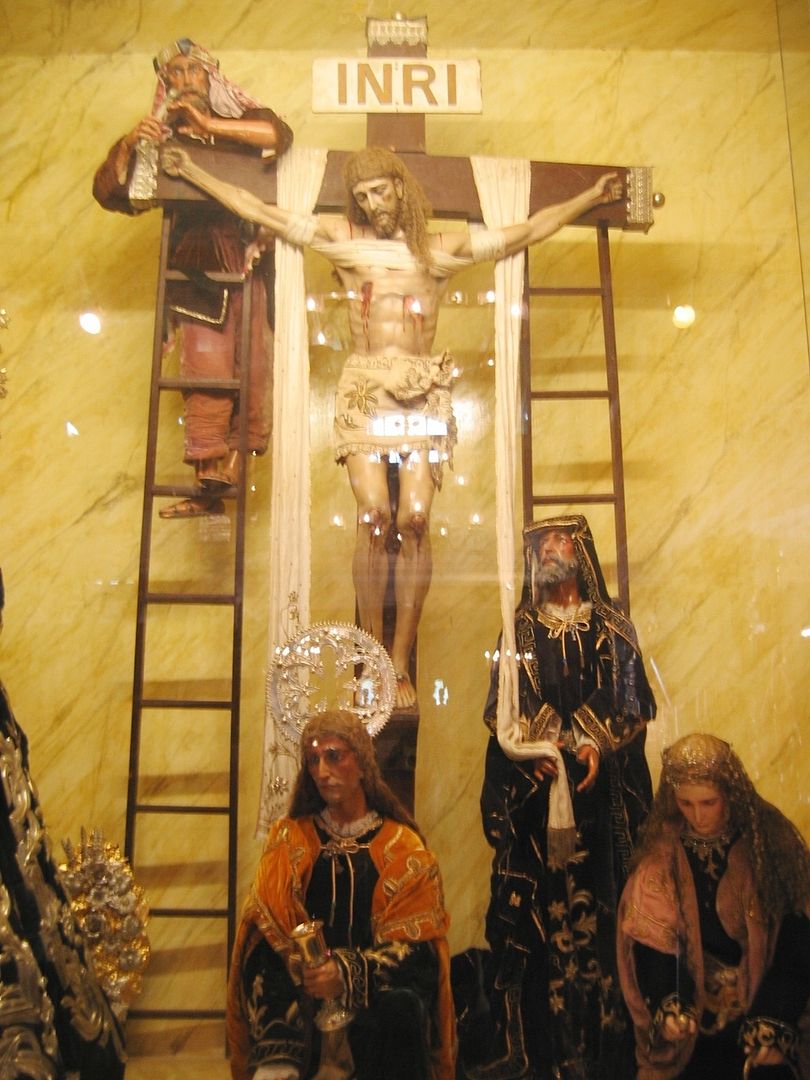

The beautifully-carved and -painted and lavishly-dressed and -accessorized supporting figures are rightfully impressive.
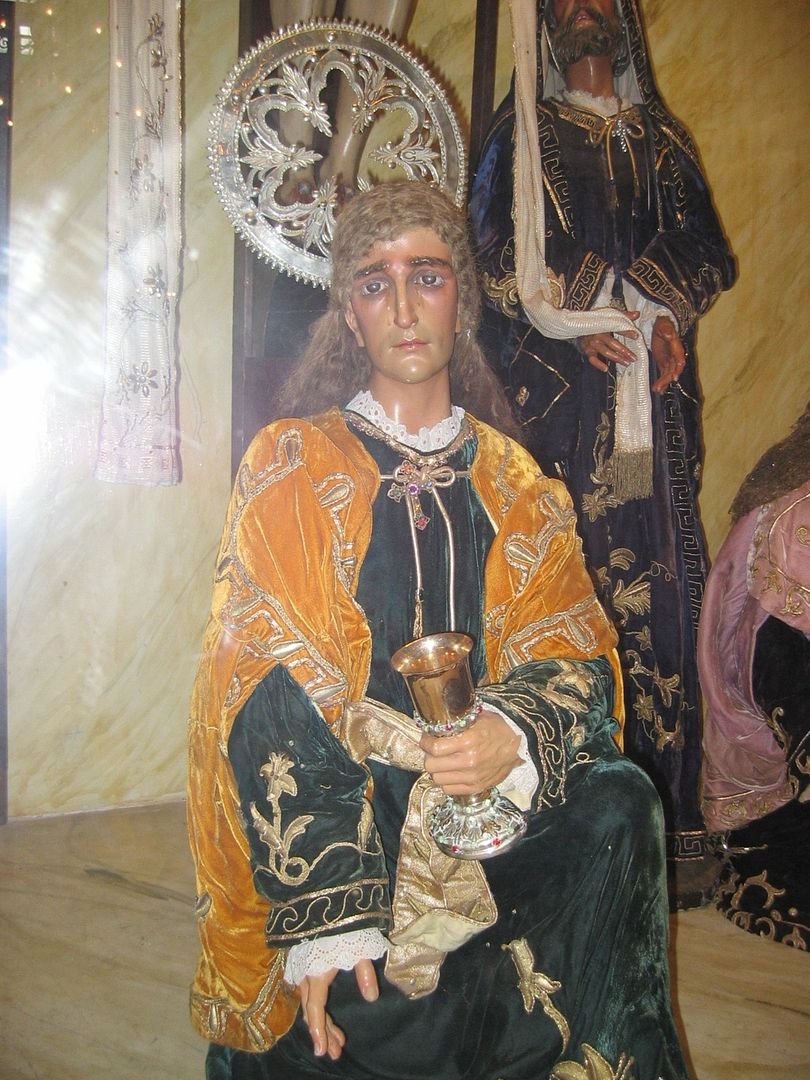
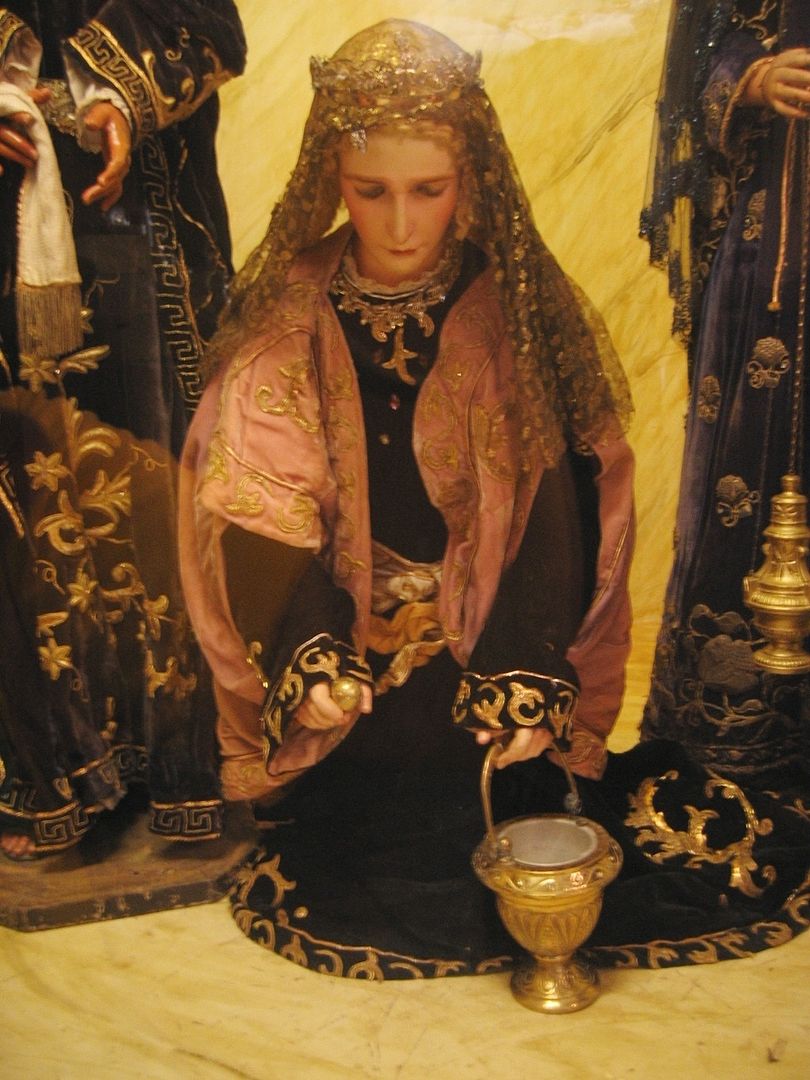
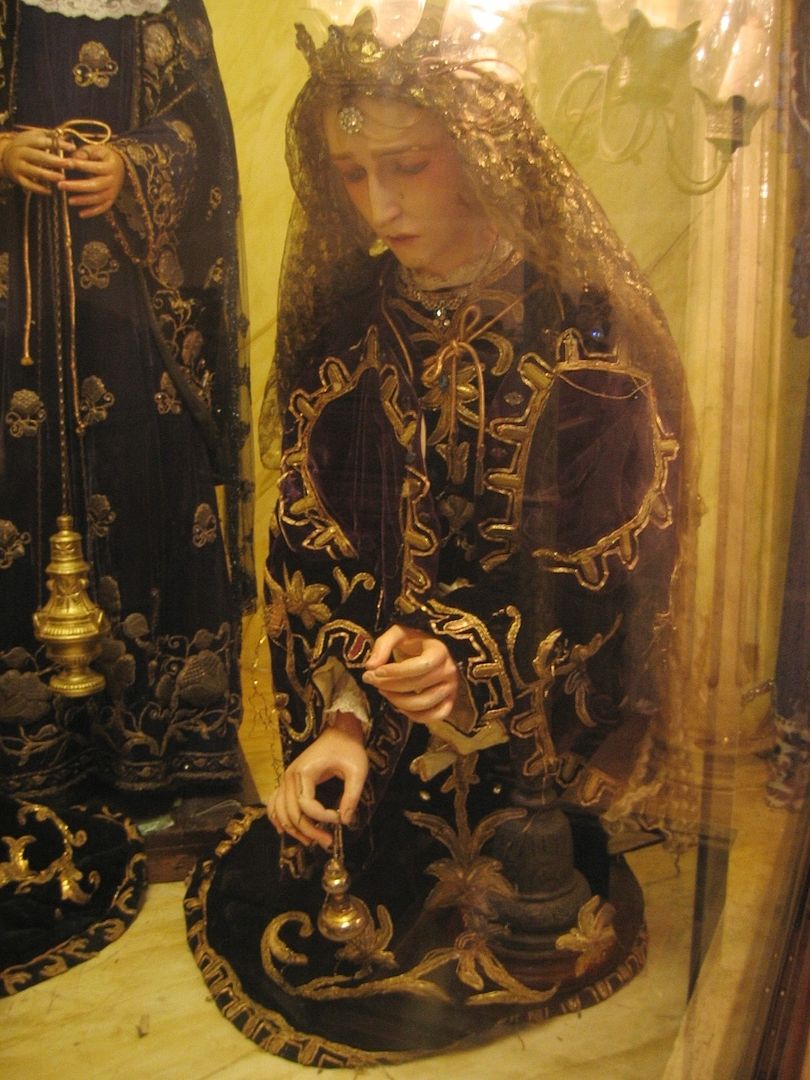
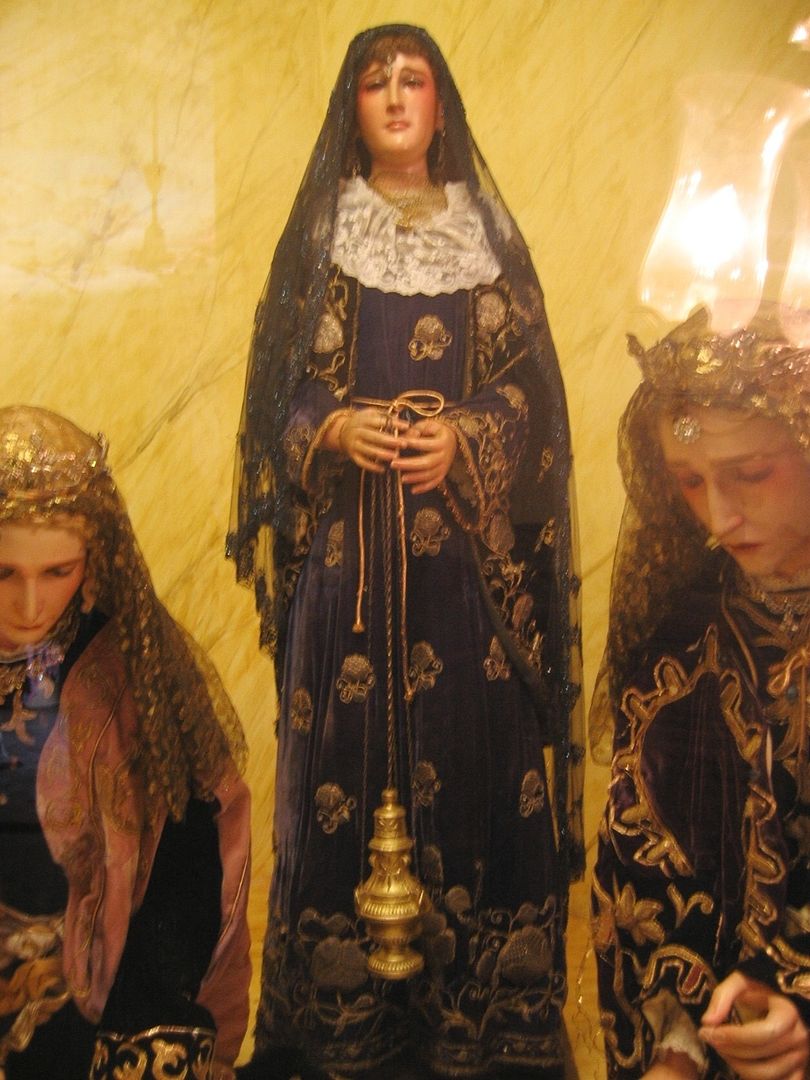
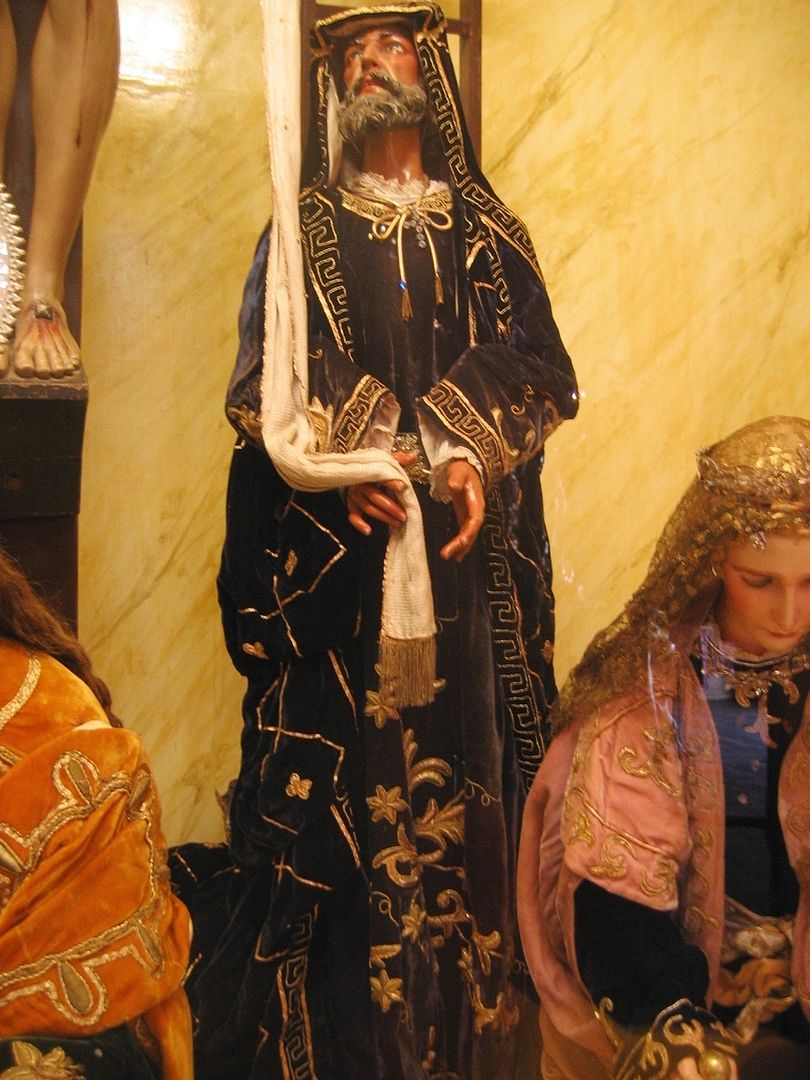

But the deathly pallor of the very realistic Christ figure is scary and moving.
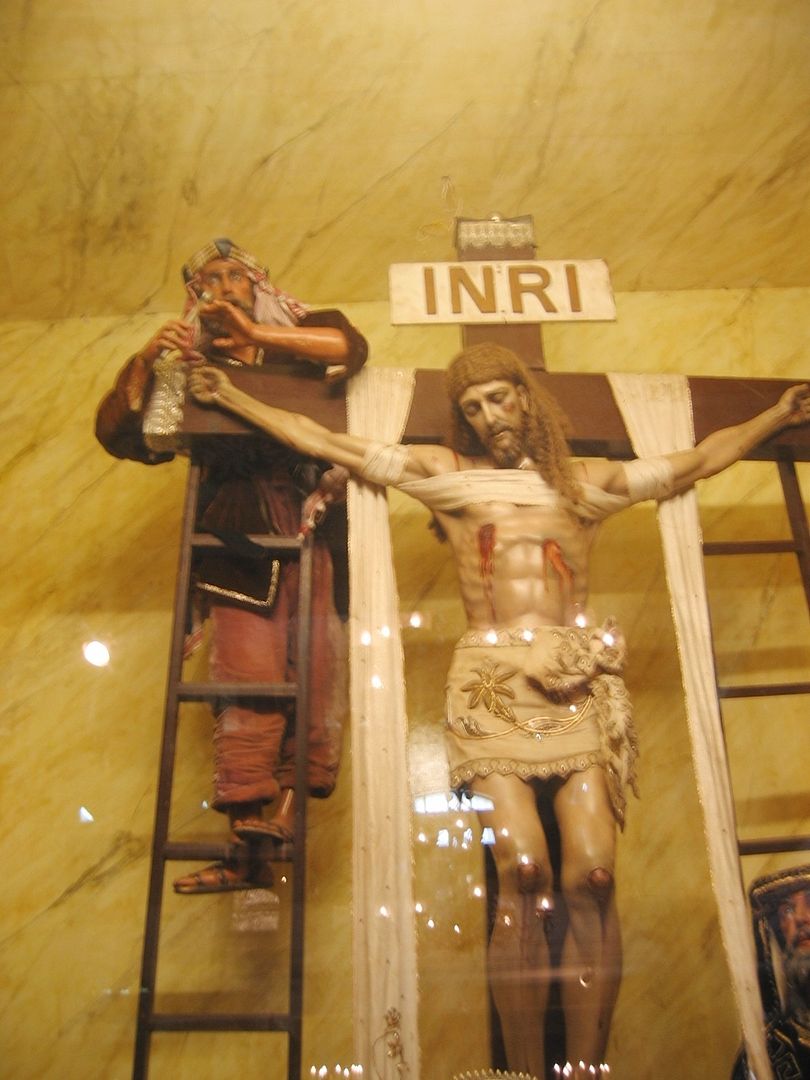


The image of the Dolorosa in this tableau has a beautiful set of ivory head and hands, but in my view is ruined by the garish and overly-large dress with hammered-silver ornaments.
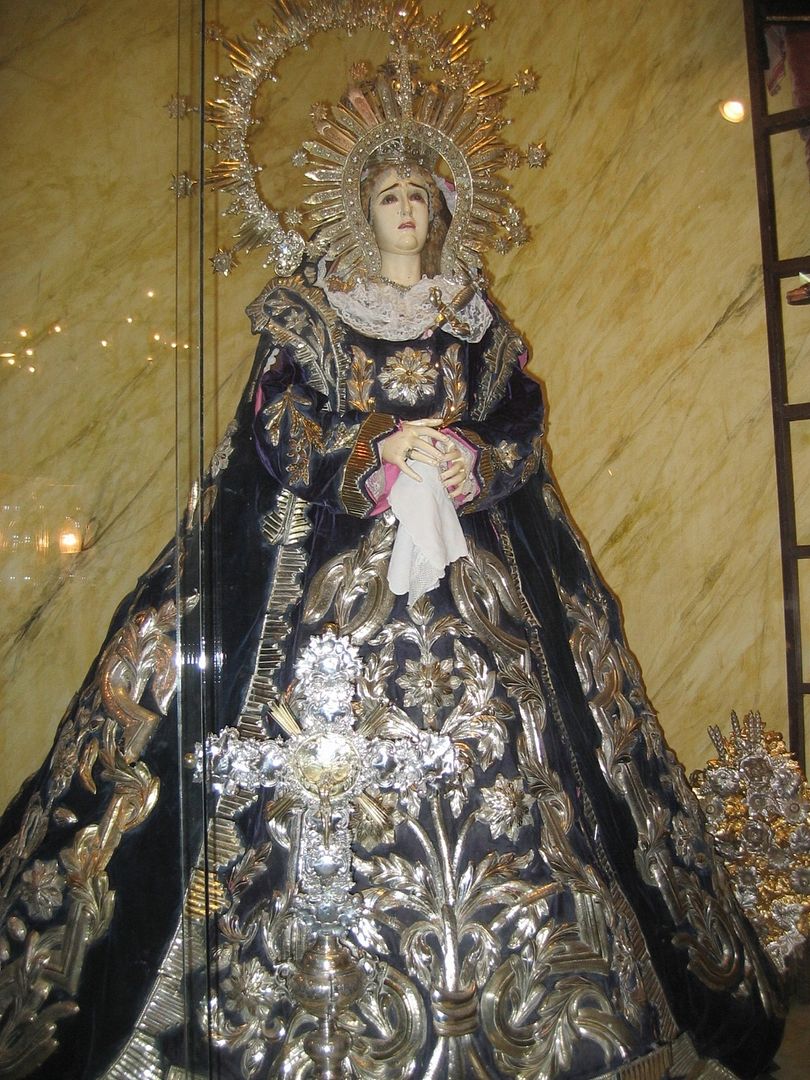

As someone suggested, may those metal pieces just be affixed to the carroza? Ha ha.

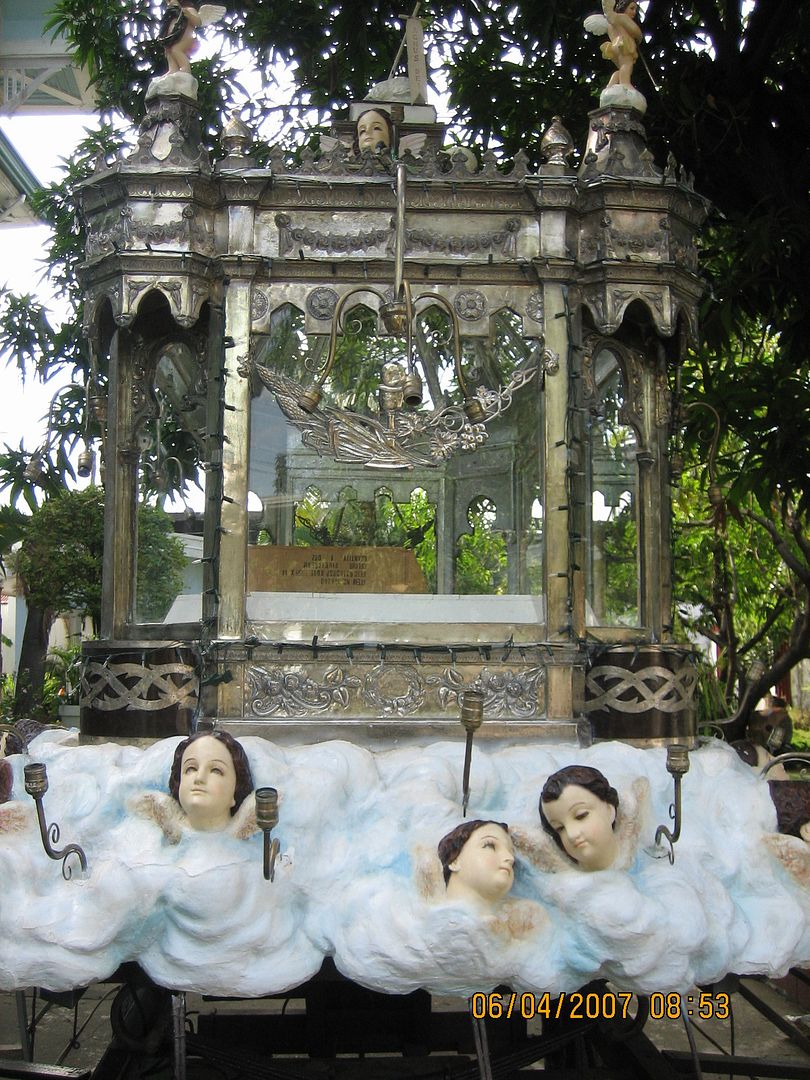
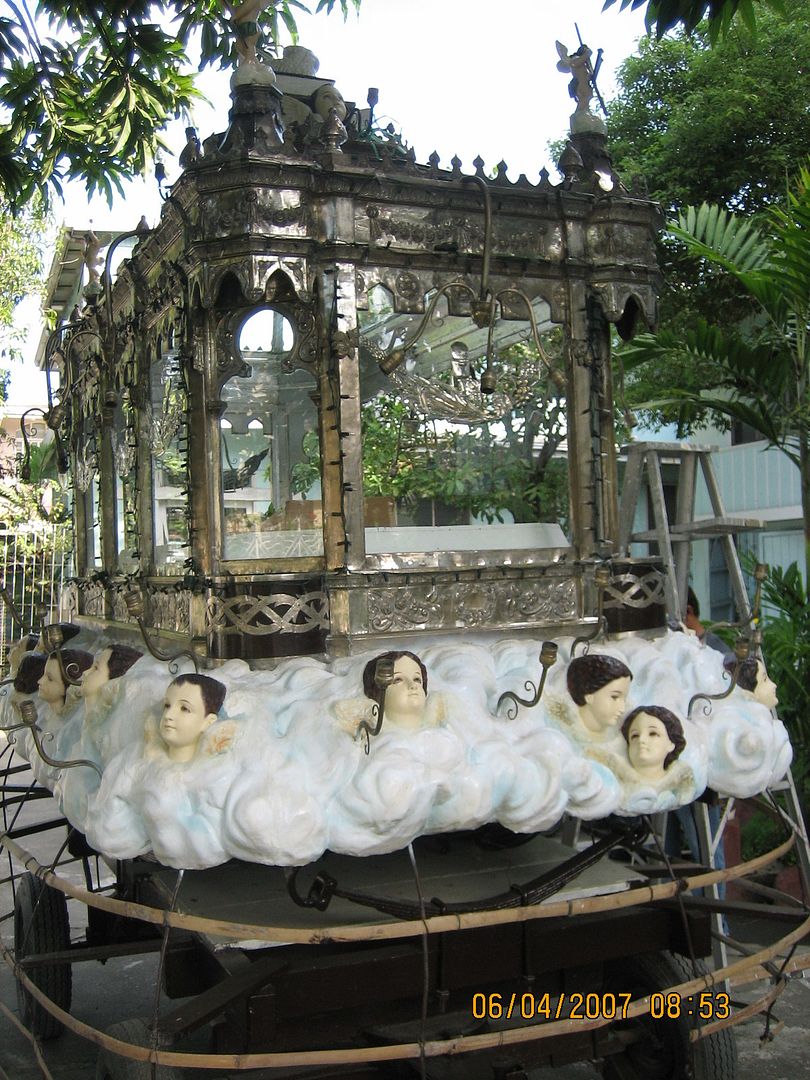
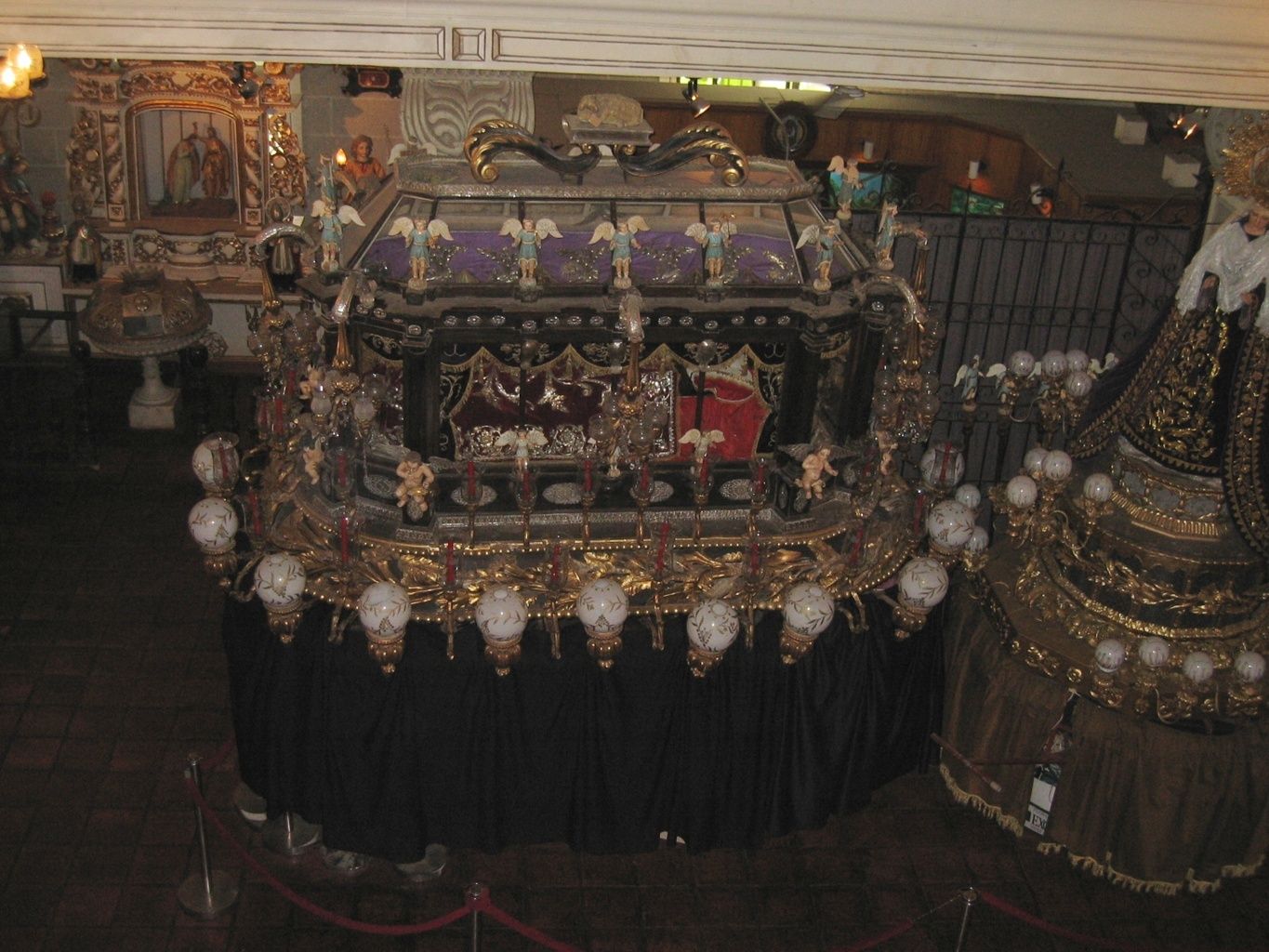
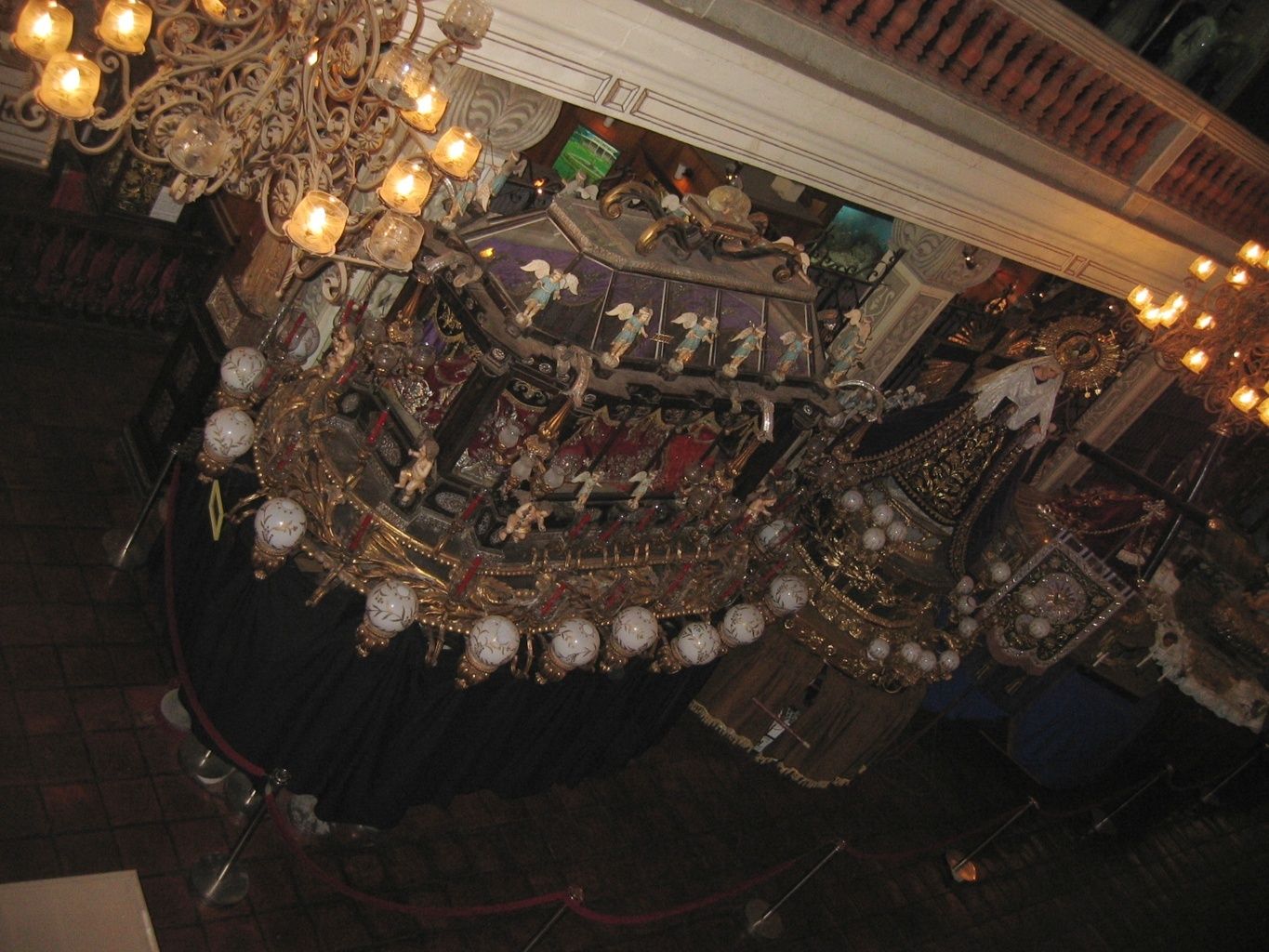
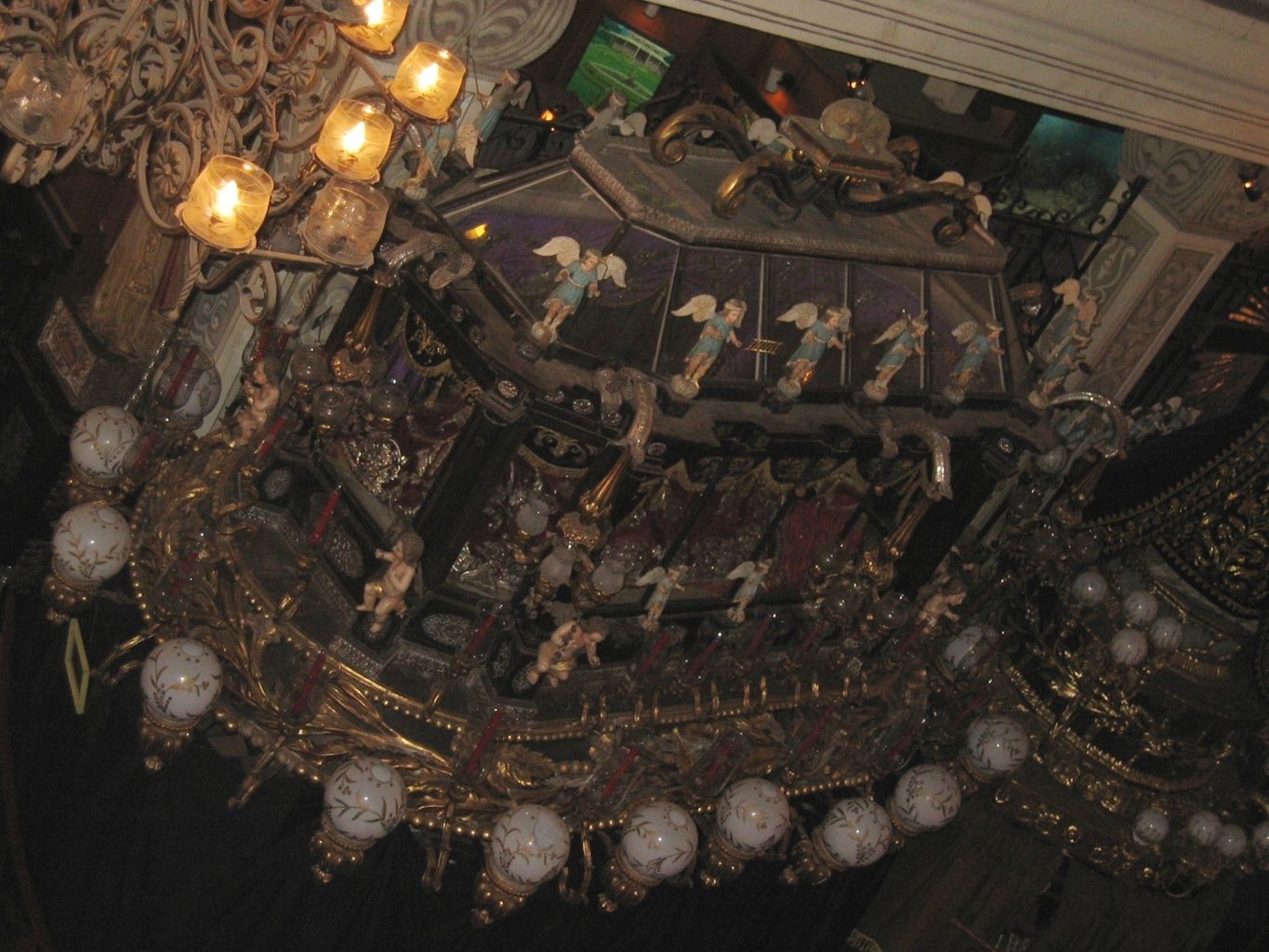
But despite these very impressive aforementioned tableaux, for me, nothing beats the Escuderos’ stately and imposing calandra of the Santo Entierro.
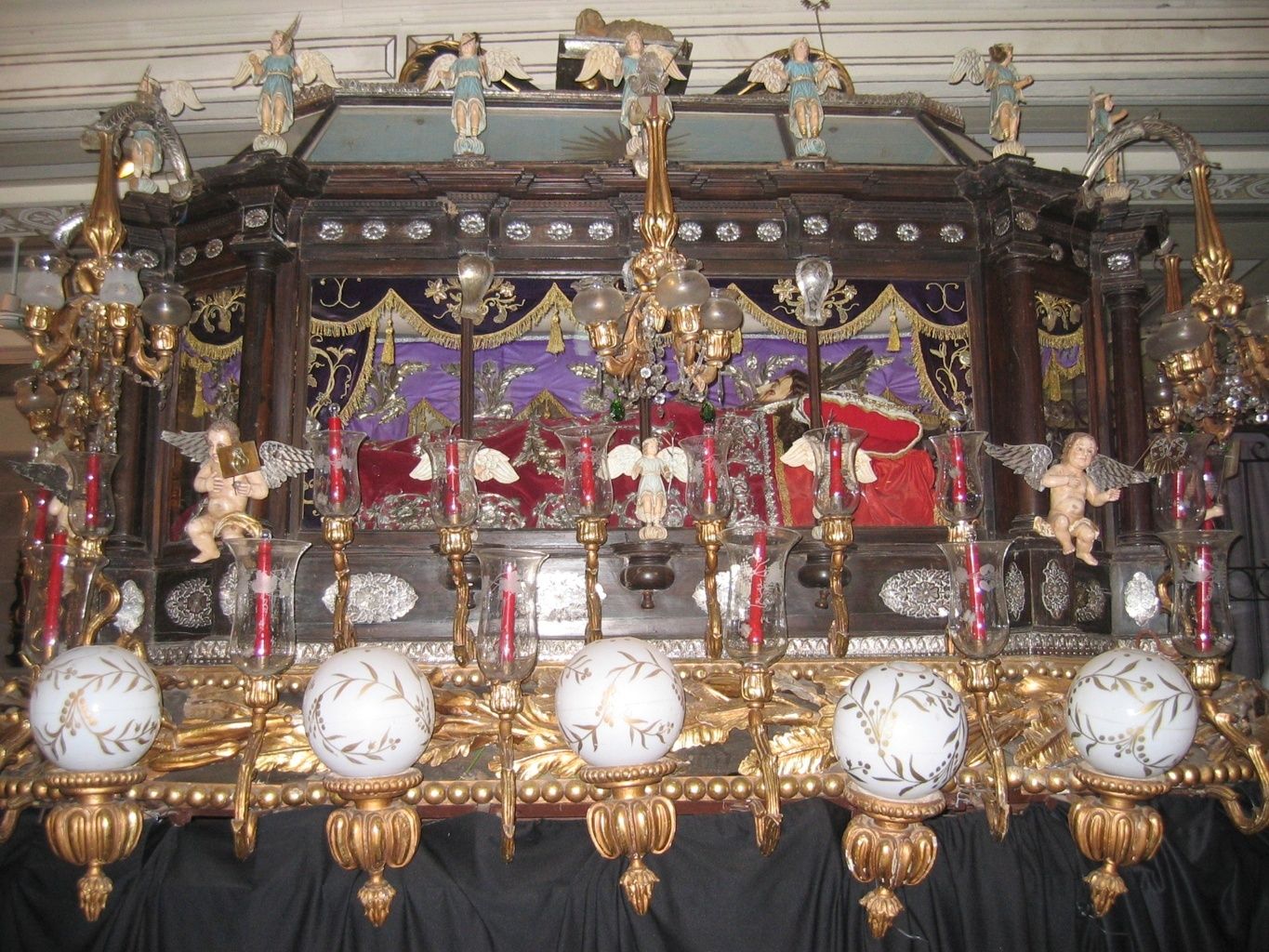

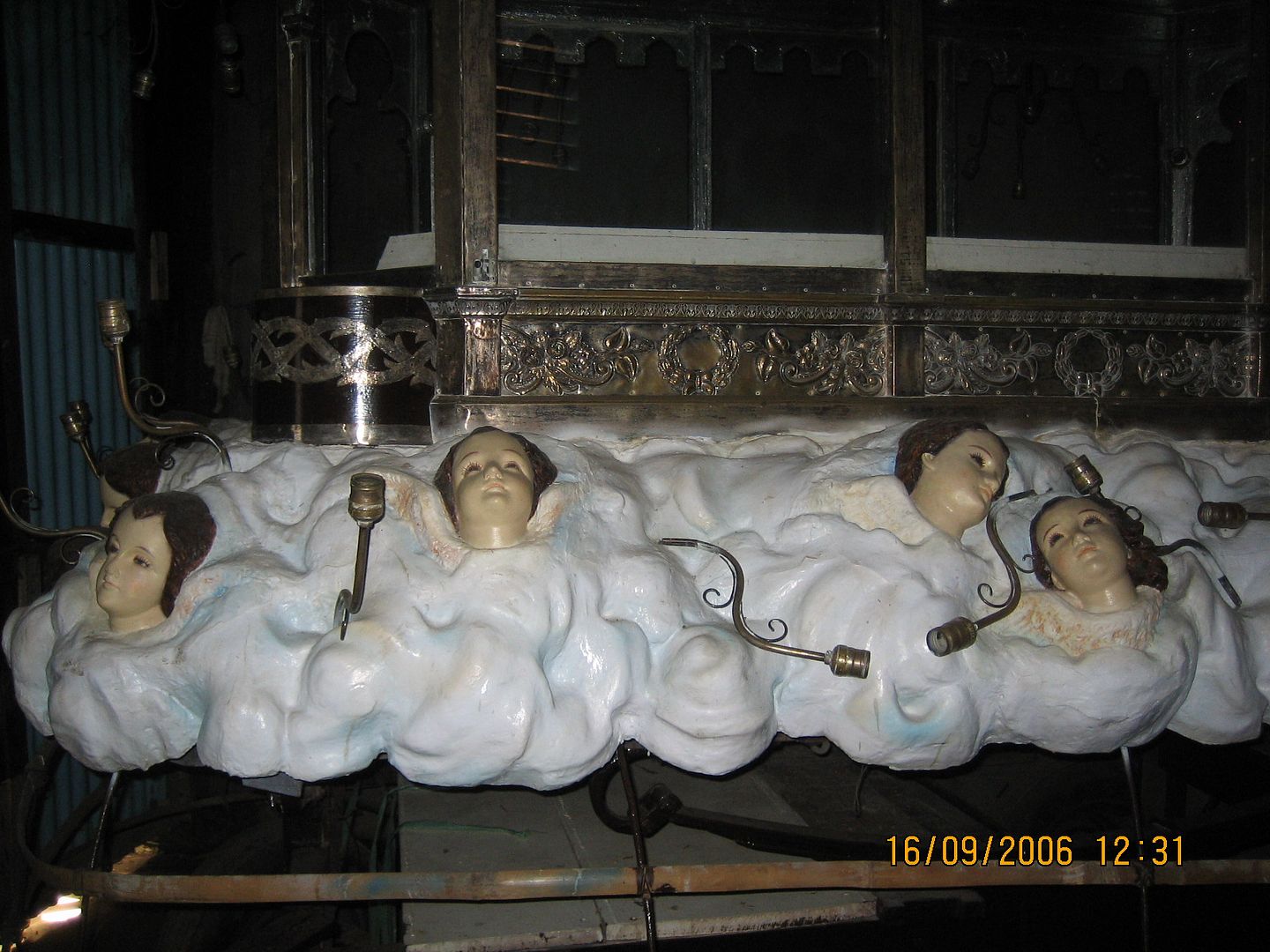
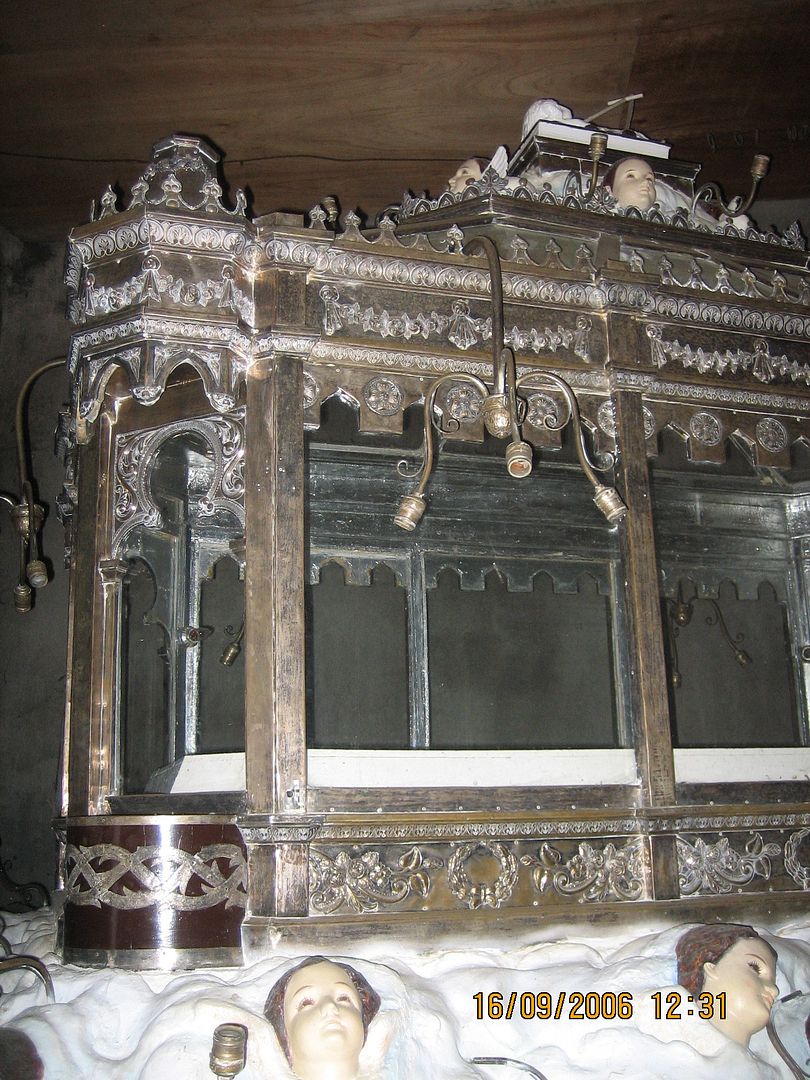
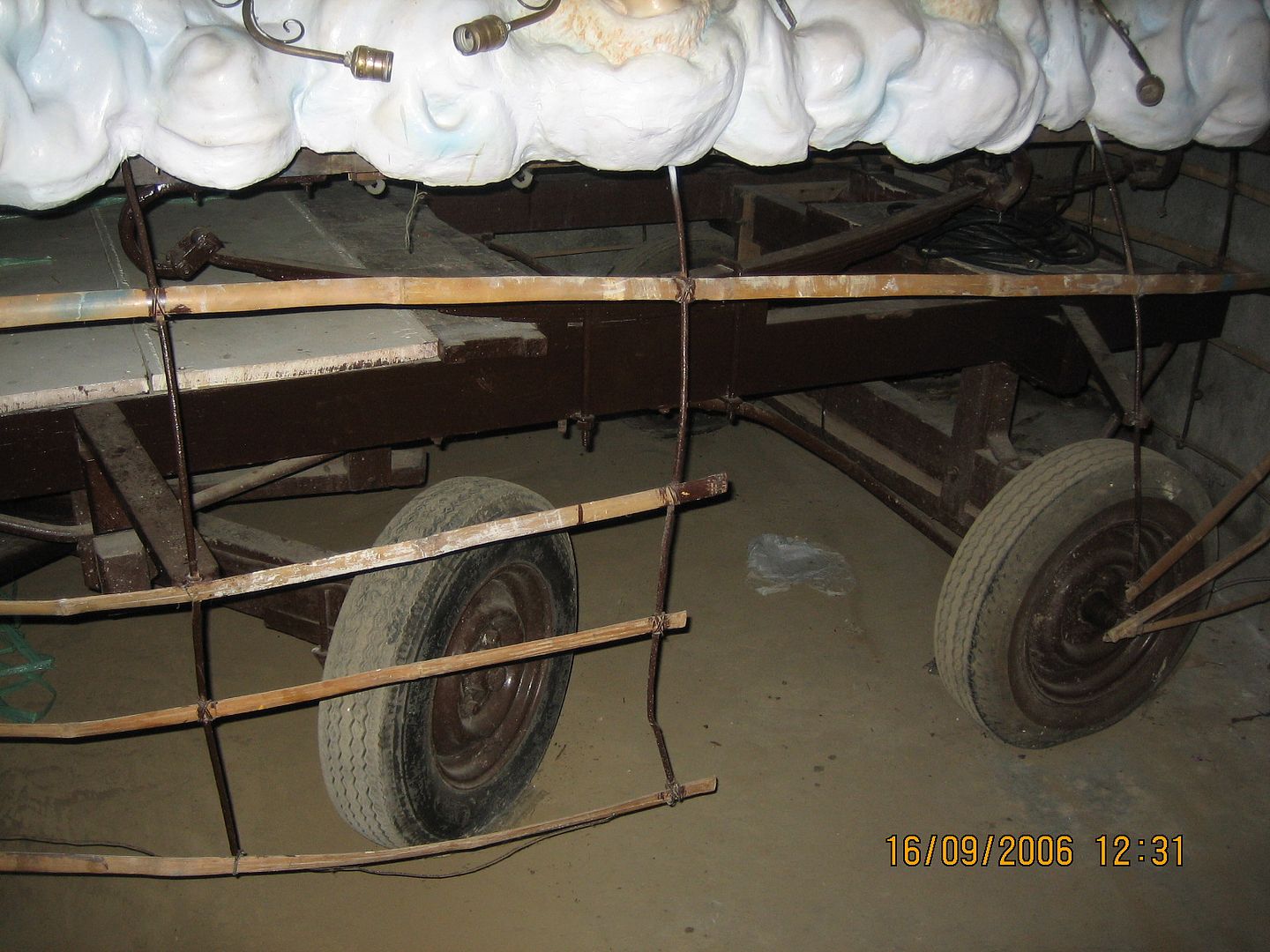
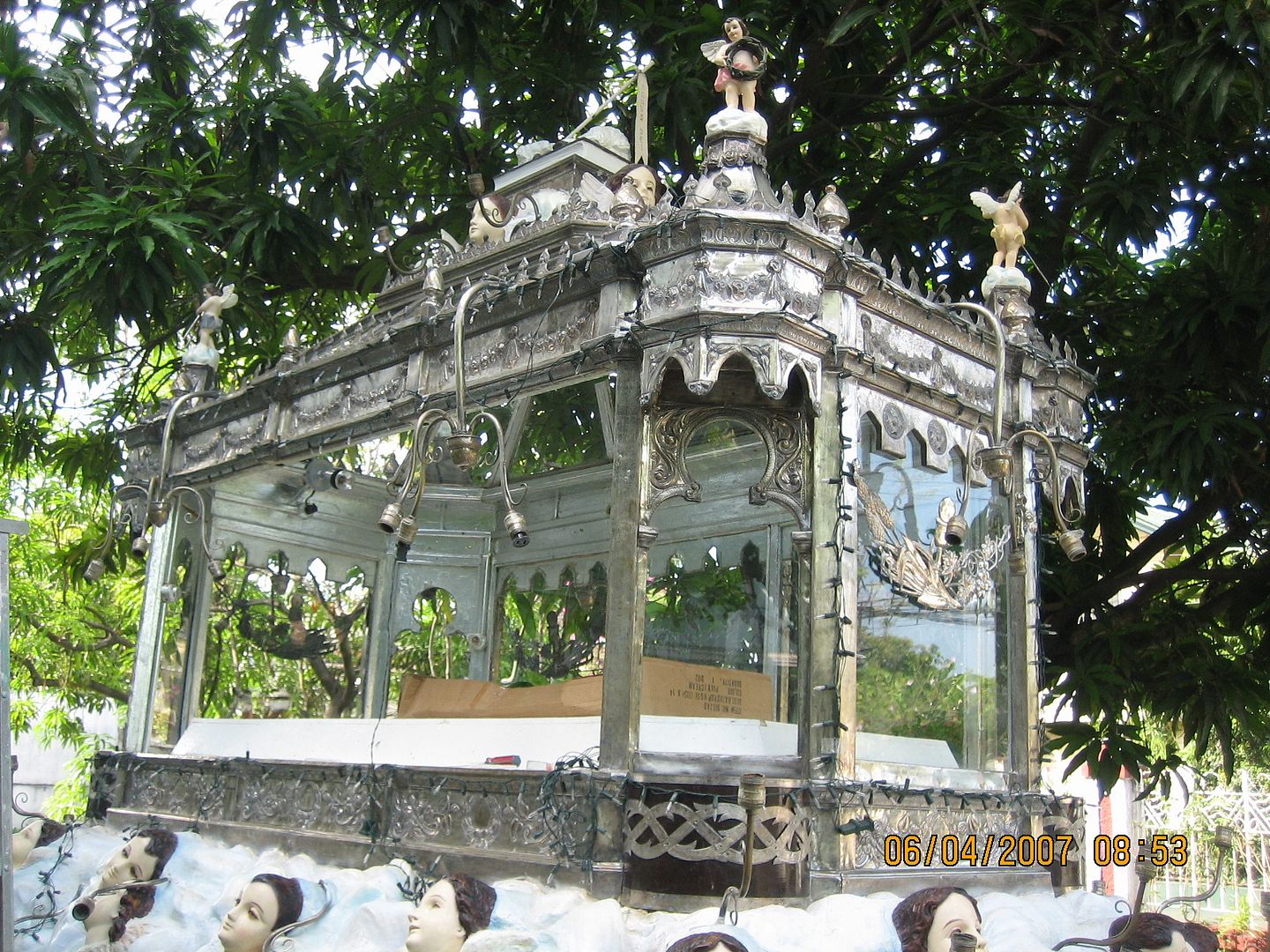
Originally a processional calandra in pre-war Santa Cruz, Manila, it was acquired by the Escudero family some years back from their relatives the Quiogue family, and reconstructed from several original parts and accessories that had been in storage for many decades.
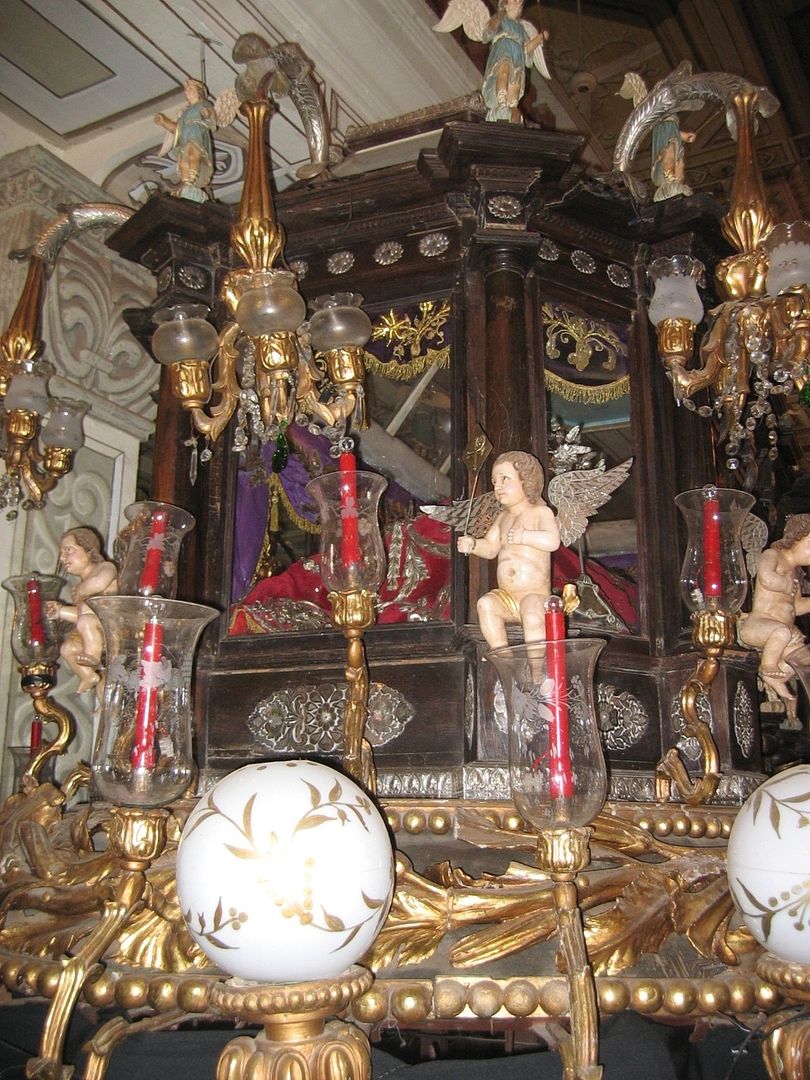
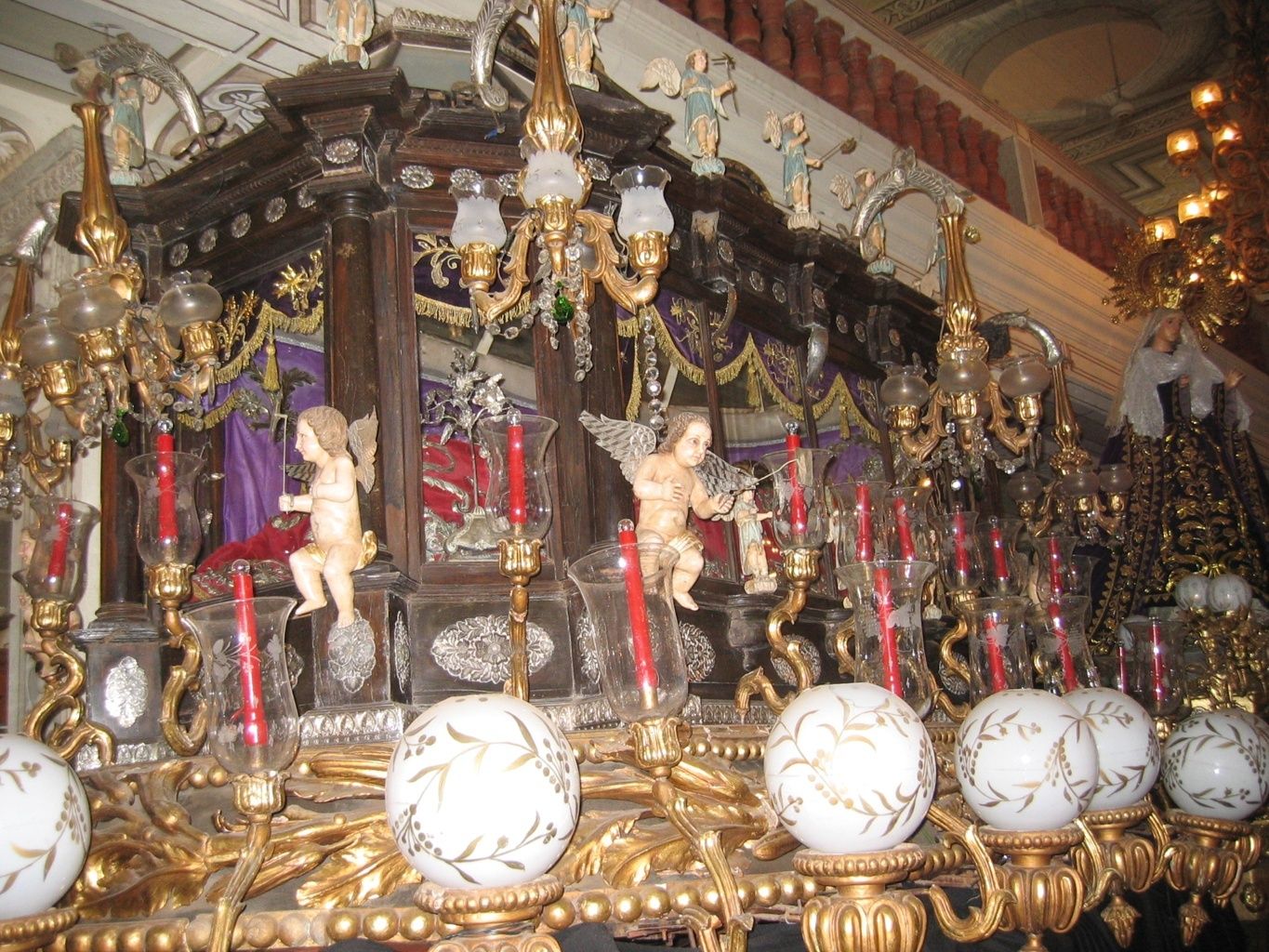


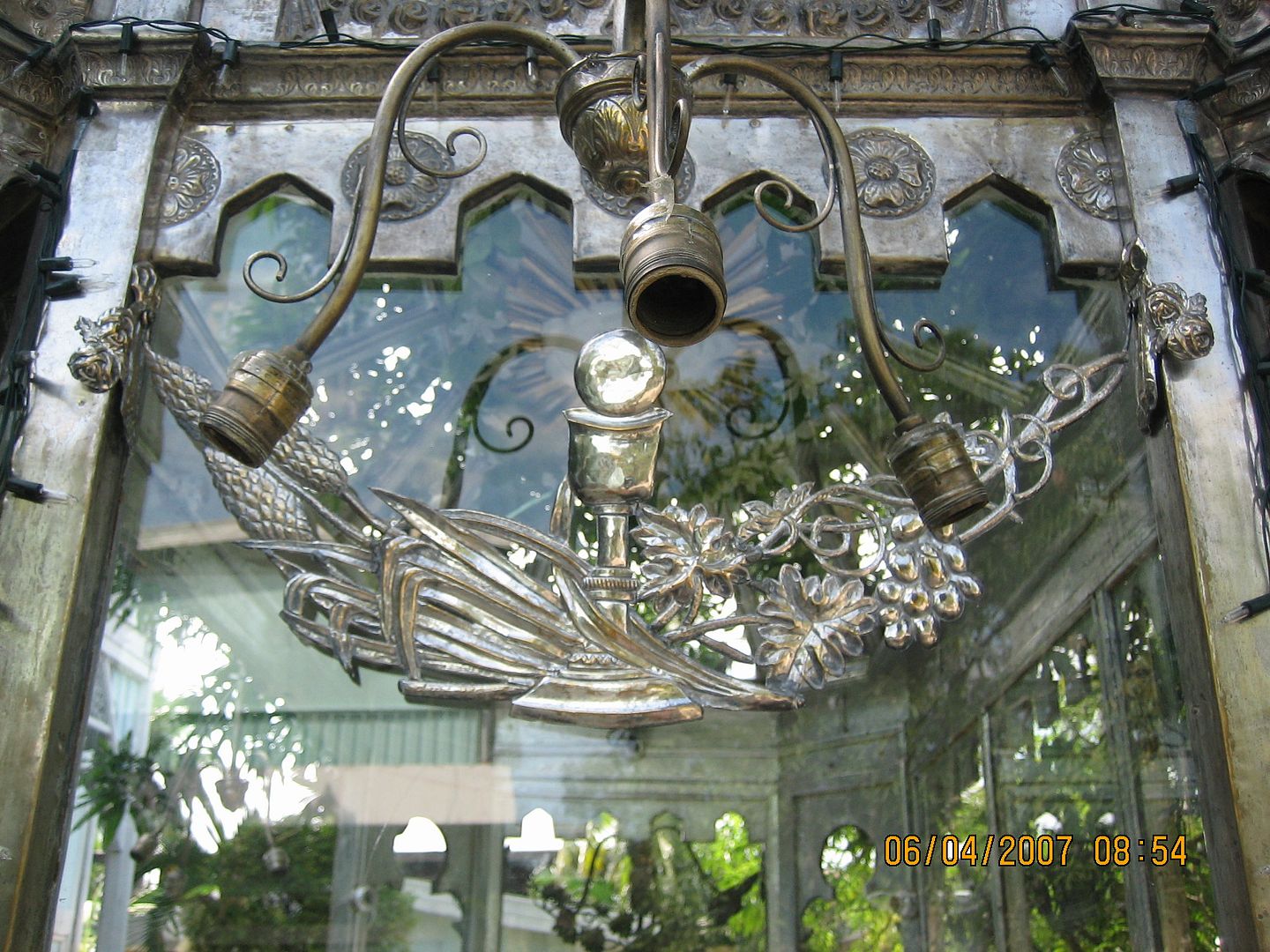
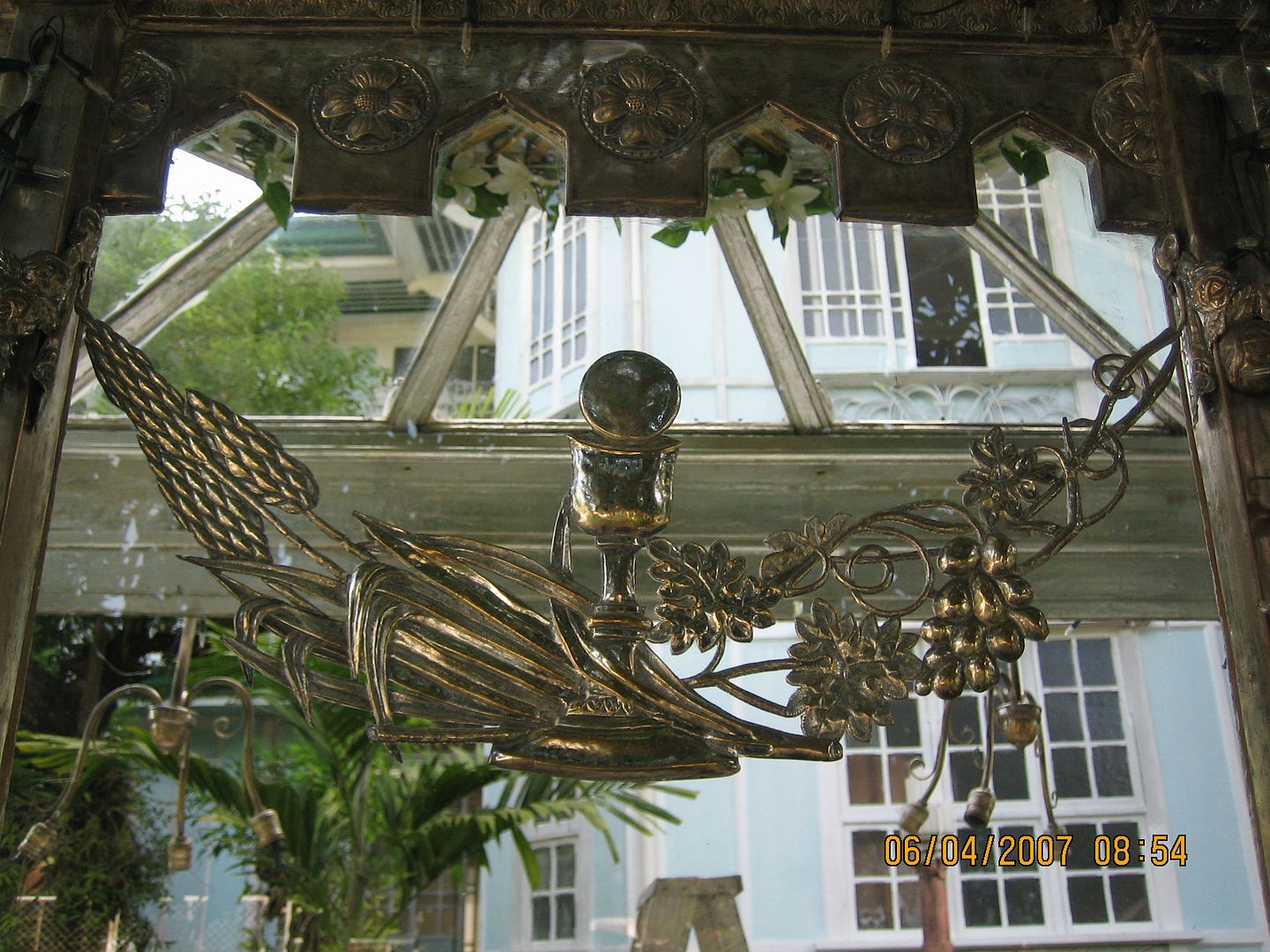
In detail, it is rather overdecorated and loud for my taste, whereas I believe that a calandra needs to look somewhat muted and simply-decorated. However, I’m willing to overlook these faults because it is so long and tall – large calandras always impress me. (Okay, so call me morbid. But you don’t have a calandra like this one, and neither do I. Ha ha.)

Its sayal area goes up to over five feet tall, and the floor of the calandra where the image of the (rather small in relation) Dead Christ lies is well over six feet above ground. And the only possible way to photograph the whole vehicle is from the gallery above.

We pause here to rest our overwhelmed eyes and minds, and prepare to continue our museum tour in a little while.


Originally published 24 July 2007.  All text and photos copyright ©2007 by Leo D Cloma. The moral right of Leo D Cloma to be identified as the author of this work has been asserted.

Original comments:
arcastro57 wrote on Aug 3, '07
I peeked! Well, it will be my 1st time to go to Villa Escudero this Aug. 12, so I am sure I'll go crazy...

VIP talaga si LEO CLOMA.

alegria2007 wrote on Aug 3, '07
ganda po, tito Leo! sayang, di po ako makakasama
makikita ko din yan bwahahahaha
marvinne wrote on Aug 4, '07
iba talaga si LEO...
lahat ng bawal kaya nyang gawing Pwede!!

hehehe....
:)


Monday, October 26, 2015

XL. SS-Files: Holy Week in Bayan, Malolos, Bulacan, Part Two

Like with Barasoain, I haven’t yet managed to take photos of Bayan’s Calvario tableau. And although I have seen it a few times some years back, neither have I photographed the very striking Descent from the Cross, at once surreal and very Filipino in conception. Those are two more of my photography tasks for the future.

Because it is only prepared by around mid-day of Good Friday, I have also not yet photographed Bayan’s Santo Entierro all dressed and made-up . So now I draw on my vast reserves of akyat-bahay experience, and give you an idea of how it must look like when readied for the Friday evening procession.

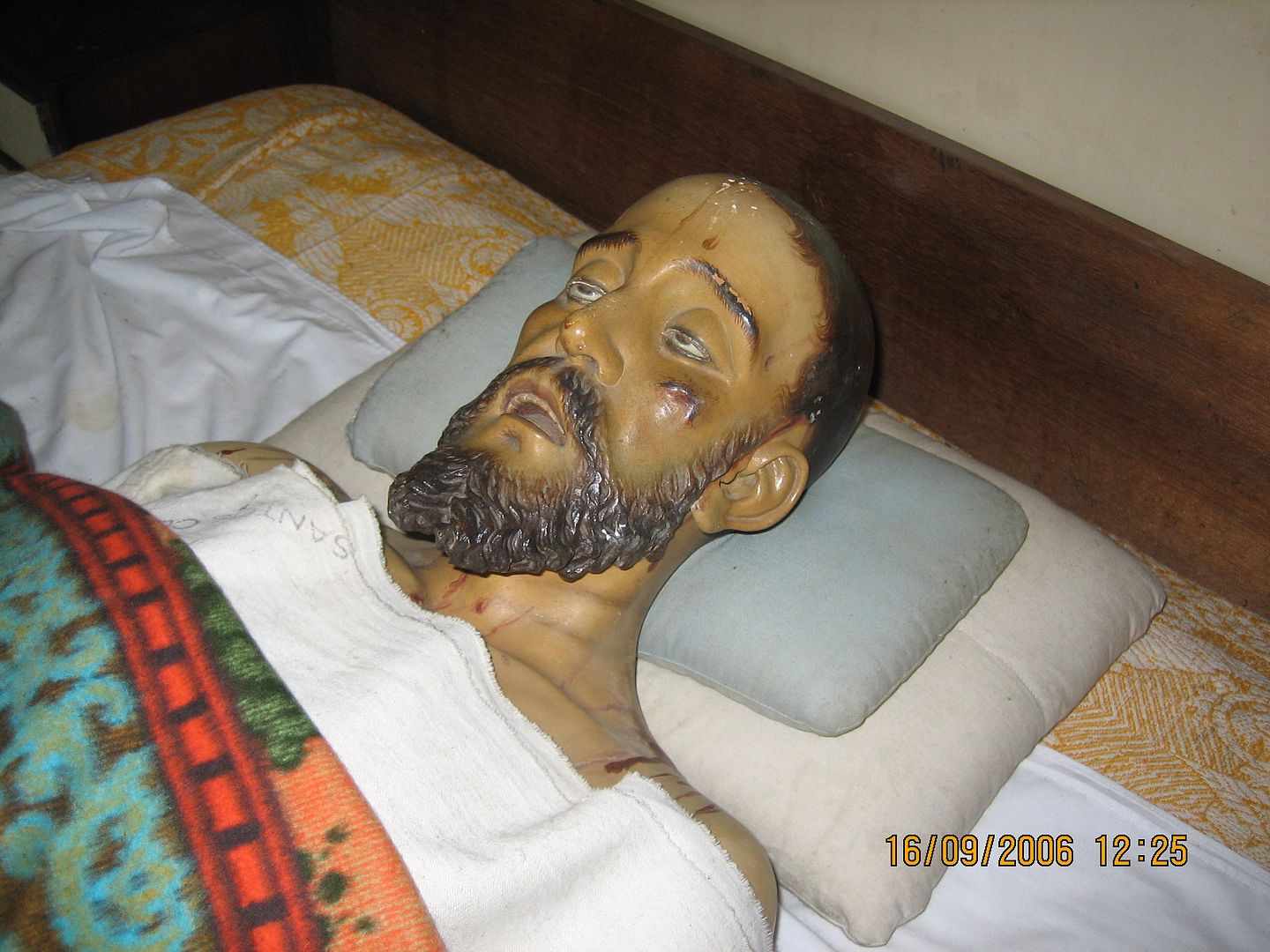
The image of the Dead Christ and its calandra were commissioned in the first half of the 20th century by a prominent Malolos physician and philanthropist, Luis Uitangcoy Santos, actually the second son of Alberta, the original owner of the Pagkarapâ that we got to see previously. Dr. Luis’ beautiful 1933 Art Deco Mansion sits diagonally across his mother’s house and directly across the home of the Tantoco family, who now care for his mother’s processional tableau.

Stylistically, the calandra is American colonial neo-classical in look and feel, and so might just be contemporary with the good doctor’s own home. When Dr. Luis died in the early 1980’s, both home and paso passed to his only son and heir, Dr. Sabino “Benny” Santos, yet another prominent Malolos physician and philanthropist.

I had the rare privilege of being Dr. Benny’s guest last year, at which time I was not only given a personalized tour of his father’s indescribably beautiful home, but was also allowed to view and photograph the image of the Dead Christ, now resting on the late Dr. Luis’ bed in the master bedroom.


I imagine that earlier in its life, and certainly when good old Dr. Luis was still using his bed, this image was properly garbed and placed inside a calandra for home veneration, probably in the beautiful house chapel on the second floor of the mansion.

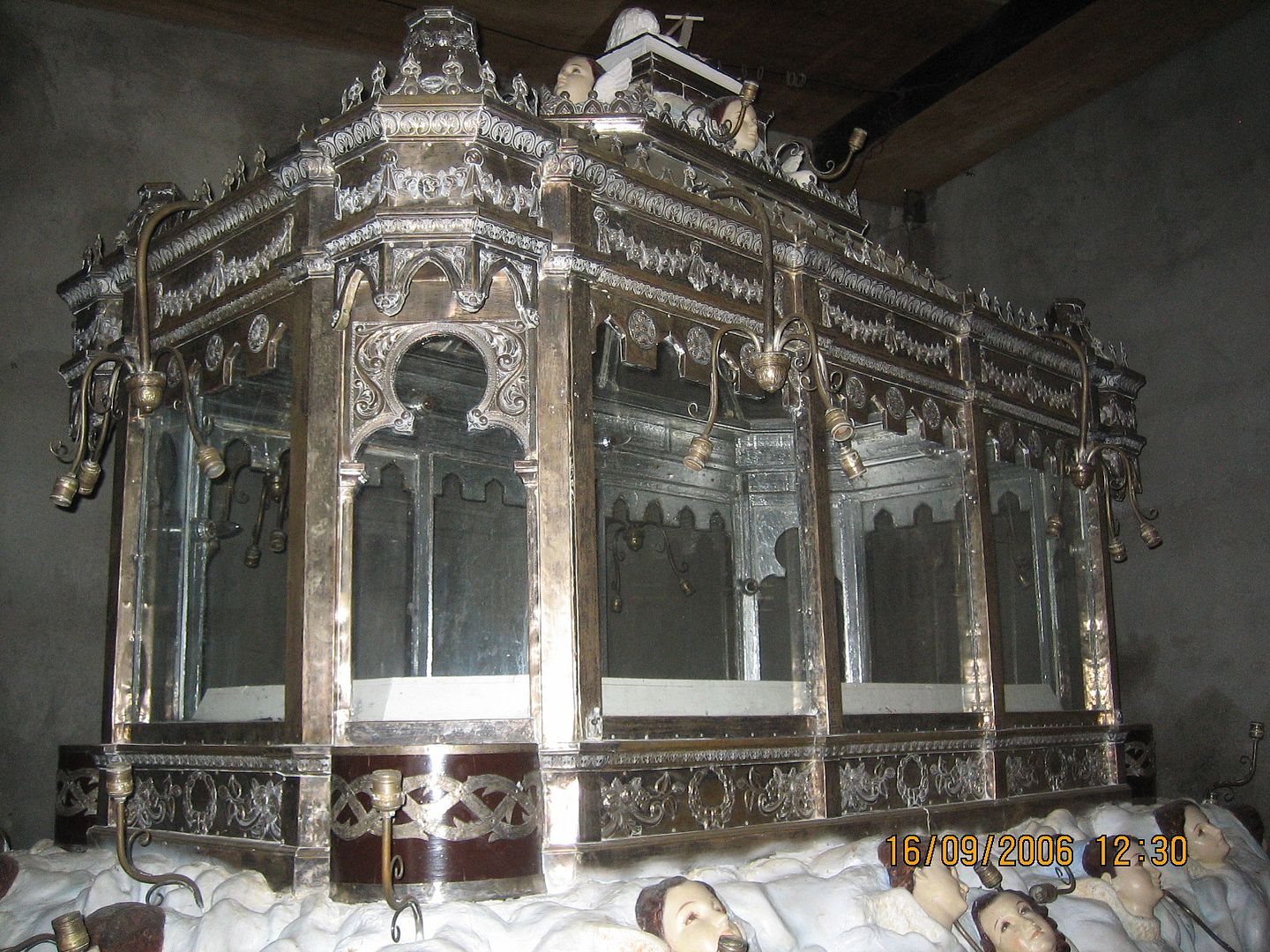
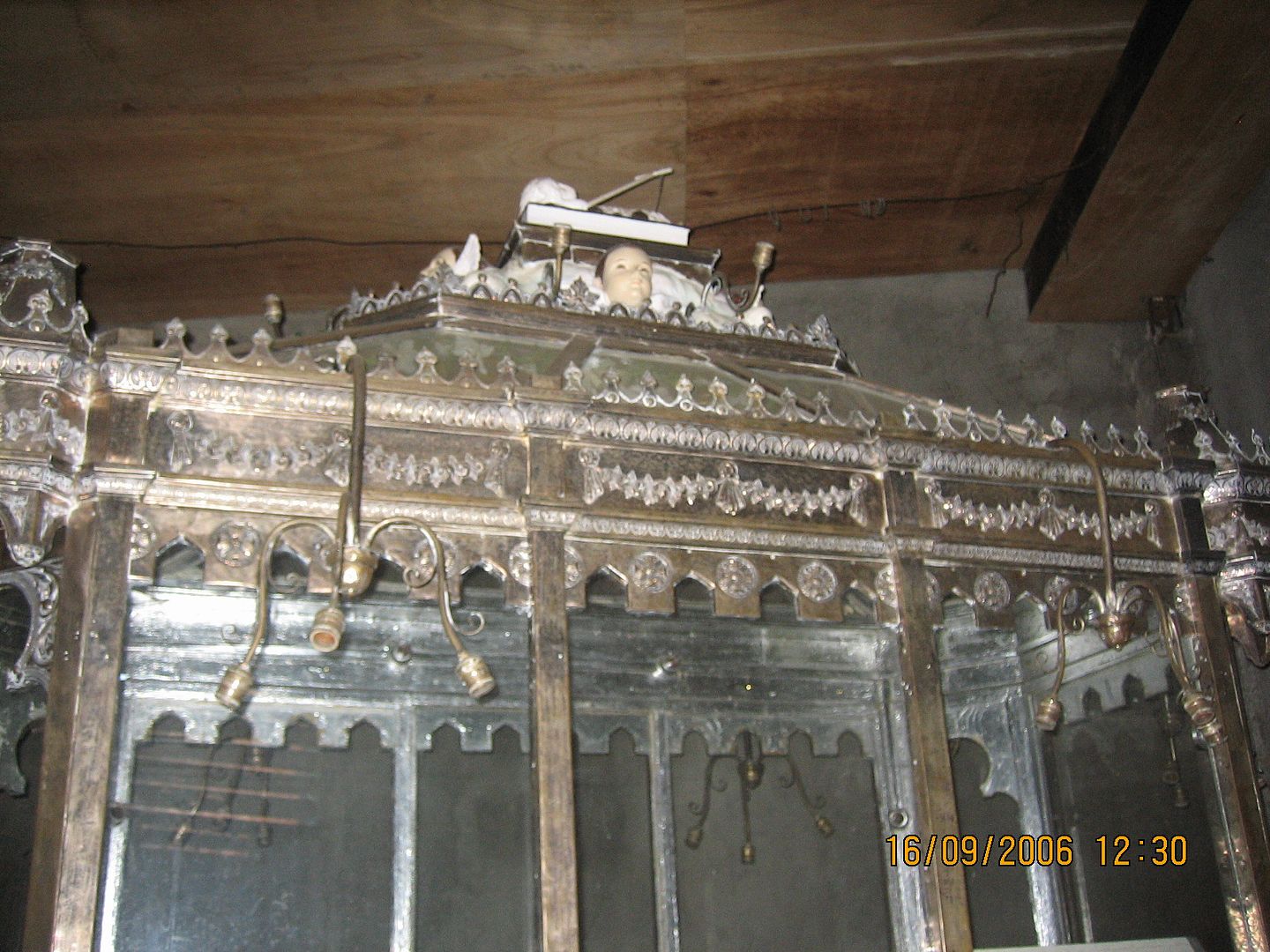
Part of the Santos house tour involved a peep (actually a full-blown walk-through) into the garage at the rear, where the calandra is parked. Here is what I saw:


Despite the tarnished silver fittings at present, this was obviously an impressive processional vehicle in its day. I imagine that a proper restoration would bring back all its original glory effortlessly.


On the morning of Good Friday, I once again availed of my not-inconsiderable akhat-bahay skills to espy the calandra being prepared for that day’s evening procession. Photography was easier this time as it was parked in the expansive front driveway of the Santos House and natural lighting was abundant and of the right intensity.


Sharp-eyed readers will notice, somewhat uncomfortably, that there are what appear to be tiny Christmas lights outlining this calandra’s panels. I guess that this is just to match up with the Christmas-y way that the neighboring Barasoain Parish’s Dolorosa has been dressed up this year. Ha ha.

Nonetheless, the intensity of its original design shines through in detail and close-up, as seen in these next photos.


Again, because of my earlier-than-preferable schedule for Good Friday photography, I haven’t yet been able to shoot this calandra when it was all dressed up for the procession. Hopefully next year then.

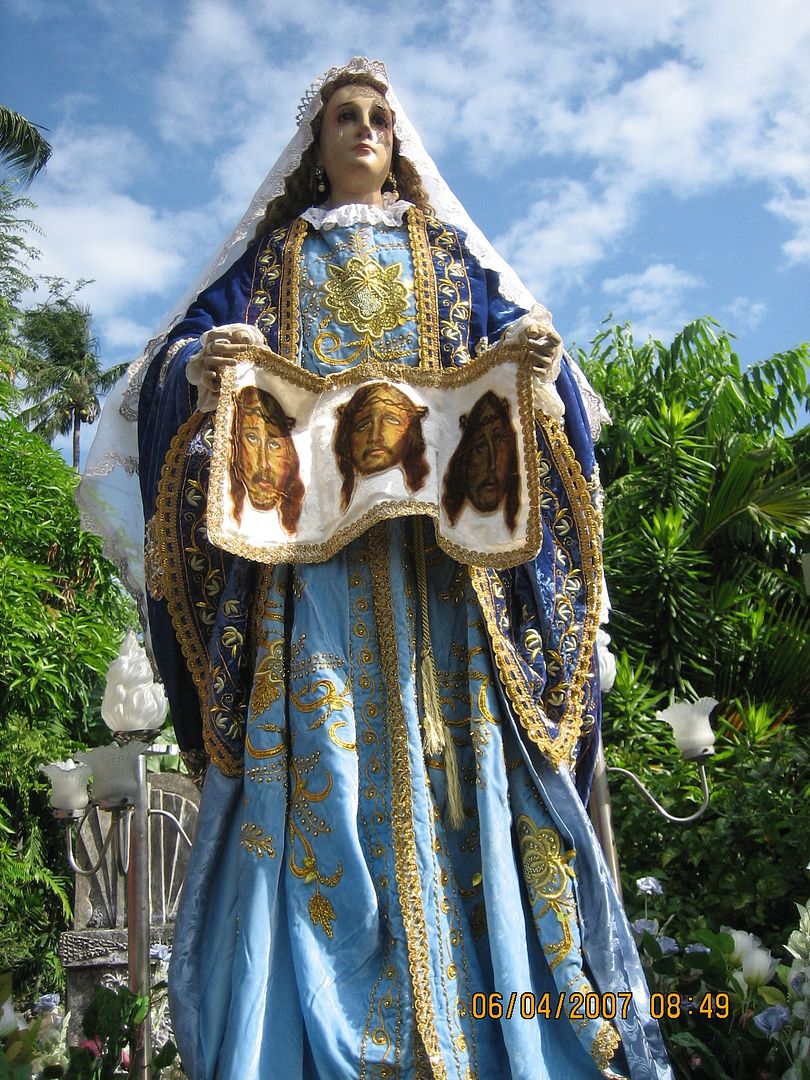
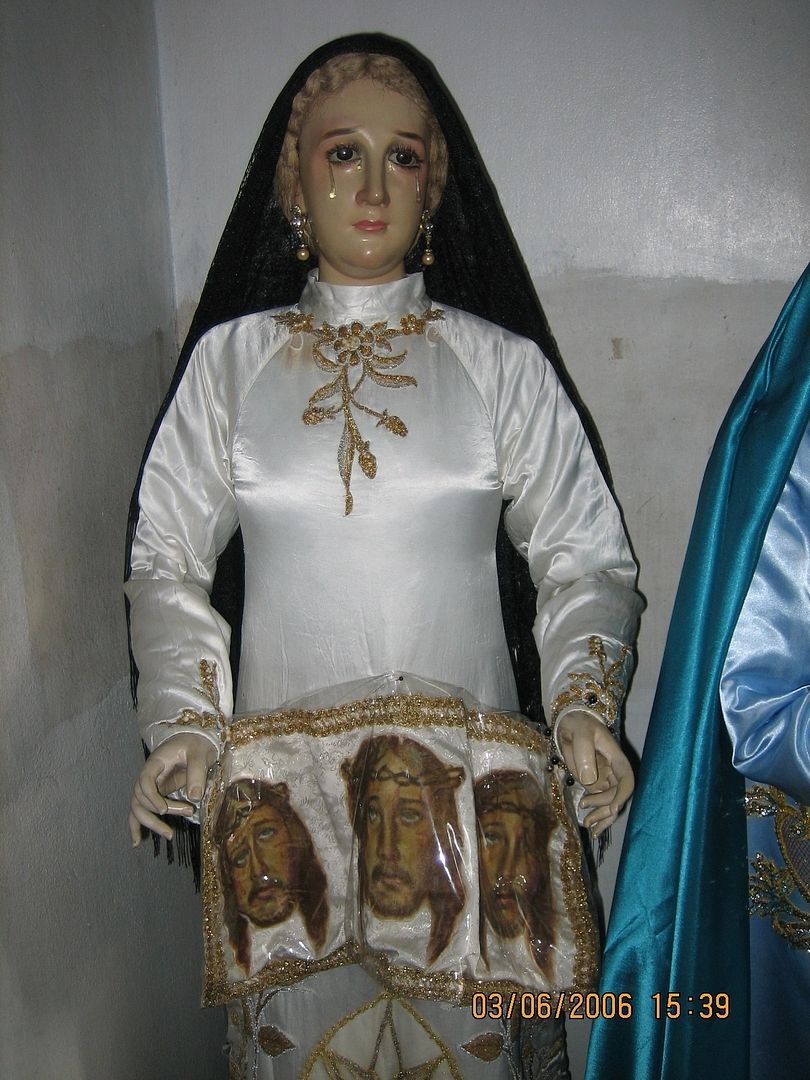
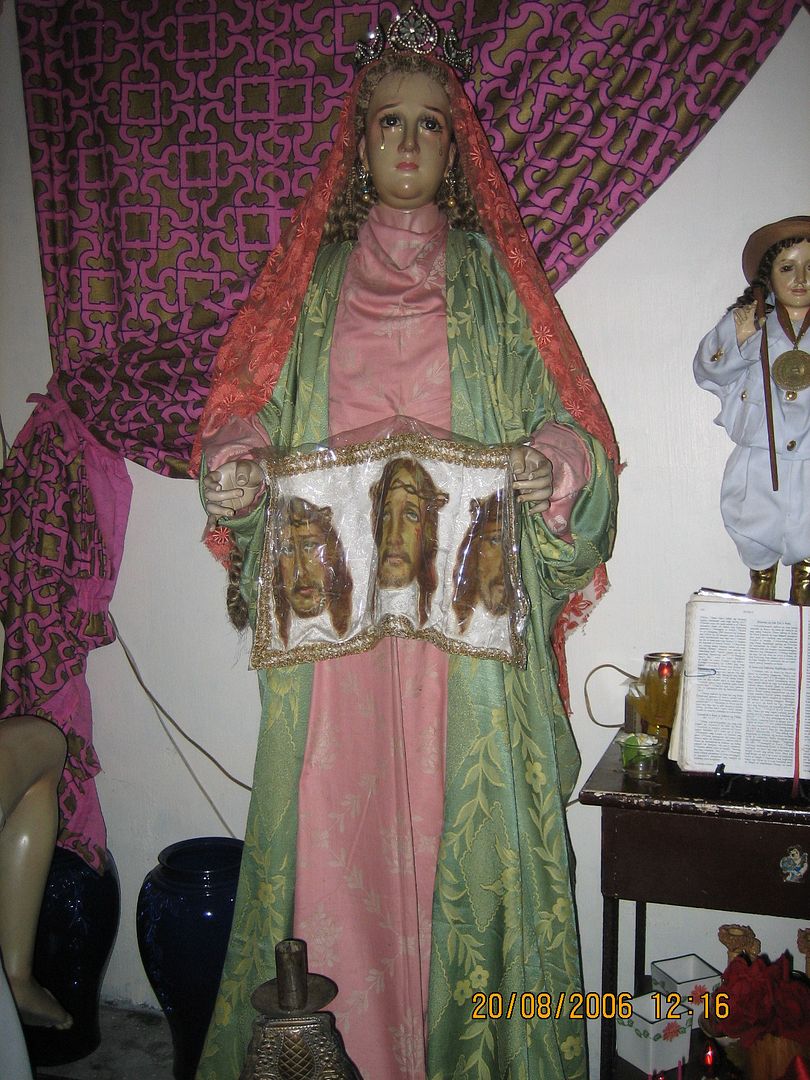
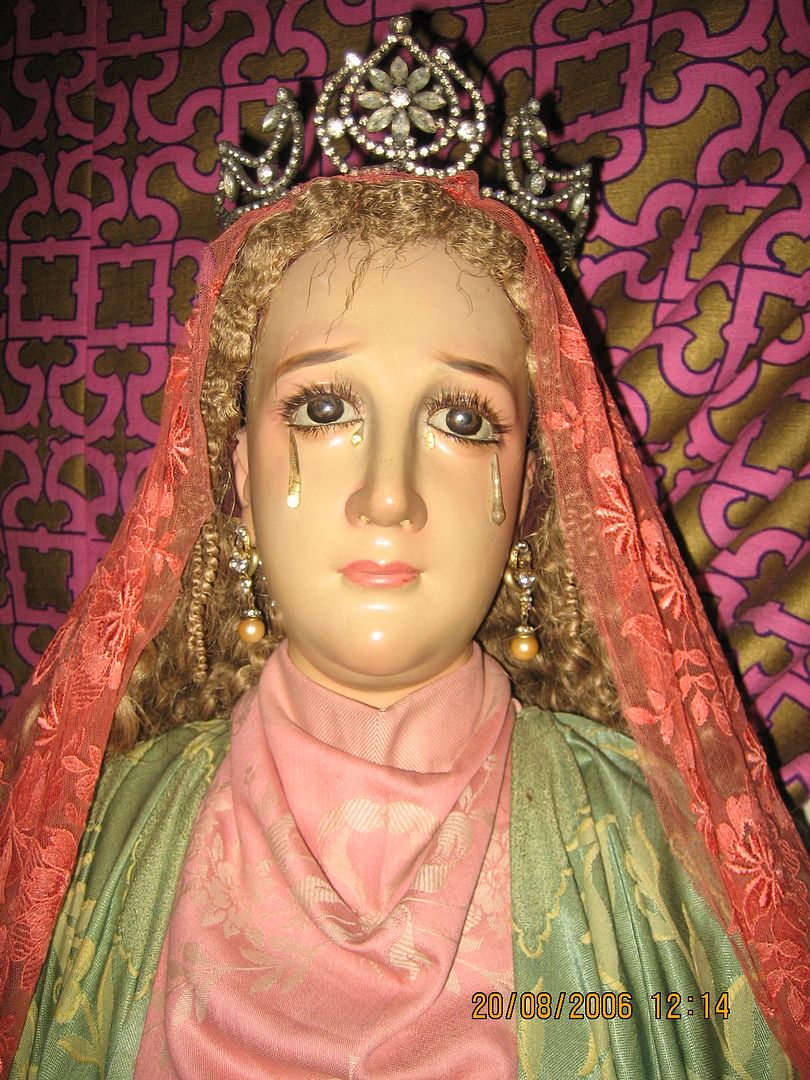
The mourners come next. First up is Santa Veronica, a beautiful antique image from yet another of the formidable Women of Malolos, Teresa Tiongson Tantoco. She and her daughter Anita commissioned this image early in the 20th century from the Maximo Vicente Workshop.


Even in simpler home garb, the elegant antiquity of this processional image remains clearly evident.


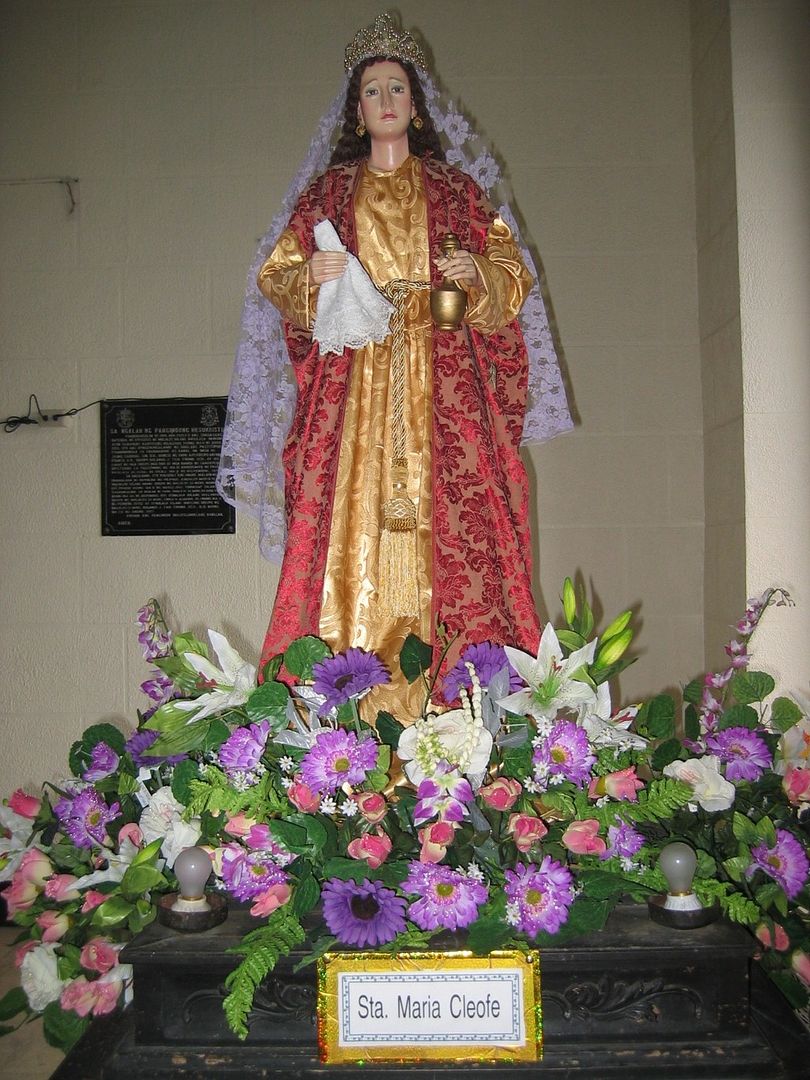
The processional image of Santa Maria Cleofe was parked inside the Cathedral a few Holy Weeks ago, and that’s where I was able to photograph it.


To my eyes, it’s a fair image, not particularly beautiful, but fortunately not folksy at all either.

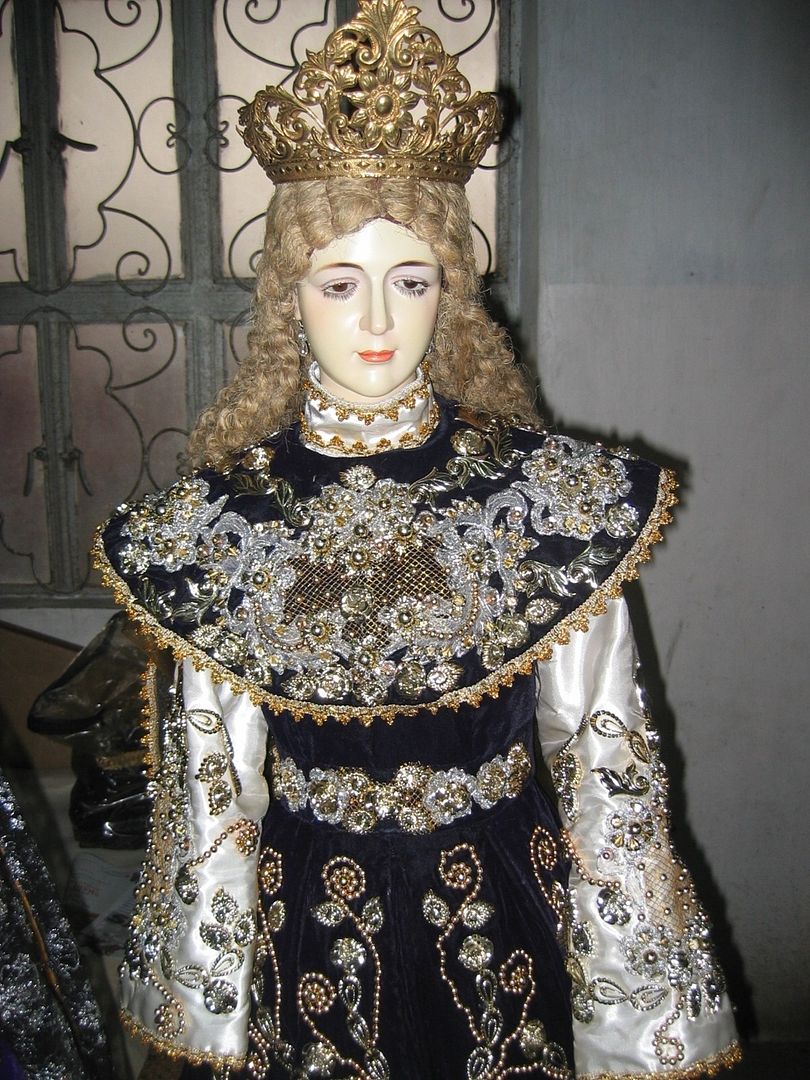
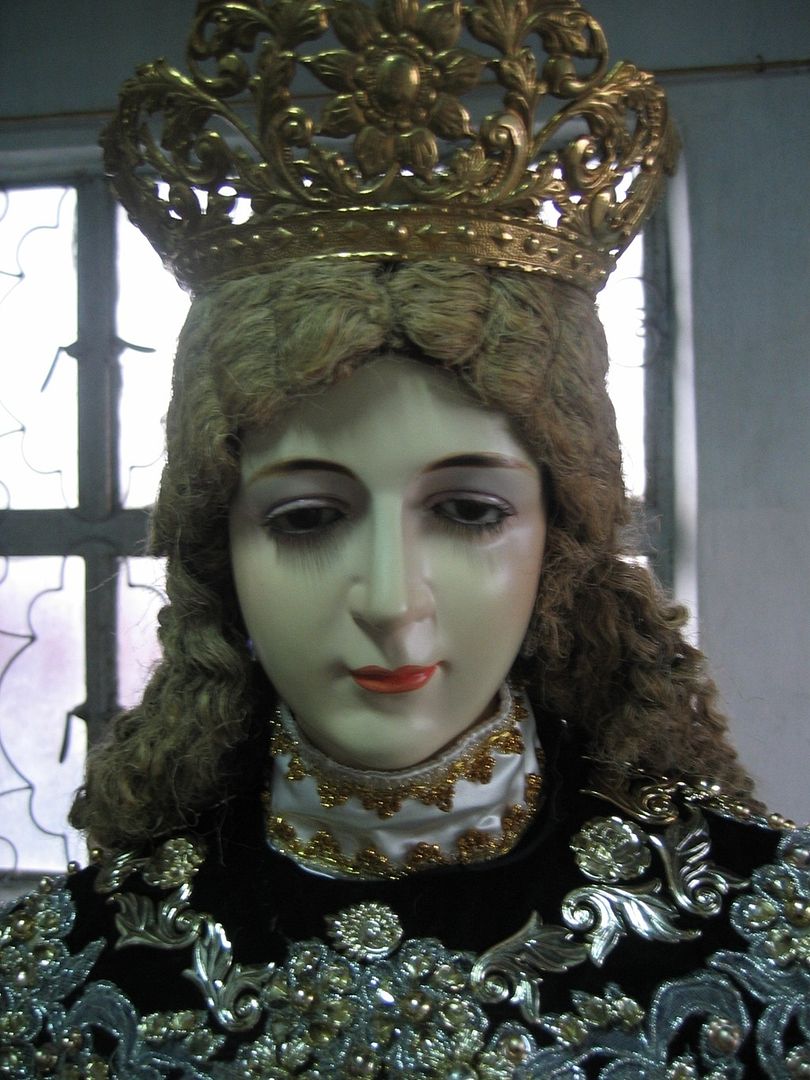
The image of Santa Maria Salome was being readied for mounting on its carroza in the workshop of the carroza decorator, and that is where I was able to take up-close photos of it.


This is one of the most beautiful religious images that I have seen with my own eyes; in fact, I feel that it is too pretty (and perhaps not too sorrowful enough) to be used as the processional image of one of the Holy Women of the Passion.

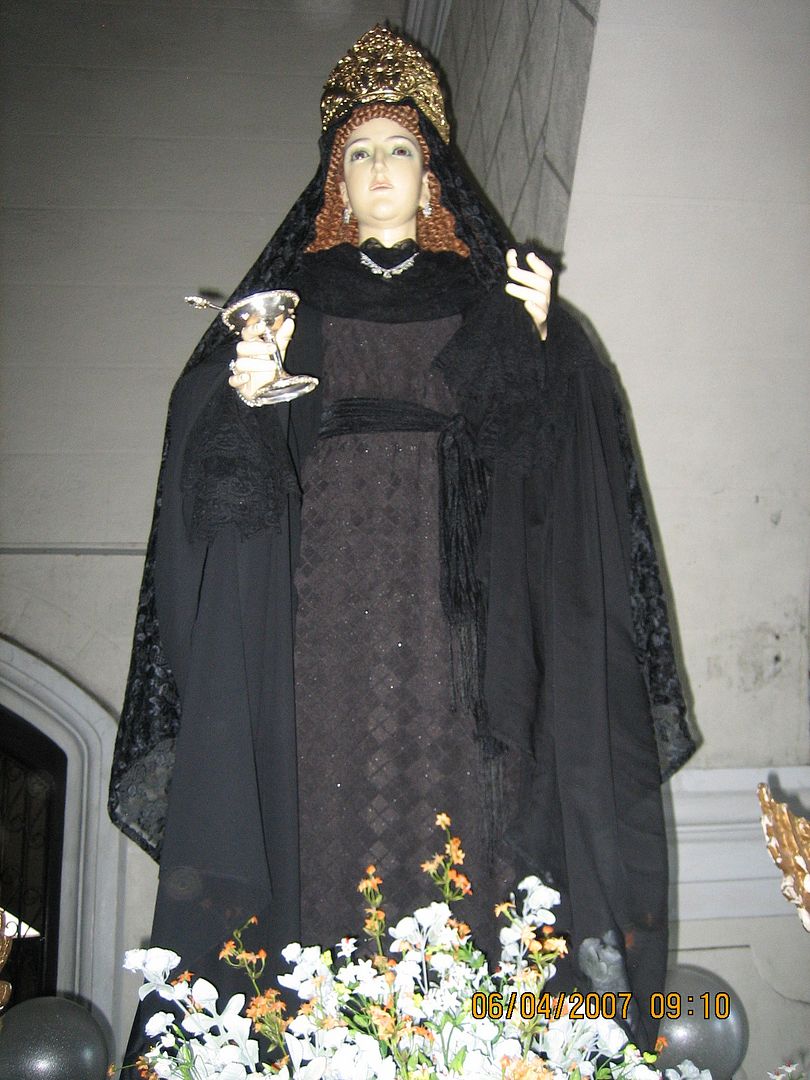
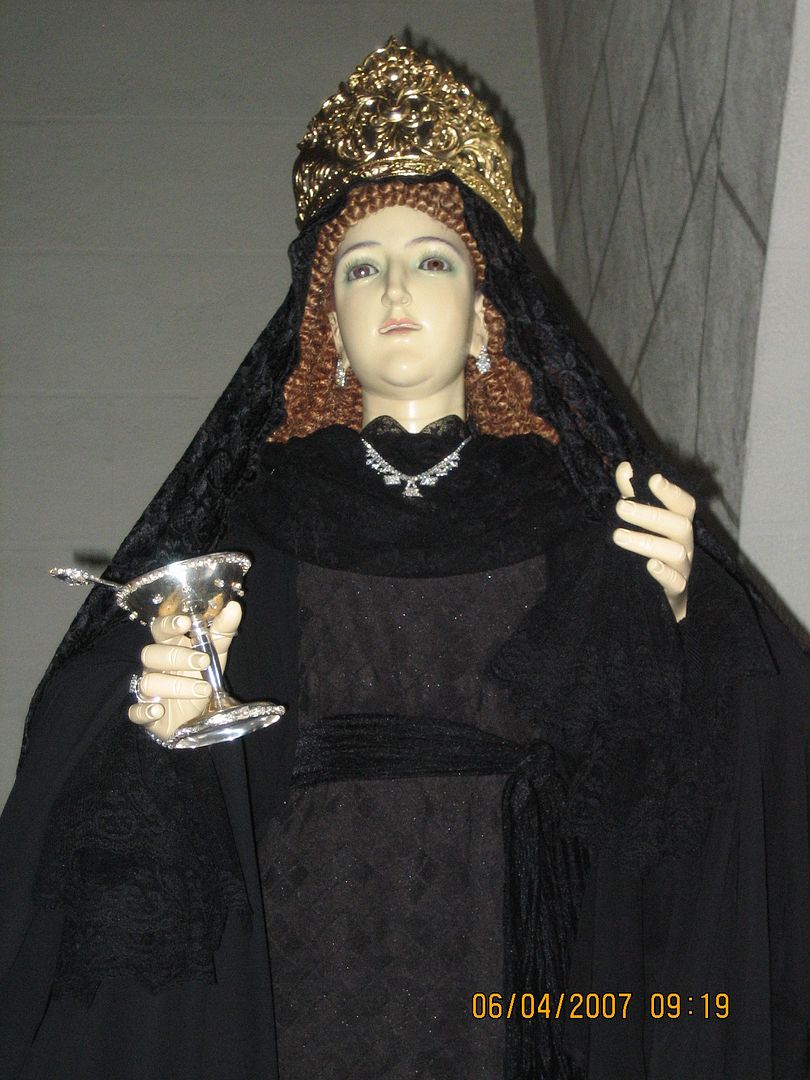
This next image of a Holy Woman of the Passion, elegantly dressed in mourning and photographed on its carroza while parked inside the Cathedral on Good Friday morning, is apparently the new image of Santa Maria Cleofe in Bayan, replacing the one dressed in red and yellow in the photograph above, taken a few years earlier. It is yet unknown what has become of that previous Cleofe image.


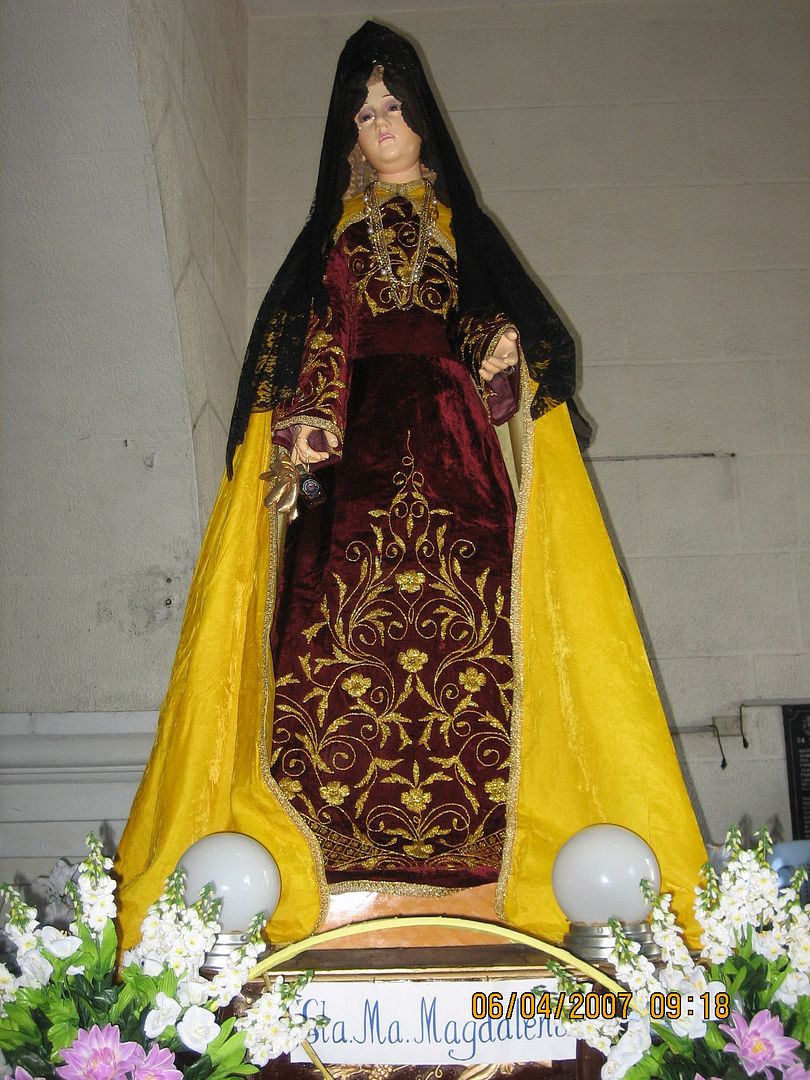
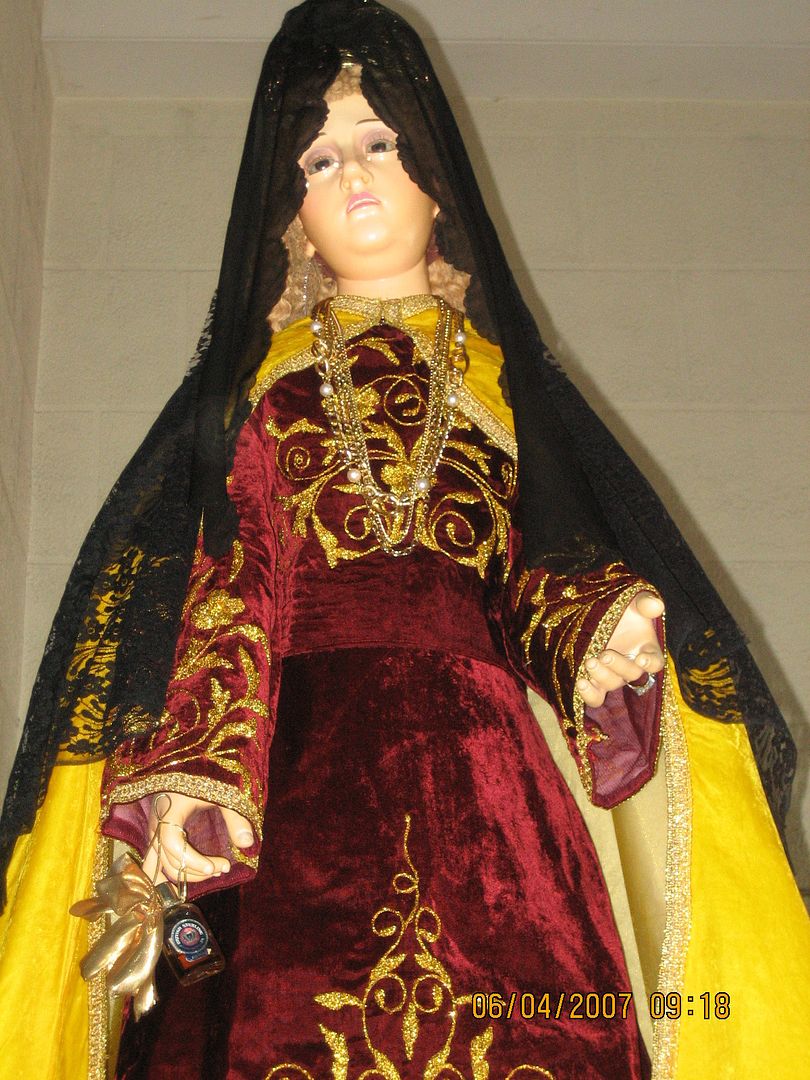
The processional image of Santa Maria Magdalena is unfortunately not as impressive as I feel it ought to be, given the stature of this Parish.


The head seems rather folksily-carved to me, or maybe it’s just her overall garb and the somewhat strange way that the mourning veil has been placed on her – again overtones of “peninsular pretension.” Oh well.

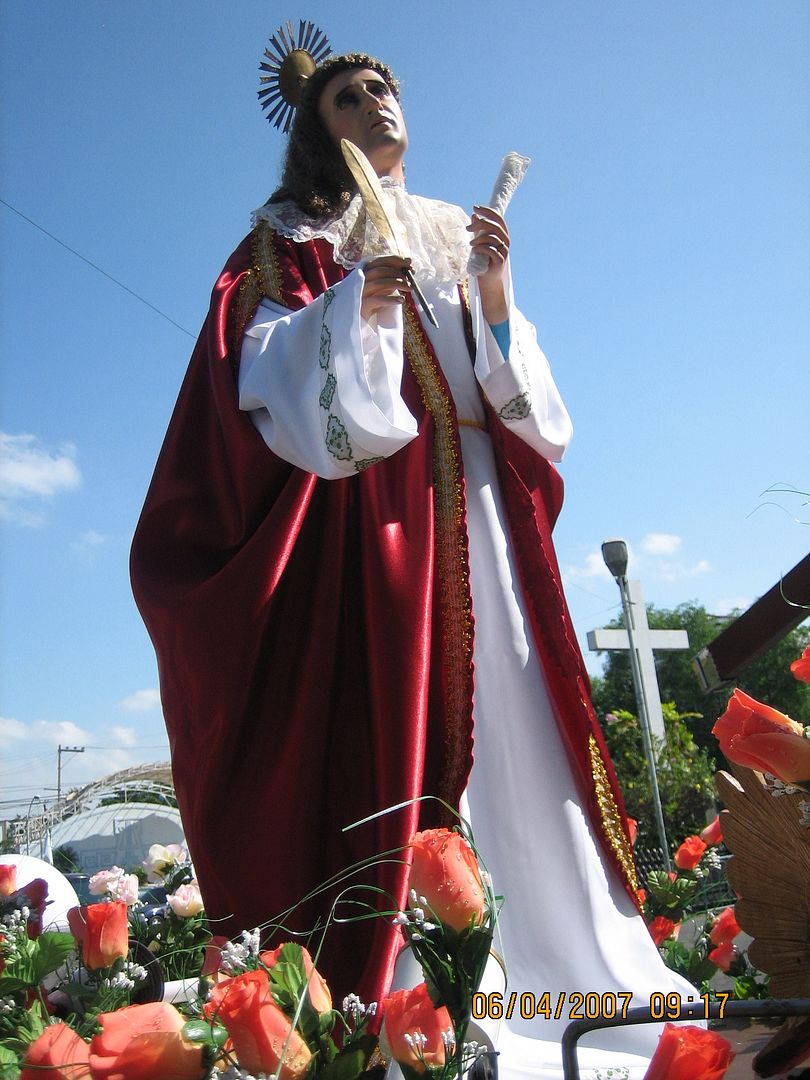
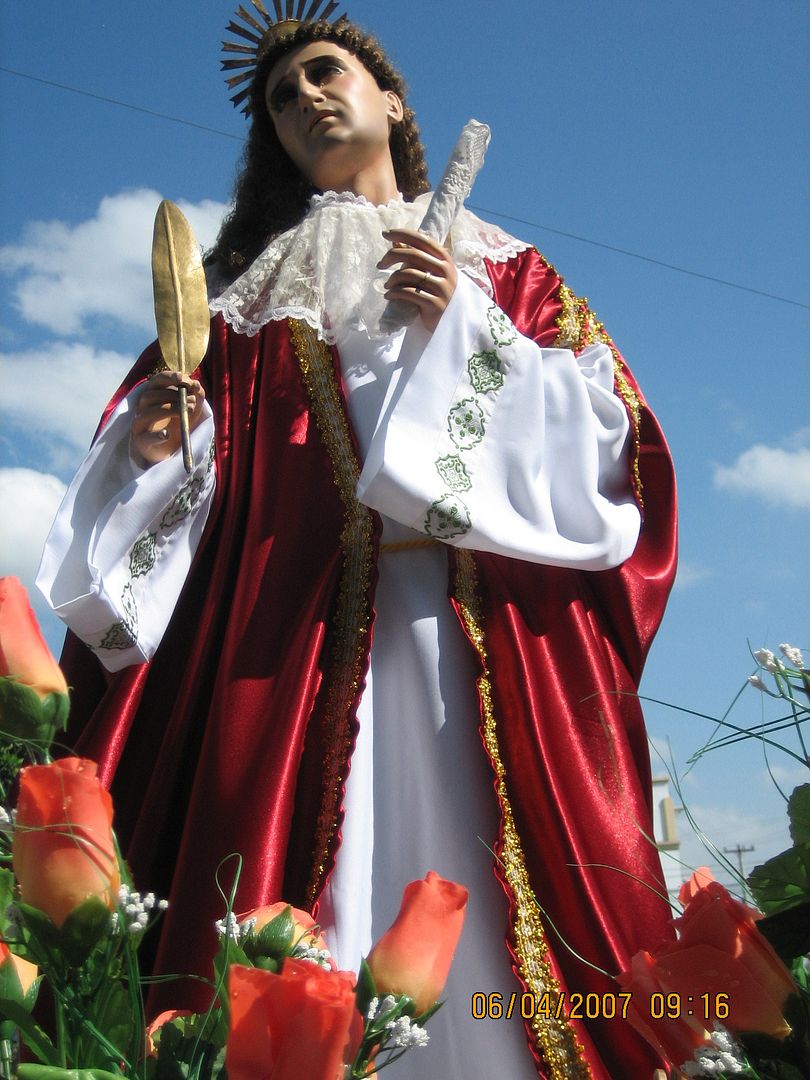
The penultimate image in the line-up, San Juan Evangelista, looks to be a fairly well-made antique image, but is slightly disadvantaged by too loose-fitting garments. And at first glance, I thought that the Sacred Heart had been conscripted into the Holy Week processions as well.


Perhaps Saint John’s traditional colors of green and red would be more appropriate instead – what do you think?

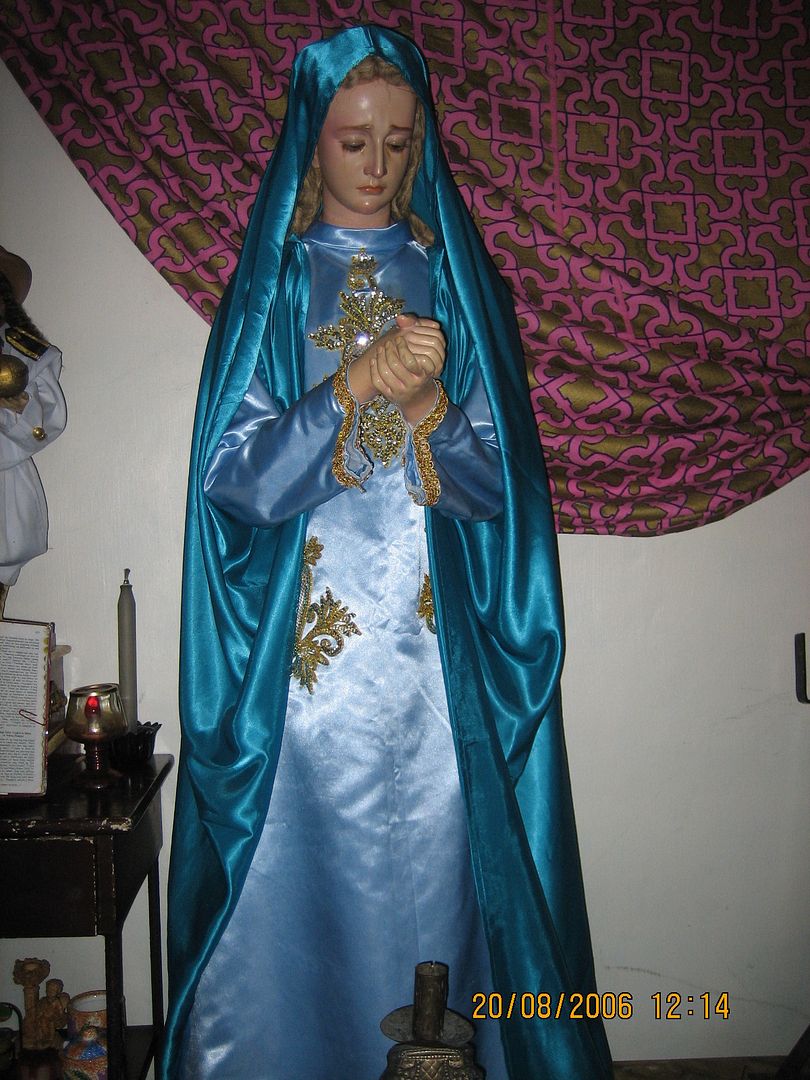
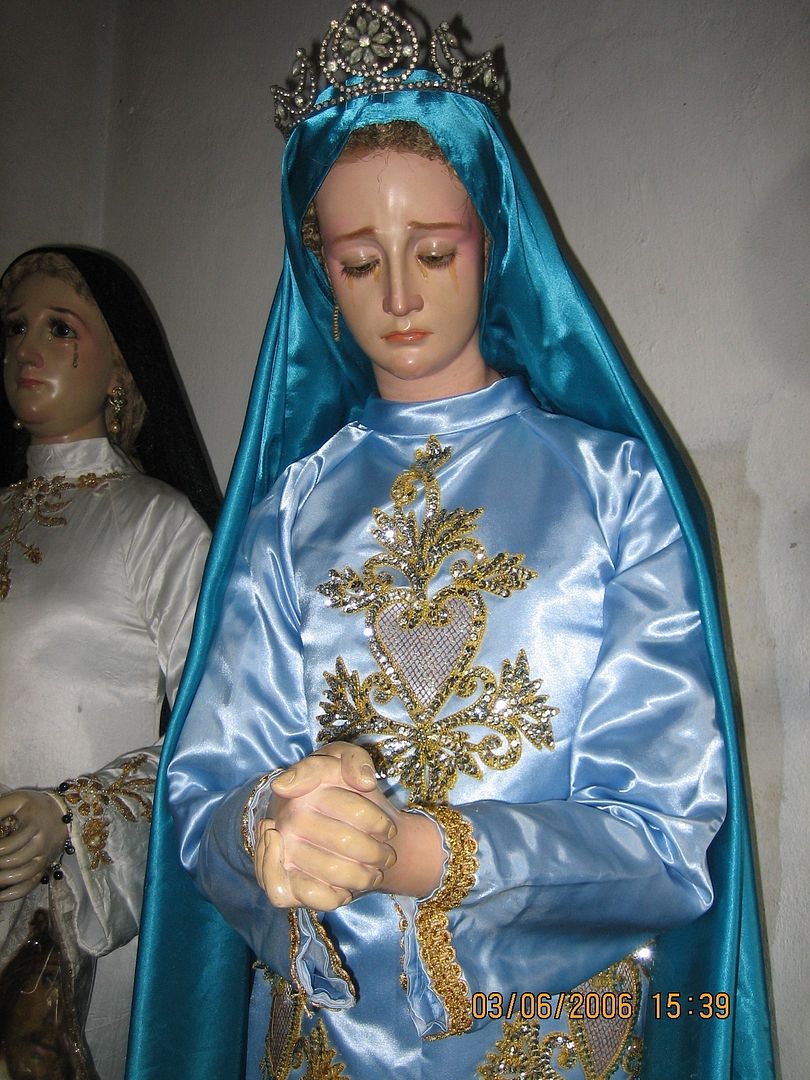
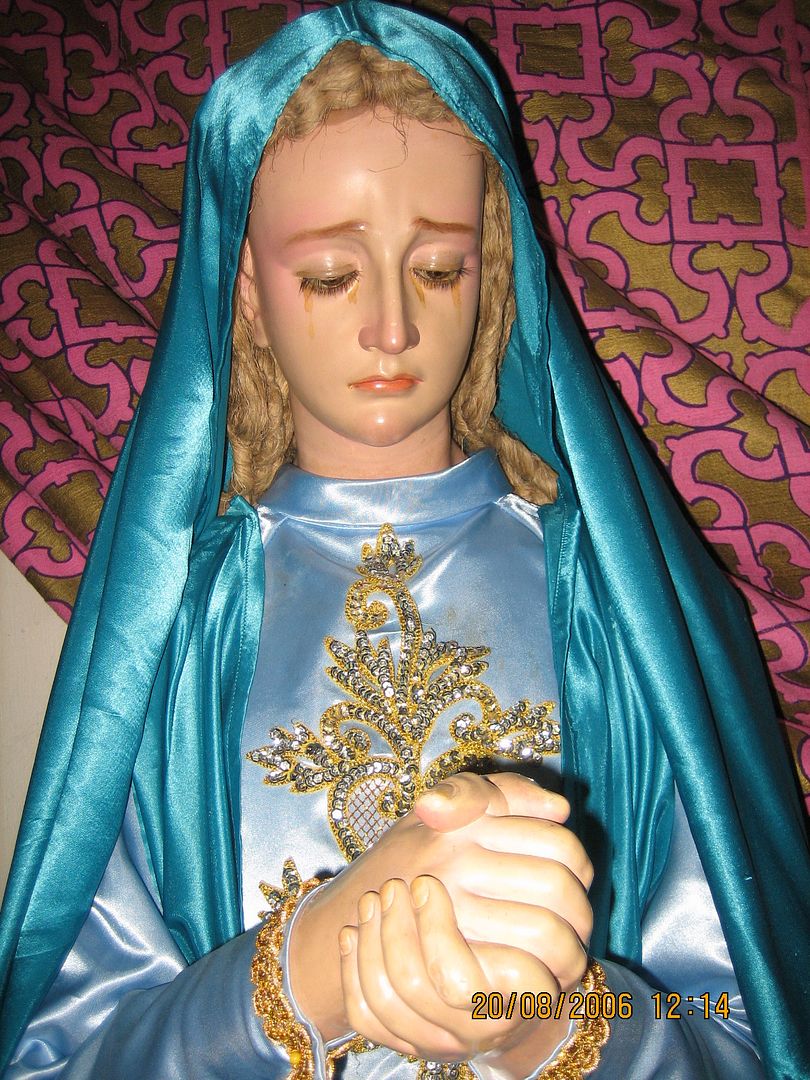
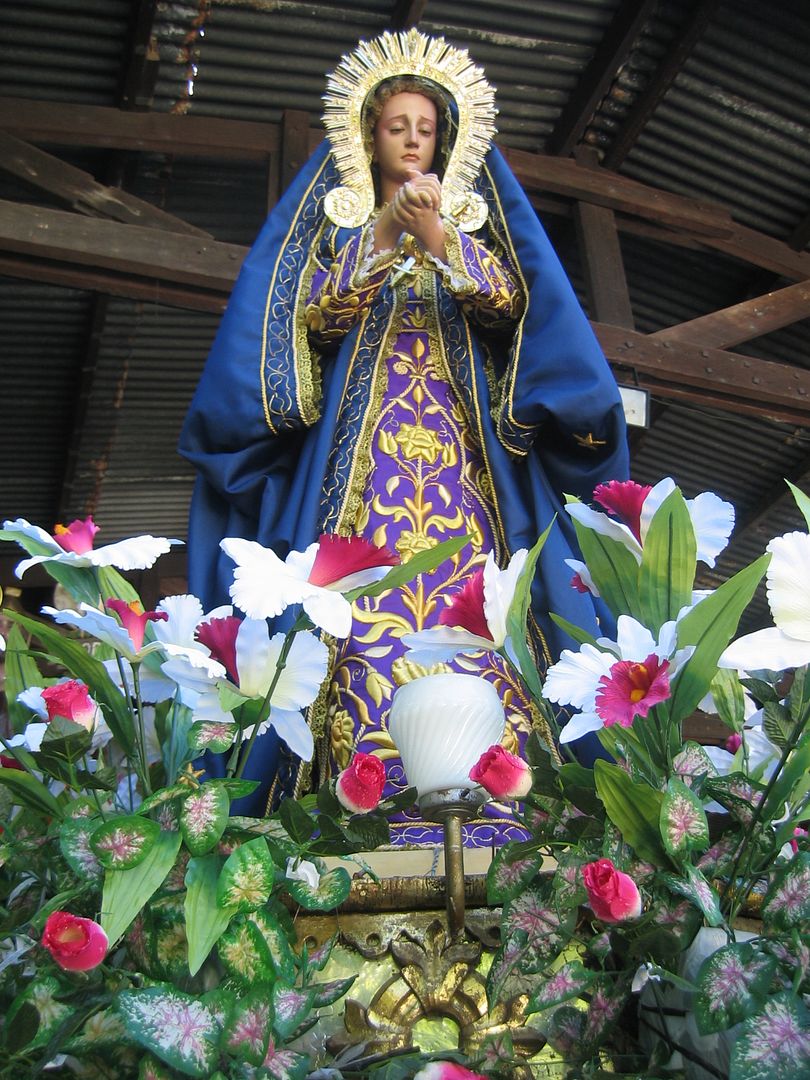
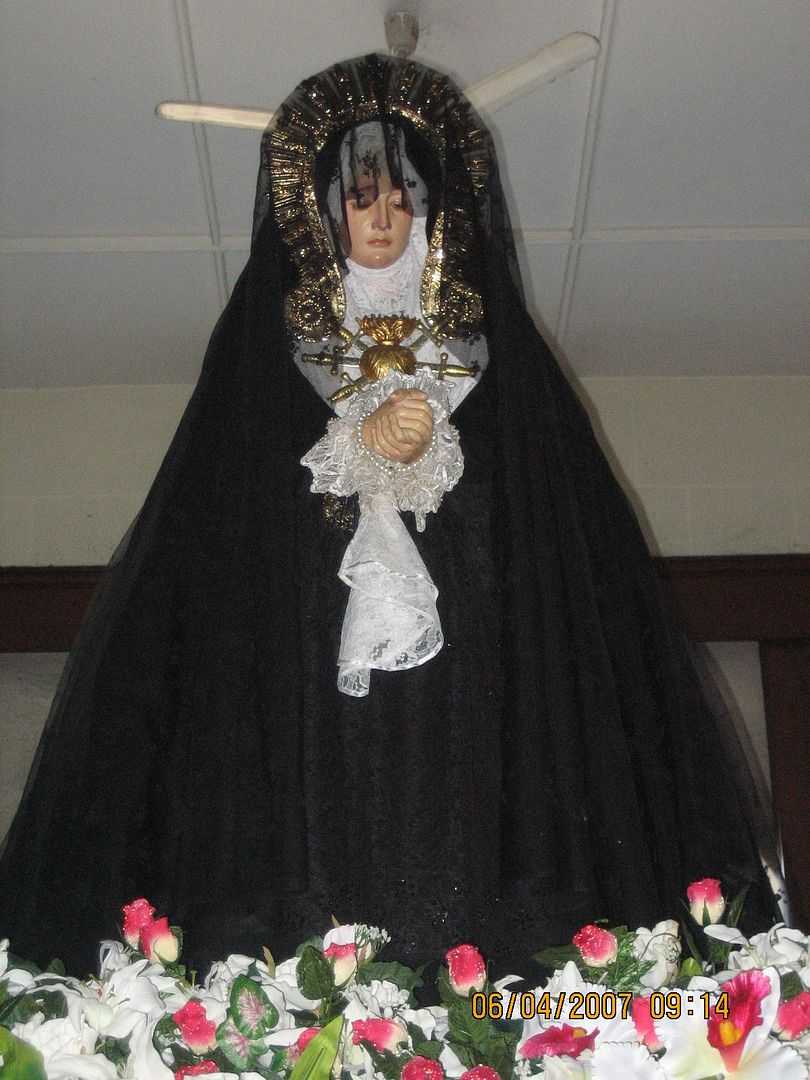
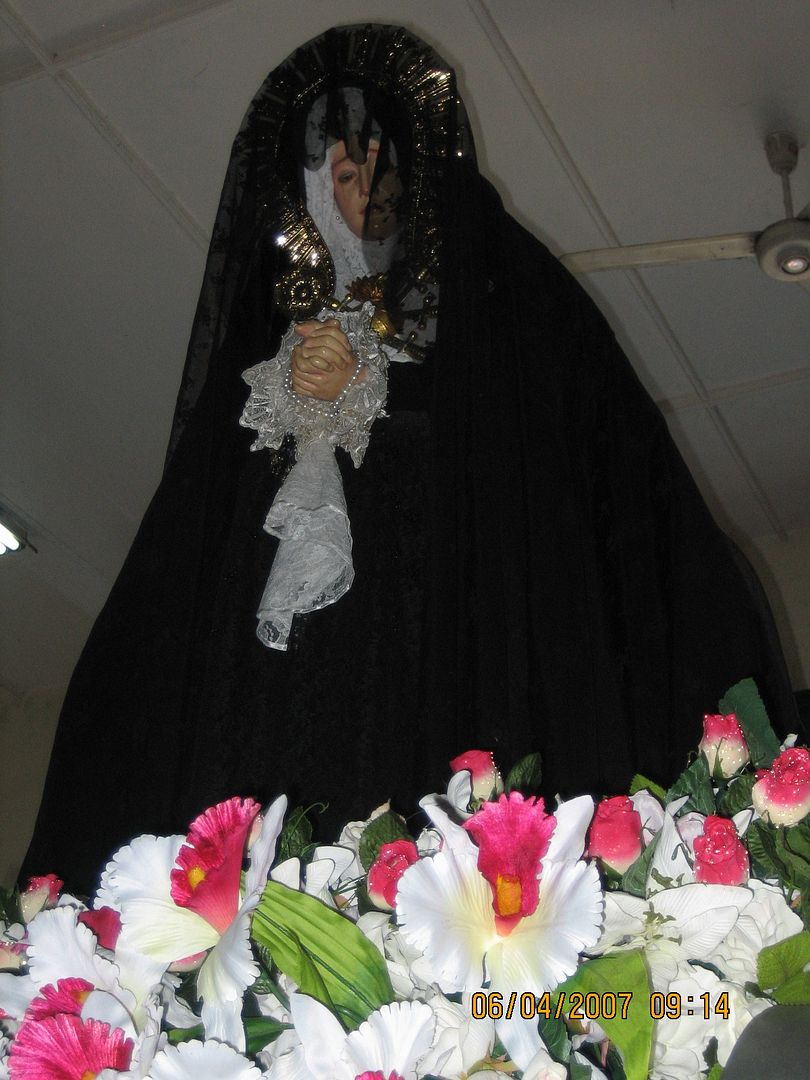
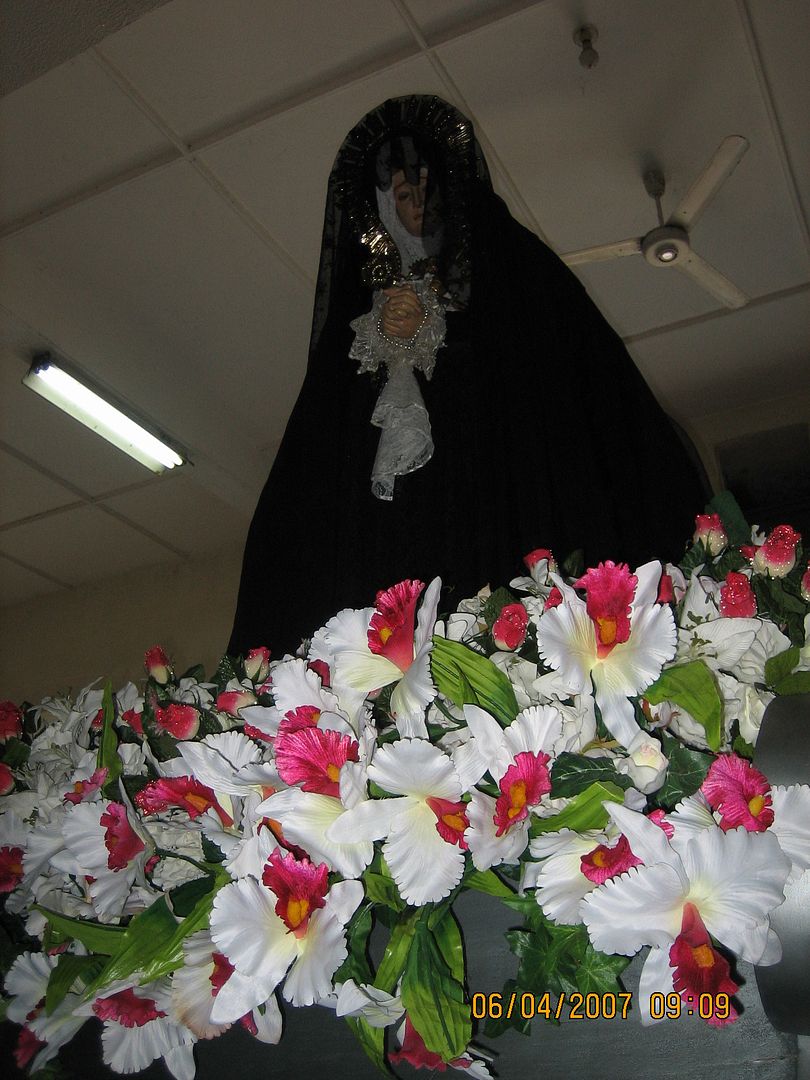
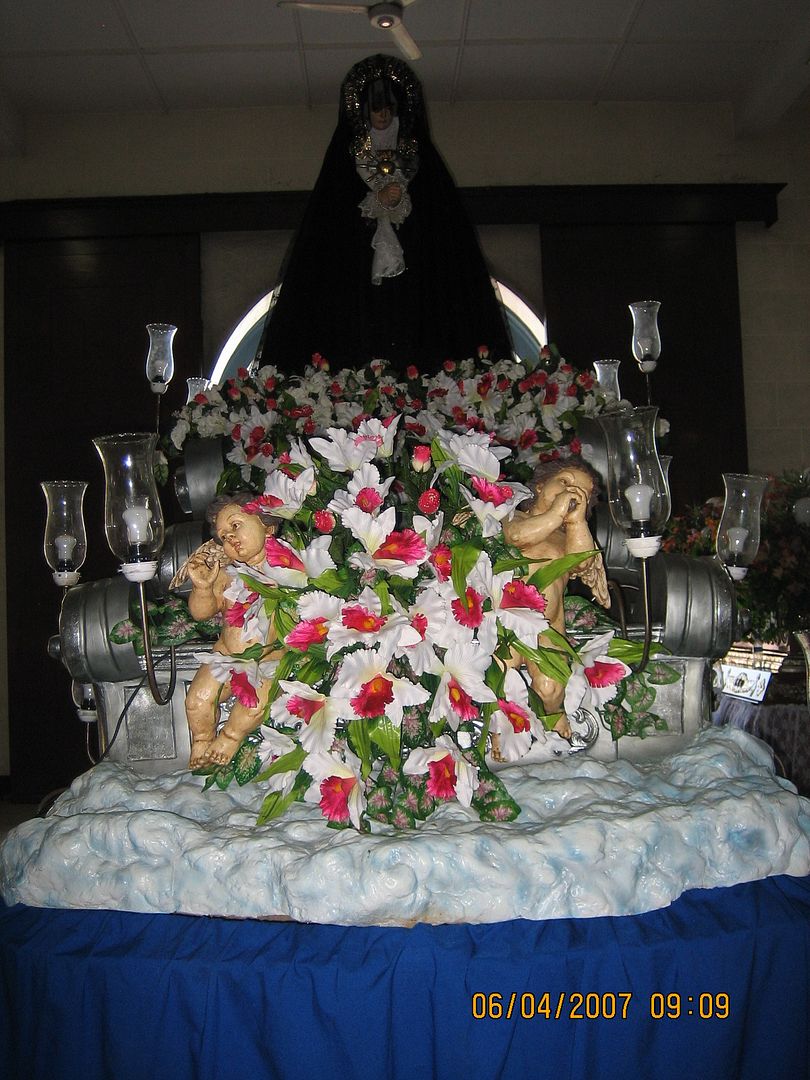
The chief mourner, the Dolorosa, brings up the rear of the Holy Week processions. The Bayan processional image of the Most Sorrowful Mother is one more early 20th century commission from another of the redoubtable Women of Malolos, in this case Basilia Villariño Tantoco, quite possibly the wealthiest lady in the Malolos of her day, an enterprising spinster who was also extremely pious yet very generous with her near-unlimited largesse.


A few Holy Wednesdays ago, she was elegantly dressed in a thick blue manto, already relatively restrained as far as Dolorosa dressing is concerned, I guess.


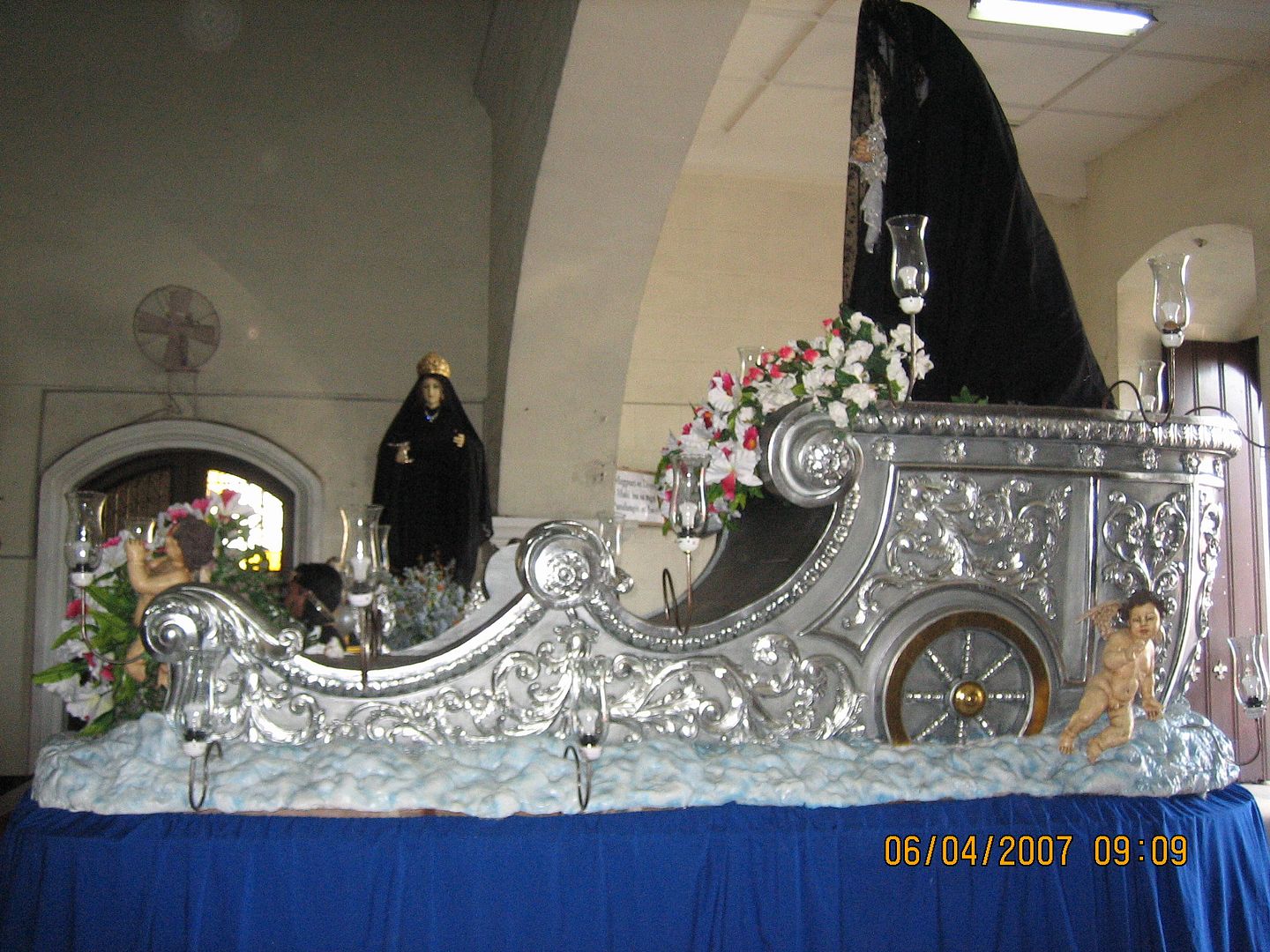
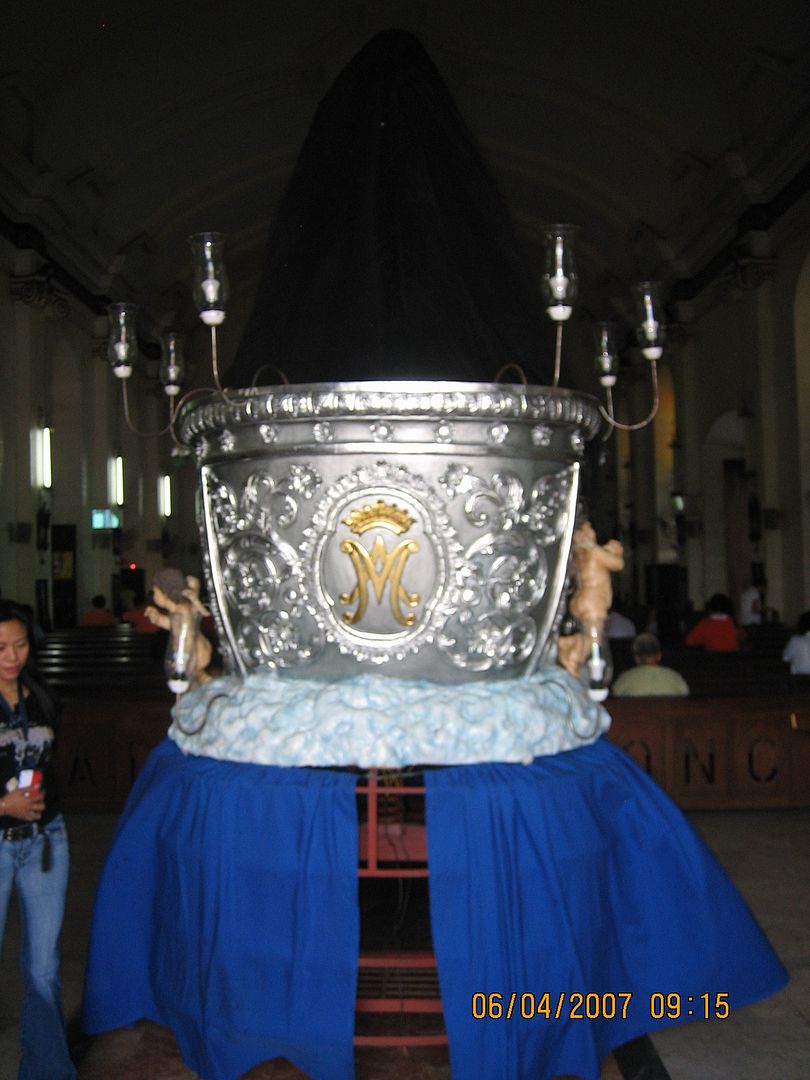
For Good Friday this year, the Dolorosa was suitably dressed in all-black mourning garments, although I felt that there was a bit too much bulk and volume to her appearance.


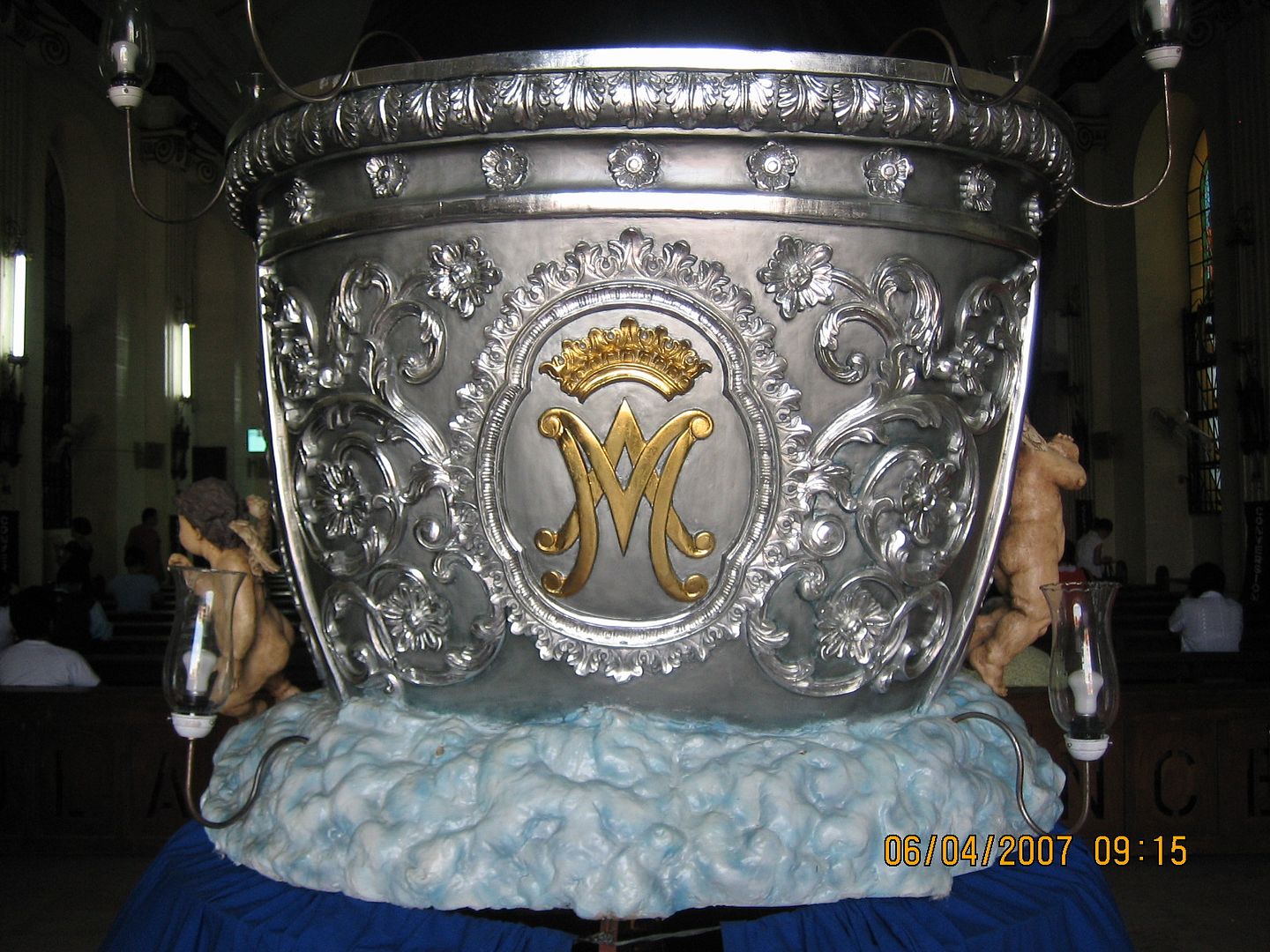
She also benefited this year from a chariot-style carroza, a newly-made but well-designed and -executed processional vehicle in silver-painted wood, inspired by numerous antique silver chariot carrozas often used for festive Marian images to this day.


The use of this grand “AVM” carroza to bring up the rear of the Holy Week processions is probably appropriate enough for what we should remember is the Parish of the Minor Basilica of the Immaculate Conception.

And so ends our review of the Holy Week processional line-up in Bayan Malolos. A fair number of gaps exist in this survey, but that just means that I already have my SS-Files written up in my head for next Holy Week. Just a few more months of waiting then!


Originally published 13 July 2007.  All text and photos copyright ©2007 by Leo D Cloma. The moral right of Leo D Cloma to be identified as the author of this work has been asserted.

Original comments:
jvlian2 wrote on Jul 14, '07, edited on Jul 14, '07
hmmmmm,,, dami pa nga kulang,, haha, pero okay nmn ang paghihintay,,, (ang dami mo na tuloy assignments for nex year) [at naunahan ko si jay hehehe]

Hindi ako nakikipagkumpetensya sa'yo. Haha. Ganda ng Salome. Parang Inmaculada.

Galing Leo! :D

mukhang damit ng nazareno yung sa magdalena,,, hehehe 

I actually prefer the Magdalena over the Salome. In my opinion the latter's too prettified and overly saccharine face with the mapupungay na mga mata is to bland and lacking in character. The nose is imperfect as well. The inappropriate cut of the vestment with the use of the guimpe makes her look like a nun.On the other hand, I think the Magdalena only needs to lose the peineta and veil and have the cape draped correctly to be impressive.
I suspect that the Salome actually does double duty as a Marian image -- I need to investigate. And yes, perhaps I should try to photograph the Magdalena in "domestic mode," so that we can see how it really looks like without all that unnecessary garb.
I've updated the text to identify the Holy Woman dressed in all-black mourning garments as the new image of Santa Maria Cleofe. (Thanks to our Malolos Bayan correspondent.) Please see above.
Hmmm.. Great shots! Mas marami ka pang alam about this kesa sa taga malolos mismo like me..LOL
sweettoothshaven said
Hmmm.. Great shots! Mas marami ka pang alam about this kesa sa taga malolos mismo like me..LOL
Oh, I'm from Malolos myself -- I've lived there all my life (except for the obligatory OFW periods abroad).

Thanks for visiting my somewhat Malolos-oriented blogsite -- please keep checking back regularly.
rally65 said
Oh, I'm from Malolos myself -- I've lived there all my life (except for the obligatory OFW periods abroad).
Thanks for visiting my somewhat Malolos-oriented blogsite -- please keep checking back regularly. 
Yeah i read it late.. Taga malolos ka din pala..hehehe! I was just searching for some multipliers nearby and I saw your site. Nice Photography. Where ka po exactly sa malolos? I am from Lugam..;-p